Bruges and on to The Netherlands

OLYMPUS DIGITAL CAMERA

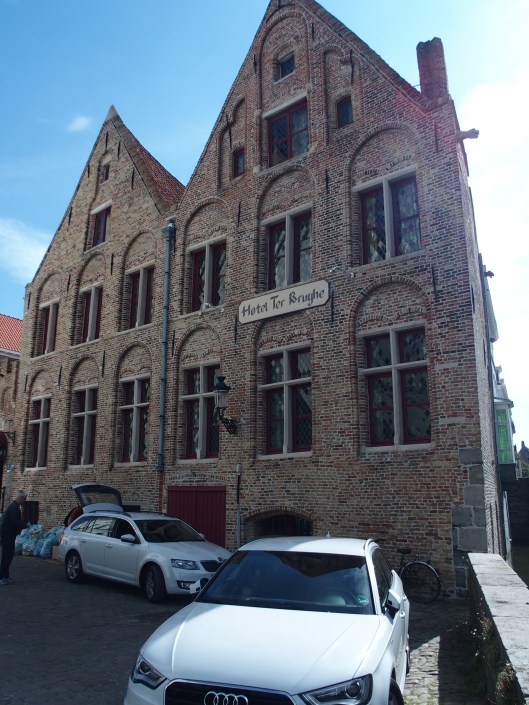
Hotel Ter Brughe

June 16th – This is the lovely old hotel that we woke up in this morning.  The building dates back to the mid-1400s and was likely used originally as a warehouse since it sits right beside the canal. The rooms were spacious and filled with antiques. Our room was the three windows on the right and afforded a view of the canal.  How delightful to wake up in the morning and see the ducks playing just outside our window.

We walked over to the tourist office and determined that we would wait for the 2pm walking tour. As we were heading out to find a museum, to put in a few hours, we discovered a boat cruise through the canals. Our guide spoke five or six languages but only used three on the tour – otherwise it would take too long.  The canal tour afforded many views of the wonderful old buildings alongside the canal and at least one shower from a boat passing in the opposite direction.

We then visited the folklore museum – an interesting collection of items used in the life of the Dutch people down through the ages. Each room showed the tools and described the life of various people such as the shoemaker, the baker, the teacher, the tailor, the milliner, etc.

After a quick lunch at a little cafe and updating the parking sticker on our car, we were ready for the walking tour. It was described as “The Legends of Bruges” tour and the guide was a great storyteller. At each stop on the tour, instead of only describing the building or statue, he told a story of the people that inhabited the area in the last century. It was a free tour but tips were welcome if one enjoyed the tour. We ended up in the square at the city hall, in the middle of a concert being played by a military band. An excellent time to sit, listen to the music and enjoy a Belgian waffle.

We left Bruges about 4:30 destined for Middelburg – just a stop along the way to make the next day easier. Our B&B in Middelburg was a fabulous place called B&B ‘t Poorthuys and run by two interesting guys who were wonderful hosts. Originally a doctor’s house built around 1530, the place was completely renovated in 2013 when they bought it. The decor was a stunning black and silver/grey combination. Lovely!

A jam-packed day

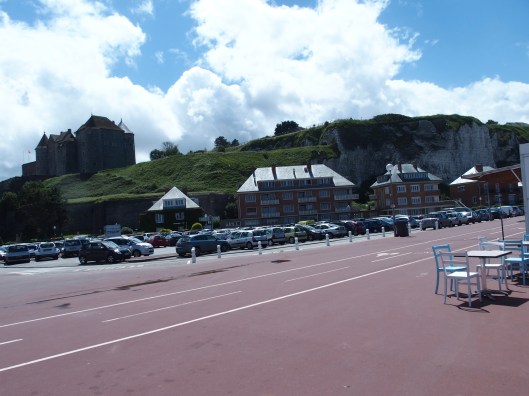
June 15th –Travelling with George Jr  is always exciting. One never knows exactly how the day might go. After saying goodbye to the cousins we headed off to Dieppe, site of the failed allied attempt in August 1942. Certainly standing down at the shoreline one can see why, compared to Juno Beach, this was not a good place to attempt a landing. The commemoration site is quite small but recognizes nonetheless the sacrifice by so many.

OLYMPUS DIGITAL CAMERA

Canadian Memorial at Dieppe

OLYMPUS DIGITAL CAMERA

Big cliffs on either side of the beach made failure almost certain

Our next stop was a most interesting museum called La Coupole. This suggestion must have come directly from George’s “travel for nerds” website. One of many bunker complexes built by the Germans to serve as a launch complex for their V2 rockets, it was built into the side of a disused chalk quarry, the most prominent feature of which is an immense concrete dome. Because the British discovered these complexes and heavily bombed them, they were never put into service. The museum tells the story of the German occupation of France during WWII, the V-weapons and the history of space exploration.

Timing allowed us just enough time to have a quick dinner and get to Ypres in time for the Last Post ceremony.  Every evening since 1928, people have gathered under the Menin Gate for this ceremony which pays homage to the soldiers of the British Empire and its allies who died in the area during WWI. We were about 1000 people there last night, although there didn’t seem to be any problem with finding the site or parking once we got there. The ceremony itself includes the call to attention, the playing of the Last Post, the reading of a poem, the playing of a lament by a bagpiper, a moment of silence, the laying of wreaths by a number of individuals representing families or groups, and then the playing of Reveille. It was quite moving given that there was complete silence during the ceremony. We’ve seen it on TV when Peter Manbridge visited a number of WWI sites last year. Now we’ve experienced it for ourselves.

OLYMPUS DIGITAL CAMERA

Menin Gate

After all this we were still an hour or so away from Bruges, our destination for the night. Fortunately, because sunset is quite late, we arrived during daylight and sort of just fell into bed. We’re staying in a lovely old building…but more of that tomorrow.


The Canadians at Juno Beach

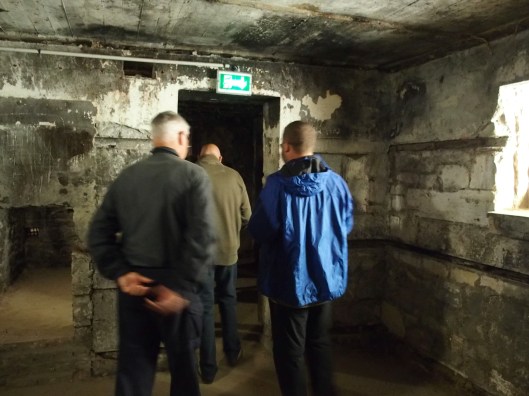
June 14th – It was a long drive, but it was well worth the 6-hour return trip down to Juno Beach from Albert. Because only the three Bells were interested in this adventure, we left the others to tour some of the small towns close to Albert for the day. Unfortunately, we didn’t get away as early as planned so we were a bit rushed to make it for the 2:30pm tour. We arrived just in time to have a quick lunch and then join the tour through the bunkers and down on to the beach.

These bunkers were built by the Germans and were part of the fortification of the Normandy coastline. Their construction was quite different than the ones we saw yesterday at Vimy and in some ways were flawed. Imagine building a bunker without ventilation other than a large hole through which a grenade could be launched!

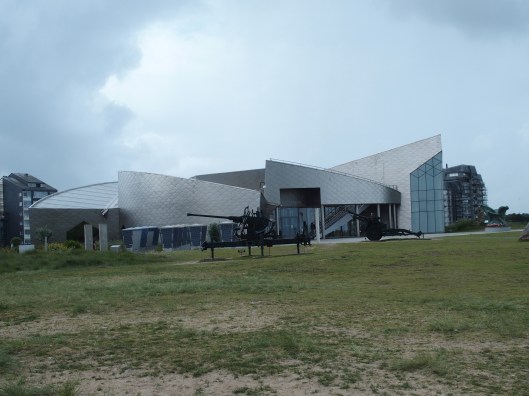
The Canadians learned a lot from the failed attempt at Dieppe making the D-Day landing at Juno Beach in June 1944 well executed and more successful than originally planned. The Juno Beach Centre, which opened in 2003, celebrates the contribution Canada made to WWII between 1939 and 1945. The museum houses a number of permanent exhibits which help to explain Canada’s participation in the war, as well as occasional exhibits which help visitors to find out about contemporary Canada. We didn’t have sufficient time to see every part of the museum, but what we did see was quite well done.

OLYMPUS DIGITAL CAMERA

Juno Beach Centre

OLYMPUS DIGITAL CAMERA

German Bunker

We arrived back in Albert at 8:15pm thanks to the speed limits on the motorways here in France. Similar to Italy the speed limit is 130 kph unless the roads are wet and then you are to slow to 110 kph. We had a bit of a scare just a few miles out of Albert when George and I saw the flash of a speed camera as we passed. We conjectured as to whether 10 km over the limit might attract a speeding ticket and if so, how it might be delivered. No worries; we found out later that the car is registered in Germany and they don’t share their vehicle registration details with France!

Dinner tonight was again at the hotel, but poor George Jr was so tired from driving he skipped dinner and went straight to bed.


Onward to France

June 12th – We were all up bright and early this morning to catch the Eurostar train to Lille. The most difficult part of the journey was figuring out where to leave the keys to our rental cars, given that it was early Sunday morning and the kiosk wasn’t open. It was fairly easy to go through UK exit, security and France entry all within about 20′ in the terminal building. The ride was relatively nondescript…about 10 minutes through the UK countryside, 30 minutes in the Chunnel and another 15 minutes through the French countryside. Before we knew it, we were in Lille.

The Hunters proceeded to the rental car kiosk to pick up a new car while George and I proceeded to the domestic train terminal to check on the local train from Lille to Albert. As per the schedule on-line, we had a three hour wait. We found a little Patisserie for lunch and then just sat and read our books. The city centre of Lille was very busy with soccer fans arriving for one of the first games of the Euro Cup taking place all over France.  The train turned out to be similar to our GO train – we felt quite comfortable on the one hour trip to Albert. Dave and Ron met us there and drove us back to the hotel.

By dinner time Dennis and Jenny Kernohan and George Jr had arrived, making our group complete.  We had a bit of a chat in the lounge before heading off to another local hotel for dinner. There are few restaurants in Albert and it was evidently quite difficult to find one that was open on Sunday evening.  We had a lovely dinner, but I’m sure the staff wondered about this group as we realized too late (the next morning) that our mathematicians had miscalculated the division of the bill and we had left a 30% tip!

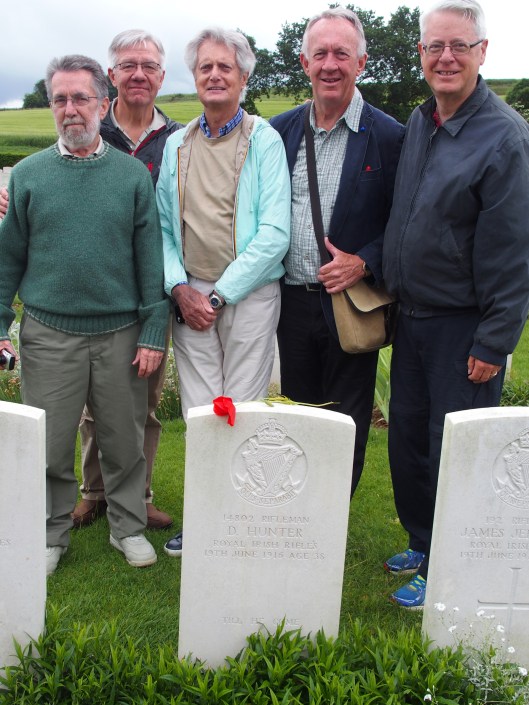
June 13th – Given the wet weather reports for the next few days, we decided to make the trek out to the cemetery today while the forecast was just for spotty showers. We very quickly learned that there is more than one Hamel, that there is a WWI cemetery on every country road in France, and that even the guides at the war memorials may not know the directions to the cemetery you are looking for. What fun! After about 90 minutes of searching we finally found the right spot.


OLYMPUS DIGITAL CAMERA

The Cousins – Dave, Ted, Dennis, Ron & George

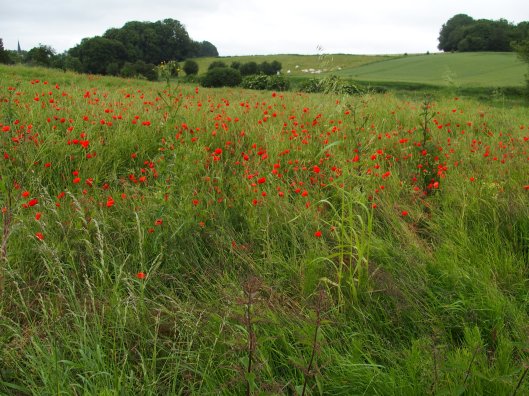
The poppy on top of the gravestone was picked along the side of the road, where they grow wild. As in England, the hedgerows aren’t cut providing for a lovely mix of wildflowers along the sides of the country lanes.

OLYMPUS DIGITAL CAMERA

Our next stop was Vimy Ridge, with lunch in the countryside along the way. Finding anything open on a Monday is a challenge in France. But then, nothing was open on Sunday either making one wonder when the French actually work.

Vimy is the site of a WWI battle, in April 1917, in which the Canadian Expeditionary Forces were instrumental in defeating the Germans. It was the first time that all four divisions worked as a cohesive force and became a national symbol of achievement and sacrifice. The memorial was unveiled in 1936 and stands as a tribute to those who lost their life at Vimy as well as those who died in WWI but have no known grave. We were just in time to take a guided tour of the tunnels and trenches, which helped to tell the story of how the war was won in that area. I wouldn’t say any of us are war buffs, but when you are this close we felt it was an opportunity to visit some of the most important ones. The government is building a new interpretive centre at Vimy, which is scheduled to open April 2017 in time centenary.

OLYMPUS DIGITAL CAMERA

Vimy Memorial

We arrived back at the Royal Picardie, our hotel, in time for a wee rest before dinner. It was a really educational kind of day and the conversation at dinner was rich.

On to Rye

June 10th – Our last full day in Cornwall was spent doing laundry and packing for the next part of our trip. We again visited the Lugger Inn in Polruan for dinner, ensuring that there were no leftovers to be dealt with. We left Triggabrowne early on Friday morning to drive east to Rye, which took about six hours.

Our arrival in Rye provided us with a bit of downtime before dinner. While out for a walk we met up with Dave and Ted Hunter, two more cousins who will be joining us on the trip to France.

Rye is a cute little town in East Sussex. Many of the buildings and cobblestone walks date back to medieval times. Being just two miles from the open sea, the port has played a big part in the town’s history, including the usual stories of smugglers. The road to our hotel was through the ancient Landgate Arch which dates back to 1329. An interesting fact – in 2015 some 25 tons of pigeon poop was carefully removed from the gate in an effort to ensure its longevity into the future.

image

Landgate Arch

Dinner was at a local restaurant called Simply Italian…a bit noisy but good food. Storytelling began in earnest and plans were made for the following day.

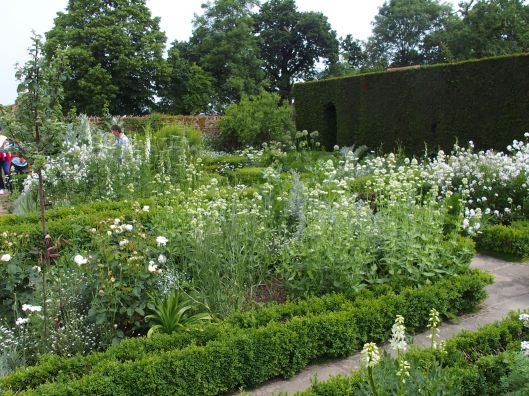
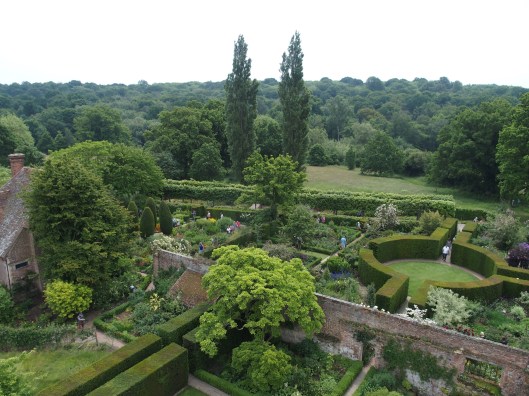
June 11th – Different interests and two cars with drivers took us in different directions today. Ted and Dave headed off to Dover to see some of the WWII memorabilia located there while the other four went off to Sissinghurst Castle Gardens for the day.  The buildings on the site date back to Tudor times and have served many purposes over the years, including a prison for French soldiers, a poor house and a family estate during the Victorian period. In the early 1930s Vita Sackville-West and her husband Harold Nicholson fell in love with the rundown property and purchased it. An interesting couple, to say the least, they designed and constructed extensive gardens throughout the estate. The gardens are designed as rooms separated by brick walls or hedges. Each room has its own distinctive feel or feature.

image.jpeg

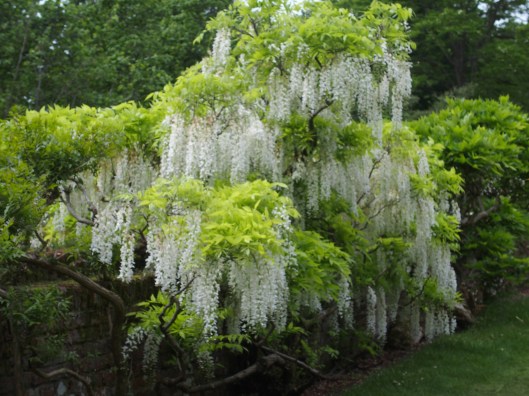
The White Garden Room

Both Harold and Vita were writers and the library contains some 4000 books. Her office was located in the Elizabethan tower from where one can get a full view of the estate. I was really taken by the wonderful use of colour both in monochromatic effect and in combinations.  I also loved the wisteria!

OLYMPUS DIGITAL CAMERA

View from the tower

image.jpeg

OLYMPUS DIGITAL CAMERA

Thanks to the National Trust for renovating and maintaining the gardens as Vita envisaged them. Although members of the family still use the home, it is their hope that some of the residential buildings will be able to be opened in the next year or so for public tours.

The estate also has an extensive vegetable garden, walking trails, a great restaurant and many scheduled activities throughout the year.

Dinner tonight was at the Ship Inn with more stimulating conversation and story-telling.

No visit to the UK would be complete without some discussion of the weather. We have certainly been lucky. Other than the first day we arrived, the rain has been pretty much non-existent. Although daily forecasts often predicted showers, we seemed to be able to avoid them. Most days have been partly sunny/cloudy with temperatures in the 18 to 20* range. A few days reached 23* when the sun was at full strength.

Next stop France where it appears to be non-stop rain this spring.


Lanhydrock

June 8th – Today’s tour was to the Victorian Lanhydrock estate. Joining us were my cousins Marilyn and Peter, from Plymouth. It was fun to see them again so soon after our stay with them last summer. Who knew we’d be back so soon!

OLYMPUS DIGITAL CAMERA

The Bells and the Crabbs

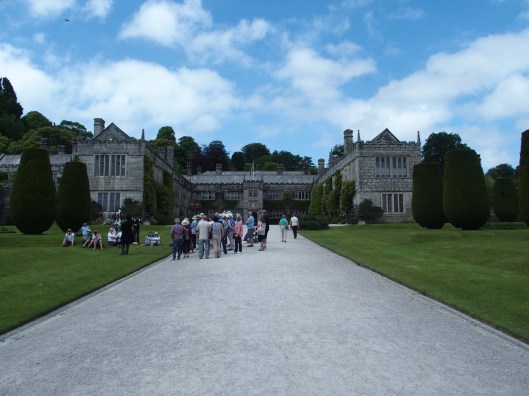
Lanhydrock was the family home of the Agar-Robartes family.  A devastating fire in 1881 destroyed much of the east wing, which was subsequently rebuilt. The home provides a fine example of Victorian family life and once again reflects the devastation that WWI brought to wealthy families. When we arrived a guide was just beginning a brief lecture on the history of the estate, which provided an excellent background for our visit. The house tour was done in three phases as we first broke for lunch and then for a garden tour. Descriptions in the self-guided tour provided interesting information not only on family life but also life below stairs for those who worked for the family. Of interest in the house was the plaster ceiling in the Long Gallery which depicted various bible stories and would have been used as a teaching tool for the children.

OLYMPUS DIGITAL CAMERA

Lanhydrock House

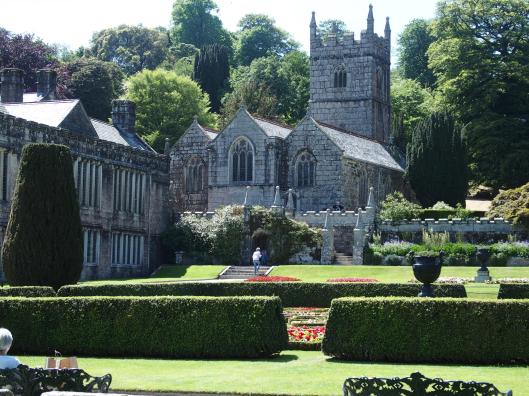
The estate includes the house and gardens as well as the church of St Hydrock, which dates back to the 1500s. There is also an extensive parkland with cycling and walking trails.

OLYMPUS DIGITAL CAMERA

St Hydrock

The garden design is largely as it was in the 1860s with an emphasis on a collection of camellias, rhododendrons and magnolias. A lovely perennial garden, with a fresh water stream, was just beginning to blossom. The guide was excellent and we enjoyed the hour we spent with him. I think this was one of my favourite sites on this vacation.

OLYMPUS DIGITAL CAMERA

The formal garden

Marilyn and Peter joined us back at the house for dinner and conversation. We’re still working on encouraging them to visit Canada sometime soon.

Cotehele

image.jpeg

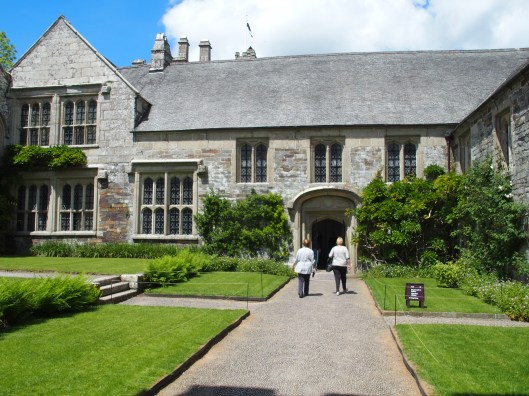
Entrance to the Great Hall

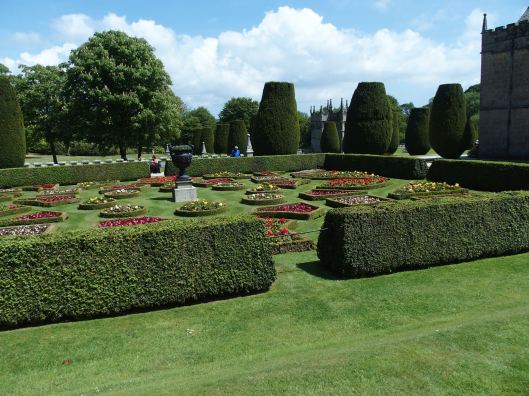
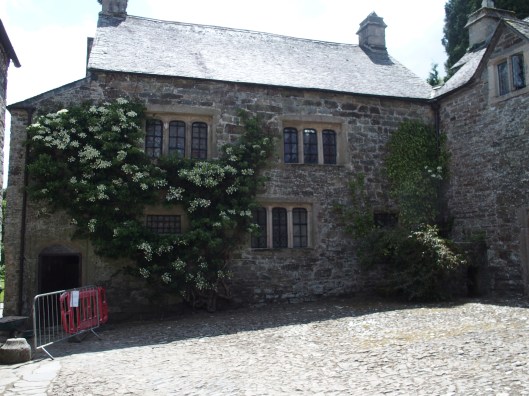
June 7th – Today’s adventure was to Cotehele, the ancestral home of the Edgcumbe family since 1353. In 1947, the 6th Earl of Edgcumbe passed it to the National Trust and it has remained pretty much as it was. The house is medieval with Tudor additions and is one of the least altered Tudor houses in the UK. The property includes a quay, extensive gardens, a chapel and a mill…all currently functioning. Throughout the property there are a number of other outbuildings that indicate other industries and activities that would have been carried out.

The house has an extensive and eclectic collection of tapestries and medieval armour, proof that it really was a play-house for the Edgcumbes. Their main house, Mount Edgcumbe, is just a few miles away and is also open to the public

OLYMPUS DIGITAL CAMERA

A lovely pee-gee hydrangea

We enjoyed touring the house and chatting with the docents in each room. We also enjoyed strolling through the gardens – some of the largest poppies we’ve ever seen.

OLYMPUS DIGITAL CAMERA

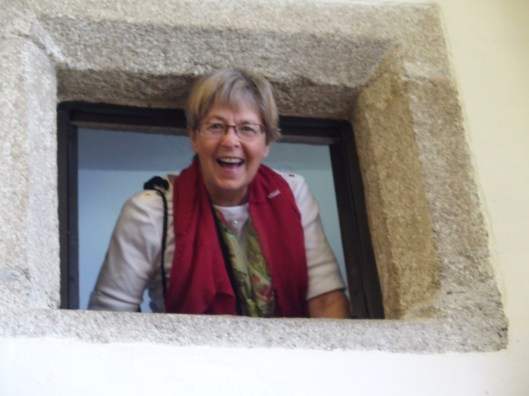
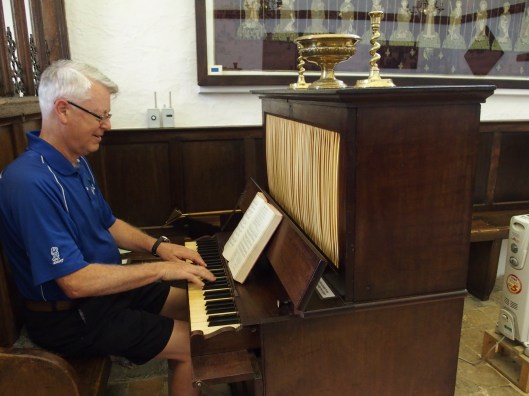
Is that George playing the organ?

OLYMPUS DIGITAL CAMERA

Yep, that’s George!

This was a special treat – to play the organ in the chapel – especially since Jenn played the harpsichord at William Wordsworth’s home on our visit to the Lake District last year.

Dinner tonight was also a special treat! We stopped in Pelynt on the way out this morning to order some lamb for dinner. When we returned, Ron, having raised lambs on his farm, was impressed to see how the butcher had prepared the racks for us. Originally the plan was to BBQ but plan B had to be implemented when the guys discovered that our bag of charcoal had disappeared. The broiler worked just fine, and sides of fresh asparagus, roast Murphies (potatoes), as they’re called in the Hunter family, and tomato salad made for a memorable meal. If you ever want to feel guilty enjoying a lovely lamb dinner, picture this sight with the appropriate sounds out the kitchen window.

image

Around and about

June 4th – Our first day in this area was a time to get our bearings and see some of the places close by. We started out by driving a short distance to Church Farm, a few minutes from Fortescue. There we discovered an organic farm and bought some steaks for dinner. Across the road was a very old church, St Wyllow, which dates back to the 14th century and is where Daphne du Maurier married Frederick Browning. As is quite common in the UK, the church was open; we were able to go in and tour around. The church has some exquisite wood features including carved panelling and bench ends that date back to the 16th century. These have been beautifully restored and preserved.
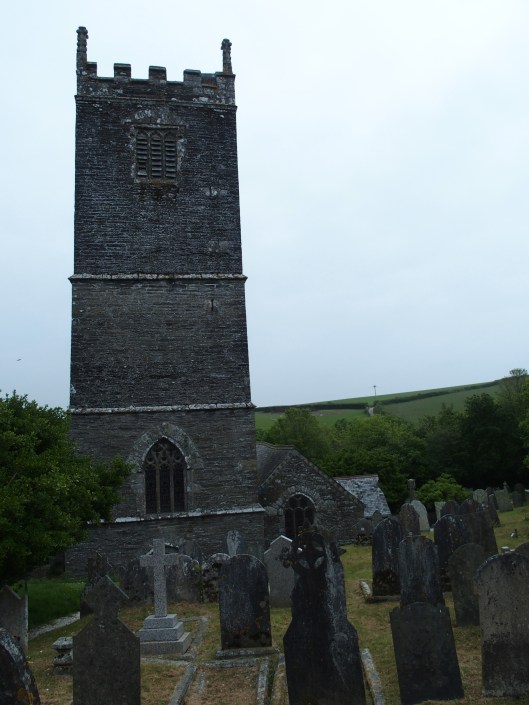
image.jpeg

Church of Saint Wyllow – Lanteglos-by-Fowey

Our next stop was Polruan, about 2 miles from Fortescue, from where one can catch a passenger ferry to Fowey. Polruan is a small fishing village with a main street leading down to the harbour. Like many of these types of villages, the street is very narrow and very steep. After lunch at the local pub we went across to Fowey and took a little walk through town. Our main interest was to do some shopping but the town isn’t big enough to have anything larger than a small deli. Onward to Pelynt where we were able to find a SPAR, a small grocery store that probably couldn’t survive back home.

No trip to Cornwall would be complete without mention of the roads. They are narrow at the best of times and bounded on both sides by large hedgerows which limit the view to what is in front. Any travel requires careful judgement when passing cars coming in the opposite direction and sometimes one or other has to back up to a wide enough spot for both cars to pass. Trucks, buses and farm vehicles just add to the excitement.
OLYMPUS DIGITAL CAMERA

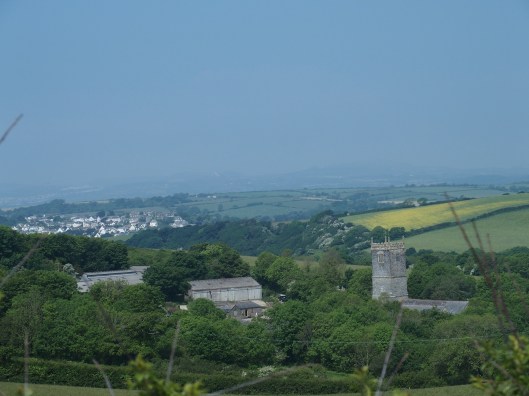
View of Church Farm and Saint Wyllow from the top of our road


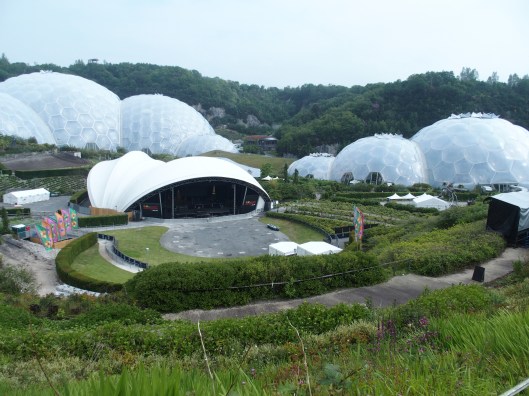
June 5th – One of the recommendations of things to see in this area is the Eden Project. Built in an old clay pit, it is an educational facility exploring how we can work together towards a sustainable future. The site includes many outdoor display gardens, two huge biomes (Rainforest and Mediterranean), sculptures made mostly of garbage, and a facility similar to the Science Centre. We spent two or three hours here including a lovely lunch in the Mediterranean Biome.
OLYMPUS DIGITAL CAMERA

The Eden Project

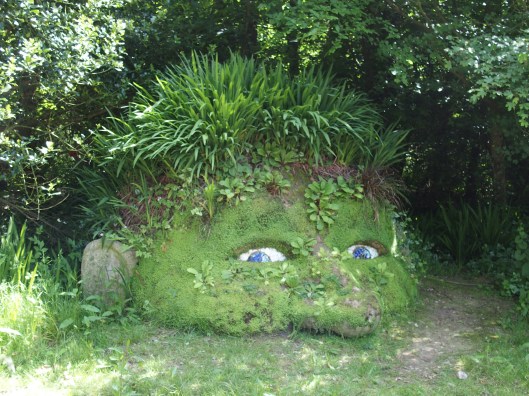
Our next stop for the day was The Lost Gardens of Heligan, which was also quite interesting. They’re called the lost gardens because 25 years ago they were lost under a tangle of weeds. The man who was instrumental in building the Eden Project also played a hand in developing the Lost Gardens.  It appears that the estate began to fall into disrepair at the outbreak of WWI, as many of the estate workers left to fight in the trenches. The estate was never sold, although the house itself was sold in 1970 and split into private apartments.  A hurricane in 1990 did further damage to the property. During some restoration work a tiny room in the corner of the walled garden unlocked the mystery of the gardens as the signatures of the workers who went to war, many of whom never returned, were discovered on the wall in the gardener’s shed. The gardens are now kept in their memory. The gardens cover over 200 acres and include flowers, vegetables, trees, a jungle, large meadows, a working farm and a mill. We particularly enjoyed seeing all the different types of vegetables that they were growing.
OLYMPUS DIGITAL CAMERA

Giant’s Head – The Lost Gardens of Heligan

We returned home via the car ferry from Fowey to Bodinnick, which is a much quicker route home when coming from the southwest. Dinner tonight was steak on the BBQ done to perfection and eaten outside at the picnic table.


June 6th – Sometimes things don’t change too much over the years and today was one of those experiences. We dropped Ron and Heather off in Polperro and then headed southwest towards Land’s End. While I had been there 40 years ago, George had not made it that far south in the UK on any previous trips. Having seen land’s end in a number of different places in the world, he wanted to add this to his list. Other than the large entertainment complex that has been built at the entrance to the facility (built to attract families), not too much has changed in the intervening years since I had my picture taken by the familiar signpost. You do have to pay to stand beside the signpost and buy the picture from the vendor, but as you can see…where there’s a will there’s a way. We took a walk along the path buffeted by strong winds – it’s never a good hair day at Land’s End.

On the way back we stopped quickly at the Telegraph Museum, to pick up some information for a future visit, and then drove through Penzance. It too hasn’t changed in 40 years. I remember walking with my mom and grandparents along the sea wall and then stopping for dinner at a restaurant overlooking the water. We chose not to stop for a meal there today.

One of the best maps of Cornwall is distributed by Cornwall Gold, a Jewellery manufacturer. They have a large workshop and showroom, which we were passing on our way home. We decided to stop there for lunch and investigate their pearl display. A delicious lunch and one pair of pearl earrings later we were off to Fowey to catch the ferry. Oh yes, we also thanked them for their great map!

When we returned, Ron and Heather reported that not much had changed in Polperro since their last visit either.
OLYMPUS DIGITAL CAMERA

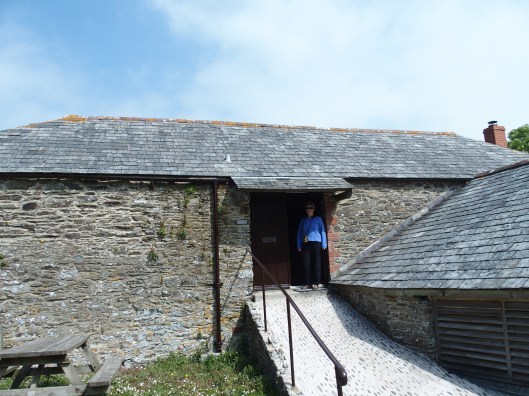
Our home in a converted barn
Onward to Fowey

June 3rd – We left our B&B in Bude about 9:30 this morning headed toward Fowey via Truro. We are amazed at the number of place names duplicated in Canada from the UK. We even found an Edmonton!

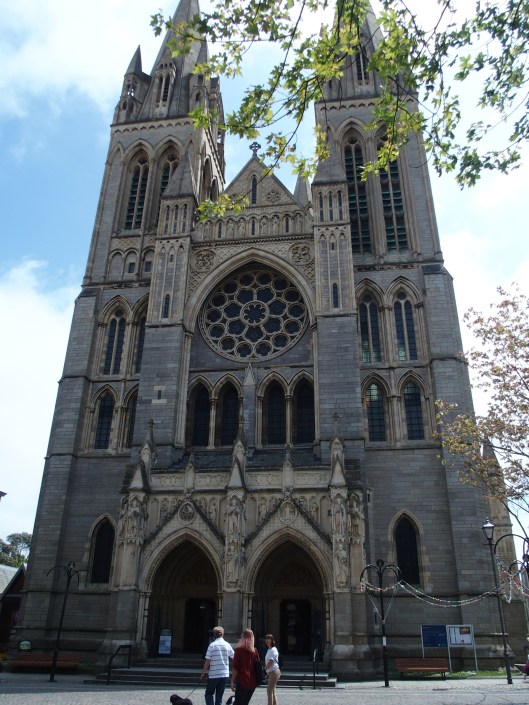
Truro is Cornwall’s only city with a population of about 20,000. Earliest records show a Norman settlement in the area and a castle was built in the 12th century. Truro Cathedral, finished in 1905, is visible from most places in the city. We took a self-guided walking tour of the cathedral and then returned after lunch for a 45-minute organ concert. Unfortunately, the organist from Bath Cathedral was unable to play today. Instead we heard Martin Palmer from the Truro School. He played an excellent concert which included Bach, Harris and Widor. After the concert we wandered through town stopping for a cuppa before heading out to find our rented cottage.

image.jpeg

Truro Cathedral

image.jpeg

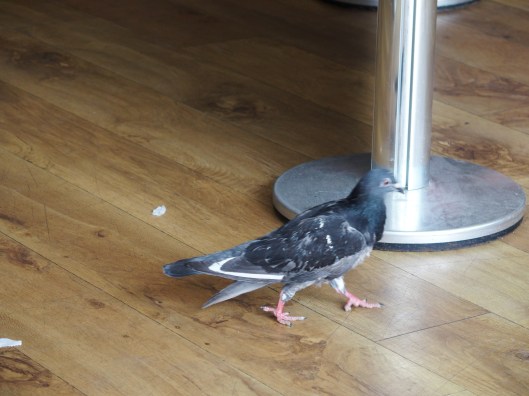
A little bird cleans up the crumbs in our tea shop

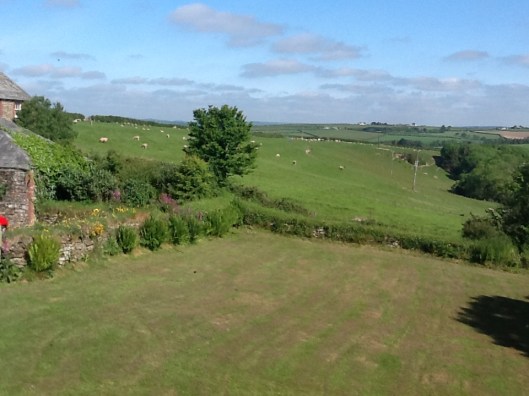
Fortescue is a National Trust Property in a rather remote area close to the sea on the south coast of Cornwall. The nearest town is Fowey. Directions provided were excellent and after stopping for groceries we were able to find the property without any difficulty. It’s a three-bedroom cottage with a fully equipped kitchen. After settling in, Ron made a lovely roast chicken dinner supplemented with a homemade carrot cake bought at the Cathedral Market in Truro. We’re looking forward to exploring this corner of Cornwall and absorbing all the wonderful pastoral views.


Exploring south of Bude

June 3rd – Since much of the lovely coastal scenery is south of Bude, we took off a little earlier this morning and headed to Newquay – one of the larger towns about an hour south. Newquay bills itself as “one of the nation’s favourite seaside towns” and the best family holiday destination. It certainly appeared to be the latter since this is mid-term break in the British schools and the town was a-buzz with families. It was very busy but we did manage to put our car in a car park and take a 90-minute walk around town – particularly up to the headlands from which there was a great view back down towards town and a good vantage point for watching the surfers, although there weren’t too many in the water this morning.

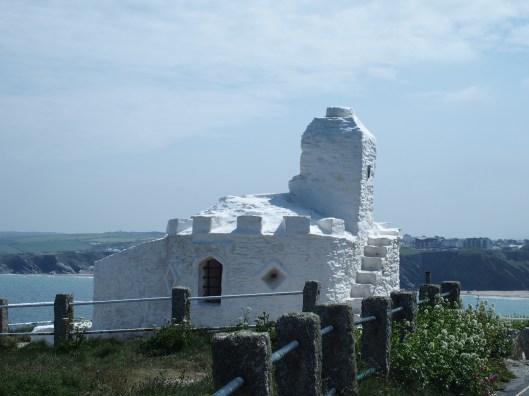
During our walk we discovered a little building called the Huer’s Hut. The present building has been there since the mid-19th century; however, it is believed that the history goes back as far as the 14th century. Tradition has it that the Huer would use the hut as a base from which he could spot shoals of fish, likely pilchards, at which point he would sound his horn. This in turn would set off a hue and cry amongst the town residents for the fishermen to launch their boats. The Huer would guide them in to where the fish were and they would use long nets to catch the fish. I wonder if this was the origin of the phrase “a hue and cry.”

OLYMPUS DIGITAL CAMERA

Huer’s Hut

After we left Newquay, we headed back north towards Padstow making a quick stop to check out the Bedruthan Steps.  The name is said to have been taken from a mythological giant called Bedruthan who used the rocks (stacks) on the beach as stepping stones. Perhaps it was a late 19th century invention for Victorian tourists. Some think the name likely referred to one of two cliff staircases used by miners to get to the mine workings but now refers to the whole beach. Each of the five stacks has a name. Further along we stopped at a little pub for lunch.

Having heard that Padstow was crazy busy because of the school break, we decided to avoid it and head north along the coast stopping at some of the small towns and villages along the way. We parked and walked through Chapel Amble (5 minutes!) which had a pub, a post office, a church (closed) and a few residences. The village dates back to at least 1373. It gained some notoriety in 2002 after a local farmer’s death was reported in the national press. The farmer was also a newspaper reporter.

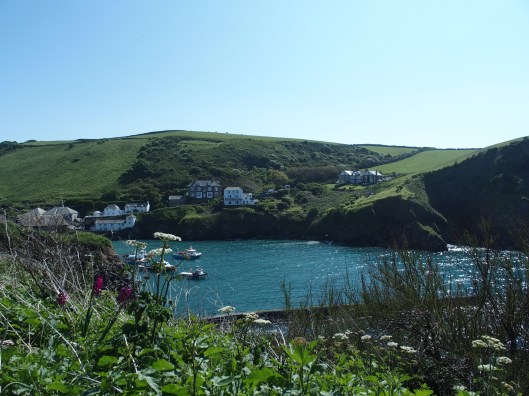
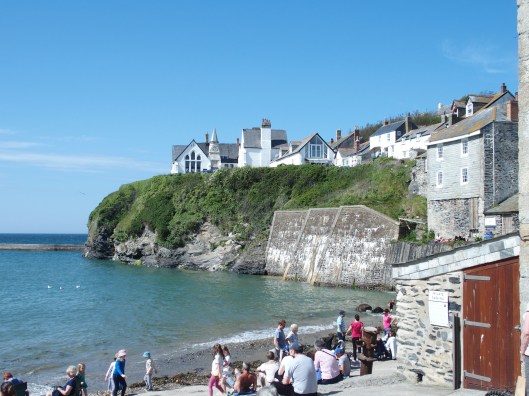
Our next stop was Port Isaac, scene of the filming of Doc Martin, an ITV series that we have been watching.  It is also the home of the Fisherman’s Friends, a group of sea-shanty singers that perform throughout the area. The pier was built during Henry VIII’s time but the actual village centre dates from the 18th and 19th centuries and has over 90 listed buildings. It’s still a working fishing port bringing in fish, crab and lobster catches.

OLYMPUS DIGITAL CAMERA

Port Isaac


OLYMPUS DIGITAL CAMERA

Port Isaac Harbour

We drove through Tintagel, a village inextricably linked with King Arthur and the site of castle ruins around which the legend has been built. Given that it was late in the day, we chose not to stop for a visit. Boscastle was our next stop. The harbour at Boscastle is a natural inlet with two harbour walls built in 1584. In 2004 the town experienced a devastating flood which washed some 1000 cars out to sea and demolished about 90 buildings. Fortunately, no lives were lost. The restoration maintains the old stone features of the village but with a slightly more modern look. The walkway on either side of the harbour includes small shops, the visitors centre and a youth hostel.

Our next stop was at a restaurant in Widemouth Bay, called Elements, which had been recommended by Brian at our B&B. Unfortunately, because of our timing we hadn’t asked him to make a reservation and we were unable to get in. We also attempted the Beach Hotel restaurants in town but the traffic was horrendous and there was no parking. We decided our best choice was a little local pub in Poughill which we had passed many times on our way in and out of town. Good choice! Lamb ragu and roast lamb were the selections of the night.