The serendipity of travel

Nov 14th – 16th – The drive from Dunedin to Oamaru is fairly short so we had the advantage of a leisurely drive, stopping along the way. We took the scenic route, when available, and while the scenery wasn’t as exceptional as it is on the west coast, there were a number of lovely views along the coast.

imageOur main stop was to see the Moeraki Boulders. These are huge marble-like boulders that are stranded, in a way, along the beach. It would appear at first blush that they were washed up from the ocean, but in fact scientists believe that they were formed millions of years ago on the sea floor by a layering process similar to the formation of oyster pearls. The seabed was then uplifted to form coastal cliffs that have eroded over time to allow the boulders to tumble down on to the beach. It was quite a sight but given the cold on-shore breeze, we didn’t hang around too long. A coffee and hot chocolate in the cafe helped us on our way.

We arrived in Oamaru just at lunch time, so we headed to the Whitestone Cheese factory for lunch. We shared a lovely cheese tray with eight different types of cheese. Our favourites were the smoked cheese and the semi-soft cheddar, which we purchased for future lunches.

After checking into our hotel, we headed off to the iSite to see what was happening in town and this is where the serendipity part of travelling comes in. It turned out that the two days we were in town was the first two days of their annual Victorian Fete. Oamaru is renowned for its attractive townscape and gardens and an intact Victorian precinct and harbour. Hundreds of people descend on the town to celebrate all things Victorian complete with period costumes.
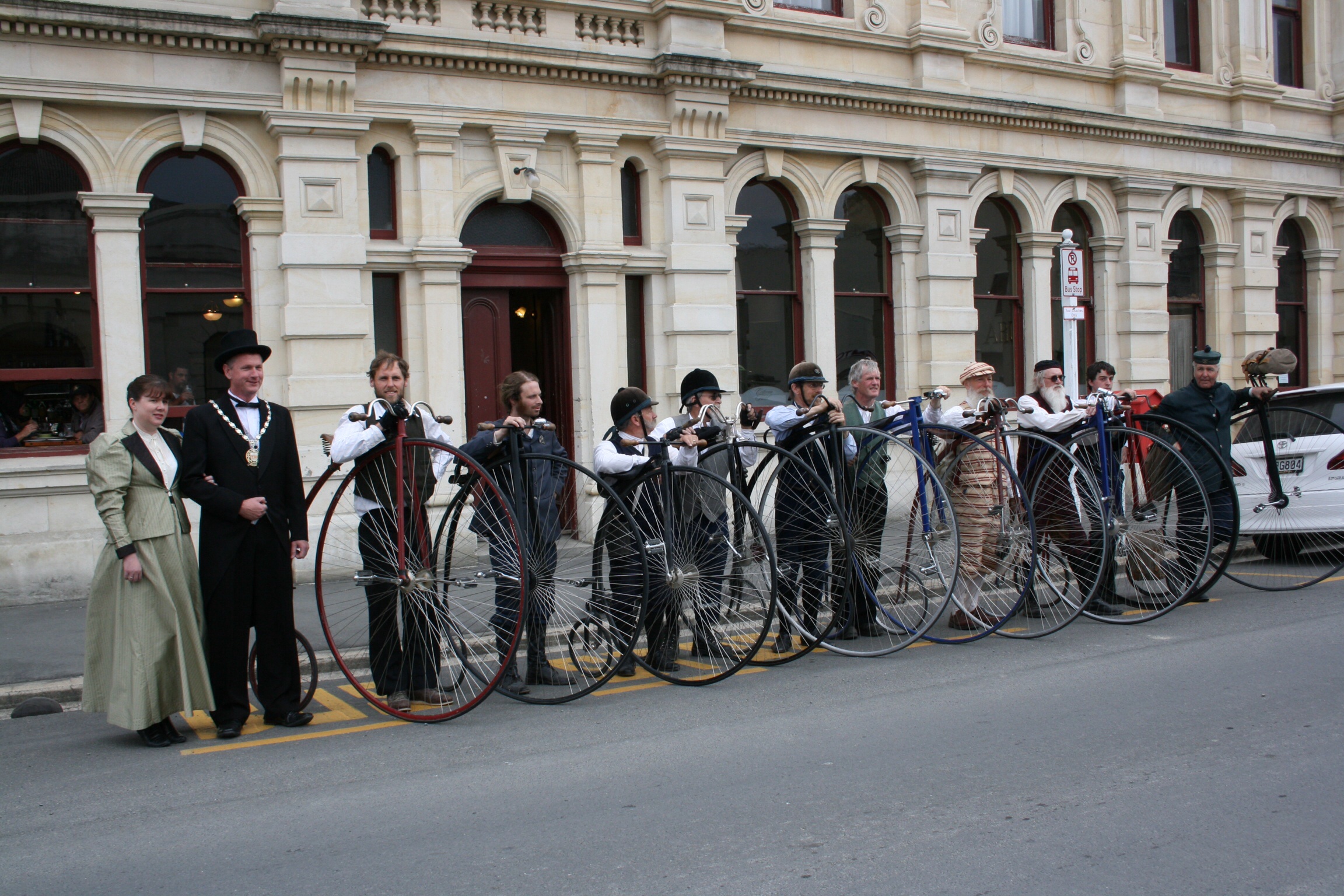
imageOur first event was the arrival of the penny farthing bicycle riders. This was a group of guys (and gals on regular bikes) who had made the 350km trek from Mt Cook to Oamaru over the past week. Since the trek is only partially finished and is mostly gravel surface, it must have been quite a body-bruising experience. Prizes were awarded and then the Mayor officially opened the festival. We then went to the local theatre for an evening of Edwardian entertainment, which included two one-act period plays plus a short musical interlude (audience participation required).

in the morning we took a guided walking tour of the precinct and other notable buildings. The historical society and local council have really worked hard to maintain many of the old buildings. It was interesting to hear some of the struggles they are now having because of new earthquake-related building requirements. Over lunch, we attended a classical concert at St Paul’s church. It included selections both vocal and instrumental. George was happy to see a euphonium in concert and we heard probably the best rendition of The Holy City since Vic Atherton sang it in the Lakeshore Inter-Church Male Choir (or Don Tofflemire in the Calvary Baptist Church choir).
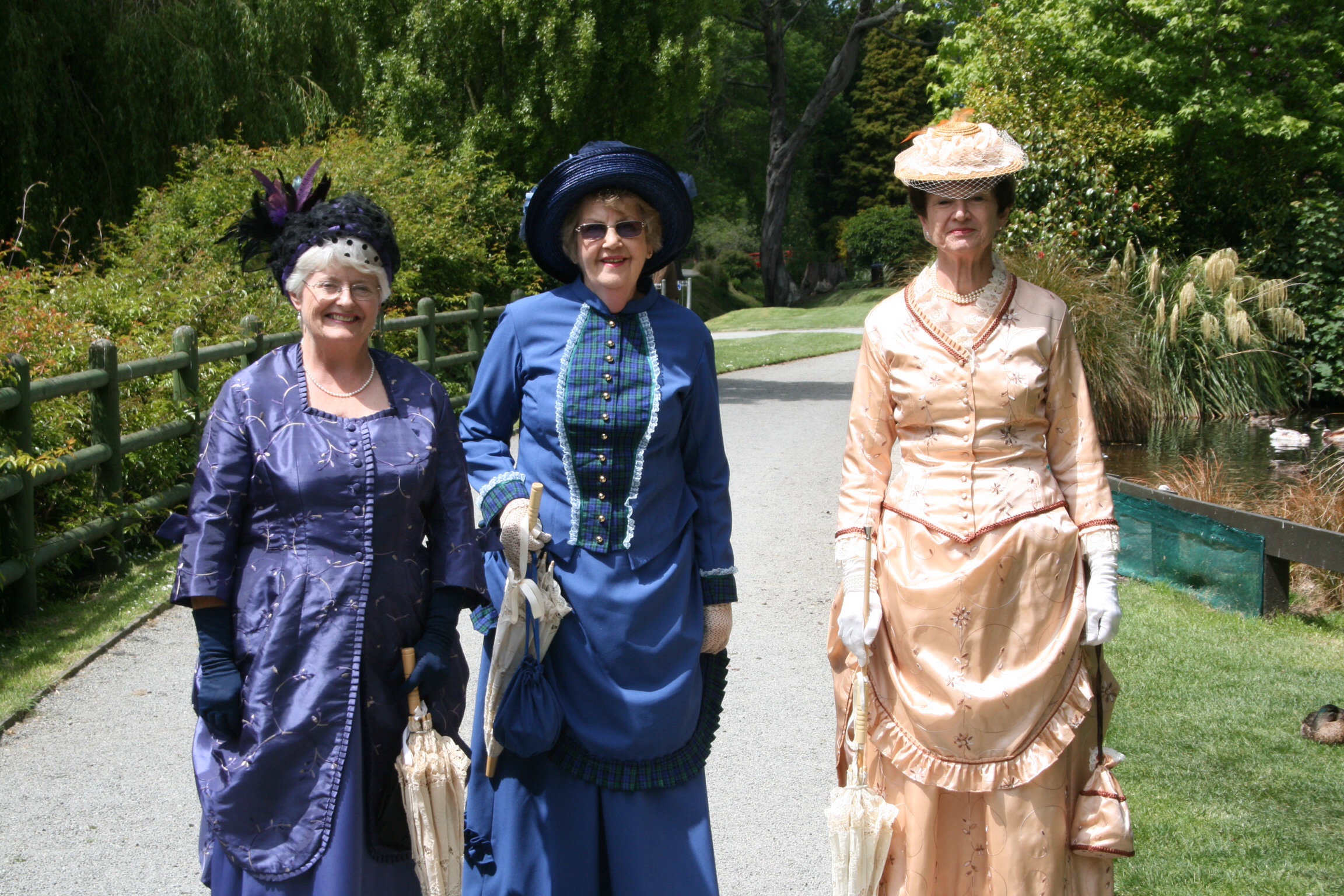
imageOur afternoon’s entertainment was a Victorian garden party at the Public Gardens complete with tea, sandwiches and scones. A barbershop quarter provided entertainment typical of the period. They also had a croquet game set up on the lawn, so George and I tried our hand at that. It is a game still played in many small towns here in New Zealand. After the party, we went back down to the precinct for a bit of shopping therapy. You’ll have to visit to see our major purchase – a lasting memory of a wonderful trip.

This turned out to be the most fun stop along our way!
Dunedin….leave it to the Scots

Nov 12th – 14th – Our trip from Te Anau to Dunedin was fairly boring when compared to all the lovely places we’ve been. The landscape could best be described as relatively flat pasture land with large farming operations of sheep and cattle. We passed through lots of little hamlets and stopped in the town of Gore for lunch. Our afternoon stop was in Balclutha to tour their museum. It was absolutely packed to the rafters with stuff and the curator was quite a character in his own right. The biggest story in the museum was about Amy Bock, who impersonated a male and married her land lady’s daughter. She was found out three days later and charged! How interesting to find a Bell & Co organ made in Guelph in the museum – originally installed in St. Mary’s church.

About 4pm we arrived in Dunedin, found our B&B (up a very steep hill) and made plans for our stay here. The B&B is an Art Deco style house built in the 1930s for a ship’s captain. The owner, Joyce, is a nurse who has lived/travelled all around the world prior to raising her twenty-year-old son as a single mom. She is quite eccentric,  and the house is chock full of various collections (mirrors, plates, buttons, zipper pulls, ceramic cats, art, etc., etc.). I’d say it’s a dusting nightmare. Three years ago a widower, Dave, stayed there for three weeks while his son was in hospital and a relationship developed. They married last year.

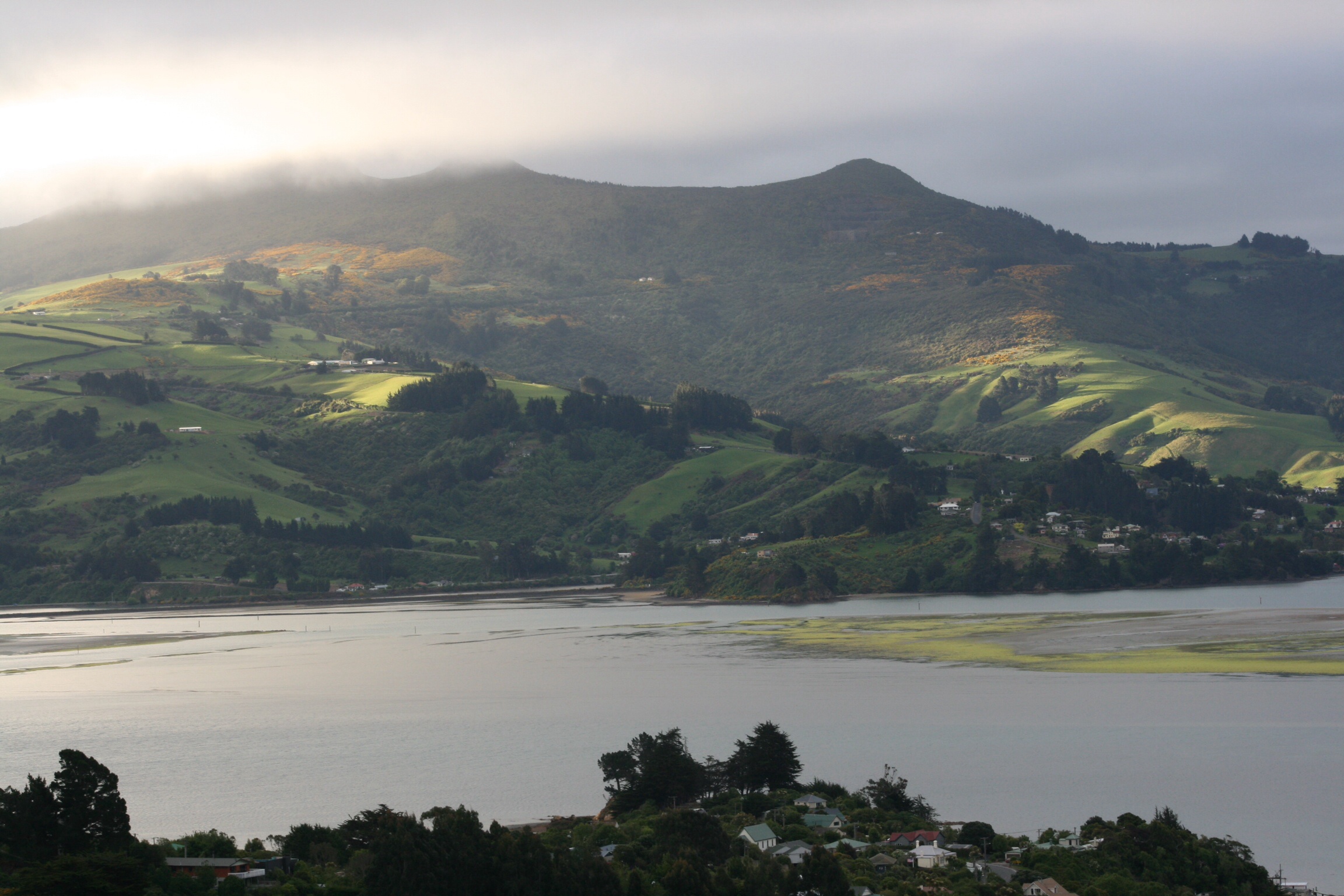
imageAfter settling in, we decided to take a drive out the Otago Peninsula, where there is a penguin colony and the world’s only mainland breeding colony of Royal Albatross. Since the Albatross are not viewable at this time of year and we have seen the penguins in Australia, we decided not to pay the rather steep fee to tour the site…besides which, it was downright cold out there! On the way back we stopped at a pub and had Blue Cod, a local fish, for dinner. The picture is looking back towards Dunedin as the sun sets behind the mountain.

Wednesday morning we drove downtown and took a two-hour bus tour of the city. We certainly learned a lot:

  • The city was settled in 1844 by a group of Scots, who wanted to establish a free church
  • Dunedin is the Gaelic name for Edinburgh
  • Originally, the plan was to lay out the city in the same way as Edinburgh, but when they got here, the topography was very different so changes had to be made
  • Dunedin is the fifth largest city in New Zealand and the University of Otago accounts for 25 percent of the city’s economy
  • Otago was the first university in the world to admit women
  • New Zealand was the first country to give women the vote
  • Dunedin is home to the steepest street in the world with a grade of 35 percent

imageAfter the tour we paid a visit to the Botanic Gardens, the first in New Zealand and the first to employ women gardeners. The rhodos were just about finished and the roses were struggling with aphids but it was pleasant nonetheless.

Joyce and Dave invited us to a BBQ they were hosting. We accepted the invitation and spent a few pleasant hours enjoying food, wine and conversation on the deck until the sun started to dip behind the mountain and it got too cool.

No doubt….truly stunning!

Nov 10th & 11th – We arrived in Te Anau after a somewhat long drive from Queenstown. We had packed a picnic lunch but ended up eating our sandwich in the car since it started to rain just as we got set to have lunch. Fortunately that was the only rain we saw. Scenery along this route was quite different than what we had seen previously. There are very few trees in this area but large tussocks of red grass dot the landscape. Te Anau is a relatively small town, mostly geared to those who are travelling on to Milford Sound or Doubtful Sound.

After discussion with many folk along the way, we decided to take the trip to Doubtful Sound. Milford is much better known, of course, but requires a two hour road trip to get there and then the boat ride is only an hour long, following which you have a two hour bus trip back again. The Doubtful trip is a full day trip with additional options. Weather also plays into the consideration since the Milford trip is cancelled much more often than the Doubtful trip because of poor weather.

Weather turned out not to be an issue since the day dawned cool but sunny. The crew said it was the best day in the past three weeks. We were picked up at our B&B and driven out to Lake Manapouri where we boarded our first boat. After arriving on the other side we boarded another bus and were driven down through a 2km long tunnel to see the hydro electric power plant 200 metres below the lake surface. It was quite an interesting story of engineering feats that required 1800 workers and eight years to complete. A road had to be specially built to move all the construction equipment and the power station equipment, which arrived by barge from the mainland. After the tour we travelled on this road to Deep Cove where we boarded the boat to tour Doubtful Sound.

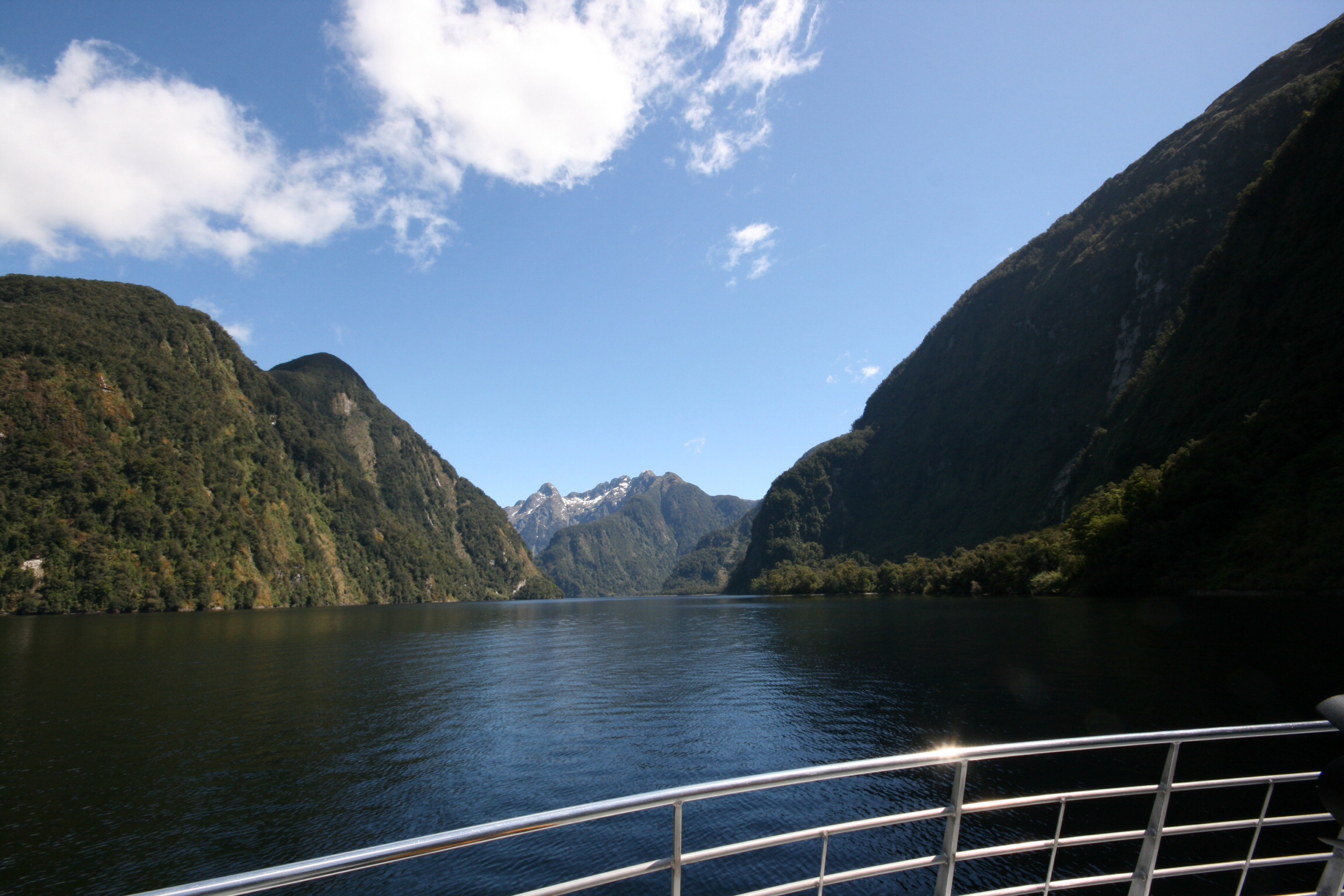
ImageThe scenery was very typical of fiords with sheer cliffs on both sides, waterfalls galore, inlets (called arms) that go off the main channel, and then eventually access to the sea. While we were travelling out to the Tasman Sea, we found a pod of dolphins that enjoy the slightly warmer water of the fiord. The morning boat tour saw humpback whales out in the sea, but we weren’t so lucky. We did, however, see a seal colony and then on the way back in two New Zealand crested penguins paid a visit. In one of the arms, our boat pulled right up under a rock ledge and we were able to fill a cup with “99.9 percent pure” water dripping off the ledge.

It was a great day but we were pretty tired when we finally got back to our B&B about 6:30pm. We invited a Swiss lady, from our B&B, who is travelling alone to join us at the local pizzeria for dinner and then chatted with our hosts and other guests until bed time. Cliff, our host, was an international rower and umpire – we enjoyed his many stories.

Farm country

Nov 7th – 10th – Our stay in Queenstown has been relaxing and refreshing. Being in one place for three days has certainly helped us live life at a more normal pace.

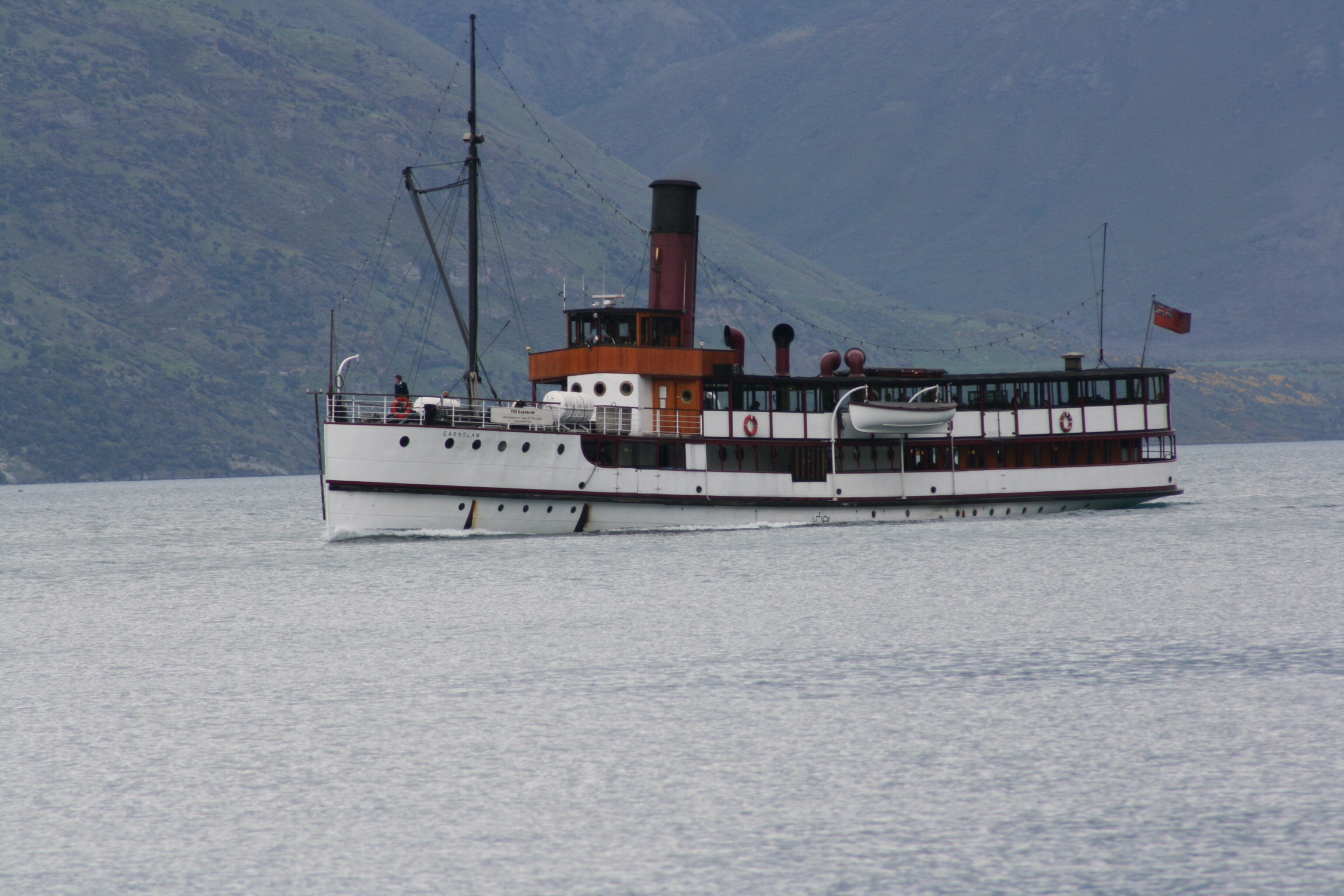
imageOn our first day here we took a guided boat tour on the TSS Earnslaw to Walter Peak High Country Farm. The boat is a period steam boat still working with the original motors. You can even watch the men stoking the four coal furnaces. Once at the farm we were given a tour by Russell, a recent university graduate. He told me he grew up on a farm that has been in his family for over 140 years and that he has just graduated from a rural accounting program at university. He said he is either an accountant in gumboots or a farmer in a suit…he hasn’t figured out which. He certainly is enjoying his summer job. He introduced us to deer farming, which is very popular, in addition to sheep and cattle.

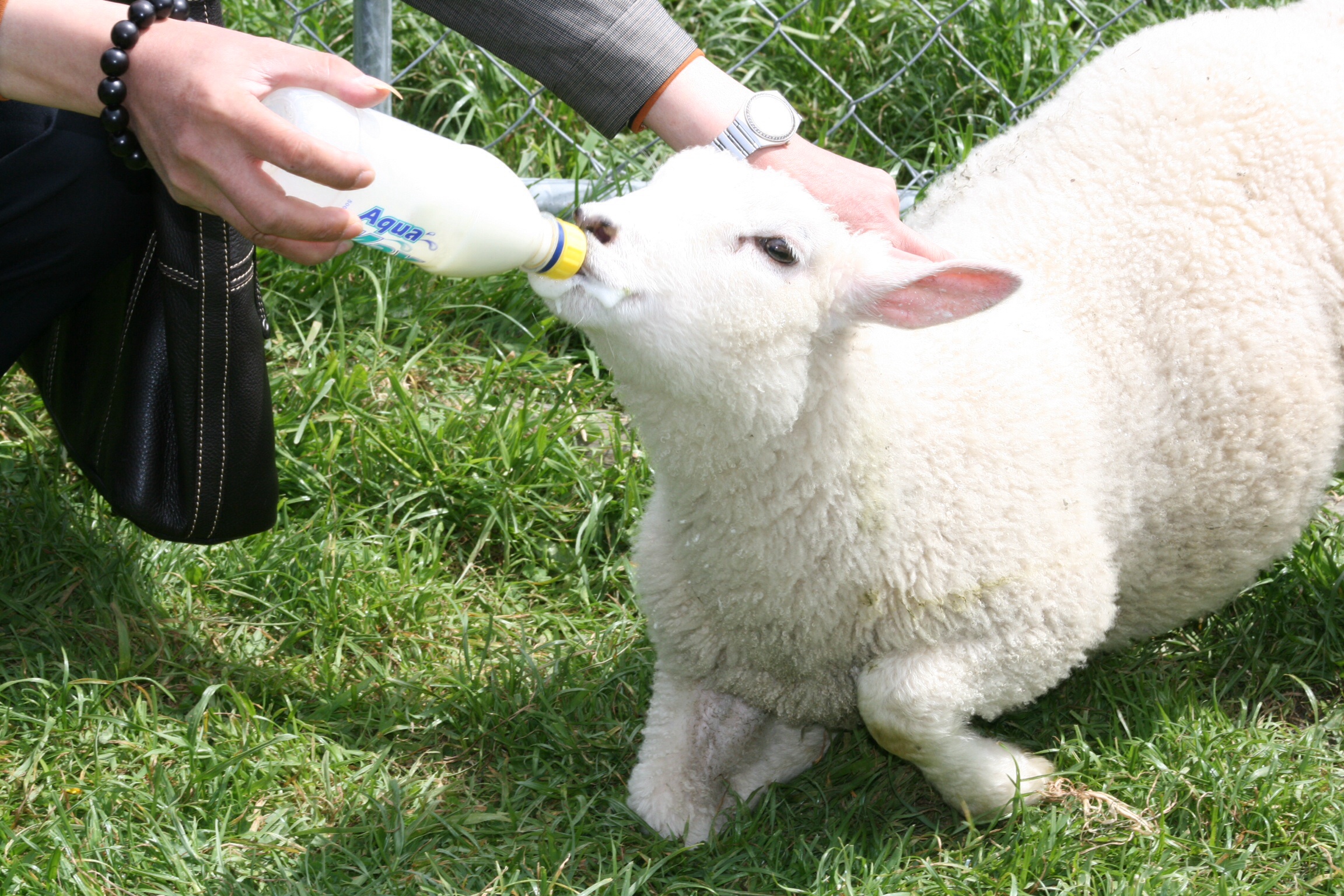
image A large group of Chinese folk were on our tour and were quite excited by all the animals. Even though China is the largest sheep farming nation, most Chinese who travel have never seen them live since they live in the cities. Chinese farmers, of course, are poor and can’t afford to travel. Russell also demonstrated how his dog Bess, herds the sheep with either voice or whistle commands. A sheep dog can cost anywhere from $6,000 to $12,000 but are invaluable in the type of work they can accomplish. He also demonstrated how to shear the sheep ensuring that the fleece remains in one piece so that the sorters can tell which part of the sheep the various wool came from. Some parts are evidently more valuable than others. Afternoon tea on the patio provided for a nice ending to the afternoon.

imageYesterday we took a drive up the lake to Glenorchy, a small town at the head of the lake. It was a bit remote and overrated but the scenery along the way was worth the drive. We stopped for lunch at the cafe in Glenorchy, which had been recommended in the guide book. Later we out the other way to see the bungy jumping. You may remember that this is where it all began 25 years ago, so it is an obligatory photo stop even if you aren’t daring enough to take the plunge. Dinner was leftovers from the night before back in our room.

This morning we tried to worship with the folks at Queenstown Baptist Church but couldn’t find them at the address on their website. They must have either moved or closed. Do we get brownie points for trying, at least?

Up and over

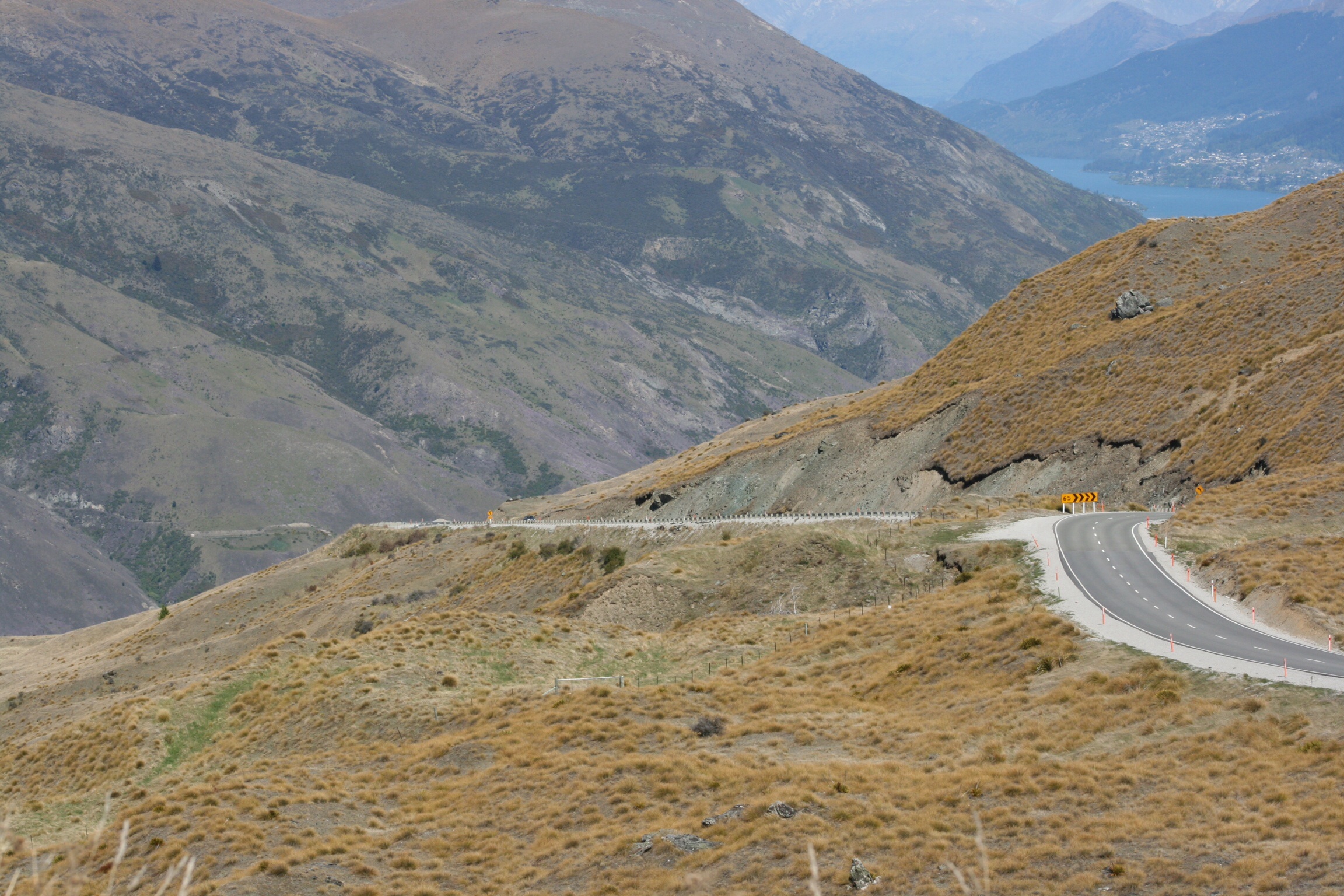
imageNov 7th – Our trip today from Wanaka to Queenstown was relatively short but a mountain range stood in our way. There are two ways to go: the longer route around the range or the shorter route up the Crown Range Road. This road is the highest in NZ at over 3300′ and needless to say has many twisting and turning sections. It actually wasn’t too bad until just at the end when there are about 8 or 9 hairpin turns to get down to the valley floor. The views along the way of the southern alps of course were stunning.

imageBefore arriving at Queenstown we stopped at Arrowtown and had a picnic in the park. I’m sure George and Jenn visited here since there are many Lord of the Rings sites close by. It too was a gold mining town and much of the main street has been preserved. They have also set aside an area down by the river flats which used to be Chinatown. During the gold rush many men from China came over to make their fortune but it was a hard life living away from family and being ostracized by society.

Queenstown is a very busy city but there isn’t much there other than for the tourists. They have developed a specialty for biking and so there were lots of young people in town here too. Our hotel is out on the other side of the lake so it is quite quiet and peaceful. Our room is a self-contained unit so we will probably eat in some of the time. The hotel has, for a fee, unlimited internet access so our first order of business was to watch the CBC news!

Look up…waaaay up

Nov 5th – One doesn’t stop at Franz Josef without checking out the glaciers of which there are two major ones in the area. The Franz Josef glacier is 12 km long and the Fox glacier is 13 km long. Similar to the Columbia Icefields in Canada, you can’t really do them justice by just looking at them from below.

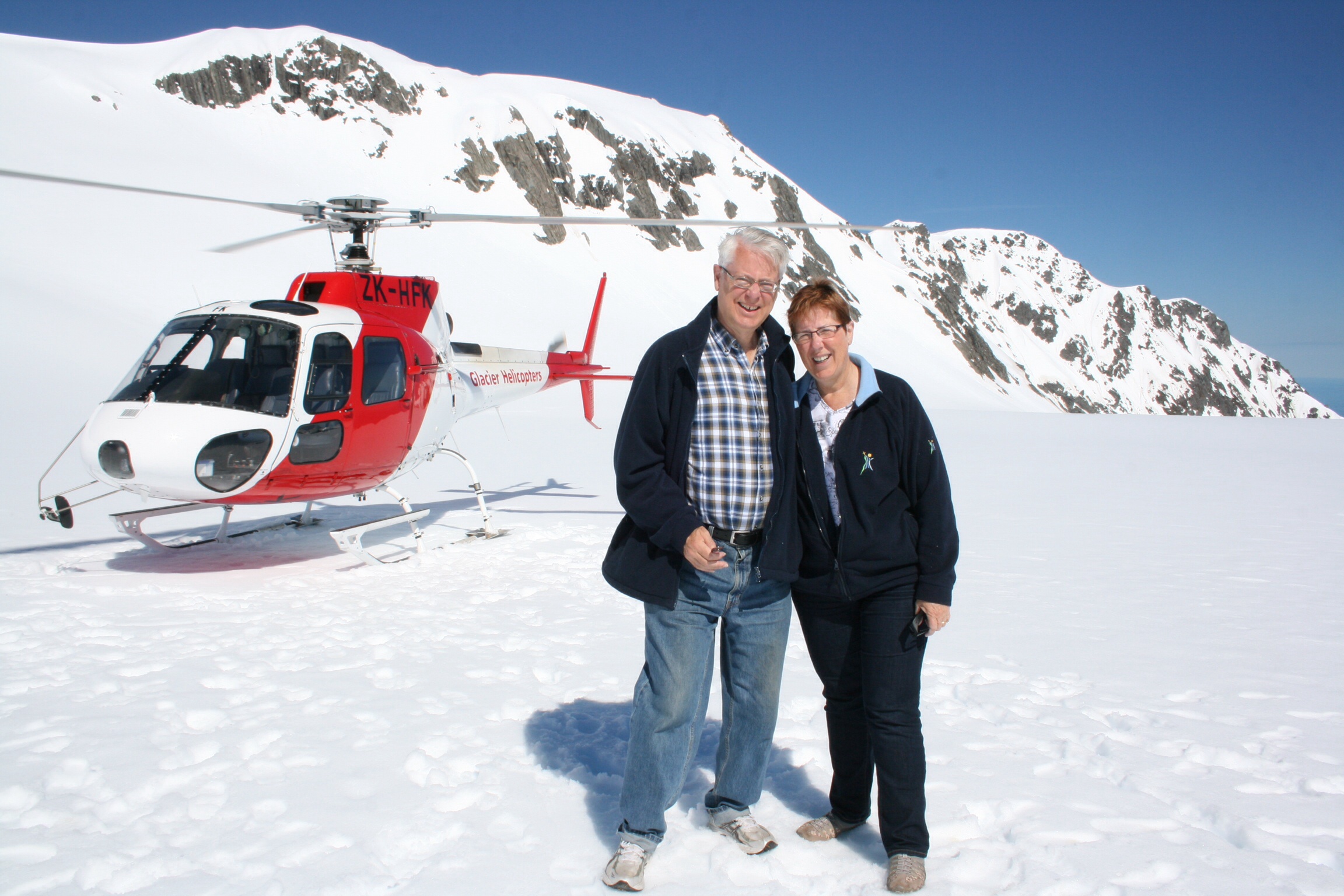
imageSo….up we went! In a helicopter with four other people. We sort of lucked out because our flight was only supposed to be 20 minutes to one of the glaciers and back but they put us on the wrong copter so we got the 30 minute trip to see both glaciers. It was a very sunny day and was actually quite warm up there. Where we landed, we were 3000+ feet up and the ice was 150+ feet thick below us.

image

We were quite concerned about our trip from Franz Josef to Wanaka because we had to go through the Haast Pass, which is where a major landslide two months ago killed a Canadian couple. In the end it wasn’t that bad and there wasn’t much of a tie-up where they are repairing the road. George read in the paper that the repair work of the past two months has already cost $2M and is expected to last until April.  Living and working in mountainous territory comes with its own challenges.

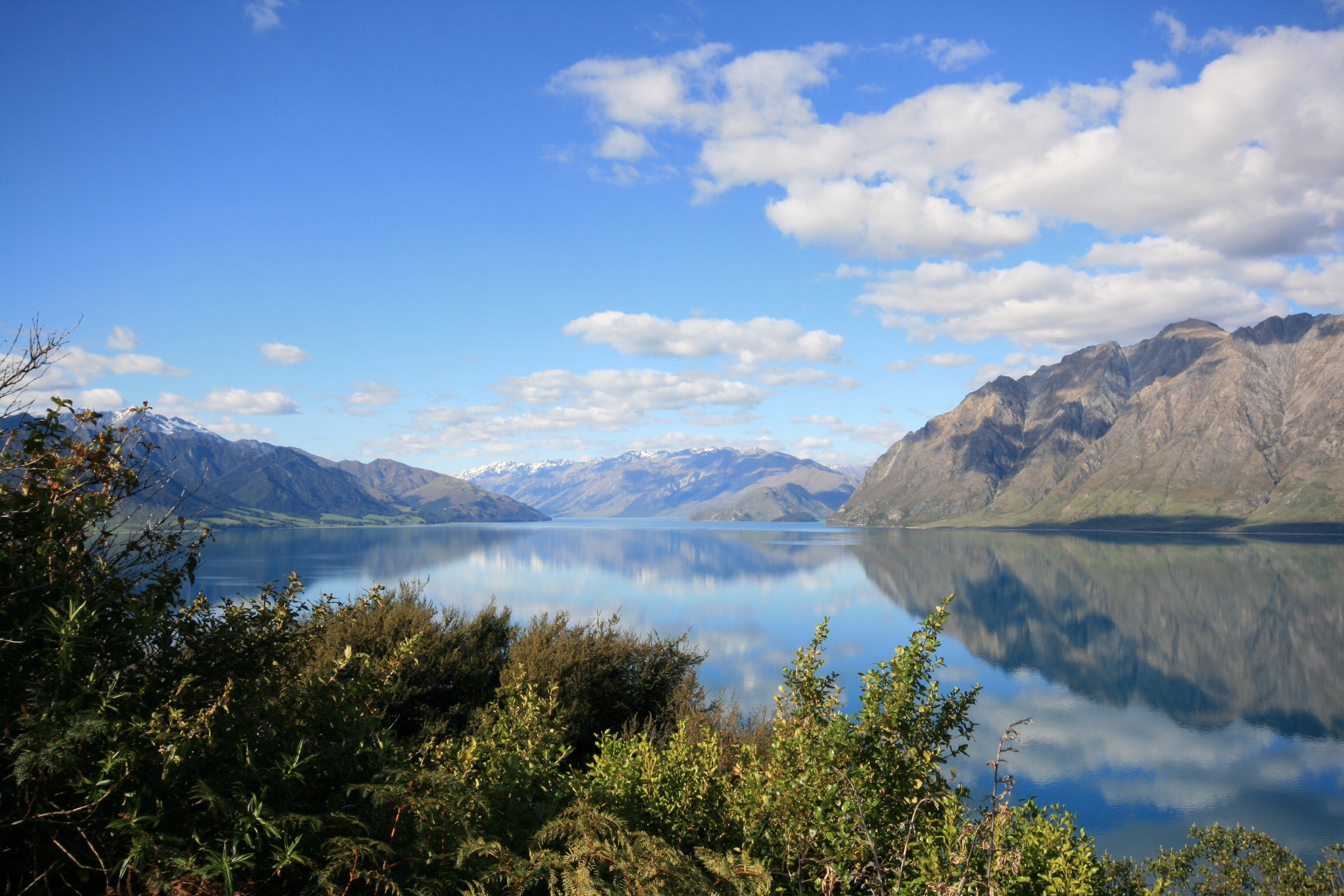
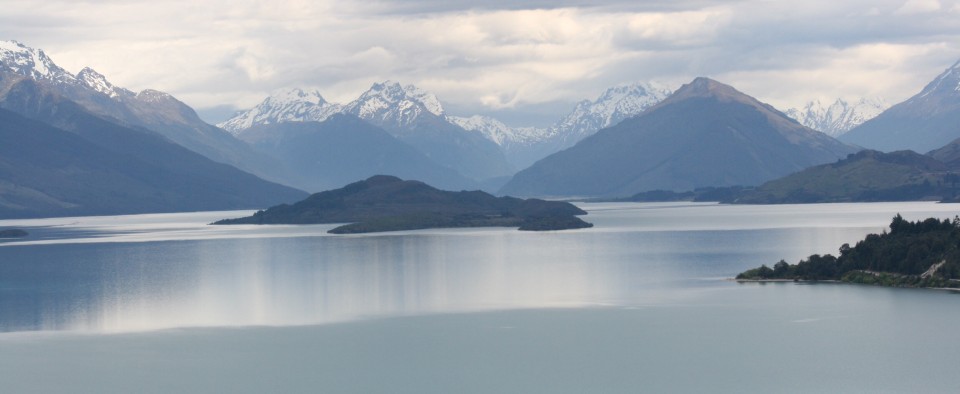
imageThe drive through to Wanaka was beautiful as we felt like we were driving through the Rockies. Lovely mountain vistas reflected in the lakes with snow peaked mountains in the background. Wanaka is a holiday town at the end of one of the lakes. Dinner was at an outdoor cafe down by the lake…a somewhat idyllic end to a perfect day.

Down the west coast

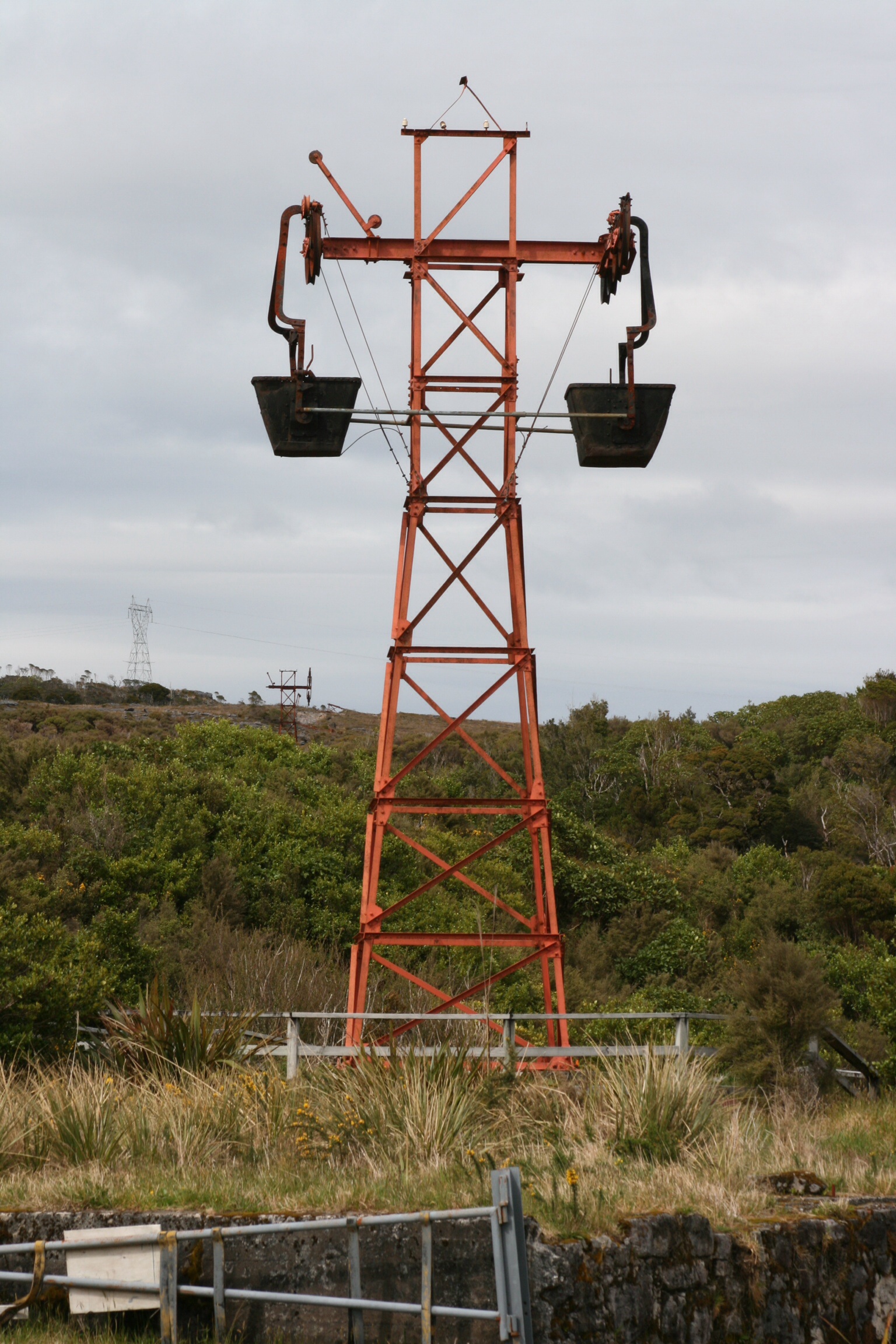
imageNov 5th – Today was another long journey, so once again we broke it up with interesting stops along the way. We began with a trip up a very winding mountain road to the site of the old Denniston Coal Mine. Through a number of different story boards the life and times of miners was told through the years that the mine operated. In the 1870s most of the miners came from Britain. Life at the mines was very hard due to isolation, horrible working conditions, and rudimentary mining practices. Things improved with the advent of electricity, the building of a road up the mountain, and better working conditions. As the demand for coal waned the mine finally closed in 1967 but friends of the mine have continued to tell the story through the museum and tours. If you want to read more check out http://www.dennistonmineexperience.co.nz.

We then moved on to Cape Foulwinds to see the seal colony. There were quite a few frolicking in the sea and lying on the rocks. We could say they were sunning themselves but there was no sun!

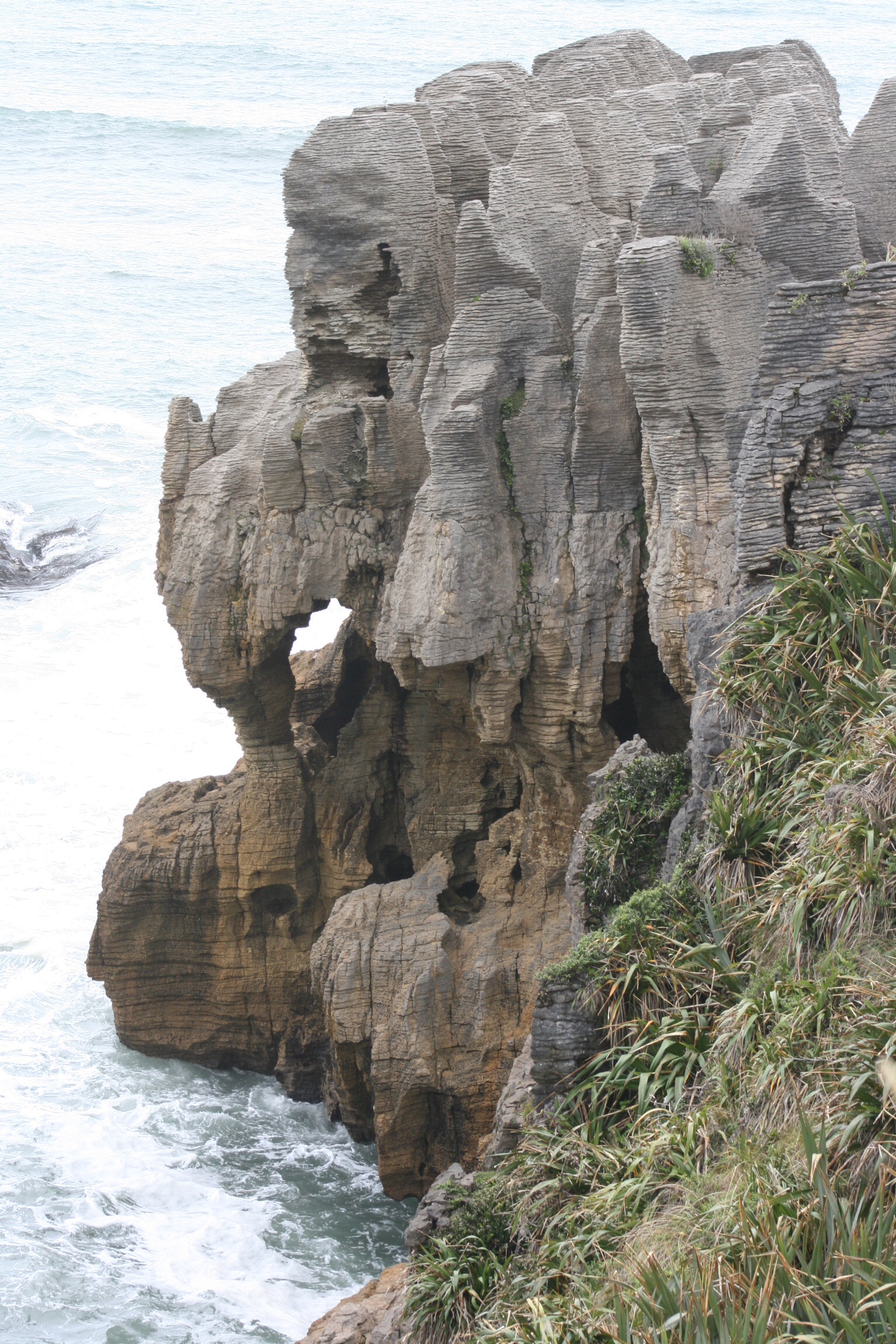
imageA little further along the road we stopped at Punakaiki to see the Pancake Rocks and Blow Holes. Scientists aren’t sure what has led to these unique rock formations but they really are quite a sight. We were fortunate to arrive around high tide, which makes the blow holes active as the water rushing in is pushed through holes in the rock causing large vertical sprays and lots of noise.

Our last stop for the day was Okarito, a lagoon just northwest of Franz Josef.  It is the largest unmodified wetland in NZ and is the pride of the very few people who live there. Great care is taken to keep it in pristine condition.

Our stop for the night was at the Rainforest Retreat in Franz Josef. What a happening place. The town is a mecca for extreme sports so young people are everywhere. The Rainforest Retreat provides accommodation of every type imaginable and there was a large indoor cooking area where many of the kids were preparing and cooking their dinner. I don’t think we’ve ever been to a place like that.

Swinging in the wind

Nov 4th – It was a long drive from Kaiteriteri to Westport so we tried to break it up with a few interesting stops along the way. We have occasionally seen the odd hitchhiker along the road but in Richmond we saw a guy with a refrigerator waiting for a ride. It was some kind of fundraiser and presumably the frig had been stripped so it wasn’t too heavy. He was on the side of the road when we went in to get gas but he wasn’t there when we came back, so he must have gotten picked up by some kind soul.

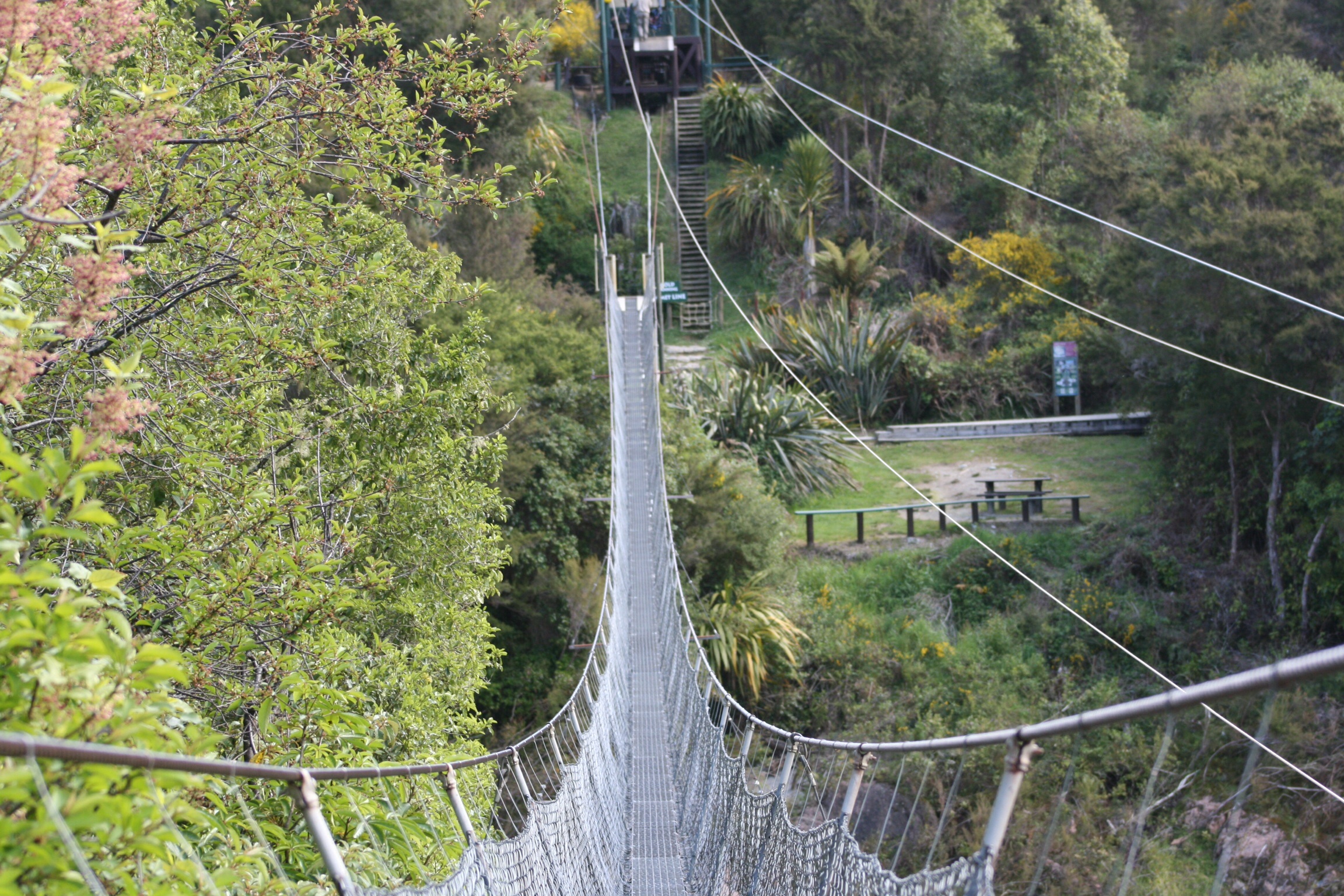
ImageMid-afternoon we stopped at the Buller Gorge Heritage Park. To get into the park you have to traverse NZ’s longest swingbridge, which didn’t seem to pose too much of a problem for either of us fortunately.  This is an area that was part of the gold rush in the 1860s and so part of the experience is an interpretive trail that tells the story of gold mining in the area.  While we were to hear more about the importance of gold mining in the development of the west coast later in our trip, this was our first experience. This area also was the epicentre of a 7.8 earthquake in 1929. The fault line runs through the Park, so we were also able to see the lasting results of earth being heaved 4.5 metres upward on one side of the fault line.

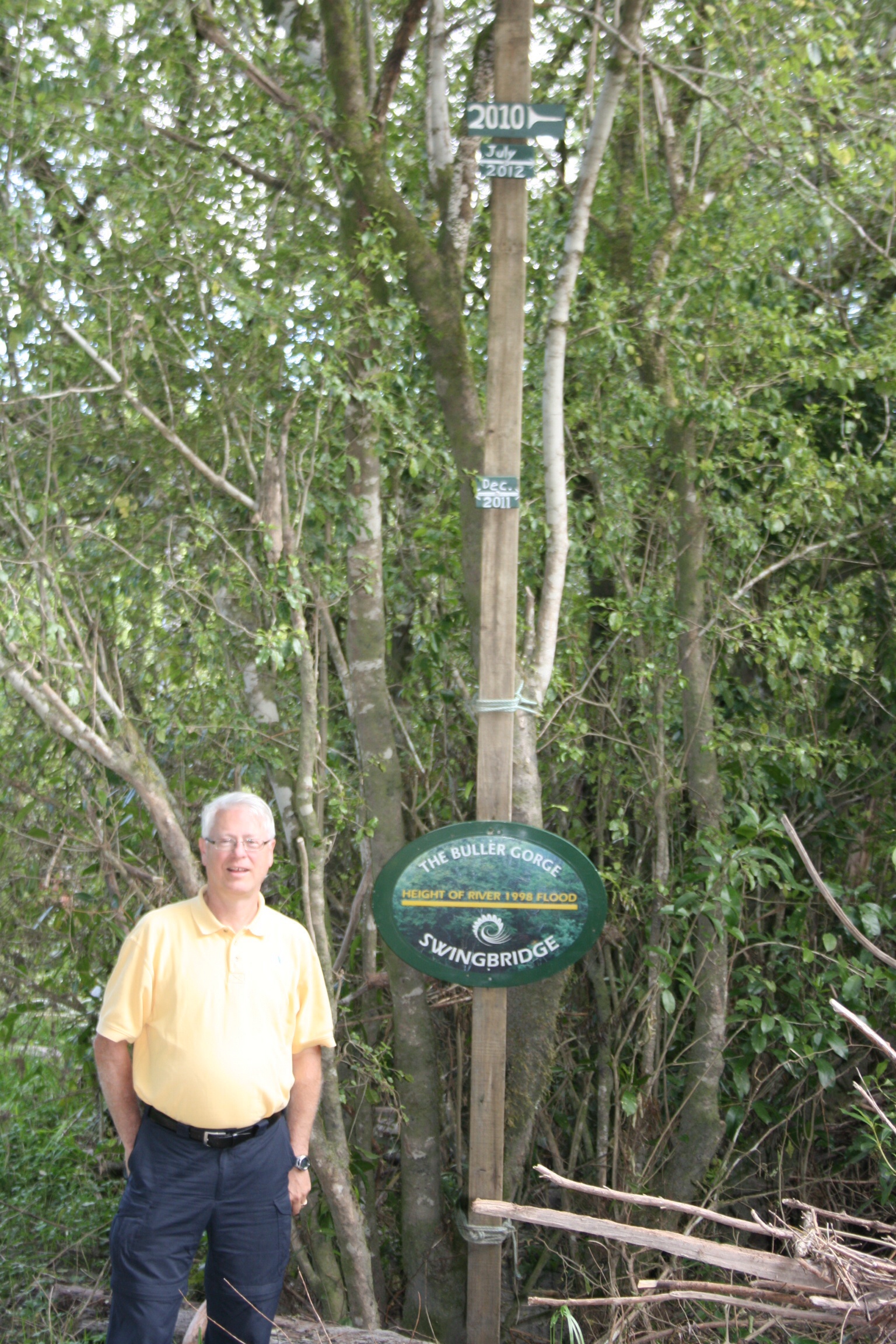
imageWhat surprised us most though was the potential for flooding of the Buller River through this area. At one point we were standing a good 20′ above the river and as you can see in the picture (the green wood at the very top of the pole) a 2010 flood was well over 35′. We were curious to hear why the flooding traditionally happened in July which is too early for spring runoff. It appears that both recent floods have come about because of excessive rainfall.


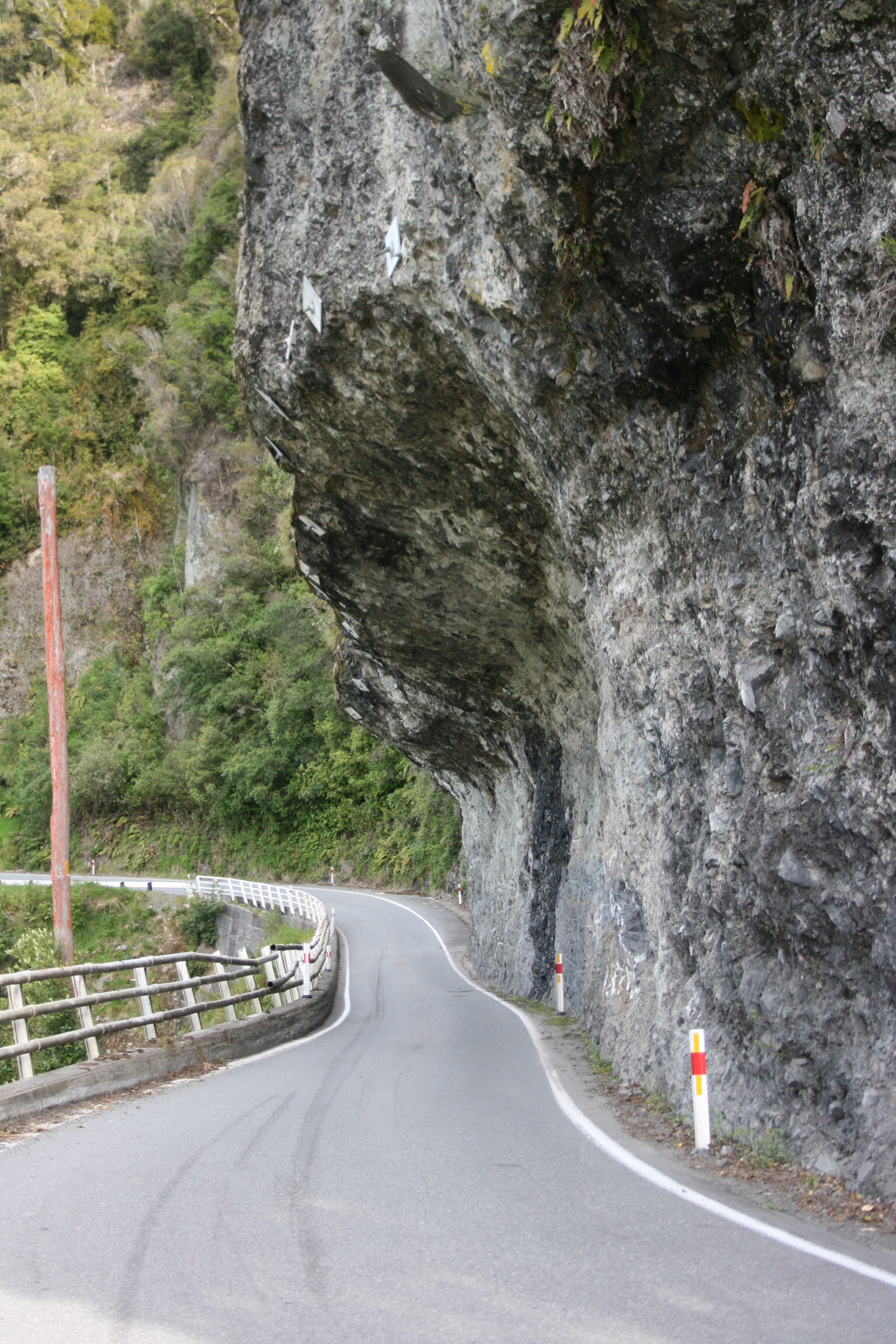
Further down the road we stopped to take a quick picture of a unique rock formation called Hawks Crag. The road has actually been cut through a cliff that drops into the Buller River.

image

Marahau, the back and beyond

Nov 3rd & 4th – Our trip from Picton to Marahau was along some very scenic roads that took us over a mountain pass above the Queen Charlotte Strait to Havelock and then along the coast road to Marahau. We stopped in Nelson for lunch and, for a bit of a break, visited the WOW museum. Part of this museum is the display of wearable art. The displays are all from the World of Wearable Art Awards show, which is an annual event in Nelson. Some of the costumes were truly remarkable.

Marahau is where the Abel Tasman National Park begins and one really has the sense of being at the end of the road once you arrive. The park is accessible only by water, foot or air and our B&B was just a short walk from the park entrance.

Our B&B owner was a widower named George, who has lived in the area all his life. His property consists of a main house and three self contained apartments just down the drive from the house. He has a stunning view from his living room overlooking the bay. To help with the upkeep of his property and likely for company, as well, he brings in foreign students who are on one-year work visas. We met Axel, a nice young fellow from Germany at breakfast.

Dinner was at a local cafe just a short walk from the B&B. George had green lipped mussels ( a local delicacy) while I stayed with a more traditional choice. Later we visited with George for a coffee and internet access. He makes a mean fruit cake although he said his mother wouldn’t be too pleased that he cut it before it had completely cooled.

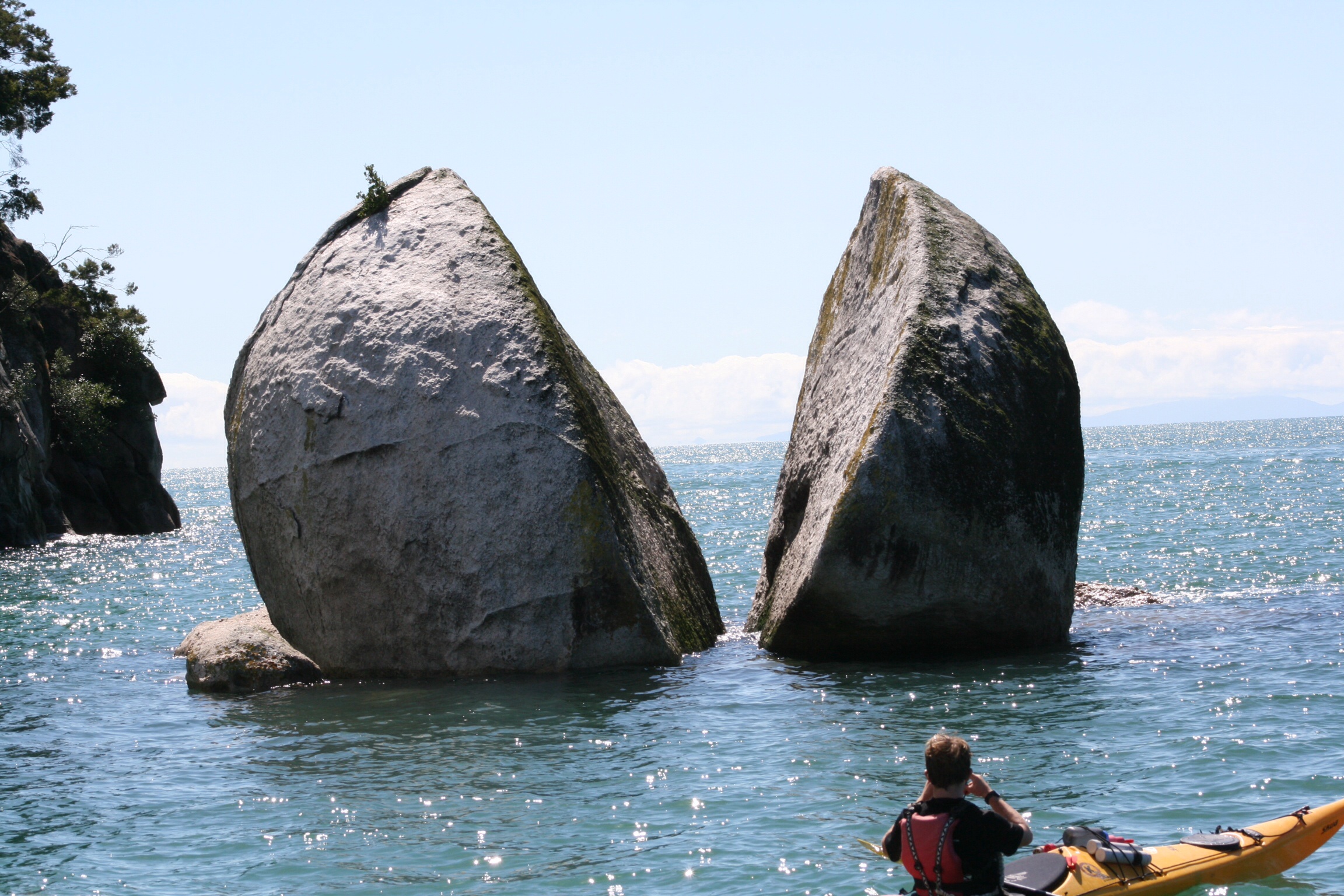
ImageThe next morning we drove into Kaiteriteri and took a boat cruise up the coastline to Medlands Bay stopping to see Split Apple Rock, the cormorants nesting and a seal colony. It was a nice way to spend a sunny morning before pressing on to Westport.

Wine Country

Nov 2nd – This was a somewhat slower day as the Picton area is wine country, so we decided to do a wine tour. We drove a short journey to Blenheim and got directions and suggestions for the various wineries.

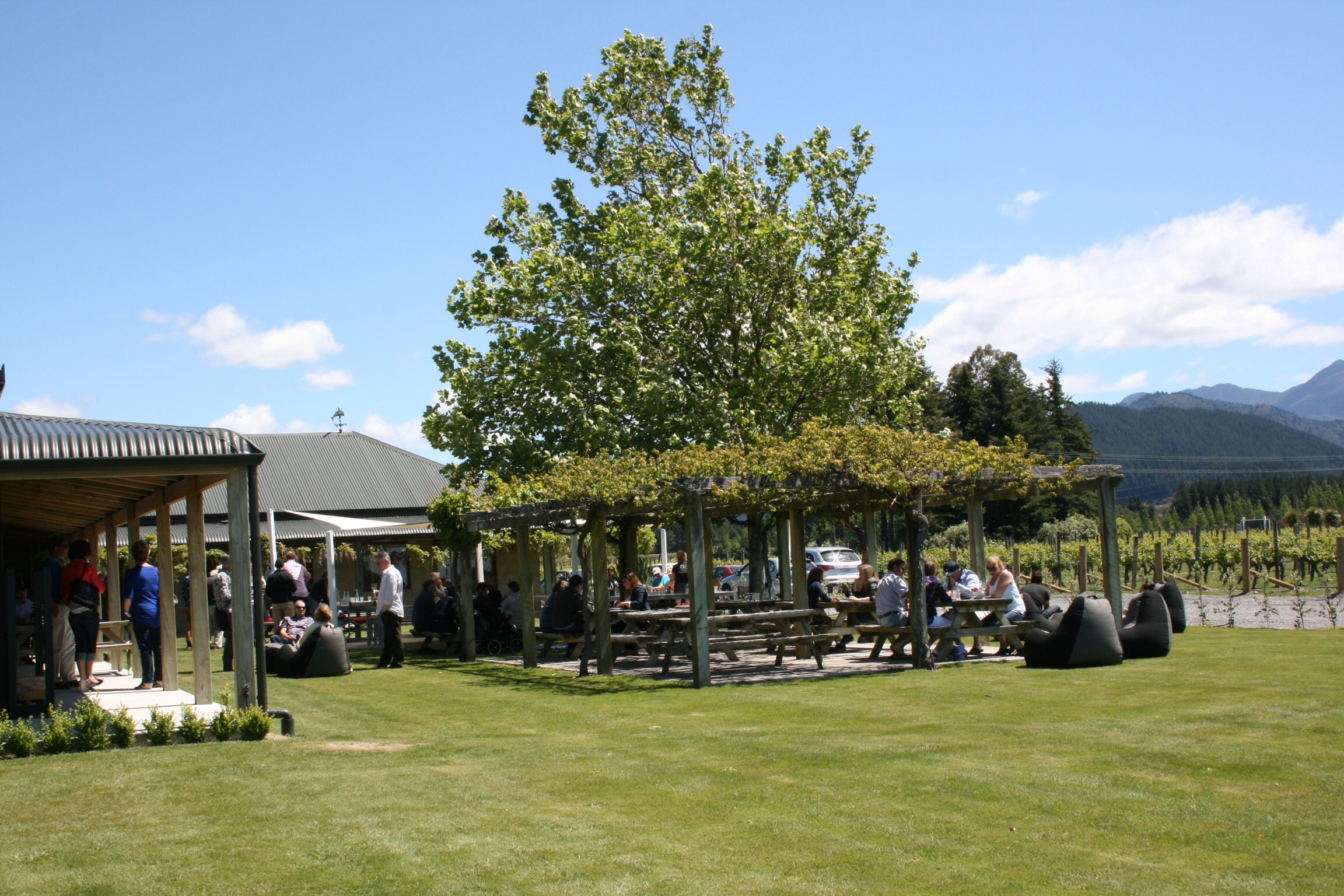
imageOur first stop was Waiparu River where we dined al fresco in the vineyard with the mountains as a backdrop. It was a nice sunny day but the breeze was still a bit cool.

We then went to Framingham winery where the courtyard alone was worth the visit – beautiful gardens and the most fragrant roses.    We tasted a number of their new wines and ended up purchasing a Riesling, which is their specialty. While there we were able to visit the cellars and see a brief DVD about the winery and then walked out to see the grapes just beginning to form on the vines. This was one of the larger wineries in the area and the vineyard extended in every direction as far as the eye could see.

The next stop was the Chocolate Factory but since chocolate doesn’t travel very well it was tasters only. On the way to the next winery we found a little local quilt shop, a gift shop and an ice cream shop…so you know what we did. The next winery was Forrest and the server was very friendly, having grown up in the northern US before marrying a Kiwi. We had a great conversation while sampling some of their wines. We purchased a Sauvignon Blanc for one night in Christchurch.

Since we’d had such a big lunch, we just stopped for a light supper at a local hotel on our way back into town.  George walked back to the B&B and I went back to do banking and email stuff. Later, we entertained other B&B guests as our hosts were away for the evening. One couple were Christians from Ohio and had already done most of the south island so we got lots of tips from them. The other threesome were from North Carolina and the daughter had just sailed from Sidney to Wellington on the Spirit of New Zealand (a tall ship). We heard lots of harrowing tales of the bad weather that had roared through the Tasman Sea and which we experienced while in Wellington.

I forgot to mention yesterday about the strange guy we met in the restaurant where we ate dinner. He was there with a group of people and greeted us as we were getting ready to leave. When he heard that we were from Ontario, he wanted to know if we had ever been to Picton or Blenheim Ontario. He is trying to get the Picton mayor to twin his city with Picton, ON since they are evidently the only two Pictons in the world! Who would have guessed. Anyway, I promised I’d gather some information about Picton when we return and send him an email.