• About

nancybellblog

~ Travels around the world

nancybellblog

Monthly Archives: November 2024

Family Trip to Iceland – September 2024

20 Wednesday Nov 2024

Posted by nancybell2108 in Uncategorized

≈ Leave a comment

Tags

iceland, reykjavik, road-trip, travel

We had so much fun traveling together in Ireland last year that George Jr decided to take us all to Iceland this year. He wanted to do it before mom and dad got too old! It was very generous of him to book our tickets, rent the car, establish a reasonable itinerary and act as chauffeur and guide.

We flew out of Hamilton via Play airlines. For some of us that was our first experience flying out of the small Hamilton airport. How nice to be able to unload easily on arrival, check in quickly and not experience any wait through security. The service on Play was fine and staff were quite friendly, other than one attendant who wore a very powerful perfume. For those of us who are scent-sensitive, it was an unpleasant experience each time she passed by.

We left Hamilton at 7 p.m. and arrived in Iceland at 4 a.m., a bit tired but ready to start our next adventure. It took about two hours at the airport since the car rental booth didn’t open until 5:30. We chose to have a small breakfast at one of the bakeries while waiting. It was cool and rainy when we left the terminal, and there was a bit of a walk to where our car was parked. Welcome to Iceland!
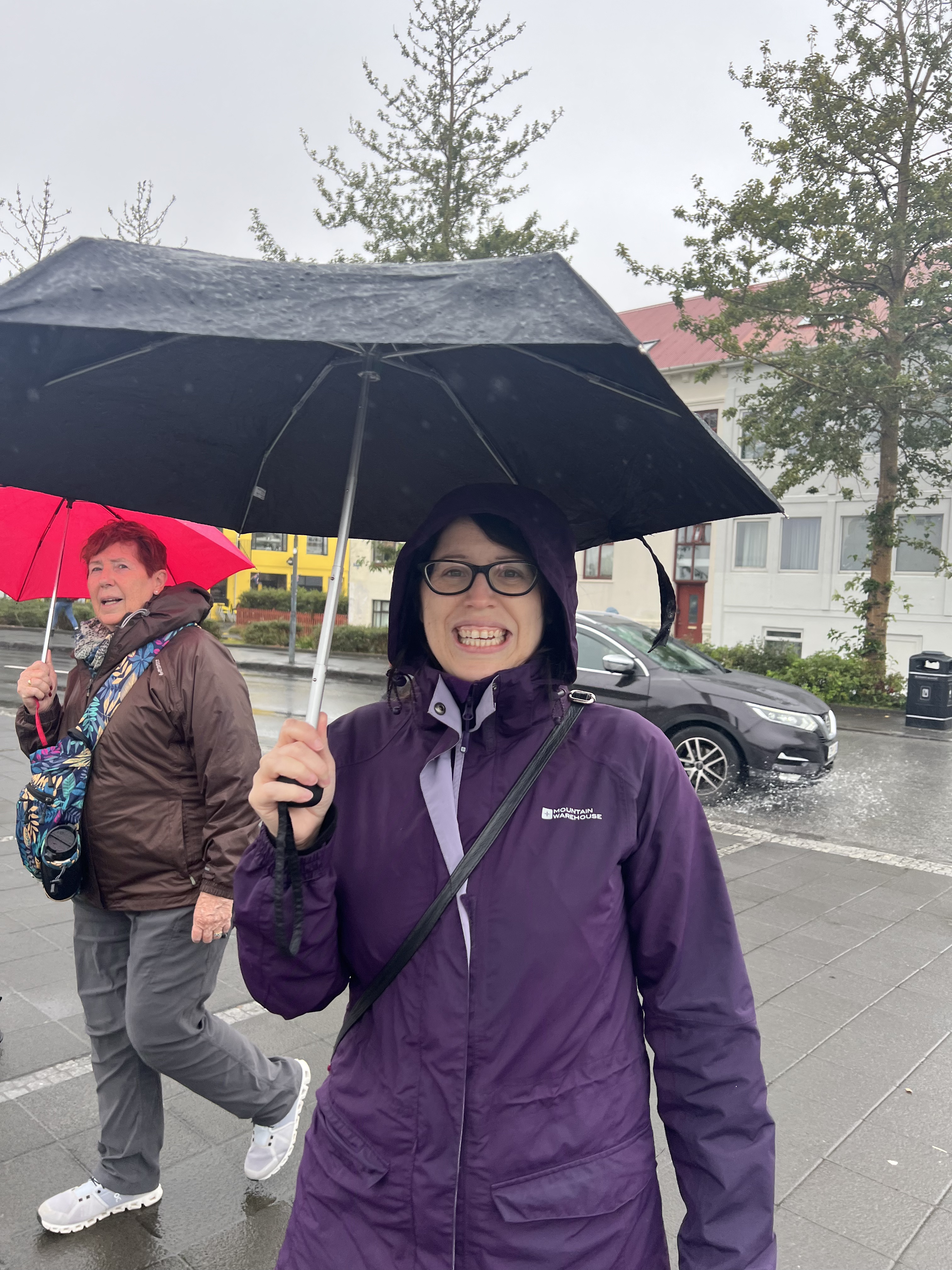
Welcome to Iceland

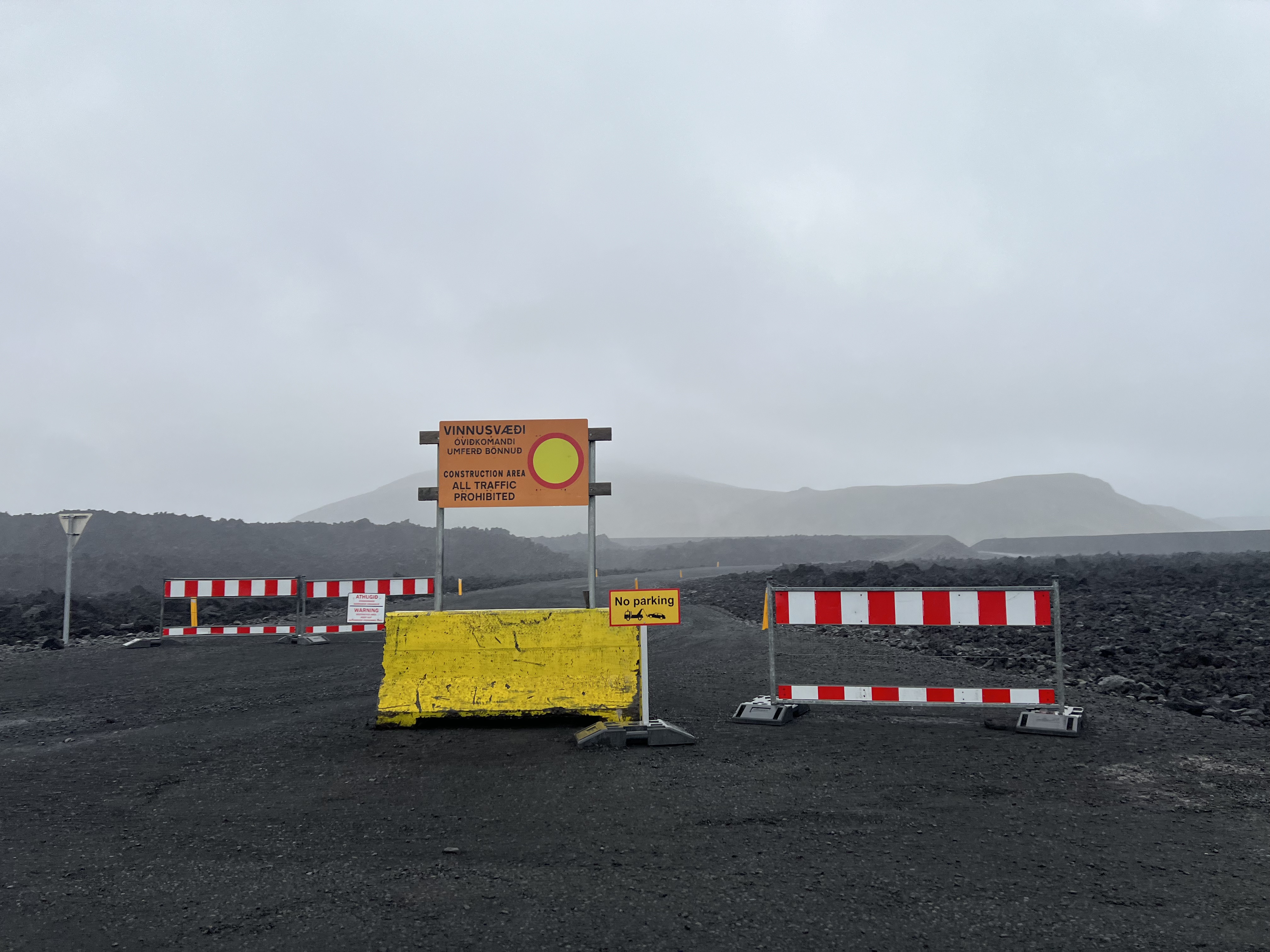
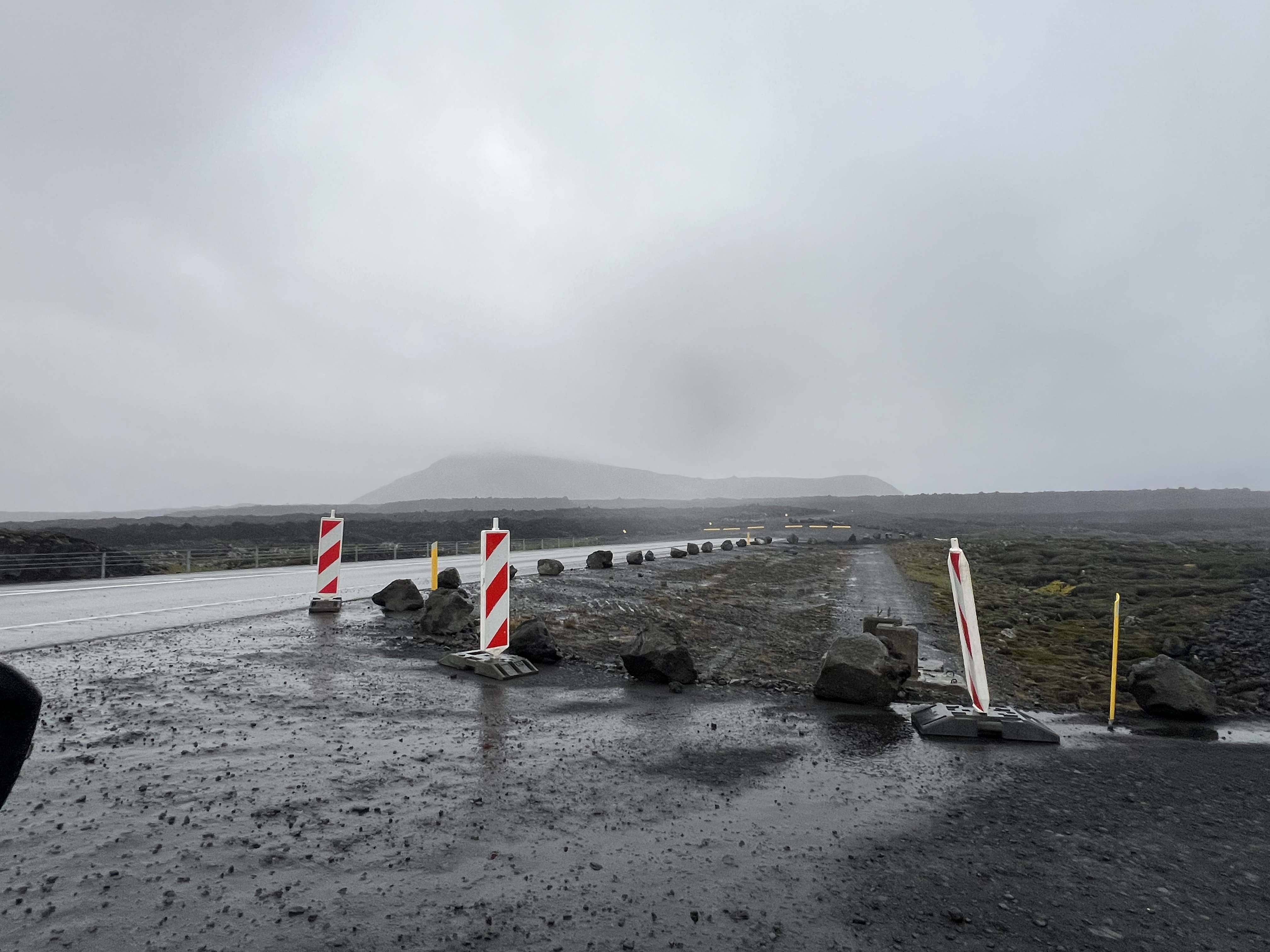
Day 1 – Given that we couldn’t check in to our hotel until after lunch and nothing was open yet, George took us on a little ride out by the Blue Lagoon. This is in the area where the Sundhnuksgigar eruption began on August 22nd, closing the town of Grindavik. We were able to see the volcano from a distance on the way out but it had disappeared completely by the time we returned from our drive. George was quite amazed at how the traffic pattern had changed since his last trip, because the lava had overflowed the road.
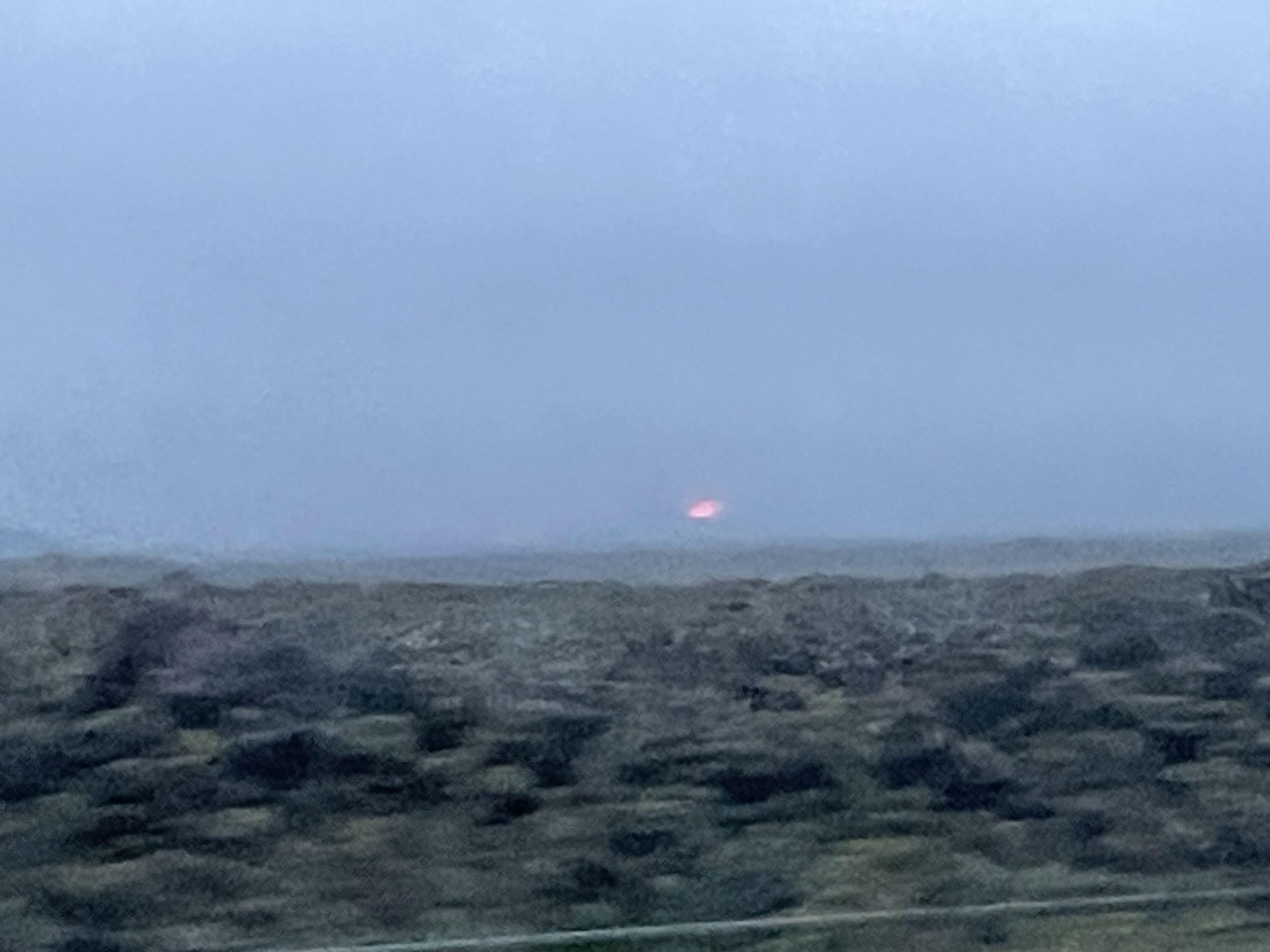
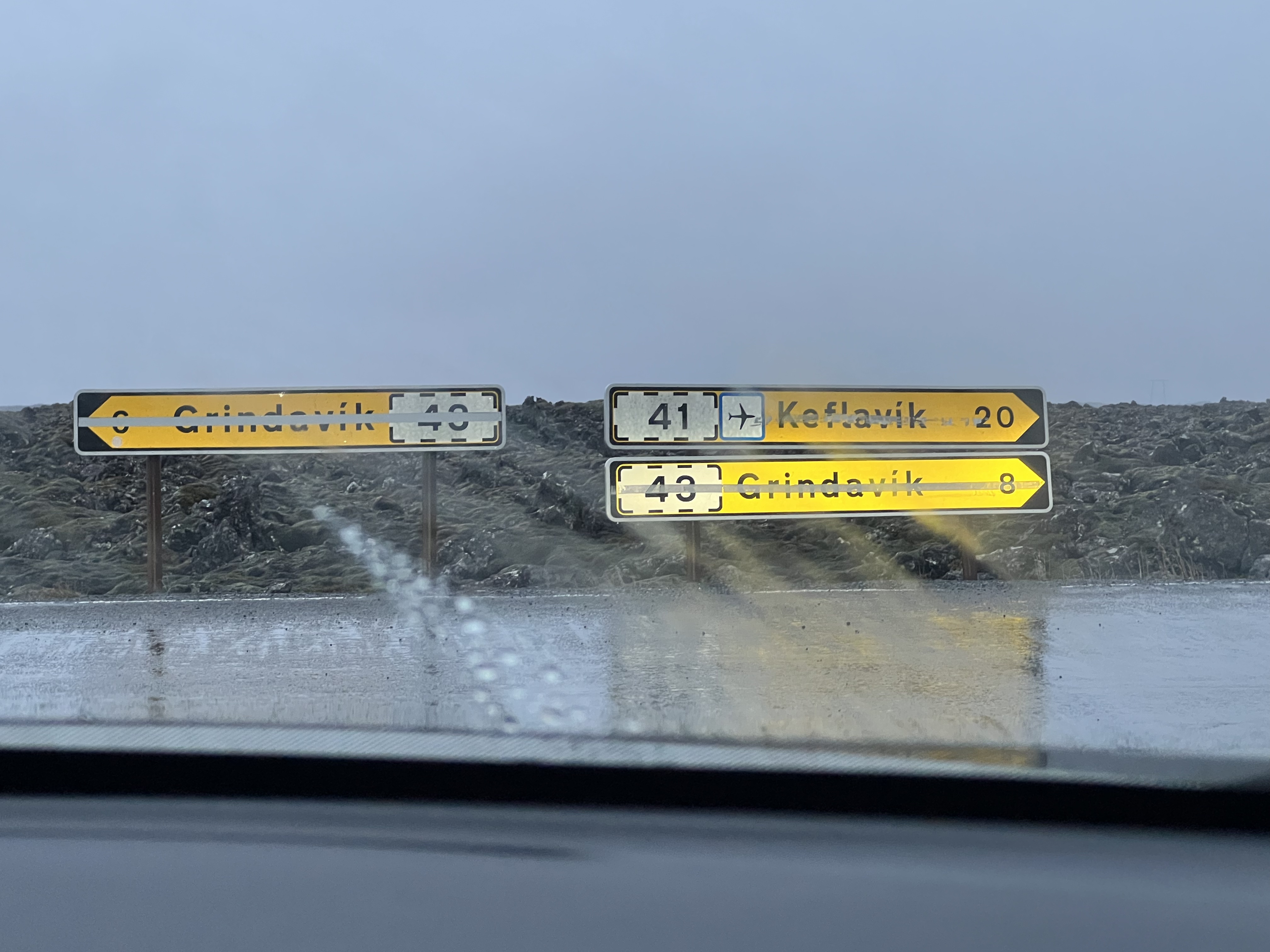
The volcano
Towns closed
End of the road
New road built in two weeks

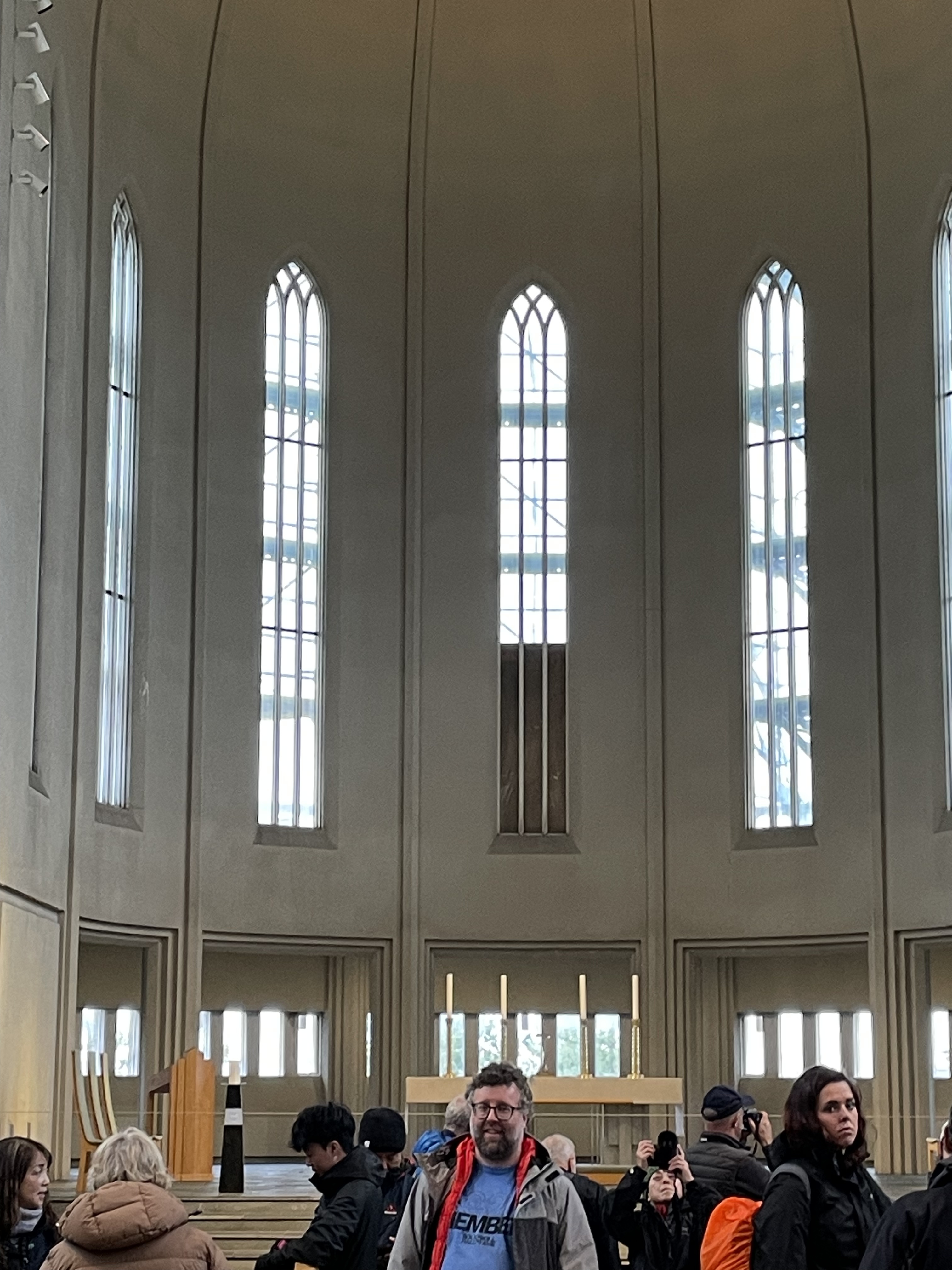
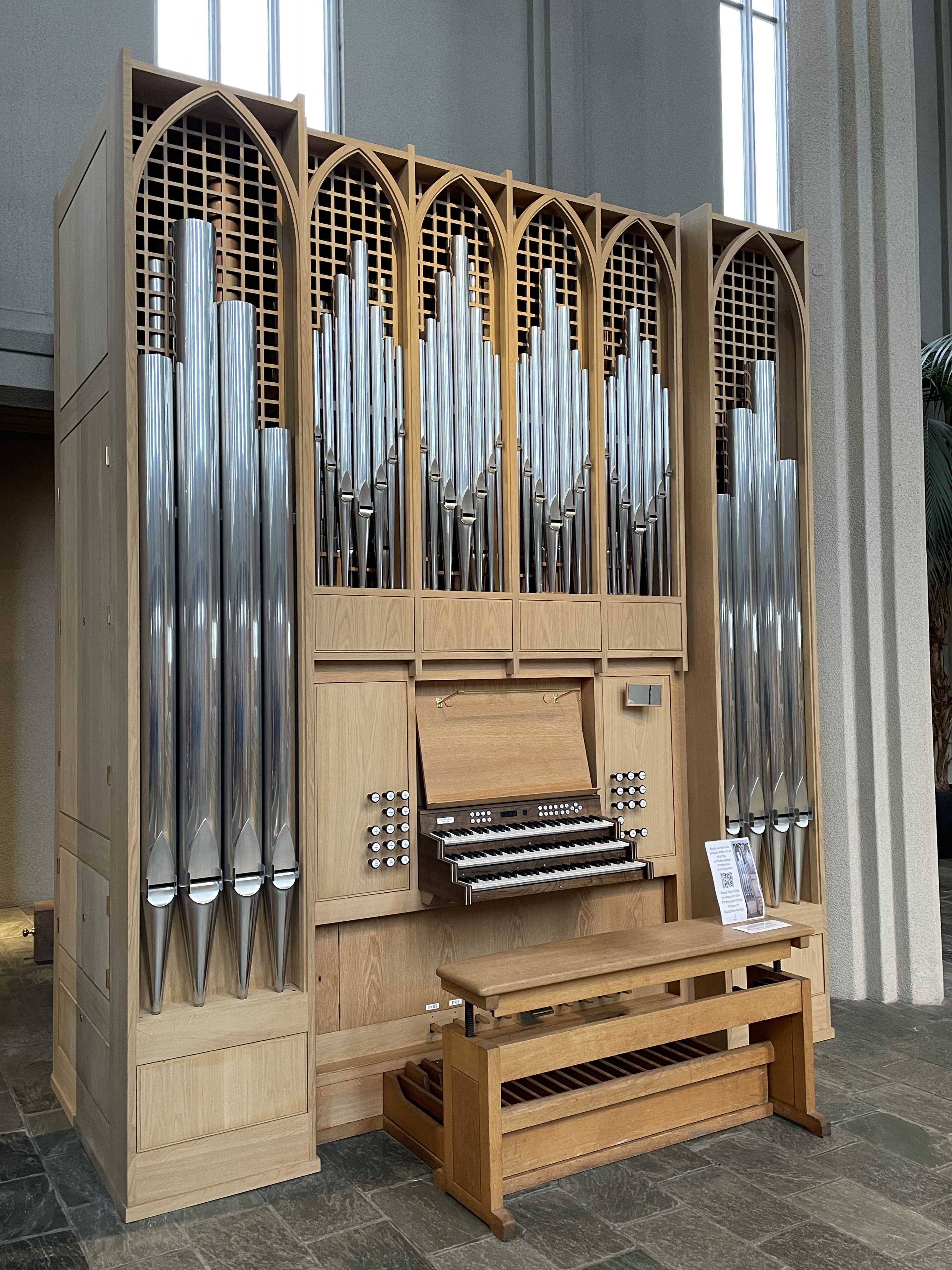
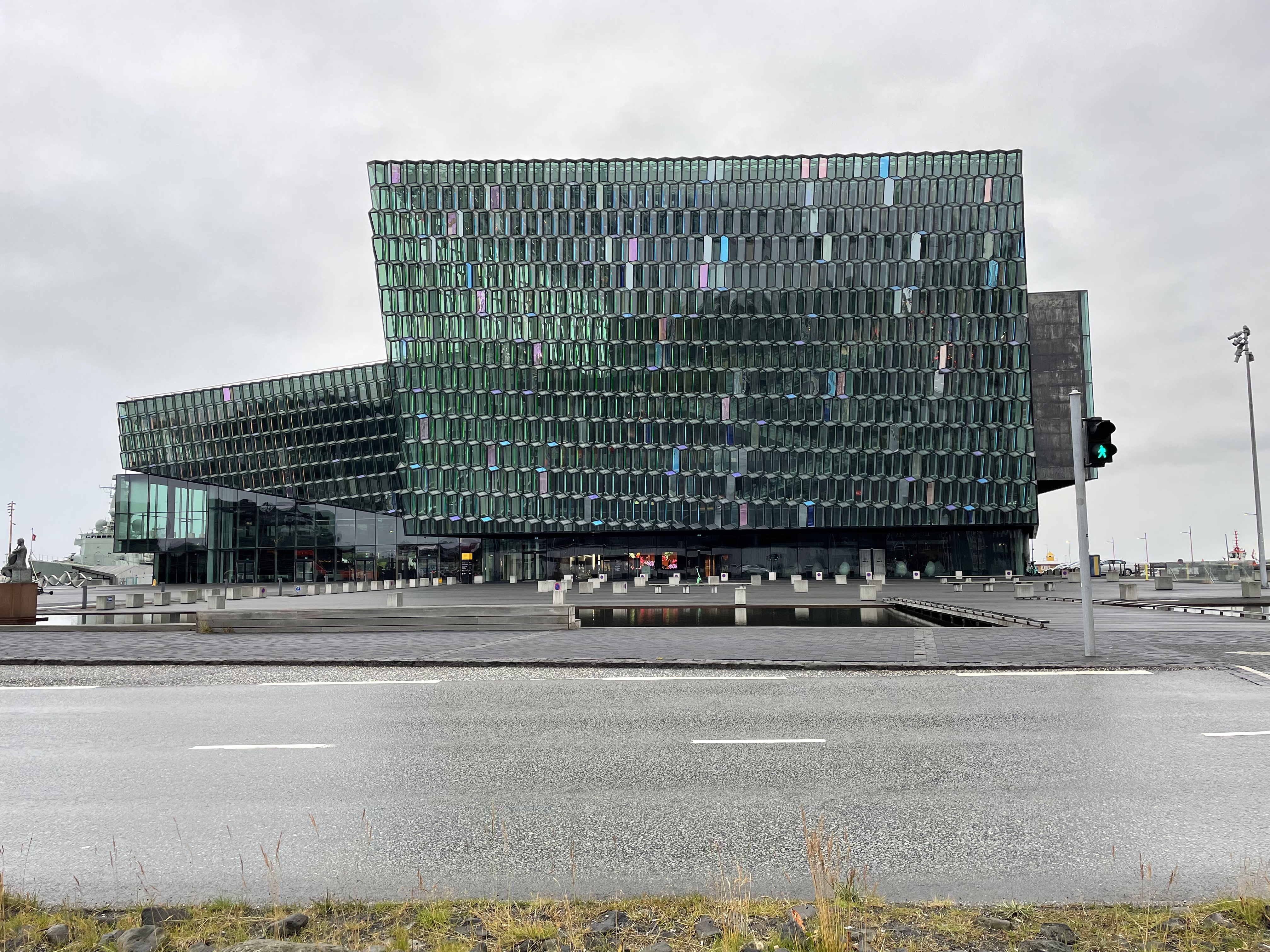
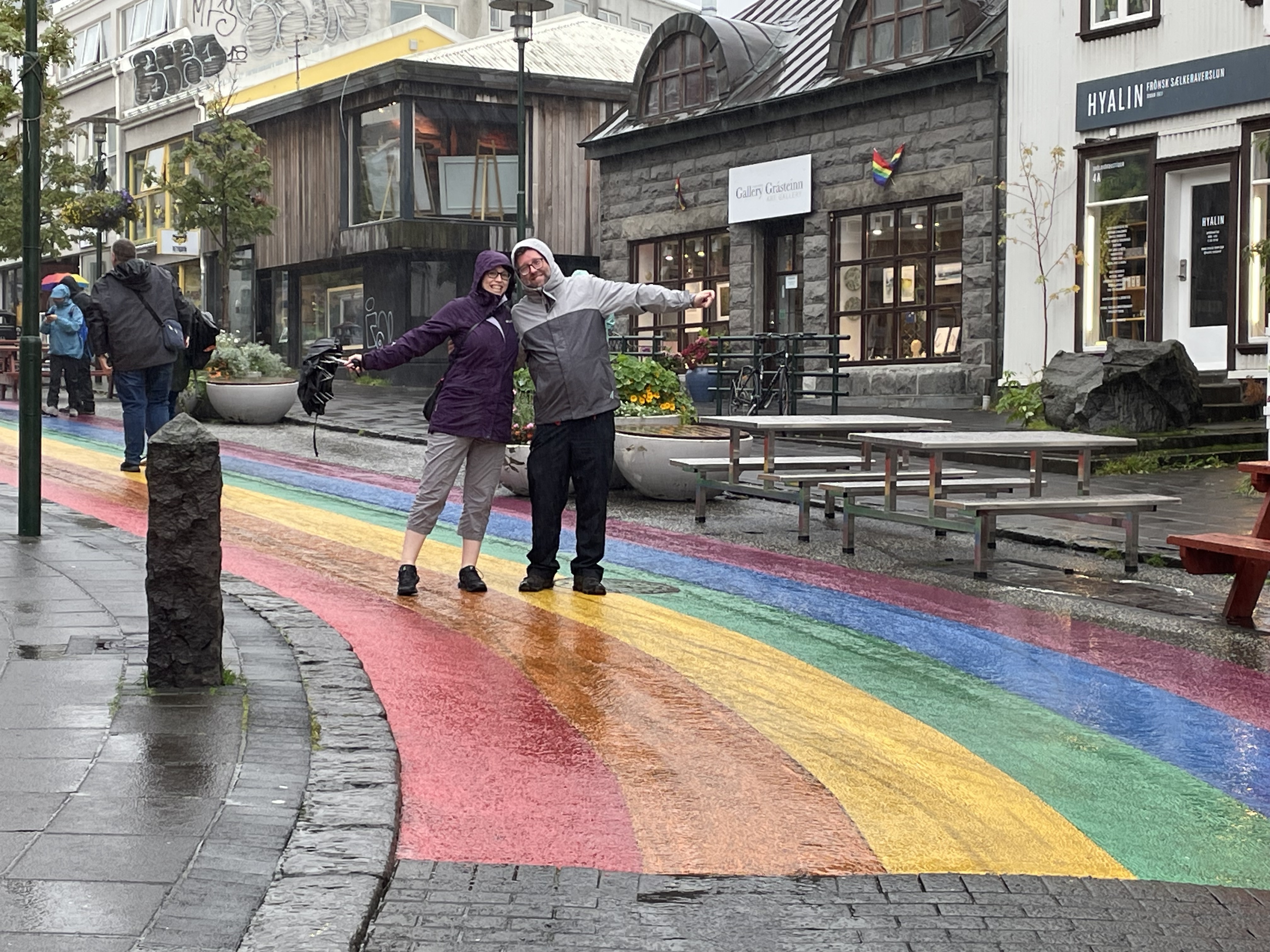
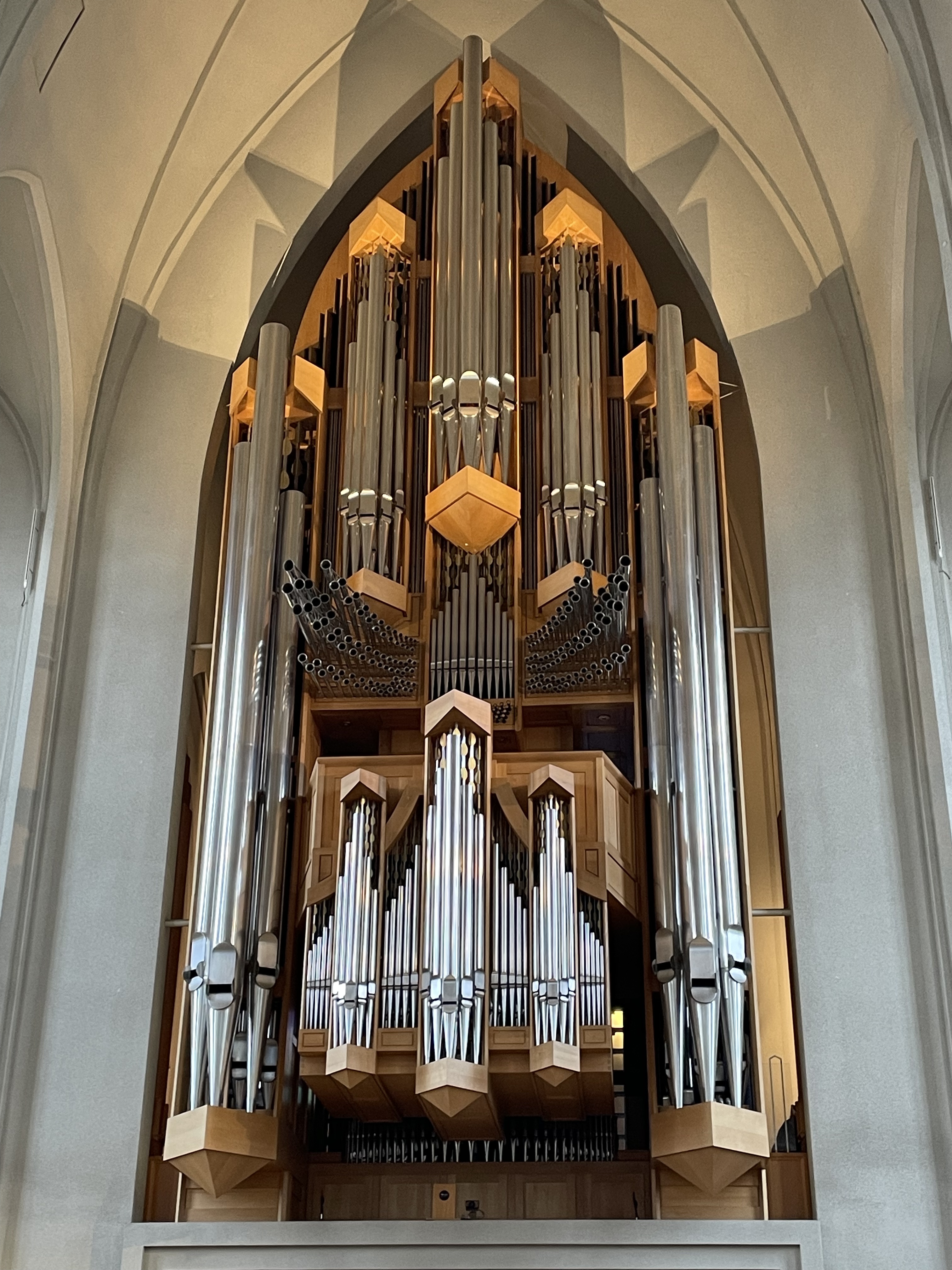
Driving on to Reykjavik, we continued our tour checking out the beautiful concert hall down near the harbour and the Hallgrimskirkja church, which is both a parish church and a national sanctuary. Built on top of a hill it is visible by two-thirds of the people in Reykjavik. Also well-known and oft photographed is the rainbow road which celebrates Reykjavik Pride which has taken place annually since 1999. While we were out walking, Jenn met a couple from her office who were walking back to their hotel to head to the airport. What are the chances? Better in Iceland since the population is only 400,000.

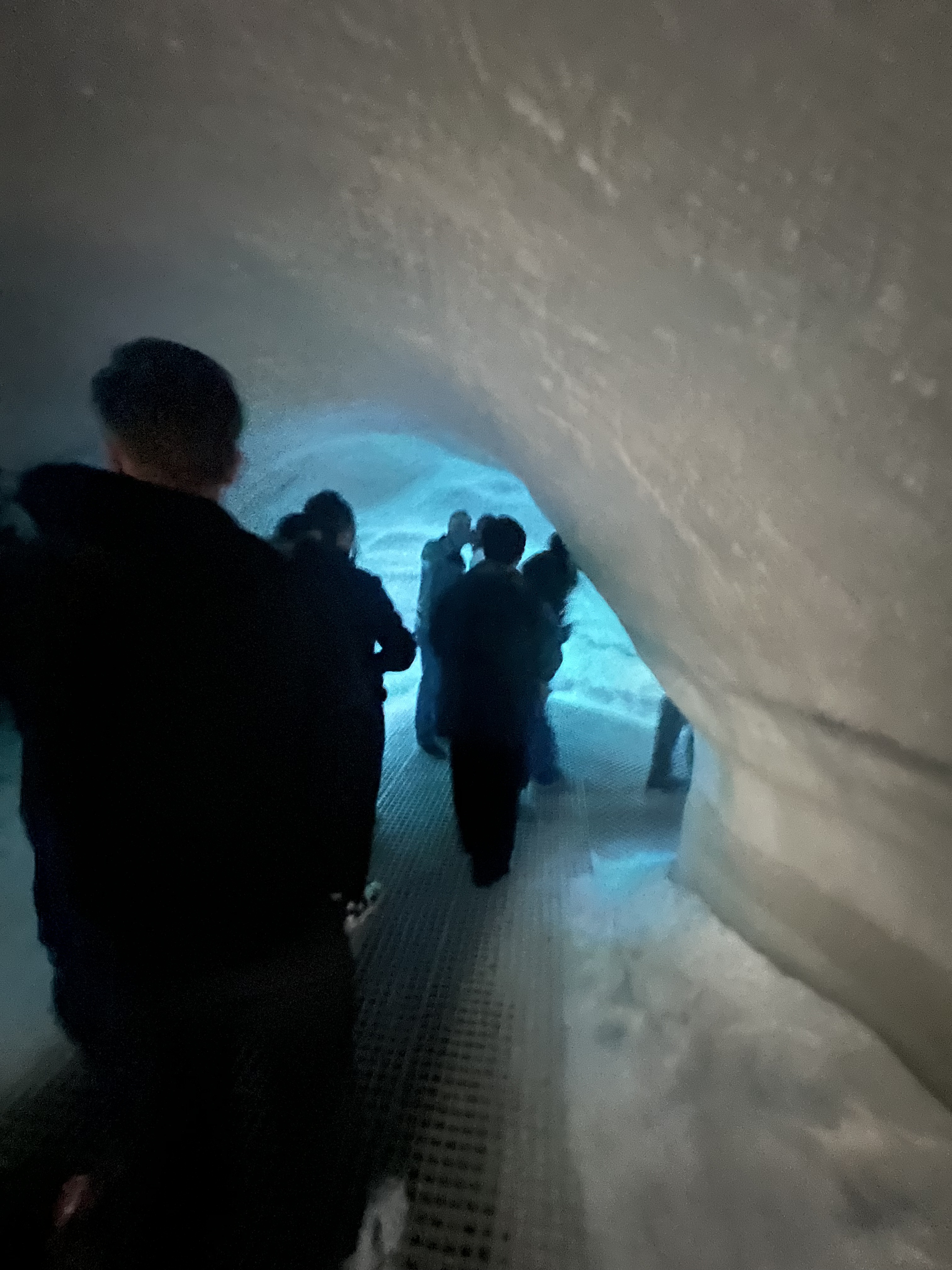
By then most things were open, and we headed over to Perlan, a museum like no other, to spend the next part of the day. Perlan is a nature exploratorium and science centre all rolled into one. Many of the exhibitions are interactive and educational. For those just arriving in Iceland it provides an excellent overview of what you will see on your travels. For those who can only spend a few short hours in Reykjavik, it is an excellent place to see what you’ll be missing. Our favourite part was the ice cave – a 100m glacier hike and a video of the most recent volcanic eruption. What power!
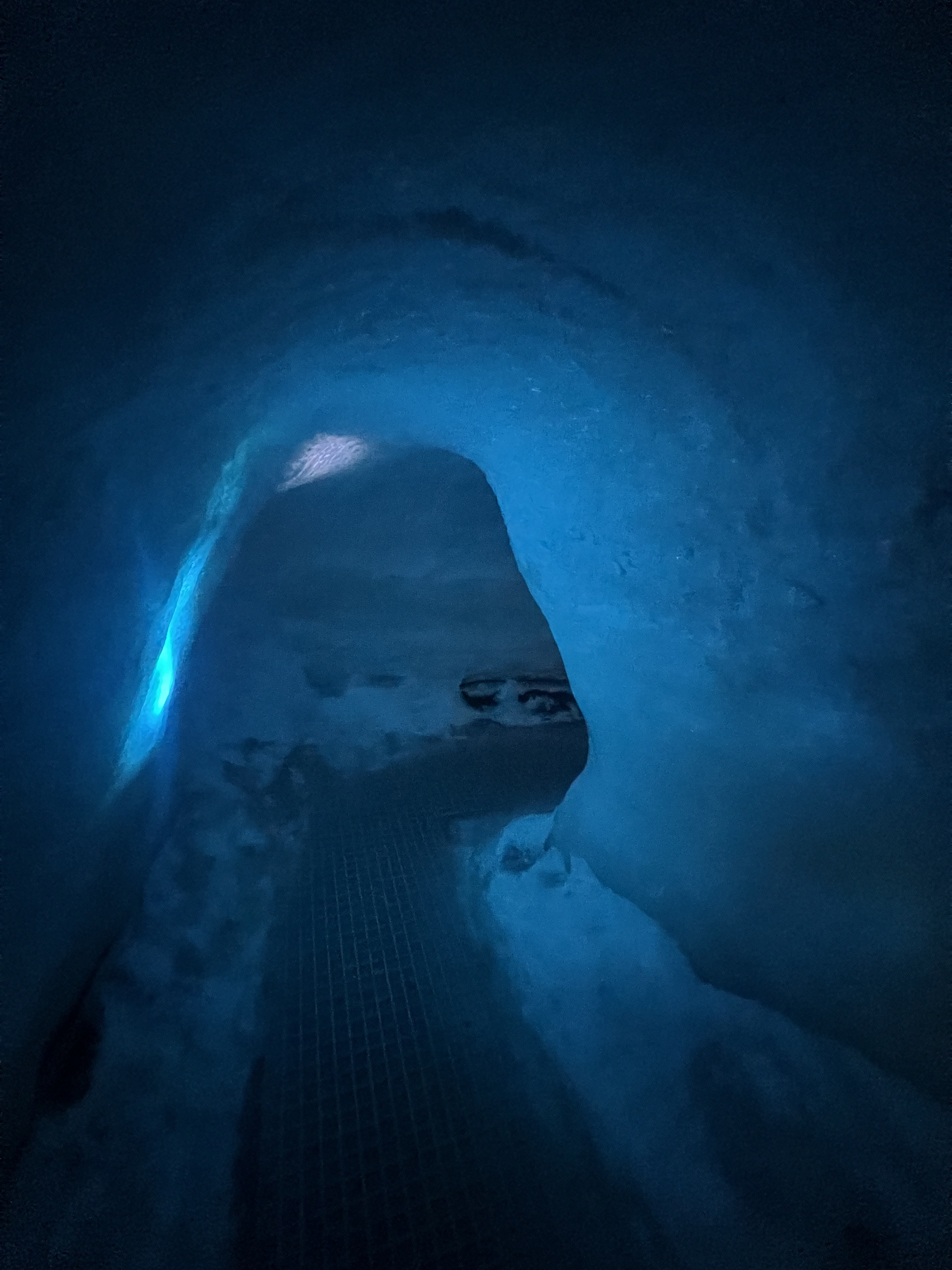
By lunch time we were all tired and ready for a nap. After checking in to the hotel, three of us went to sample Iceland’s famous hot dogs – a combination of lamb, beef and pork (organic, free-range, hormone free). It’s the cheapest meal you will buy in Iceland!

After our nap, we headed out to find dinner at one of the street food restaurants. Because the first one wasn’t what we expected, we all got up and headed out the door. We eventually found the one we were looking for – Icelandic lamb soup served in a bread bowl.
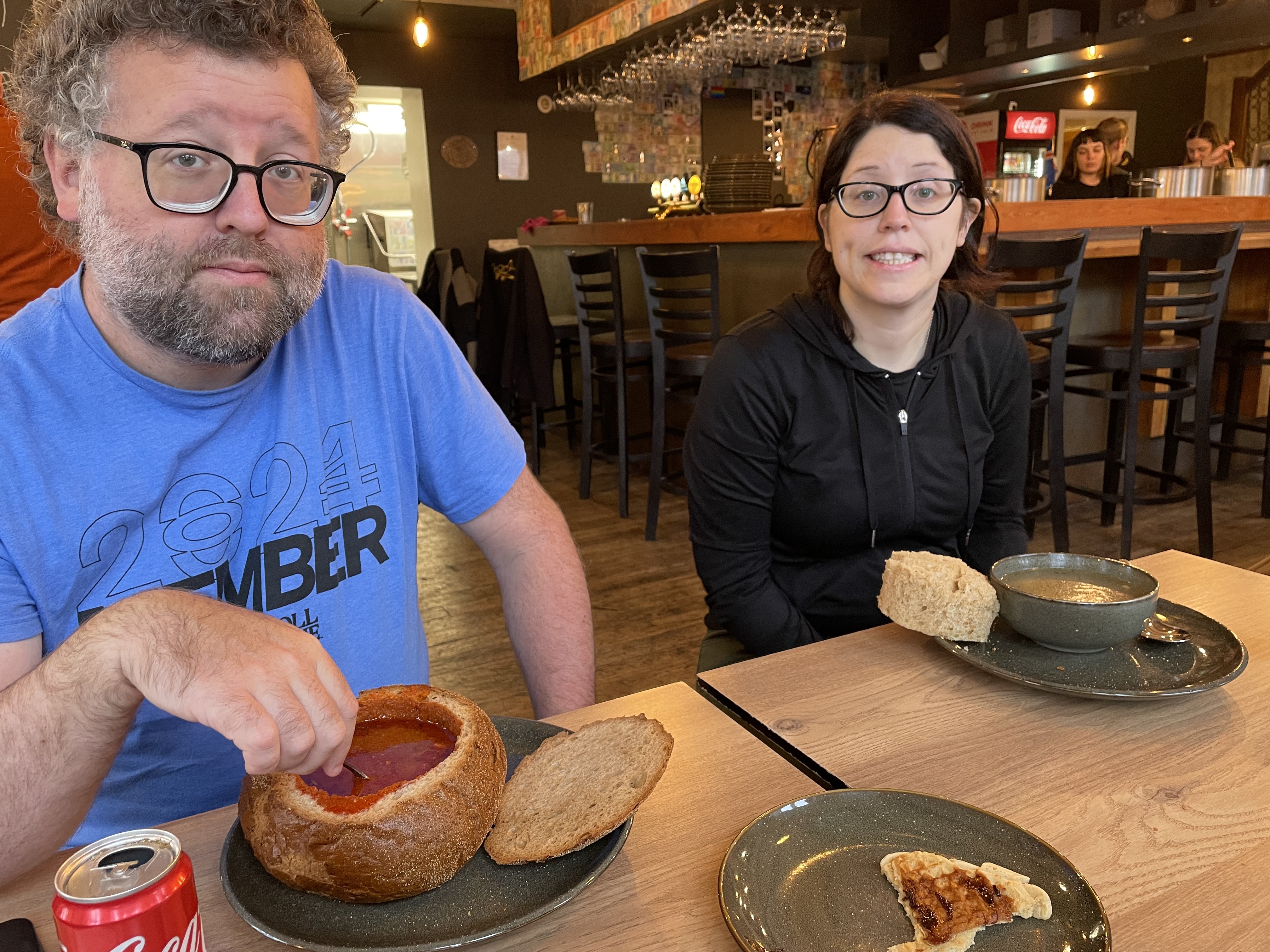
In the category of we knew it, we expected it but we still couldn’t quite believe it – food is very expensive in Iceland. Breakfast ranges from $32-40, a Subway sandwich is $15 and our bread bowls were $30 each. The good part was you were allowed refills.

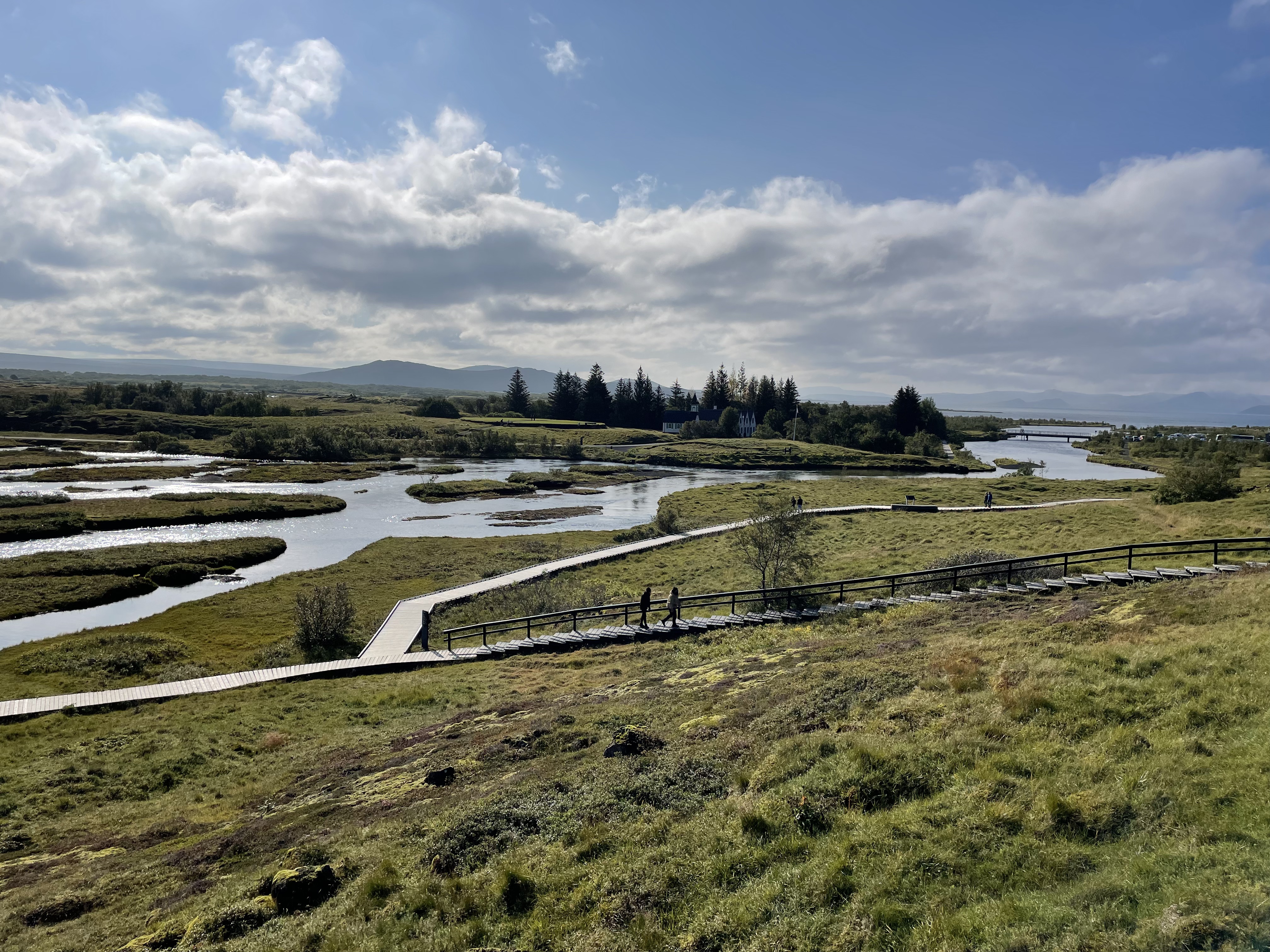
Day 2 – Hooray, the sun was shining when we left in the morning which made for great hiking/walking weather. Our first stop was Thingvellir National Park, a UNESCO World Heritage site. It holds deep historical, cultural and geological significance. From 930 until 1798, it was the site of the annual parliament of Iceland. In 1944, it was chosen as the site of the celebration of Iceland’s independence from Denmark. Given WW2, the King of Denmark could no longer provide protection for Iceland, and hence it was decided that Iceland should become an independent country.

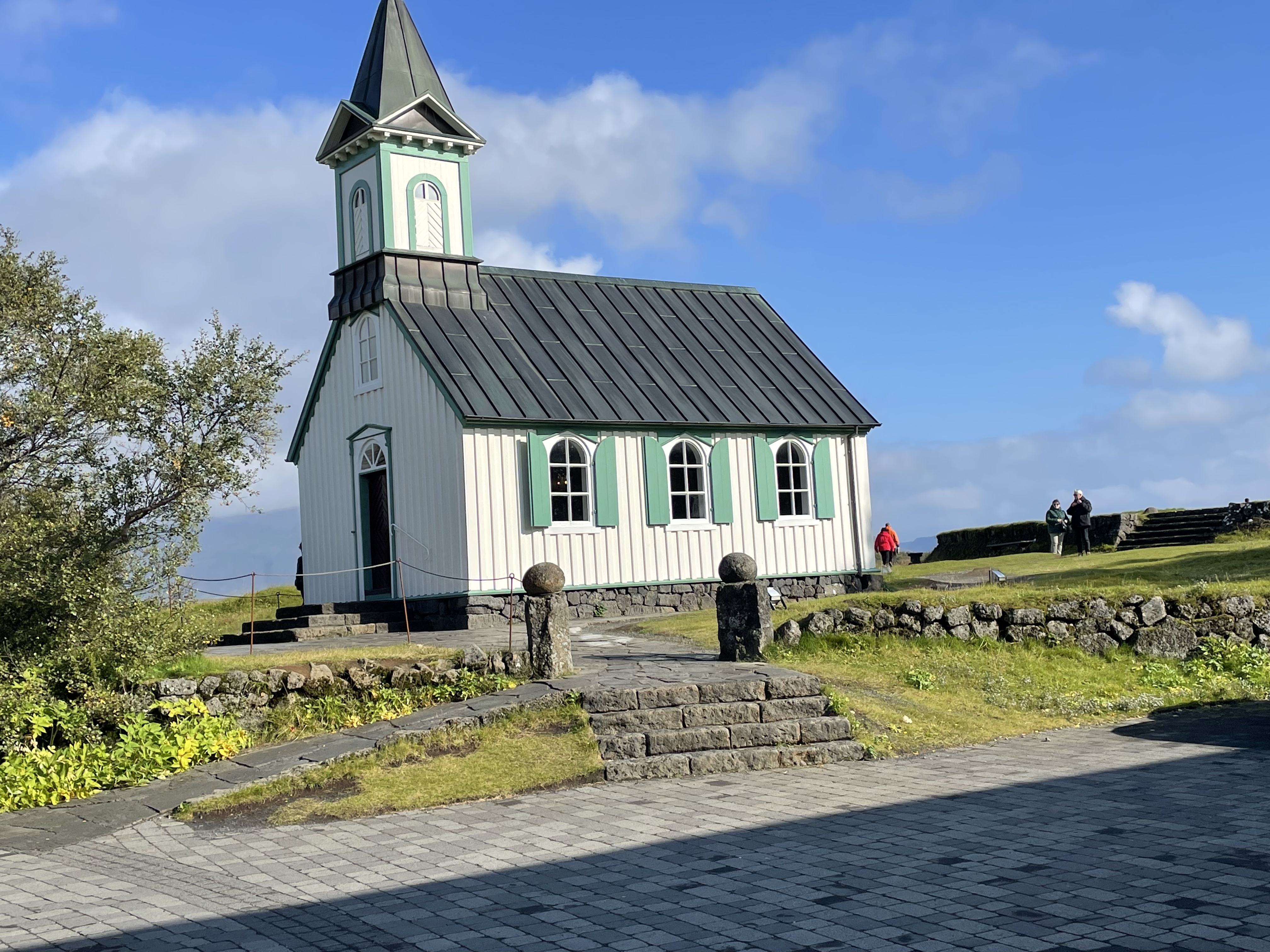
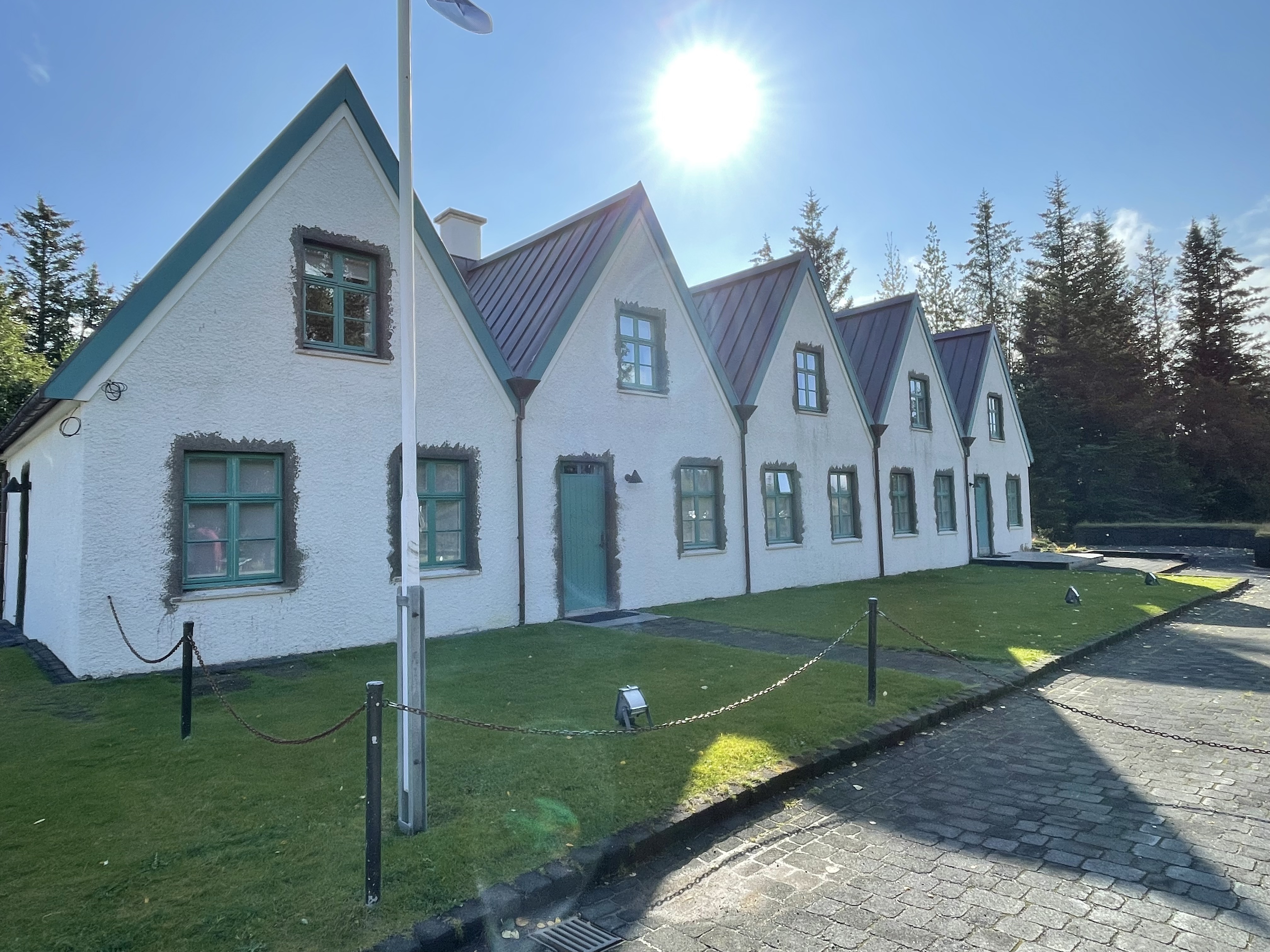
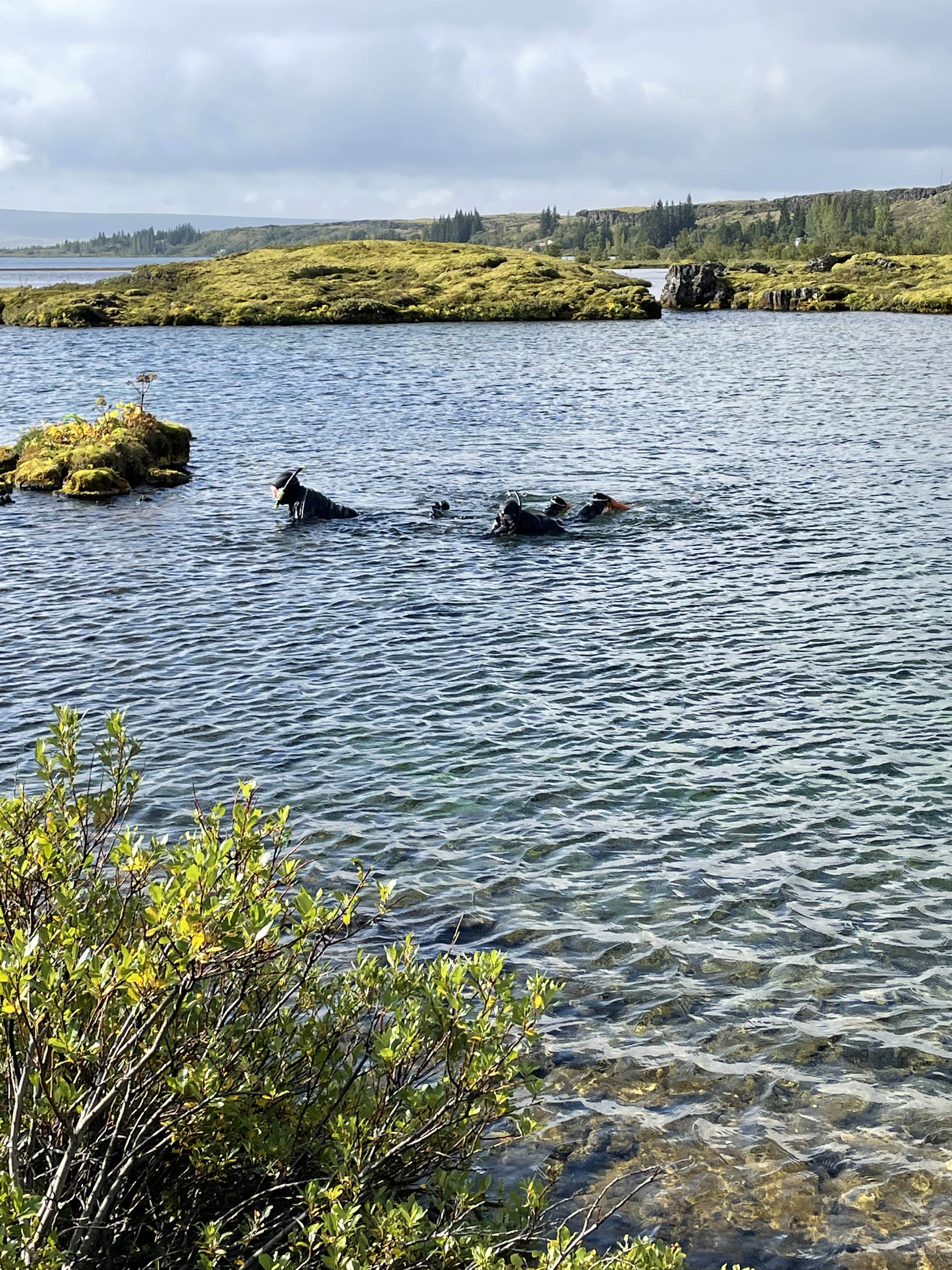
Located in a rift valley, it is the only place in the world where you can snorkel between two tectonic plates. Thingvallavatn Lake is Iceland’s largest and is fed by ground water from the Langajokull glacier. It evidently takes about 30 years to actually reach the lake. Within the park is also a church and the Prime Minister’s summer residence.
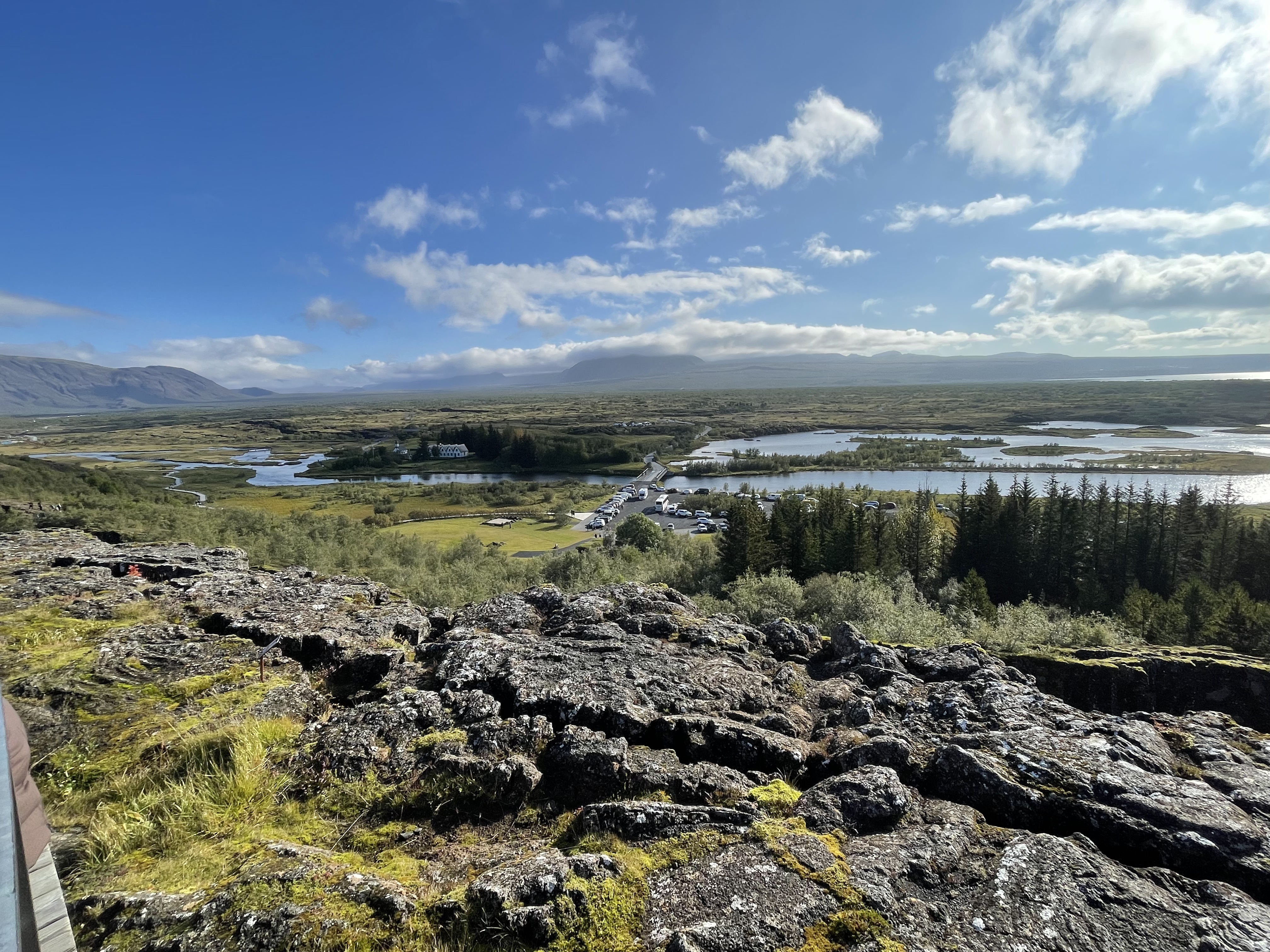
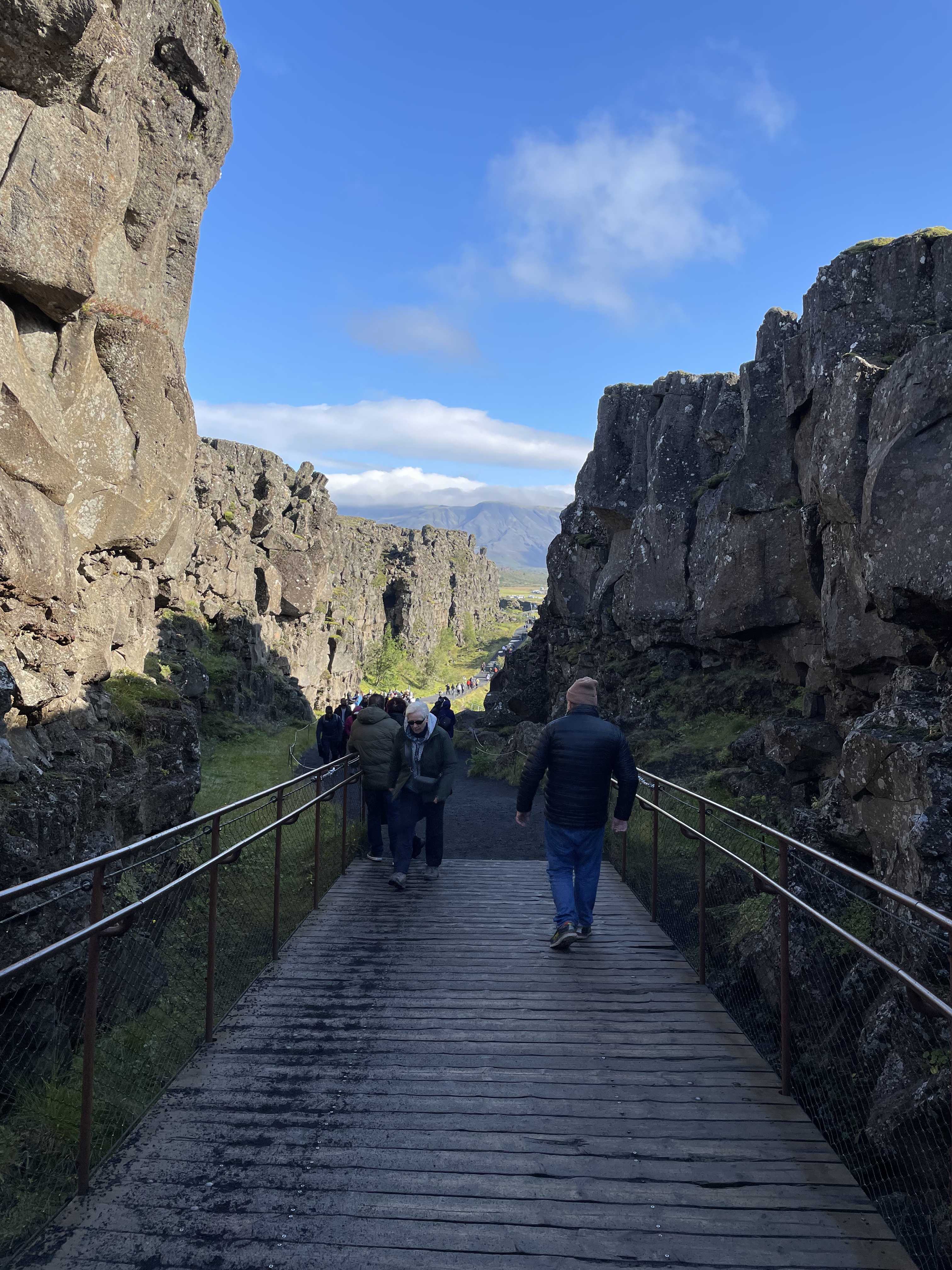
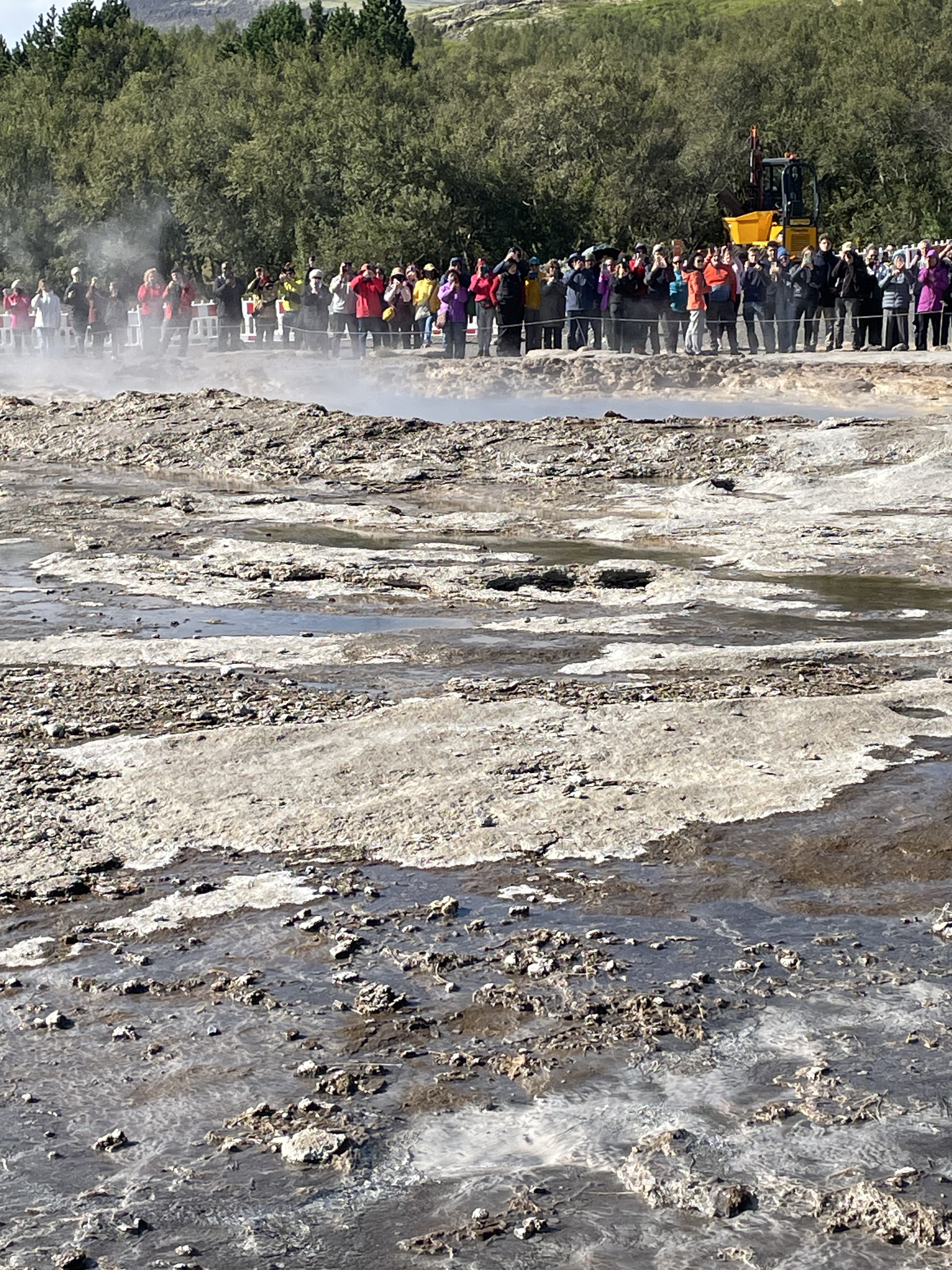
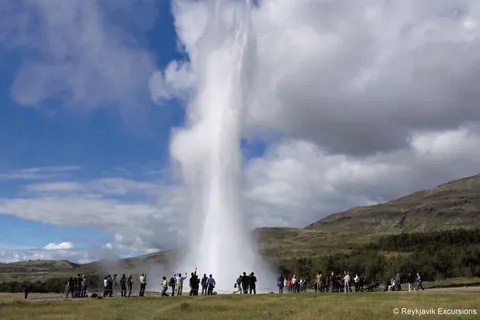
Then it was on to see the Strokkur Geyser, which erupts every few minutes to heights of up to 115′. We saw a couple of eruptions but none that high. The visitor’s centre was a welcome spot to stop for lunch.
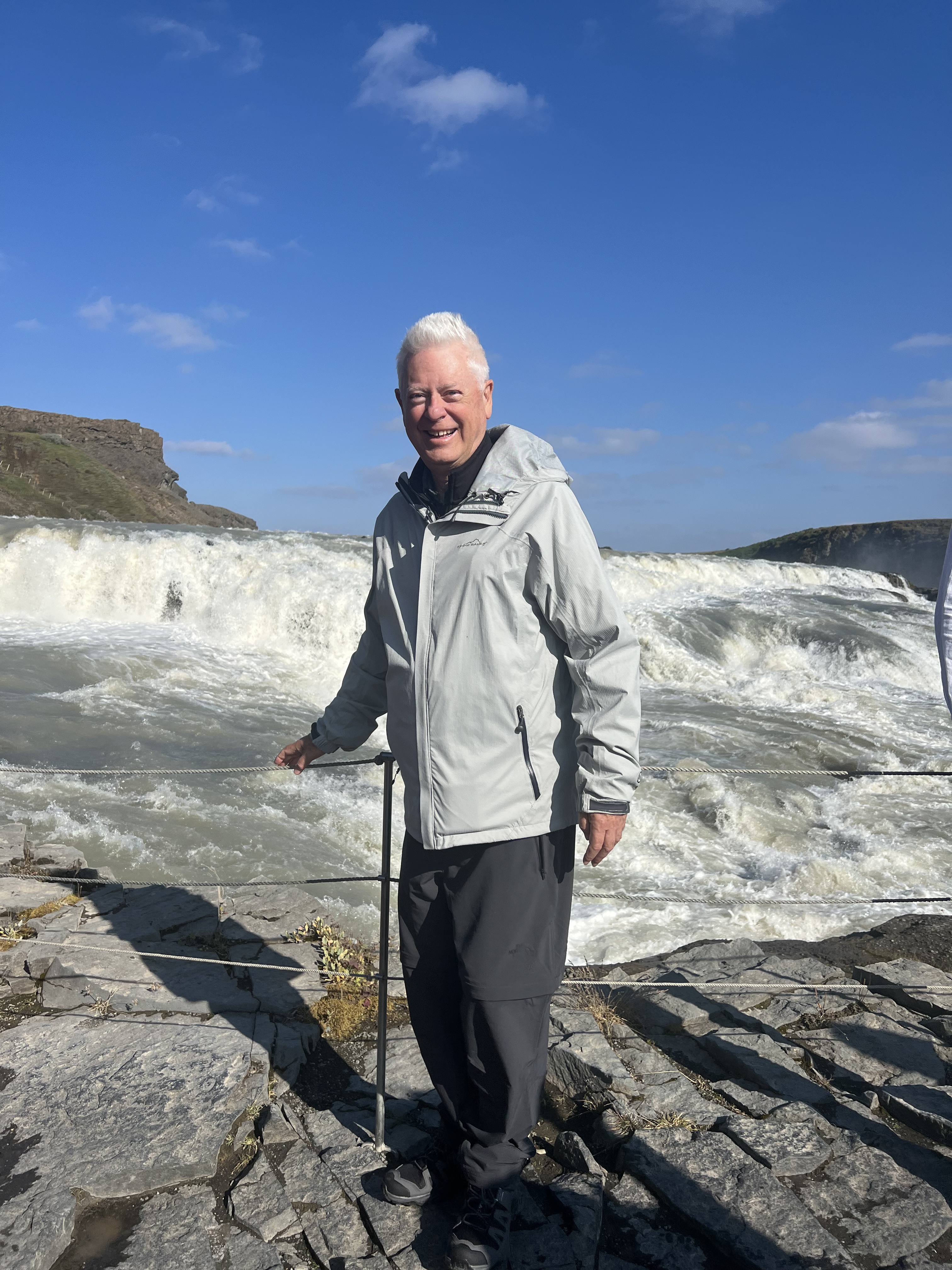
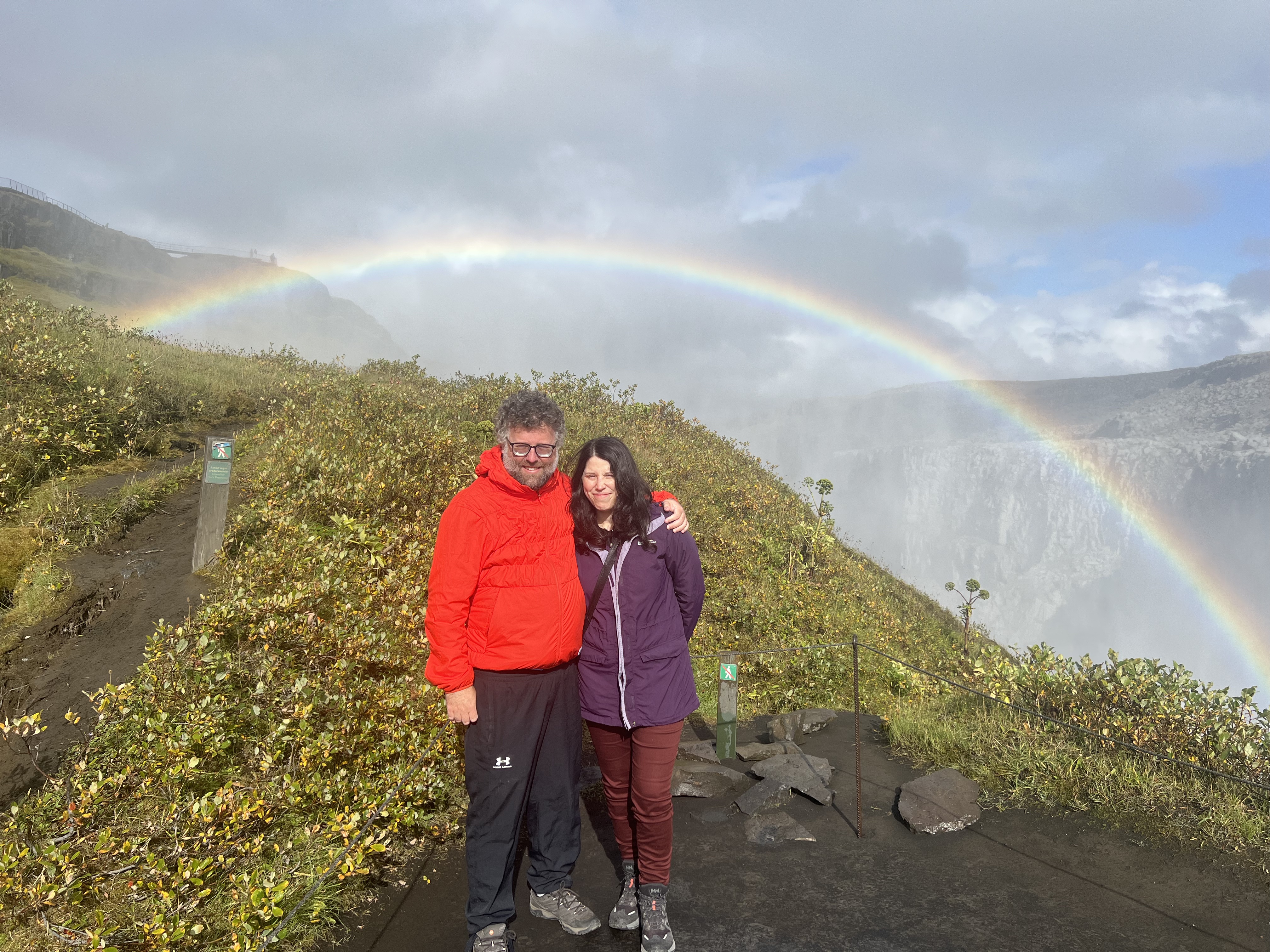
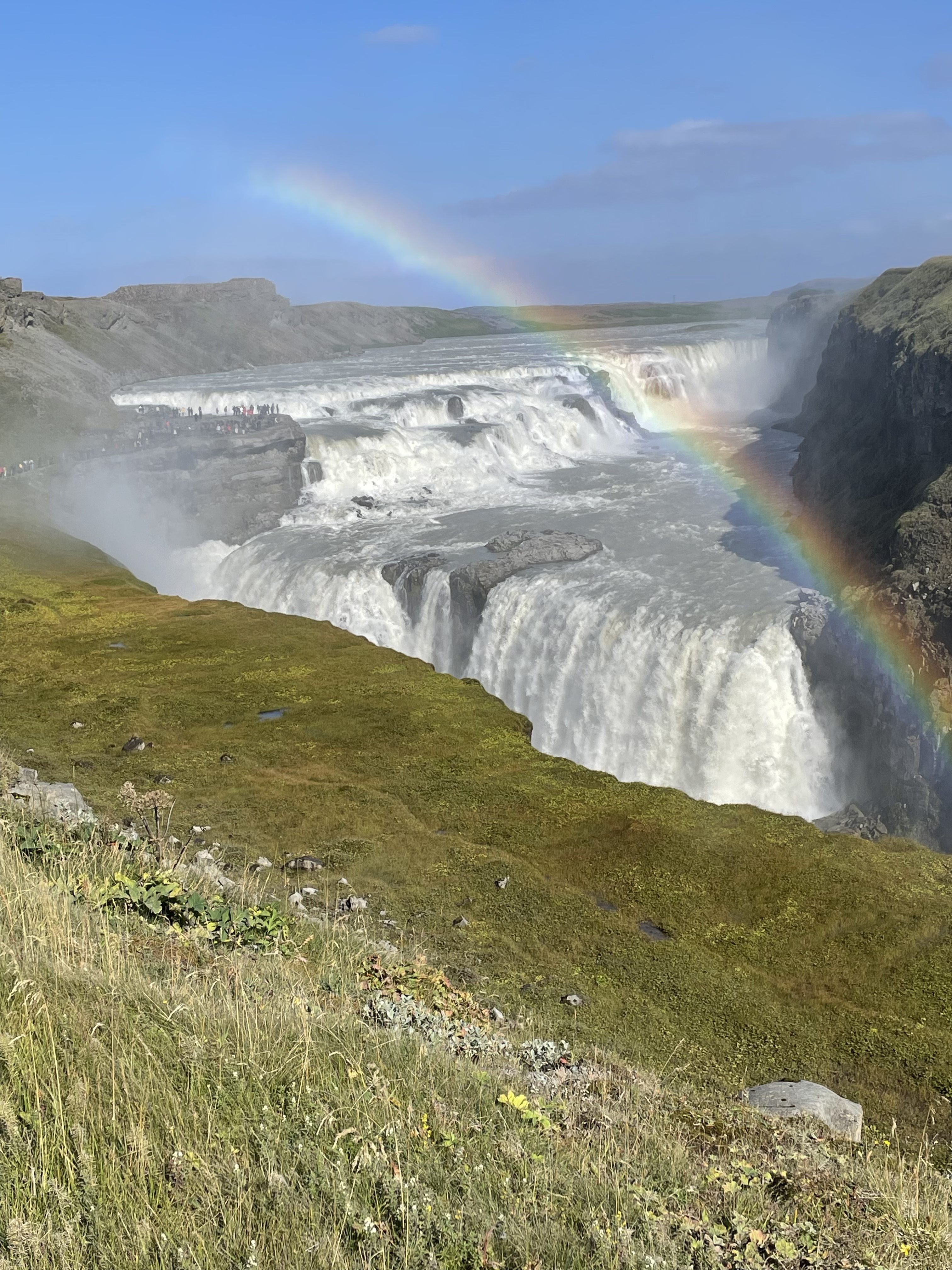
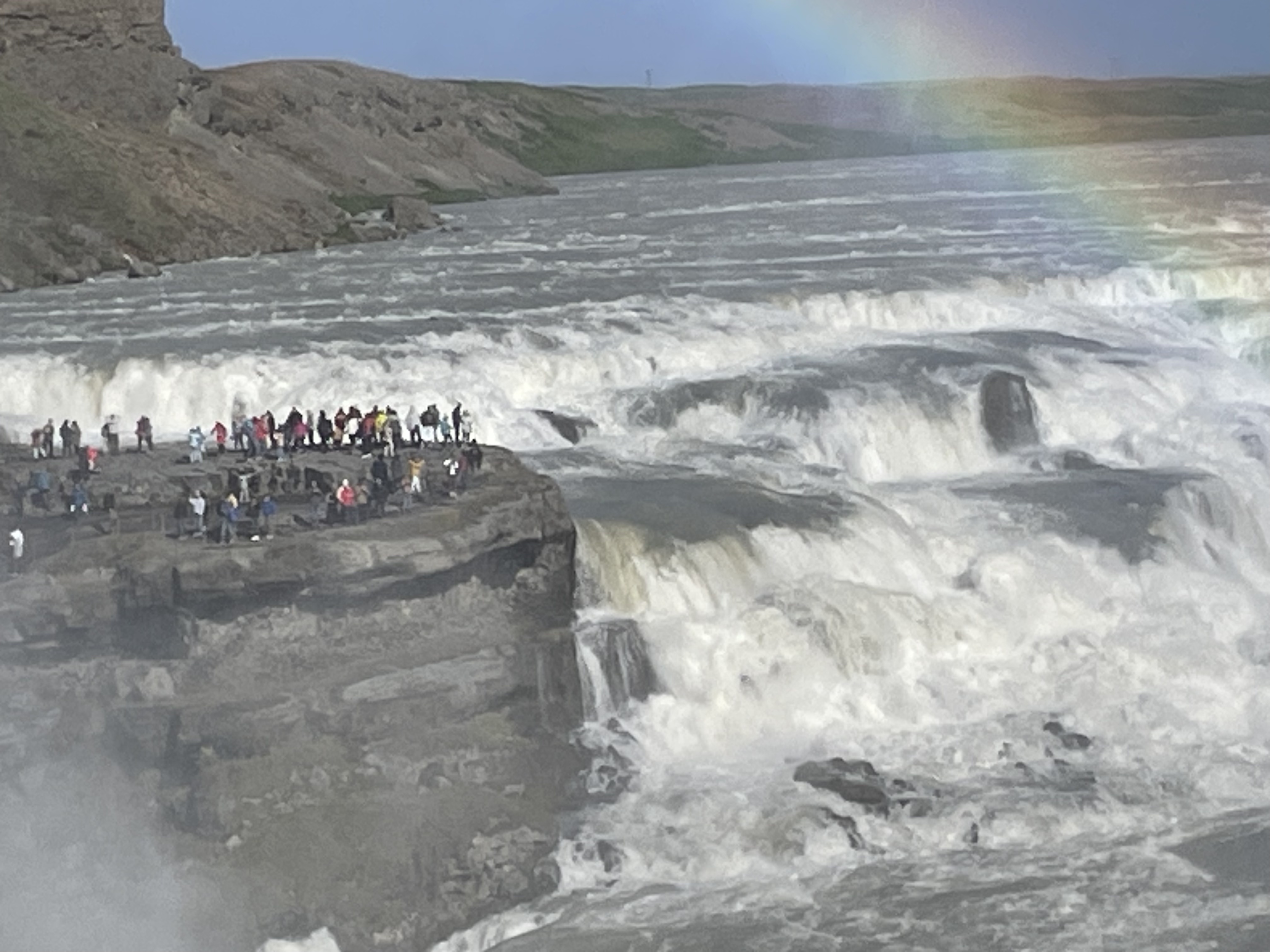
After lunch we travelled a short distance to the Gullfoss Falls, which means “the golden falls.” Our chauffeur dropped us off midway down the hill but it was still a bit of a wet descent to the bottom level. It doesn’t quite rival Niagara Falls but the rainbow was pretty. Dad was quite close to the end of the rainbow at the bottom, but he claims there was no pot of gold. I stayed at the midway point and chatted with a couple from the US who were doing a similar tour with their siblings.
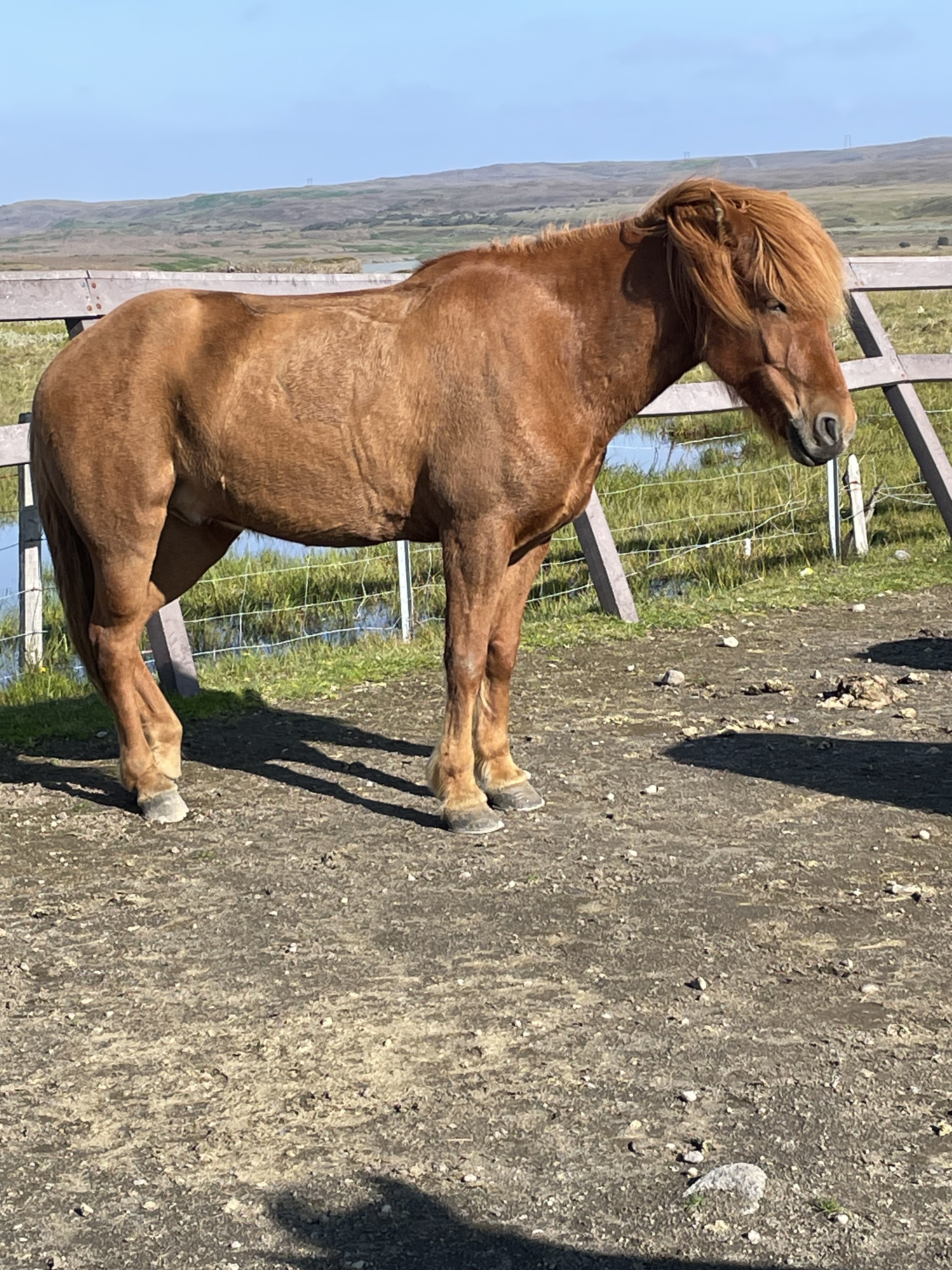
We saw a lot of horses in Iceland as well as farms with sheep and some cattle. We didn’t see any pigs. The horses are specially bred for hardiness owing to the ruggedness of the land. Laws in place prevent foreign-born horses from being imported and any horses exported are not allowed to return. This ensures that the native breed experiences few diseases. Typically they are used for sheep-herding, leisure, showing and racing.

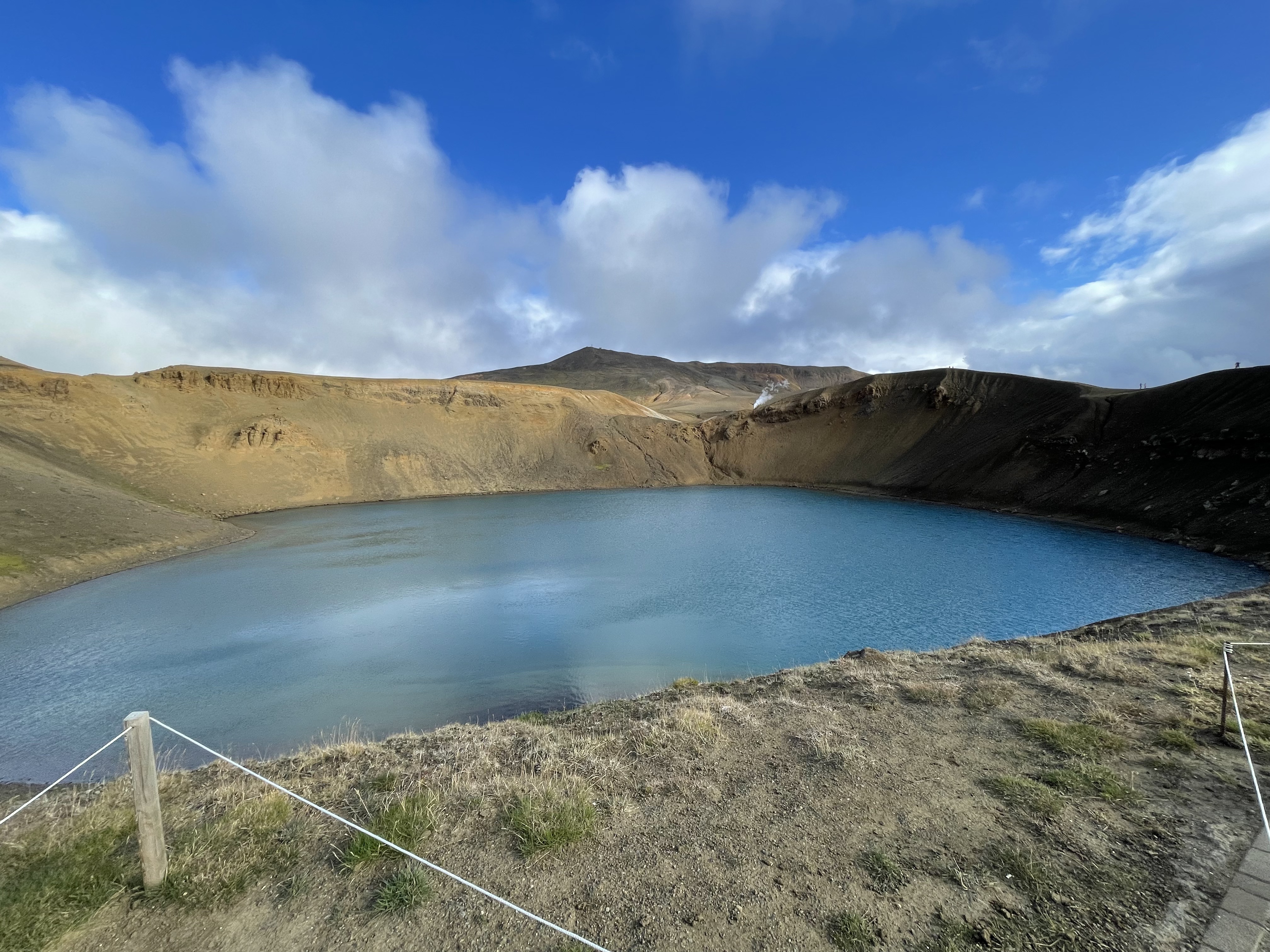
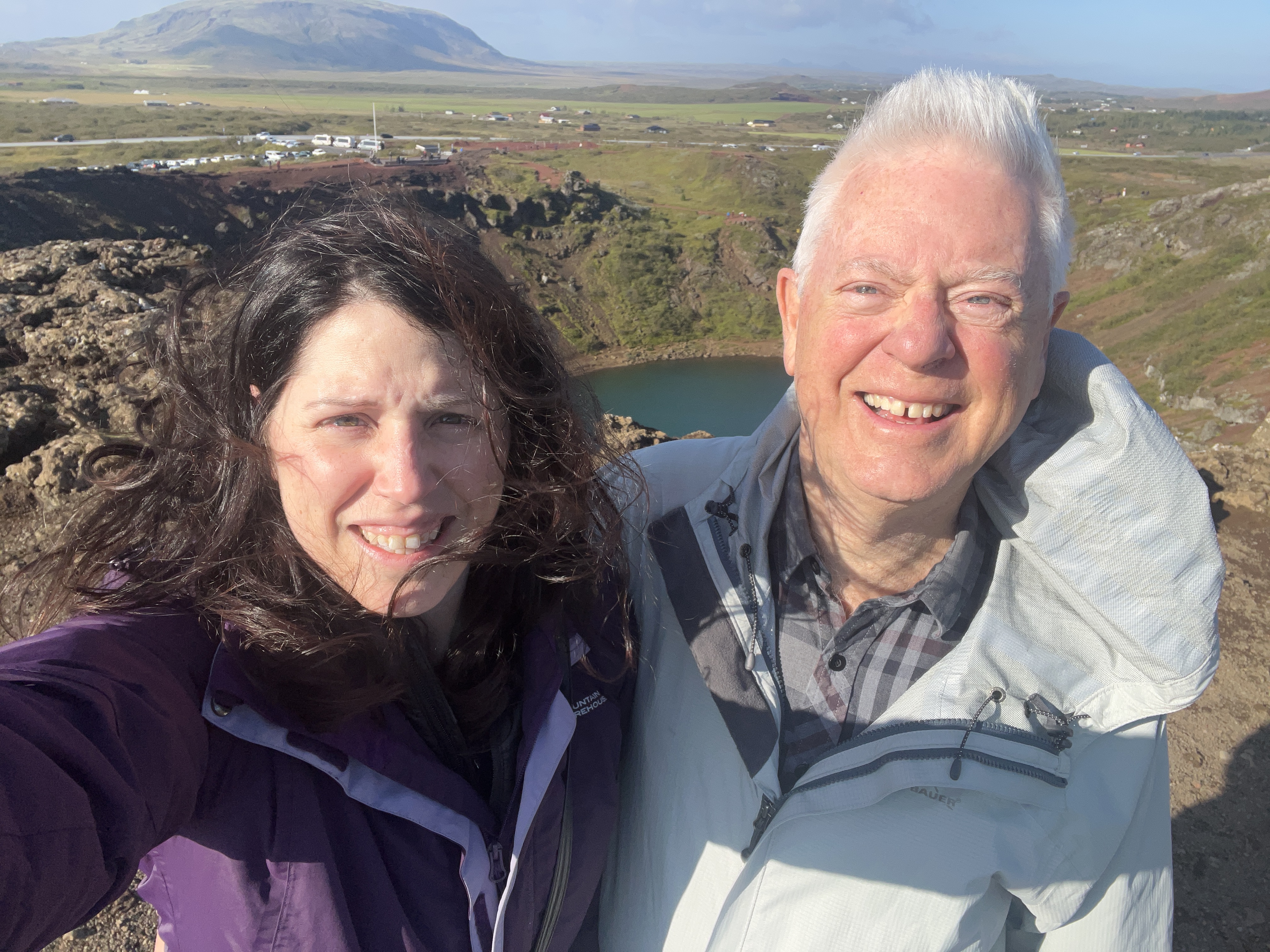
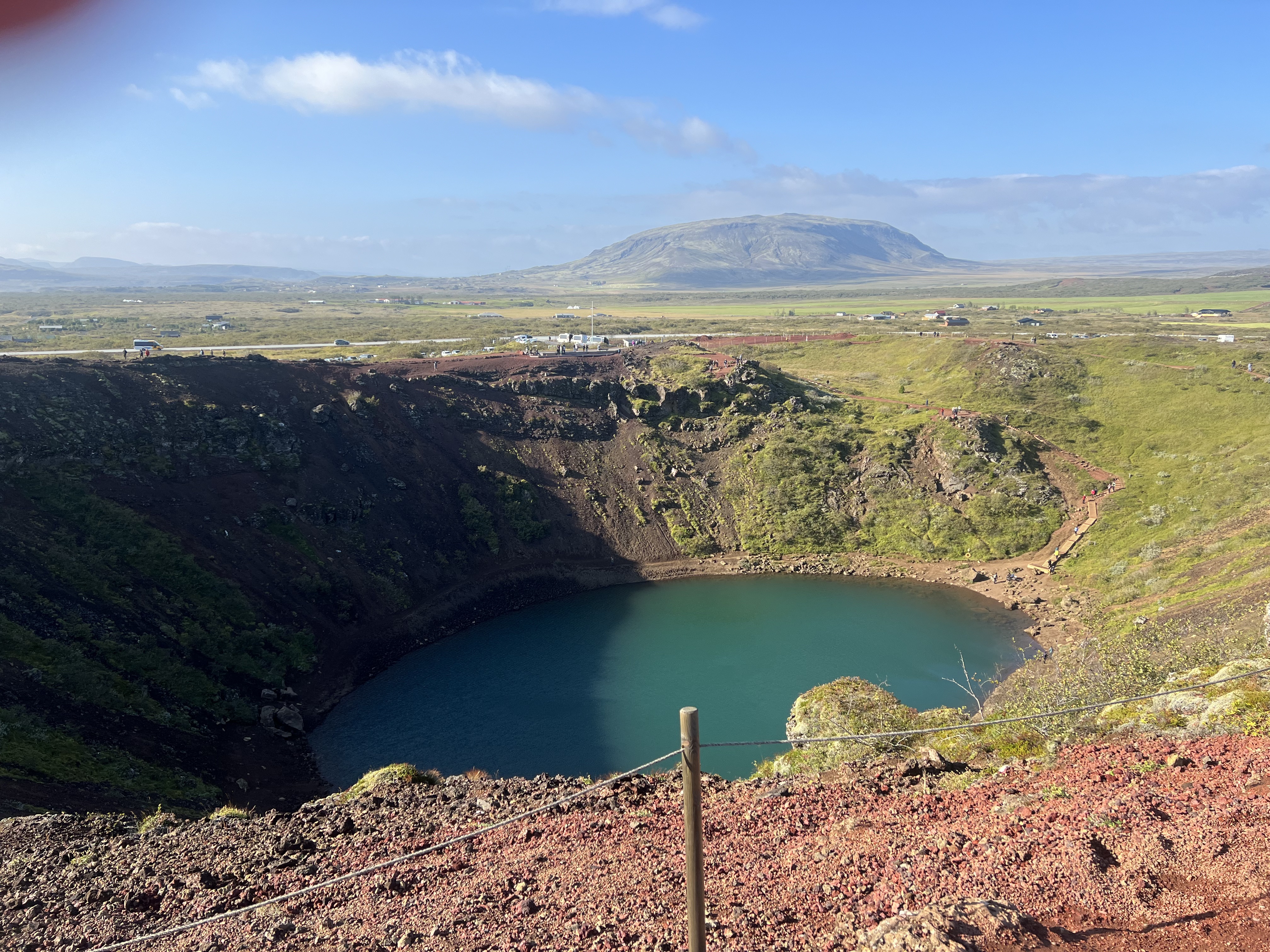
The last stop for the day was the Kerid Crater, which Jenn and dad hiked around on their own. A volcanic crater thought to be about 6500 years old, it was formed by a volcanic cone that erupted, the weight of which caused the cone to collapse creating the current crater. It is made up of a unique red volcanic rock. The water is fairly shallow and is at the same level as the surrounding water table.
It was just a short drive from there to Sellfoss, our stop for the night. Dinner was at the Old Dairy Food Hall, an historical house that was the first dairy factory built in 1929. It has eight different restaurants in a gourmet fair type setting so everyone’s taste buds could be satisfied. After a little walk to wear off dinner, we turned in early, because we had an early departure the next morning to catch the ferry to Westman Island.

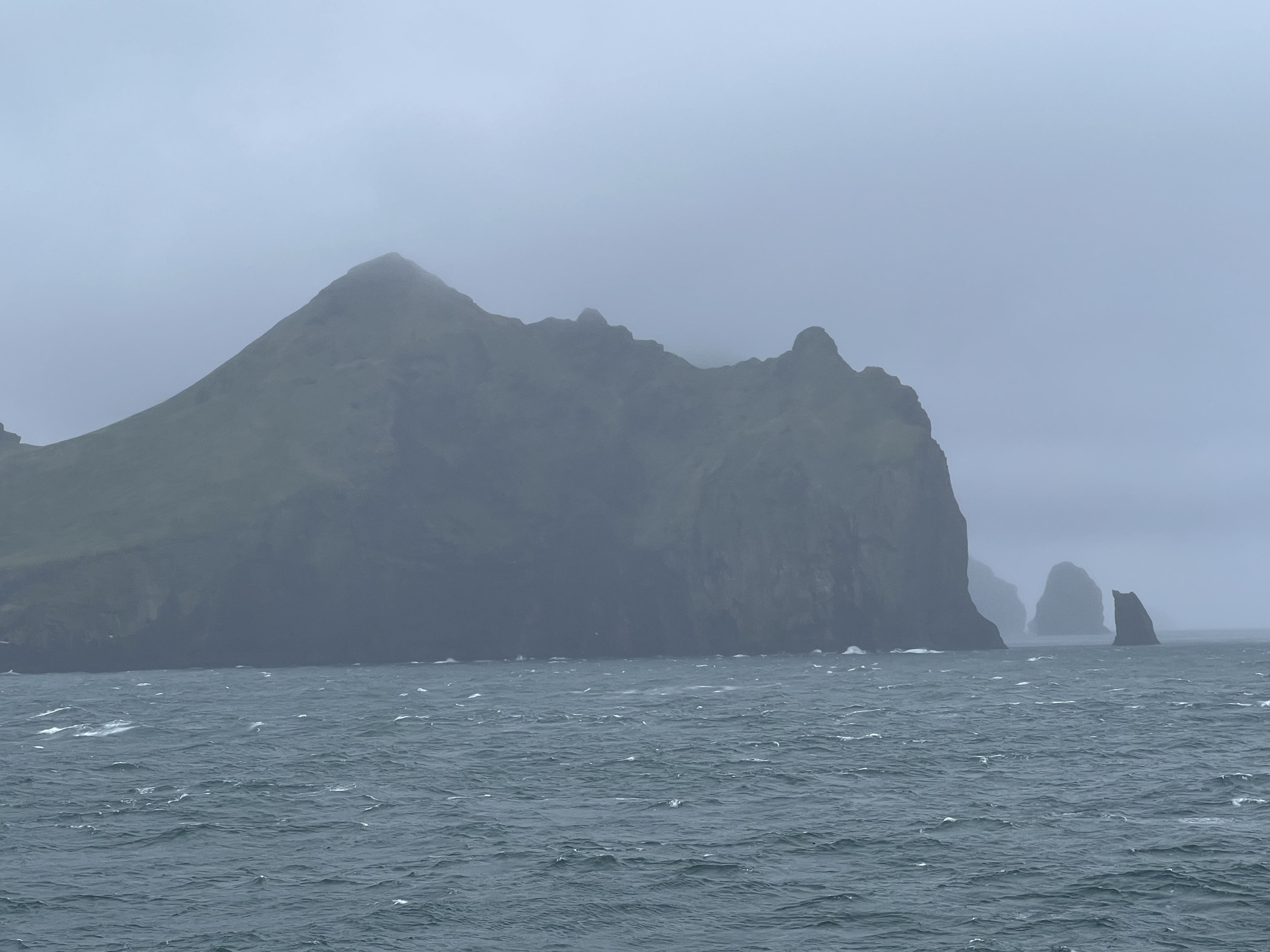
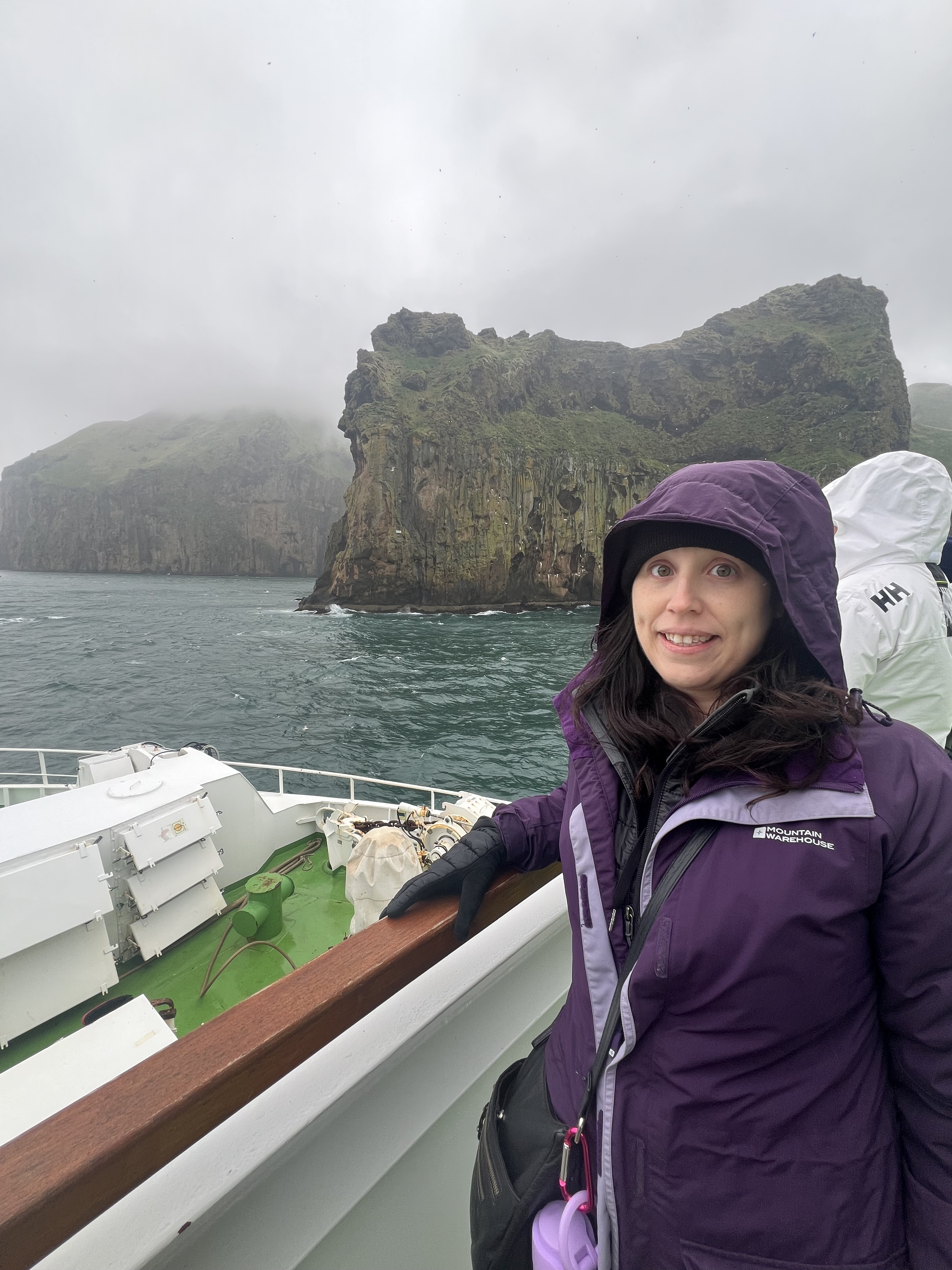
Day 3 – The weather was damp with a biting cold wind. We’re told Iceland has not had a good summer weather-wise and we are just experiencing the ups and downs of living in a maritime climate. Our route took us on a ferry over to Westman Island, scene of a large volcanic eruption in 1973. The entrance to the harbour is shielded by very high cliffs that dramatically rise out of the ocean. We certainly wondered how the captain pilots a ship through such a narrow opening. Practice makes perfect, I guess.
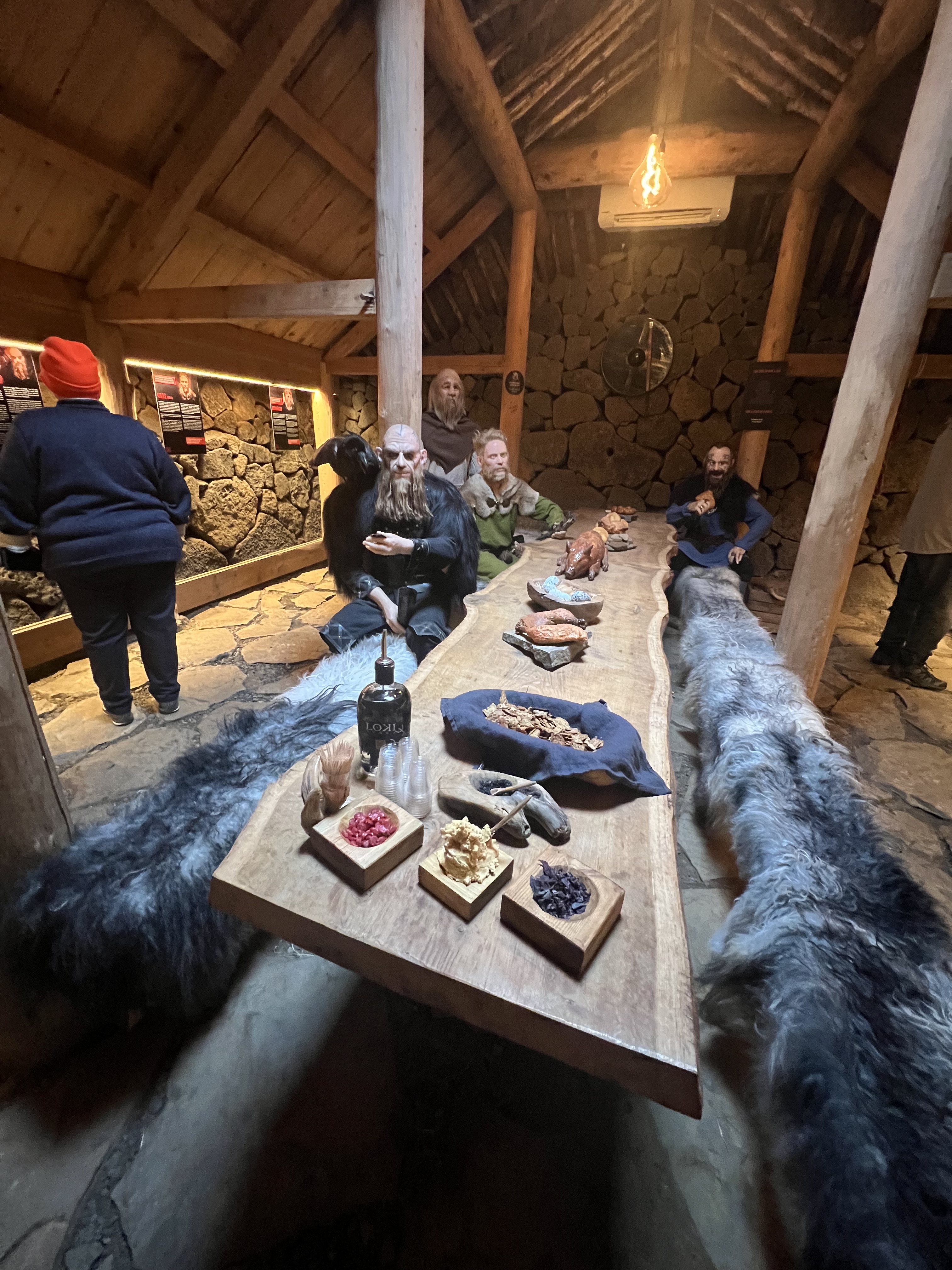
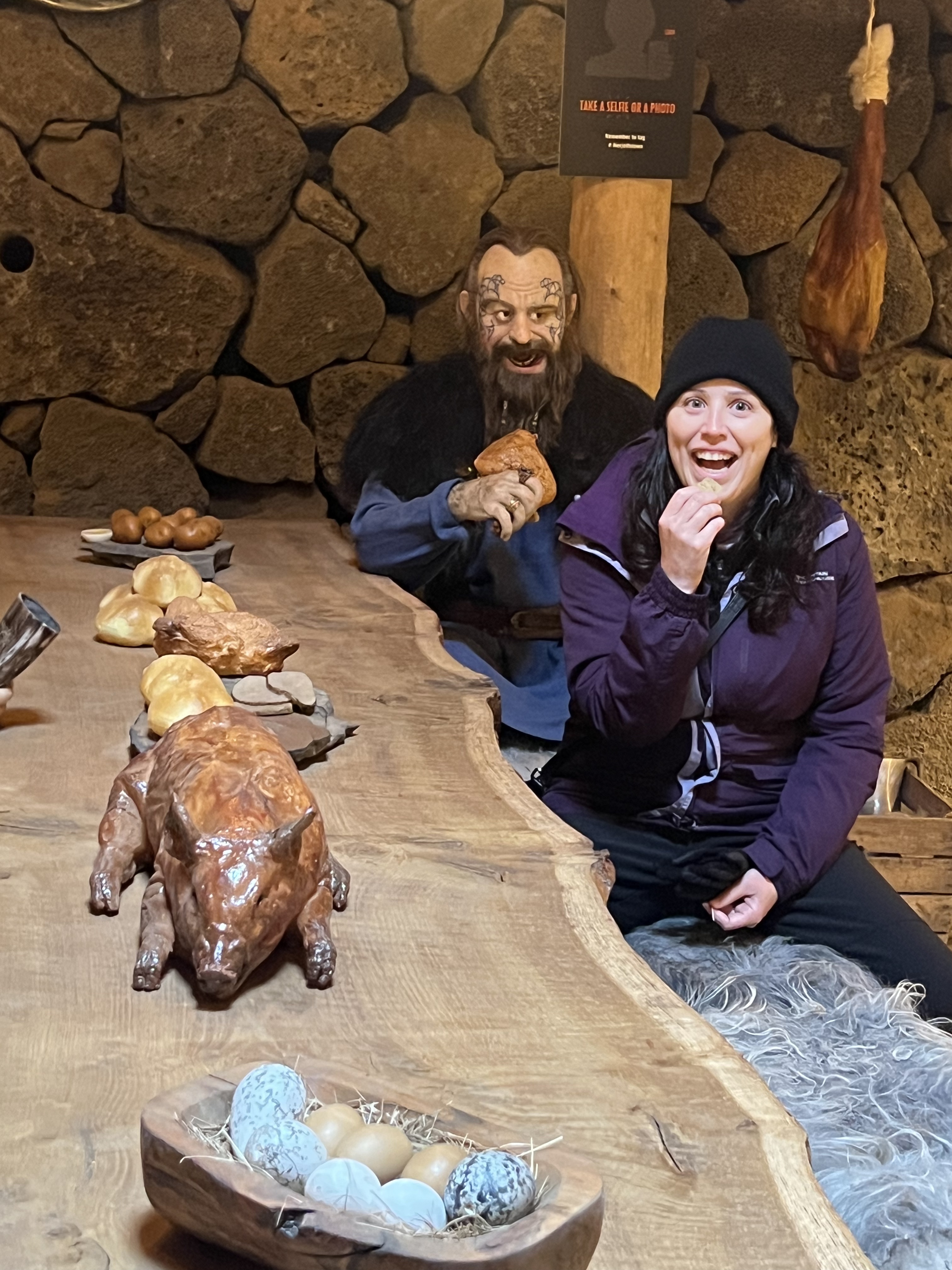
Our first stop was at a little Viking museum that told the story of Herjolfur, his wife Freyja, and their two children. The turf house has been recreated along with artifacts and samples of traditional Viking delicacies. We sampled dulce, dried sausage, dried fish that seemed like a cracker, whipped butter, black lava salt, and Viking vodka.

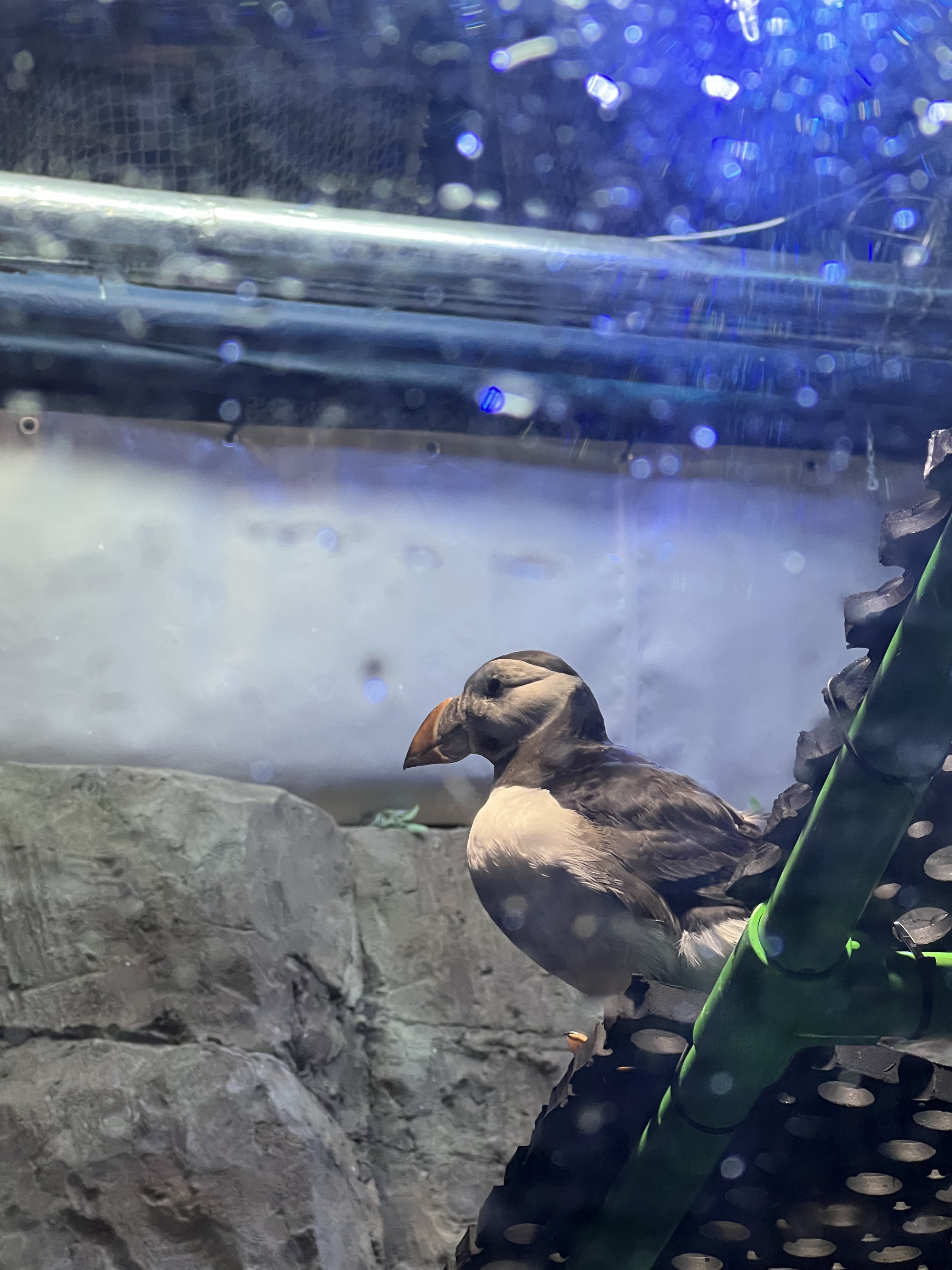
We had lunch at a little cafe down near the harbour and then visited the Puffin and Beluga Rescue Centre. The Centre provides a natural sanctuary in a protected sea inlet that allows for land-side care. Currently two belugas, Little White and Little Gray, who were rescued from a Chinese water park, call the sanctuary home. It is the hope that this more natural setting will provide opportunity for more belugas to be housed. The Centre also acts as the Puffin Rescue Mission, treating puffins and then releasing them. Locals, including schoolchildren, act as the Puffling Patrol, finding and bringing in puffins (usually babies) in need of assessment and care. It is always the intent to release them back into the wild but at least three make the Centre their permanent home because of permanent injuries.

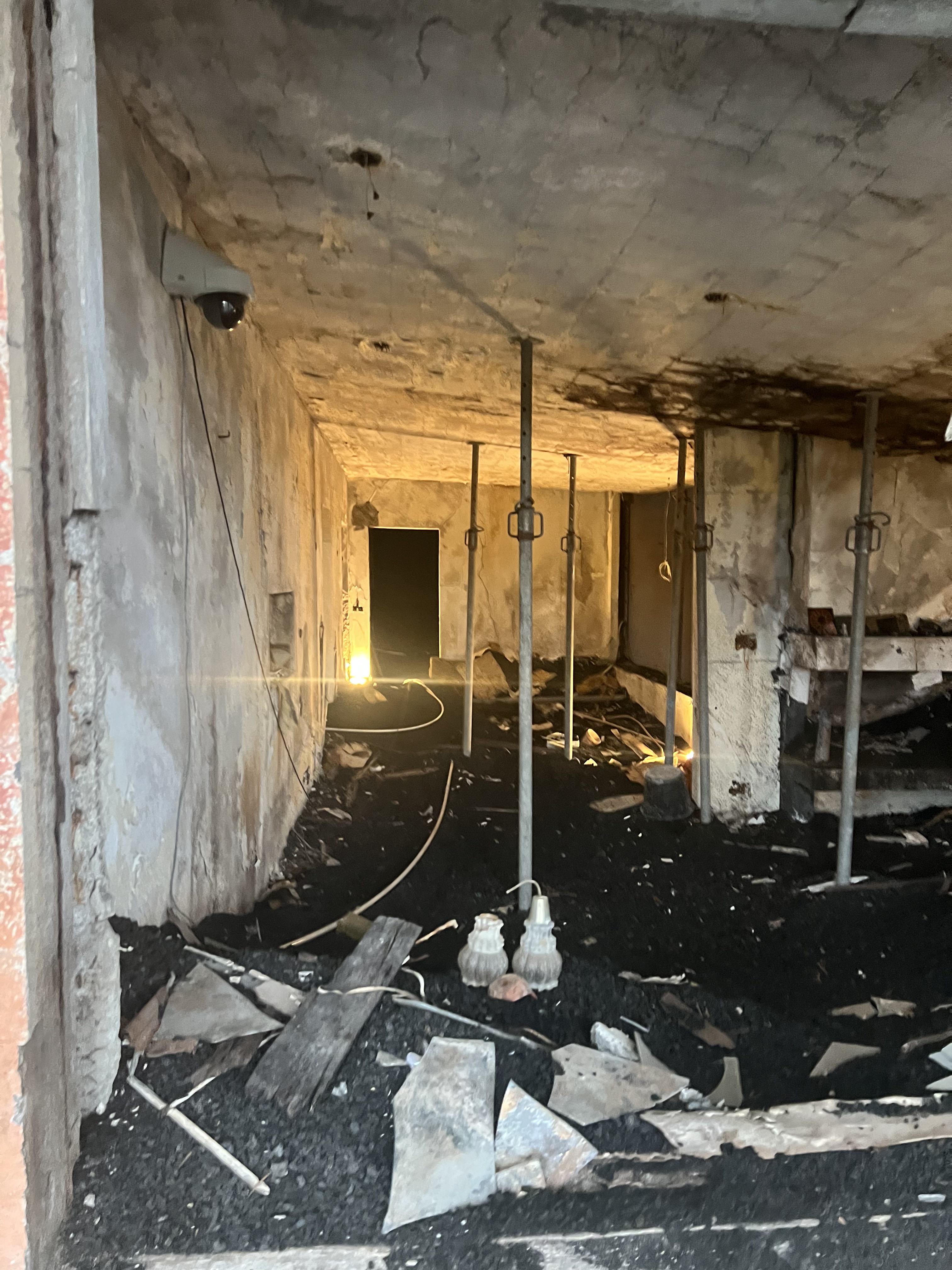
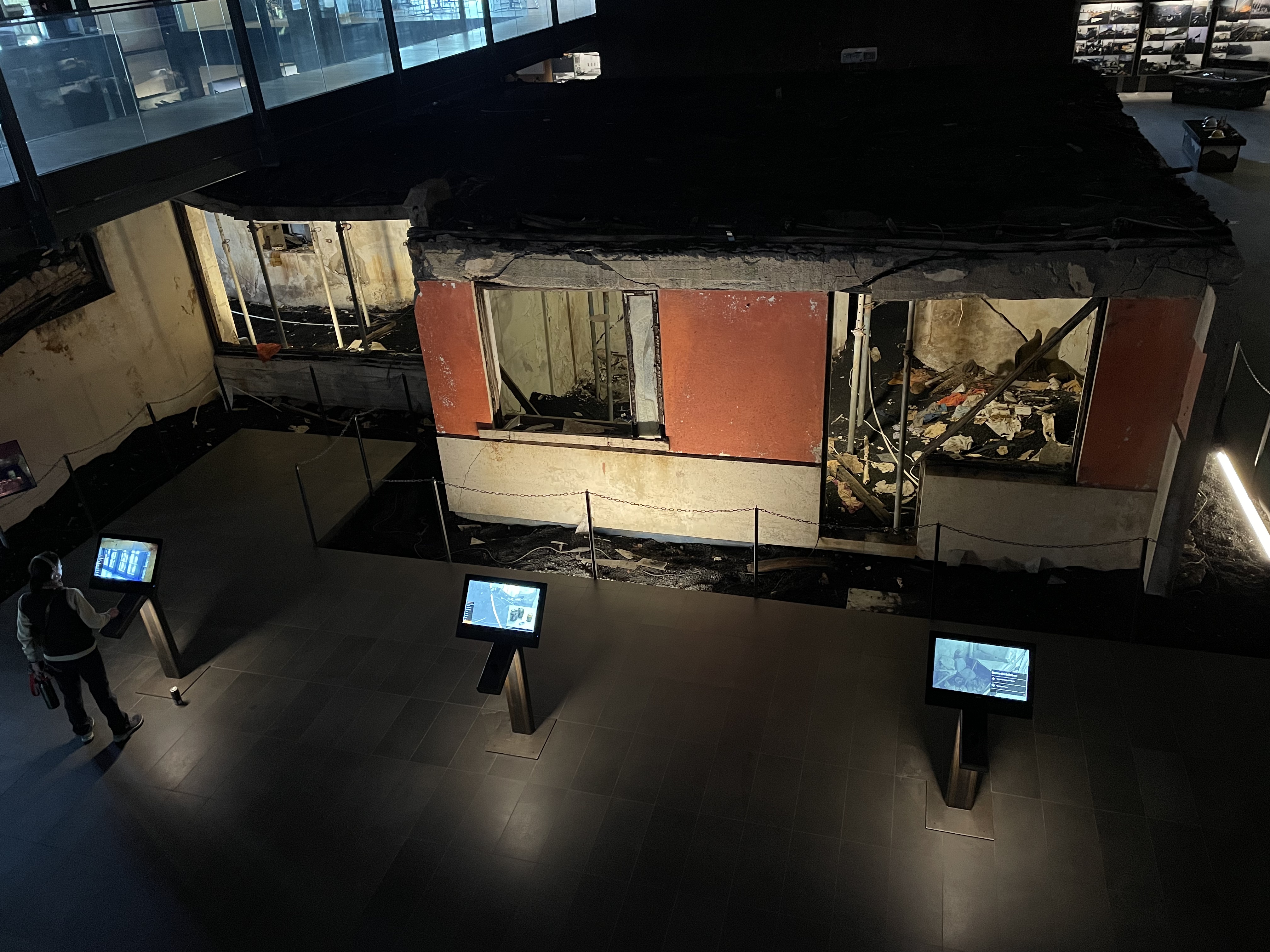
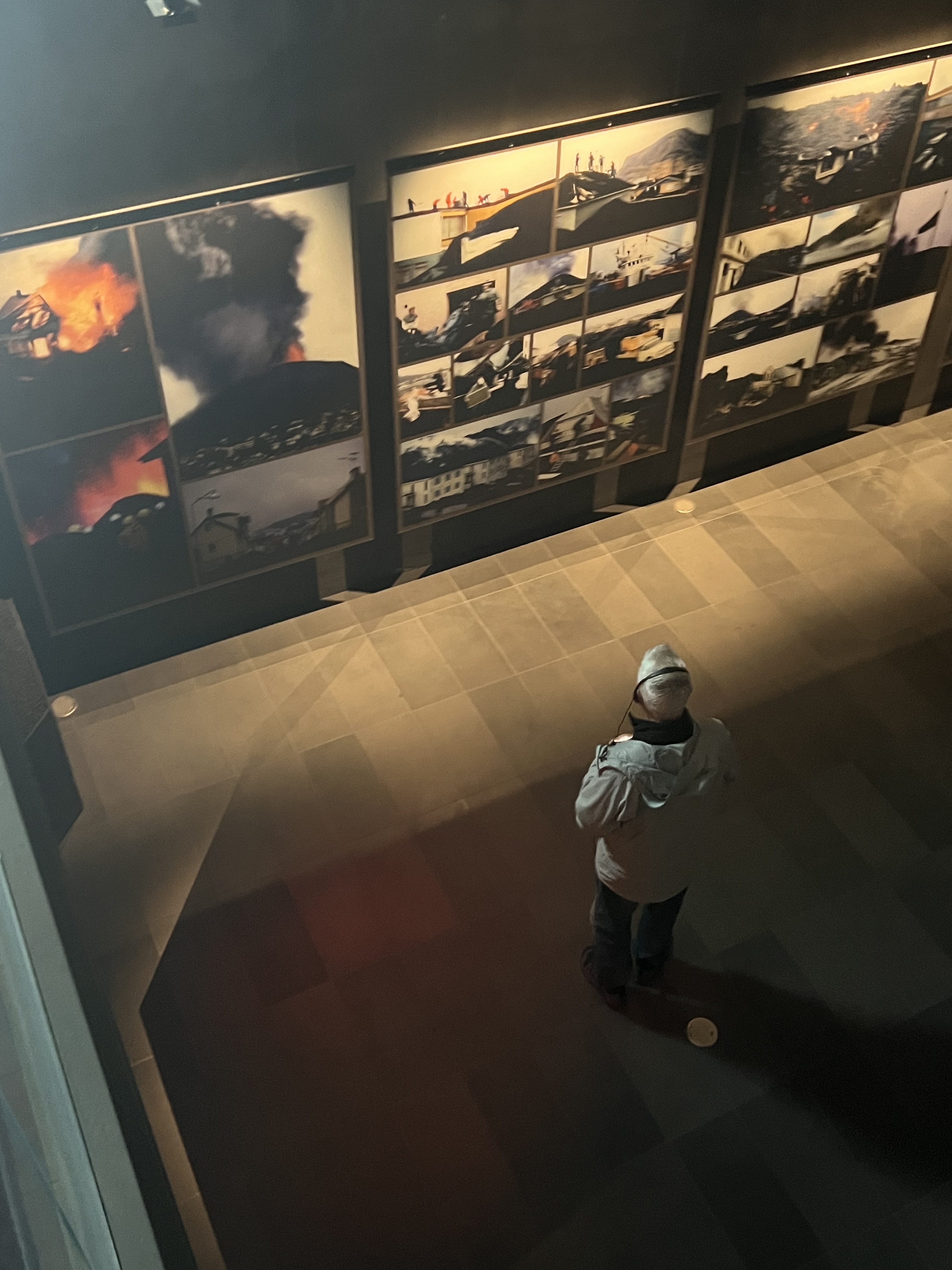
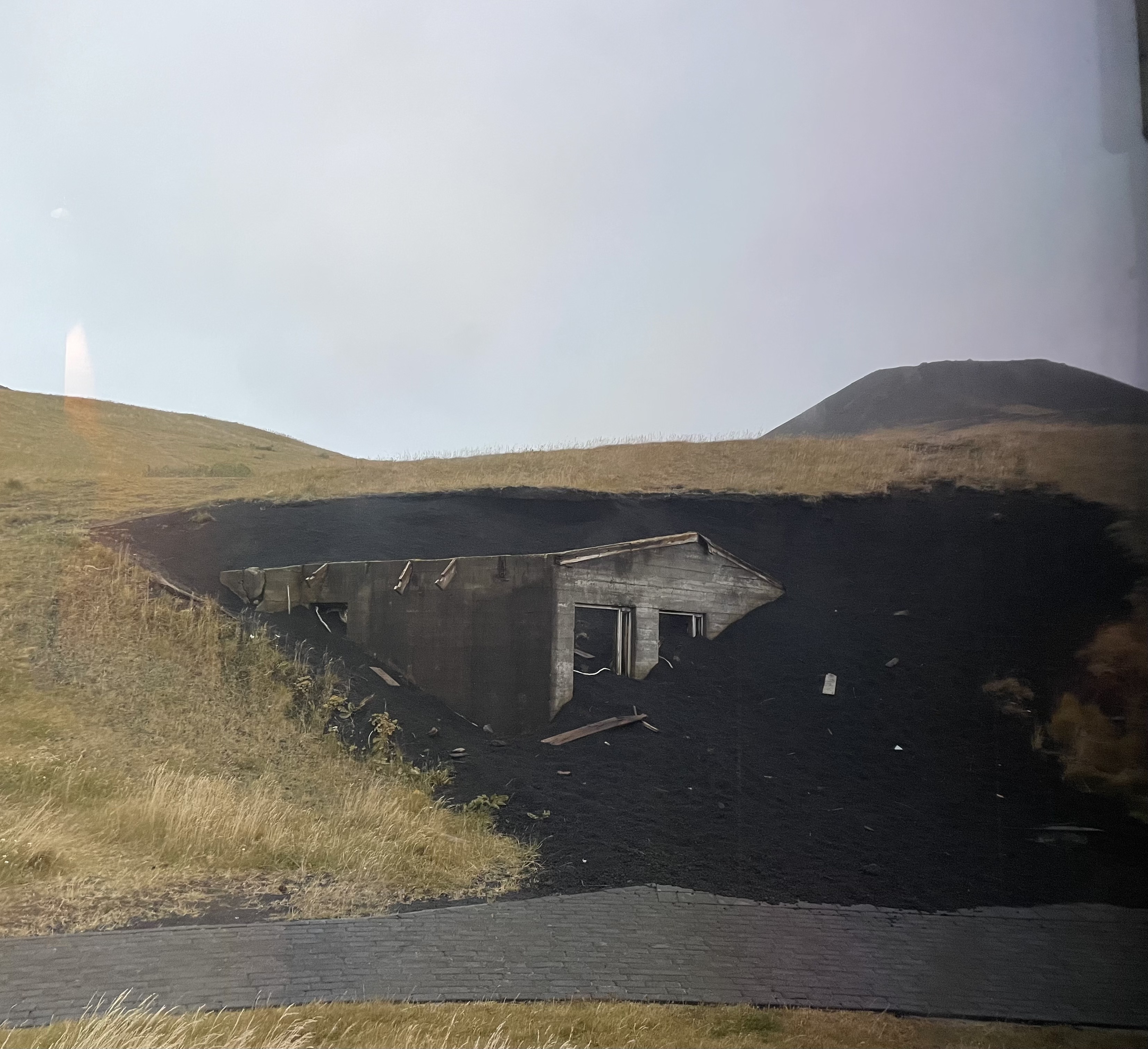
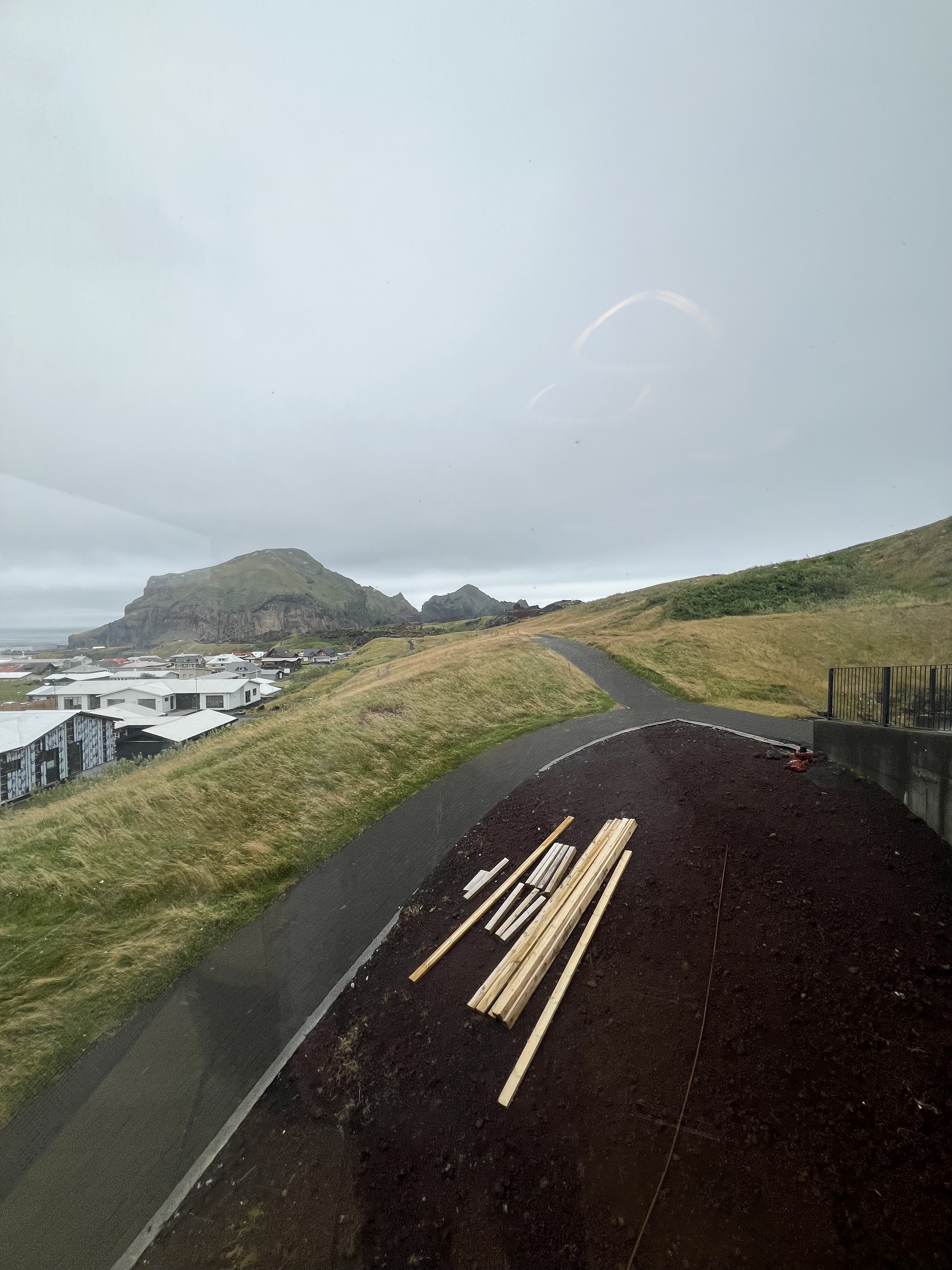
Our next stop was the site of the eruption of Eldfell on January 23, 1973 in the early morning hours. Lasting until July 3rd, nearly 1/3 of the homes and buildings were burned or buried under the lava and ash. A storm the previous day meant all the fishing boats were in port providing the means to evacuate 5000 people from the town quickly. As a result of the eruption the island grew by more than 2 square kilometres, the harbour entrance that was almost blocked by the lava ended with a better protected harbour, and the lava brought unlimited landfill material which had been scarce. It also brought new people to the island while others who lost their homes decided not to return.

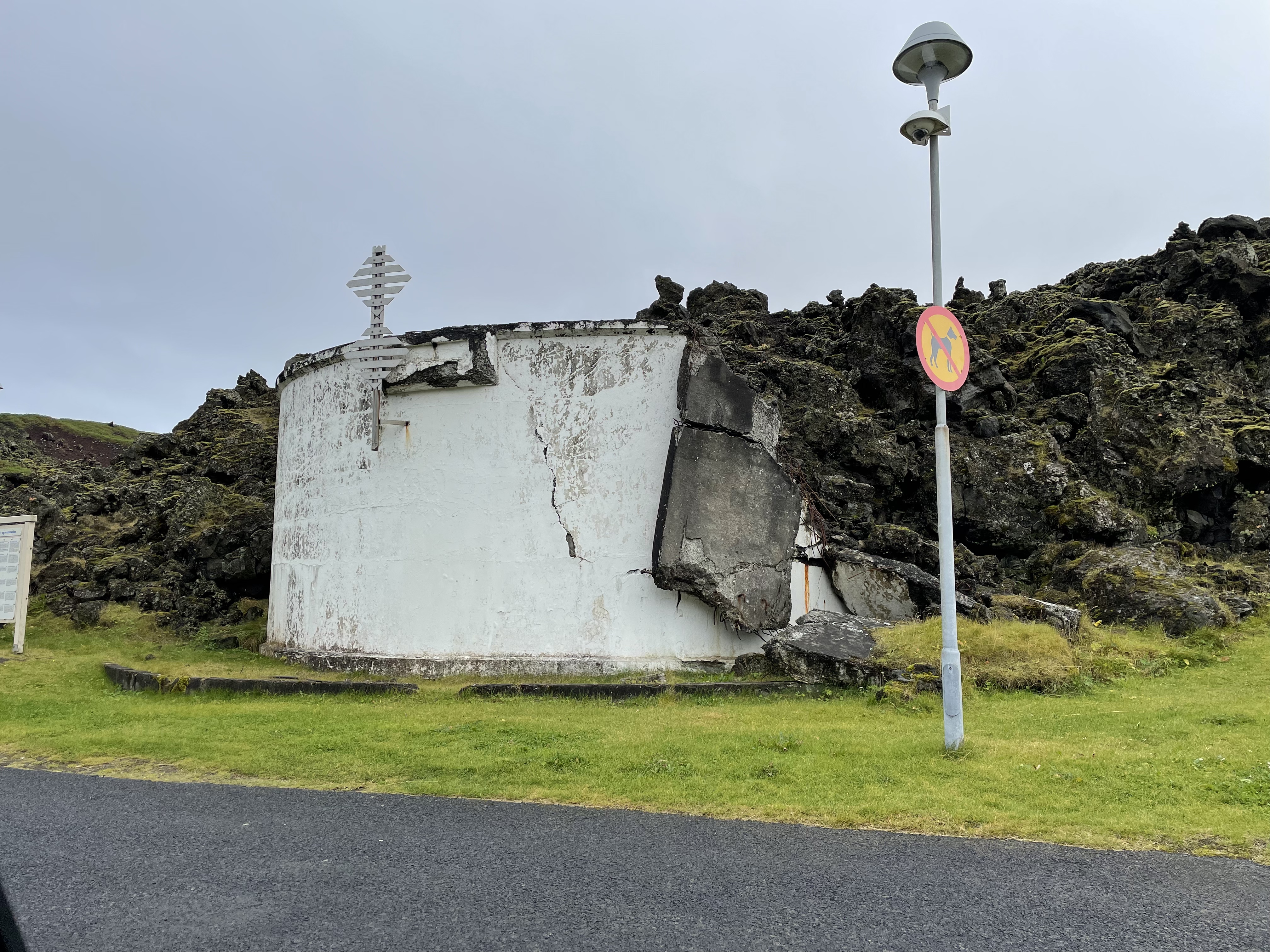
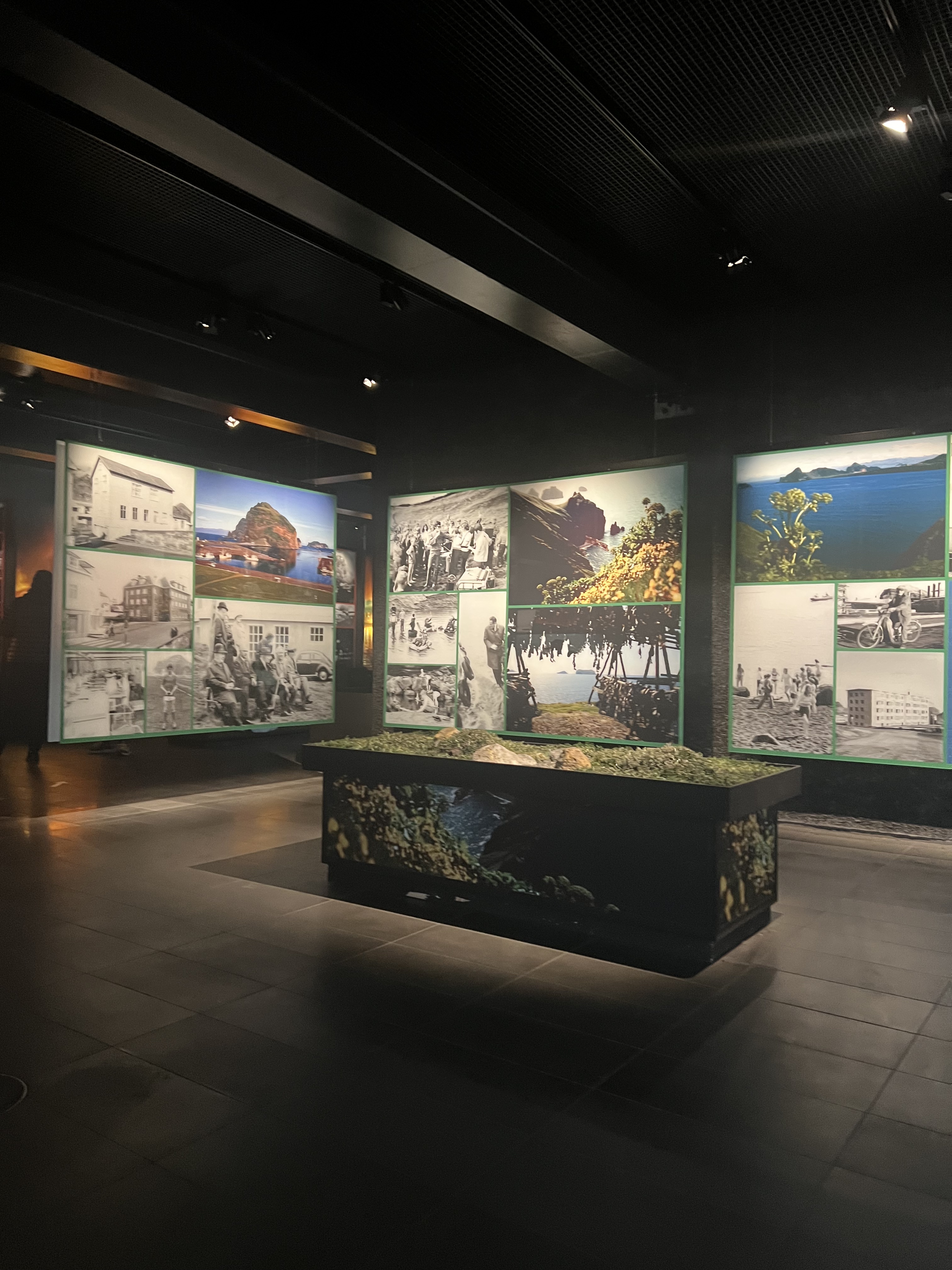
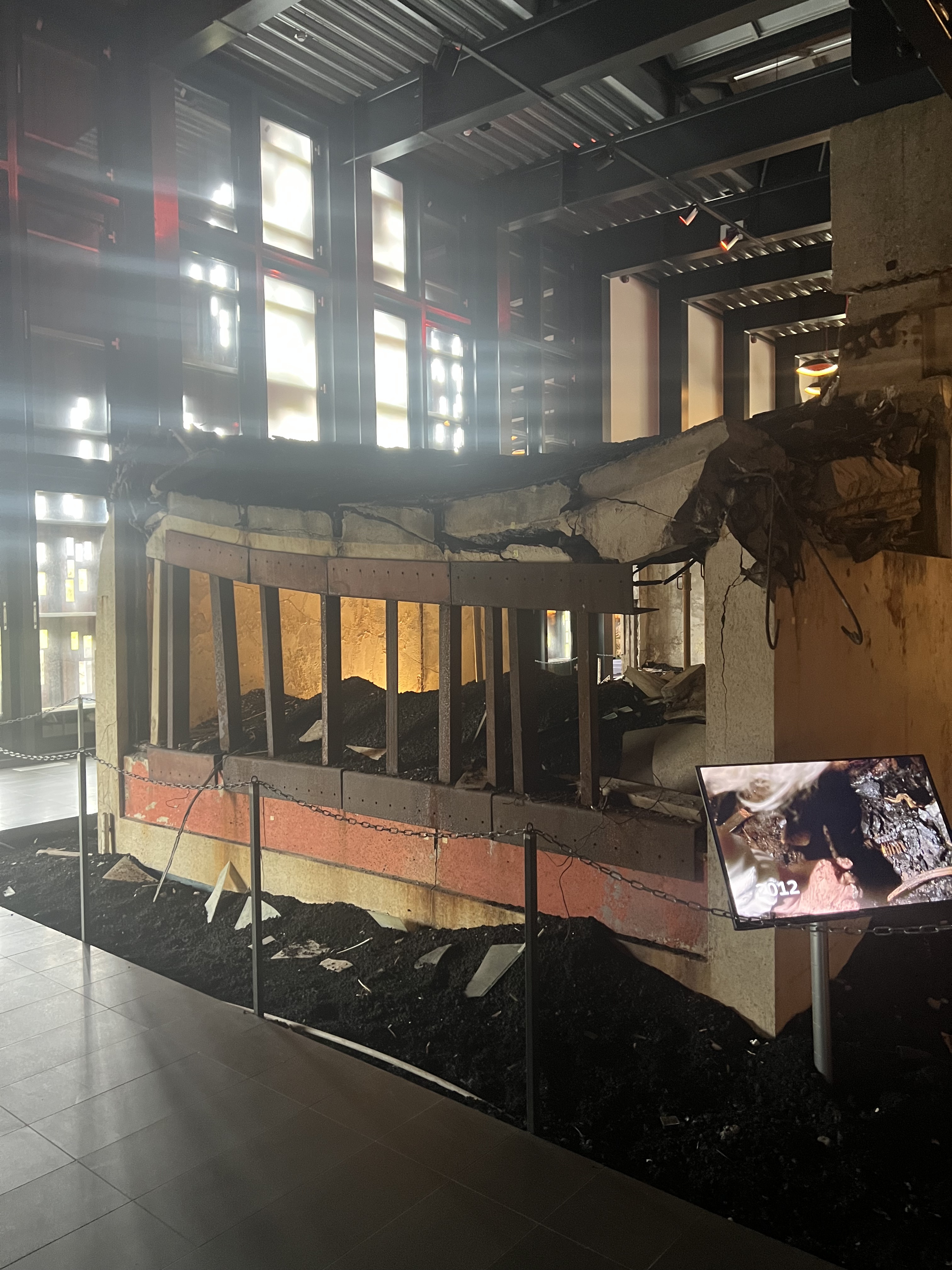
Most of the oldest part of the town was completely buried, but within months rebuilding and reconstruction of the town’s infrastructure was begun. In May 2014, a museum of remembrance was opened giving visitors a chance to go back in time and learn about the dramatic events that took place. The highlight is the house at Gerdisbraut 10, which has been excavated, and the museum built around it. It demonstrates the cruel treatment of nature. Interestingly, the cemetery gates were filled with lava and ash but survived. One of the pictures show the destruction of the island’s water tank, still filled with lava rocks.
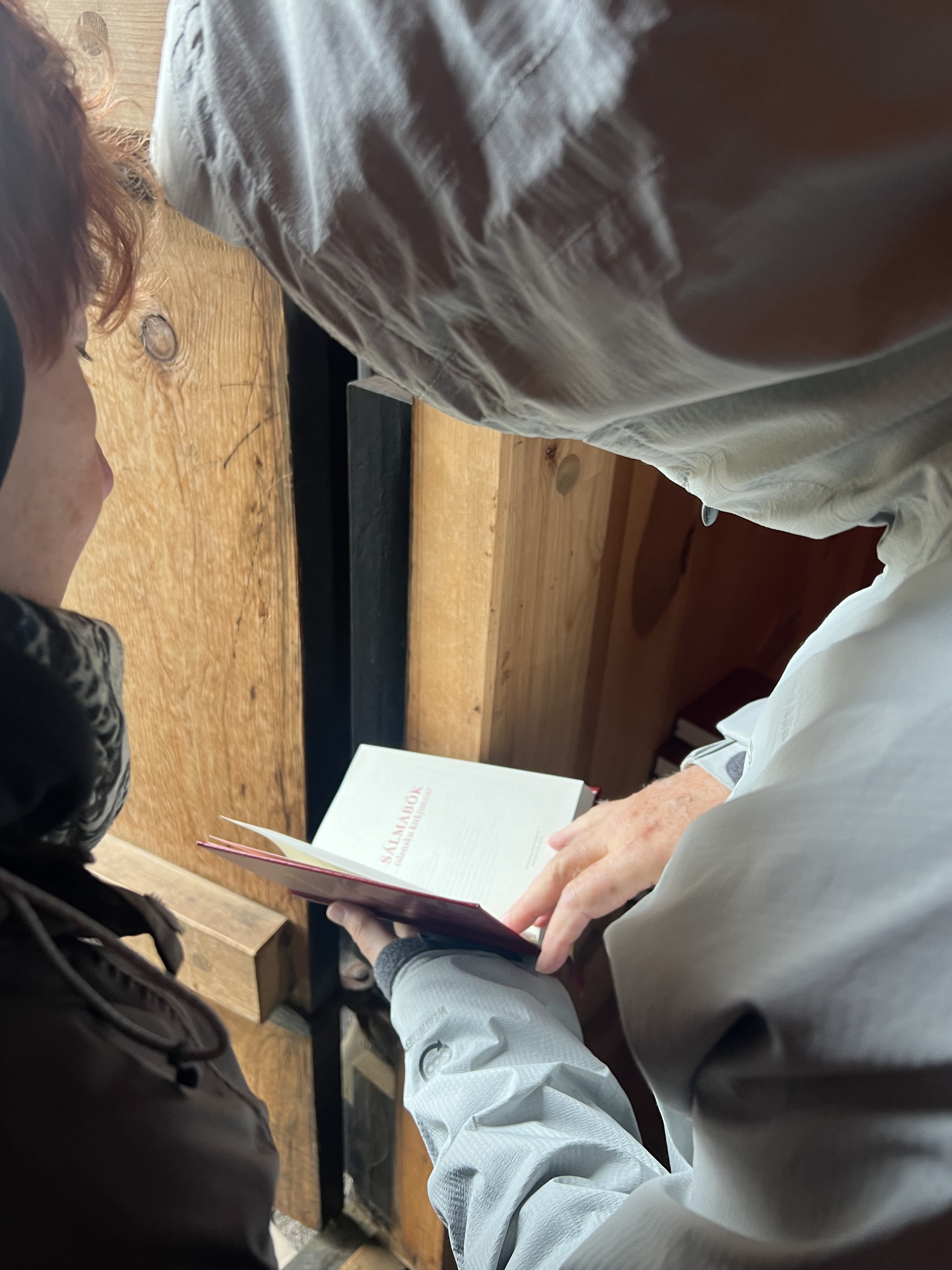
Lastly, we visited two reconstructed buildings down by the harbour. One was the home of Solveig Palsdottir, the first midwife on the island. The other was a replica church donated by Norway to celebrate the 1000th anniversary of Christianity on the island. Jennifer was taken by the children’s song The B-I-B-L-E in the Icelandic language.
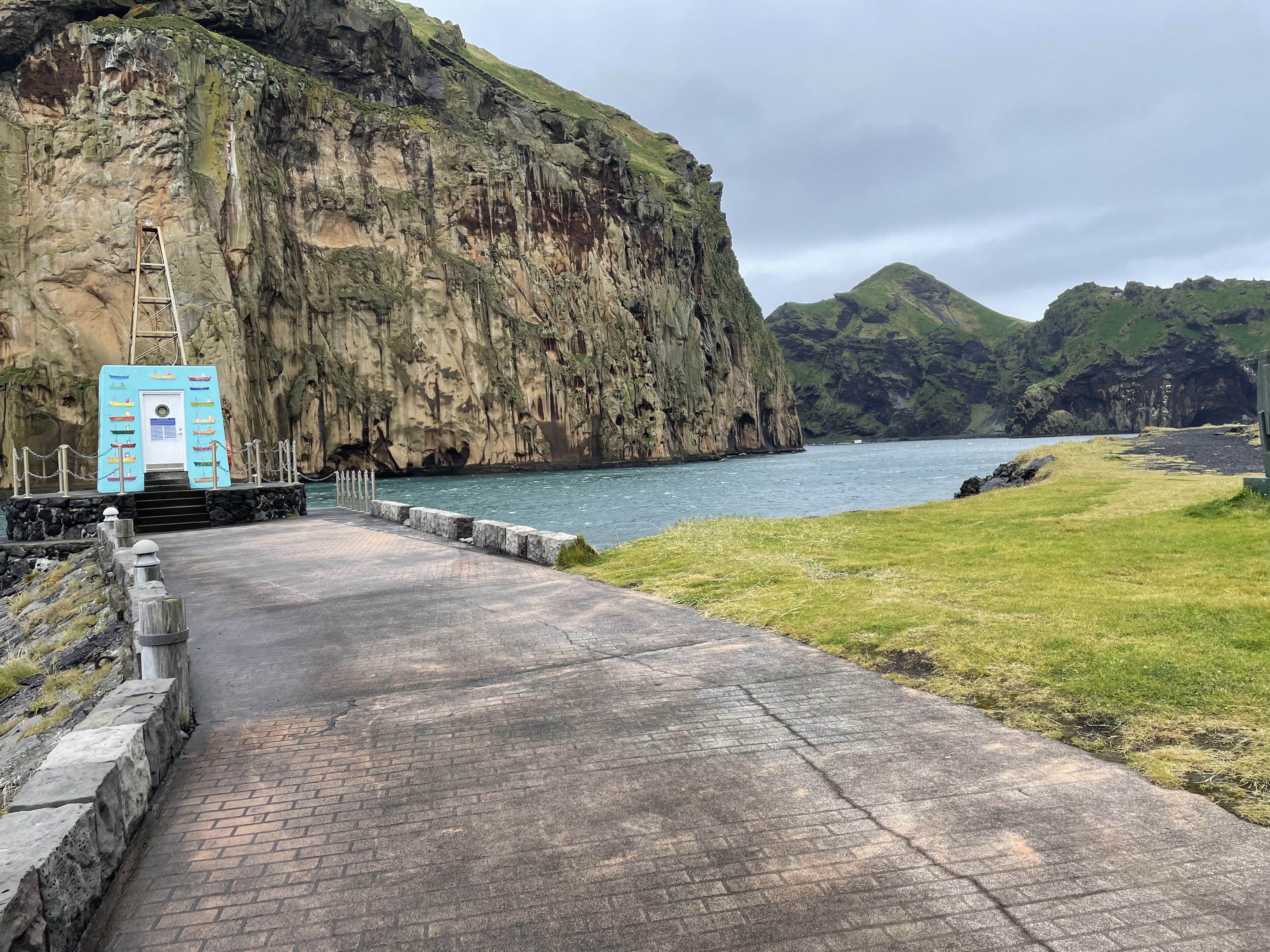
After all that, the day wasn’t quite over. We had a great meal at Gott’s restaurant in town and then dad and George visited the local swimming (thermal) pool for a quick dip. Unfortunately, the weather wasn’t really showing it off to its best.

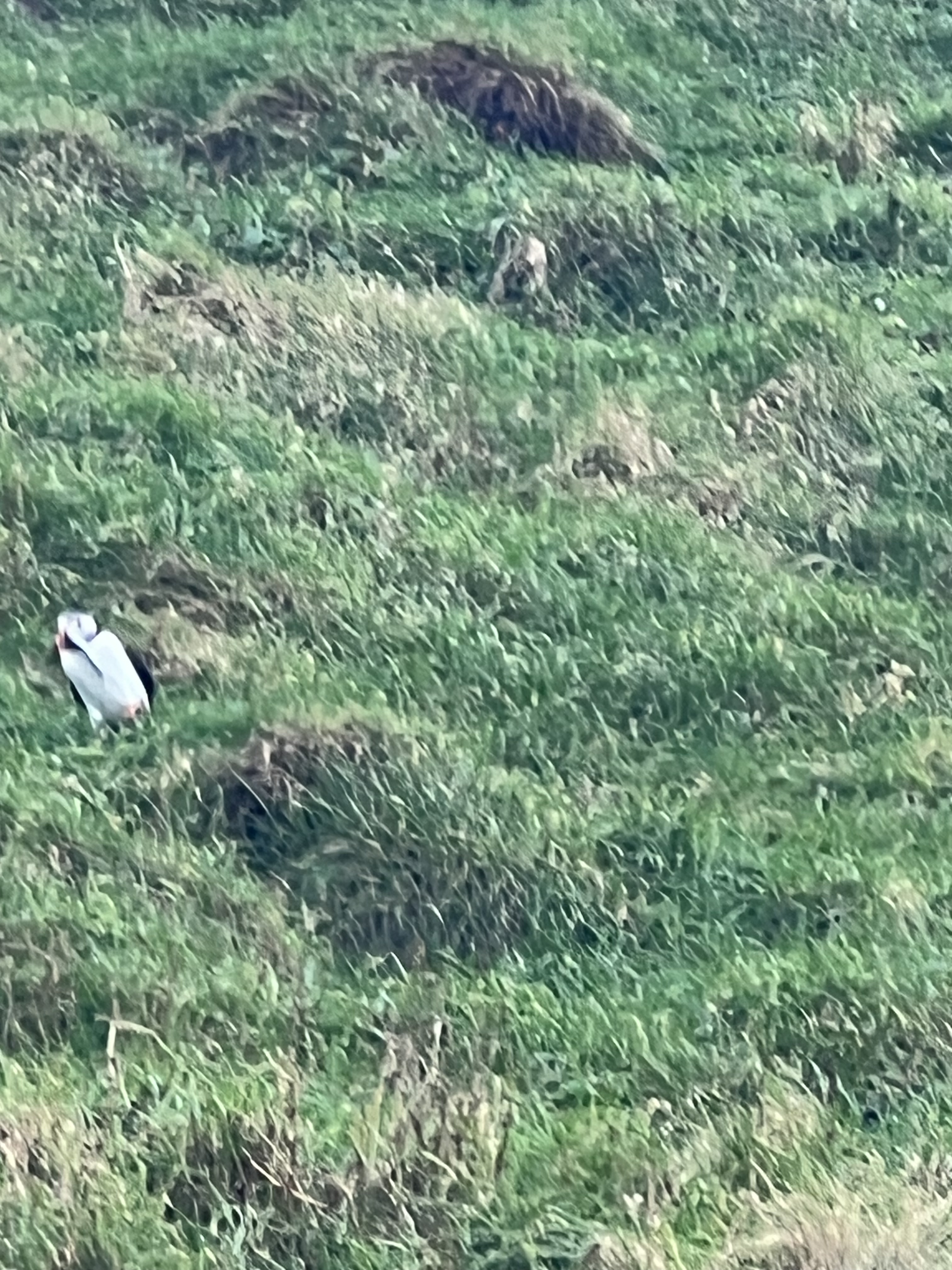
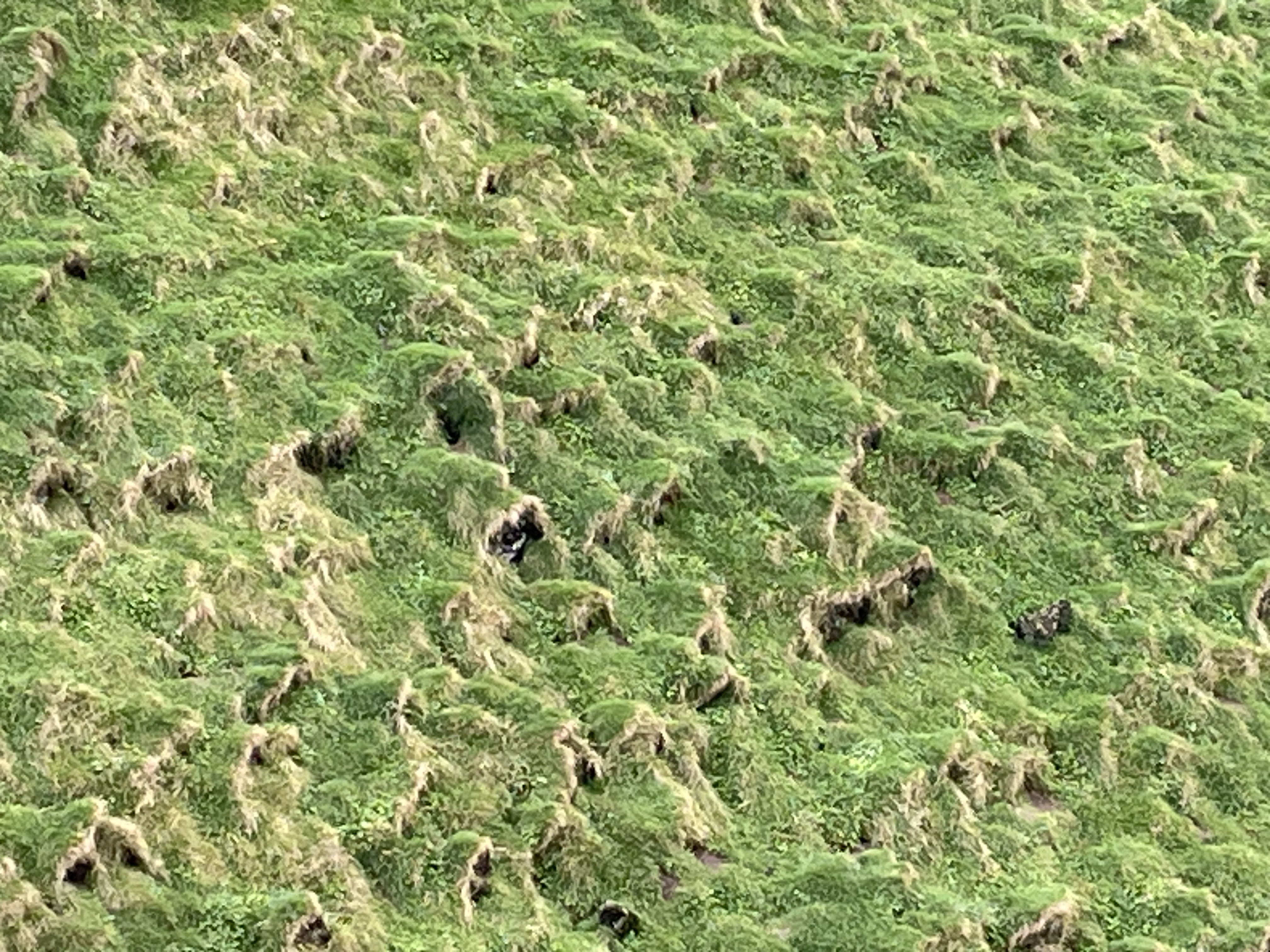
Day 4 – Today was all about the puffins and waterfalls. After a bit of a slower morning, we drove out to see where the puffins nest. The hillside is covered with their burrows and while most had already left their nests for the winter, there were still a few coming and going. They are very hard to capture on film!
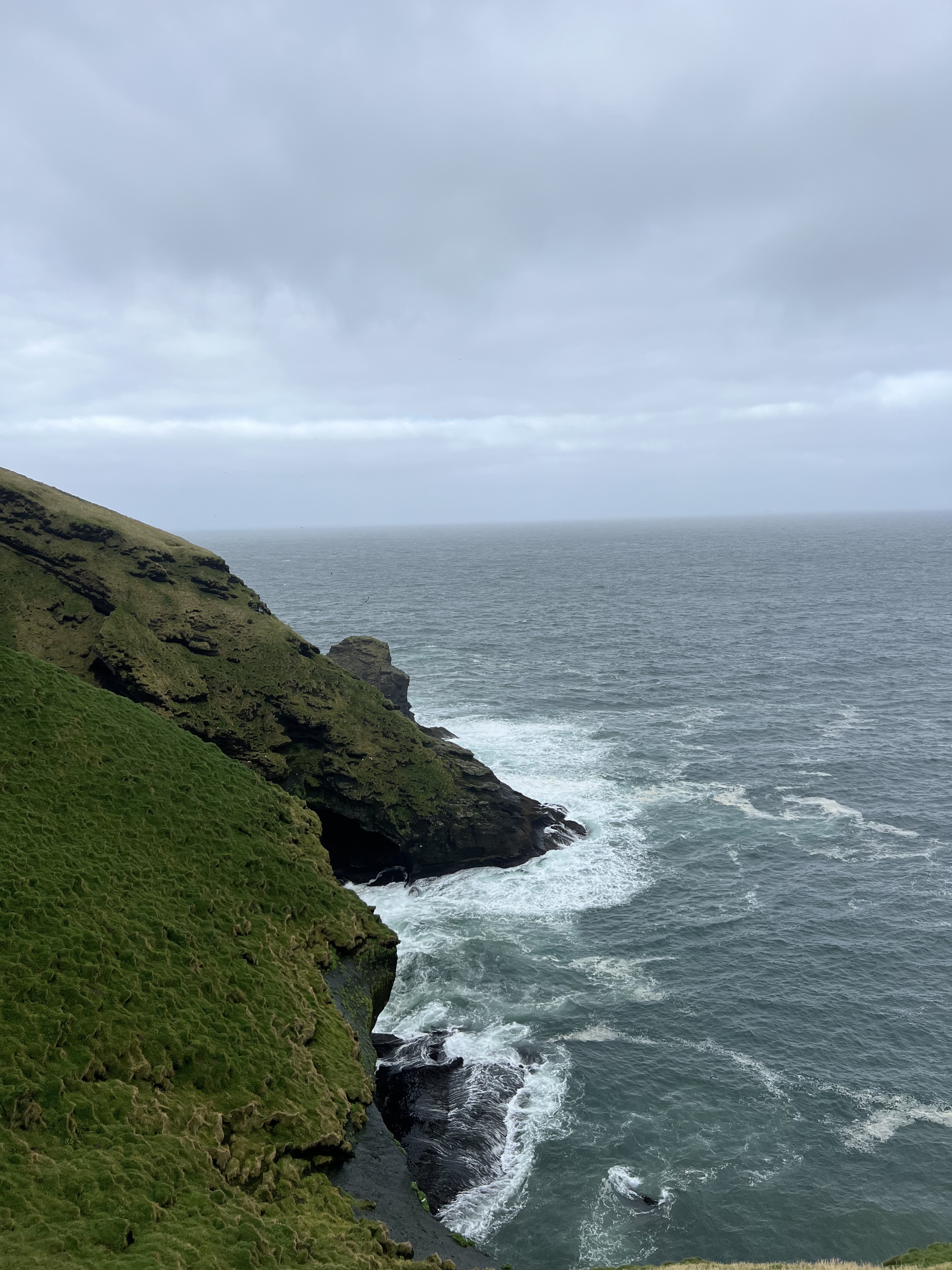
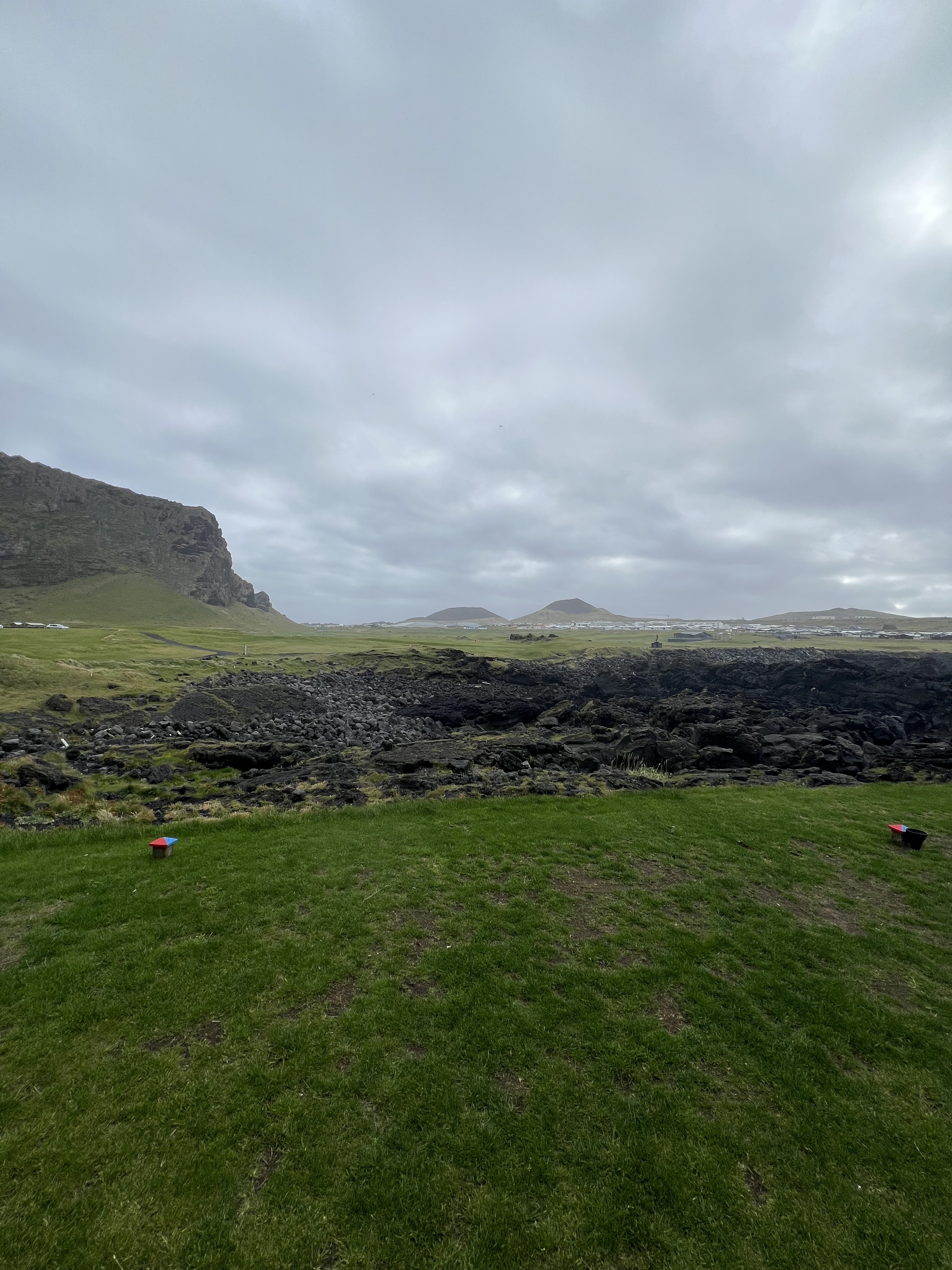
On the way back into town, we stopped to check out the golf course. Since it’s right on the coast it was a wee bit windy. In Iceland you don’t have gorse between the tee box and the fairway, you have large rocks and ocean. George figured he would lose lots of balls on this course with his hook swing. I wondered if you get a free drop if your ball landed in a lava-rock formation. There was actually a couple golfing as we returned to the car. It looked like a true slog in the wind!
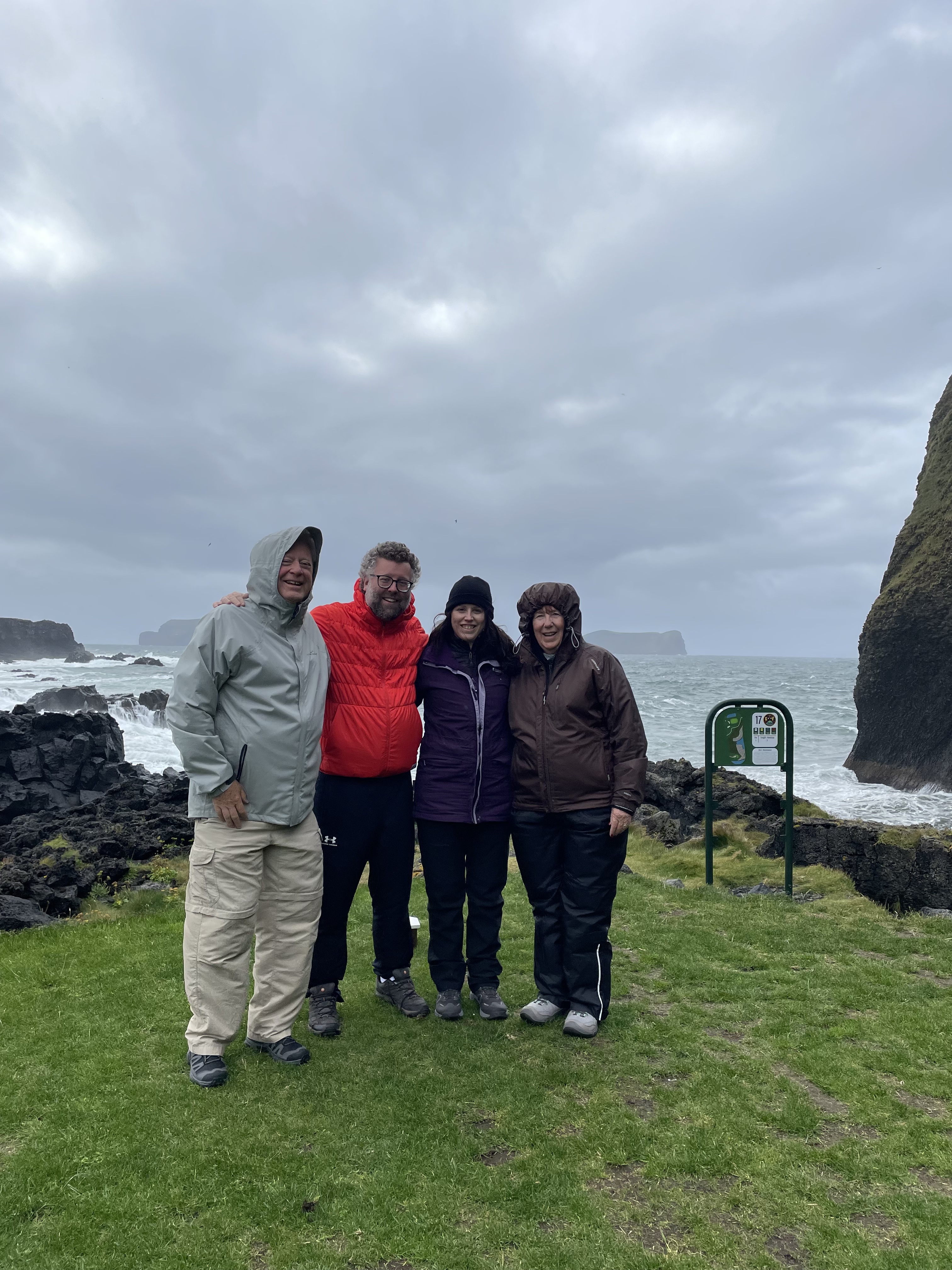
We returned to town for lunch and an introduction to Icelandic yogurt called Skyr – delicious with fruit and toppings.

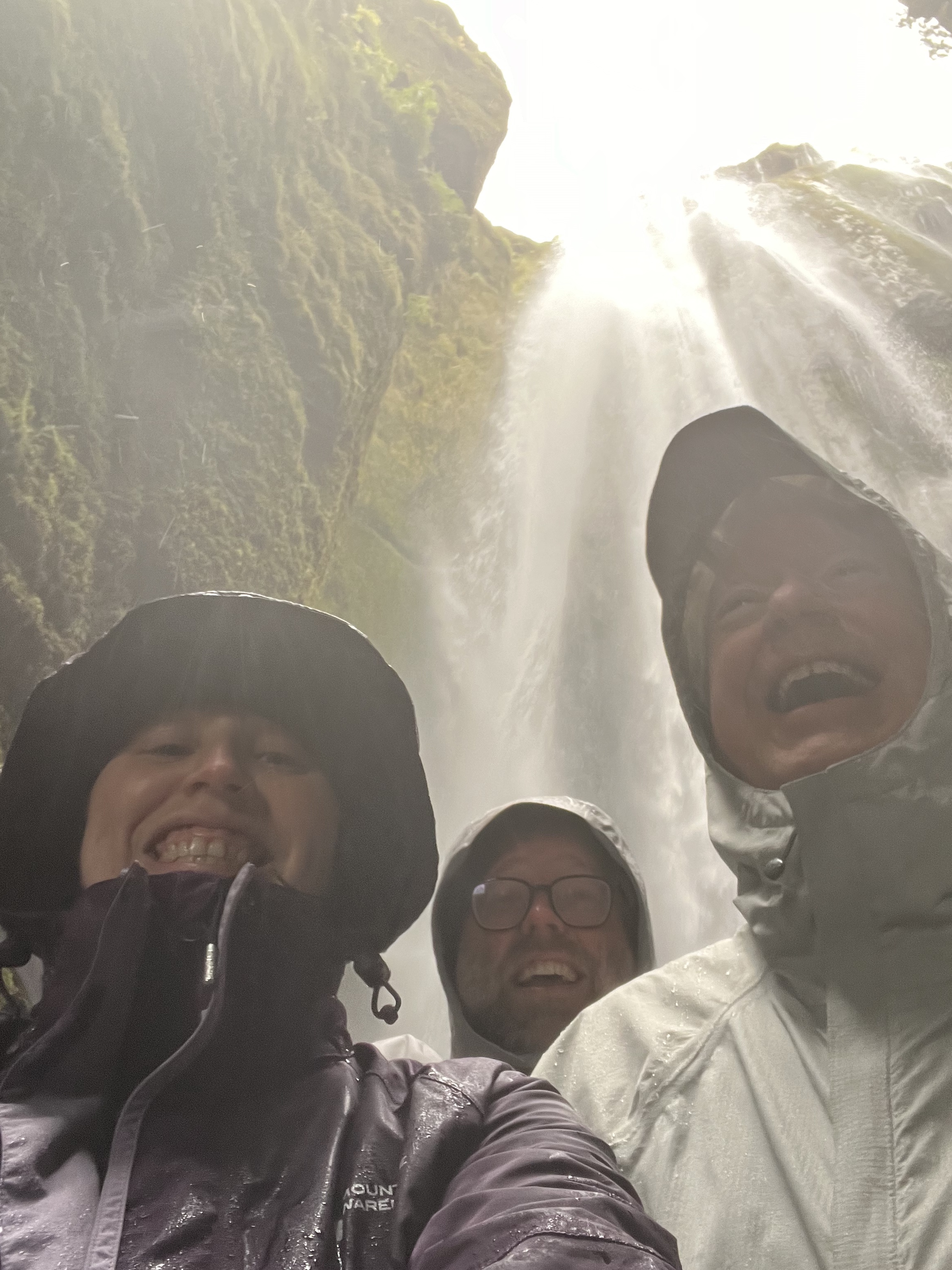
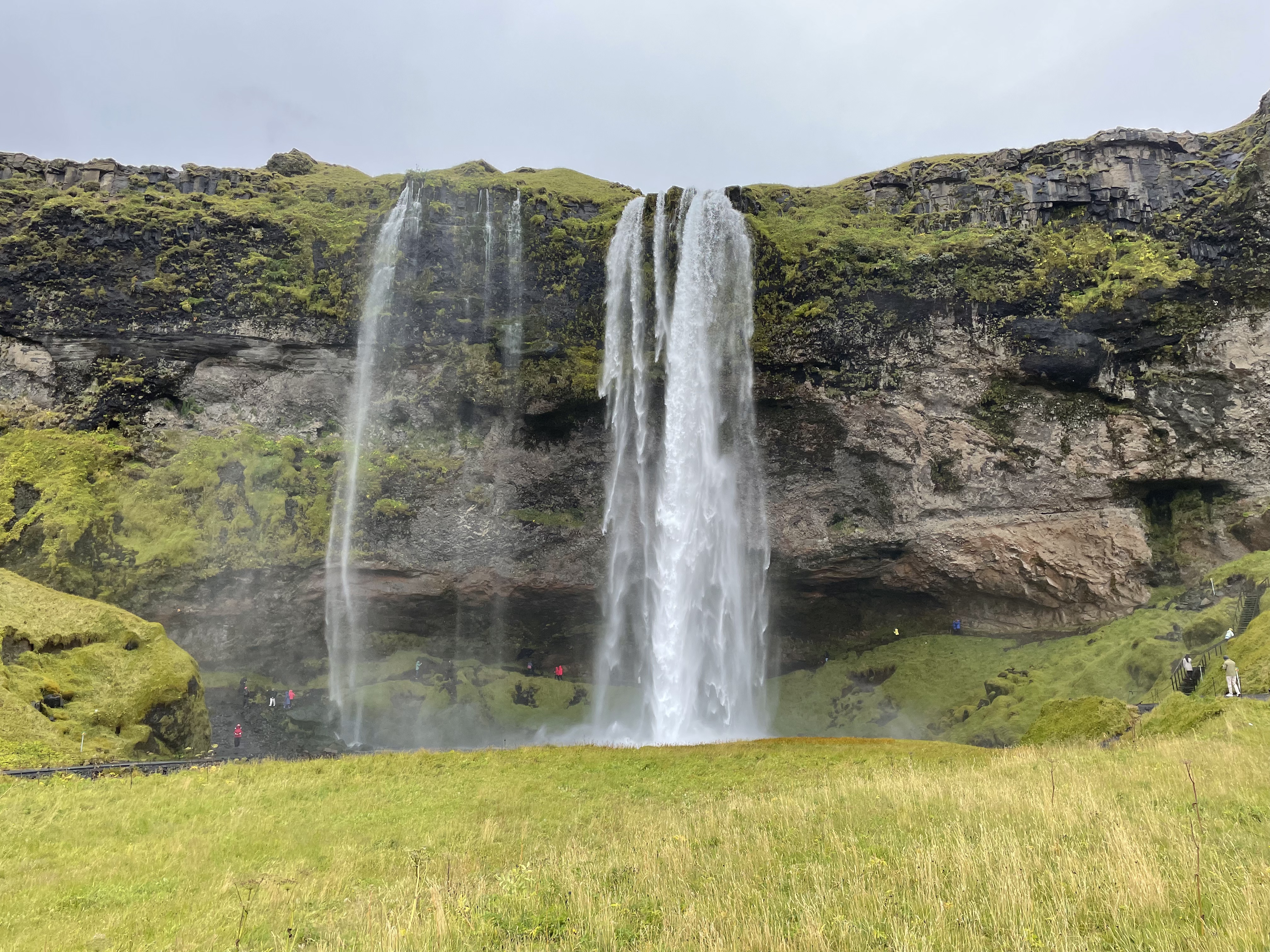
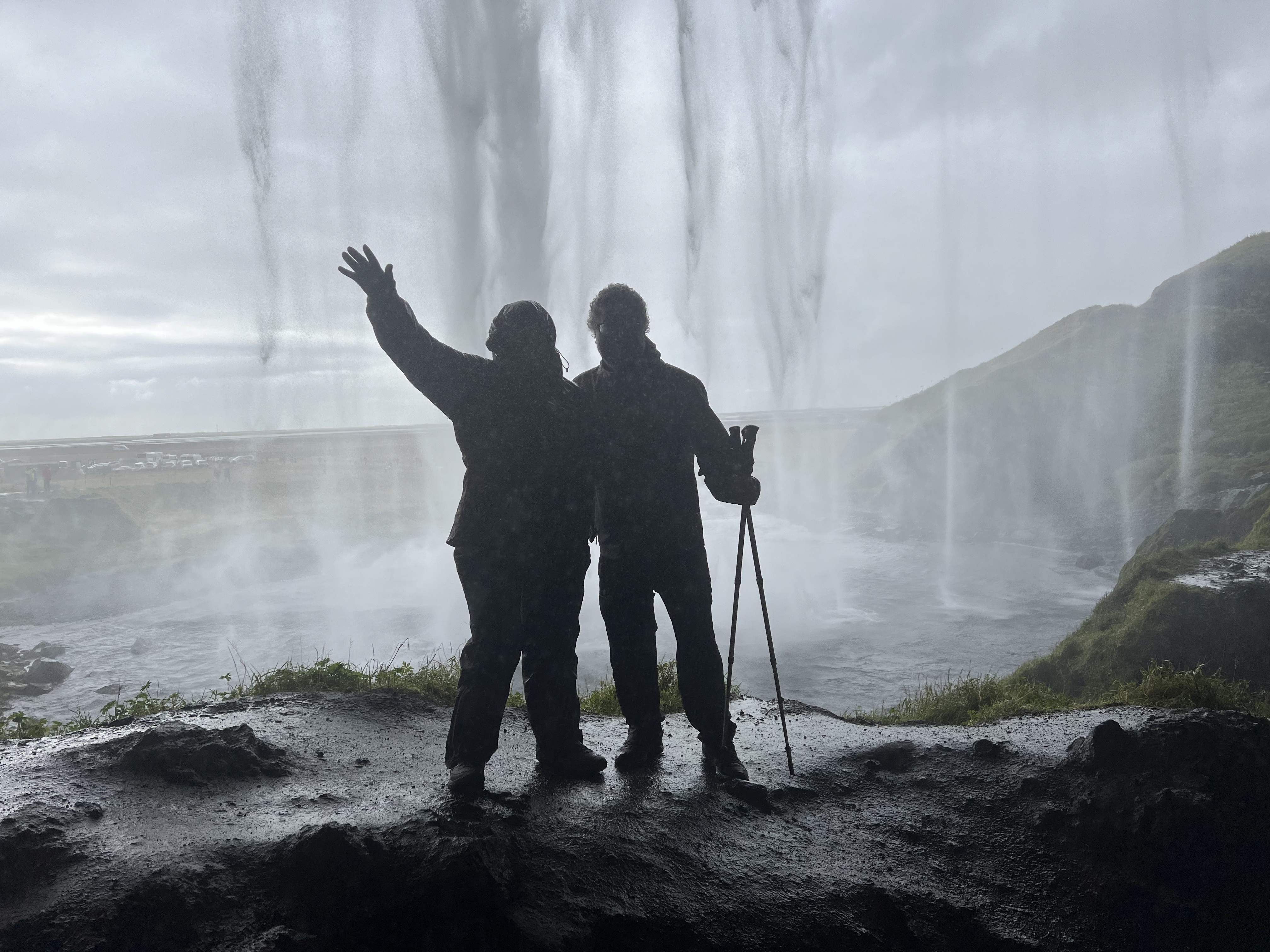
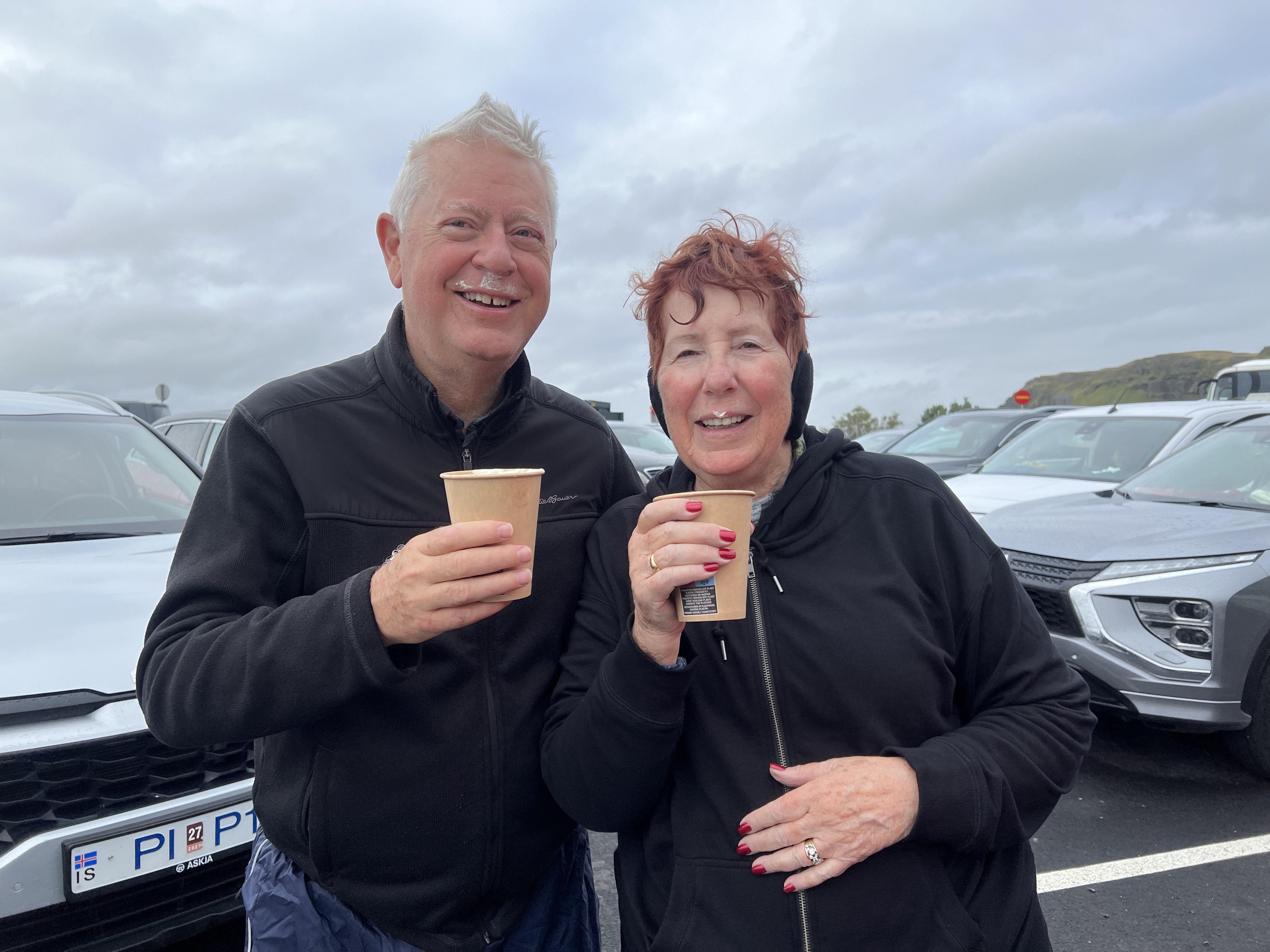
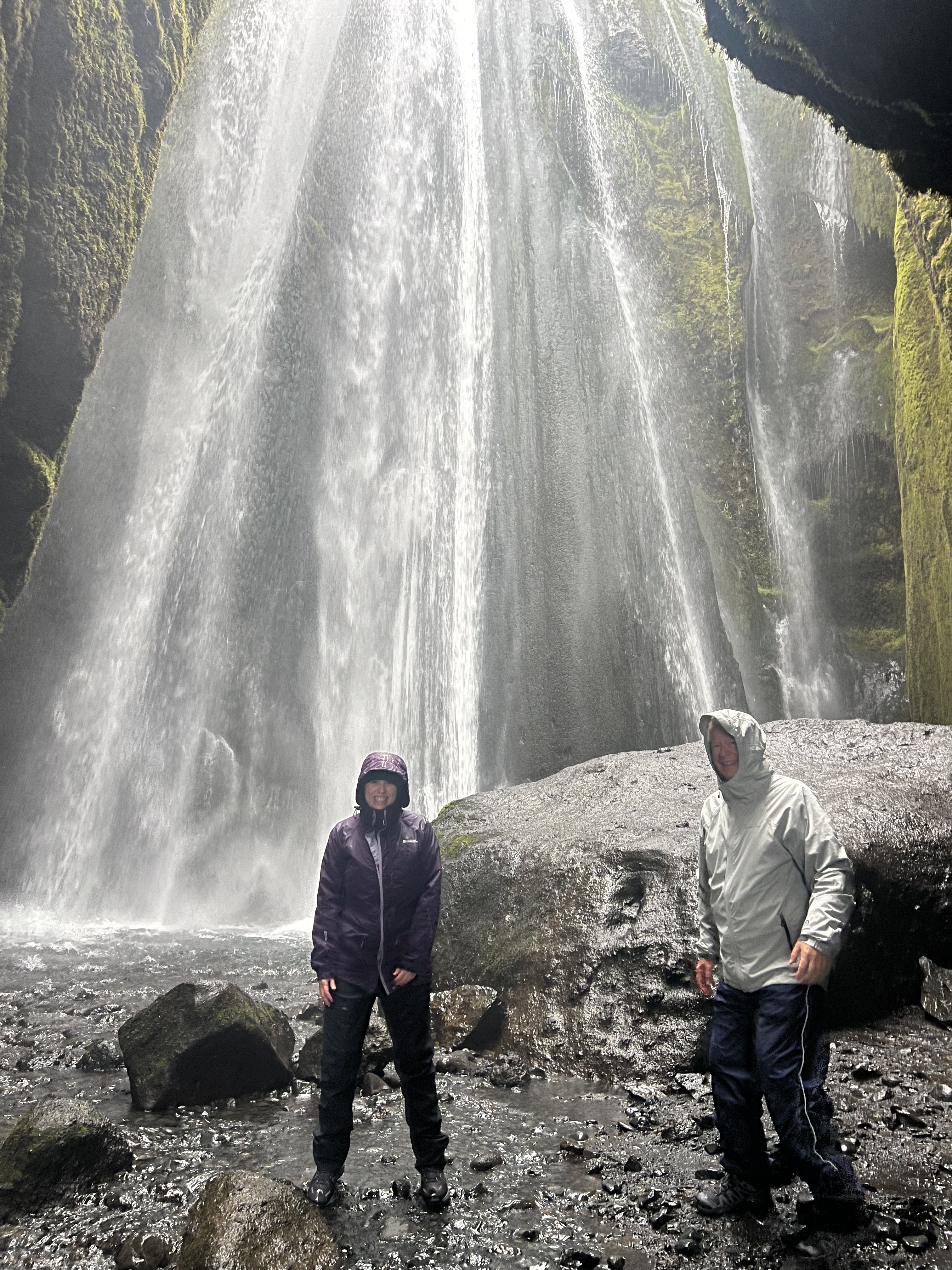
Then it was back on the ferry to head in the direction of Vik, stopping at no fewer than 4 different waterfalls. Our first stop was Gljufrafoss, a 131-foot waterfall hidden behind a cliff. Getting close requires getting wet and clambering over slippery rocks to arrive at a large flat rock where you can take pictures. Also at this stop was Seljalandsfoss, probably one of the more famous waterfalls. Standing about 197 feet tall, there is a path that allows you to walk behind the falls and experience another opportunity to get wet. I don’t think our son thought I would be able to do these two waterfalls but I persevered and had fun doing it. In between the two waterfalls is another small one with its own unique features. All of these waterfalls are accessible along a 1.2 km path from the parking lot. The hot chocolate was a welcome treat at the end of our hike.

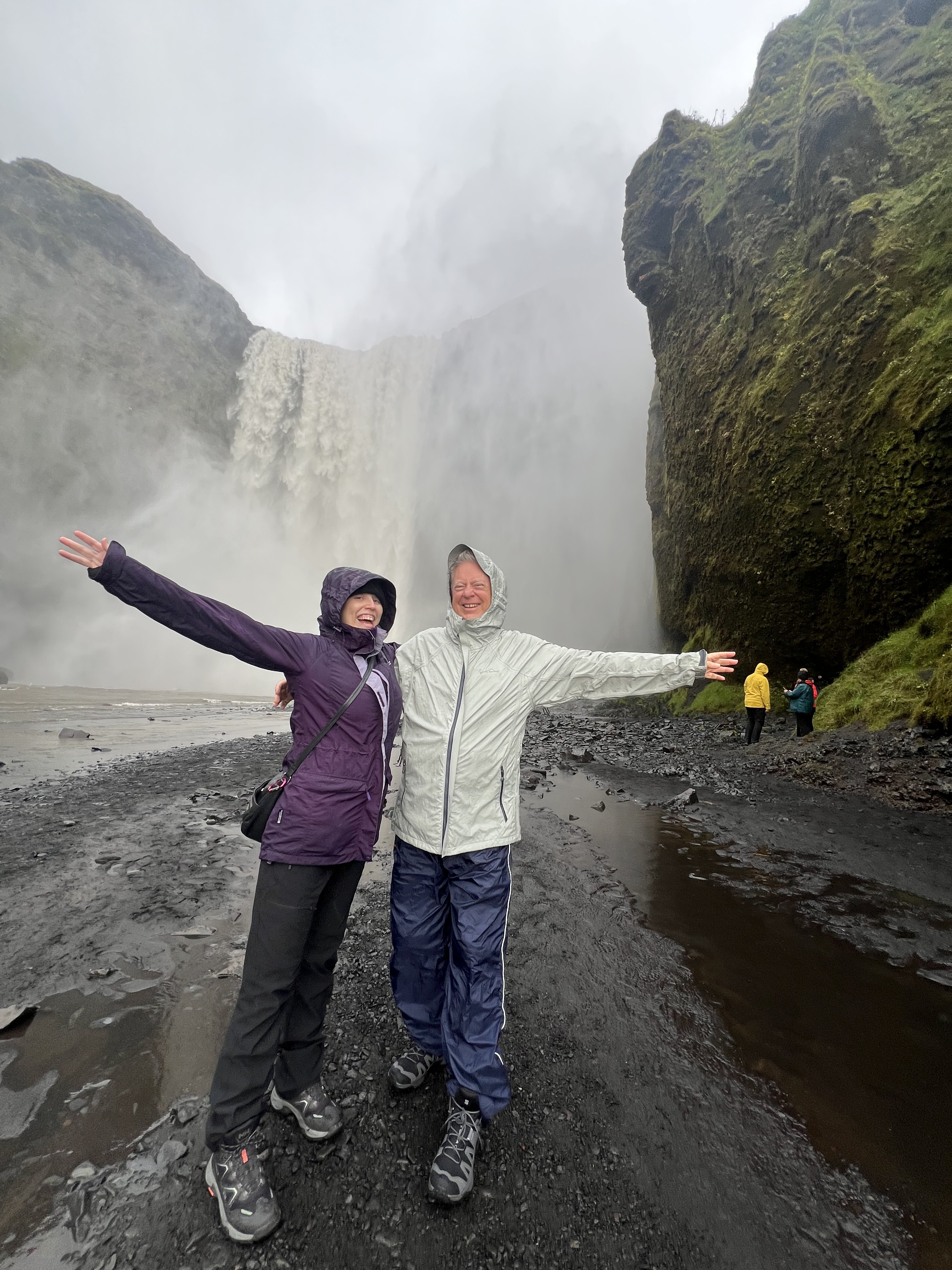
The last waterfall for the day was Skogafoss. At 82 feet wide and 200 feet tall, it is powerful and epic! It’s easily reached along a short path from the parking lot. We didn’t have time but evidently a hike up about 530 steps to the top provides you with incredible views of the waterfall and surrounding area.

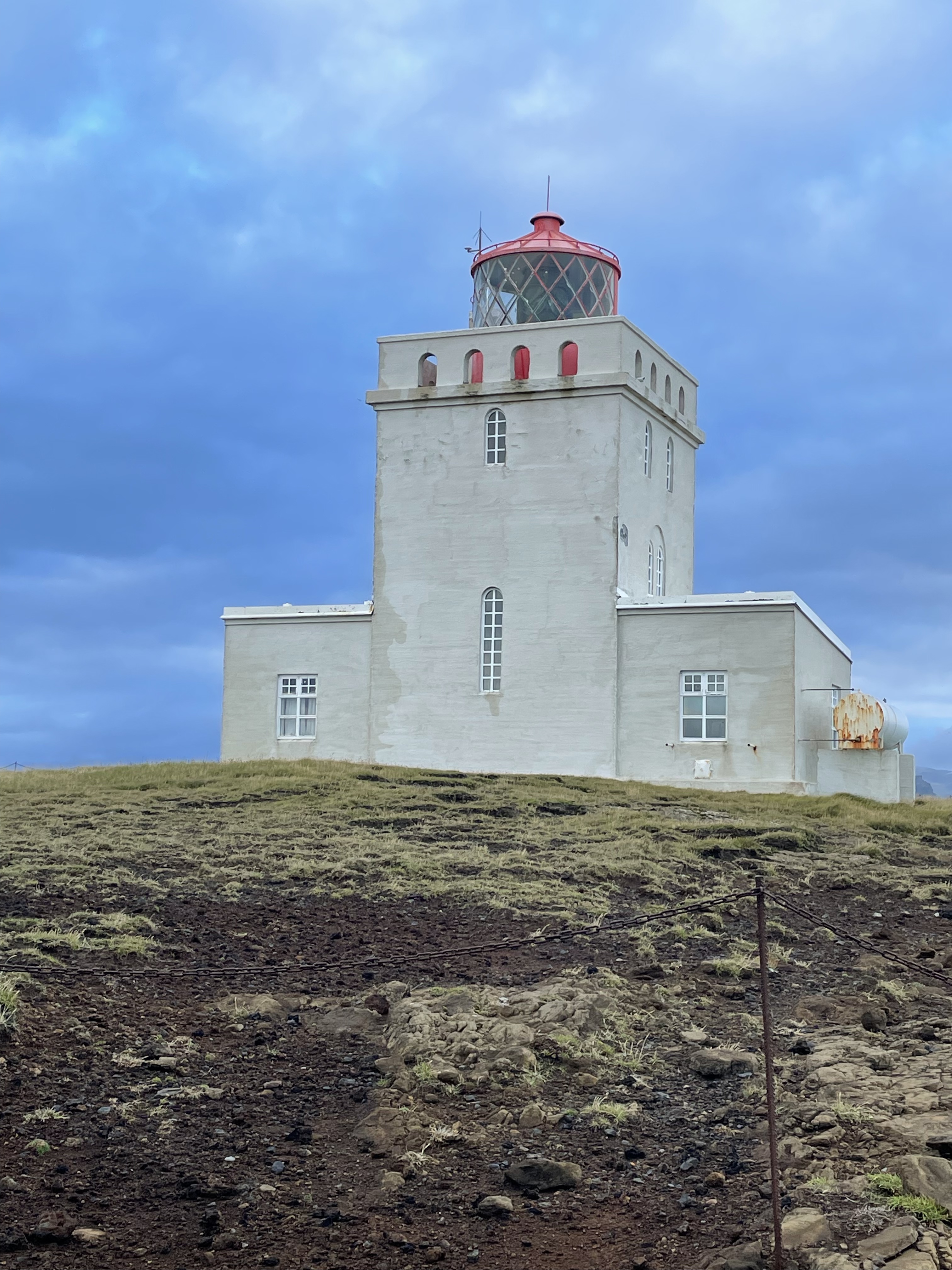
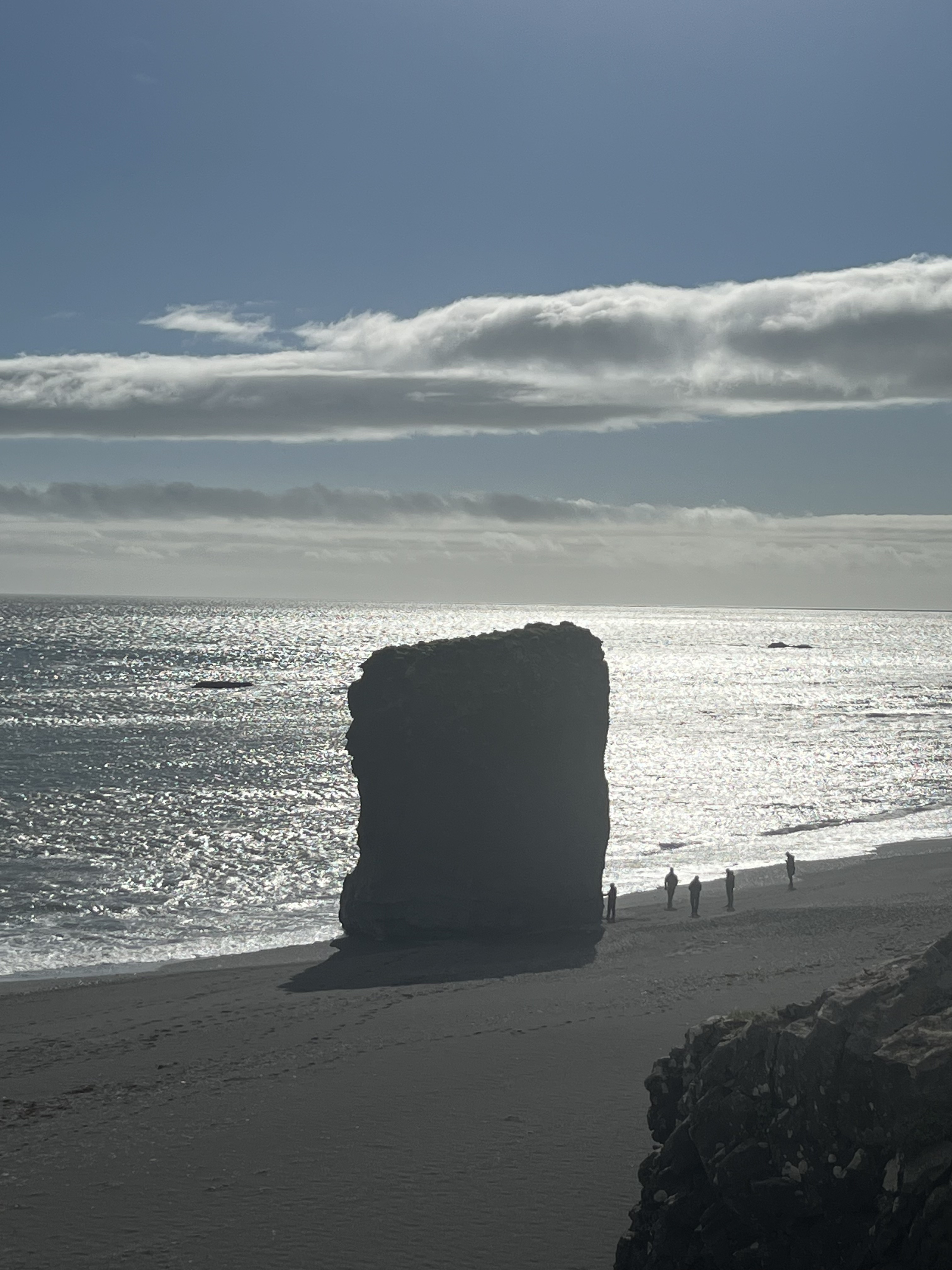
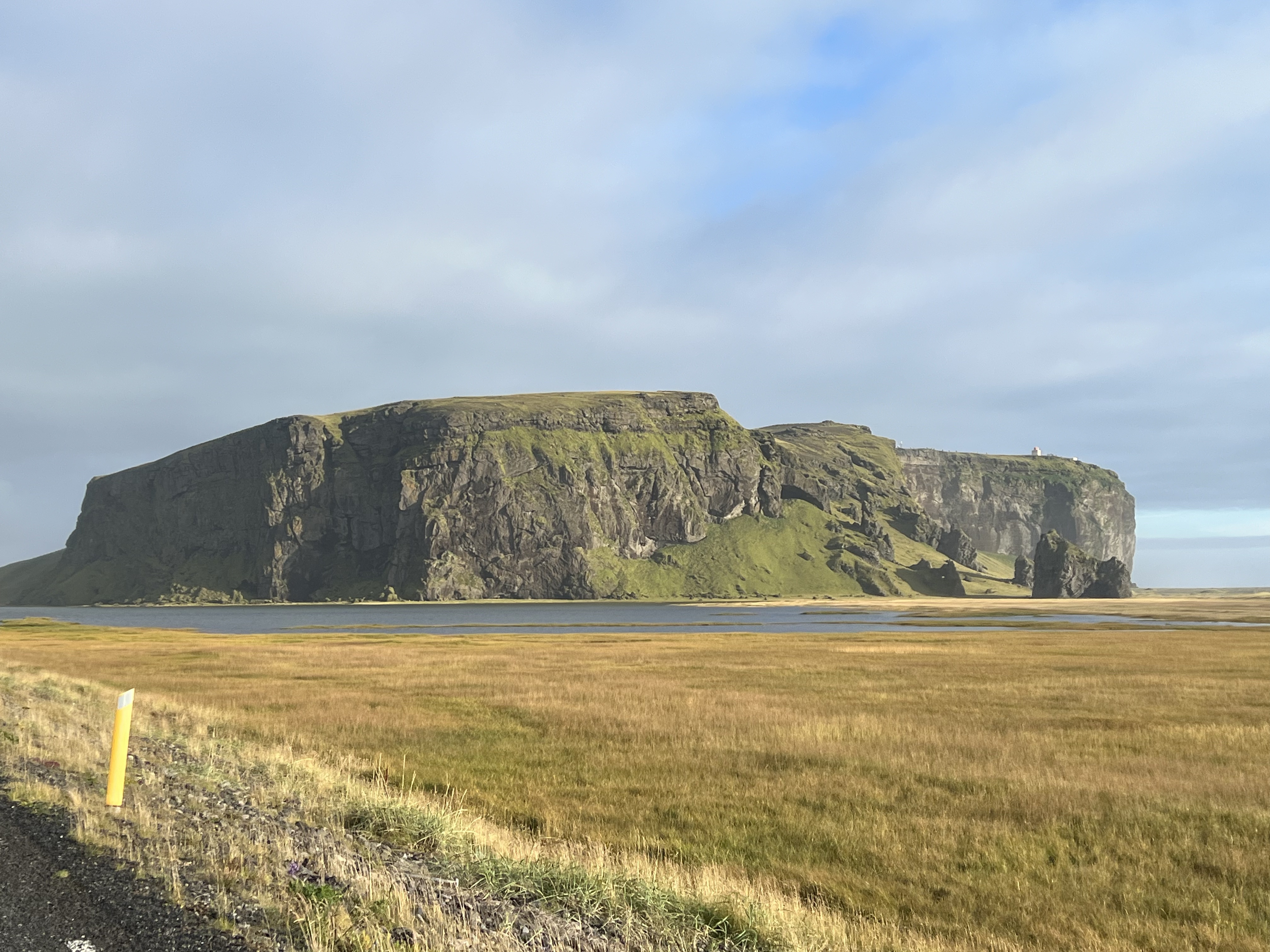
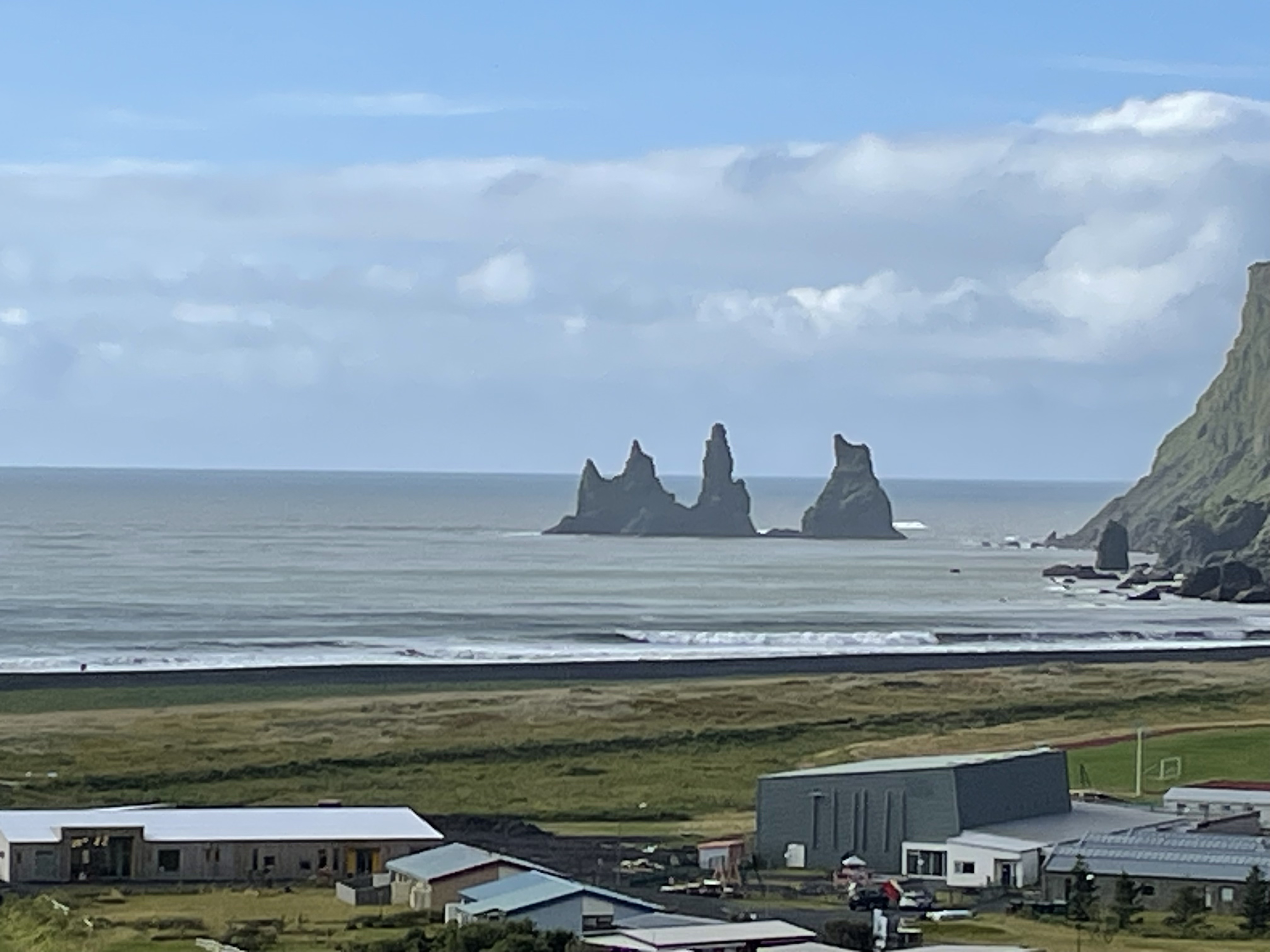
Our last stop was at Dyrholaey, a hill overlooking Black Sand Beach, with its interesting rock formations and old lighthouse. The black sand, of course, is formed from volcanic lava, creating a dramatic contrast against the powerful waves of the Atlantic Ocean. The basalt columns located along the cliffs of Reynisfall mountain are formed by cooling lava. According to local folklore, these large sea stacks were once trolls trying to pull ships from the ocean to the shore. However, the trolls went out too late one night and as dawn broke, with sunlight on the horizon, the trolls turned into stone. Dyrholaey means “the hill island with the door hole” and perfectly describes the enormous lava arch that dominates the coastline. The lighthouse, completed in 1927, isn’t open to visitors and still emits a white light every 10 seconds guiding ships around Iceland’s southernmost point.
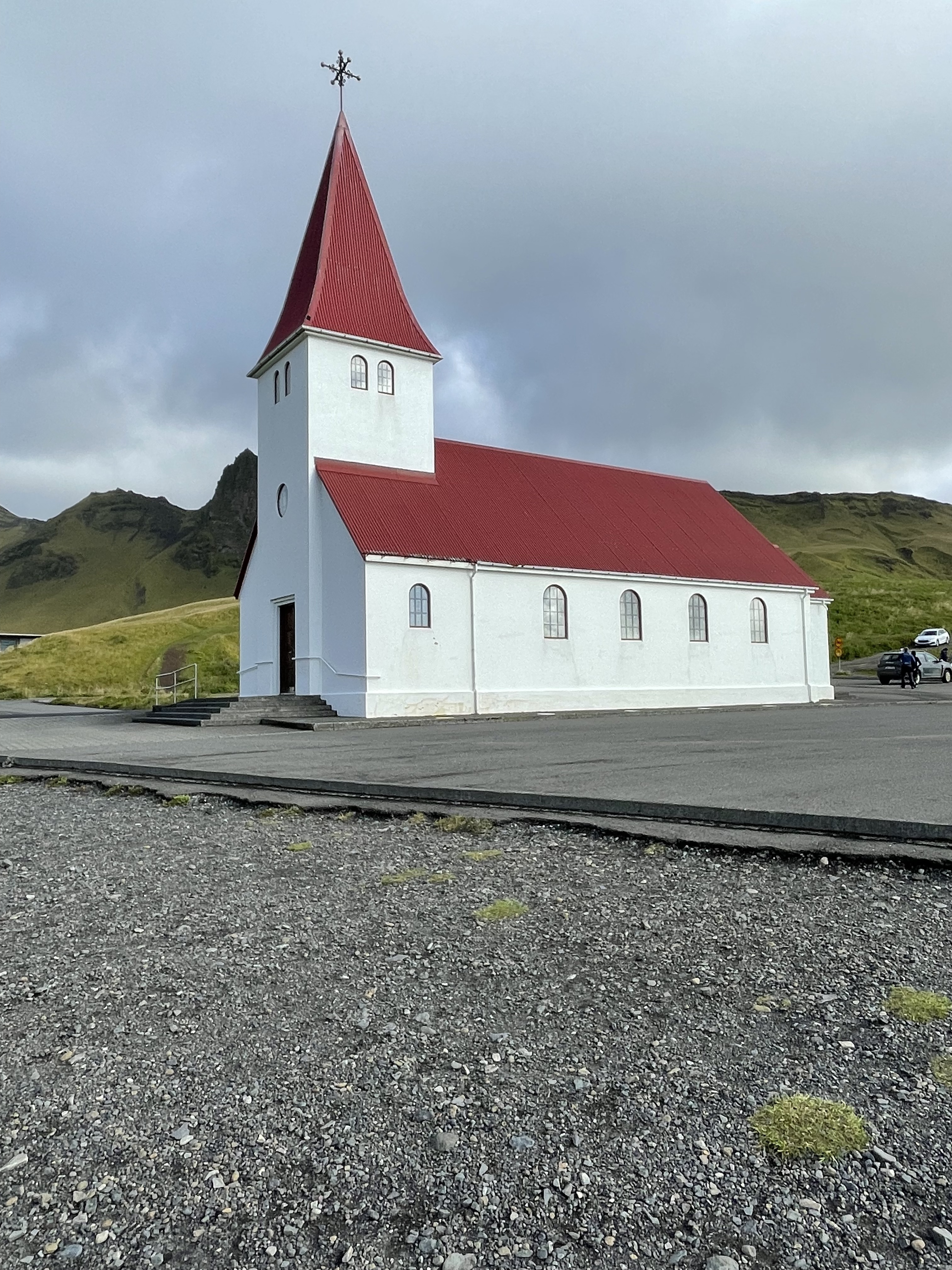
Then it was into Vik and our lovely home for the evening. We rented at Vik Apartments on the same property as the Vik Hotel. We had a big two-bedroom suite that included a full kitchen and laundry facilities. Time for showers, clean clothes and a nice dinner across the road at the Strodin Pub (great choice!). Since we didn’t want to buy breakfast supplies for just one morning, we were able to enjoy a full breakfast at the Vik Hotel next door.
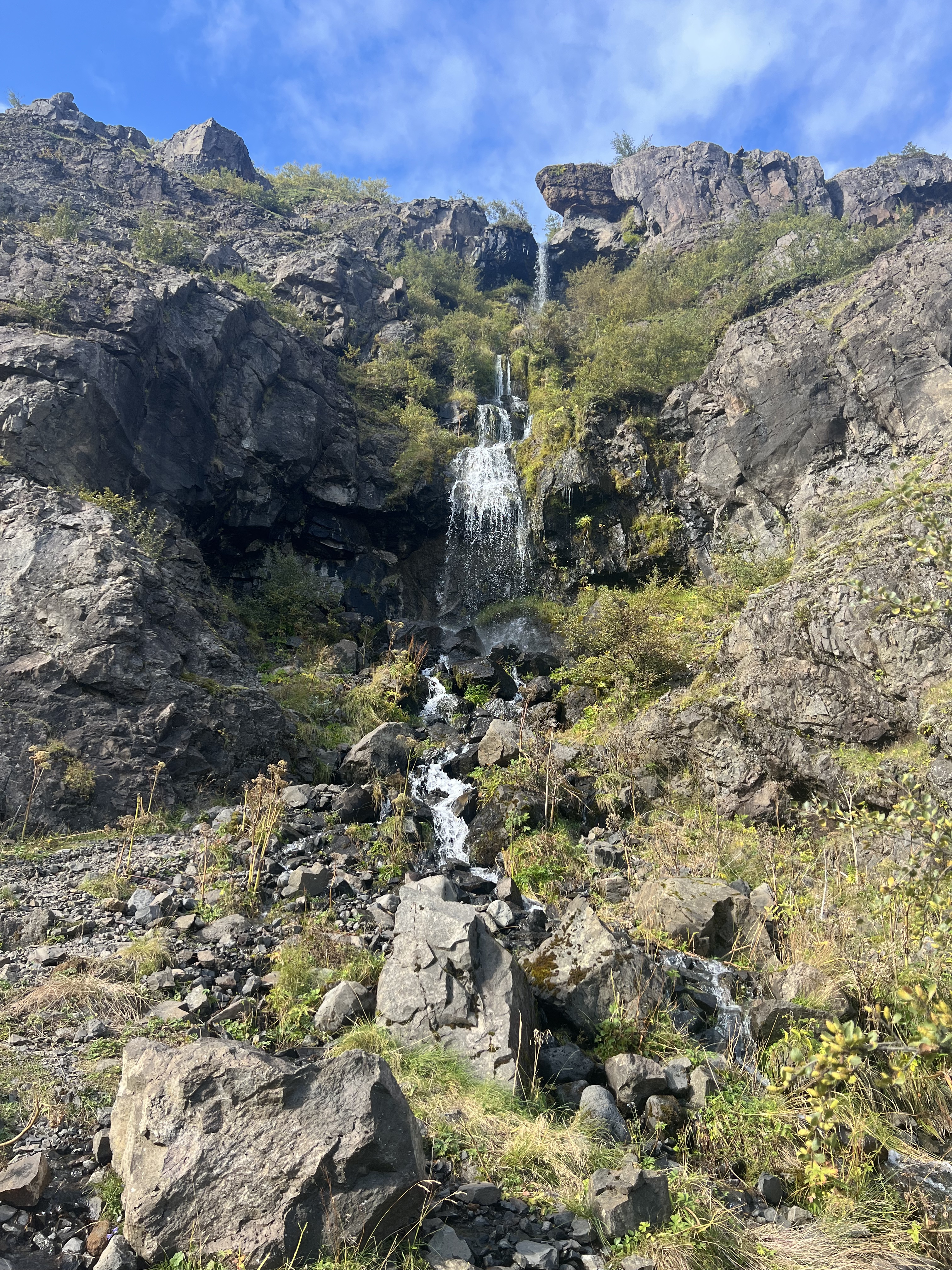
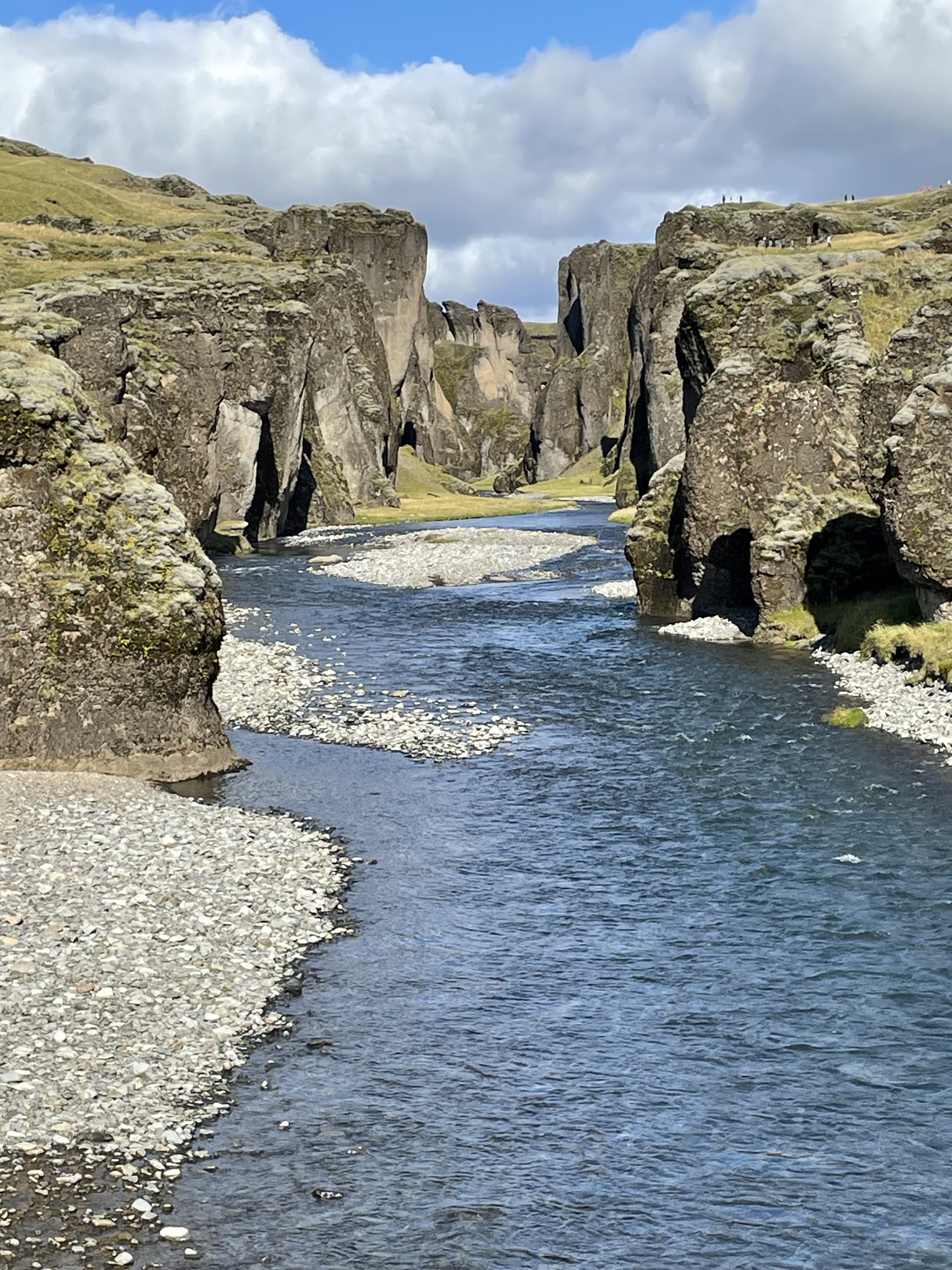
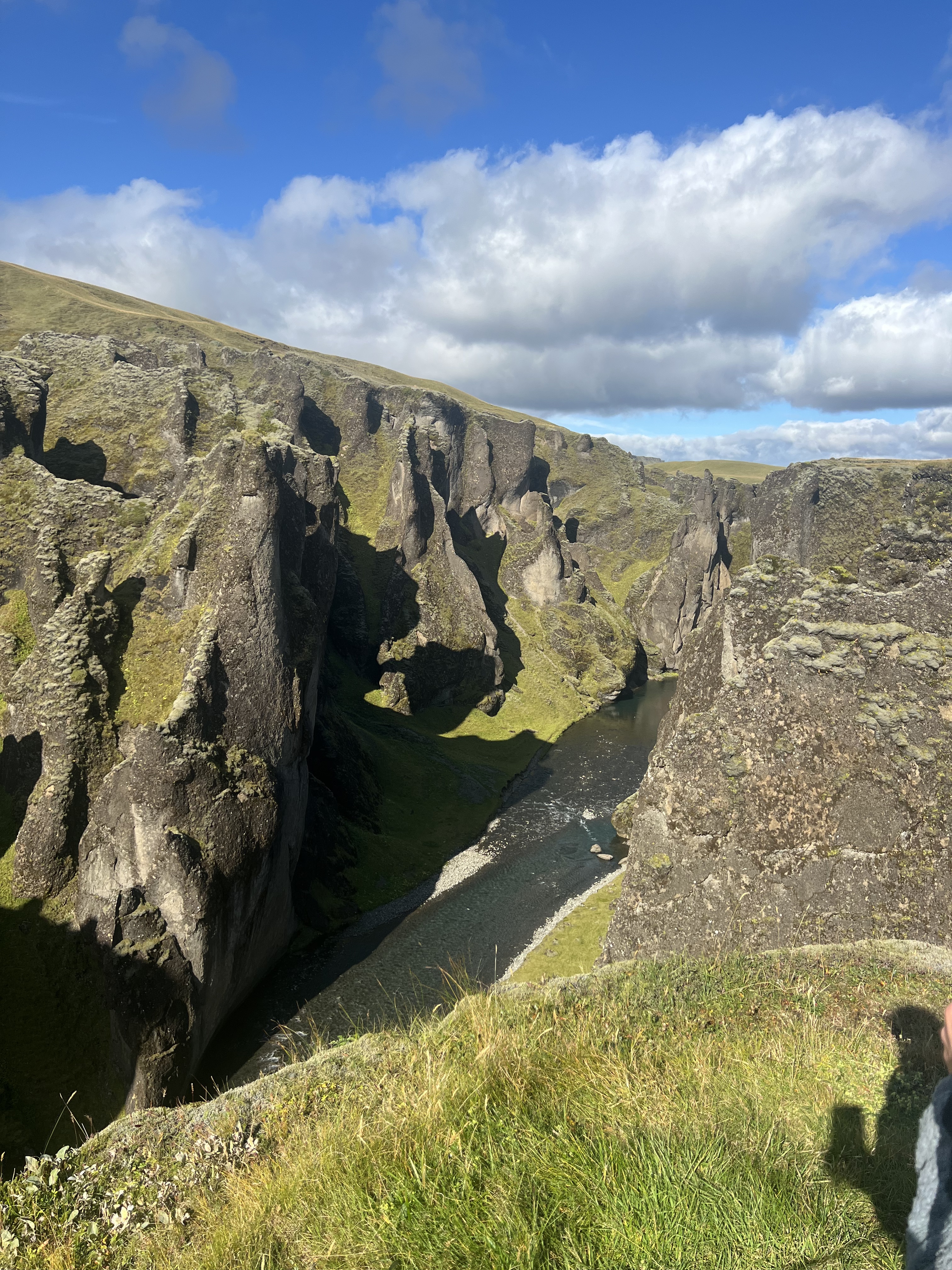
Day 5 – Today’s adventure was all about glaciers, which cover about 11% of the land area of Iceland. Our first stop was at the Fjadrargljufur gorge, made famous by Justin Bieber music video, I’ll Show You. The kids hiked part way up to the top while we just sat on a bench in the sun. Unfortunately, the gorge was closed after Justin’s escapade but has now reopened with more stringent rules to protect the fragile nature of the area. It’s a shame that so many areas have to be roped or fenced off because people just don’t understand that tromping all over the flora and fauna, rather than staying on the path, will eventually spoil things for everyone.
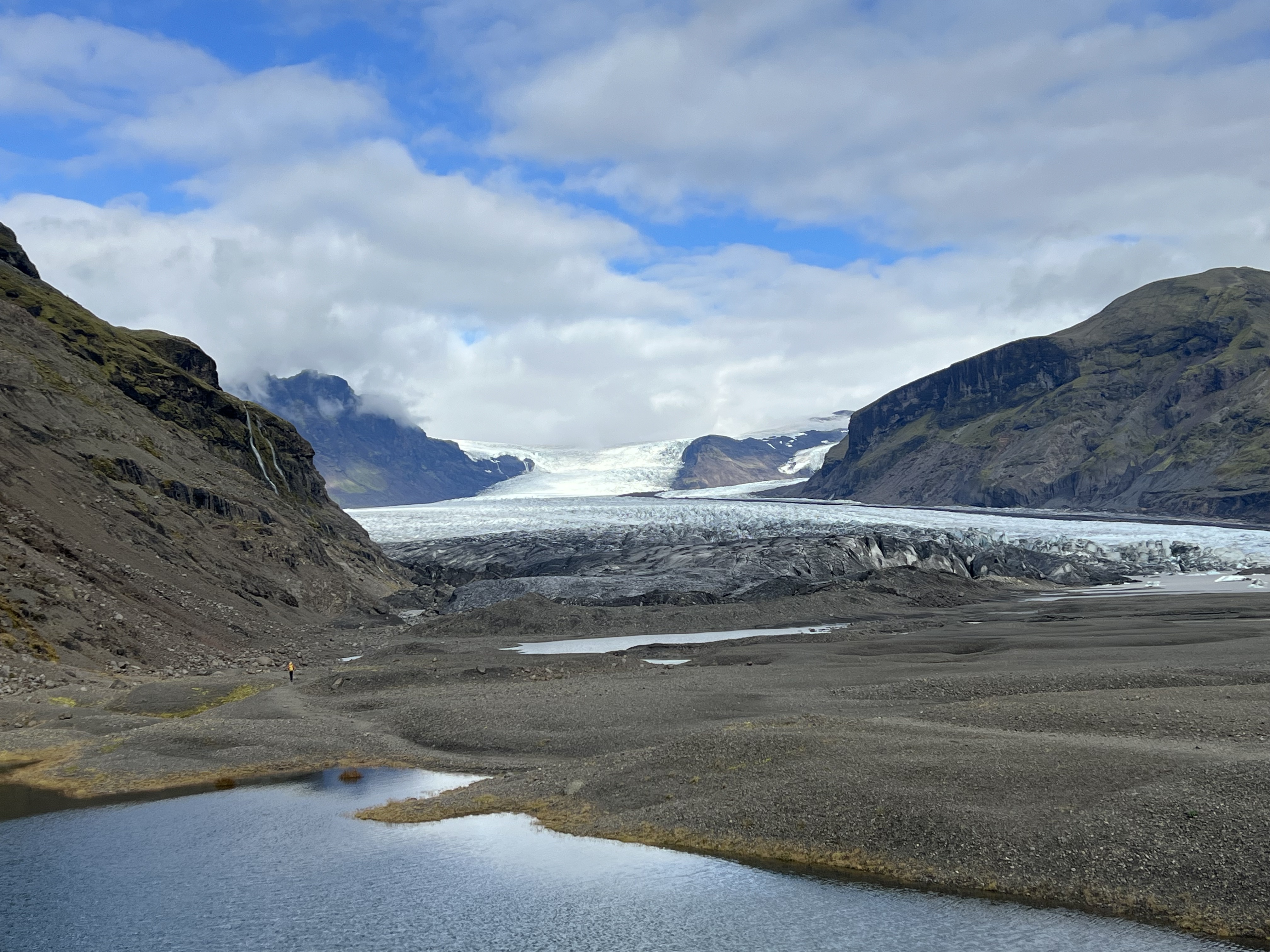
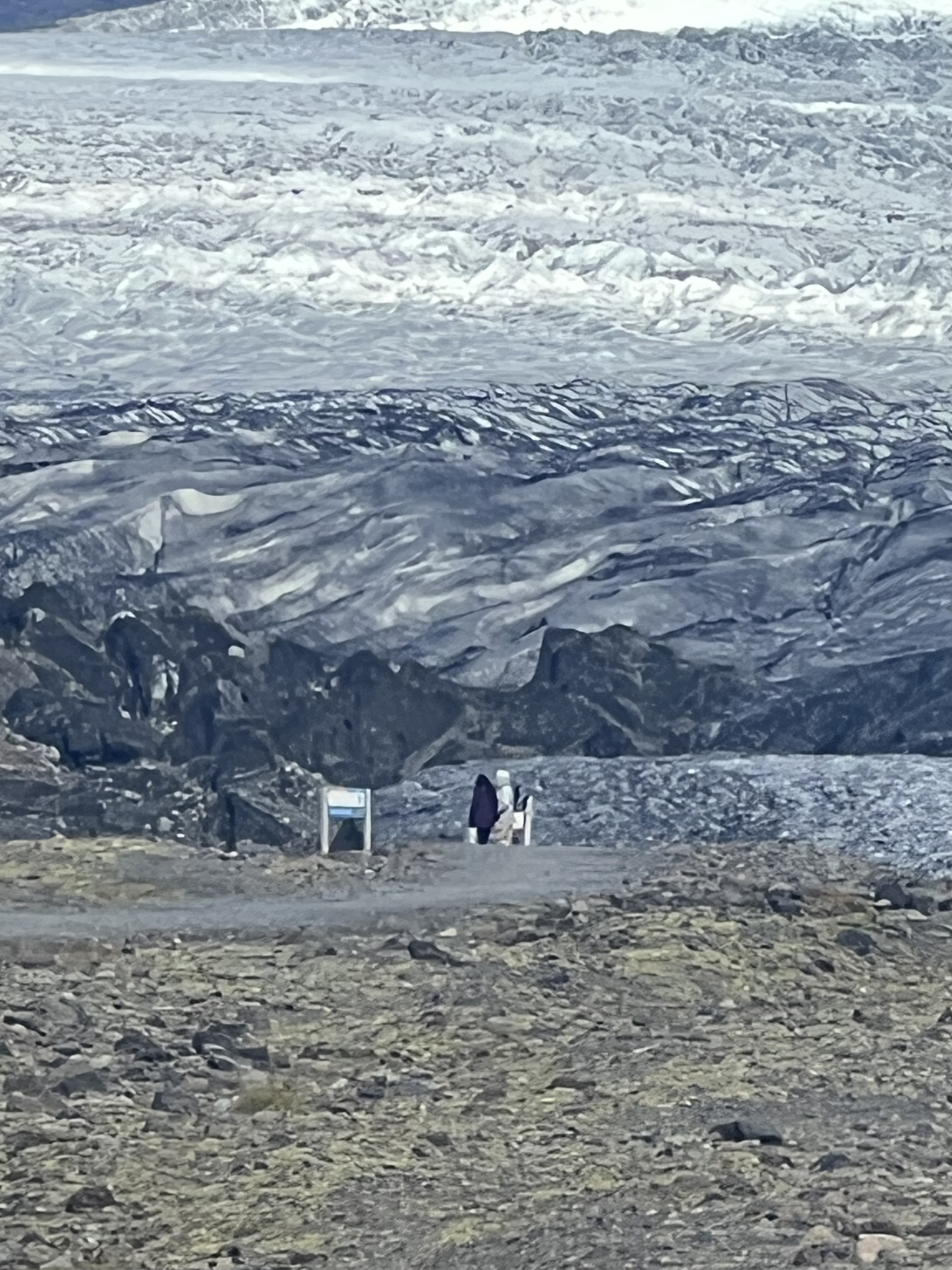
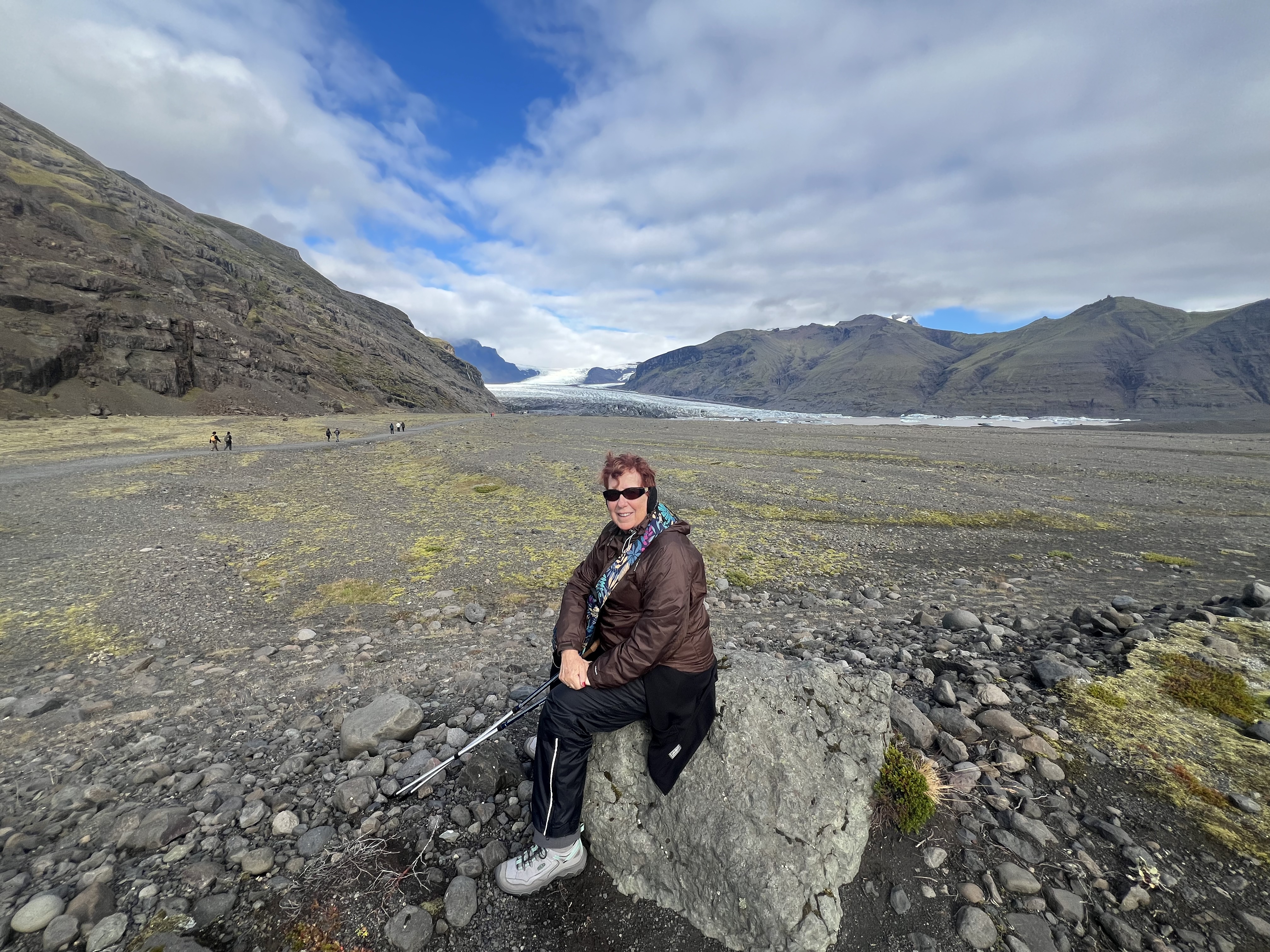
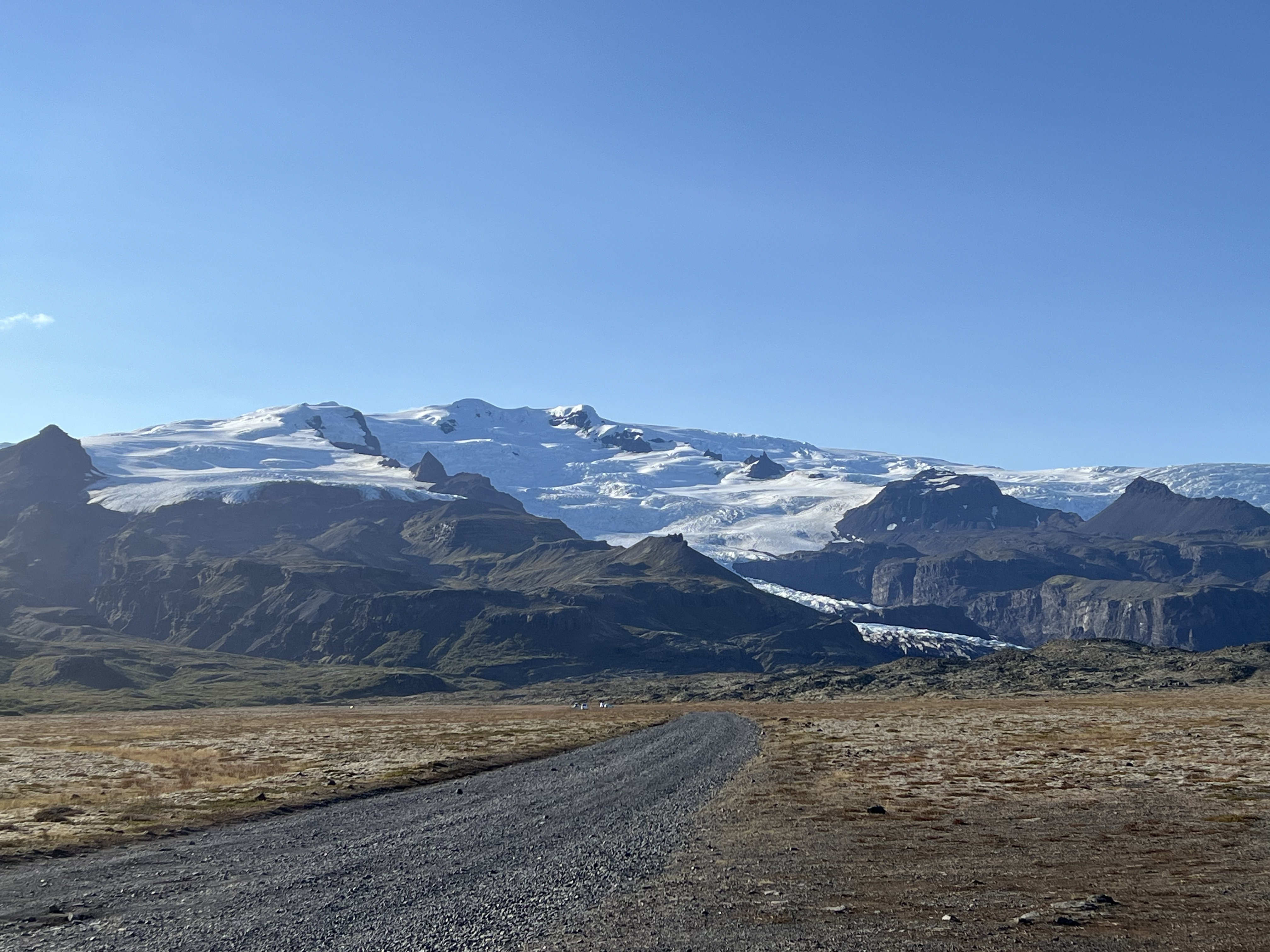
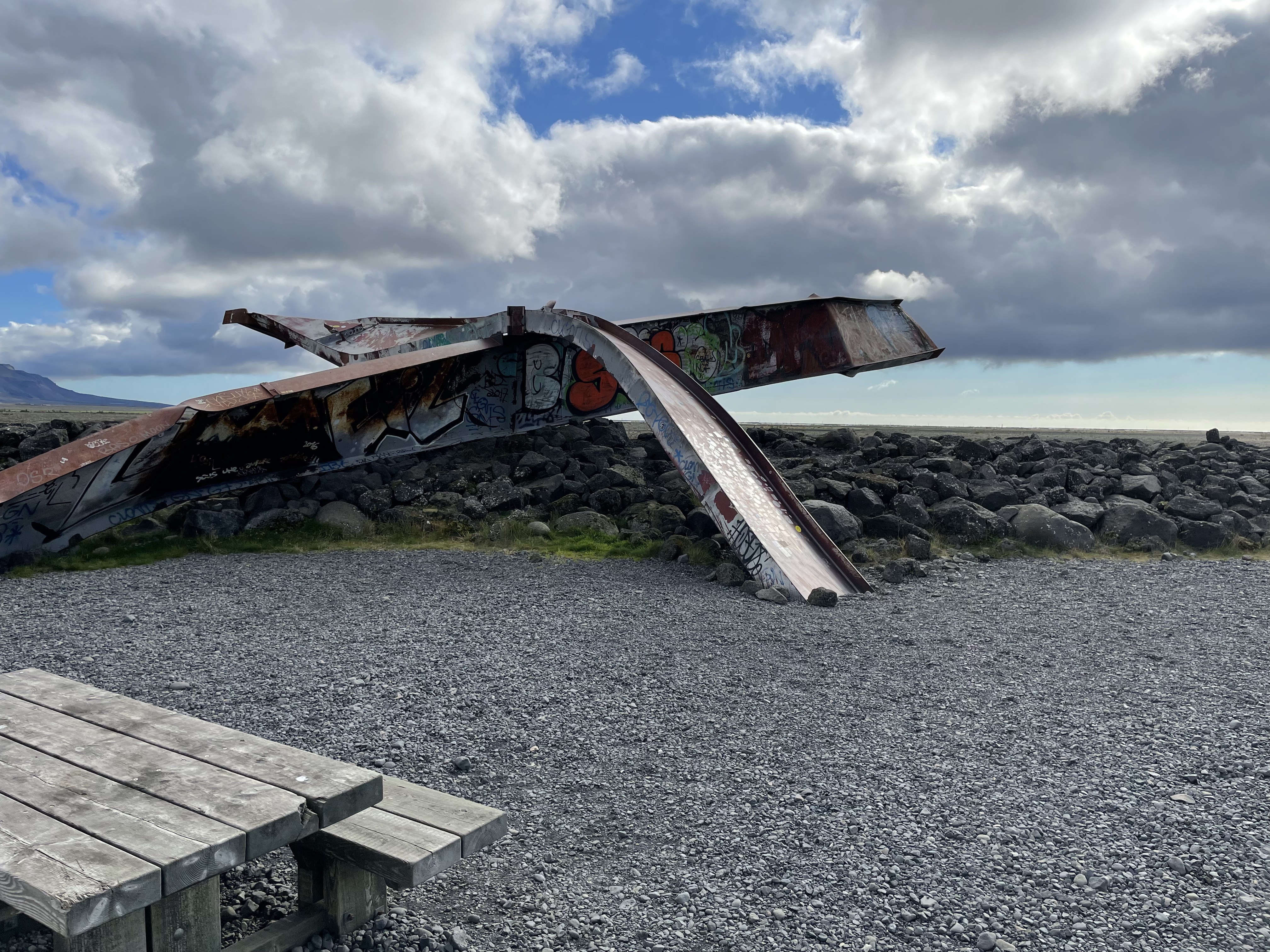
Then it was on to the Vatnajokull glacier, the largest in Iceland covering about 10% of the land area. Under the ice cap there are volcanoes, whose eruptions have caused the development of large pockets of water beneath the ice. Occasionally these break through and cause severe flooding carrying huge icebergs across the sand flats to the eastern side. The ‘artwork’ in one of the photos is the remnants of a bridge that was washed out during one of the last floods in 1996. After we had lunch at the visitors centre, we hiked down to the edge of the glacier. Jenn and dad made it all the way to the bottom while George and I stopped after 2 km. The sun was shining and it was very warm through part of the hike, but it definitely got colder as we got closer to the glacier.

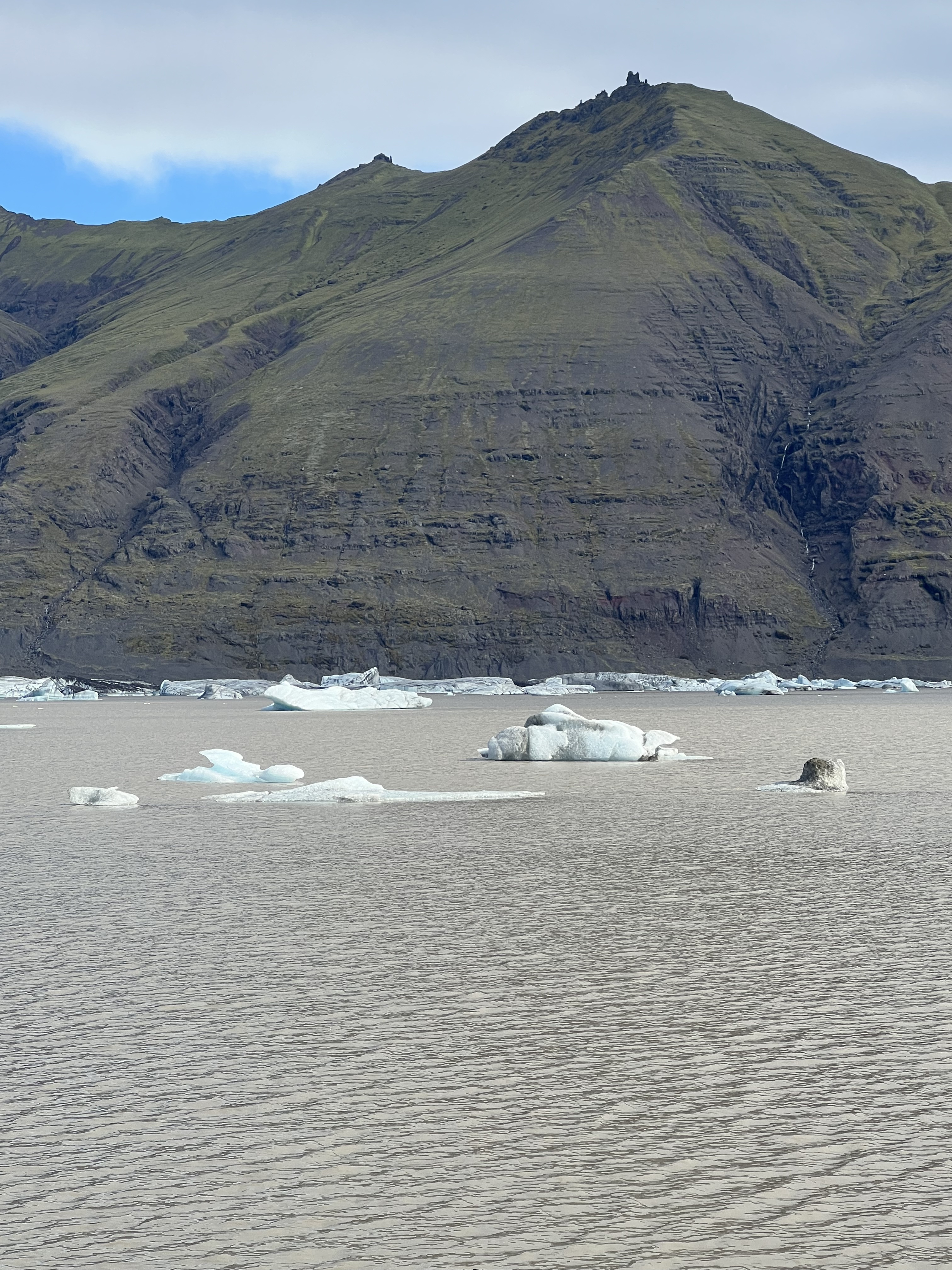
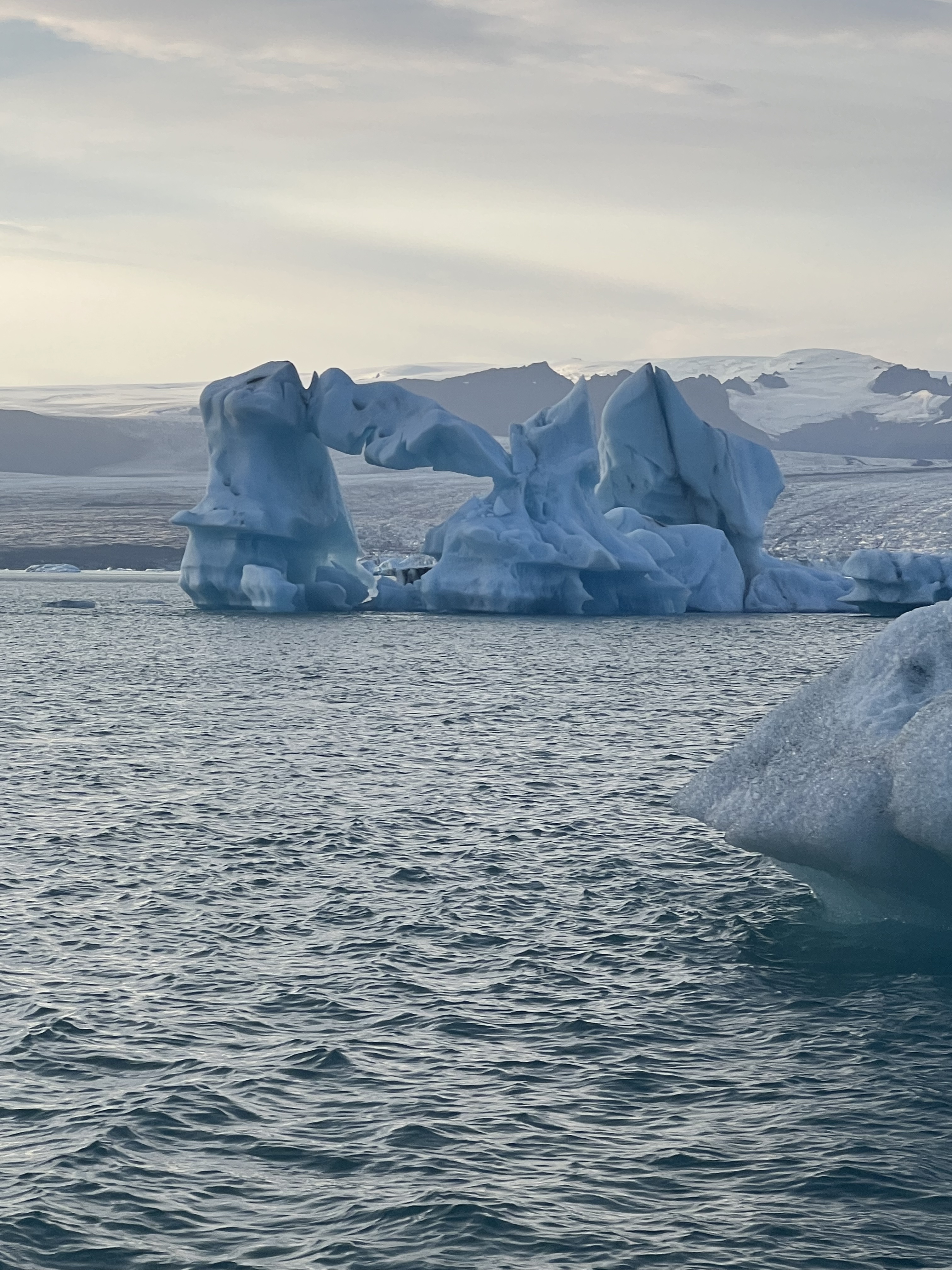
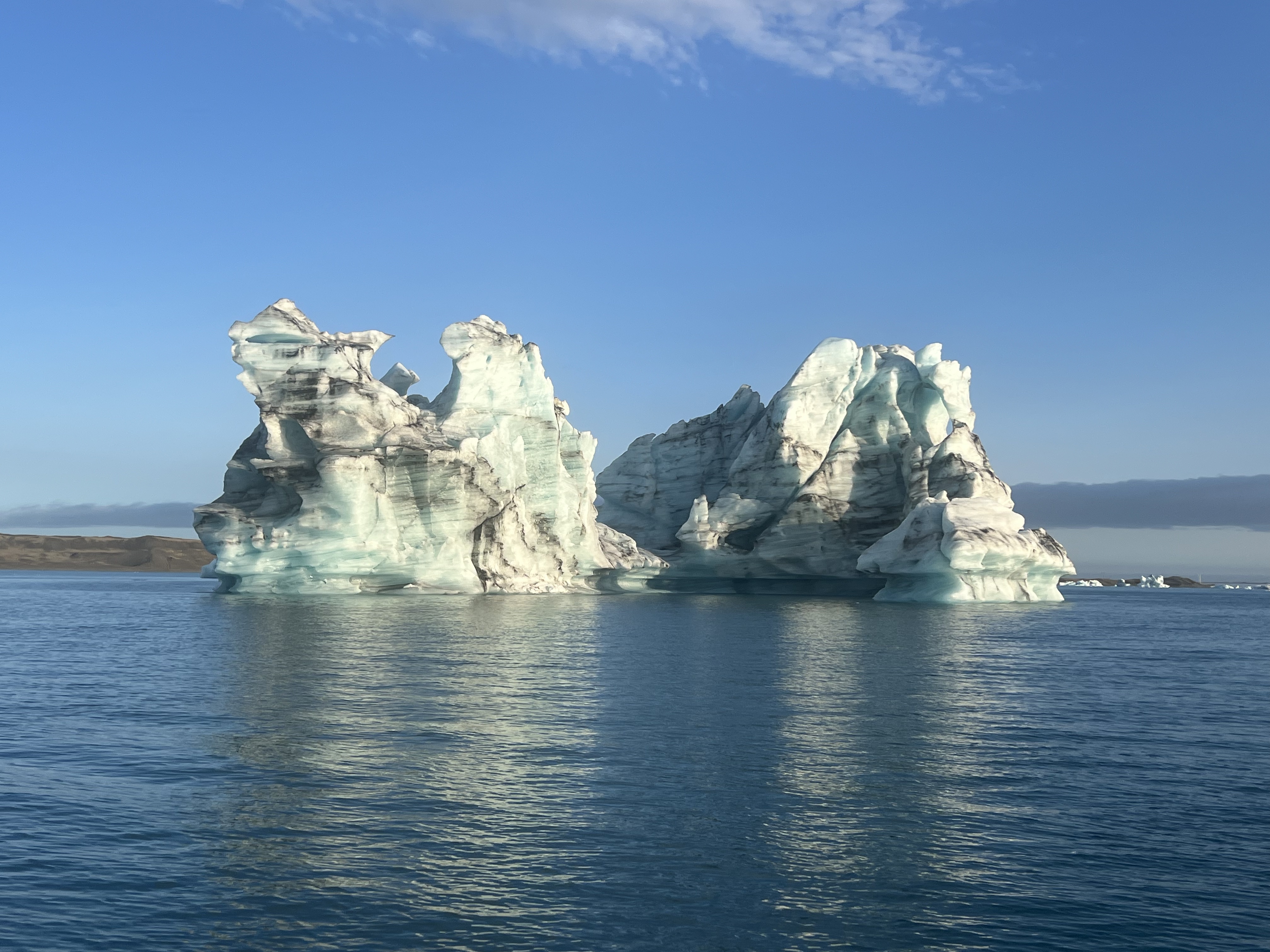
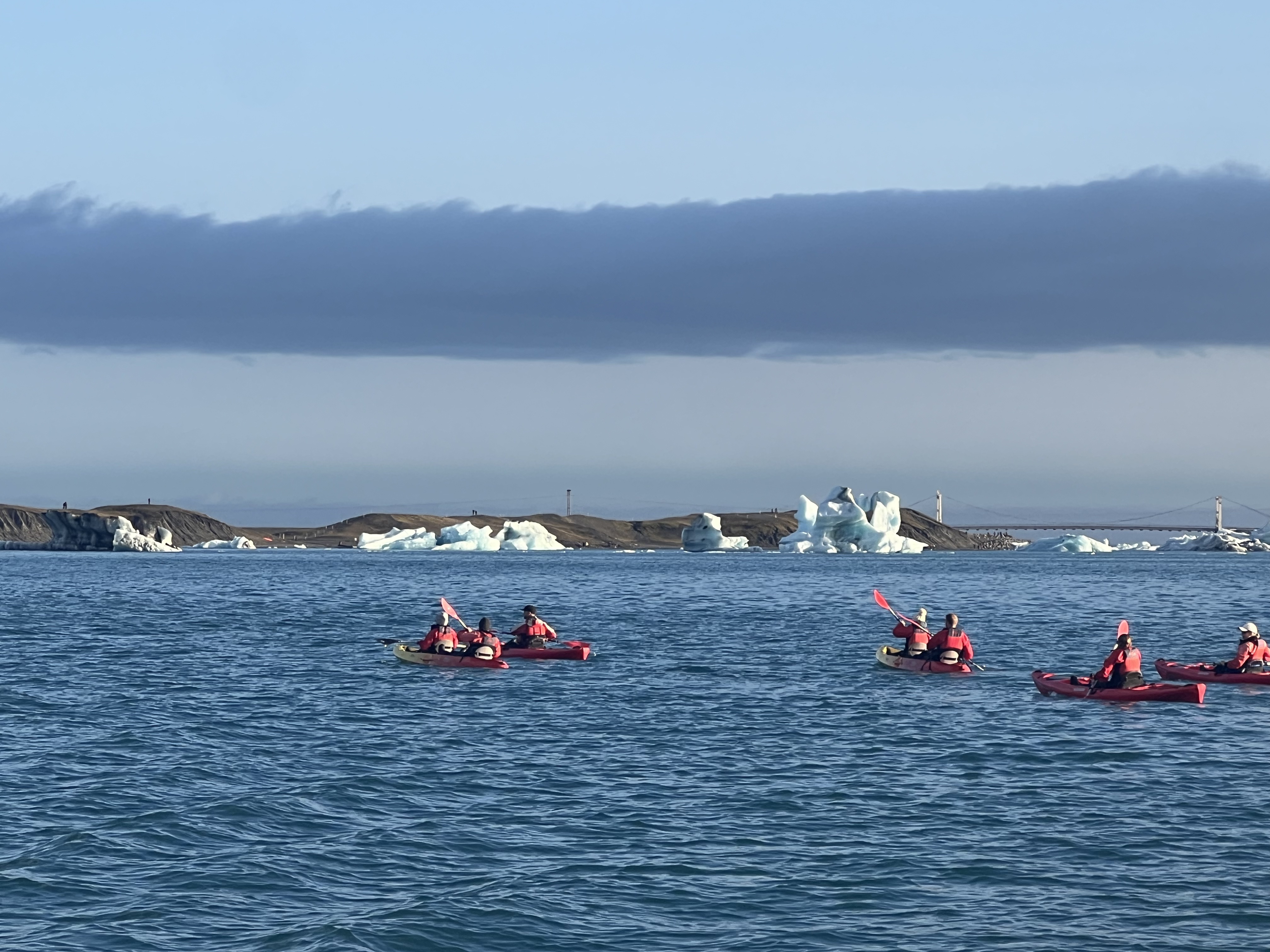
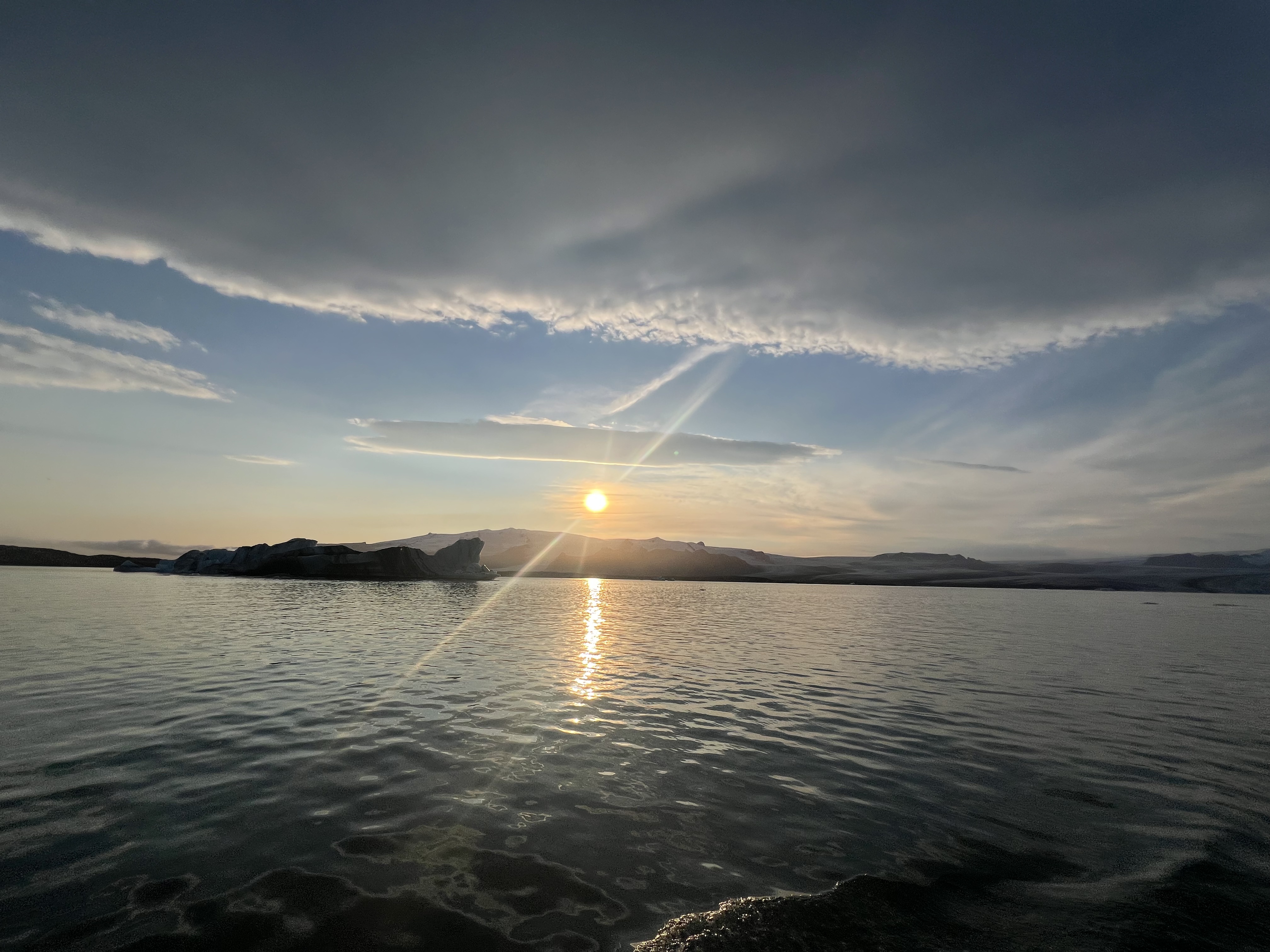
Our last stops for the day were Iceberg Lagoon and Diamond Beach. As the glacier recedes, large chunks break off and begin their voyage to the sea. Icebergs stay in the lagoon for up to three months but many only last about three weeks or less. When they get to the ocean they break up completely and small shards of ice wash up on the nearby beach and appear to be ‘diamonds’ on the sand.
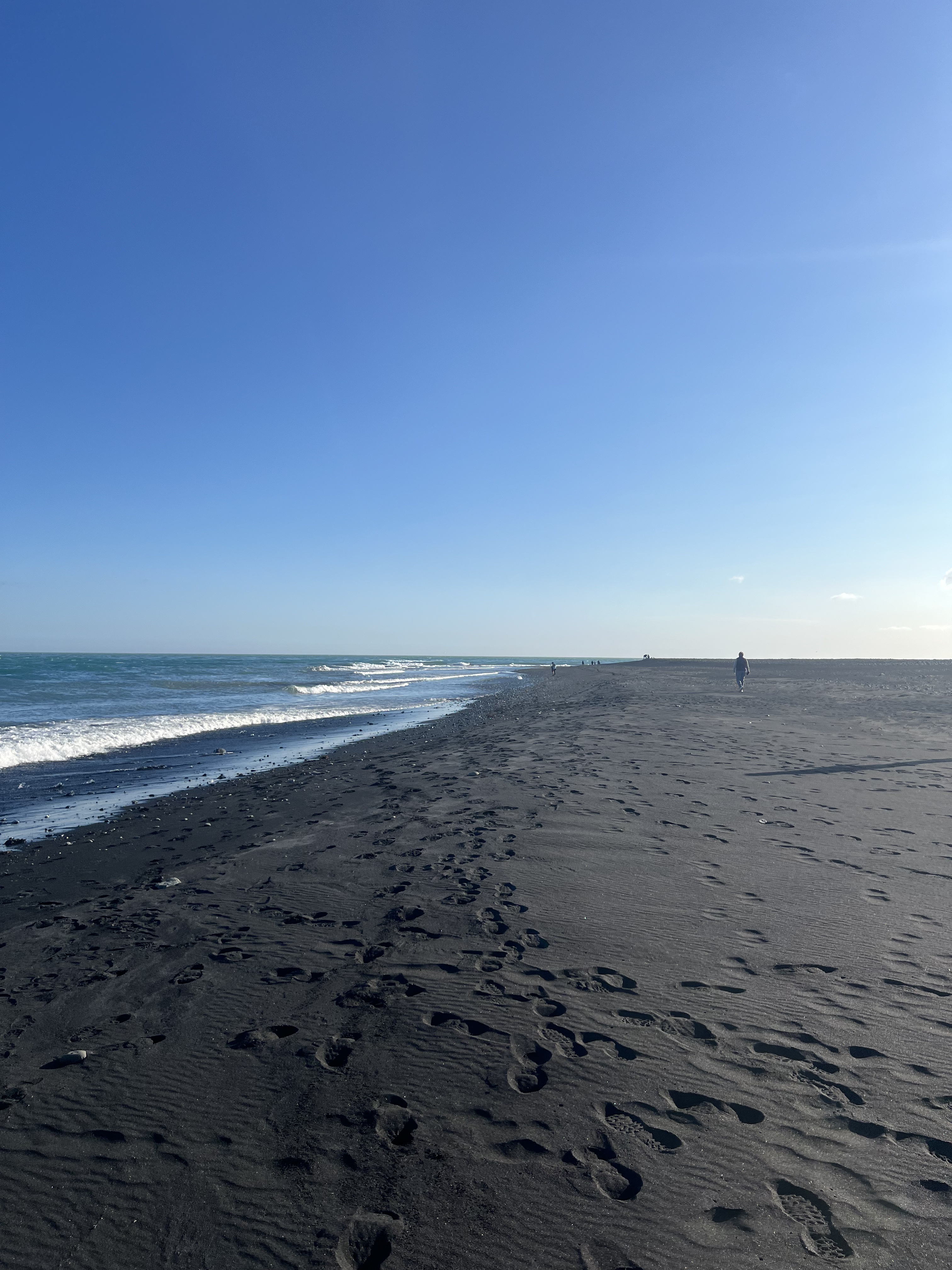
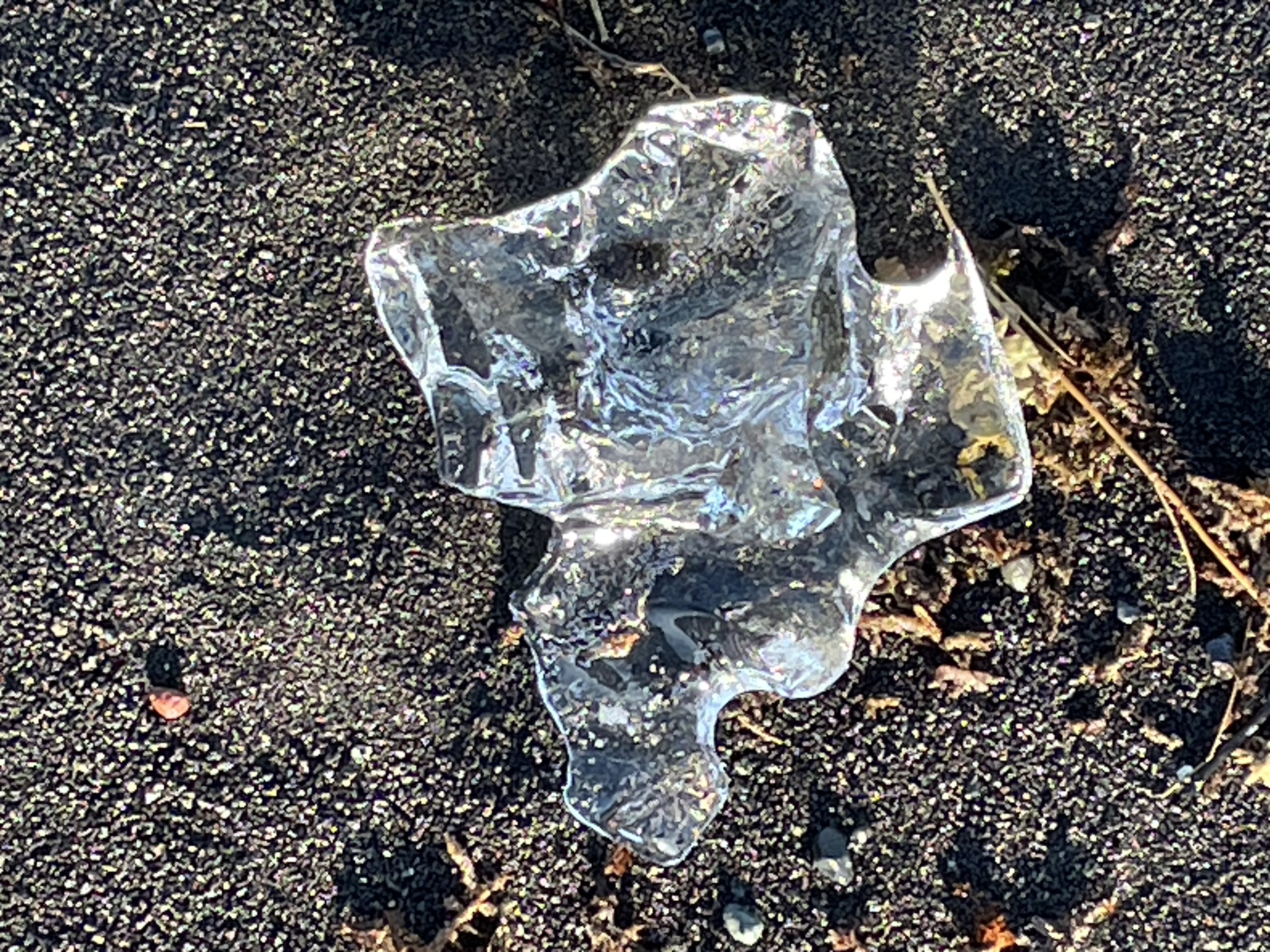
It was late when we arrived at the Foss Hotel so we quickly unloaded and headed into Hofn for a late night snack. The Traditional Icelandic Dessert at Kaffi Hornid was excellent!

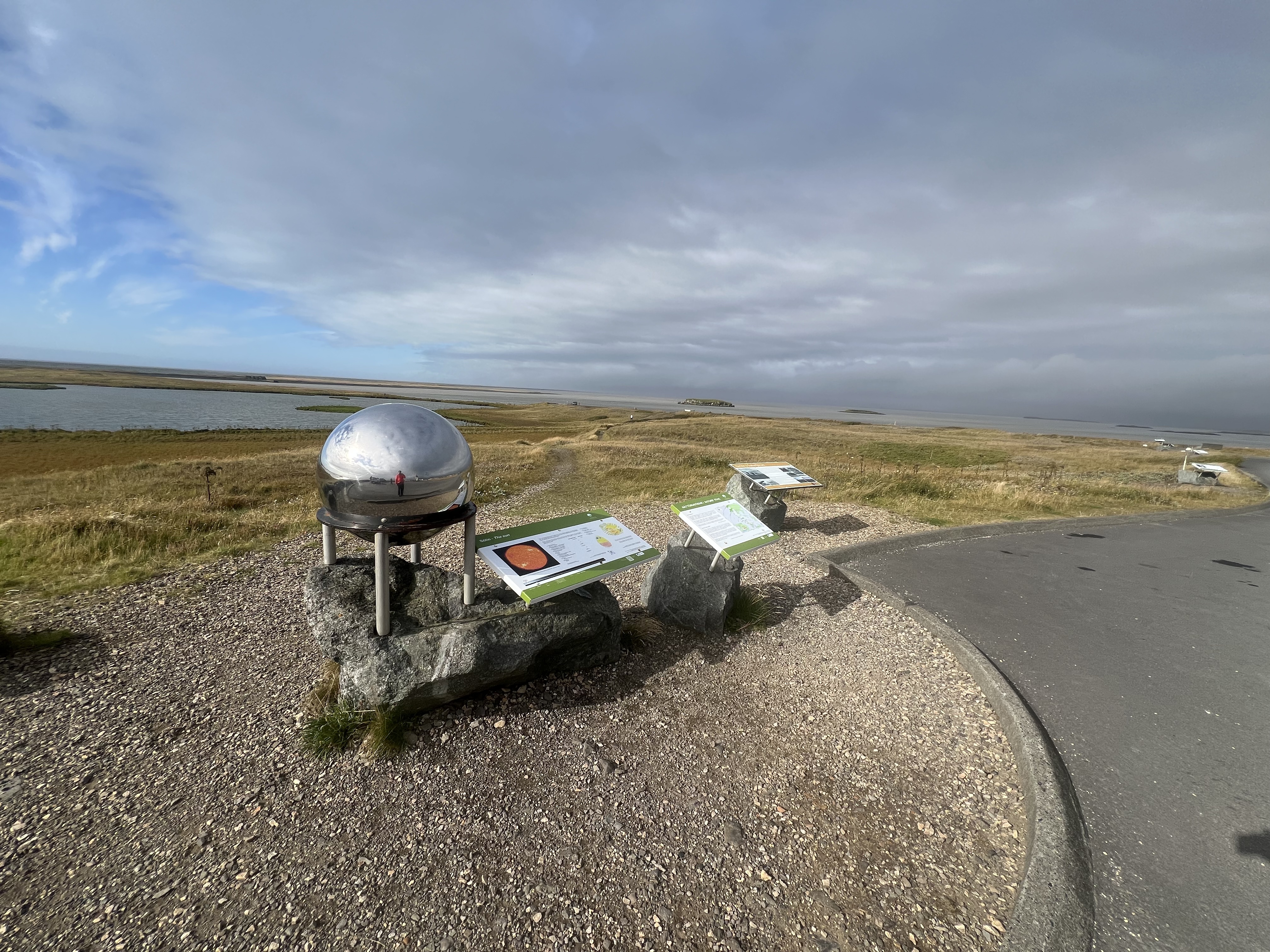
Day 6 – Today’s adventure was big skies, mountains and fjords, with a little off-roading for good measure. We toured around Hofn briefly stopping at the harbour to check out the Hofn Universe Sculpture and the nature walk. The walk is about 3 km (we didn’t do it because of time) and to-scale displays the size and orbits of the planets in the solar system. The sculpture is a memorial but to whom we do not know.
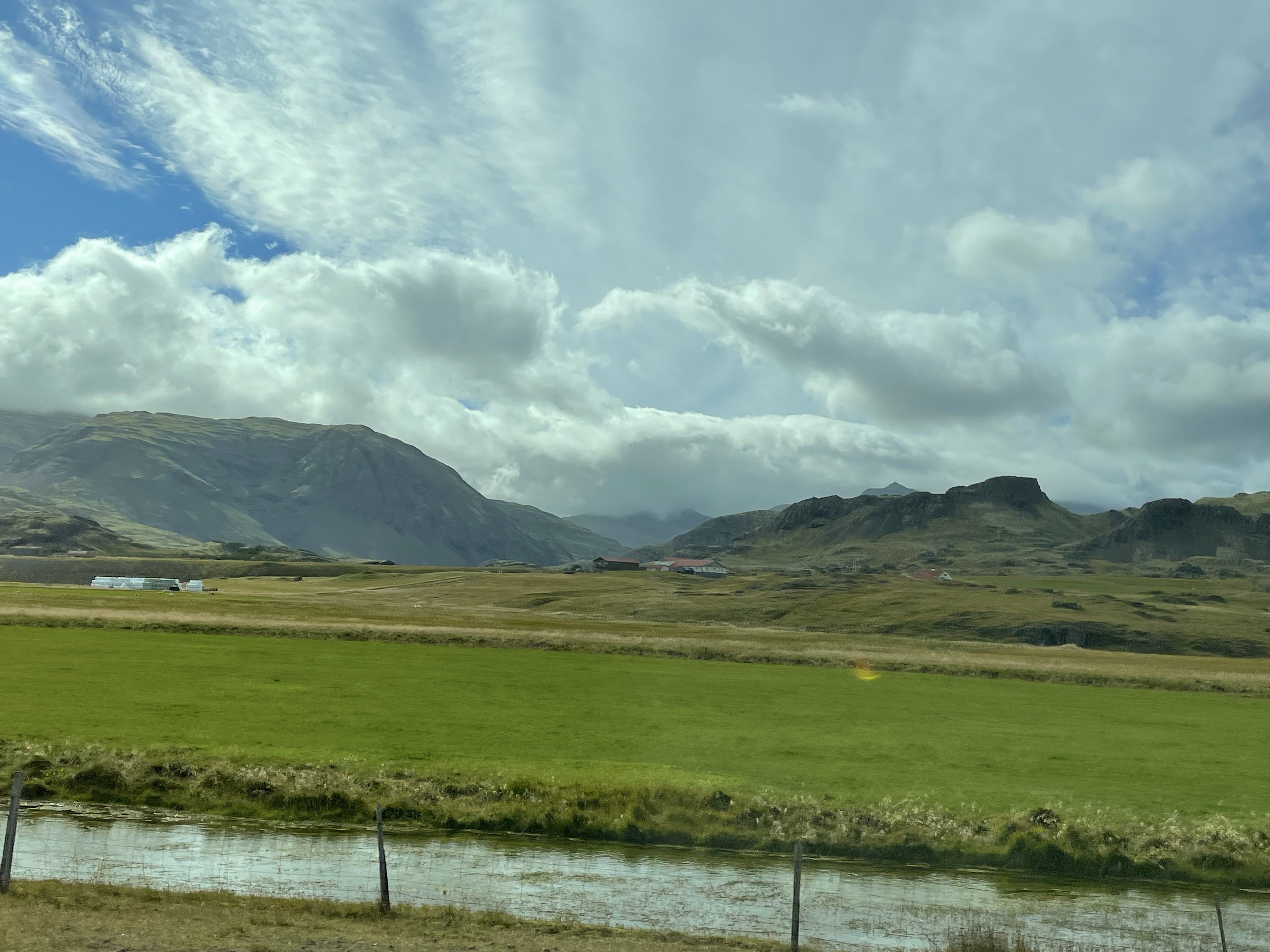
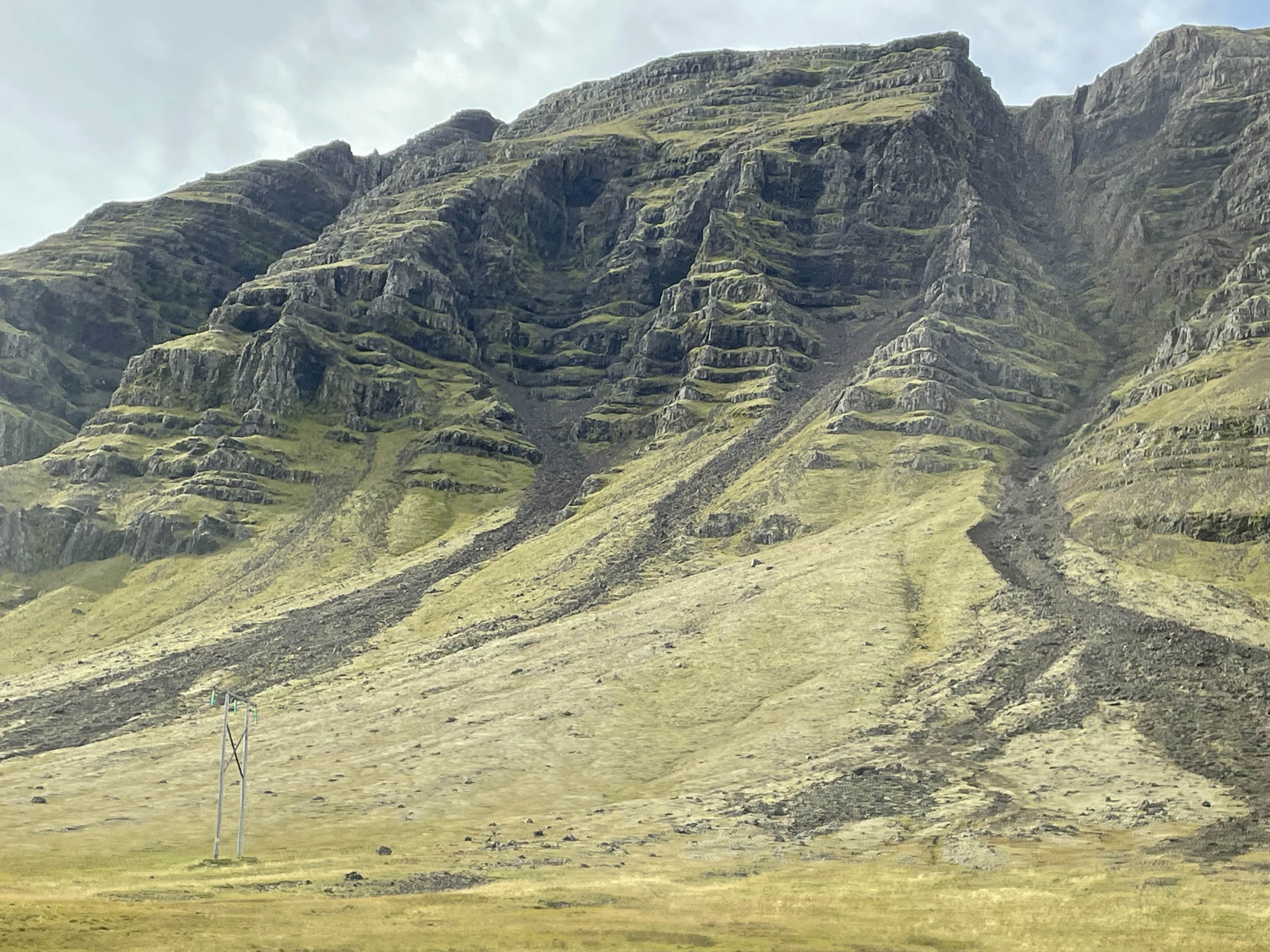
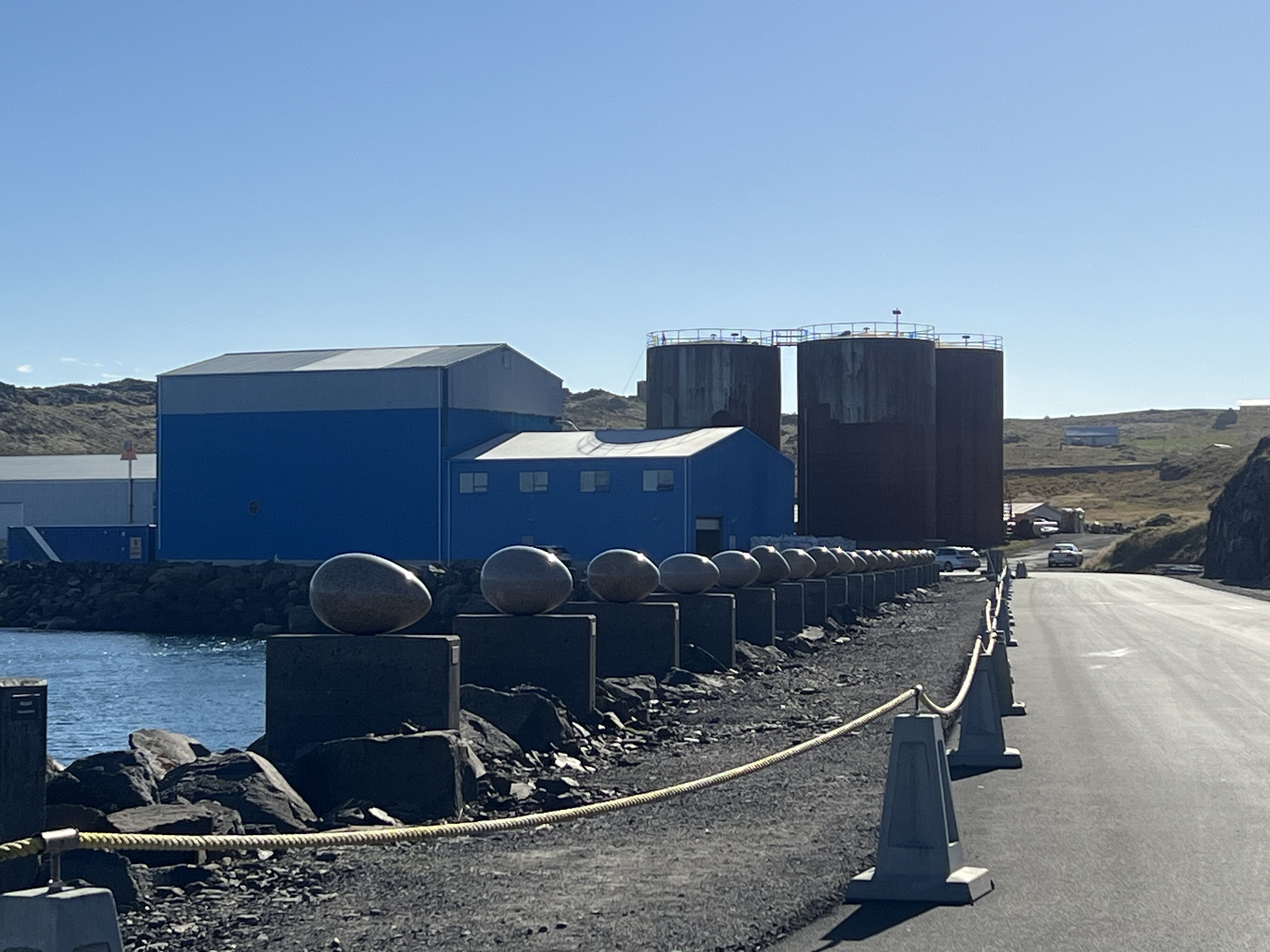
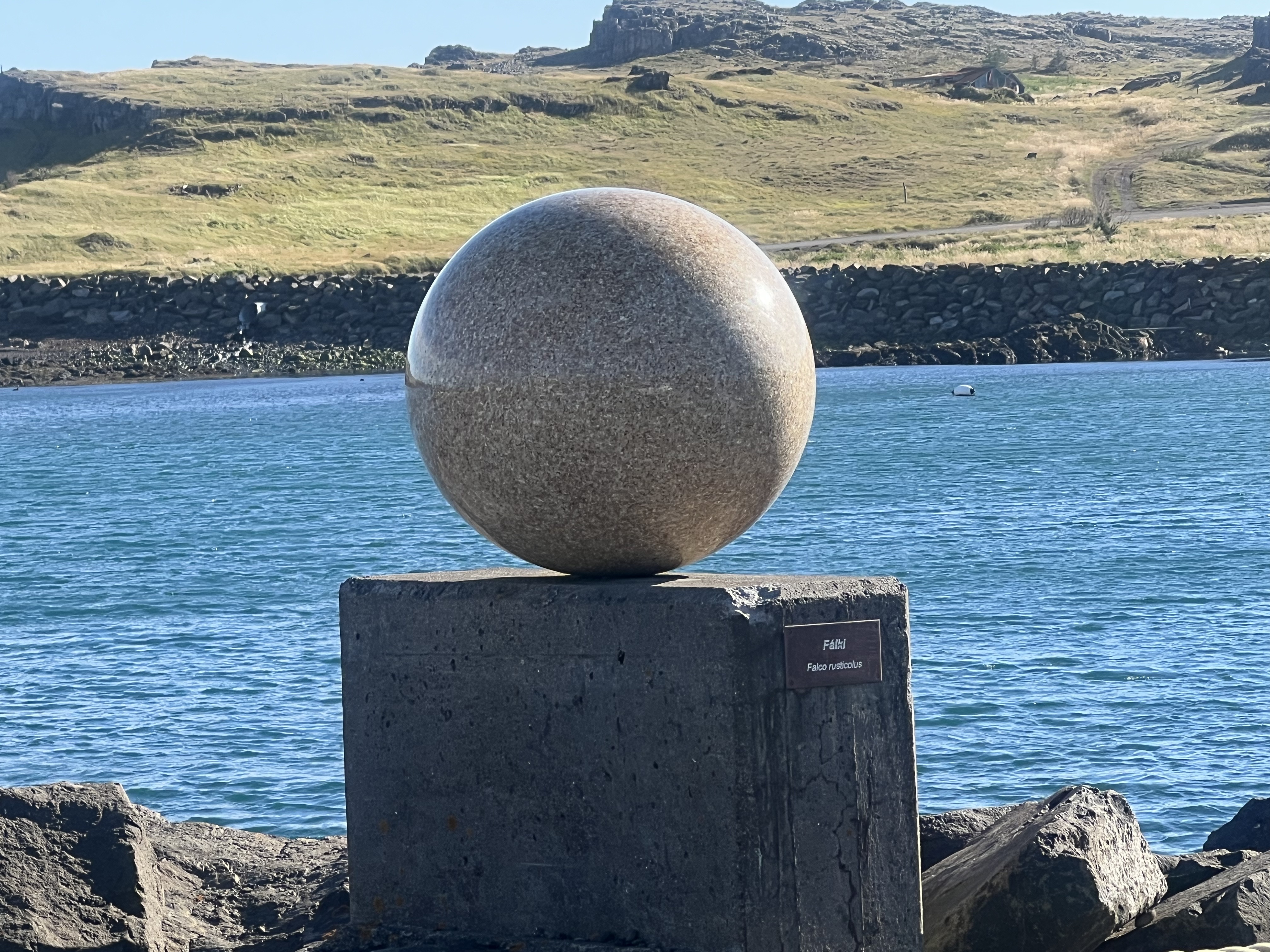
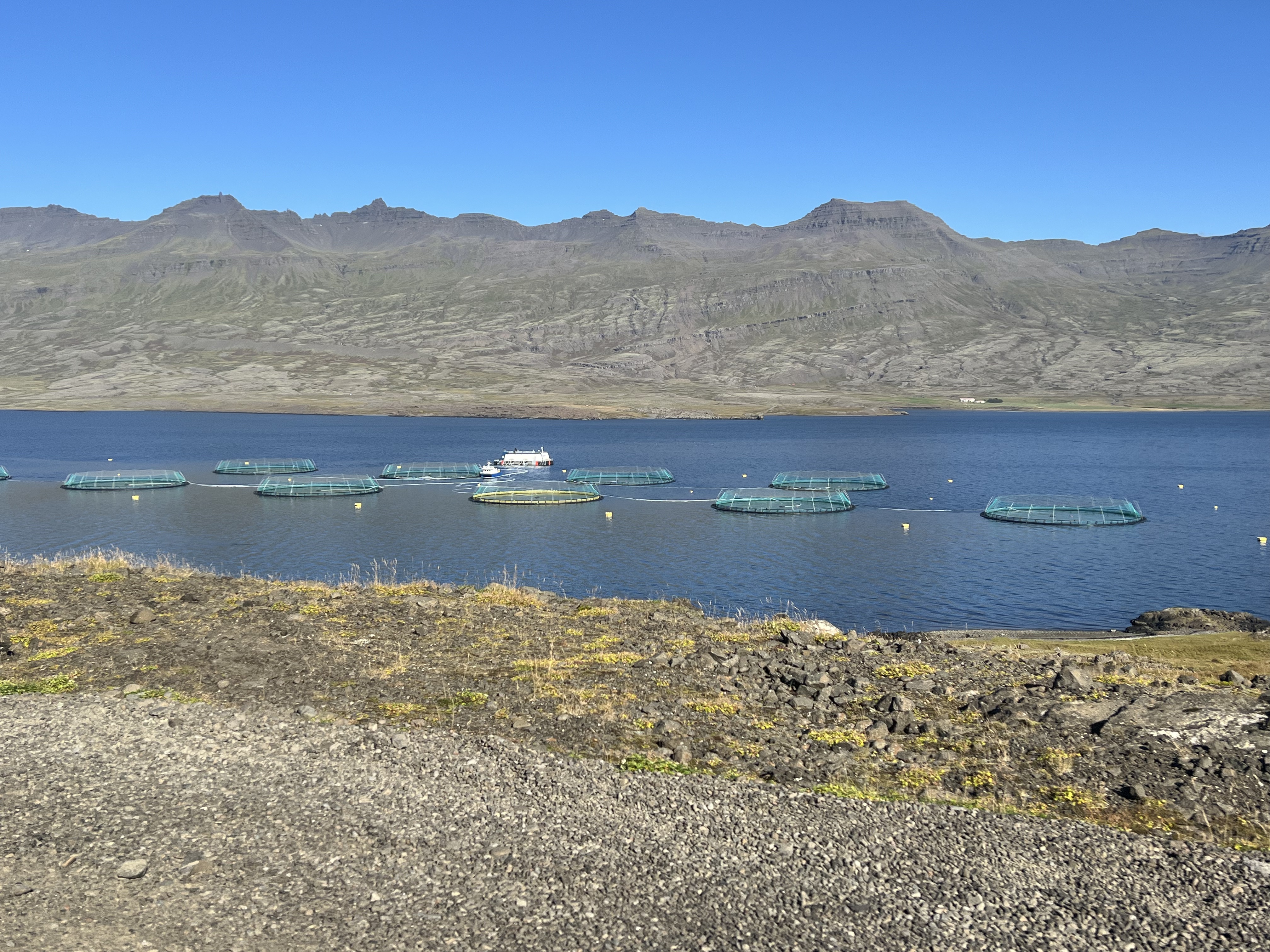
Pictures from day 6 are just a few of the scenes along the way – fjords, rocky mountain vistas, farms and a quaint fishing village, Djupivogur, where we stopped for lunch and visited the port and cultural centre. On the way out of town, we were fascinated by the sculpture, “The Eggs of Merry Bay”, representing the 34 eggs from species of birds that nest in the Djupivogur area.
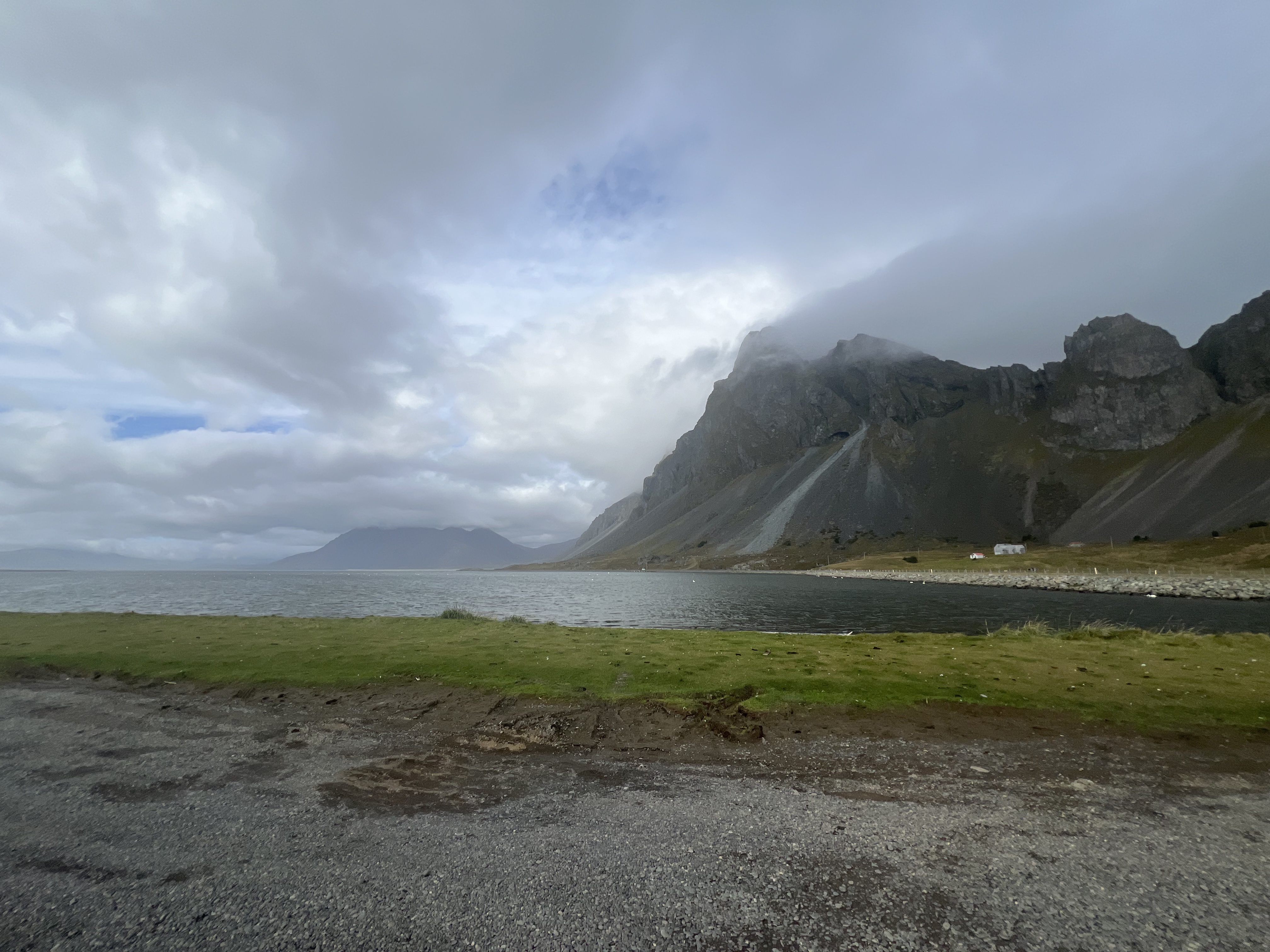
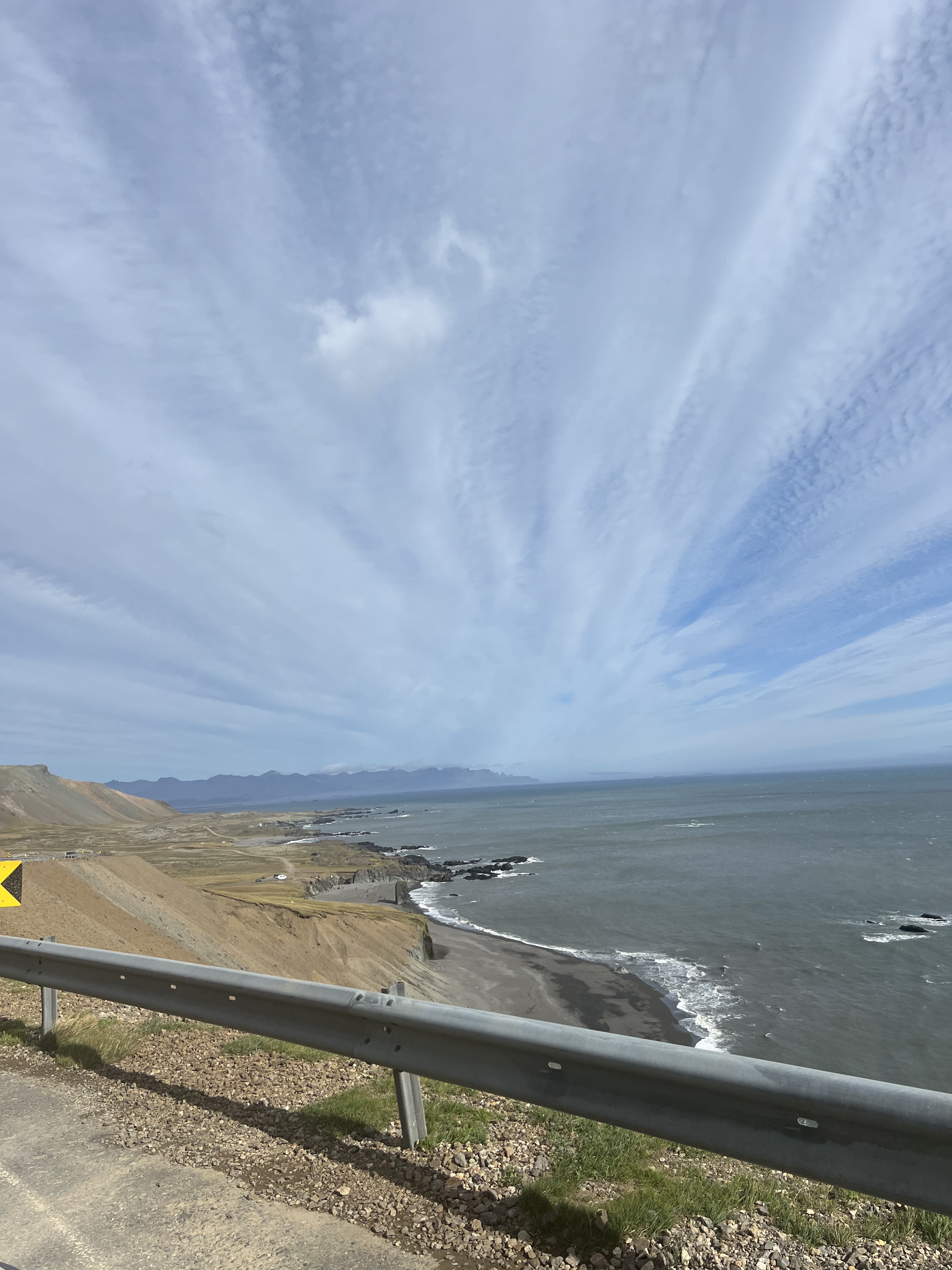
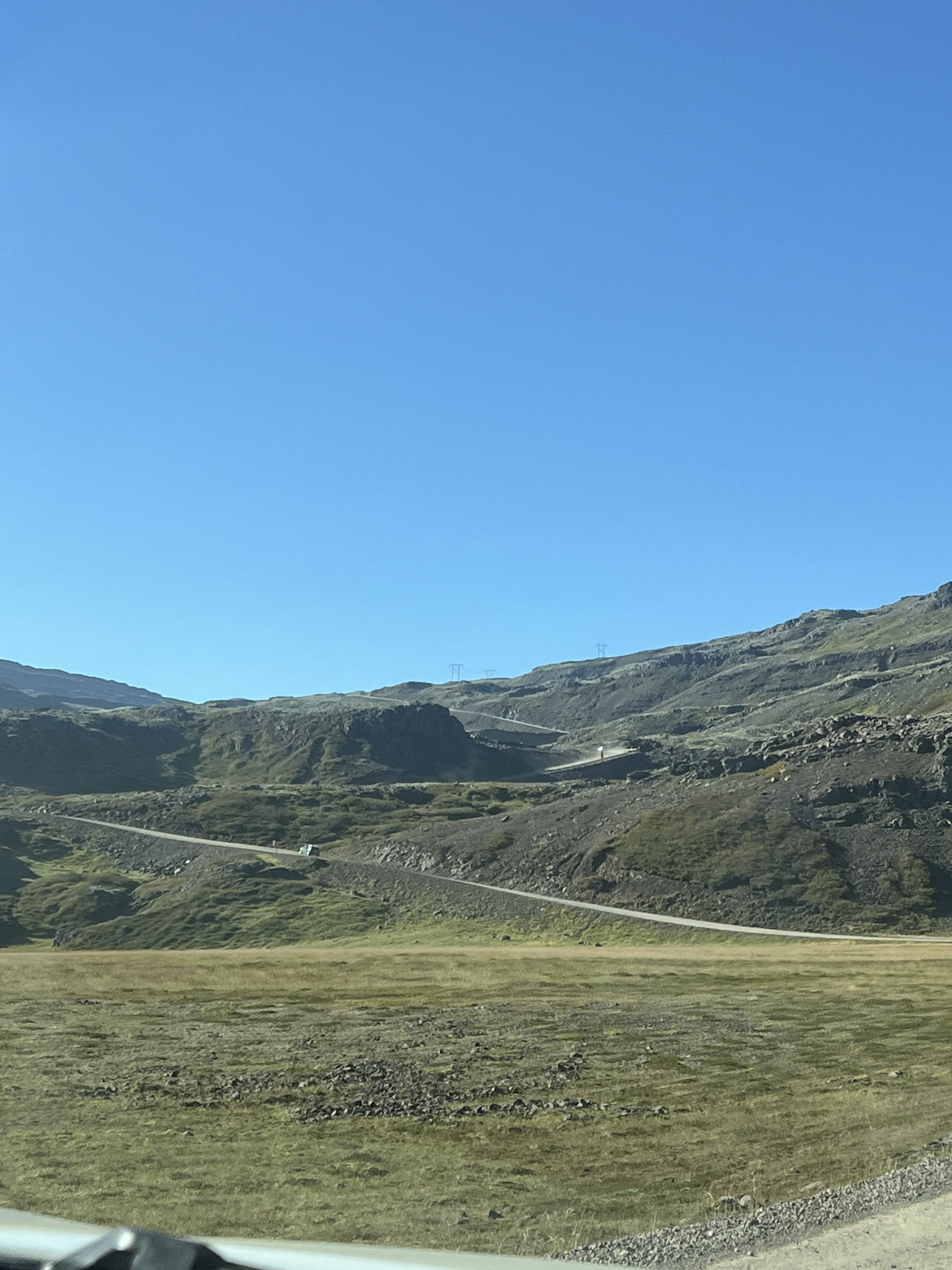
George travelled this route last year on his way to the ferry that took him from Seydisfjordur to the Faroe Islands. On that trip, he parked his bike about 15 km from Seydisfjordur, returned his rental car back to the airport in Egilsstadir (about 15 km back), hitchhiked back to his bike and coasted down a really scary road with multiple hairpin turns into town. This time, we drove from the mountains to the port, and enjoyed the beautiful vistas as we descended.
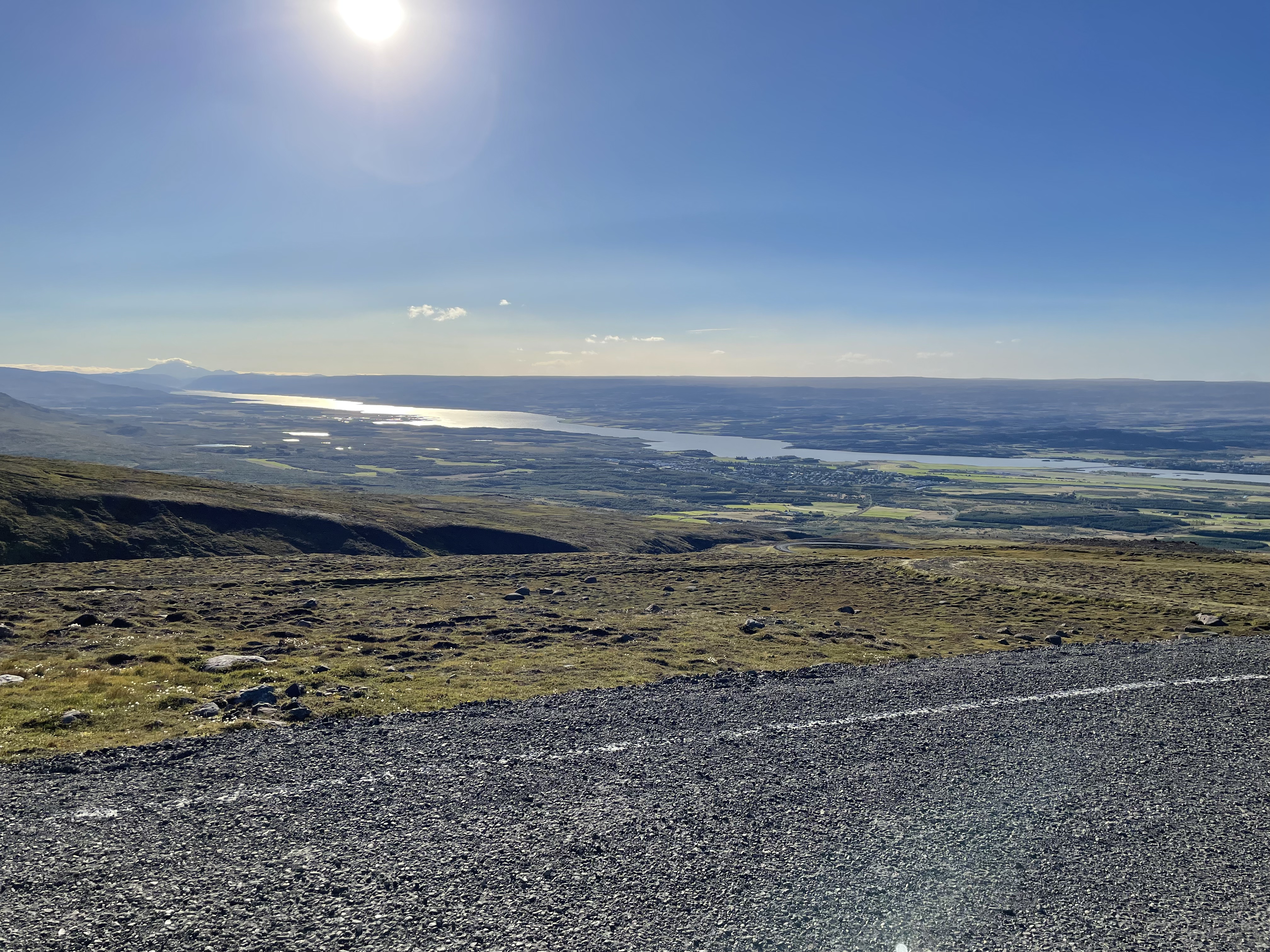
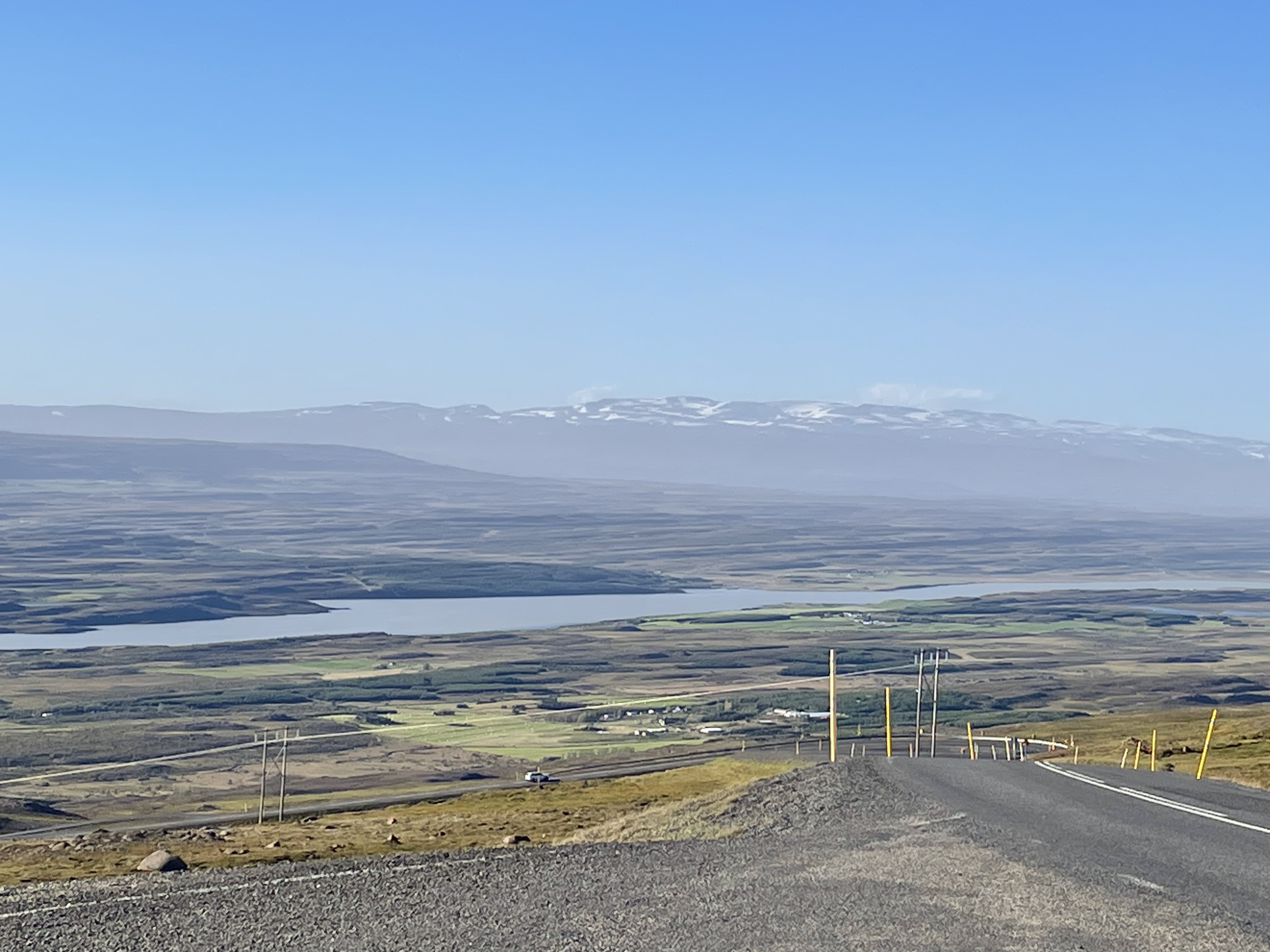
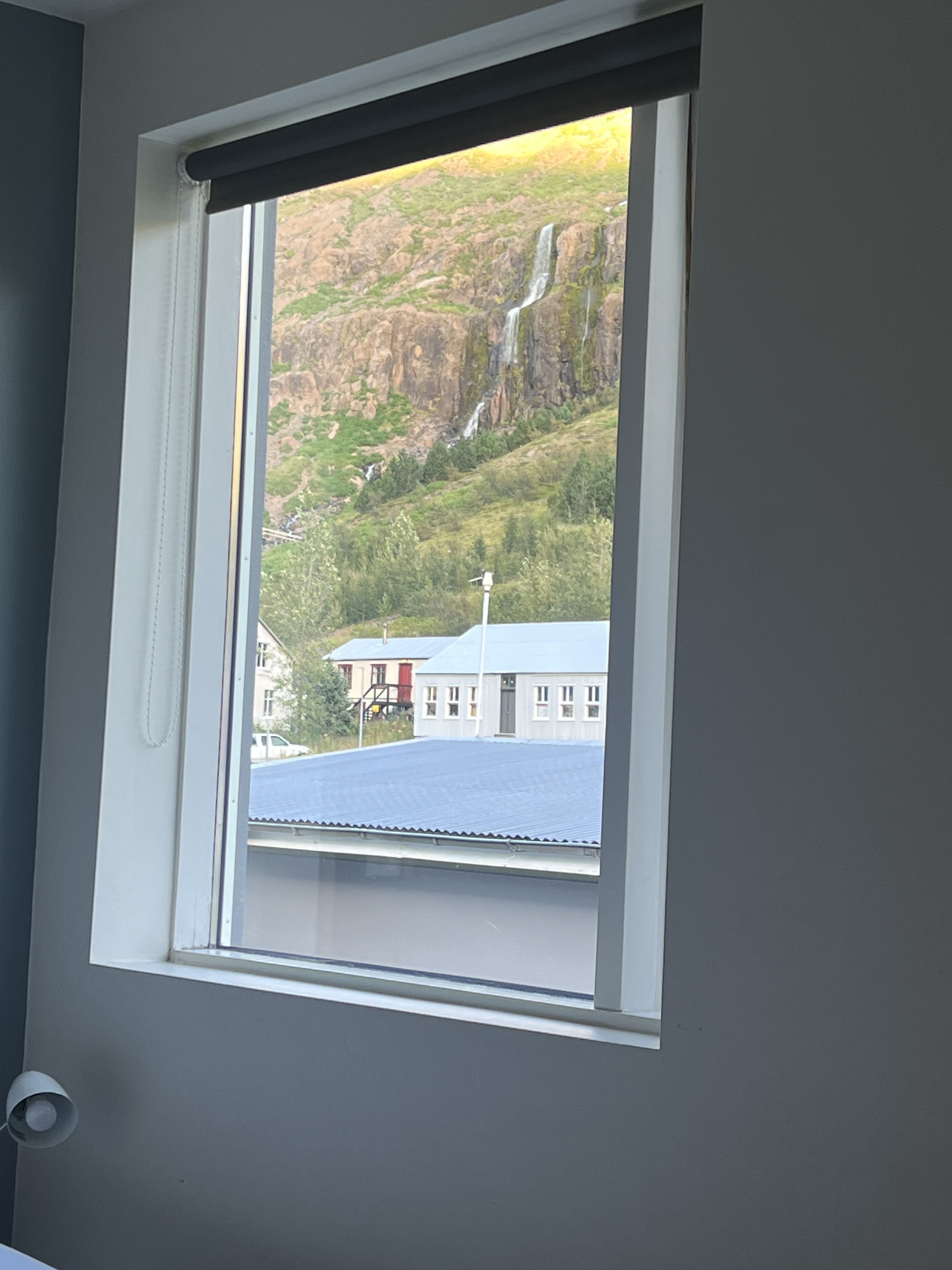
Seydisfjordur is very small with a population of about 675, just a few restaurants and very few options for accommodation. Book ahead! It’s a very picturesque town surrounded by mountains and waterfalls and has a fairly lively cultural life.

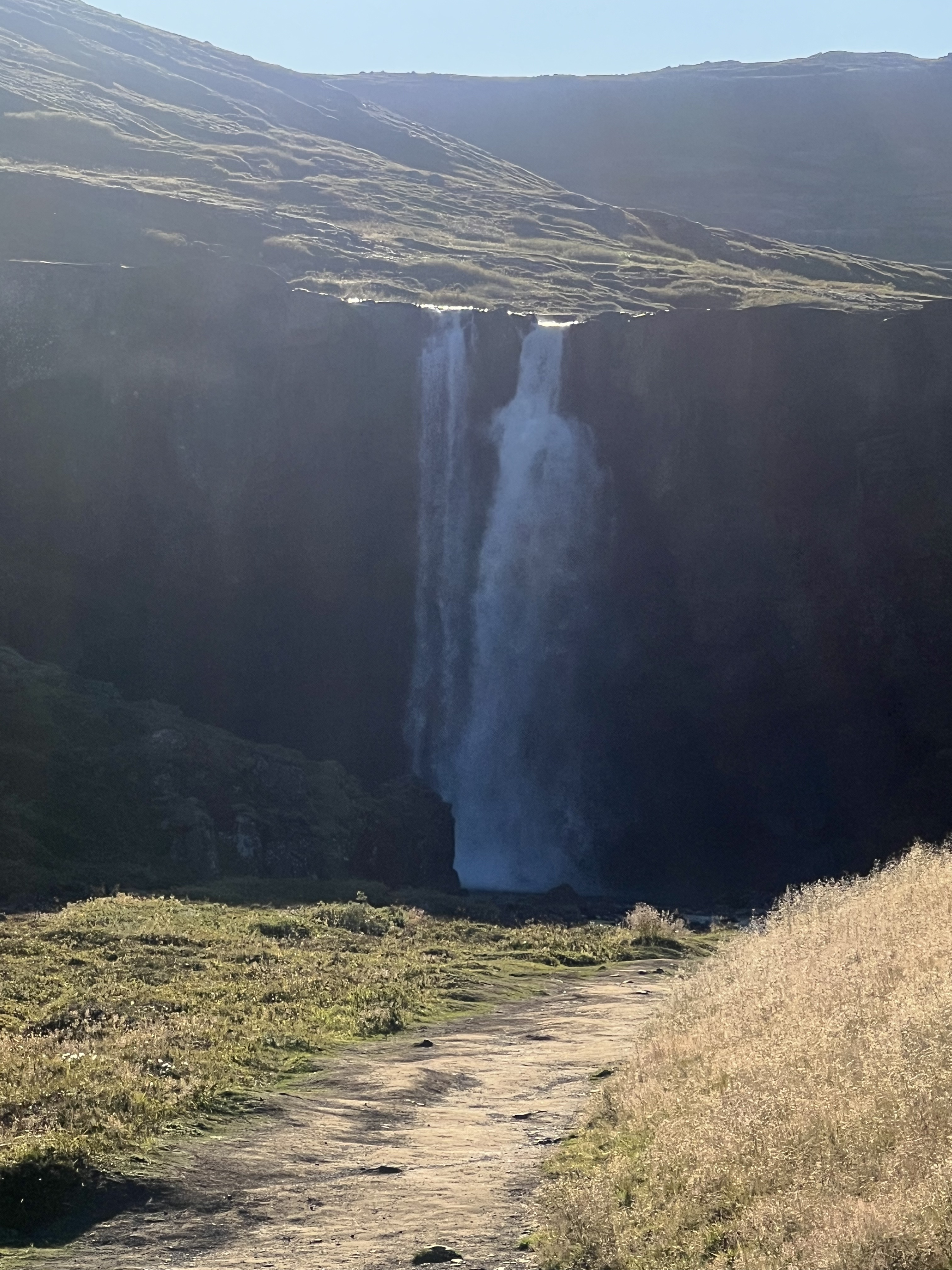
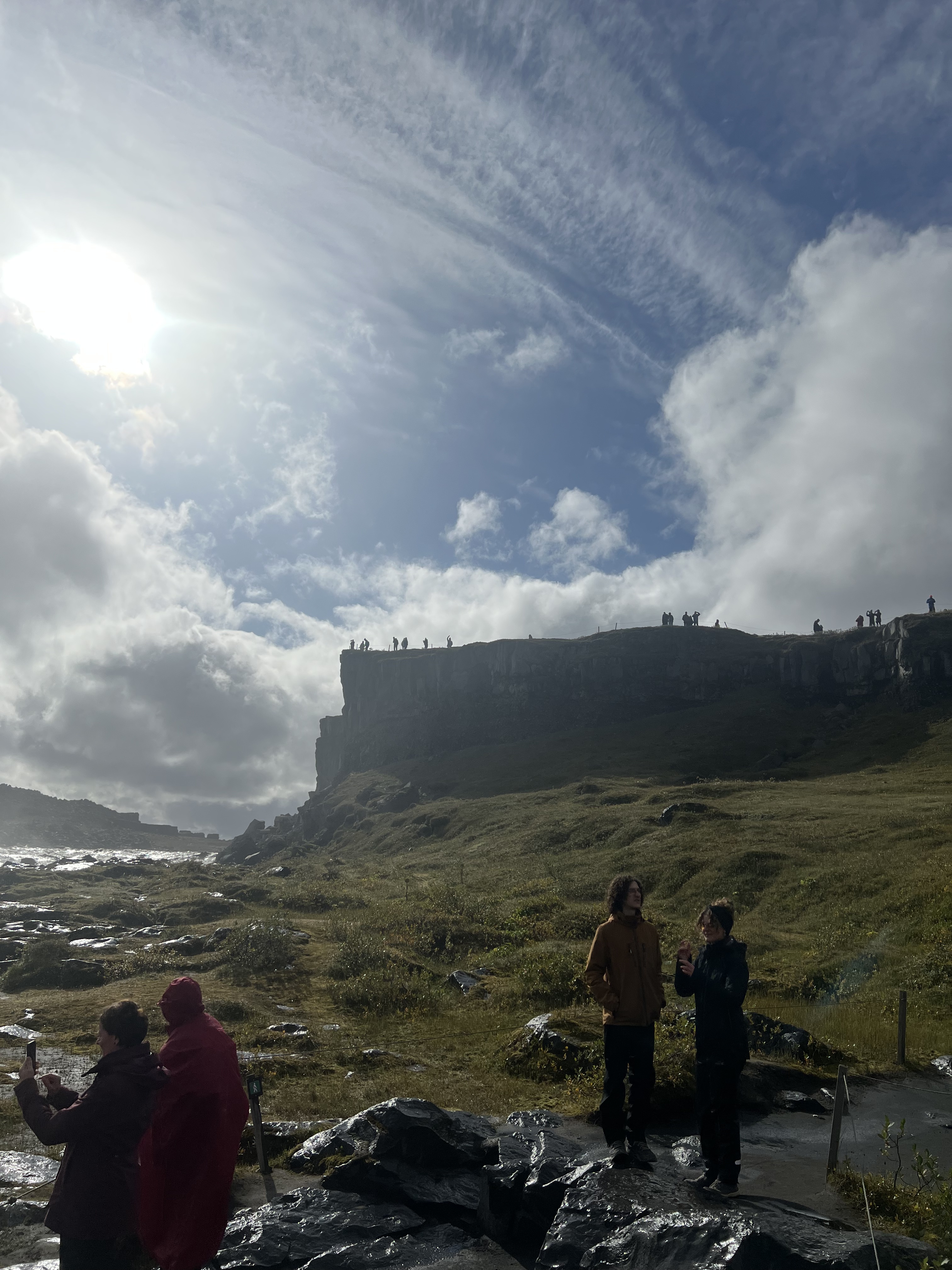
Day 7 – Continuing on along the ring road travelling northwest, our first stop was Dettifoss waterfall, ranked as the second most powerful in Europe. 100 metres wide, the water plummets 45 metres down into Jokulsargljufur canyon. It is definitely quite a sight and well worth the visit.
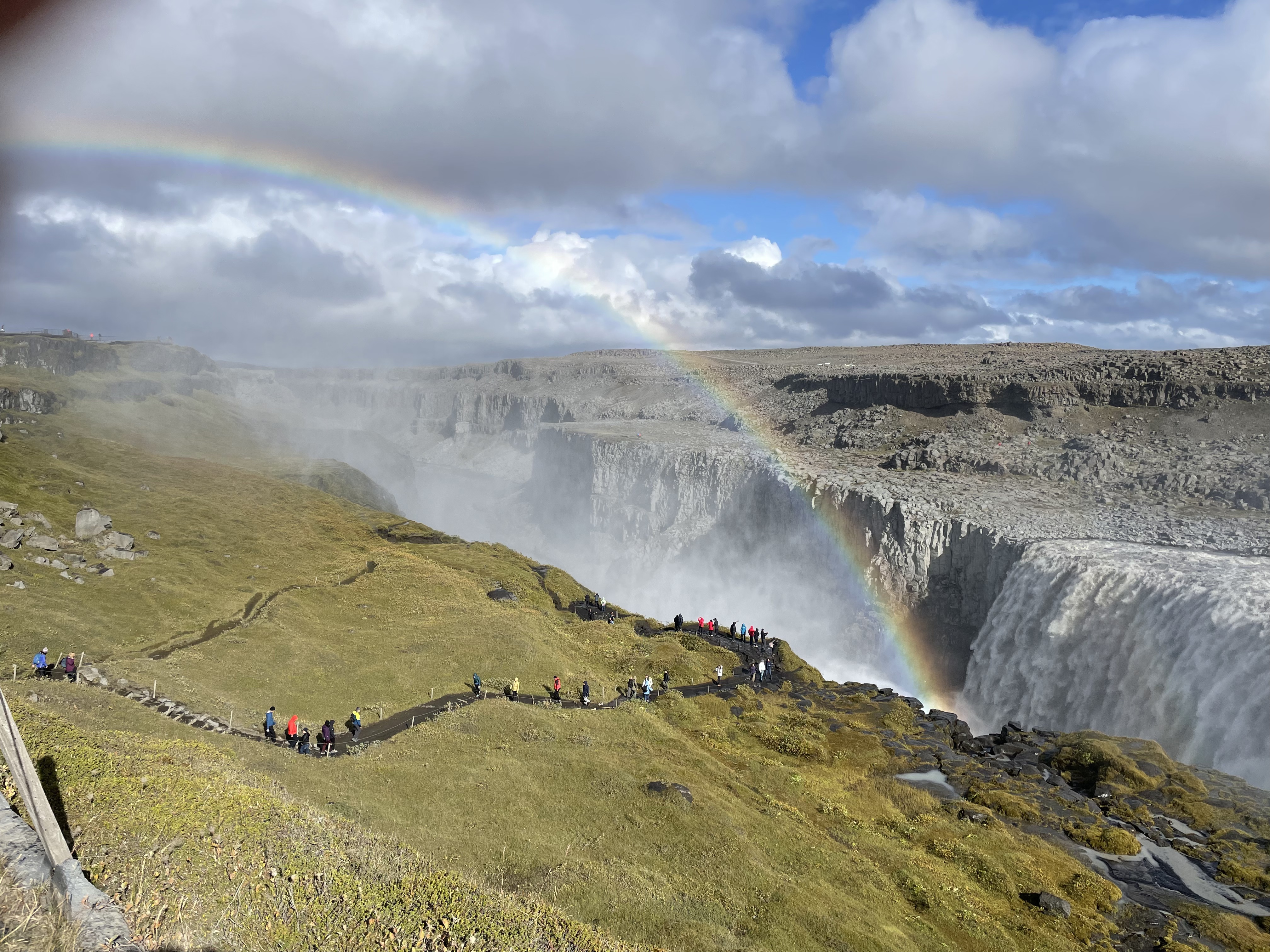
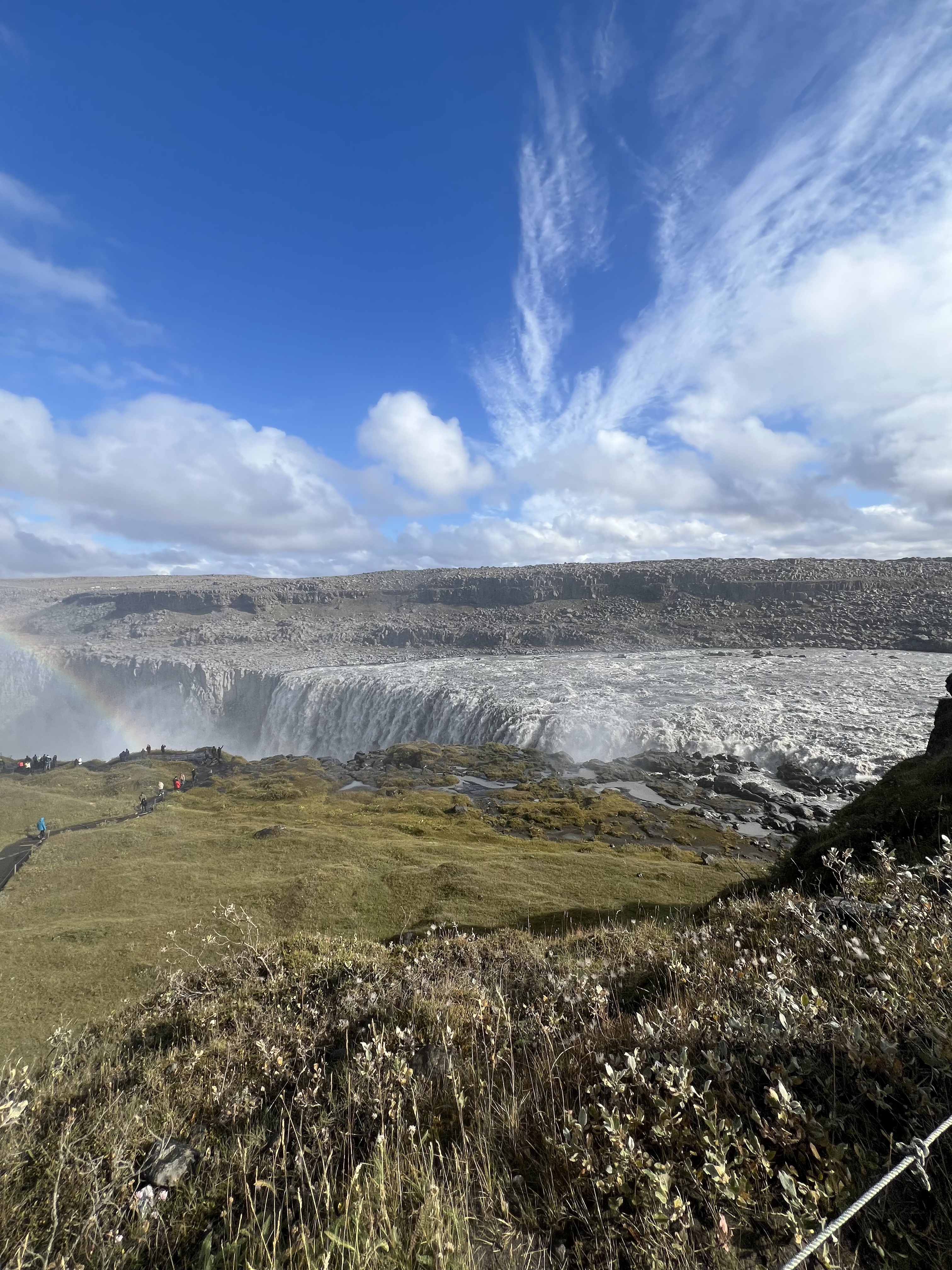
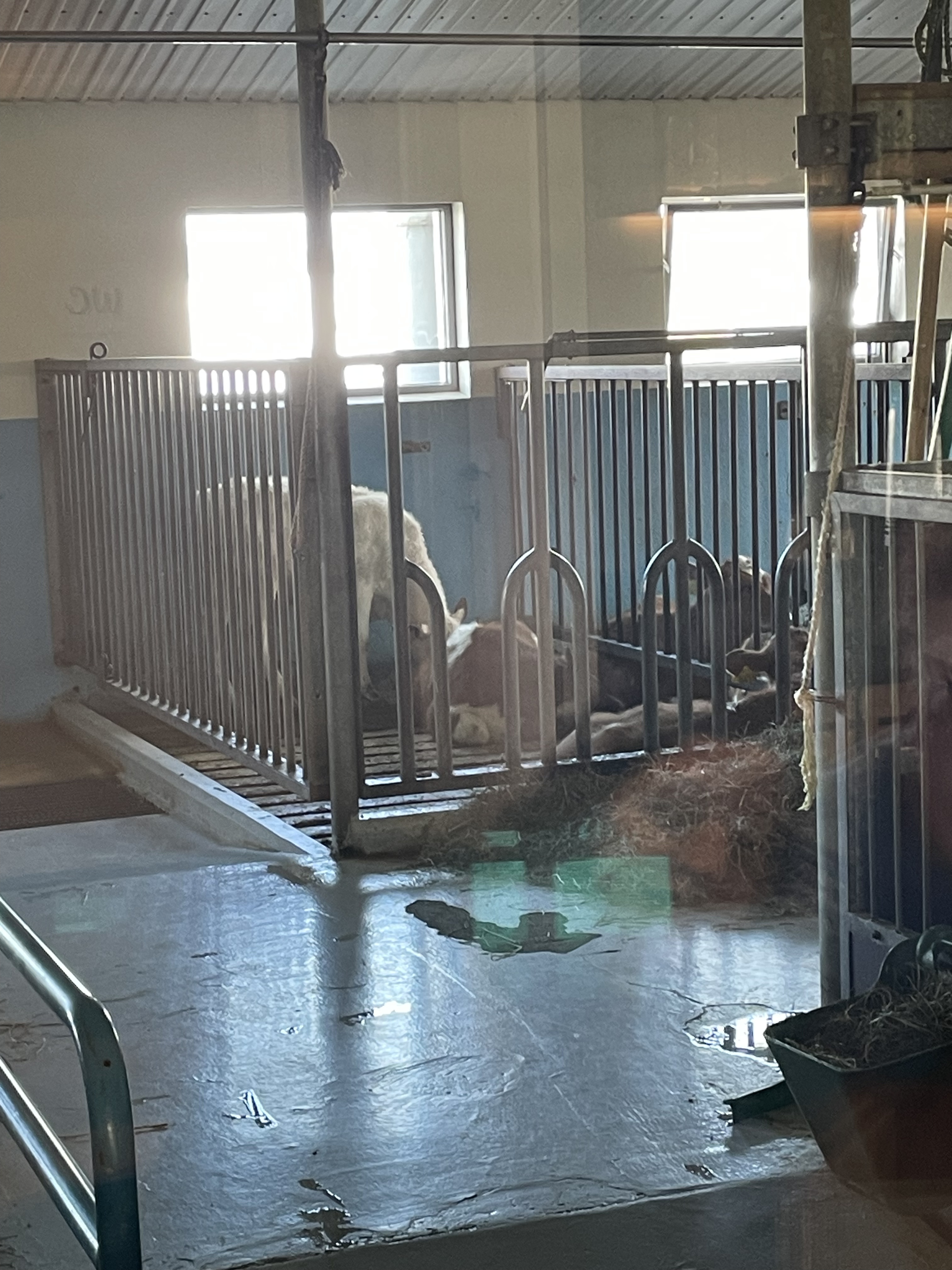
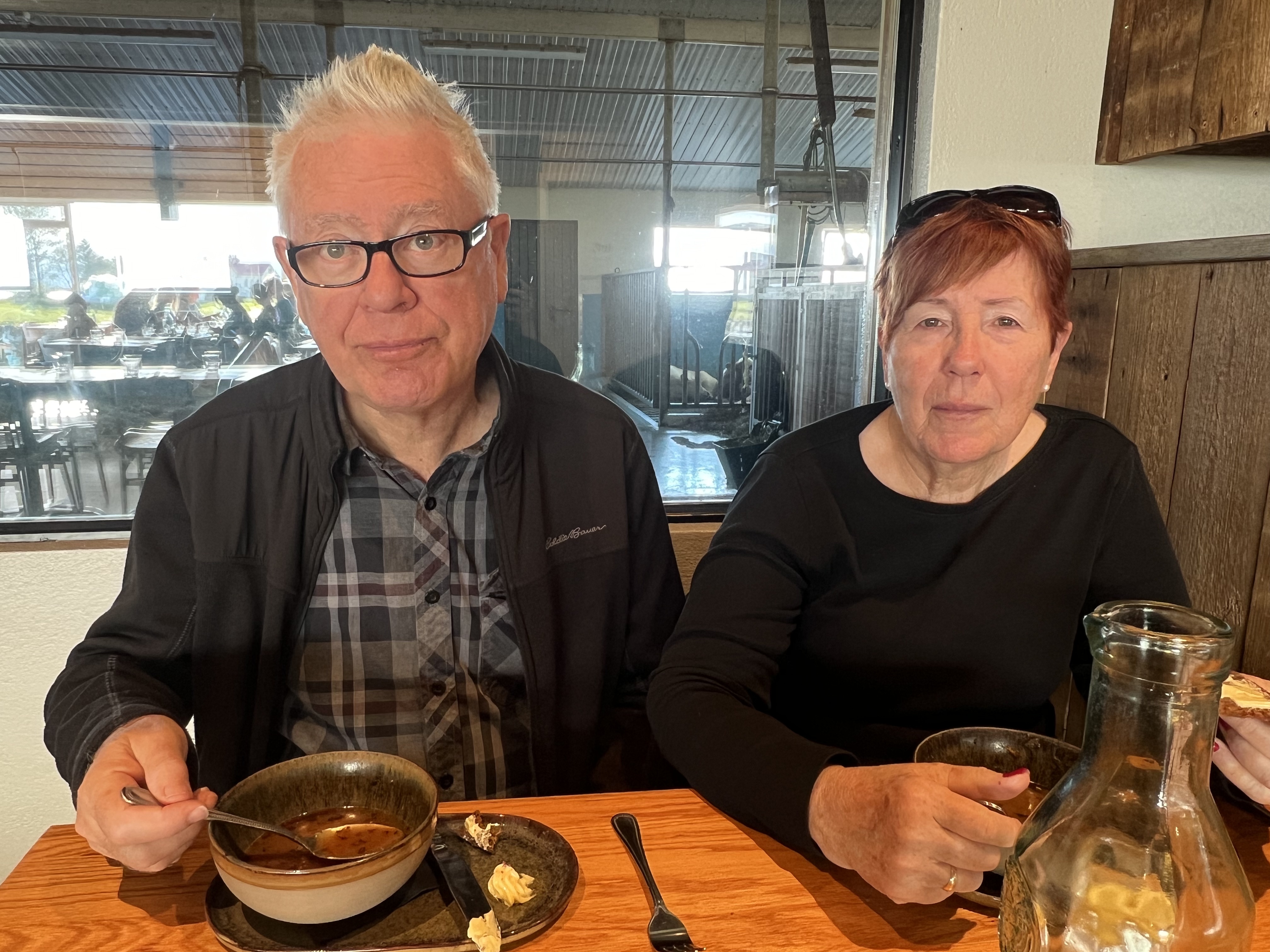
Our next stop was Myvatn, a geothermal area that is renowned for its wealth of flora and fauna, particularly its birdlife. Our first stop was a fun spot where we had lunch. Vogafjos Farm Resort is a family-run guesthouse which includes a restaurant adjoining the barn where one can watch, if you arrive at the right time, the cows being milked. Just about everything on the menu is grown and made on the farm. Great spot!
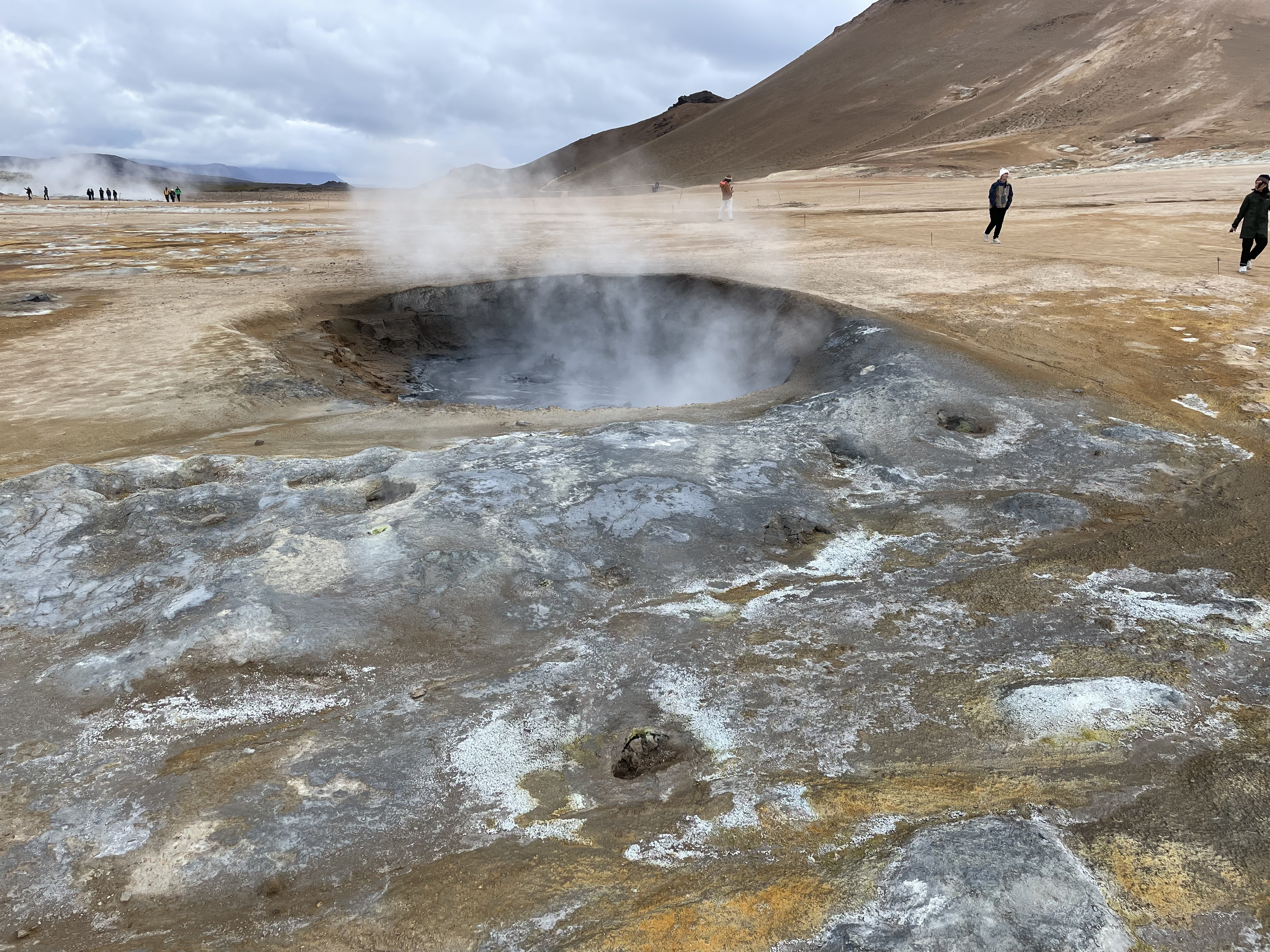
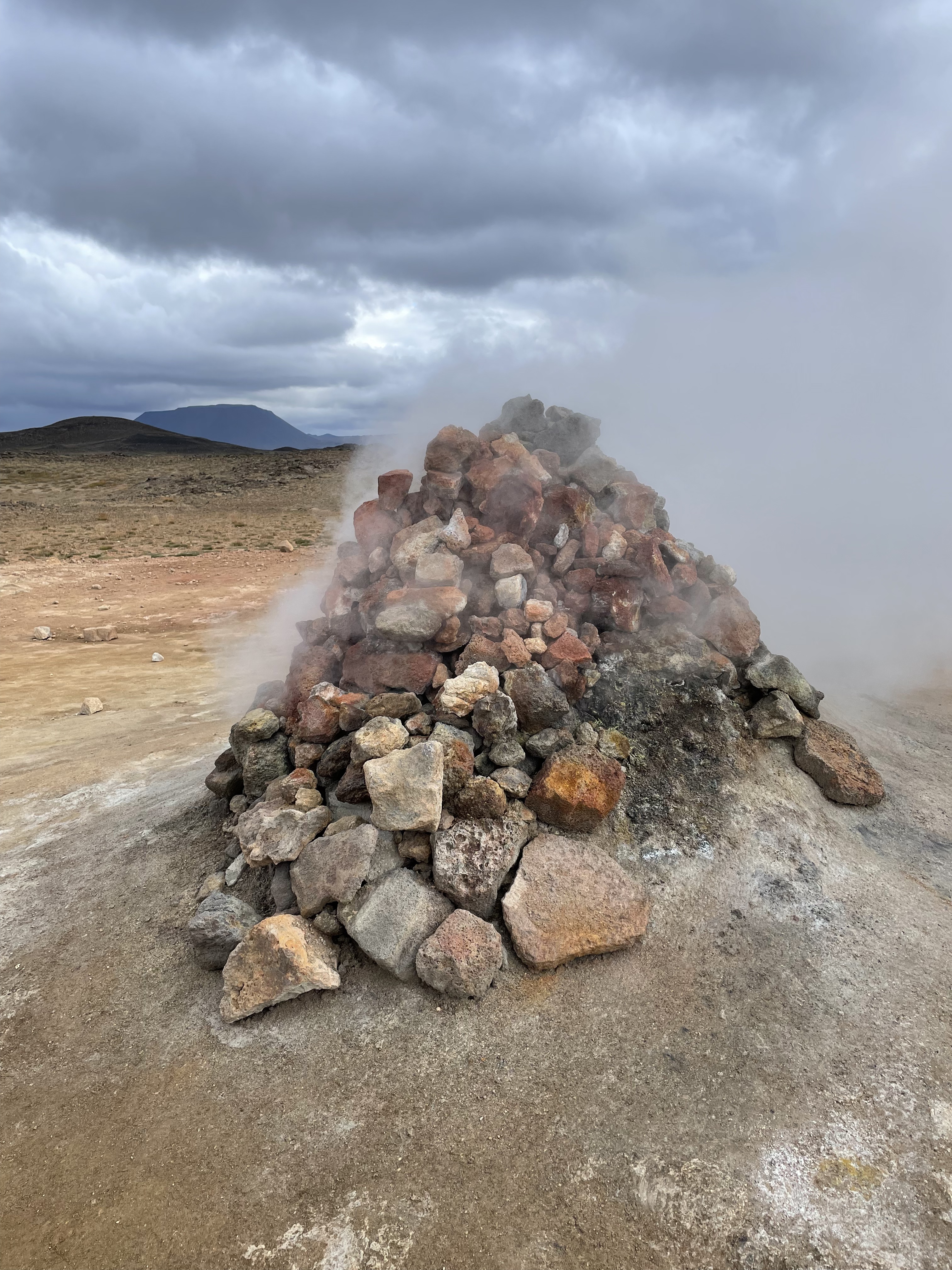
After lunch we travelled up the Namaskard Pass, on Mount Namafjall to the Namaskard Geothermal Area, a stark landscape defined by seething fumaroles, sulphuric smells and brightly coloured clay. Walking around this area makes it feel like you’ve entered another world. It’s hard to believe that just over the mountain is the lush landscape we had just left.

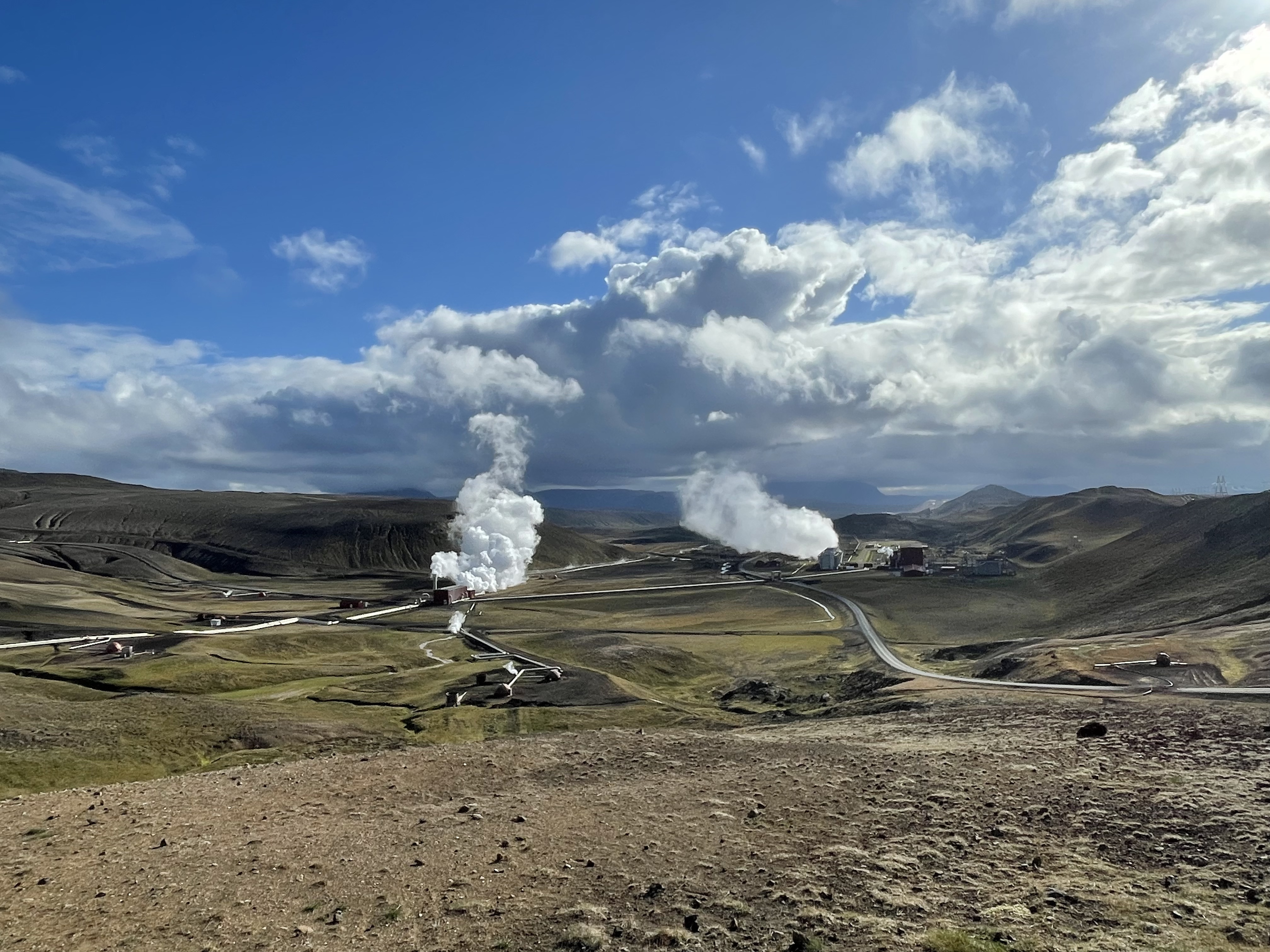
Also in this area is a large geothermal plant and Hverfjall Crater Mountain.

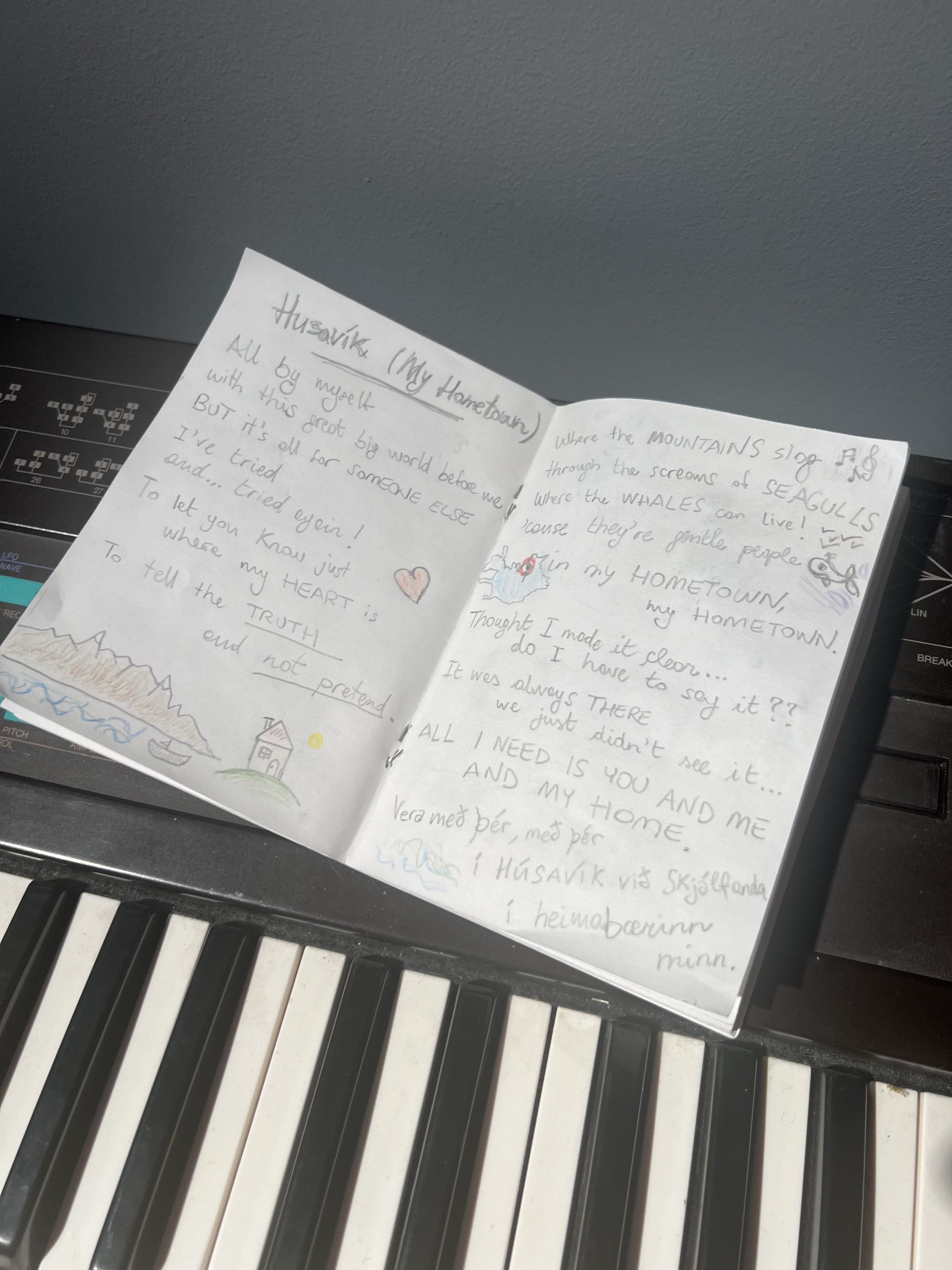
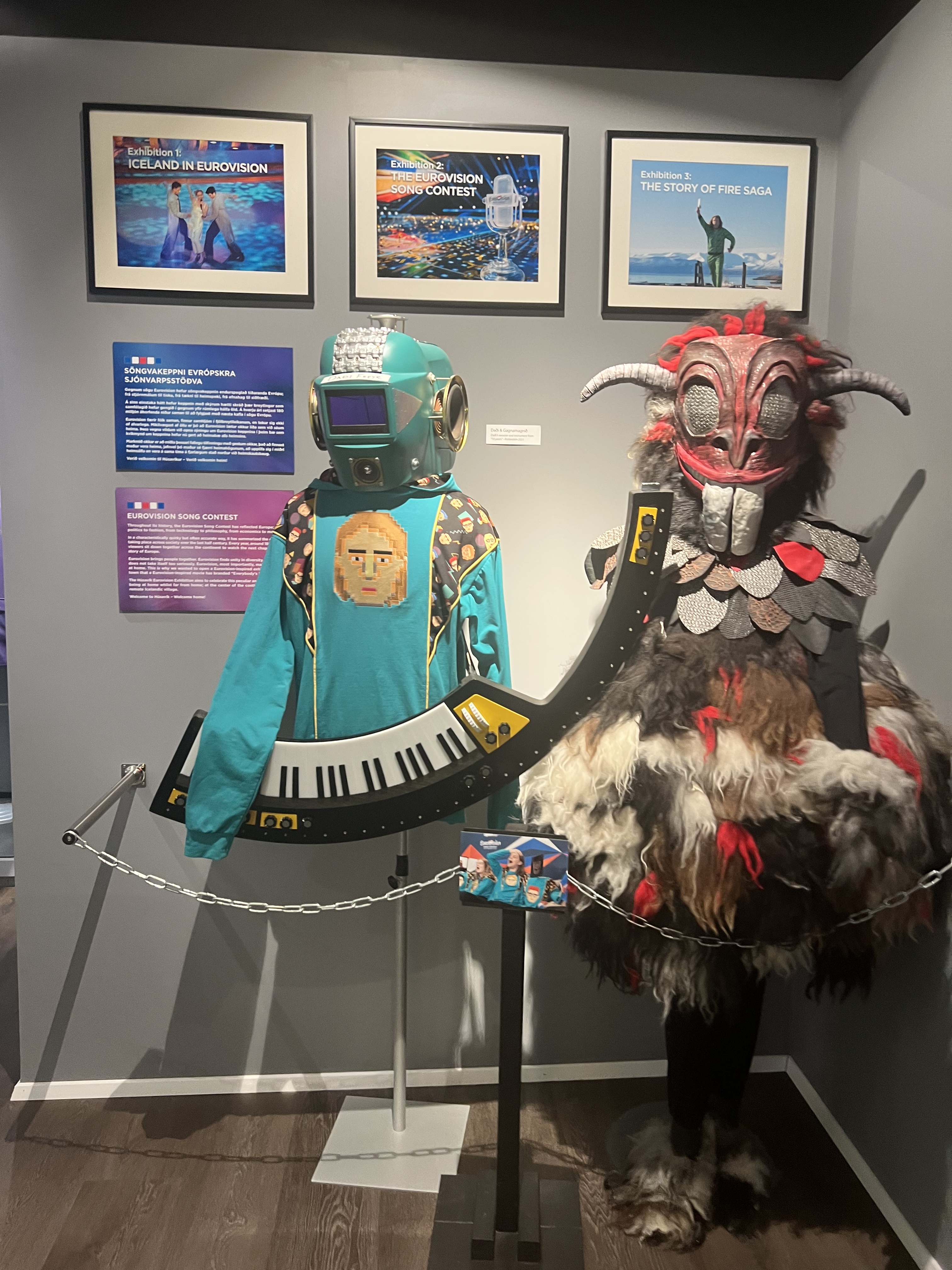
Our stop for the evening was Husavik. After a short rest we walked down to the harbour for dinner at Restaurant Salka, a great spot to eat. Then for our evening’s entertainment we visited the Eurovision Song Contest Exhibition. What fun! Based on the movie Eurovision Song Contest – the Story of Fire Saga the exhibition tells the story of the song contest, Iceland’s history at the competition and a behind-the-scenes look at the Netflix original film. Husavik, where some of the movie was filmed, became an overnight sensation.
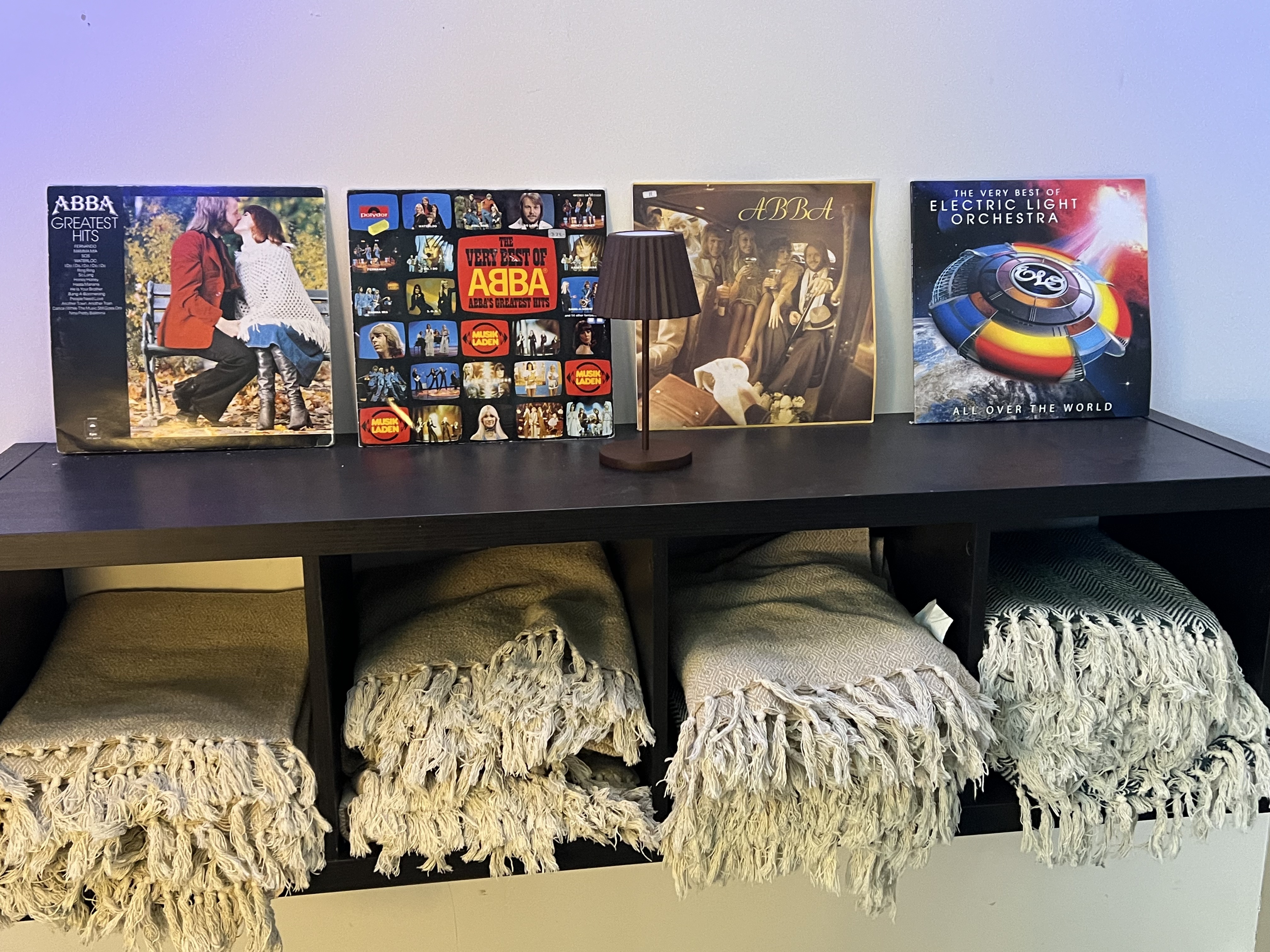
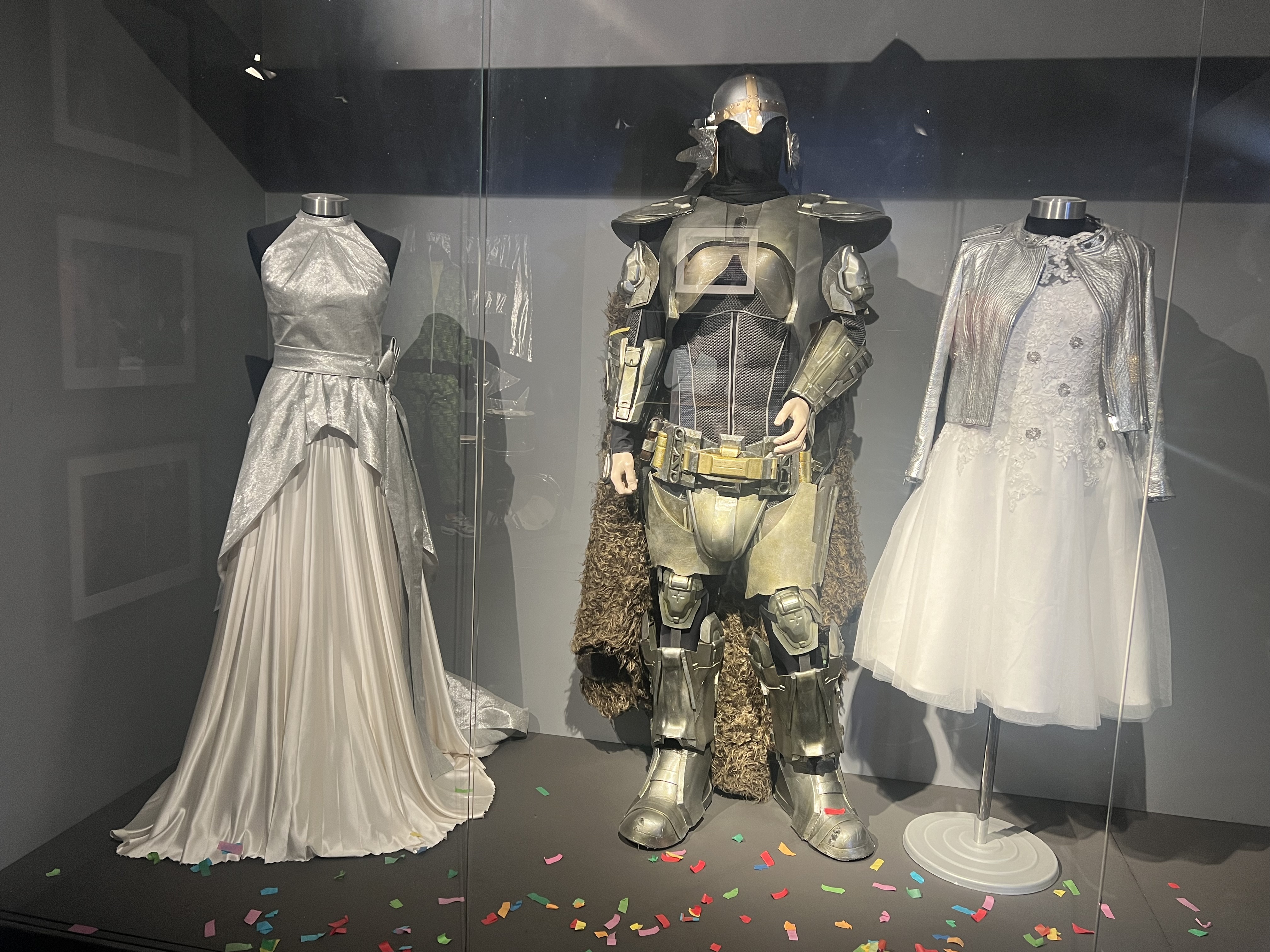
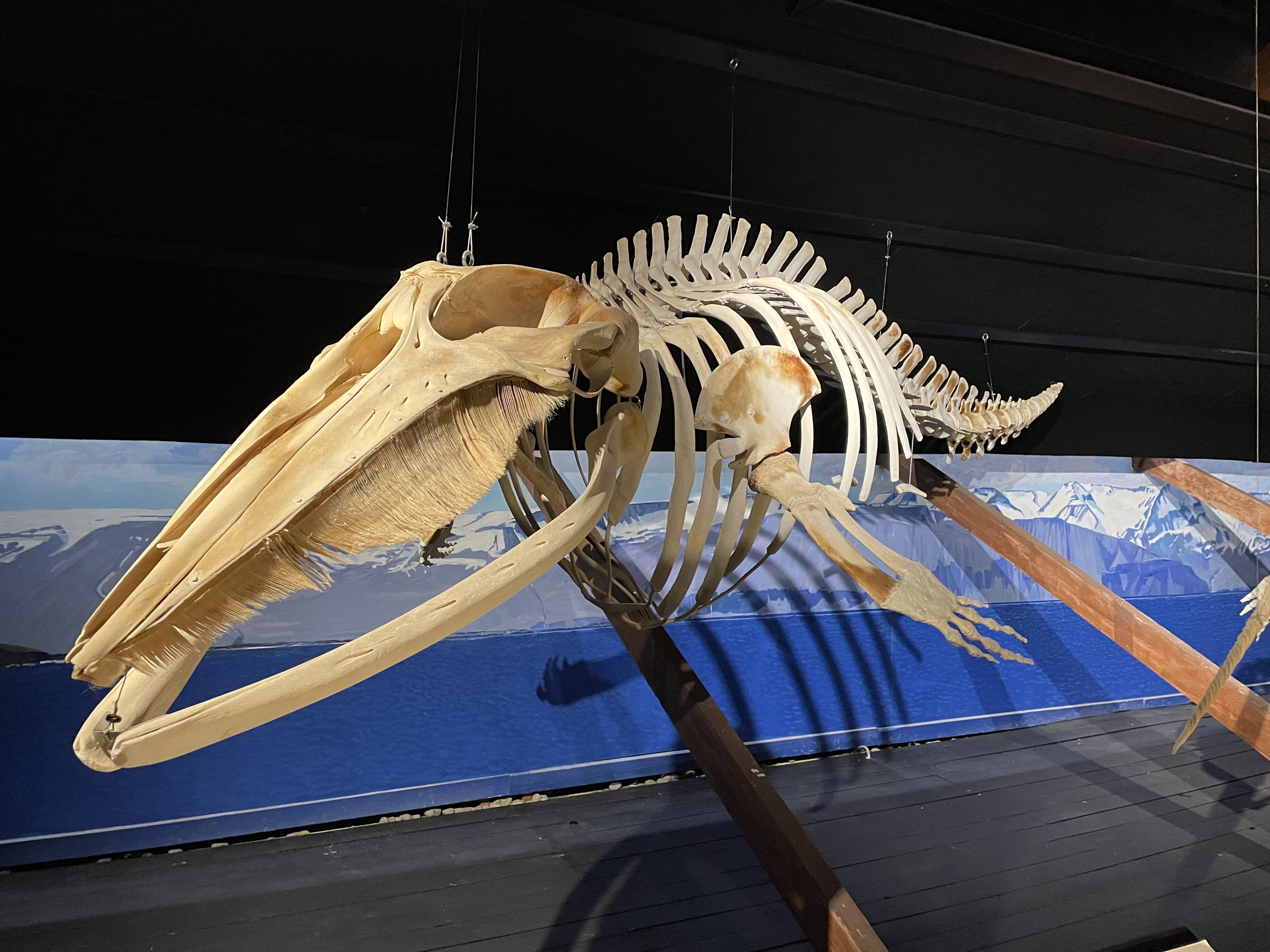
Day 8 – Our original plan was to perhaps go whale watching or to a spa in the morning but the weather wasn’t cooperative. Wet, cold and windy we opted for the Whale Museum instead. The museum includes 13 real whale skeletons, interactive displays, and informative presentations providing a deeper understanding of these magnificent creatures and their importance in the marine ecosystems. Of particular interest was a documentary on the pilot whale hunt that takes place on the Faroe Islands. Interestingly, Canada still catches the most whales under the aboriginal exemption provision of the International Whaling Commission. The debate continues.

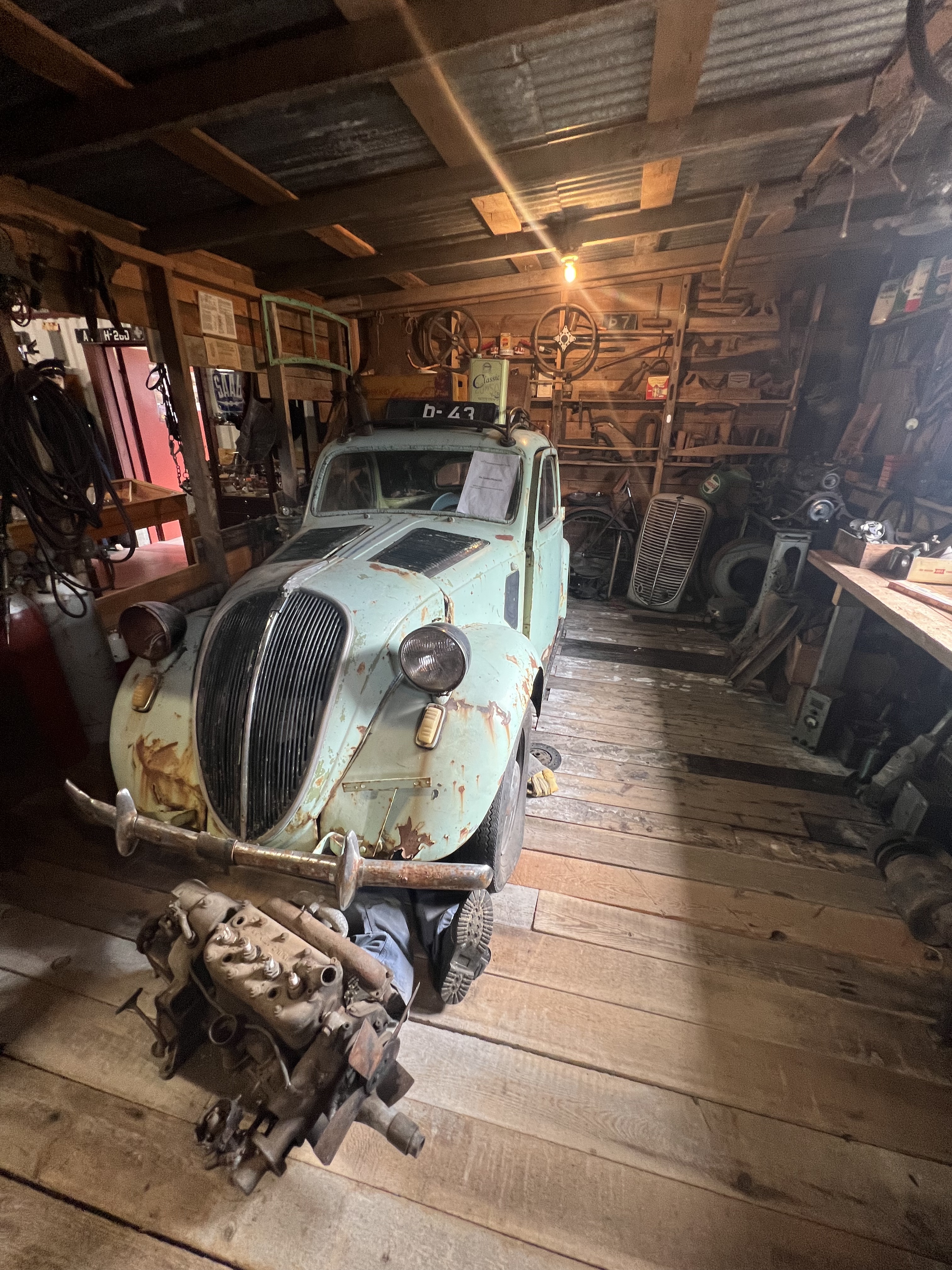
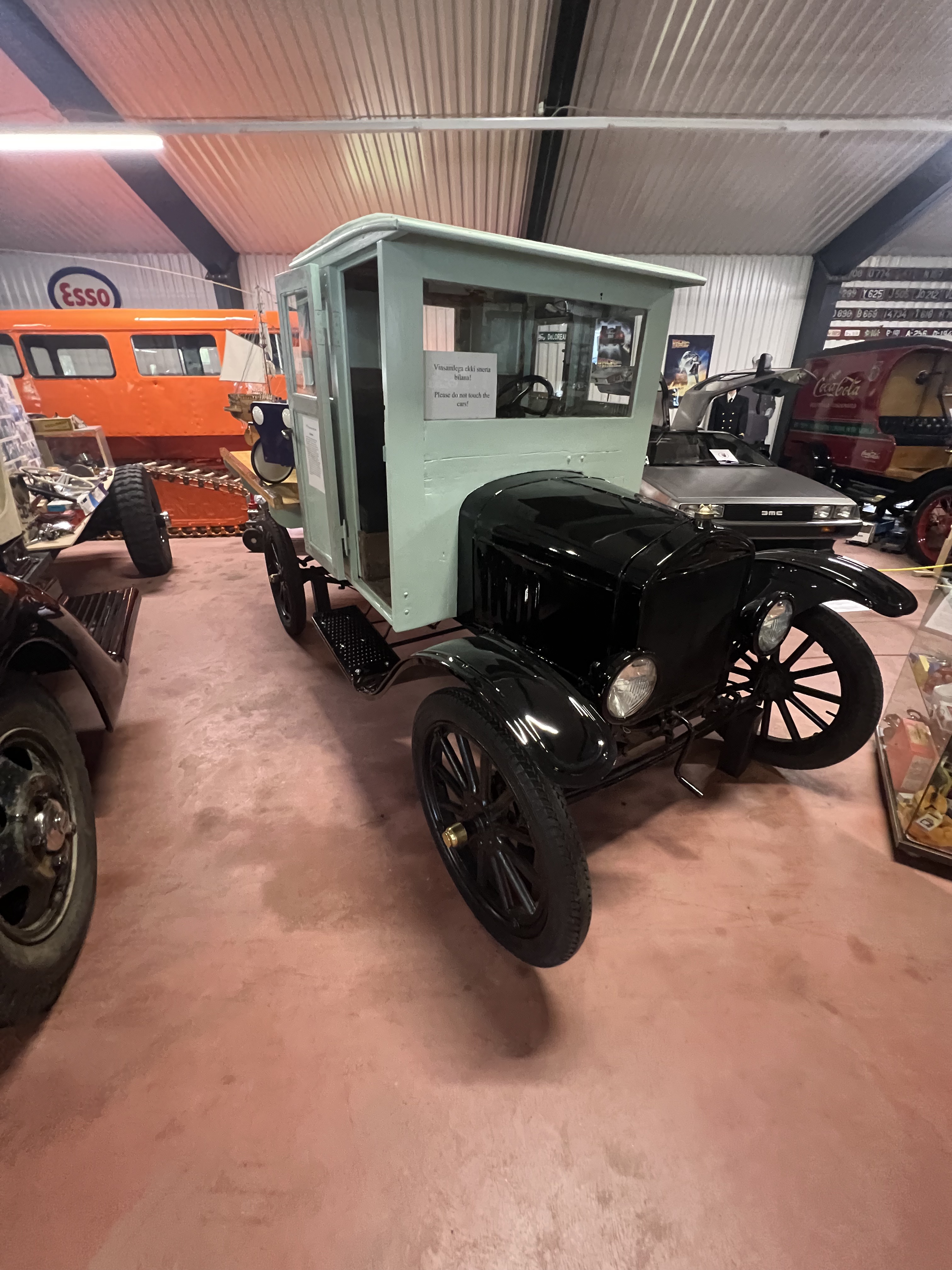
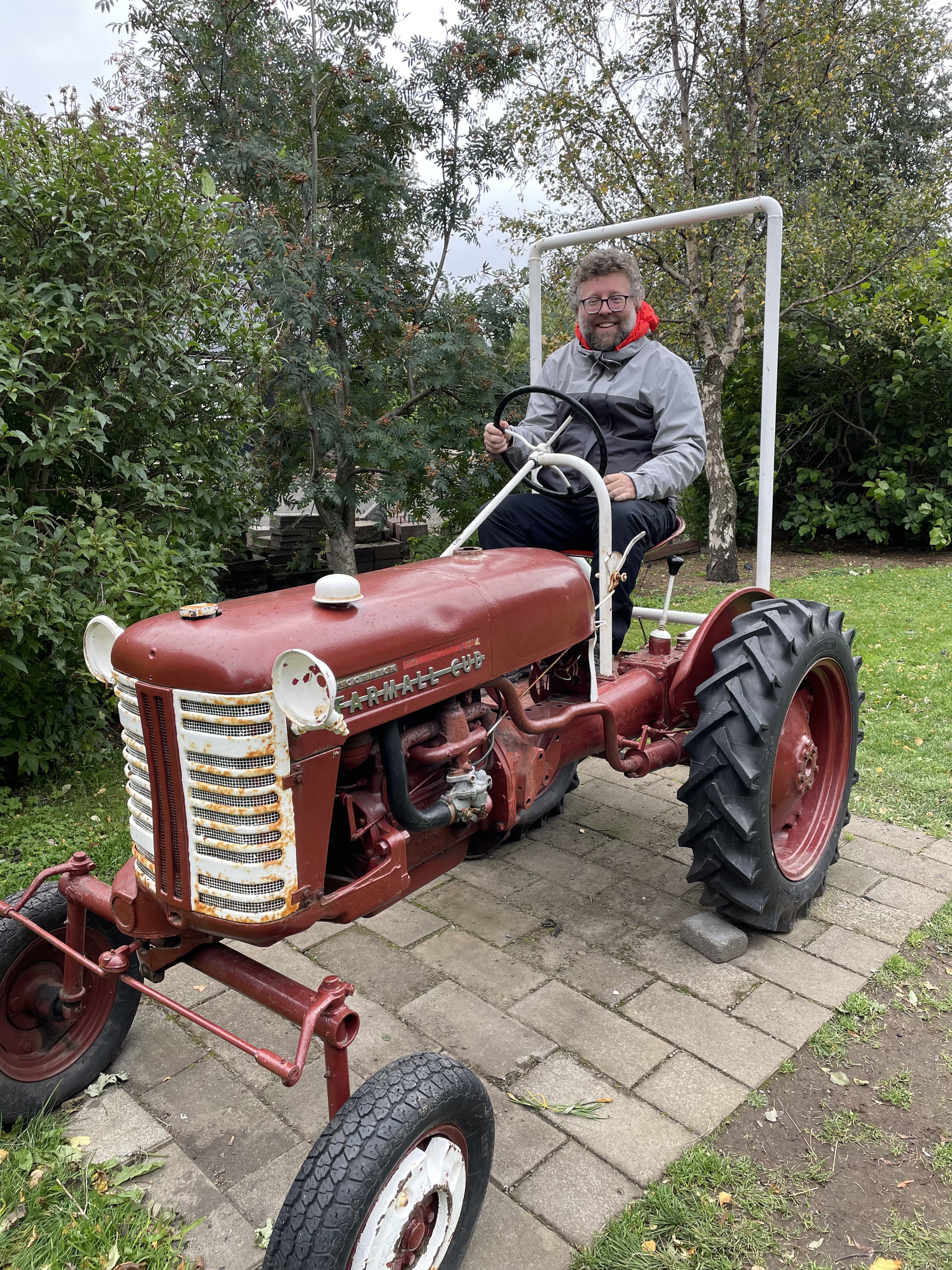
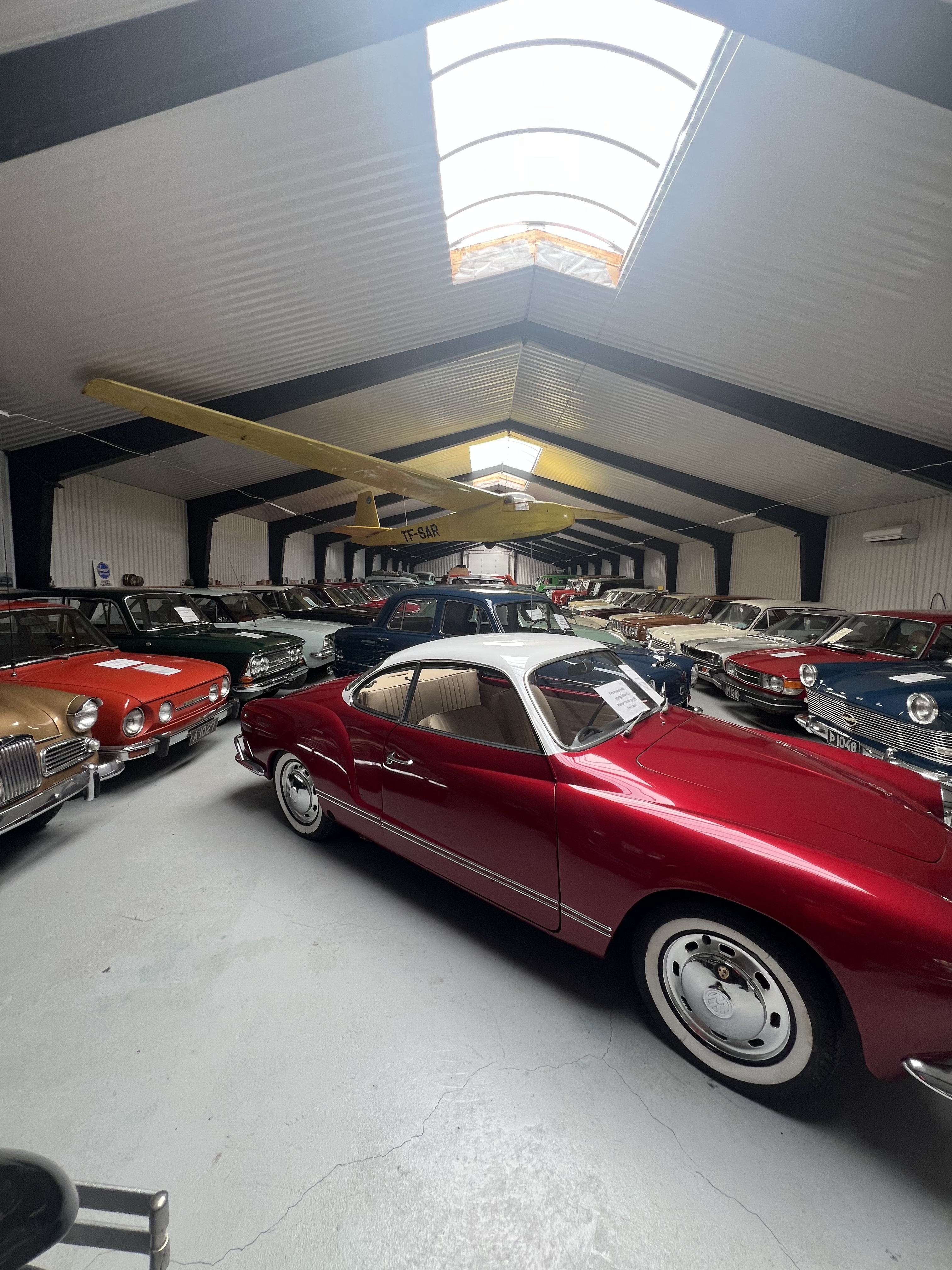
Our stop for this night was Akureyri, just an hour from Husavik. With a short drive we were able to make a couple of stops along the way and get into town early enough to enjoy some of the Akureyri sites. Our first stop was the Ystafell Transportation Museum, the oldest car museum in Iceland. Its main purpose is to preserve and show various ways and means of transportation and is the loving effort and dedication of one man and a team of volunteers.
Then it was off to see yet another waterfall across the bay from Akureyri. The water was steaming but those who tried it reported that it was just warm, not hot as usual. We saw one brave fellow who had taken a dip. Given the 2C temperature, I’m not sure how he made it back to his car without turning into an icicle.

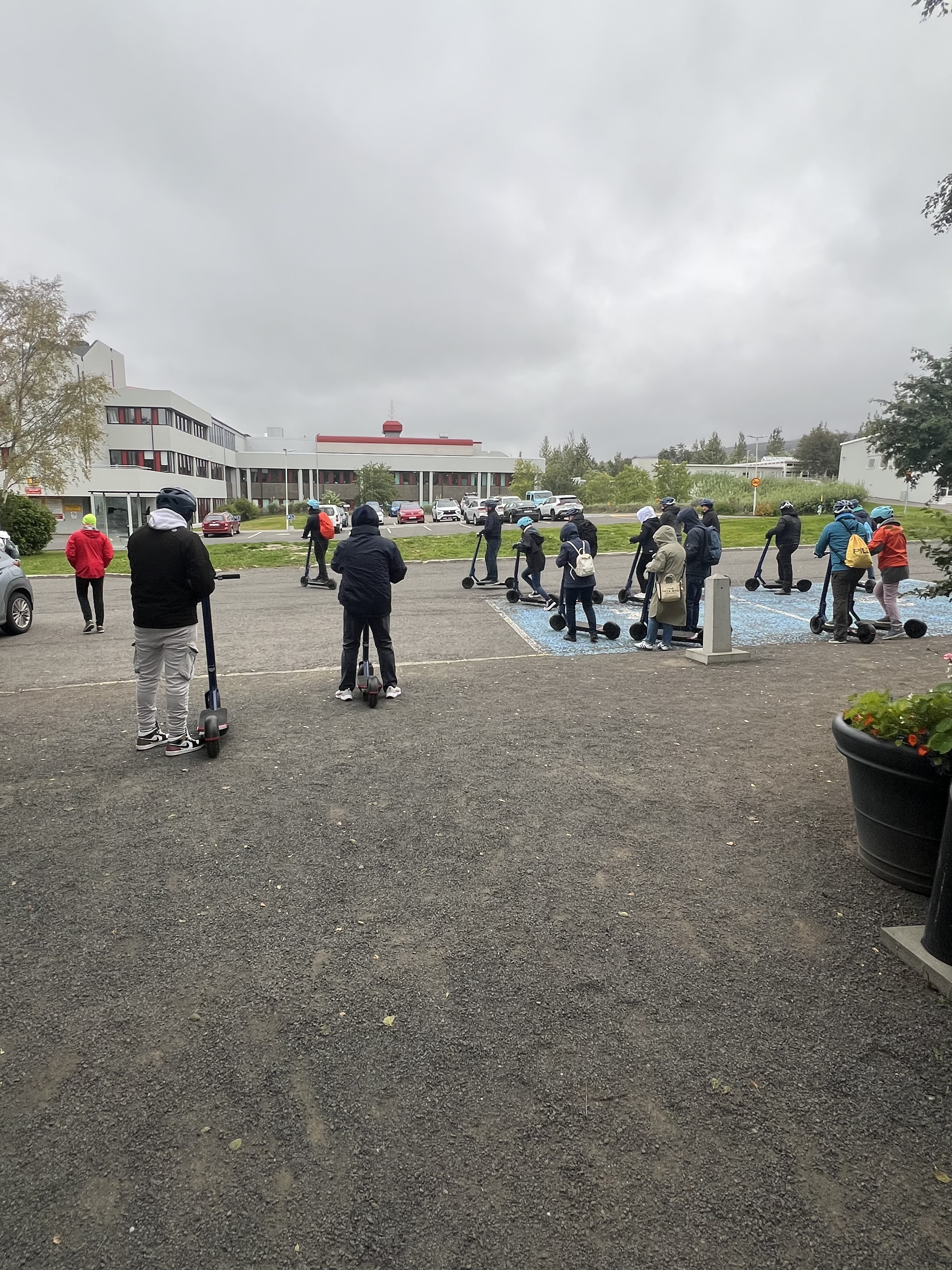
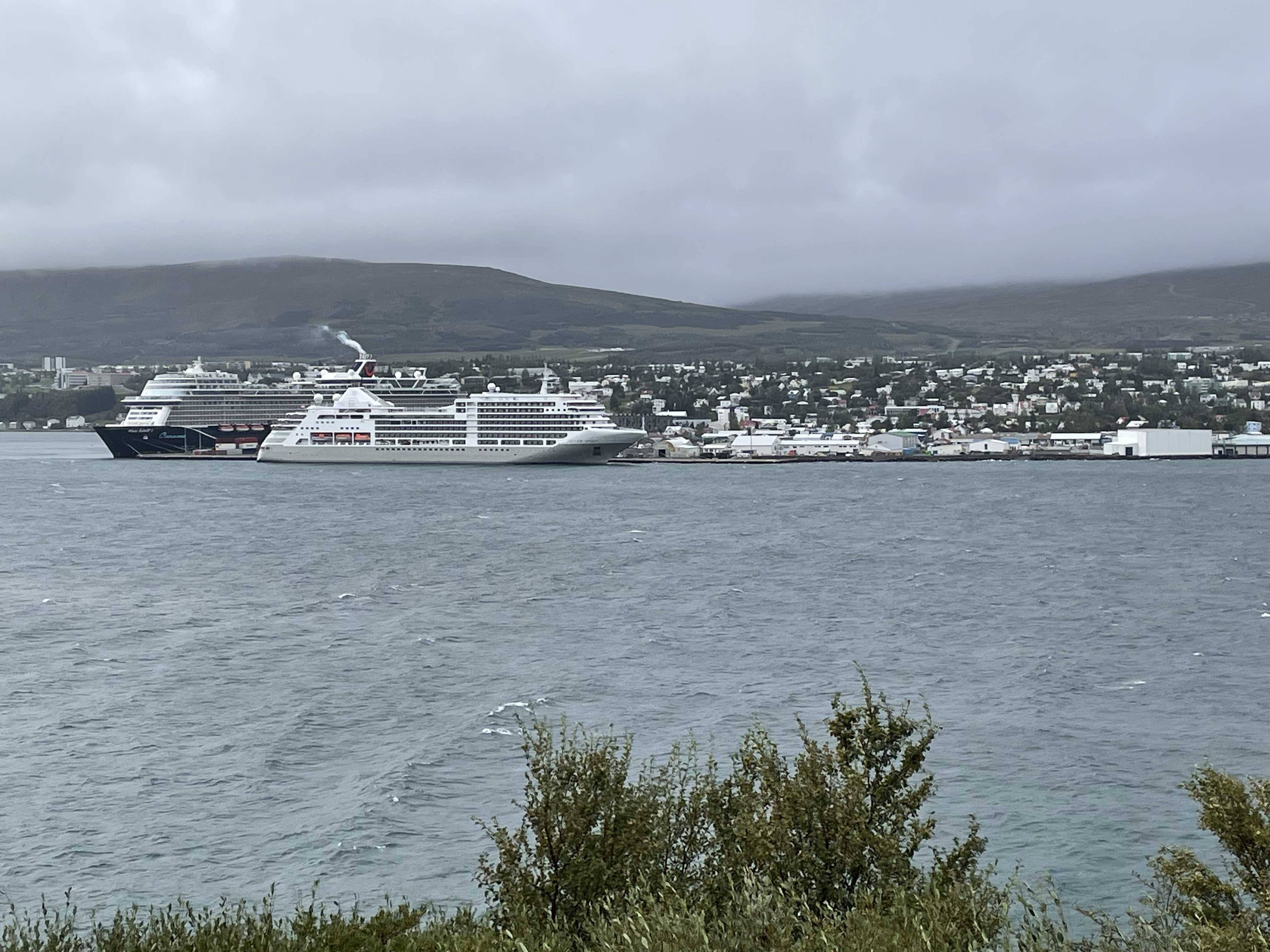
There were two cruise liners in port and while we were eating lunch George noticed a whole bunch of people on scooters. We figure that was one of the Port excursion tours offered.

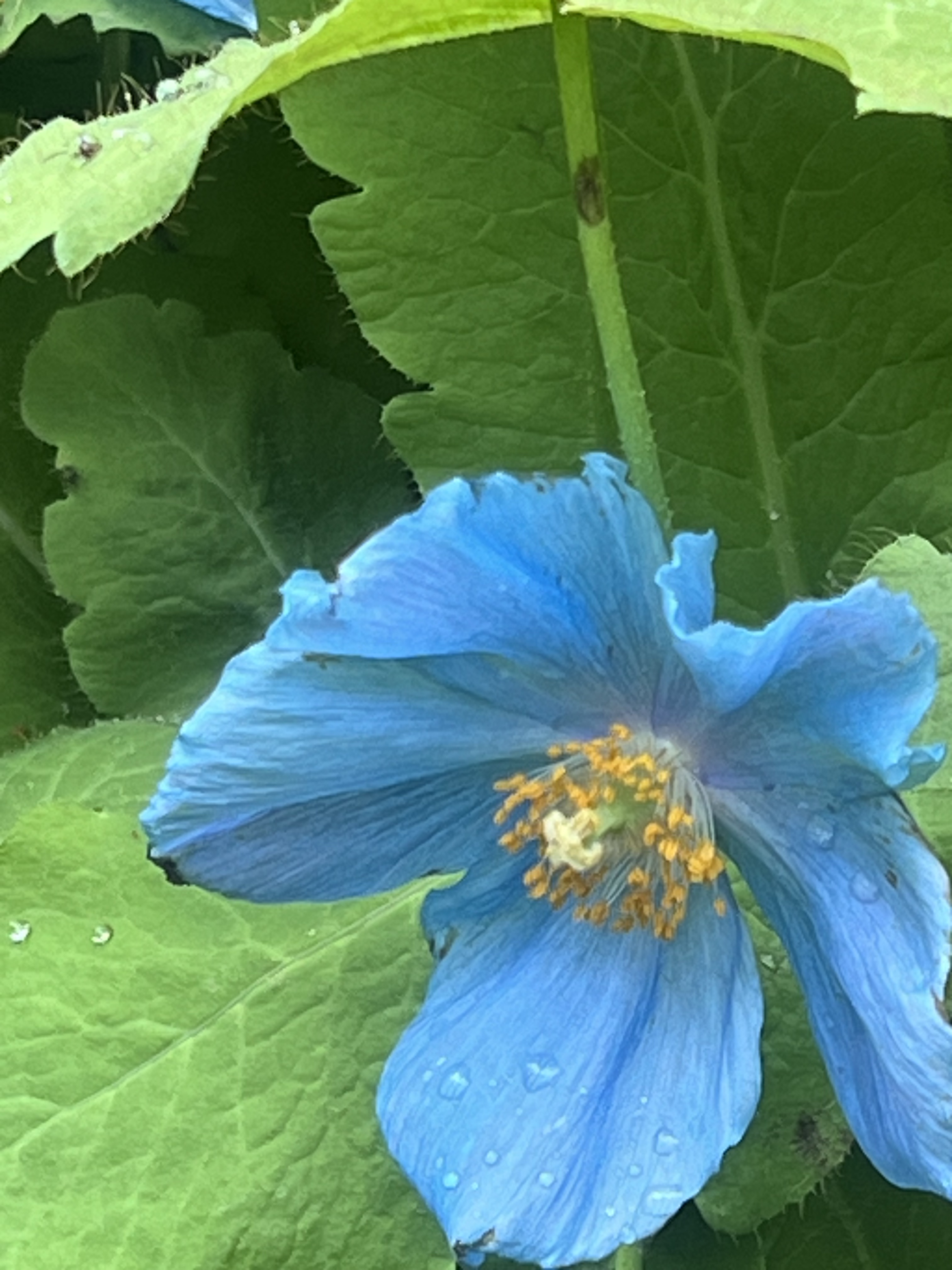
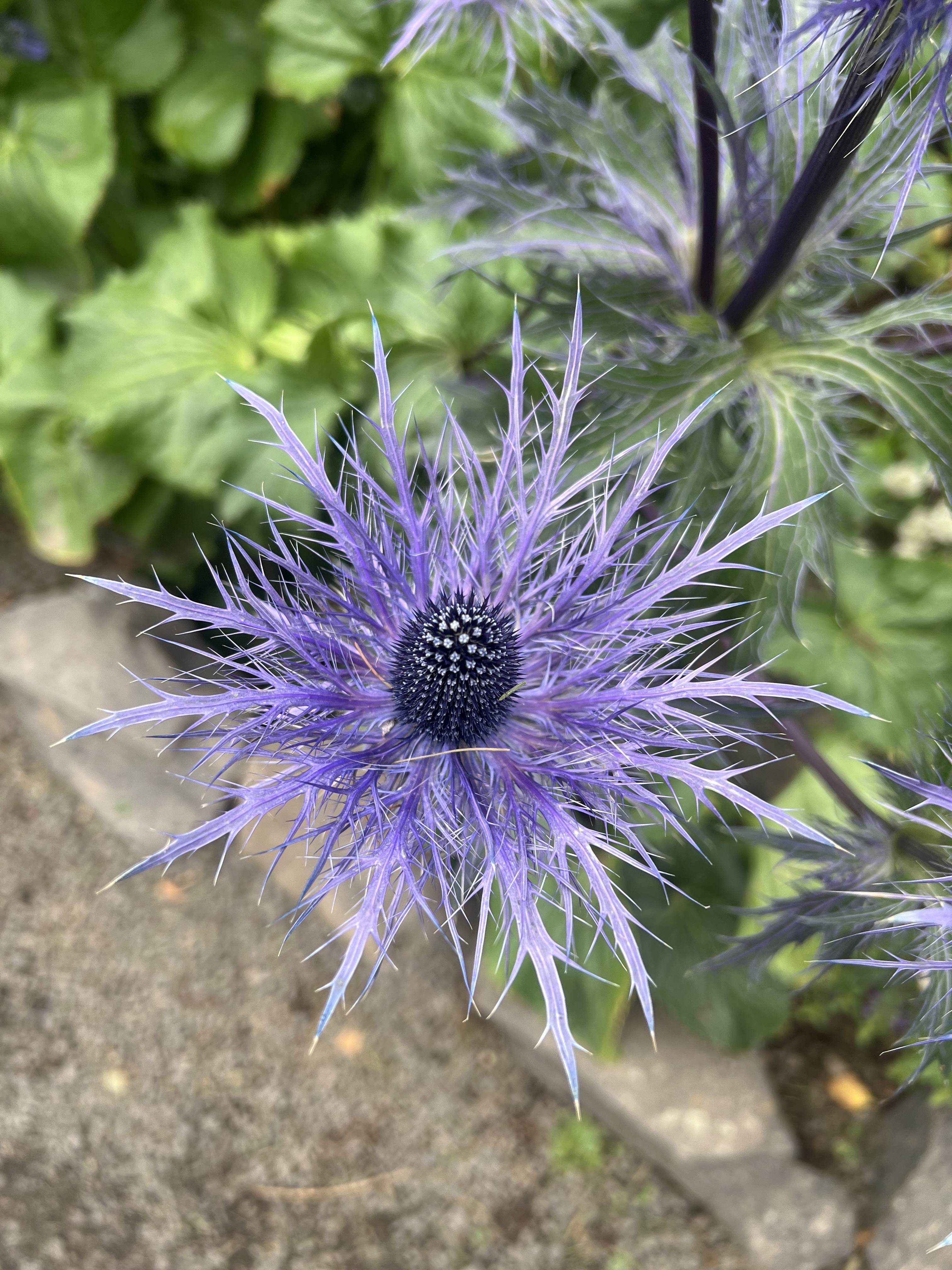
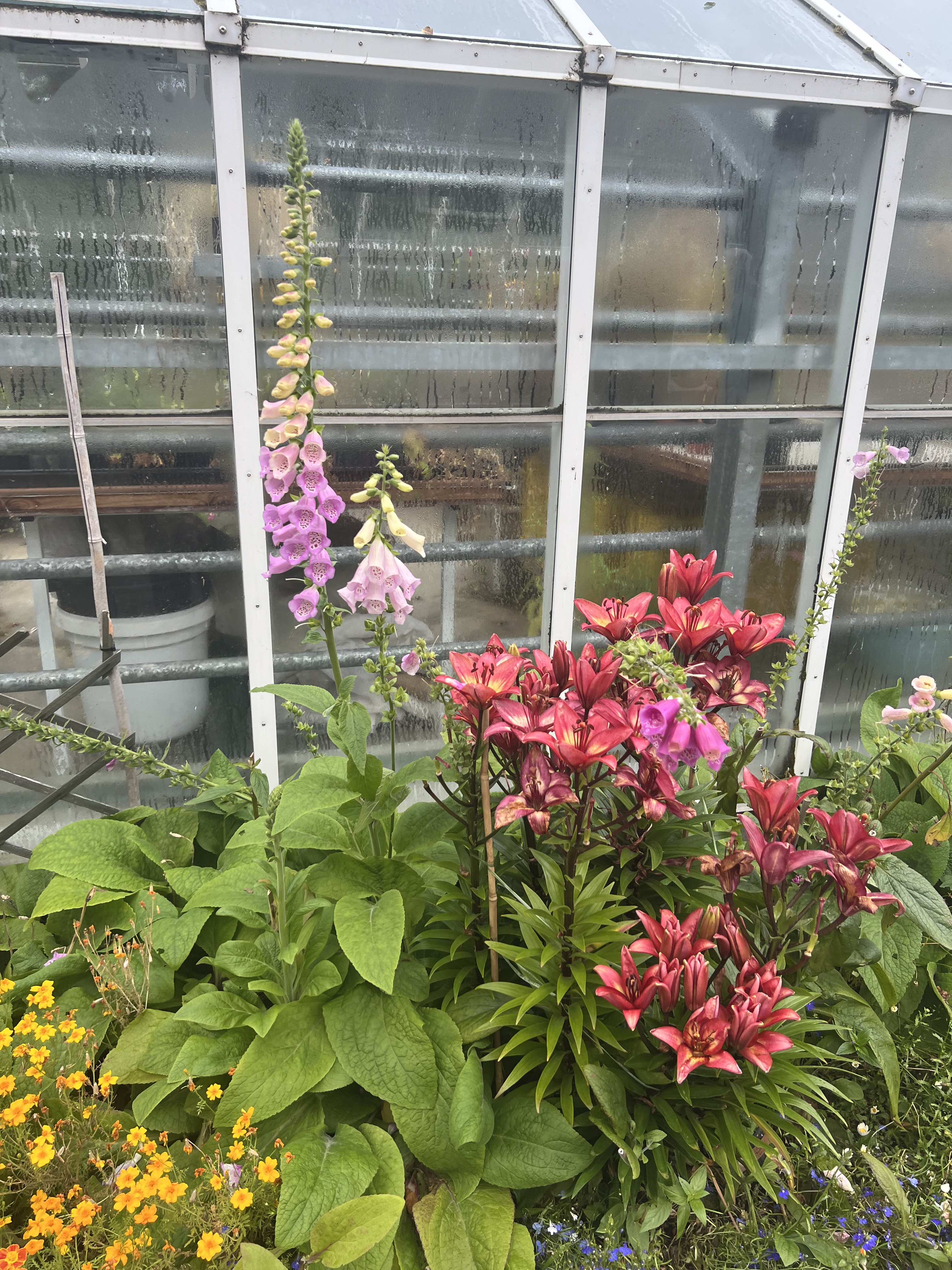
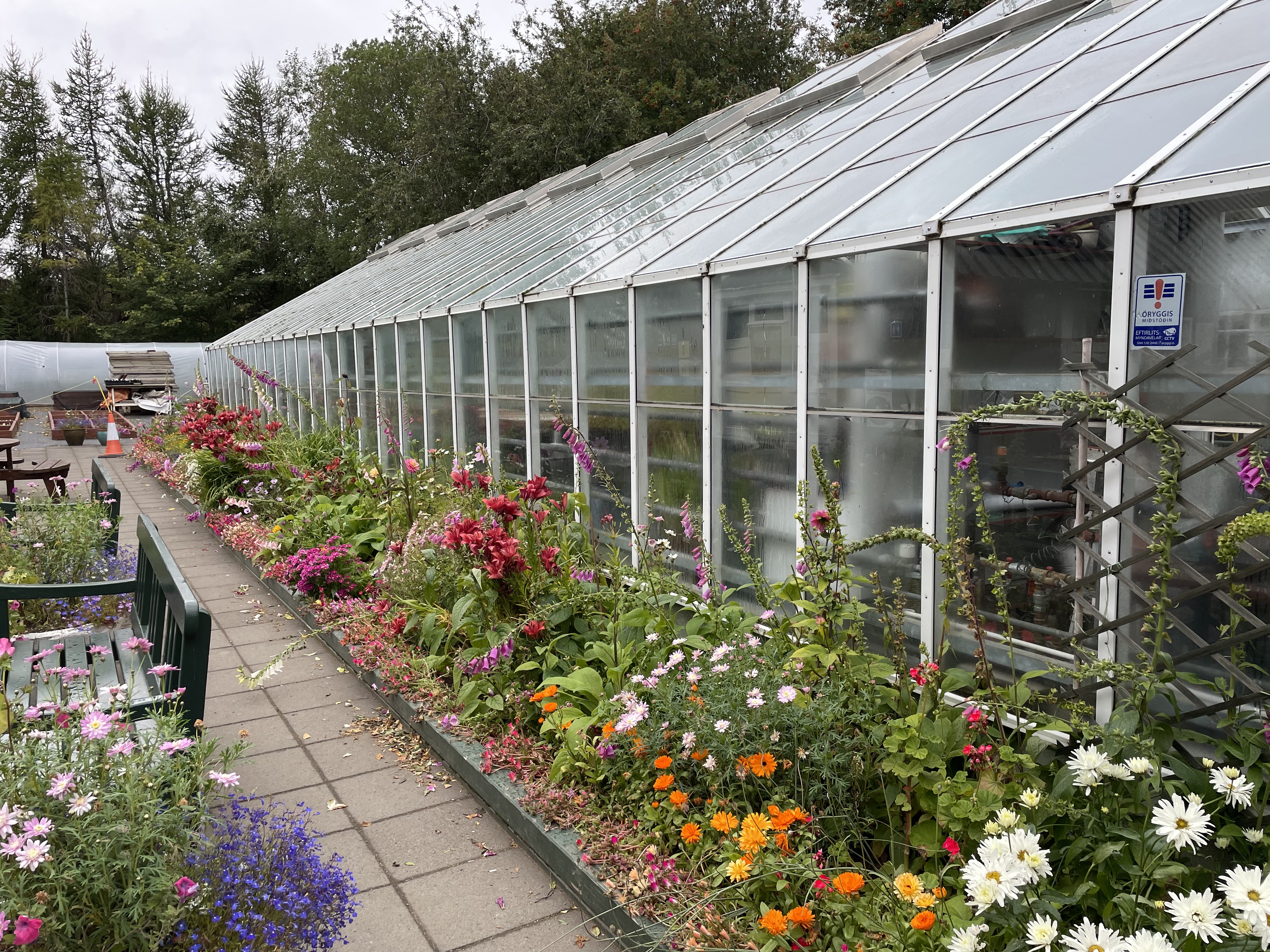
After lunch we went to the Botanical Gardens – one of the northernmost, sitting just 50 km south of the Arctic Circle. The Botanical Gardens in Tromso, Norway is further north. It was most interesting touring a garden in our winter garb and seeing lots of colourful flowers in bloom, many of which bloom in a different season at home. Delphiniums, foxglove, many varieties of asters, pansies and columbine were all in bloom together.
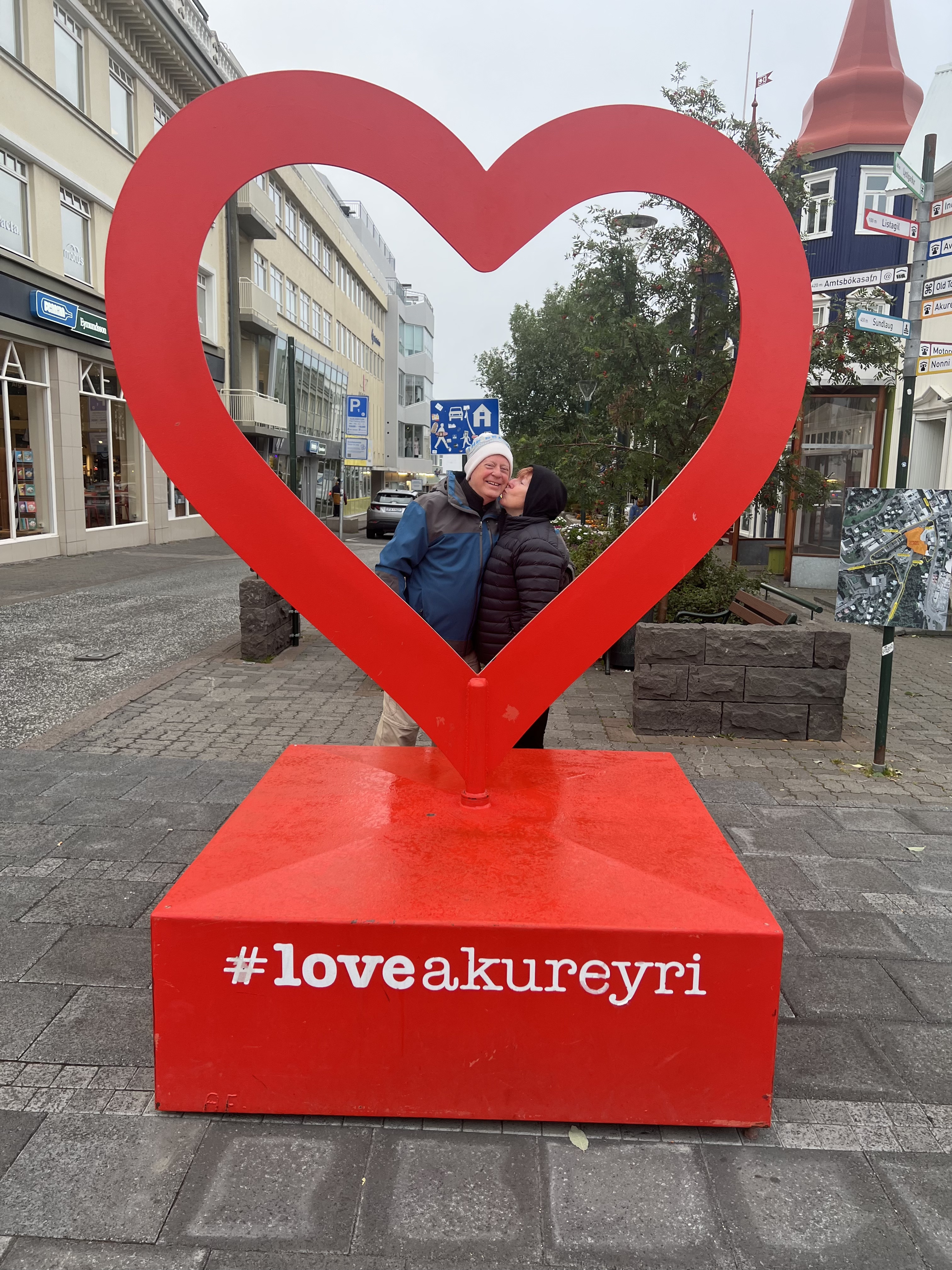
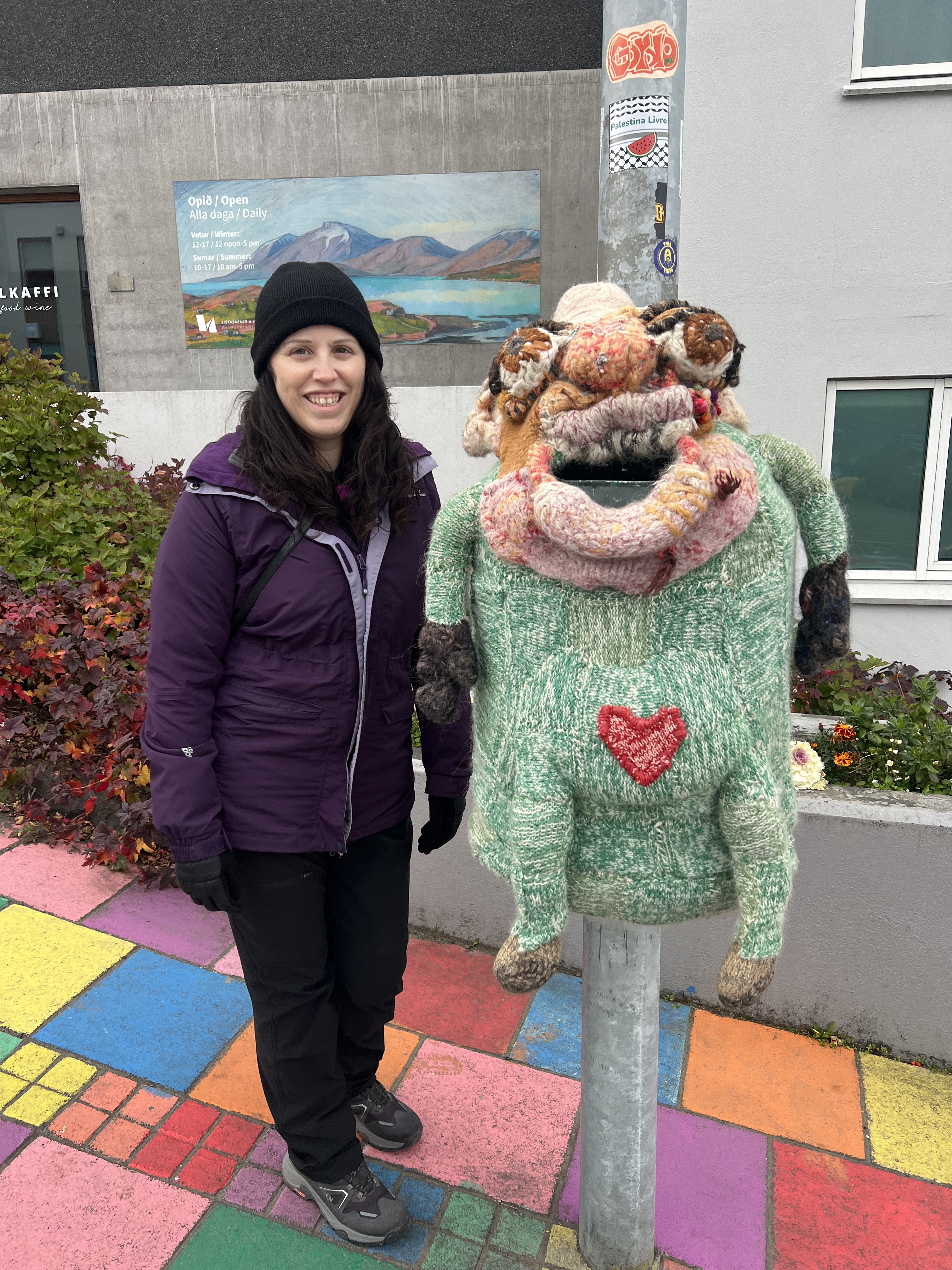
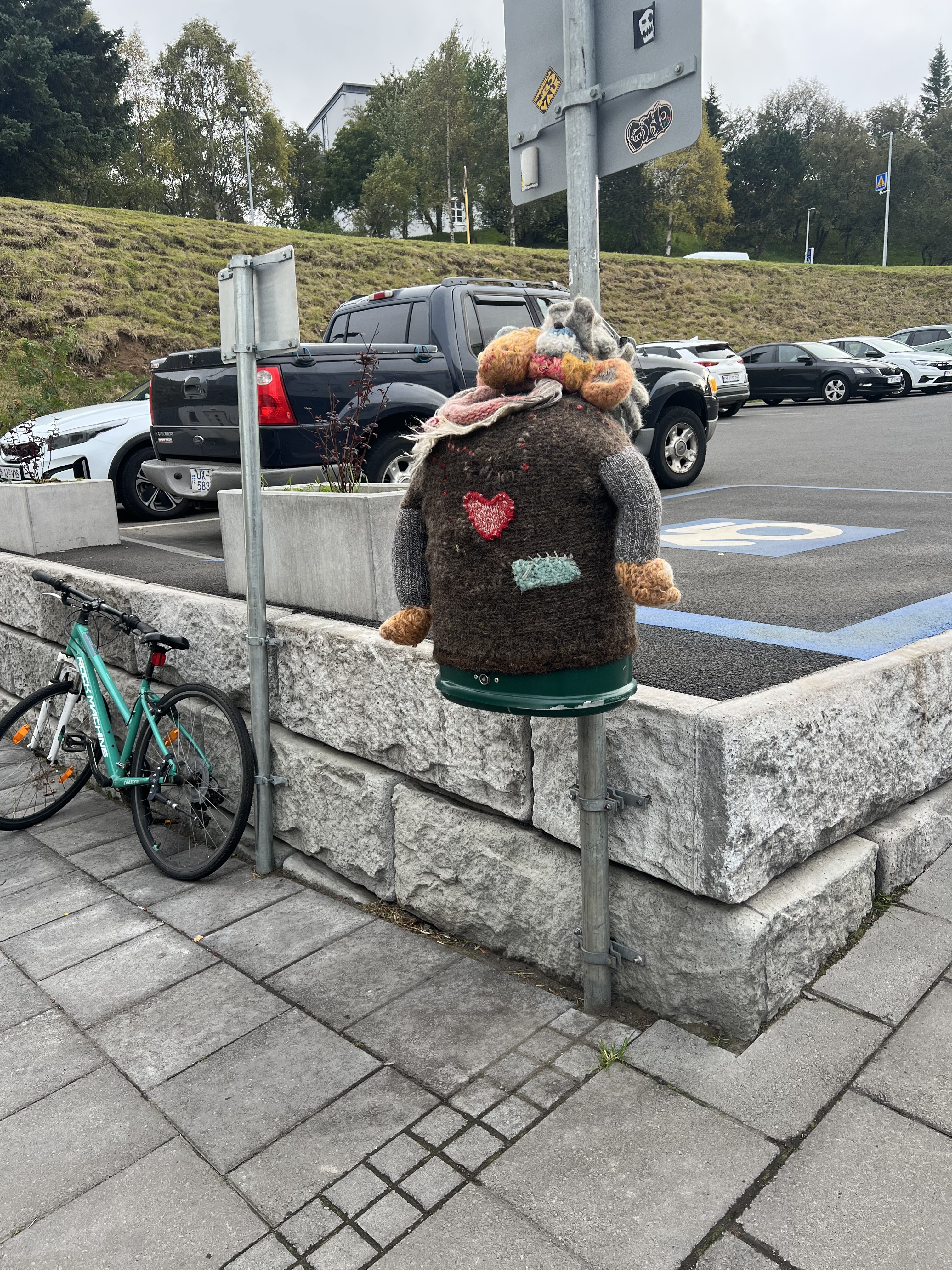
After checking into Hotel Kea, which is right downtown, we stopped for dinner at the Bautinn right across the road. After dinner we strolled through town. We found Akureyri quite a cute little town as we walked around. Where else do you see garbage pails disguised as trolls with knitted outfits? But beware: in one of the souvenir shops I found some cute aprons with puffins on them. I purchased three for a volunteer group that I work with back home. We thought they were about $10 each … turned out they were $60 each!
The Lutheran Church was consecrated in 1940 and holds a dominant place in town.

Day 9 – We debated staying in town for an extra hour to return the aprons, but we had a long drive ahead of us and abandoned the idea. Live and learn!

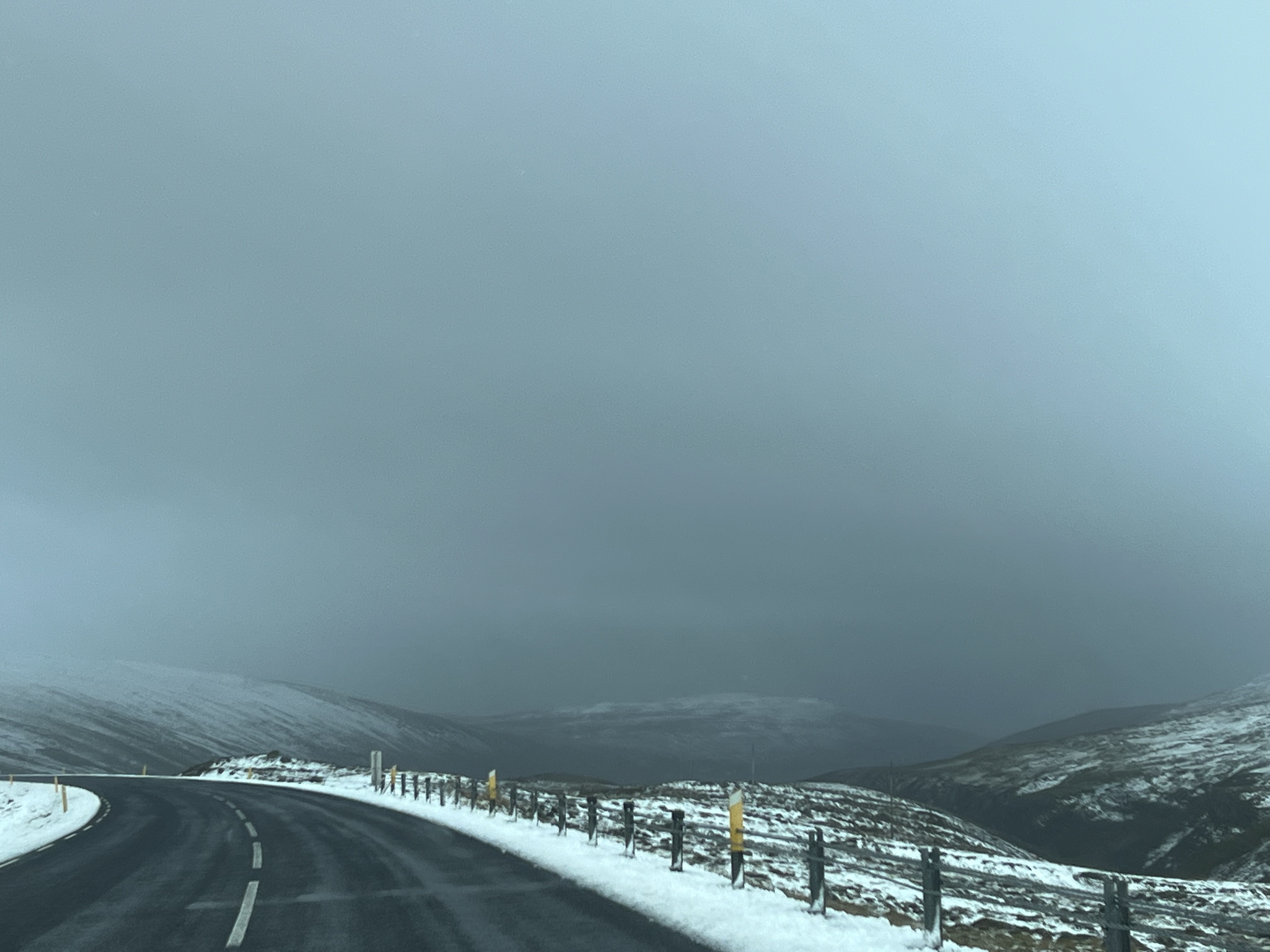
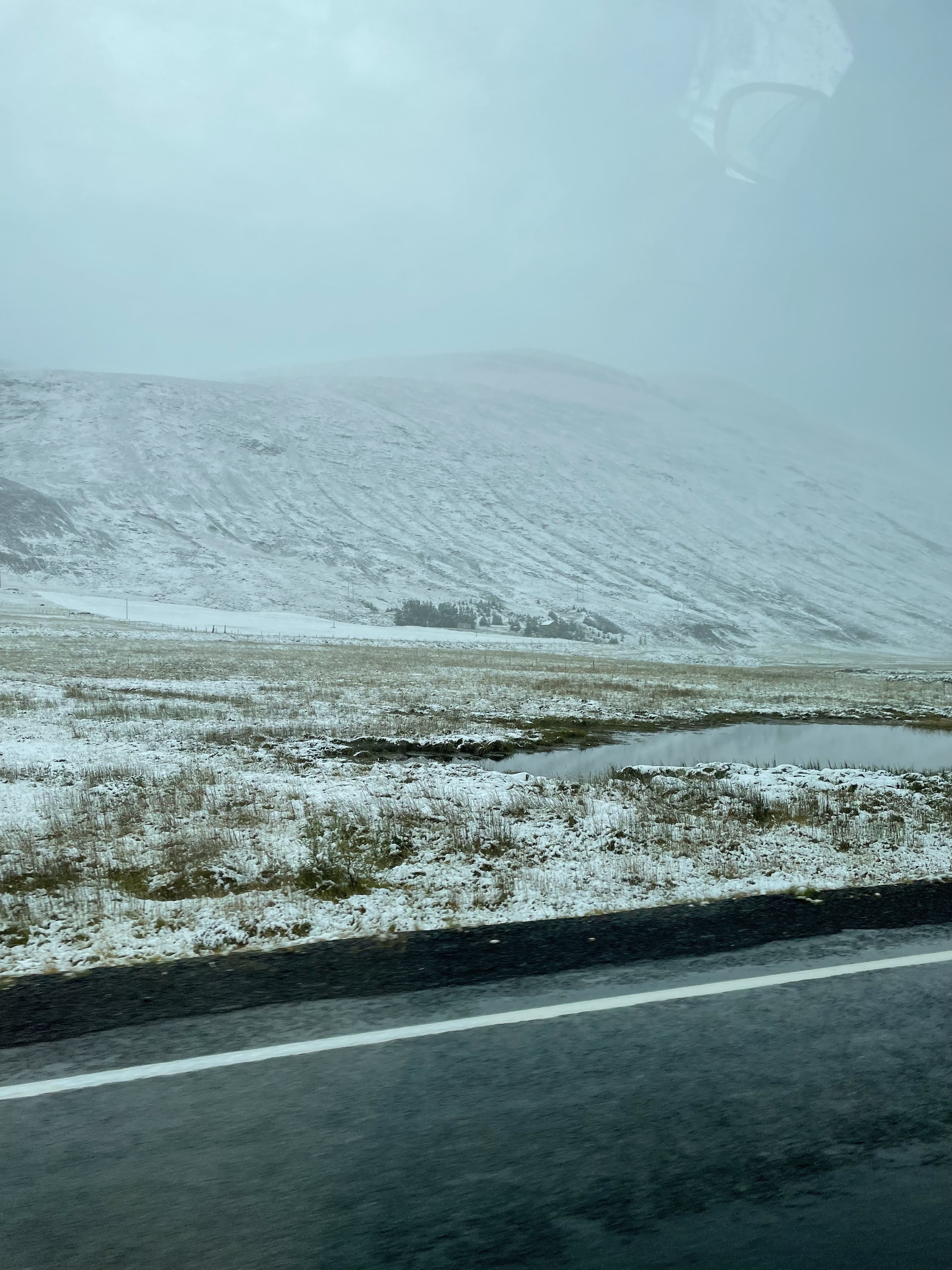
Winter finally caught up to us and we saw a fair bit of snow along the way. Fortunately, it didn’t collect on the road, ensuring a safe trip into Reykjavik. After a stop in Blonduos at a pizza restaurant, we motored on to Reykjavik, arriving late afternoon. There isn’t really much to see on that part of the circle road. A short stop at the Grabrok crater provided an opportunity for a bit of exercise. Over 3,000 years old, it is very visitor friendly and relatively easy to access. Once at the top, the view is quite stunning and you can see one other crater, Gravrokarfell, in the distance.

We did shorten the trip 45 km by taking the Hvalfjordur Tunnel – a 5.8 km sub-sea tunnel that only takes about seven minutes instead of one hour around the fjord.

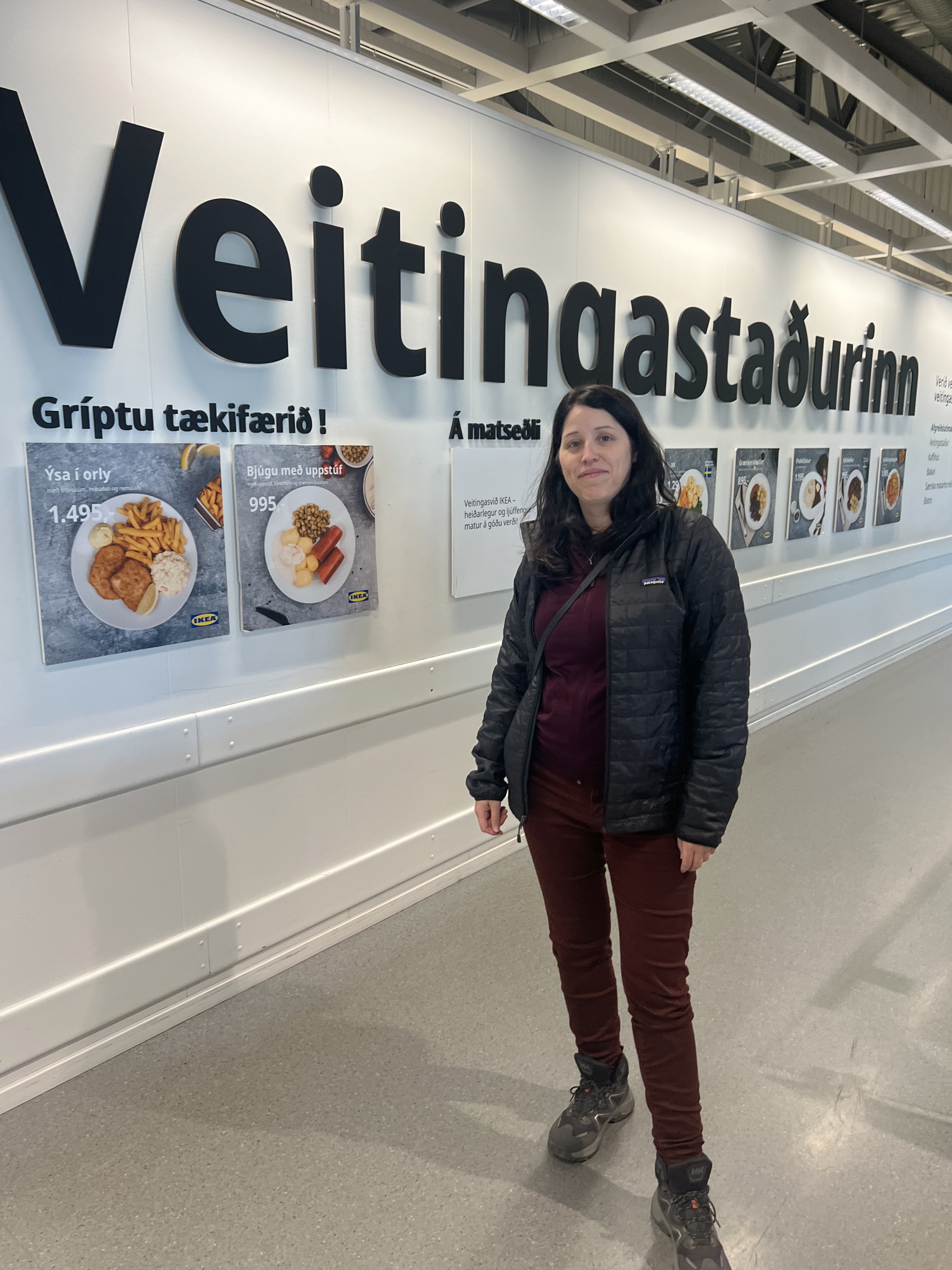
Our hotel of choice was the Viking Hotel in a southern suburb. It was quite a fun-looking spot but not the best hotel on our trip. The rooms were quite small and breakfast offerings were minimal. Dinner that night was Ikea for meatballs – another cheap meal. Dad and I welcomed an early evening rest at the hotel, while George Jr and Jenn went off to the Lava Museum.
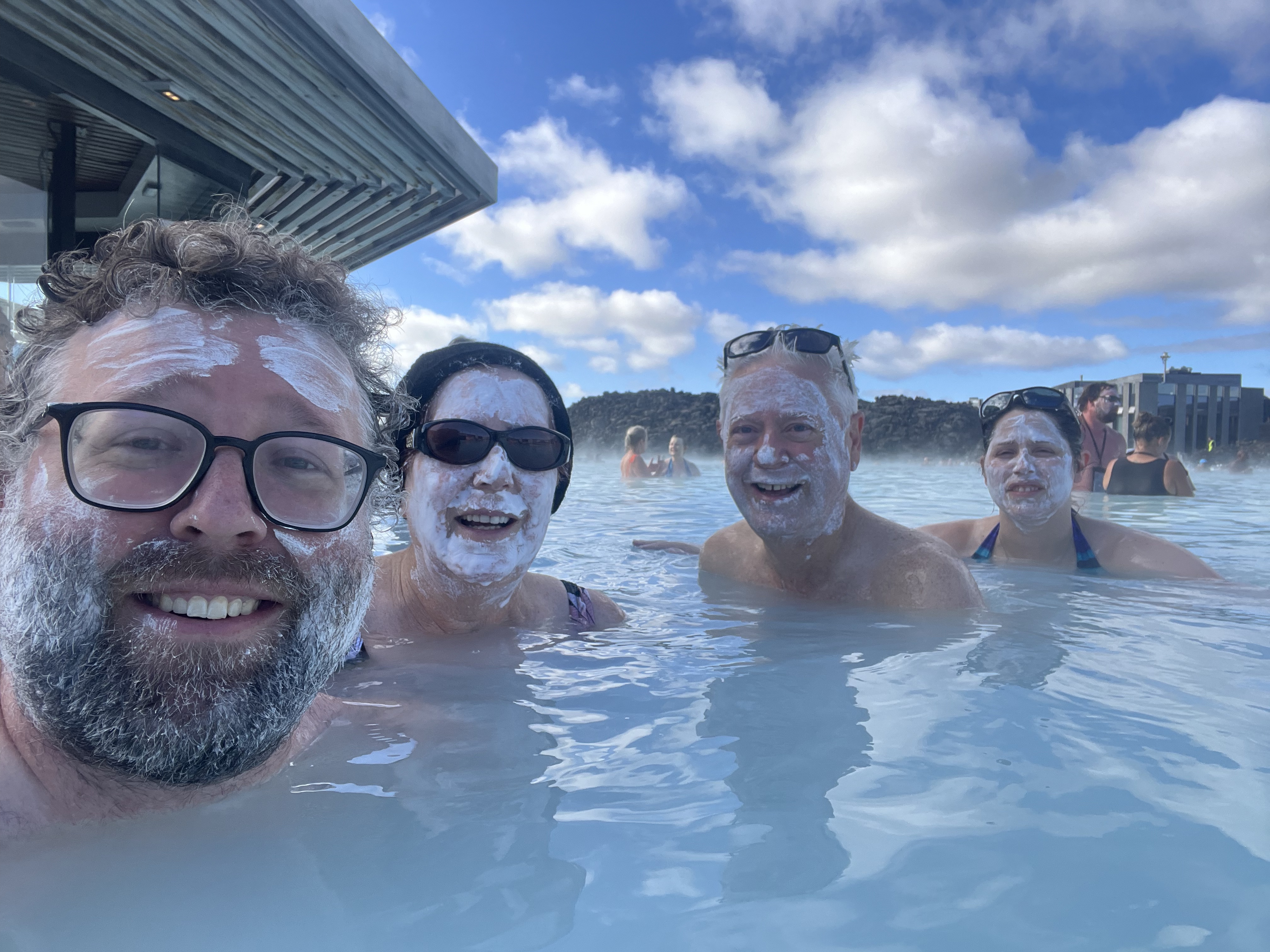
Day 10 – Today was spa day. The sun shone and it was actually warmer than the 8C forecast. Our first stop was the famous Blue Lagoon. For those who aren’t aware, it’s the most famous outdoor spa in Iceland and probably one of the largest complexes. While we planned for cold, with the sun shining and the steam coming off the water, it was a very pleasant experience. After changing and wading into the pool, we went over to get our free drink at the swim-up bar. Then it was off to get our mud mask. Some of us were obviously better than others at putting it on. There are a number of different areas in the pool and we were there for about 90 minutes altogether.

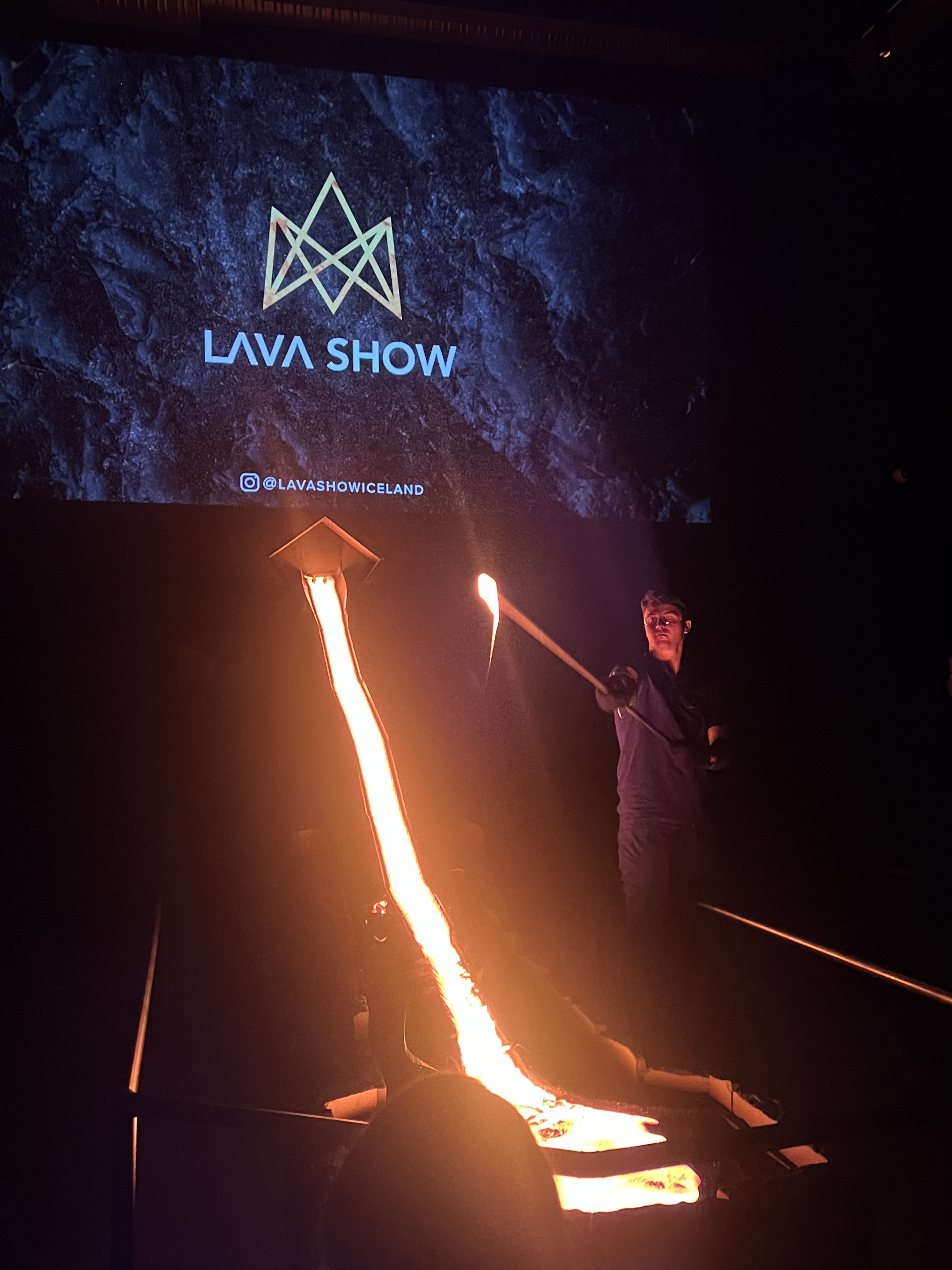
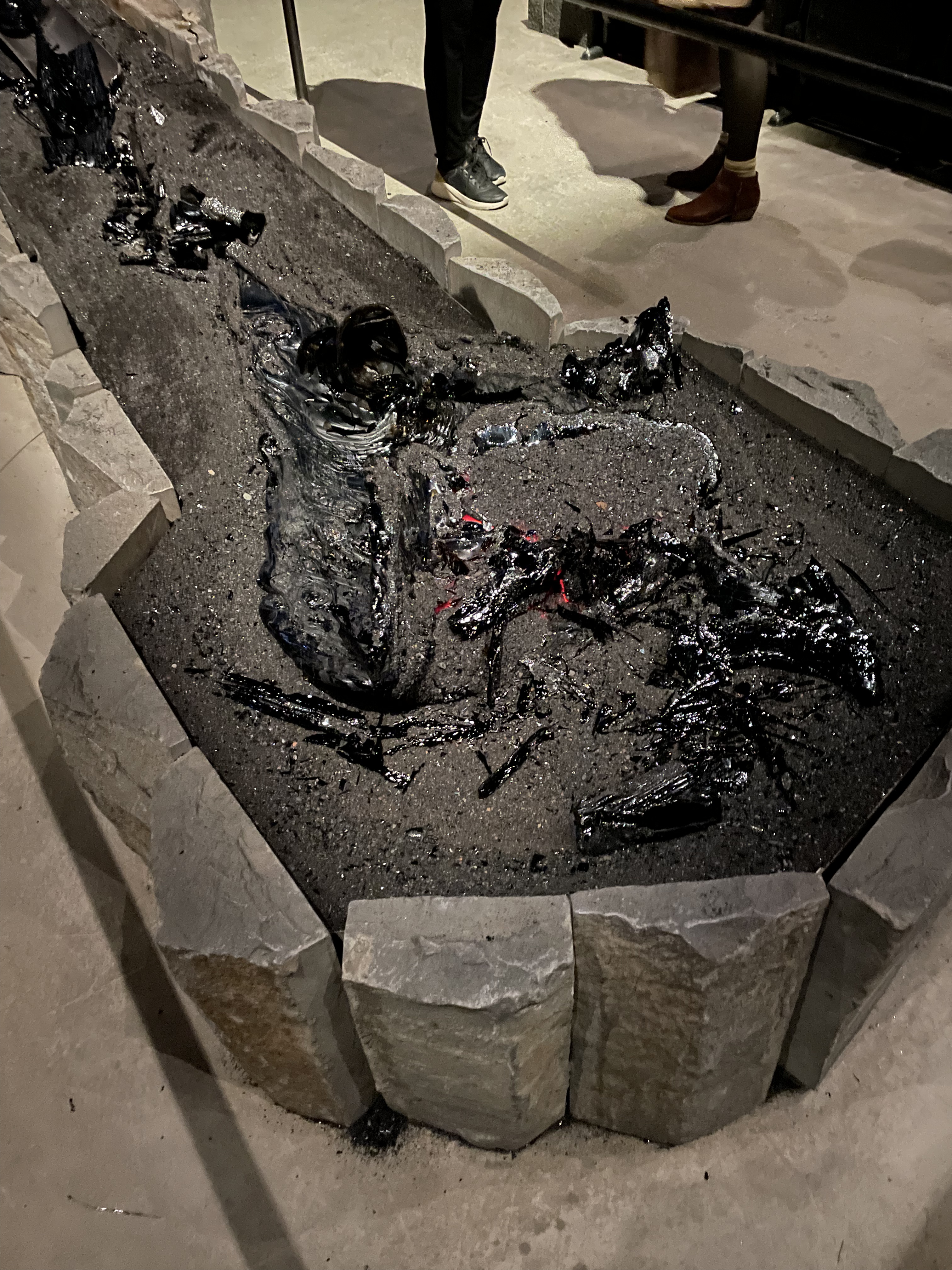
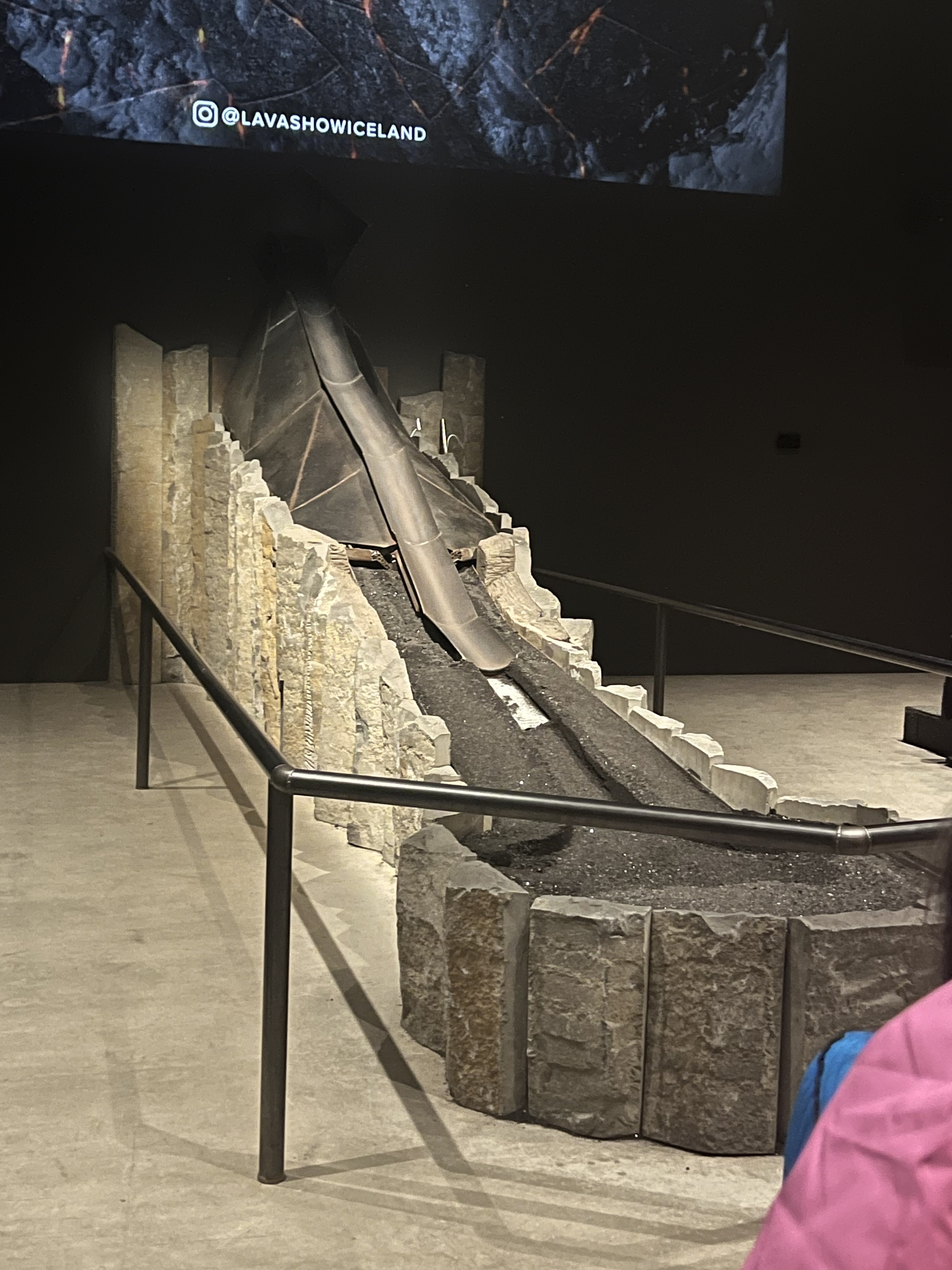
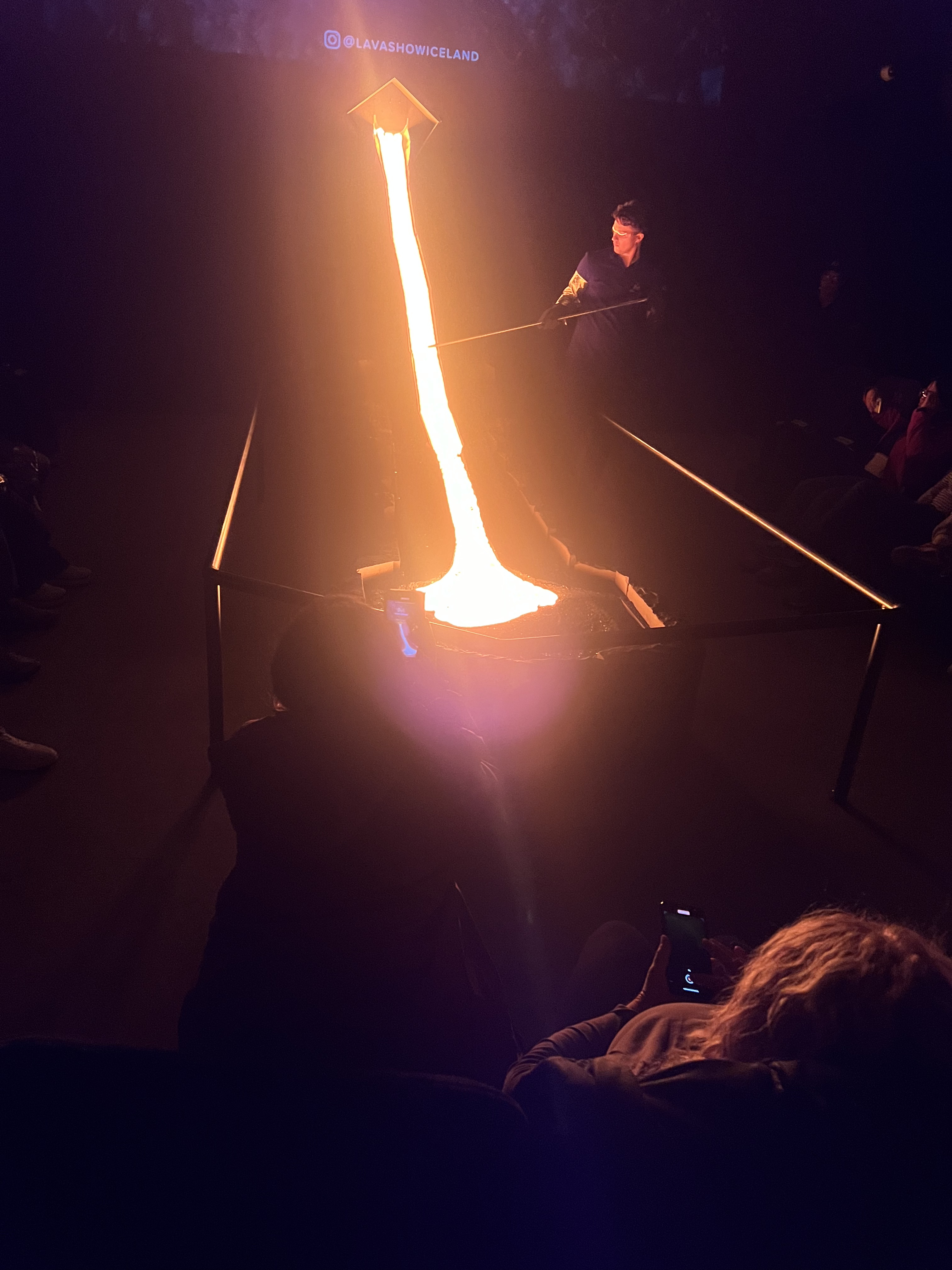
After lunch (at a Subway), the kids dropped dad and me off at the Lava Museum, and they went into town to do some shopping. The purpose of the presentation is to explain how volcanoes form, the different kinds of volcanoes, and how the lava flows. It was a fascinating show with real lava flowing in a controlled indoor setting. As the lava cooled, the presenter explained the properties of the lava, and demonstrated how hard it becomes as it cools. It has the sound and feel of glass, but underneath, it is still molten and very hot. While it would normally take about three days for it to harden completely, the technicians have a way to collect it and recycle it for the next show in less than two hours. We highly recommend this experience.
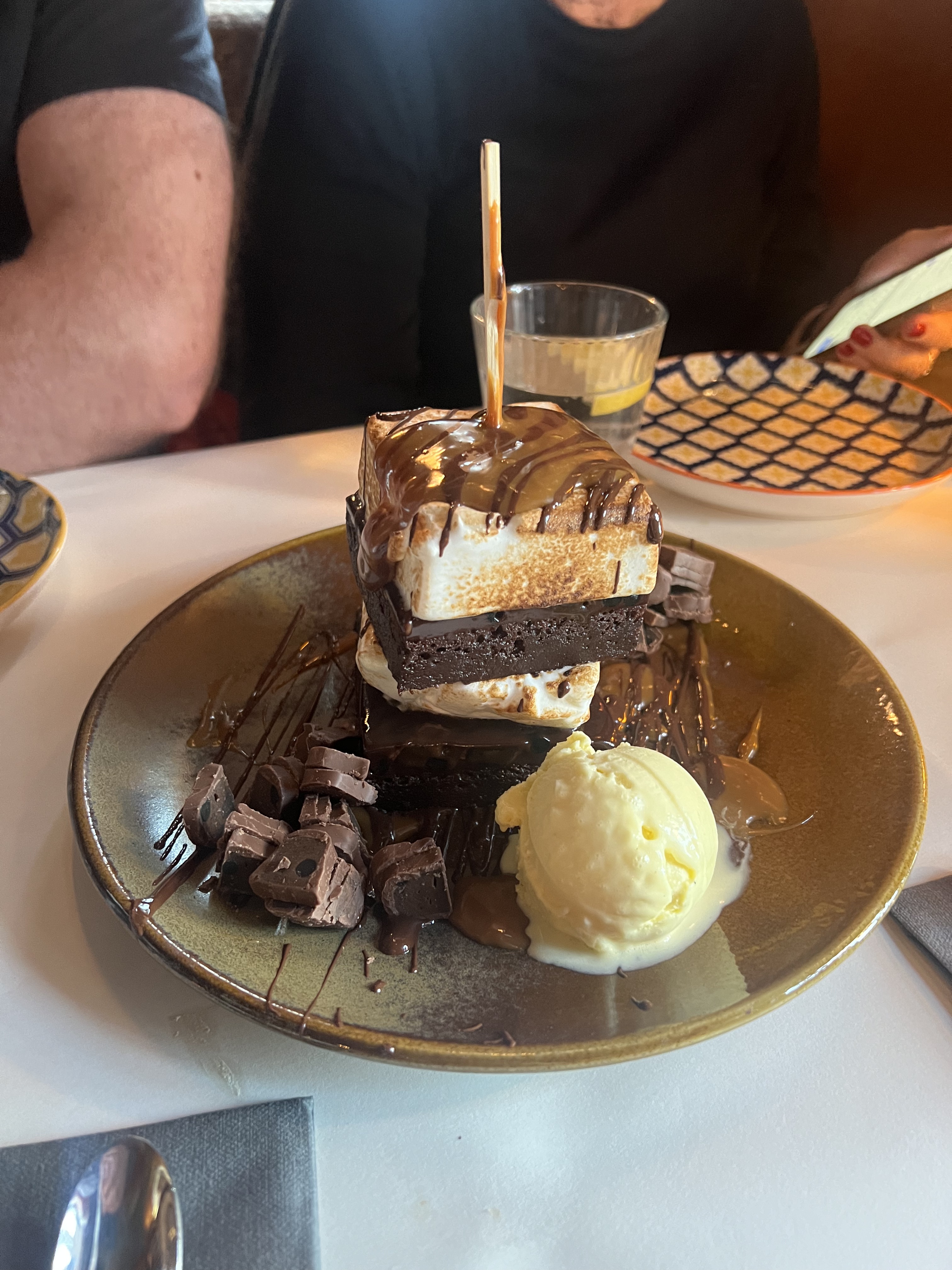
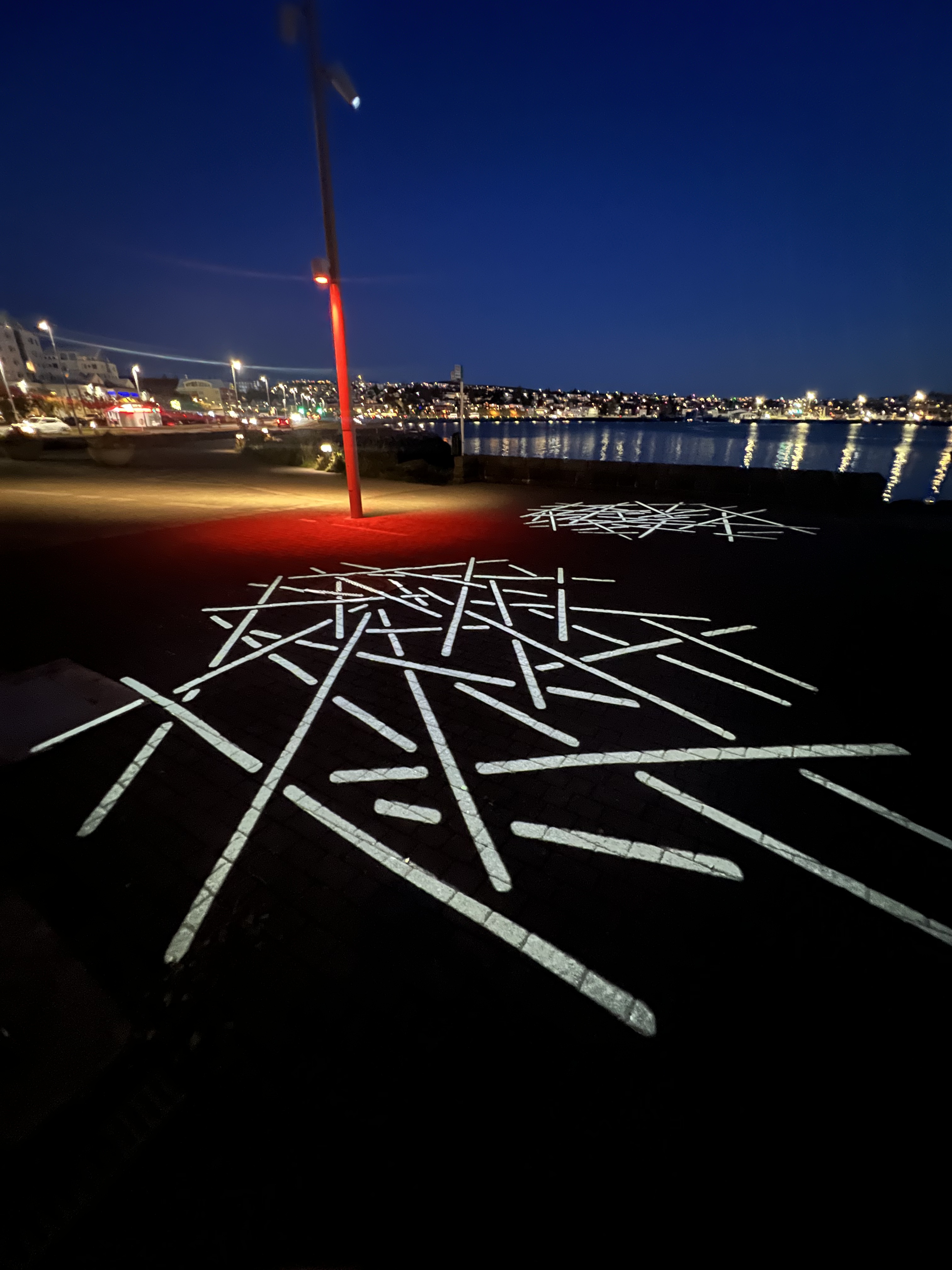
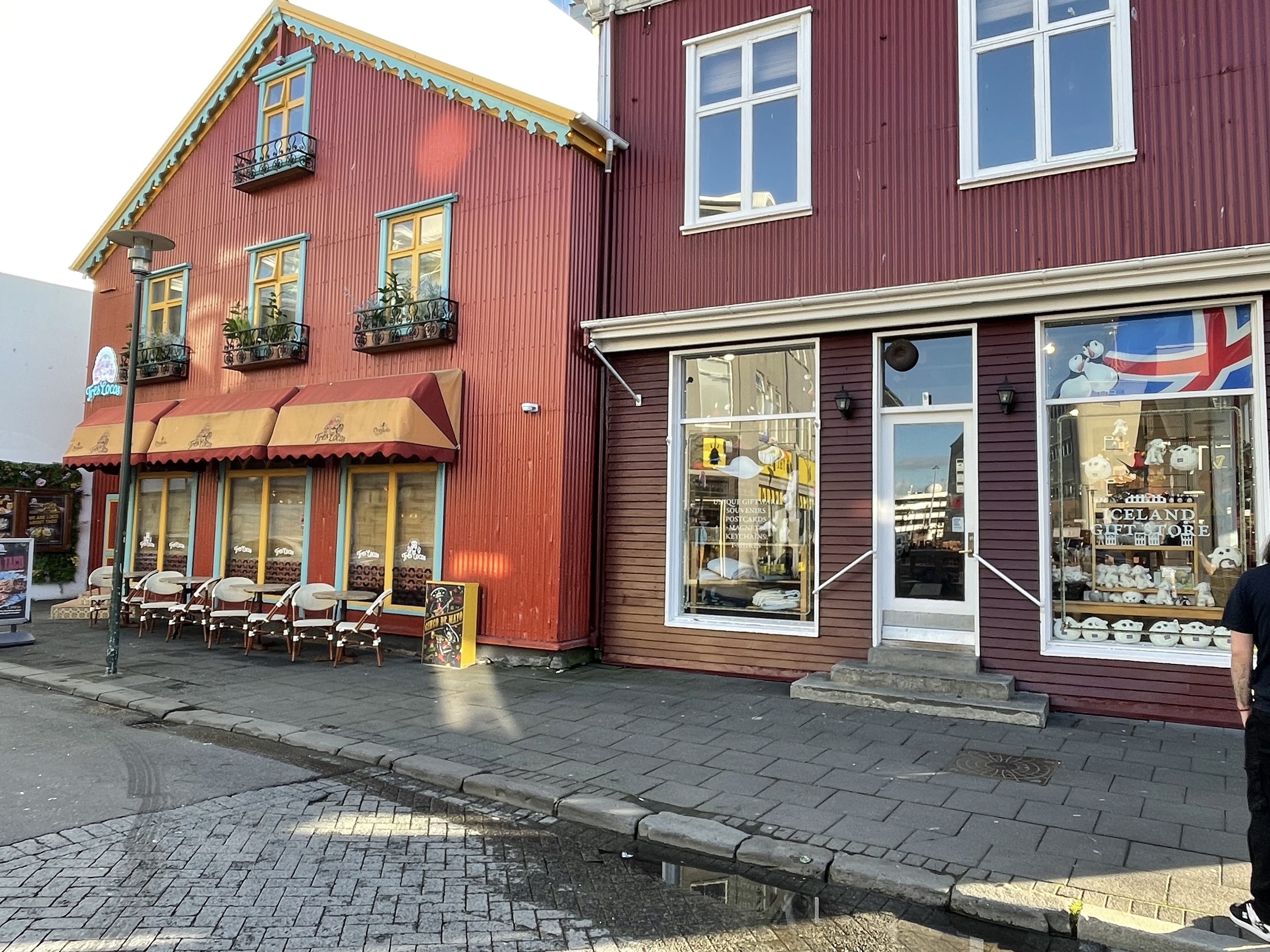
We walked back into town and met the kids for dinner at Saeta Svinid Gastropub. The portions were huge but dinner was absolutely delicious! Dessert was to die for and required a four-way sharing. While we were walking through old town, dad mentioned that it felt like we were in Dublin. Lo and behold, there was the Dubliner (pub) on the next street corner. After we returned to our car, our chauffeur took the long route back to the hotel around the peninsula and the suburb of Alftanes.
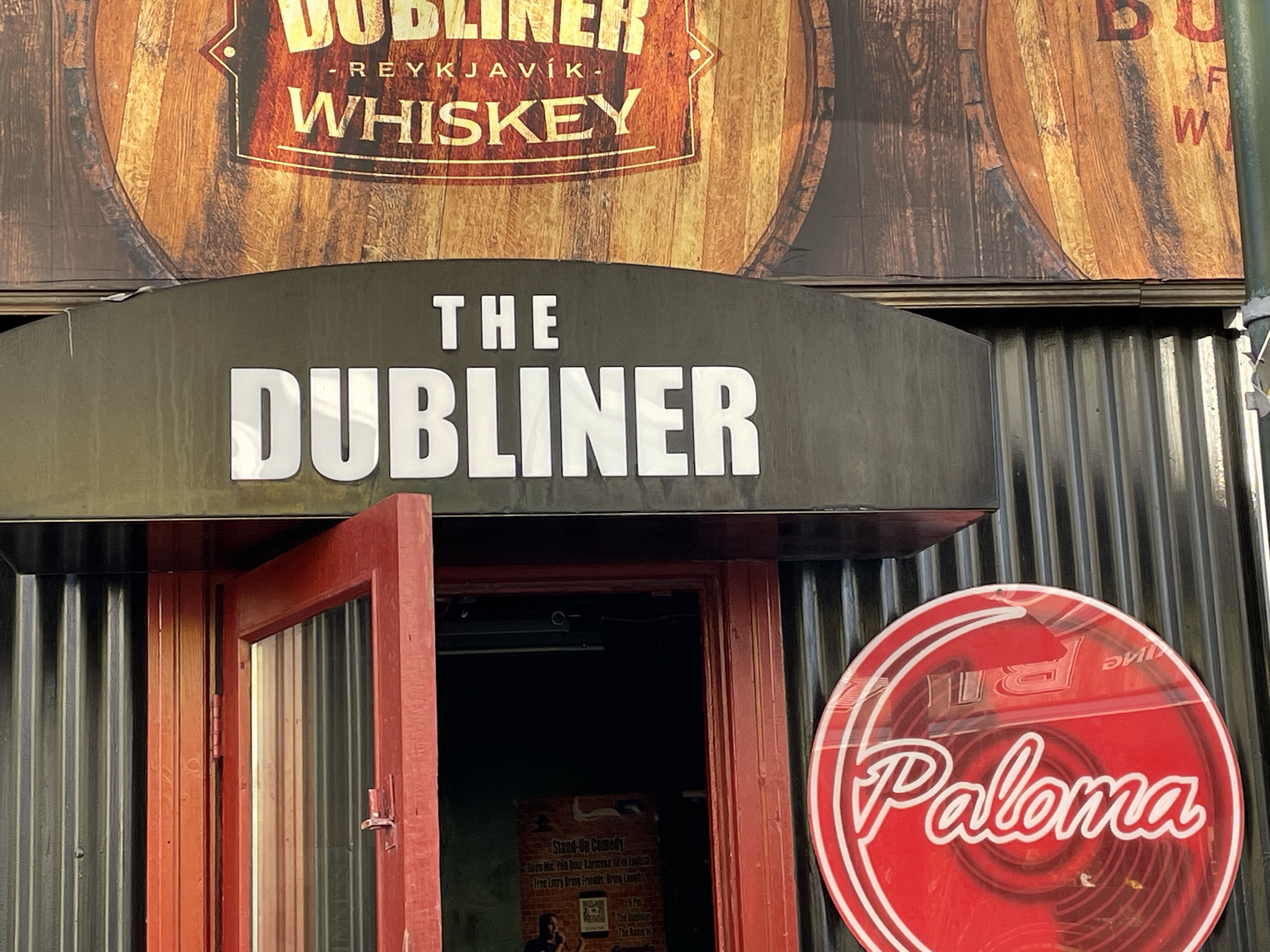
Then it was time to pack and get ready for our departure tomorrow.

Day 11 – All good vacations must come to an end. For our last few hours in Iceland, we visited the Viking World Museum which tells the story of how the Vikings settled in Iceland from Norway beginning about 800. By 930, they were convening a central annual gathering to consider issues affecting the whole island. Based on what we heard on Day 2, this would have been at Thingvellir. The structure has continued, with few lapses, to function as Iceland’s parliament. The main attraction at the museum is the Viking ship, The Icelander, which was sailed to New York in 2000 to commemorate Leif Erikson’s journey to the New World a thousand years earlier. Included in the presentation was some discussion about the Vikings’ travel and settlement in Canada.

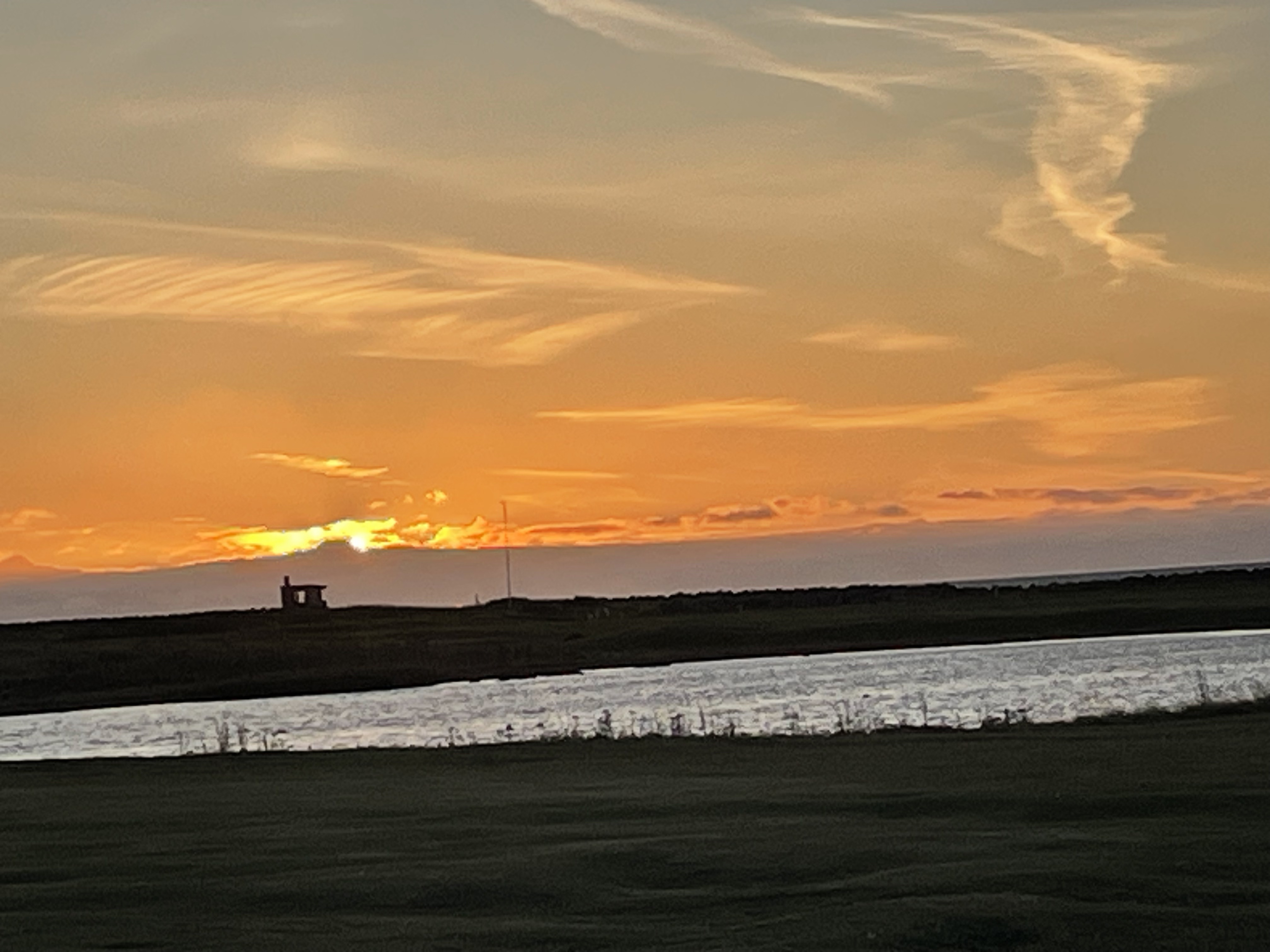
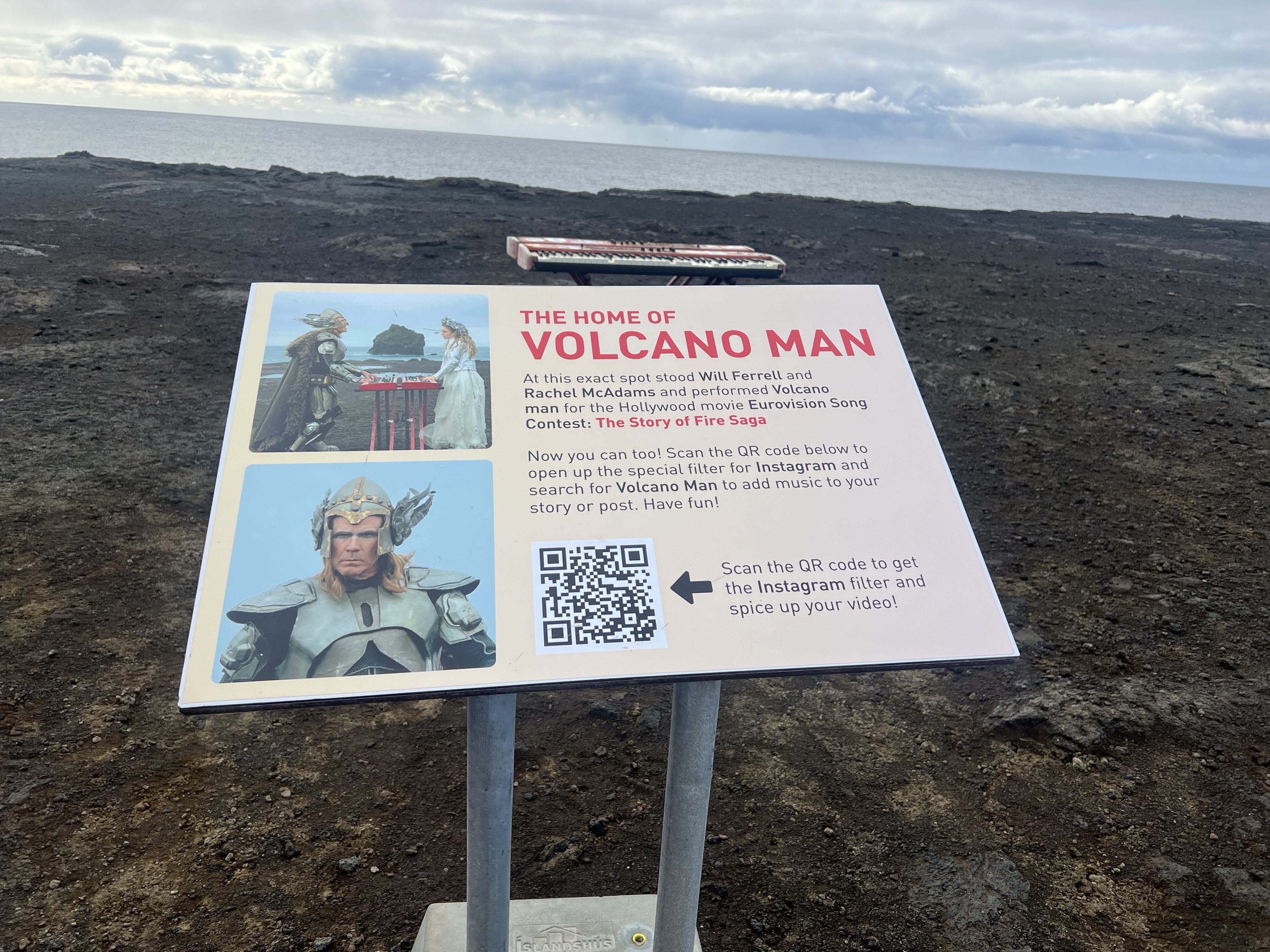
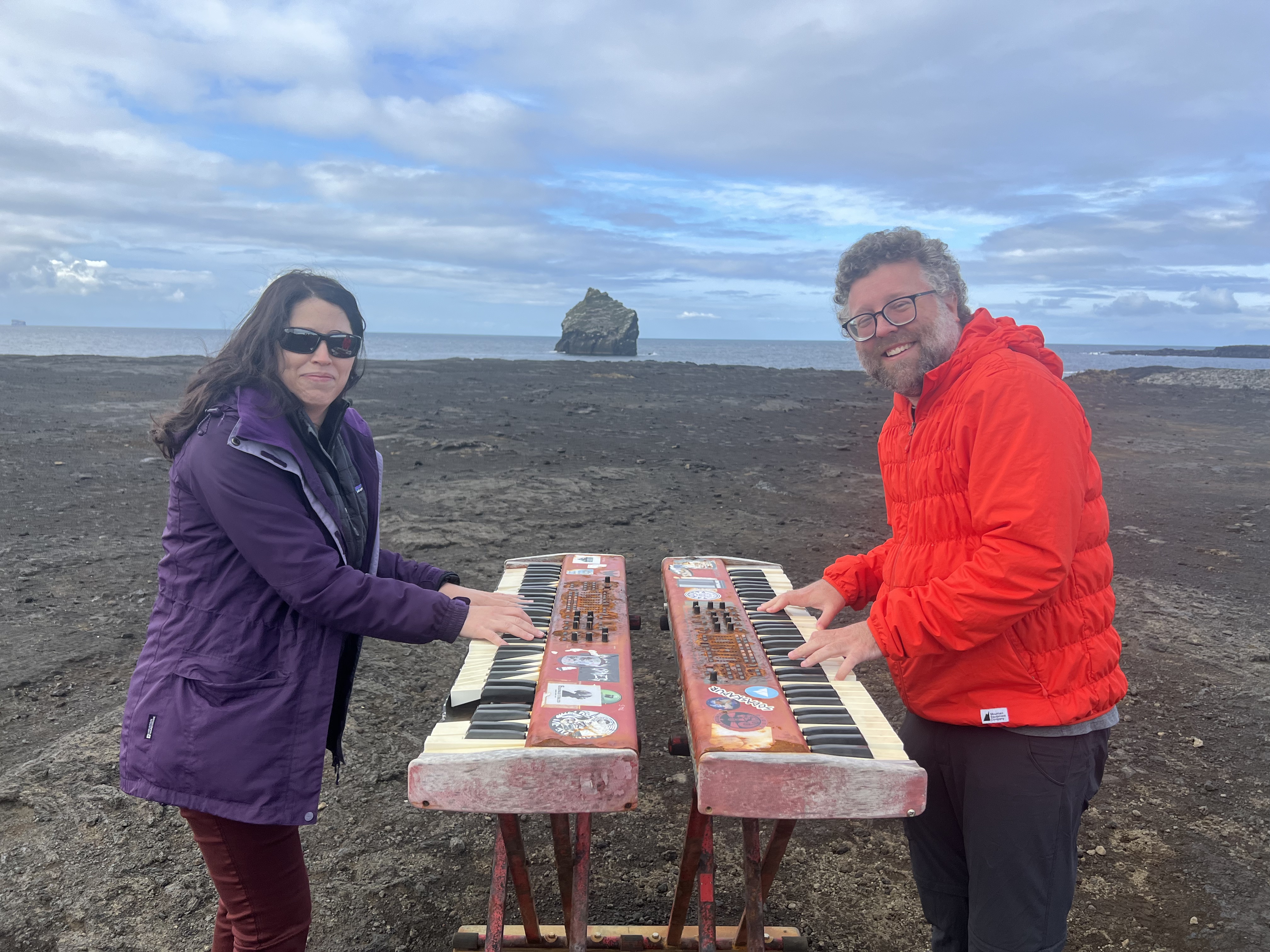
The last stop was a special surprise for Jenn. We travelled out to what seemed like the end of the world to the spot where Will Ferrell and Rachel McAdams performed Volcano Man for the movie The Story of Fire Saga. What a fun way to end our 11 days in Iceland!
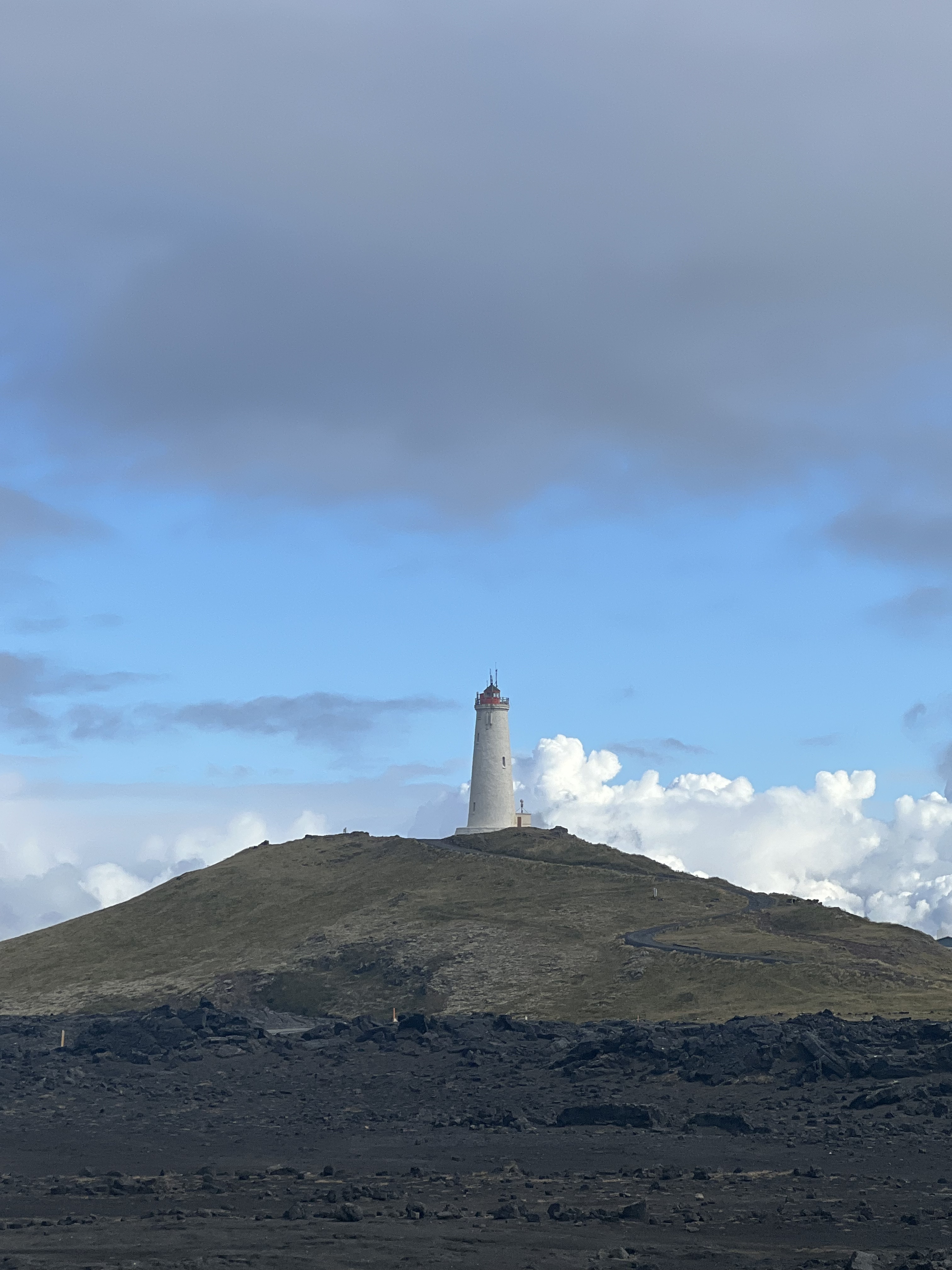
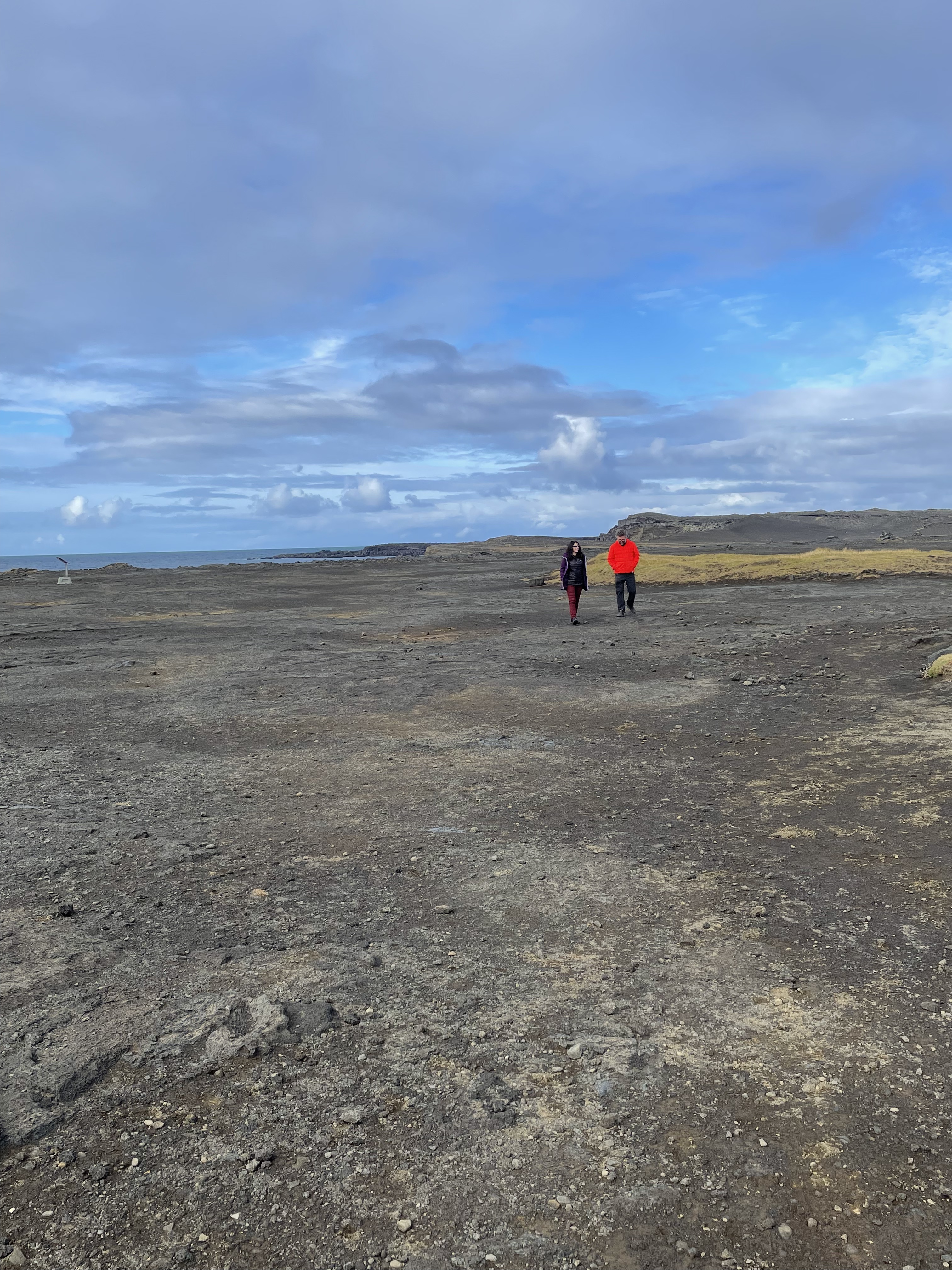
Then it was off to the airport and our flight home. I must say we loved the Hamilton airport. It’s small, there was no wait for luggage or customs, and our driver met us right outside the airport terminal. A very civilized airport experience!

Now on to planning our next adventure to France.

Family Trip to Ireland – August/September 2023

01 Friday Nov 2024

Posted by nancybell2108 in Uncategorized

≈ Leave a comment

Tags

belfast, europe, ireland, northern-ireland, travel

We have always wanted to take our adult children to Ireland to experience and learn about one portion of their heritage. George’s mom was born in Ireland and emigrated to Canada with her family (single mother and seven siblings) when she was 11. George’s dad, while born in Canada, was also part-Irish. Money from my dad’s estate gave us the financial ability to pay for much of the trip.

George, Jennifer and I left on August 25th and met George Jr in Belfast shortly after landing. We had mapped out our itinerary and booked our accommodations in advance. Some tours/entrance fees were booked before we left Canada to ensure availability, others were booked on-the-go one or two days in advance.
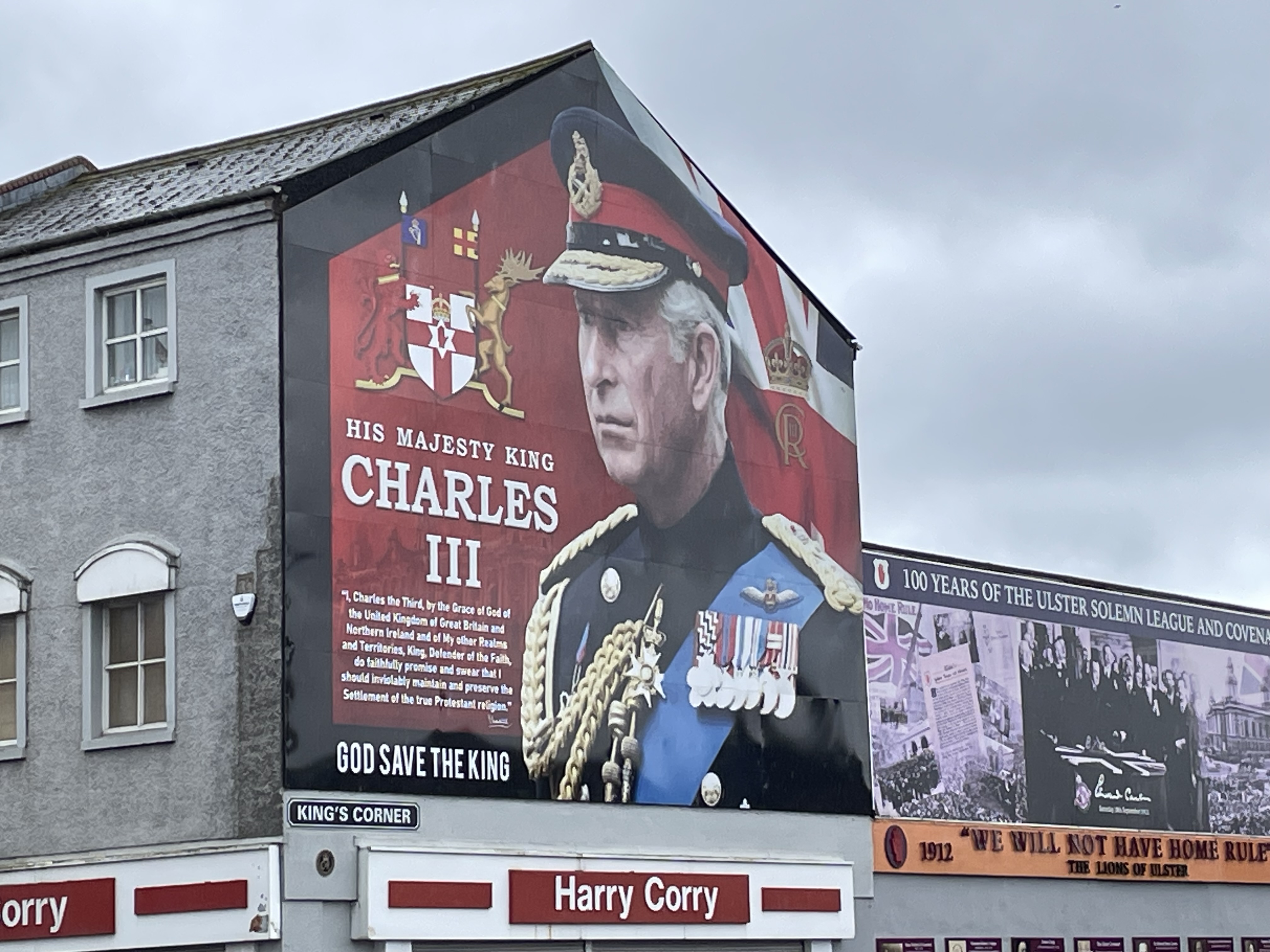
Belfast – We spent three nights in Belfast at the downtown Holiday Inn. The location was ideal for walking into the city core, which we did the first evening after a brief rest. A well-recommended fish and chip shop was our dinner choice. The next day we took a Black Cab tour – a private tour for the four of us. Our cabbie was generous with his time, well-informed, and provided interesting commentary on a number of sites related to “the troubles.” Belfast is definitely a city of murals, and one can’t travel far without being confronted by the history of the events of the past. The cabbie’s question of whether we had Irish roots, prompted a discussion of where George’s mom lived prior to emigrating and his promise to take us by her street on our way back to the hotel. It was so kind of him to stop his cab and offer to take pictures for us. The afternoon was free time, which allowed for some of us to have a rest and for others to go walk around town. Sunday night’s dinner was at a Thai restaurant just around the corner from the hotel.
Belfast City Hall
Grandma’s Street but house is no longer there
A mural on every flat surface
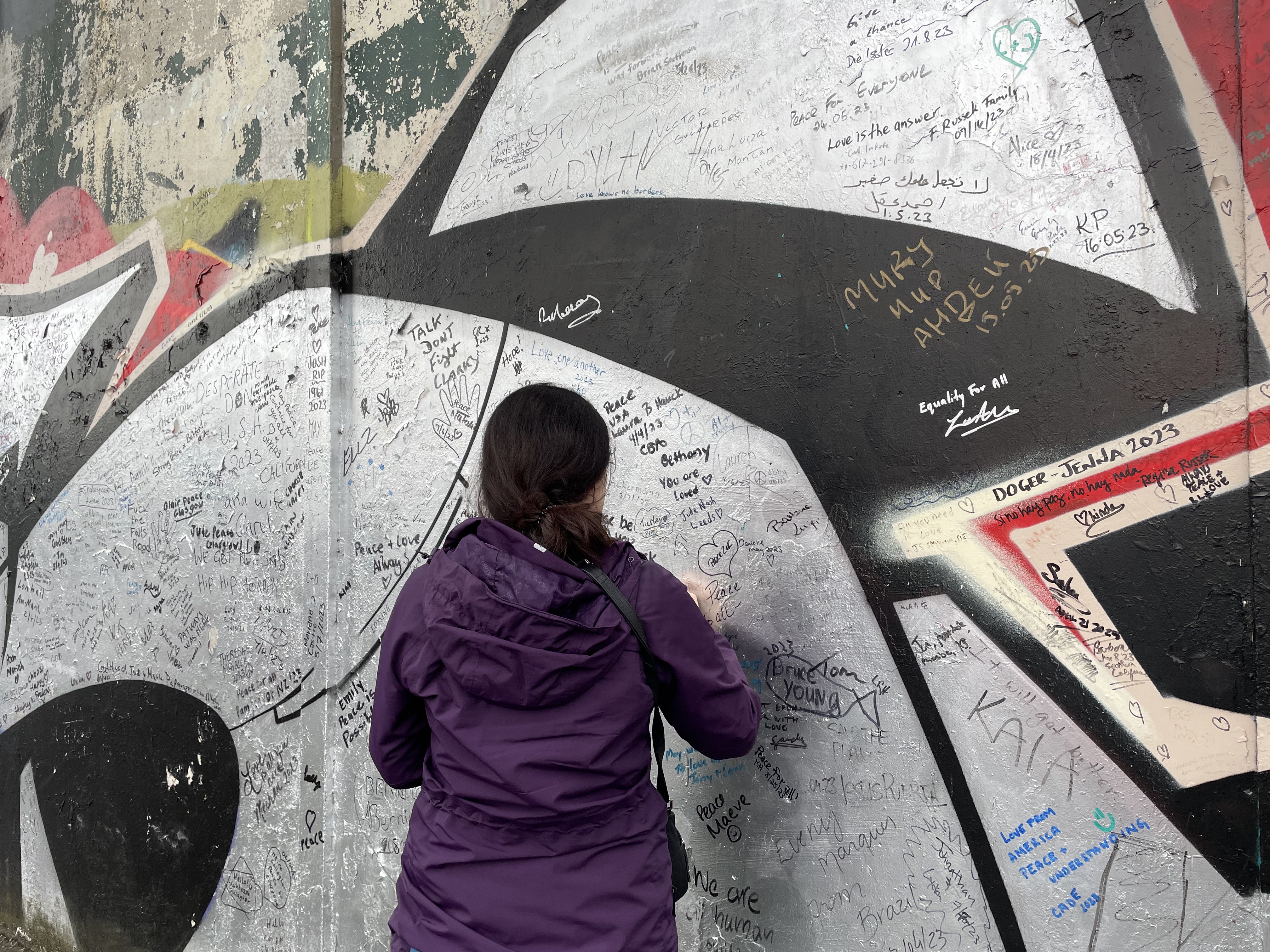
Signing the Peace Walll

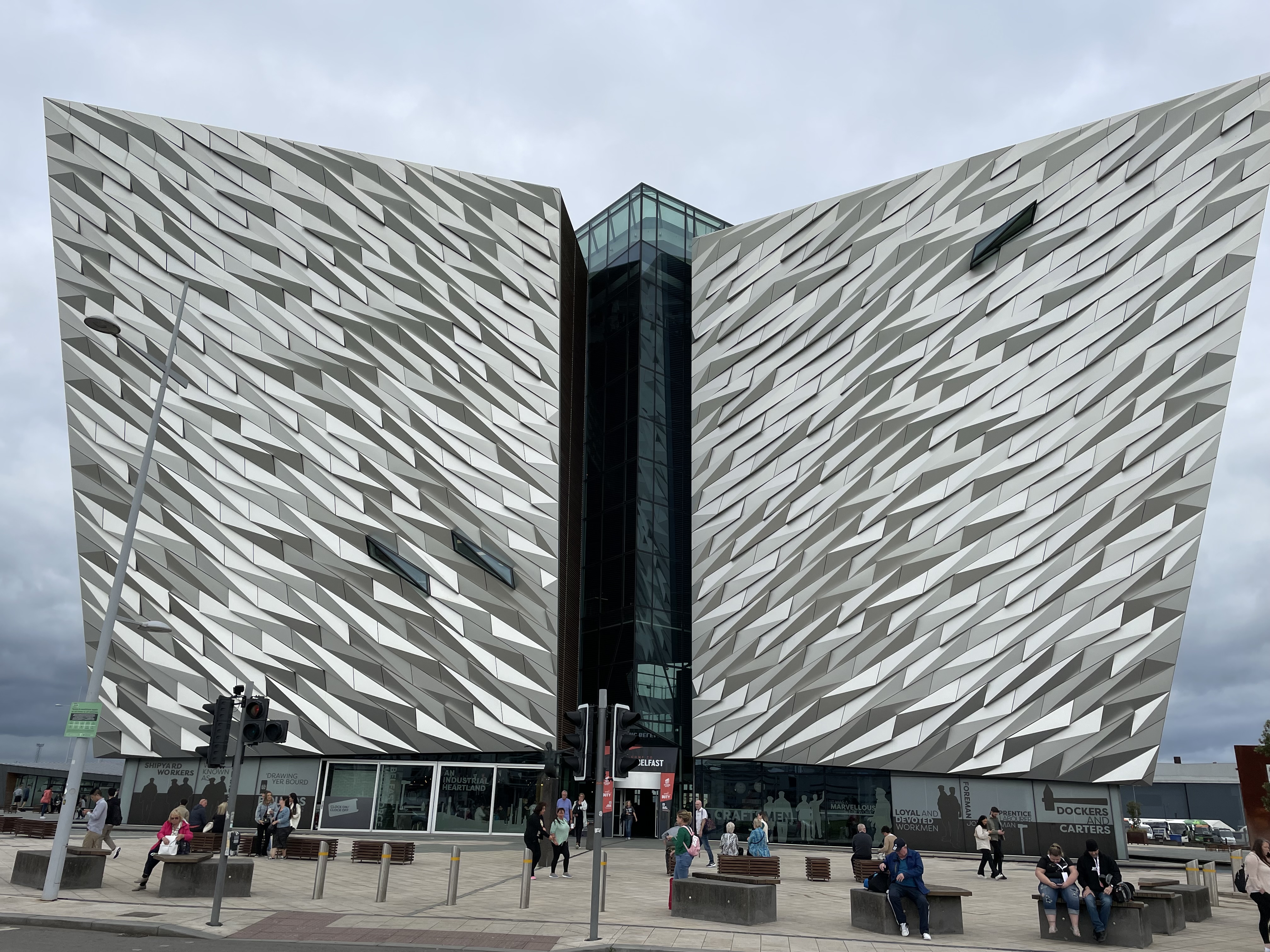
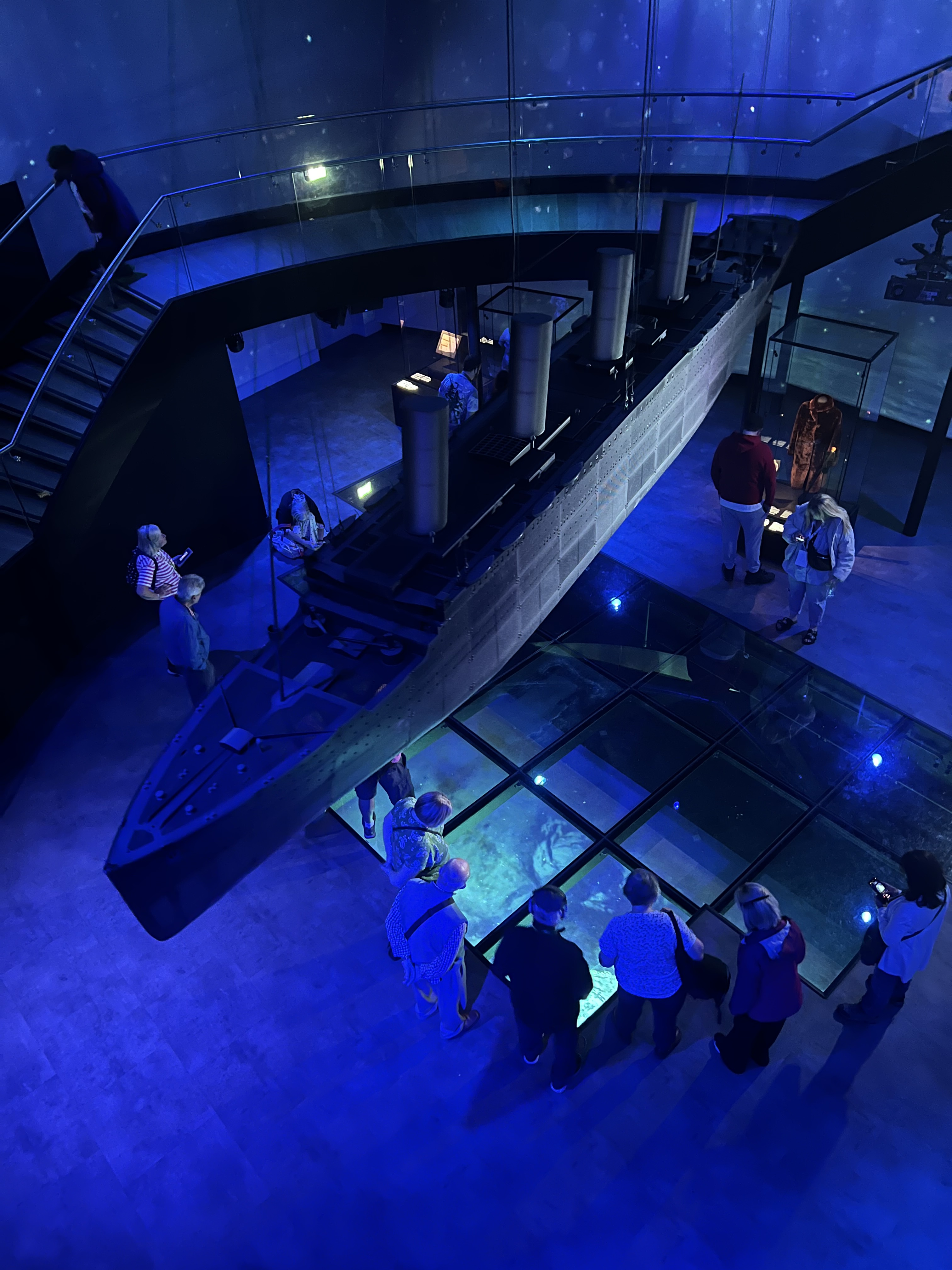
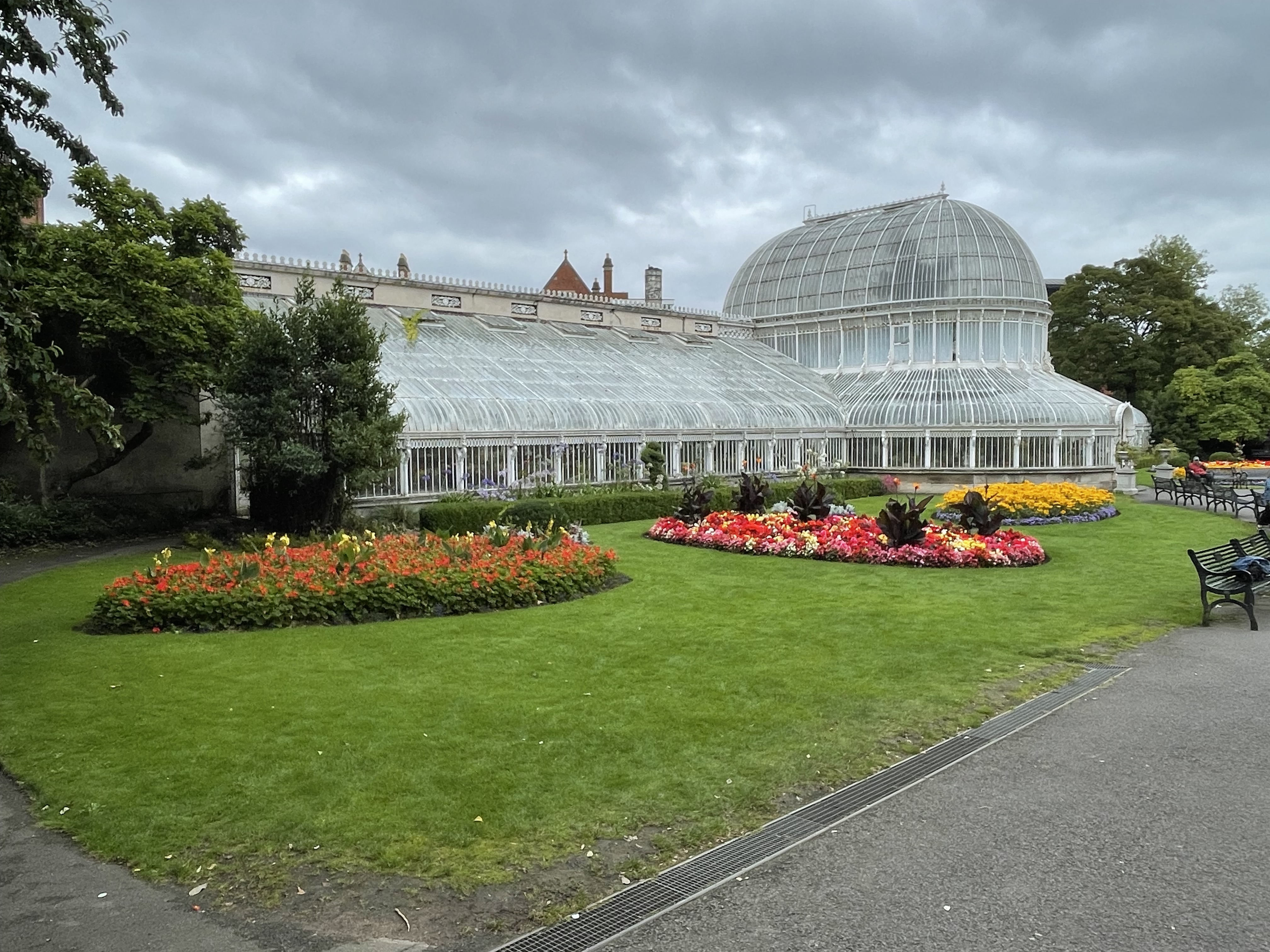
We spent Monday morning at the Titanic Museum, which is a must for anyone visiting Belfast. Our children declared it one of the best museums they have ever been to and as inveterate travelers, they have been to many. The story of the building, launching, and passengers on the Titanic was so well told in many different ways. One of the most impactful moments for me was the wall of remembrance which was two-storeys high and recorded all the names of the more than 1,500 people who died. Lunch in the Cafe was good; since the portions were quite large, we realized later that sharing would have been a better option. In the afternoon we drove out to the Botanic Gardens and spent about 90 minutes wandering through the gardens and the iconic Palm House.
Titanic Museum
Pier where the Titanic was built
A deck chair from the ship
Imposing model of the ship
The Palm House at Botanic Gardens

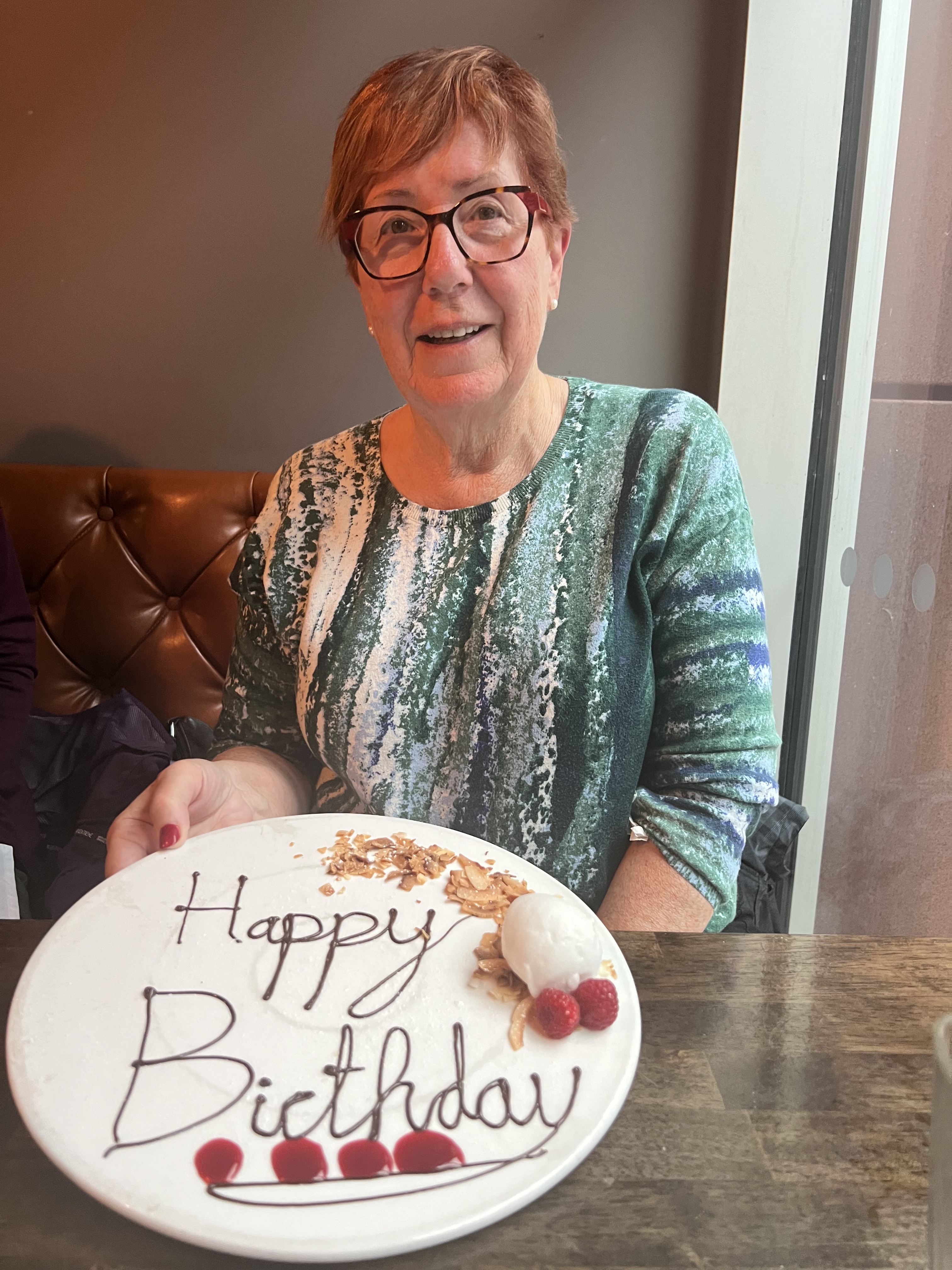
Dinner Monday evening was a special occasion as it was mom’s 75th birthday. We went to a most novel restaurant called Stix and Stones, a steakhouse. The novelty centered around how the steaks are cooked. In the kitchen they just sear the steaks and bring them to the table on a board that includes a stone heated to 450F. By slicing and cooking your steak at the table, each mouthful is hot, succulent and tender. It truly was a unique experience and a wonderful birthday celebration.
Londonderry – On Tuesday, we left Belfast and headed out towards Londonderry. We had planned a number of stops along the way but the wet, windy weather preempted some of those. We passed on a stop at the Carrick-a-Rede-Rope bridge which was closed due to high winds. We made a brief stop at the Dark Hedges, which appeared to be a popular spot. Dad and I had not seen any of the Game of Thrones series but our kids were fans. A nice cafe provided a quick stop for hot chocolate.

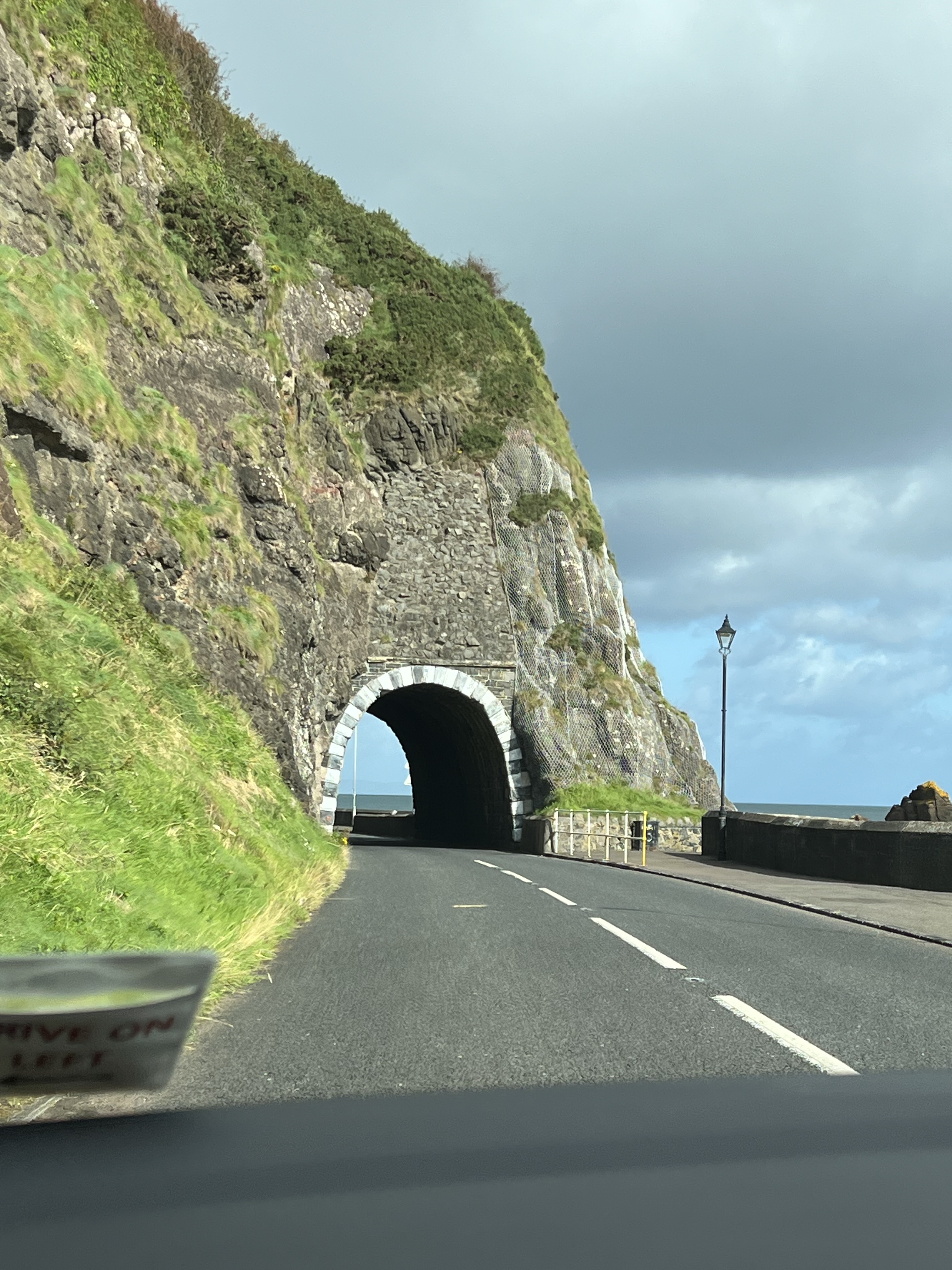
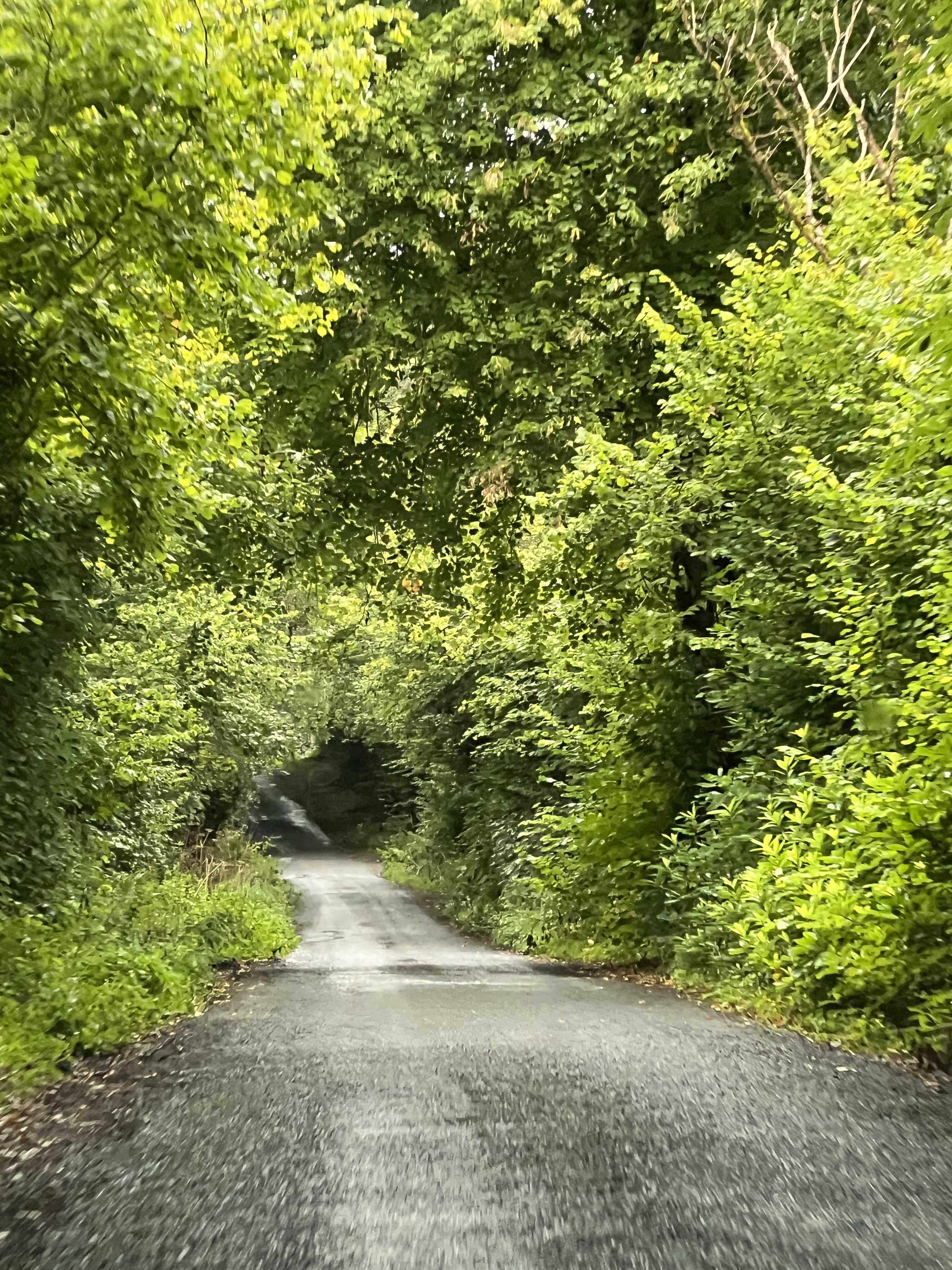
Tunnels are always fun
Look at all the green
Dark Hedges
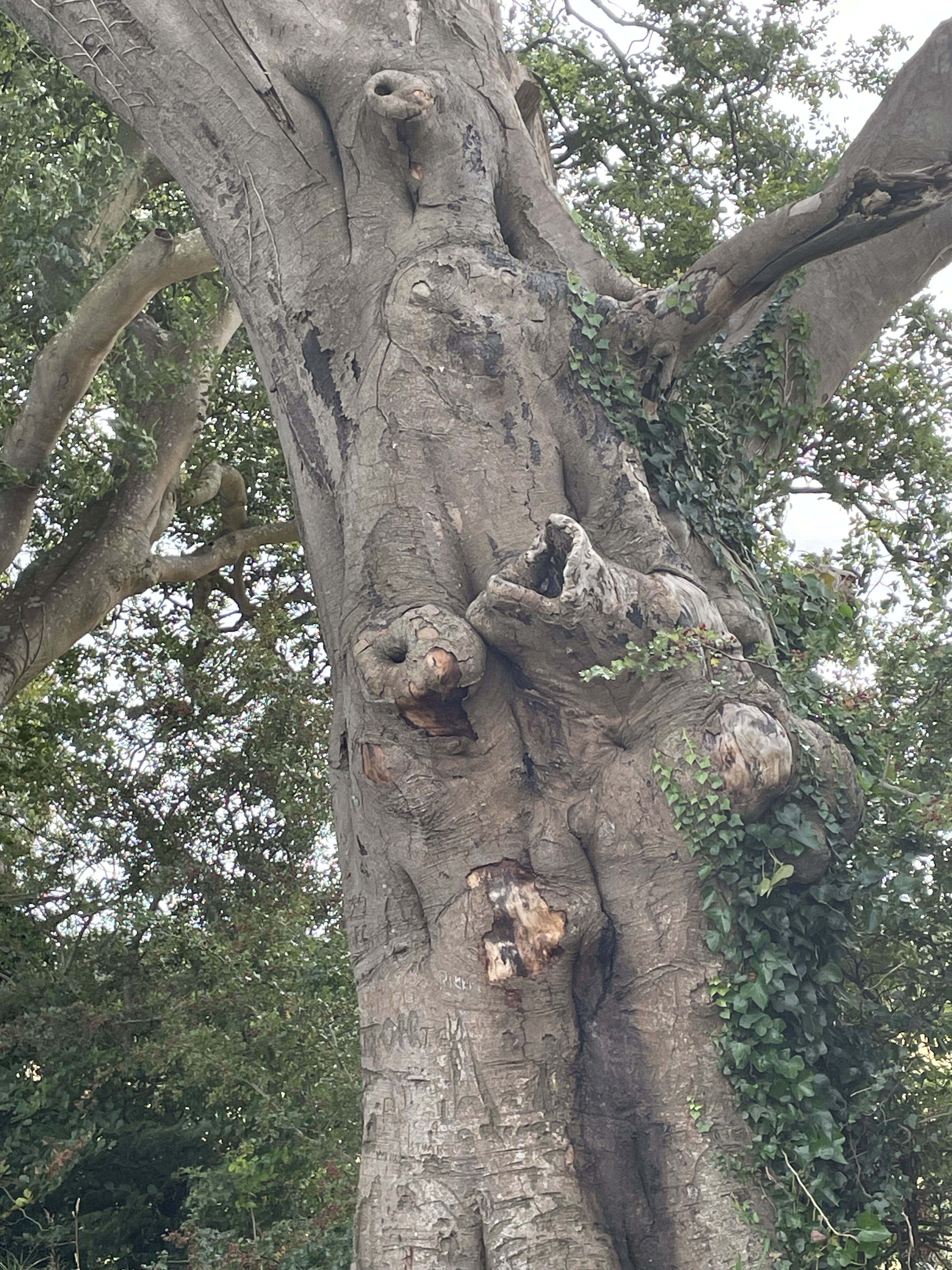
A tree with character!
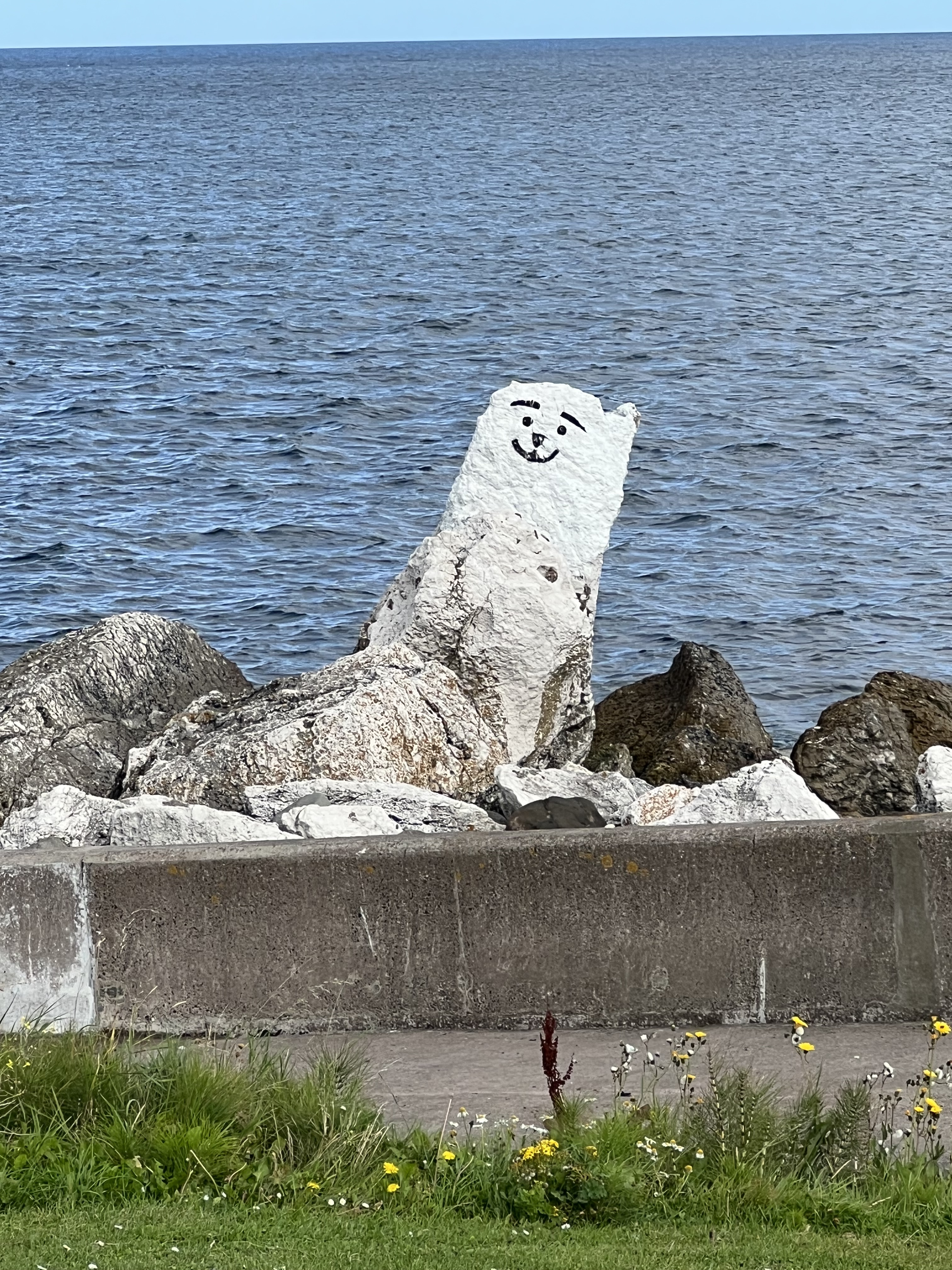
Fun site along the way

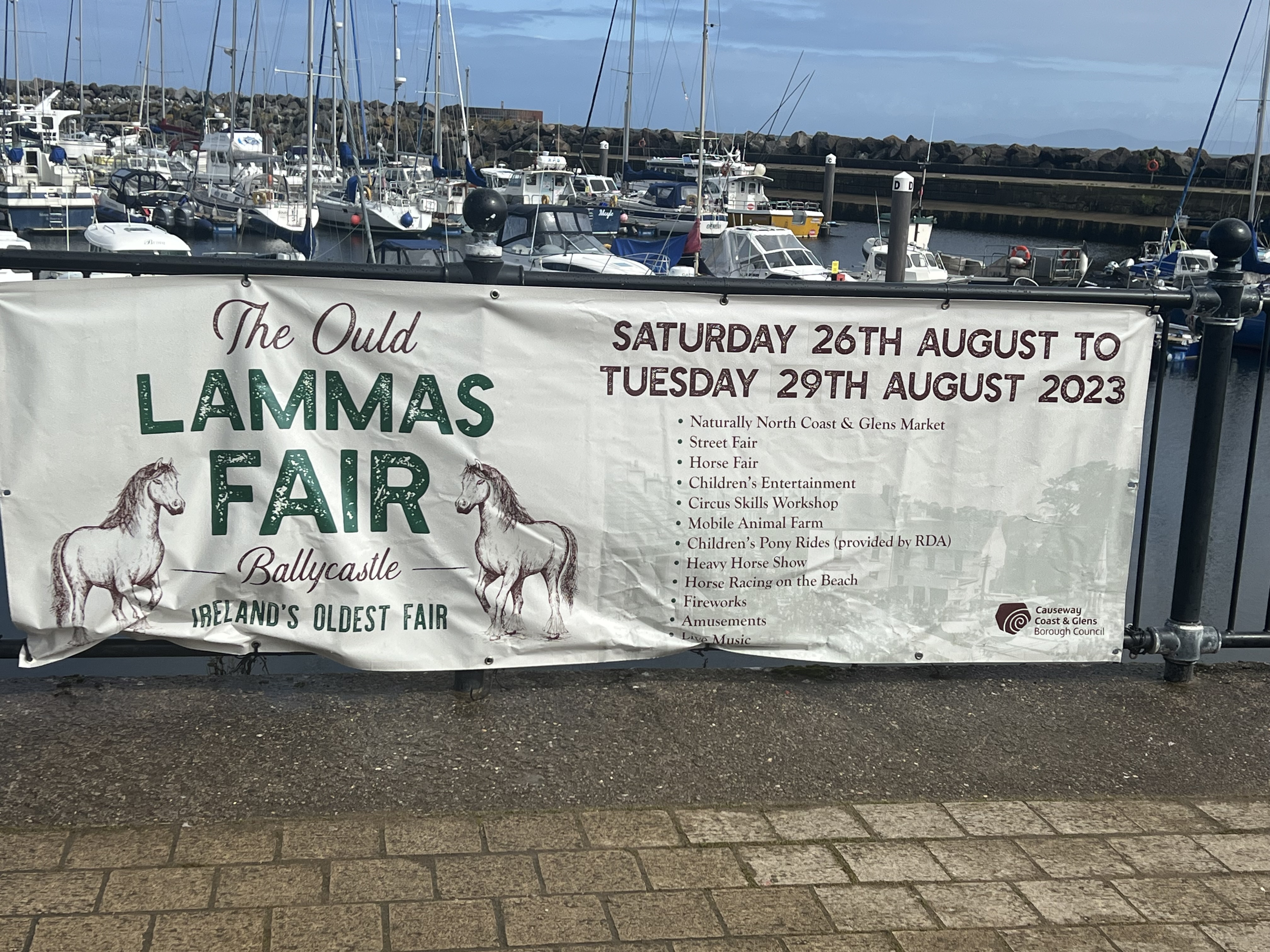
Our lunch spot was a serendipity as the town (Ballycastle) where we planned to stop was holding its Ould Lammas Fair – a celebration of the harvest. We decamped and wandered through the stalls, each choosing a lunch item, and sat listening to music while we ate. It certainly was a busy spot and the weather was much nicer than earlier in the day.

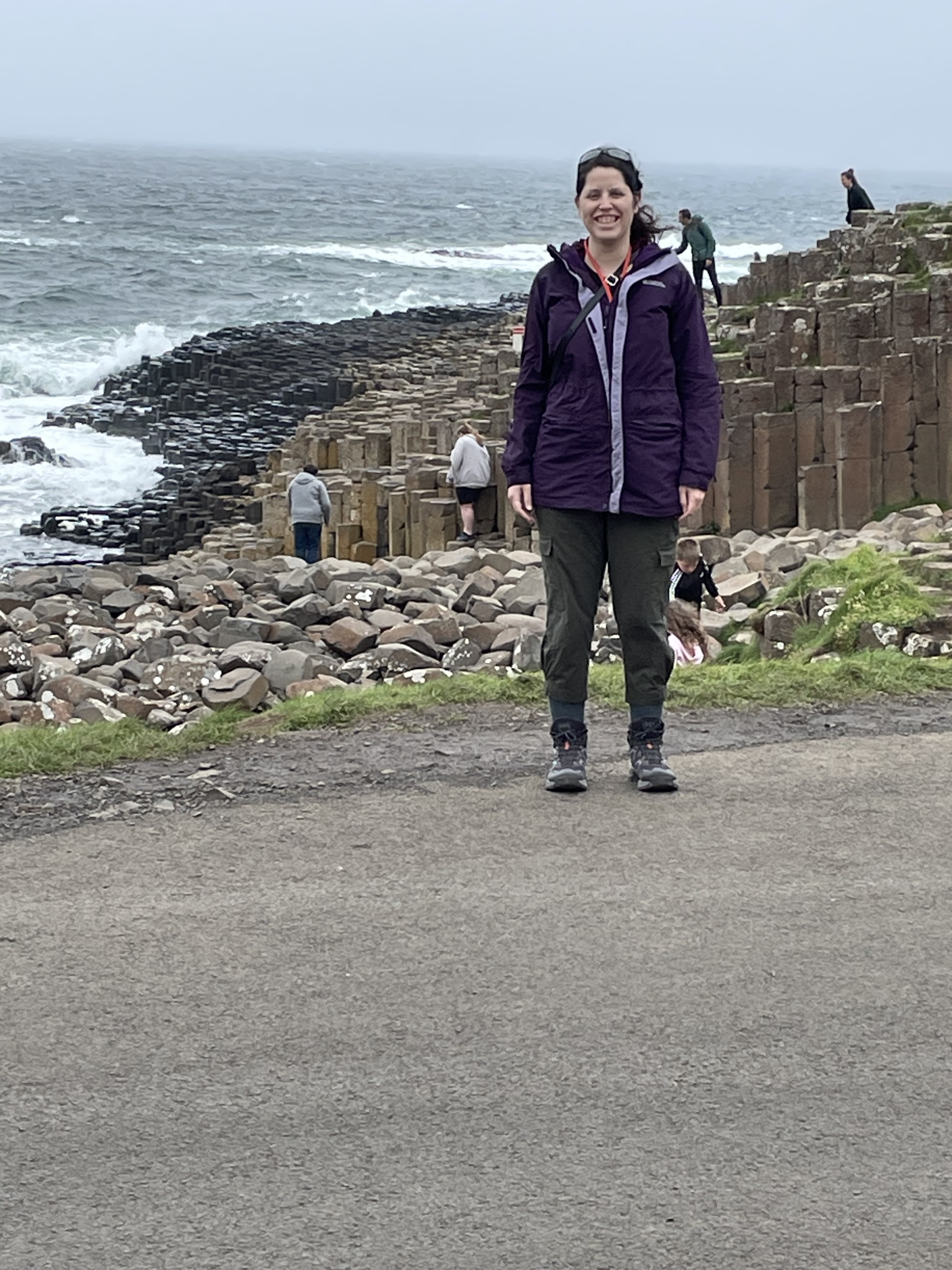
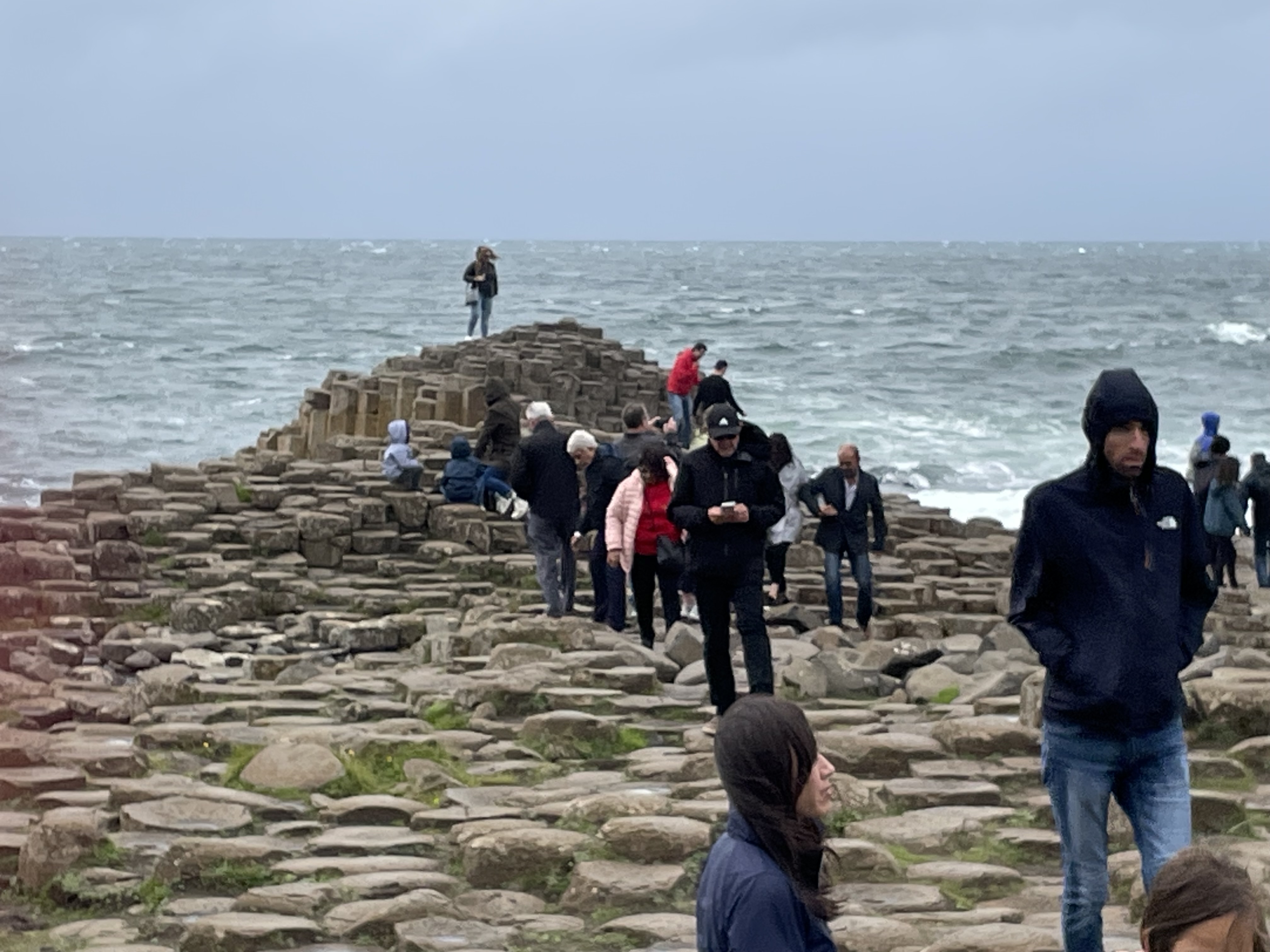
The next stop was the Giant’s Causeway. Because of the wet, windy weather (it returned!), Jenn and I spent just a few minutes down around the stones, which were very slippery, and then took the bus back up the hill to the visitor’s centre. George and dad hiked to the top of the far hill and back again. It’s an unbelievable spot to visit, but is better when it’s sunny and dry!

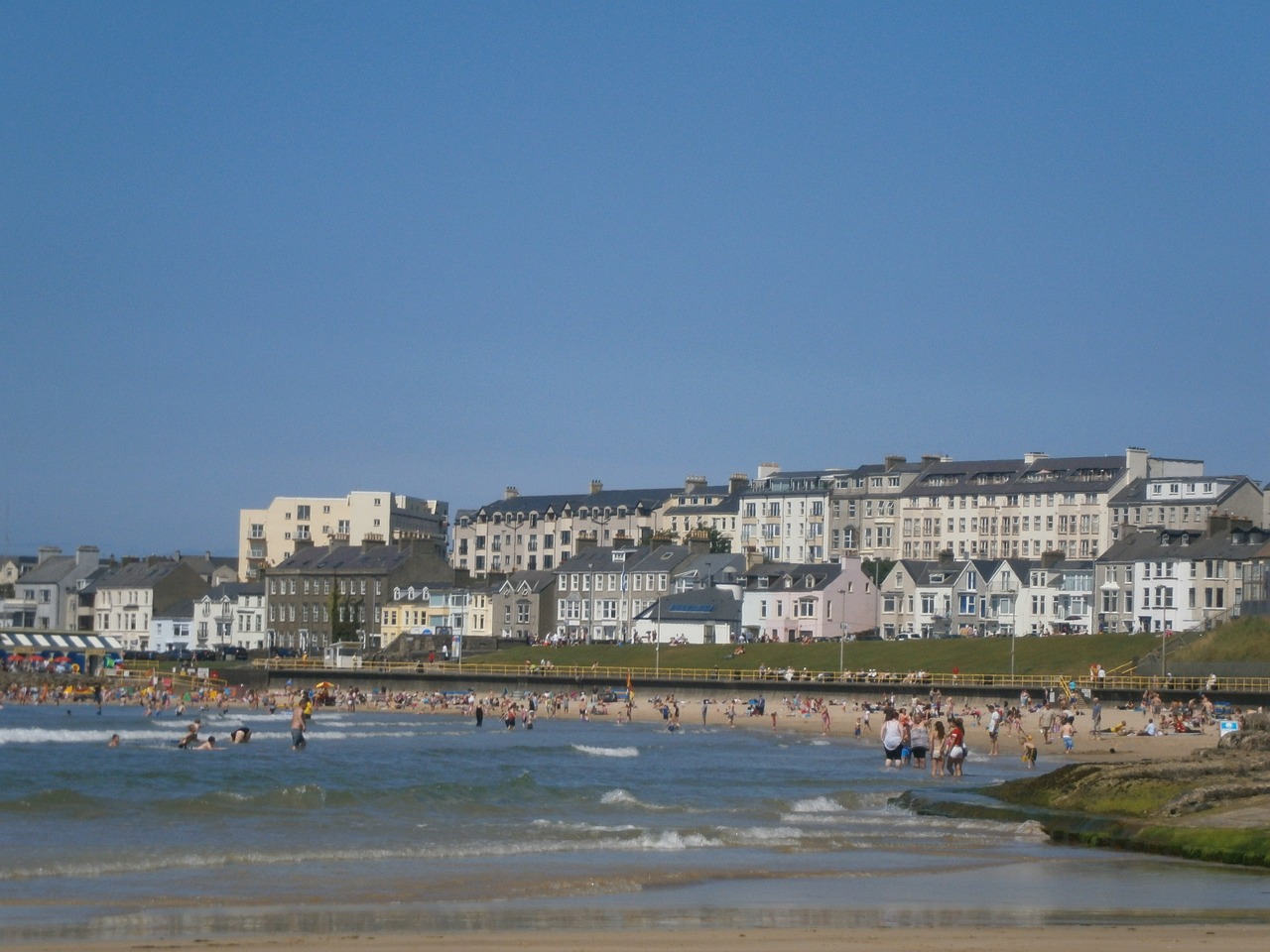
On our itinerary was a brief visit to Portrush, home of PGA golfer, Rory McIlroy. In the end, it became our stop for dinner as we had spent so much time at the Giant’s Causeway and the Ould Lammas Fair. By the time we arrived, the clouds had parted and the sun made its second appearance for the day. A resort town, it is home to popular places like Barry’s Amusements, some amazing beaches, and, of course, a very well-known golf club.

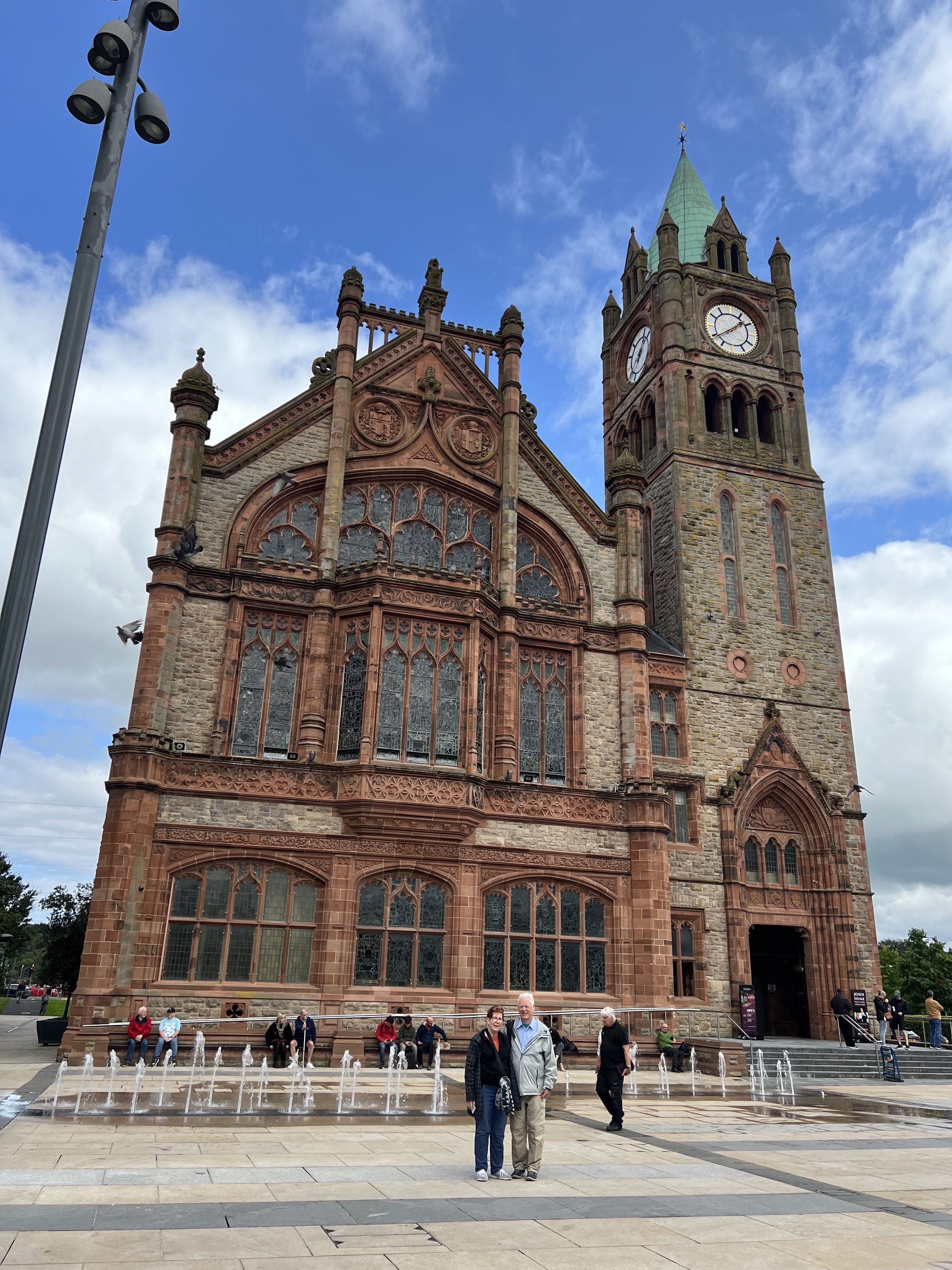
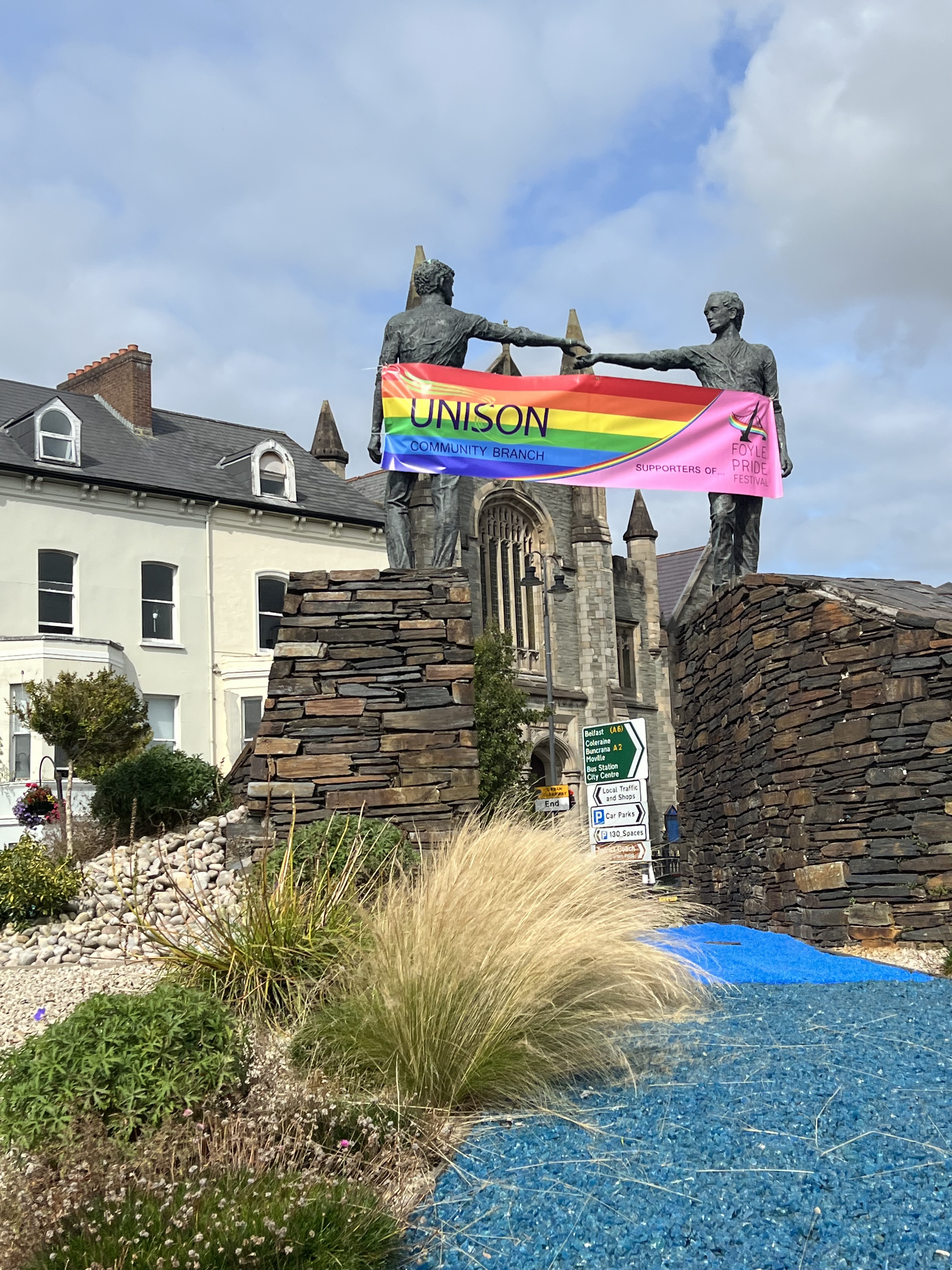
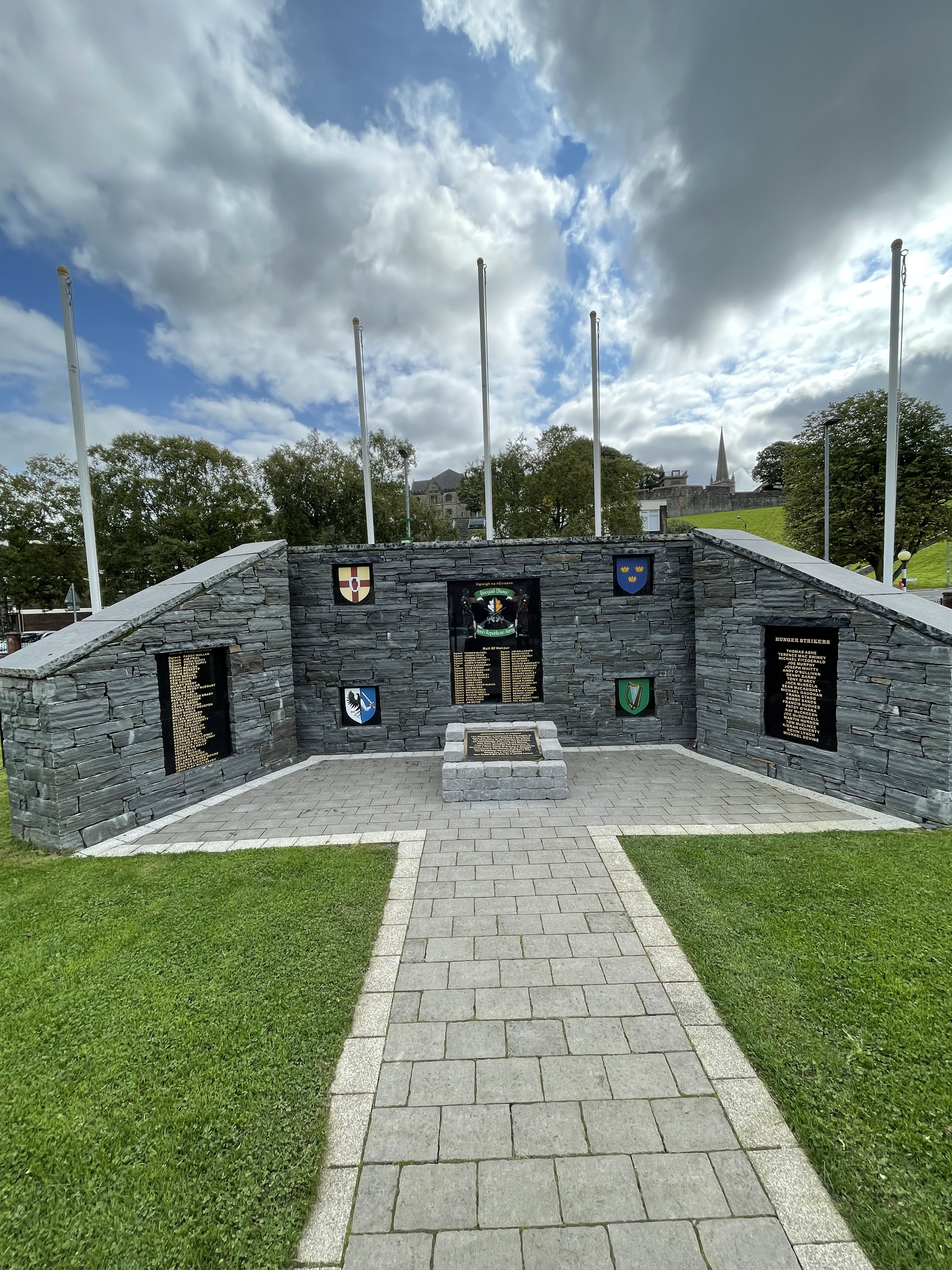
Our stop for the night was the Holiday Inn in Derry, well situated downtown for our walking tour the next day but somewhat difficult to access as the unloading area is right on a very busy main street. The tour took us through a section of Derry covering the history of the Battle of Bogside and Bloody Sunday Massacre, and pointing out various landmarks including the Free Derry Corner and Bloody Sunday Monument. Again, as in Belfast, murals everywhere are a reminder of the troubled times many lived through. While Dad and I had done both tours on a previous trip to Ireland, we were pleasantly surprised to hear our children’s favourable comments about both tours including their impression that the Belfast tour told the story from the Protestant perspective while the Derry tour told the same story from the Catholic perspective. Both, they felt, were well-balanced reflections.

Guildhall
Hands Across the Divide Statue
The Worker’s Monument
Winners of Nobel Peace Prize
Bloody Sunday
Memorial to those who died fighting

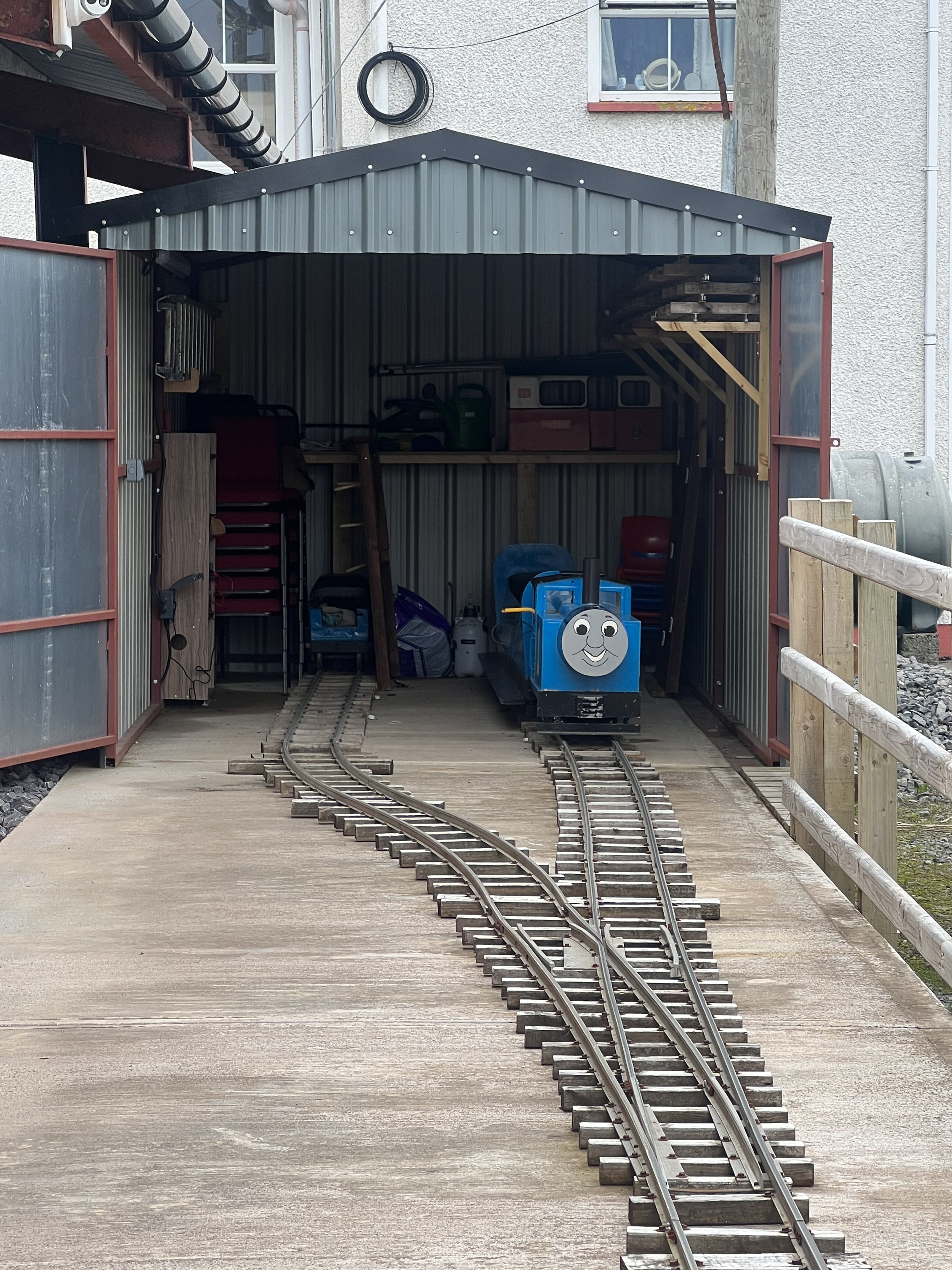
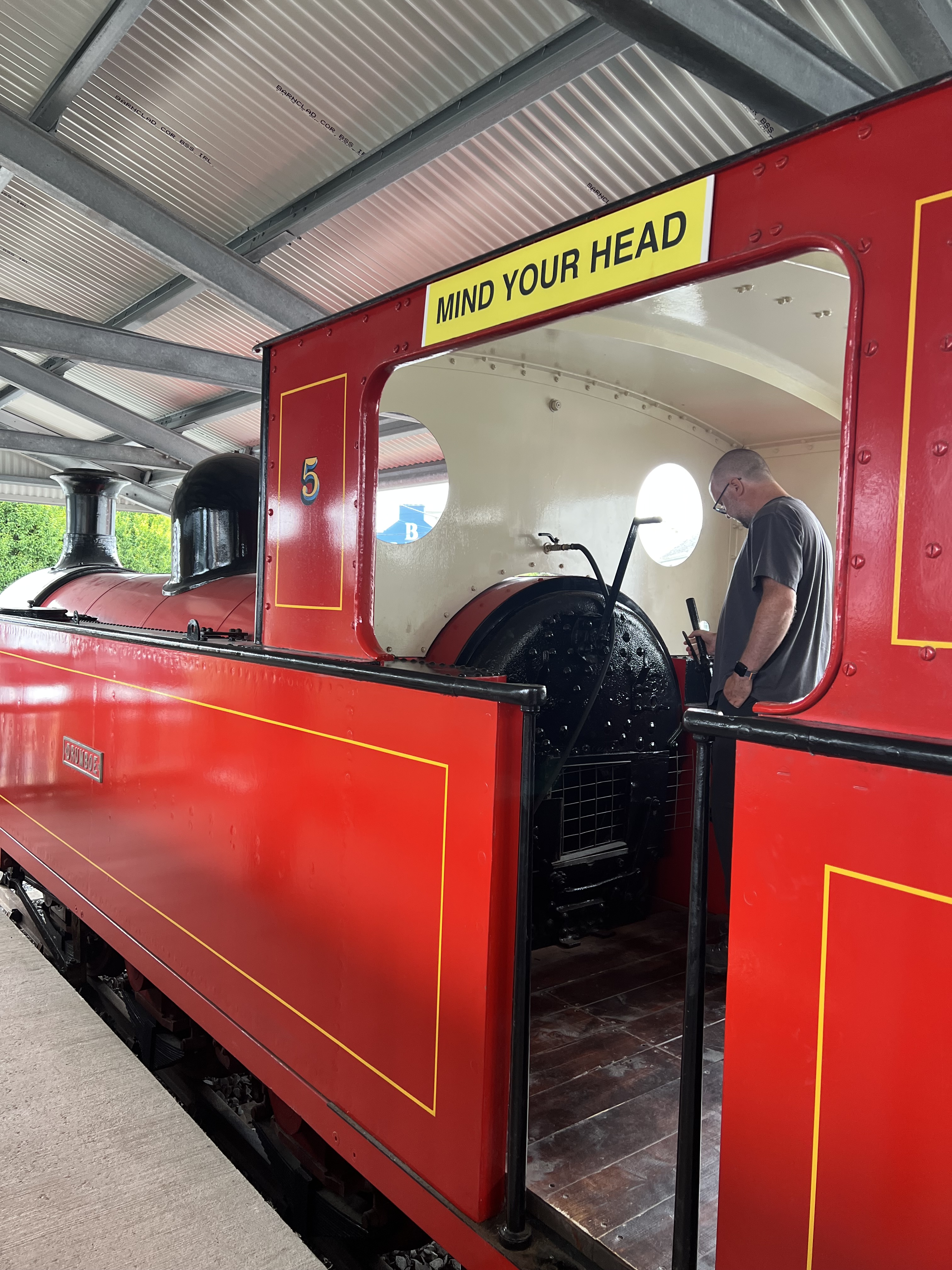
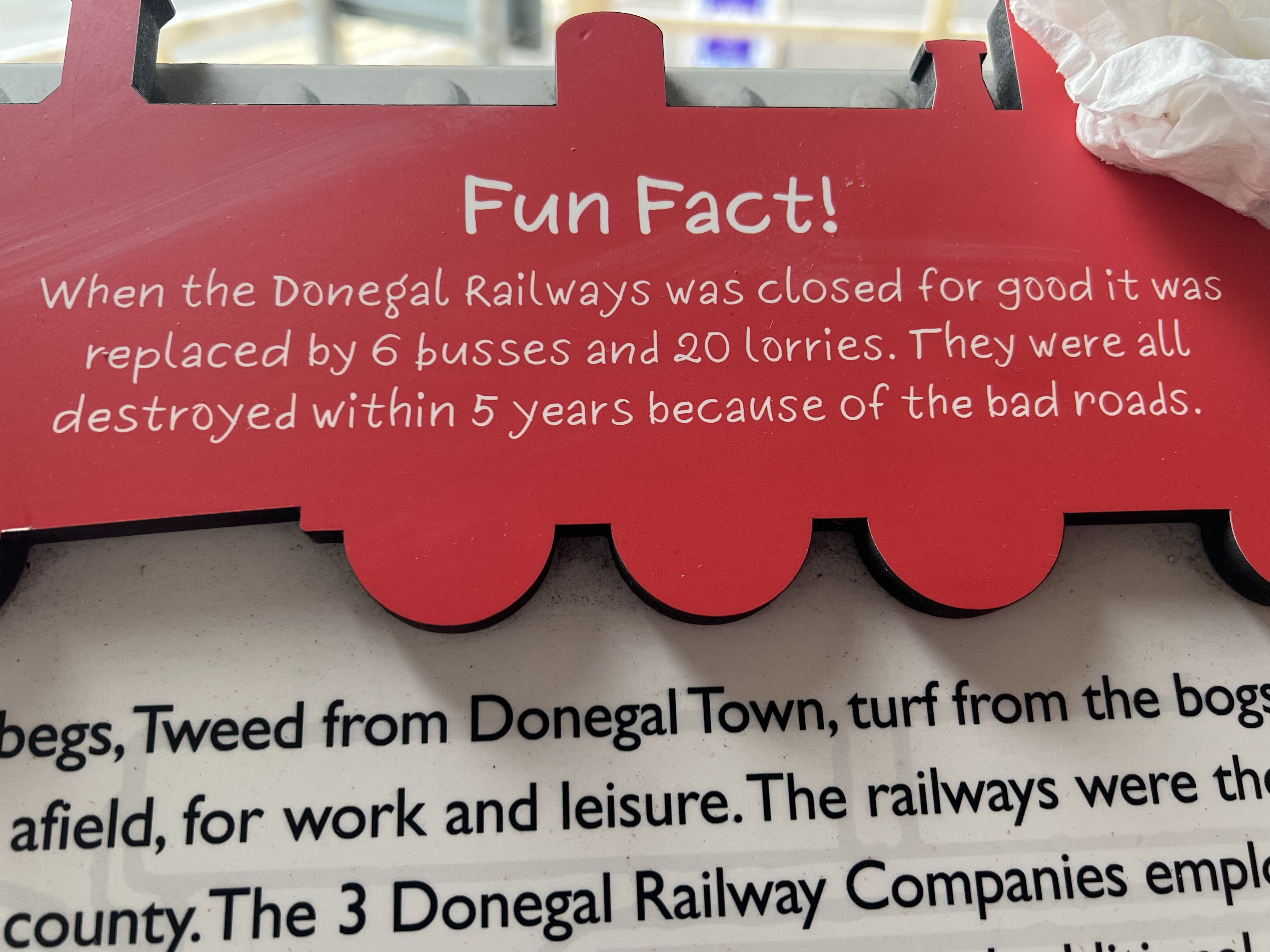
Sligo – On Wednesday after lunch, we left Derry en route to Sligo. While it’s a relatively short distance, there is a lot to see along the way and many diversions to be taken. We stopped in Donegal so the train buffs amongst us could visit the Railway Heritage Museum. The County Donegal Railway was the largest narrow gauge railway system in the British Isles and operated in various lengths, routes and varying degrees of success from the 1840s to the 1950s. Much of the railway’s locomotives, railcars and rolling stock has survived in various museums, including here in Donegal.

Our stop for the next two nights was the Riverside Inn in Sligo. The hotel is well situated in town with some rooms having lovely views of the river. After dinner at the Mill Bar on site, we went for a short walk around town before turning in for the night.

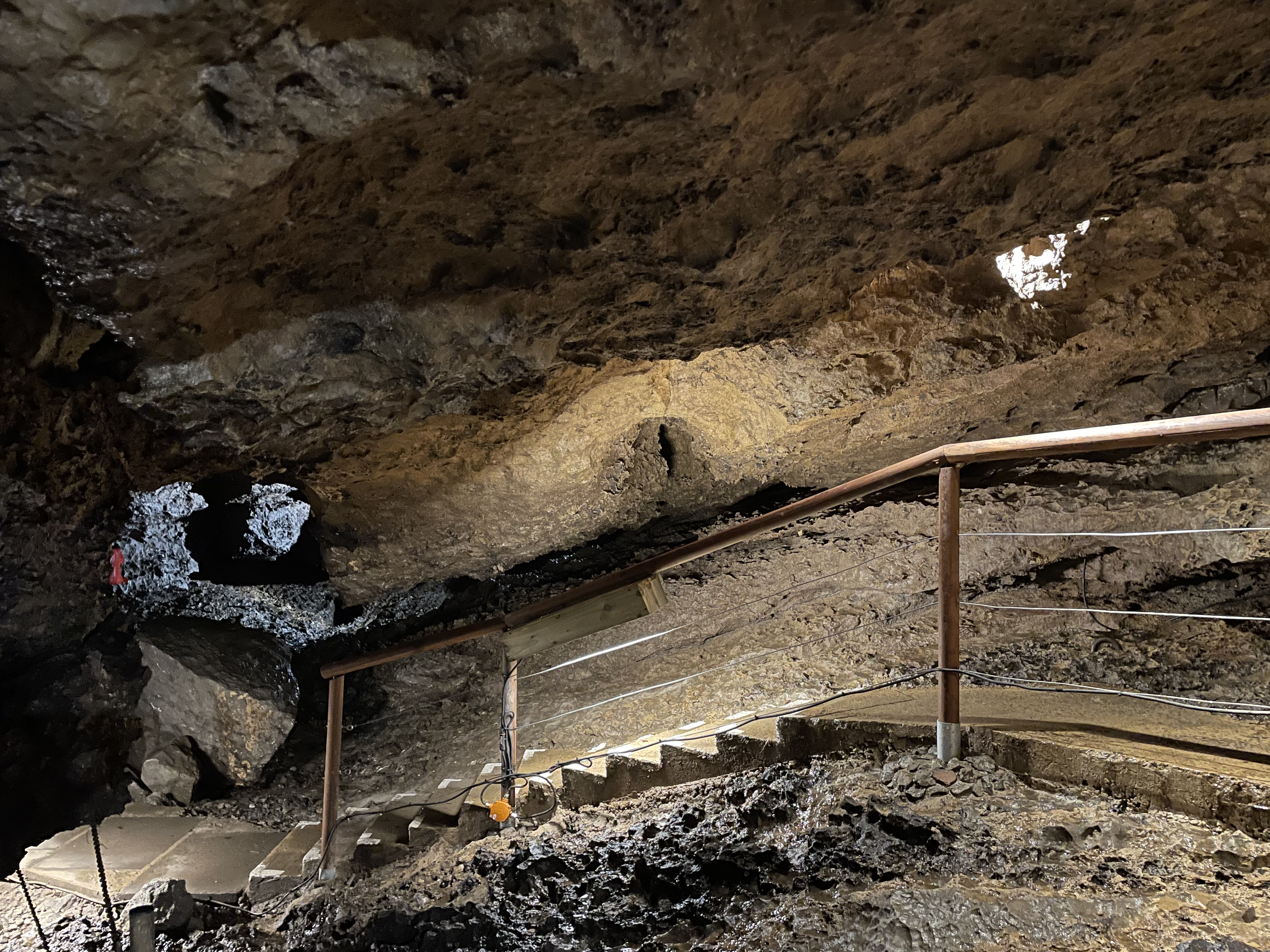
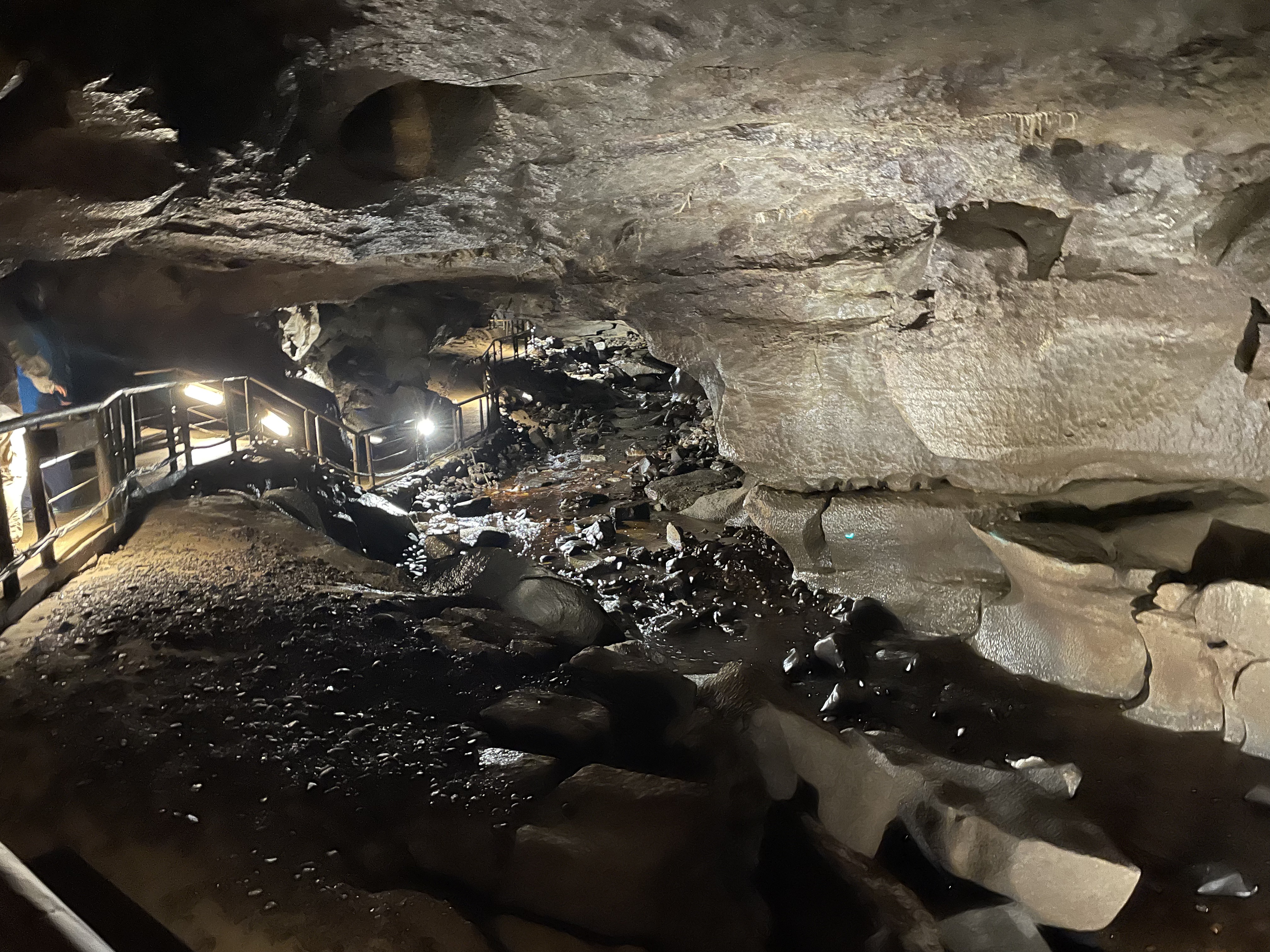
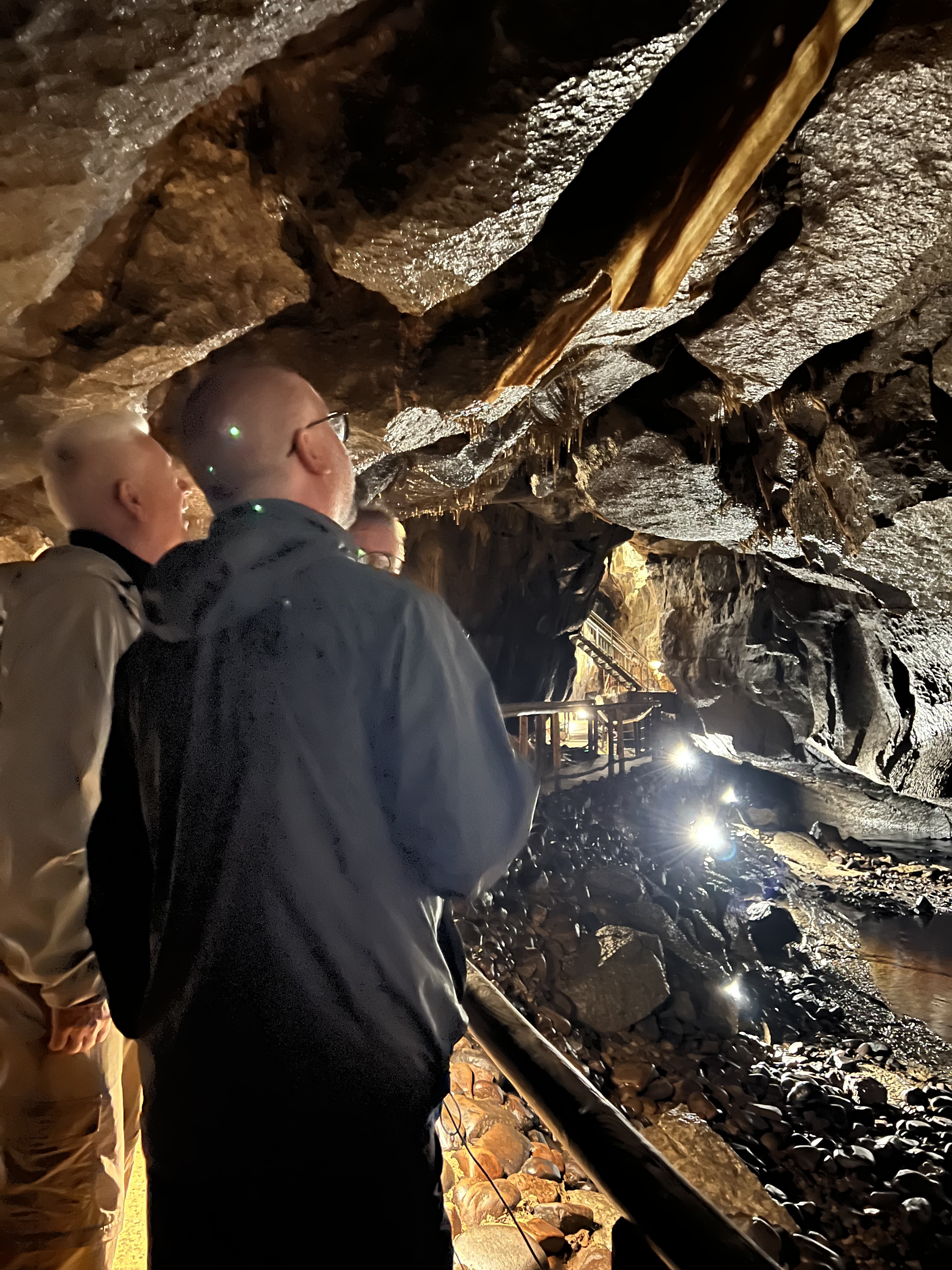
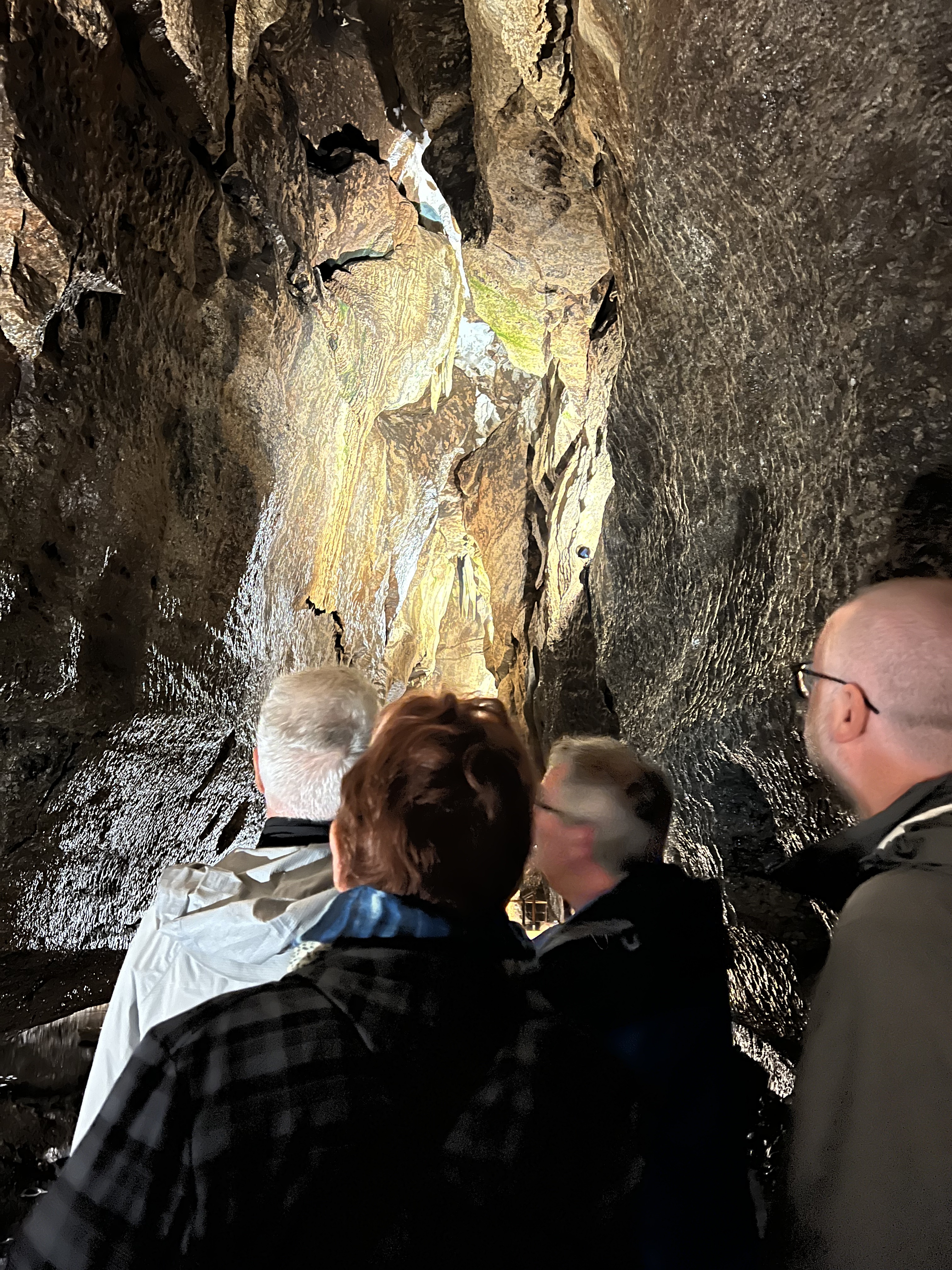
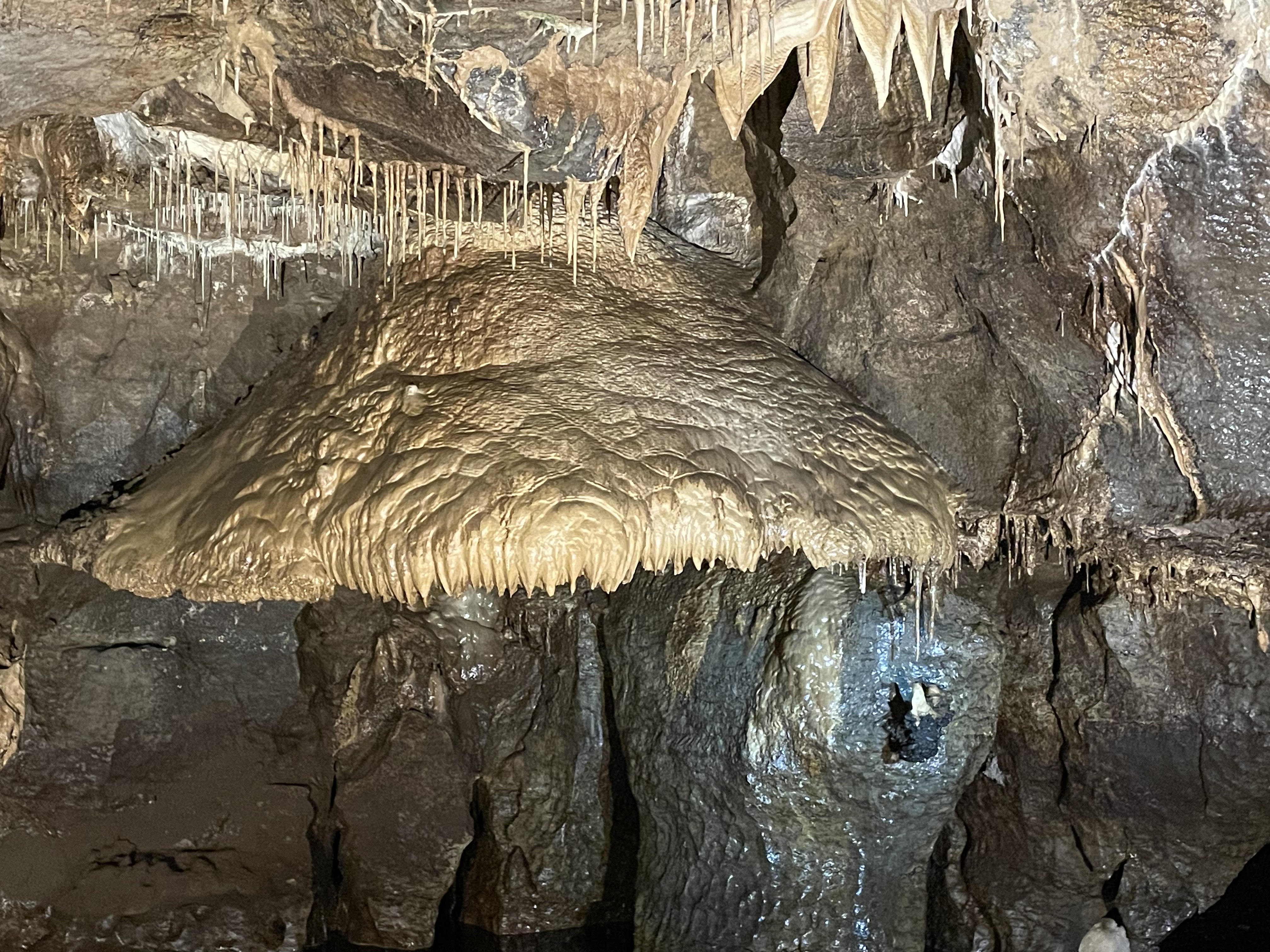
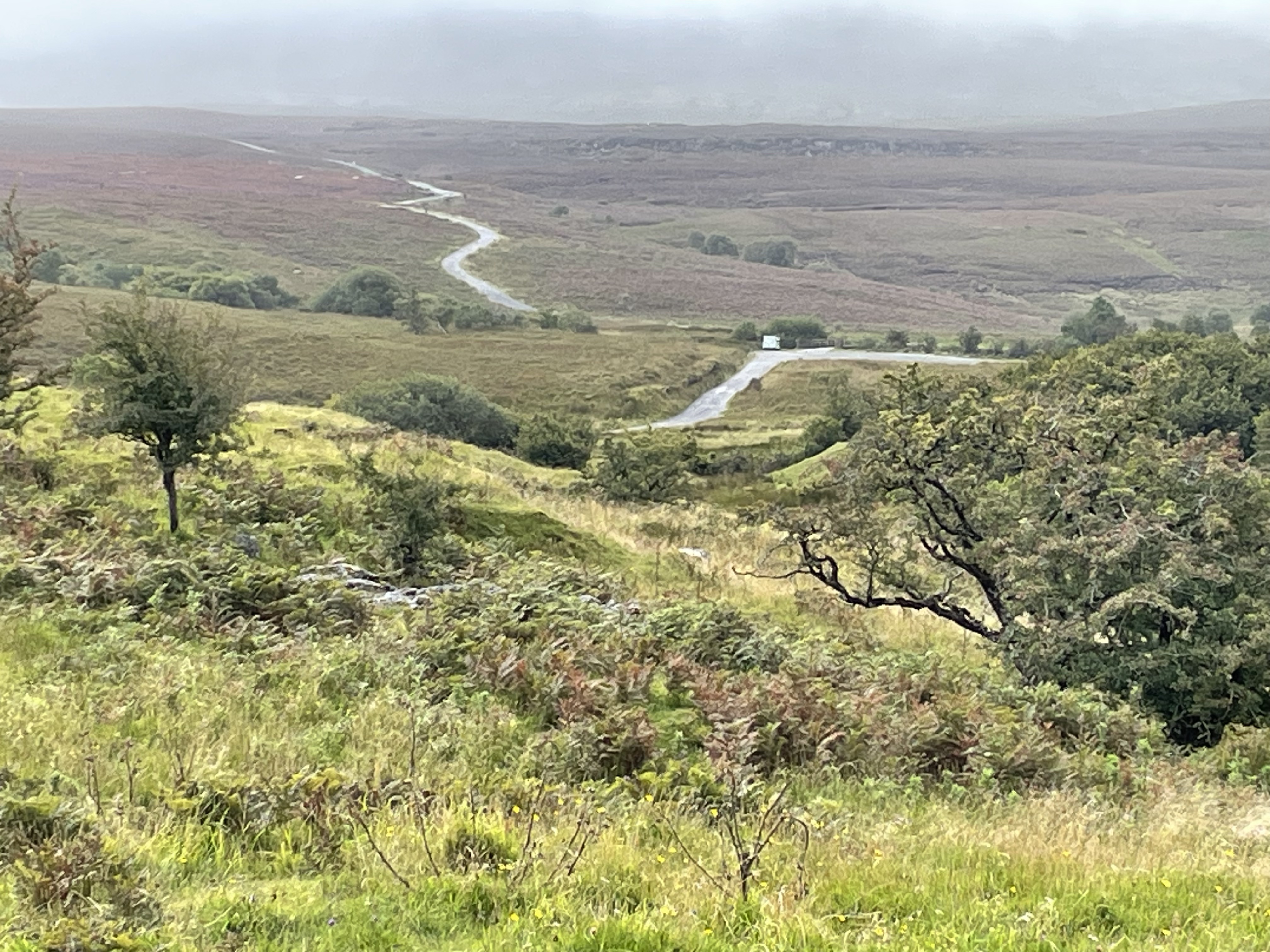
On Thursday, our travels took us to Yeats Country to visit the Marble Arch Caves, Benbulbin mountain & Glencar Waterfall. Under the vibrant green hills of Fermanagh lies a labyrinth of caves, sinkholes and subterranean rivers. Amongst them is the Marble Arch Caves which is the most active river showcave in Ireland and the UK and a key site within the Cuilcagh Lakelands UNESCO Global Geopark. A guided tour begins with a descent to an underground walkway, followed by a short boat trip, an informative description outlining how the caves were formed, viewing of various awe-inspiring formations, and a return to the visitor’s centre. The onsite cafe provided a welcome stop for a quick lunch. There are a number of hiking trails nearby and some of our group trooped off in search of a boardwalk, which they didn’t find.

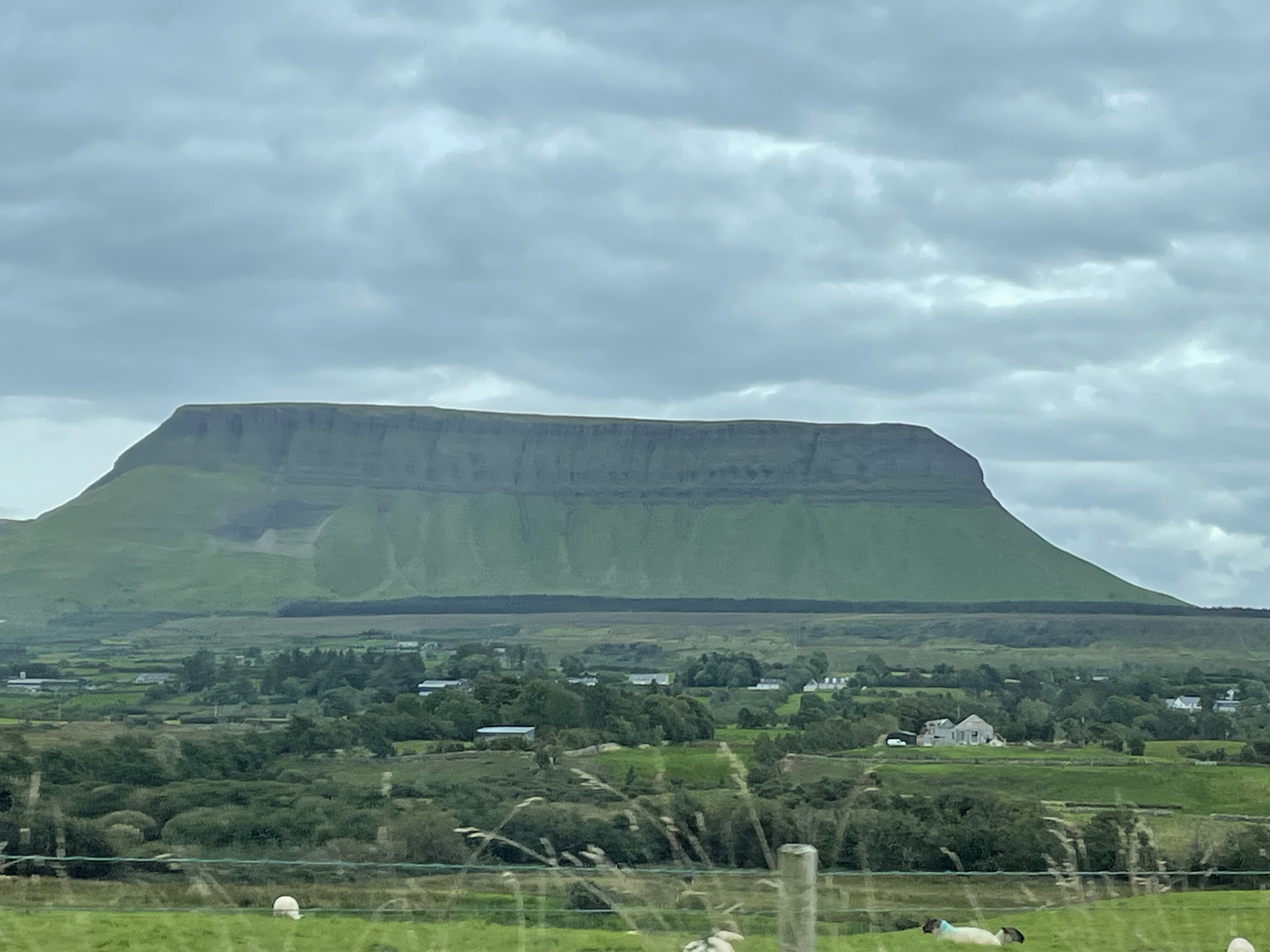
Benbulbin mountain is a large flat-topped mountain protected as a Geological Site. It is a favourite hiking spot for locals – a gentle climb on the south side but a hazardous climb on the north side caused by the impact of high winds and storms from the North Atlantic. We chose to see it from a distance as time did not permit hiking. The drive through to the Glencar waterfalls was a pleasant trip through peaceful countryside aided by the appearance of the sun.

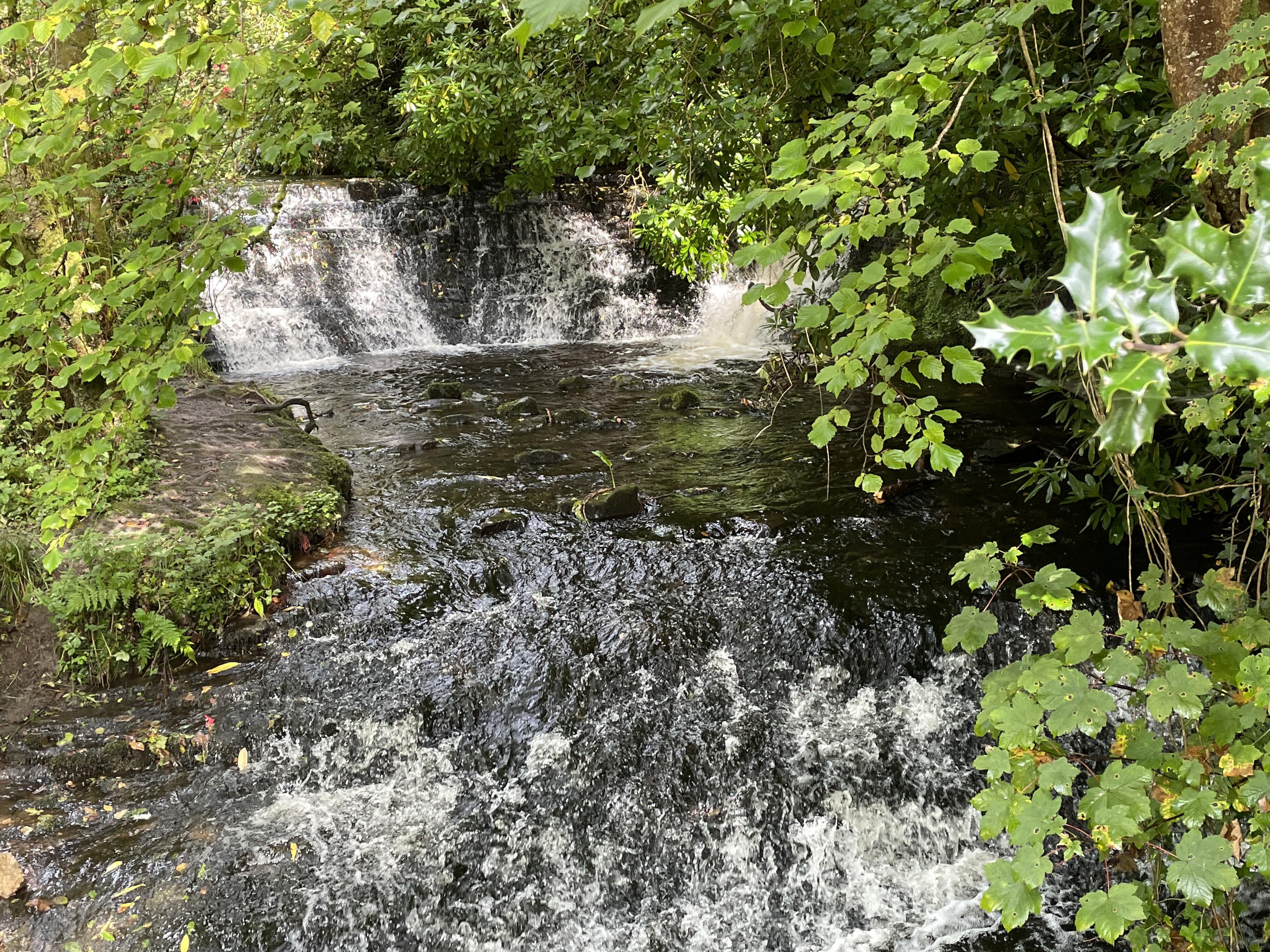
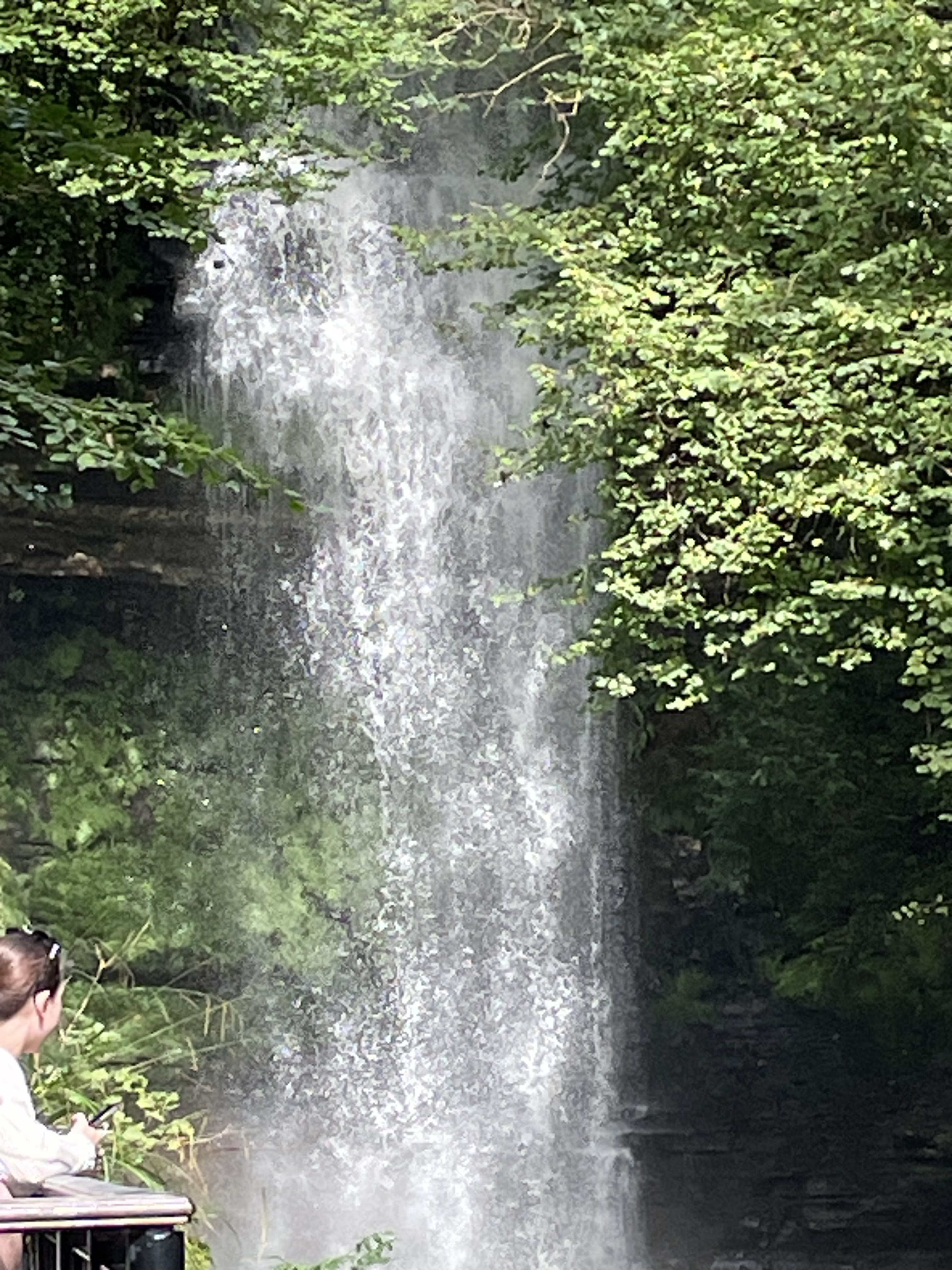
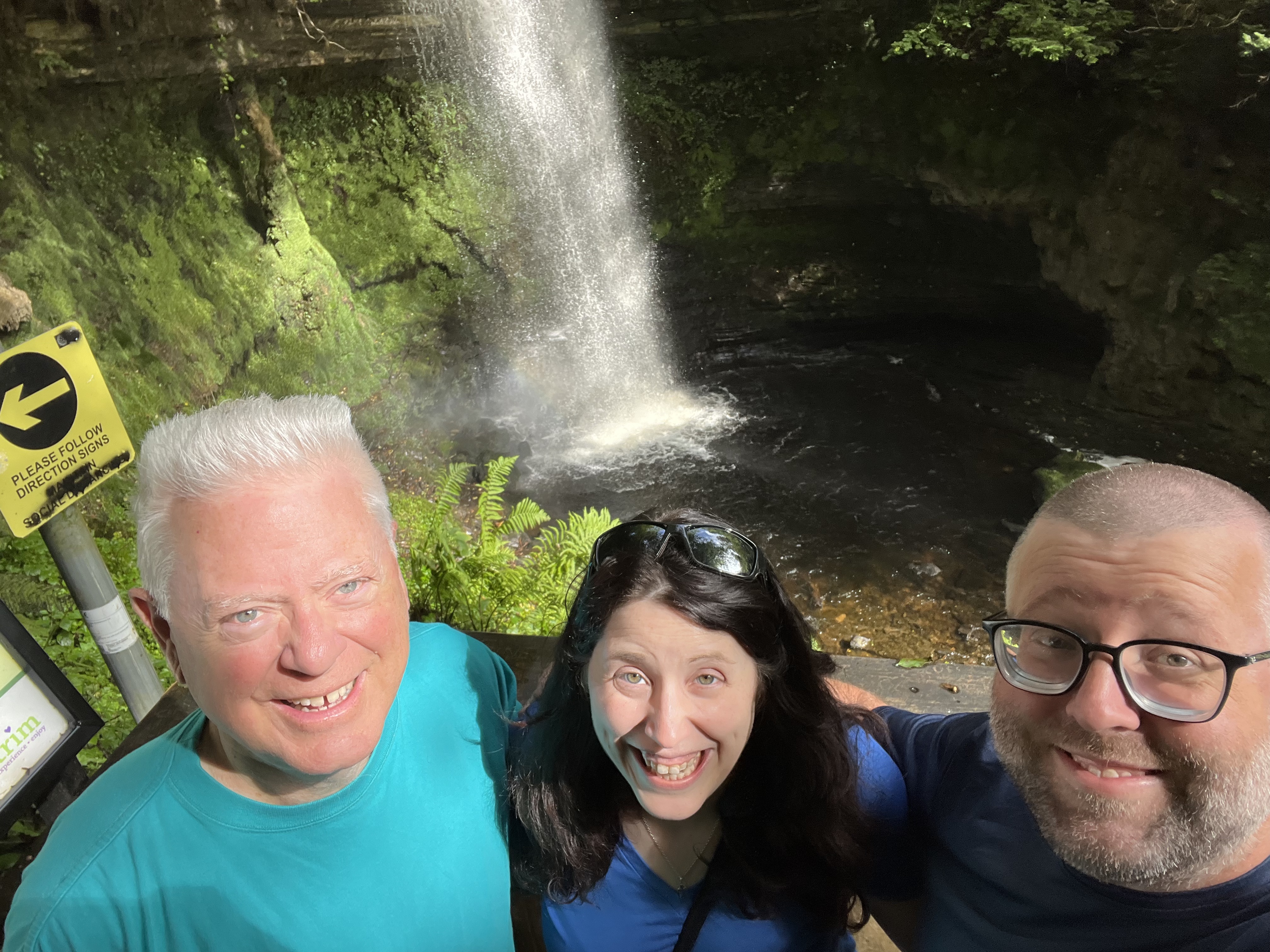
Hidden away within lush forest just north of the lough, Glencar Waterfall isn’t the biggest waterfall in Ireland but it’s undoubtedly one of its most picturesque. The green foliage, craggy rocks and cascading water all make for a gorgeous scene – basically, you can see why Yeats was so inspired!

We returned to Sligo in time for dinner, again at the Mill Bar. Afterwards we strolled through town, some of us in search of dessert and others in search of Irish music. Both groups returned to the hotel having found what they went in search of but also a little damp having experienced the famous unexpected Irish shower.

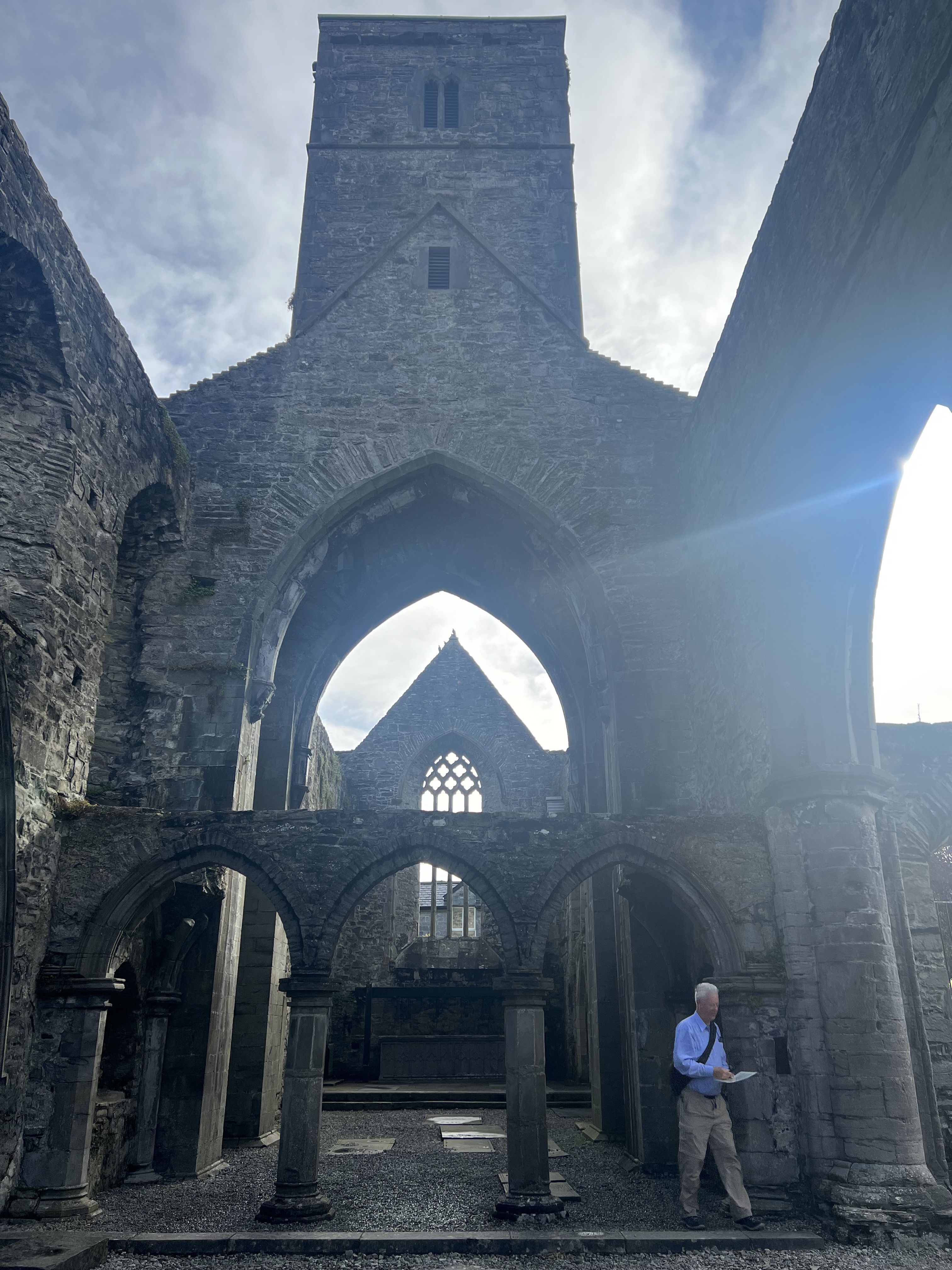
In the morning, I went off with George Jr to do laundry at an outdoor laundromat – definitely a new experience – but it worked. Dad and Jenn toured the Sligo Abbey, a Dominican convent founded in 1253. It was built in the Romanesque style with some later additions and alterations. Extensive ruins remain, mainly of the church and the cloister.

Galway – We left Sligo mid-morning and stopped at Cawley’s Guesthouse in Tubbercurry for lunch. A nice patio in the back provided for an al fresco dining experience. The food and service were both topnotch. Our stop for the next two nights was the Coach House Hotel in Oranmore. Service was very spotty and the rooms booked were not provided on check-in requiring a subsequent move. Parking is quite limited and we found it easier to just park in the town lot a short distance from the hotel. An on-site restaurant provides breakfast but doesn’t open until 8:30. After decamping we drove into Galway in search of dinner and a stroll around town. We chose a steakhouse called Rouge for dinner. Originally just open for dinner, Rouge pivoted during the pandemic to also offer a daytime menu of french pastries and coffees. In the evening there’s live music and a french vibe.
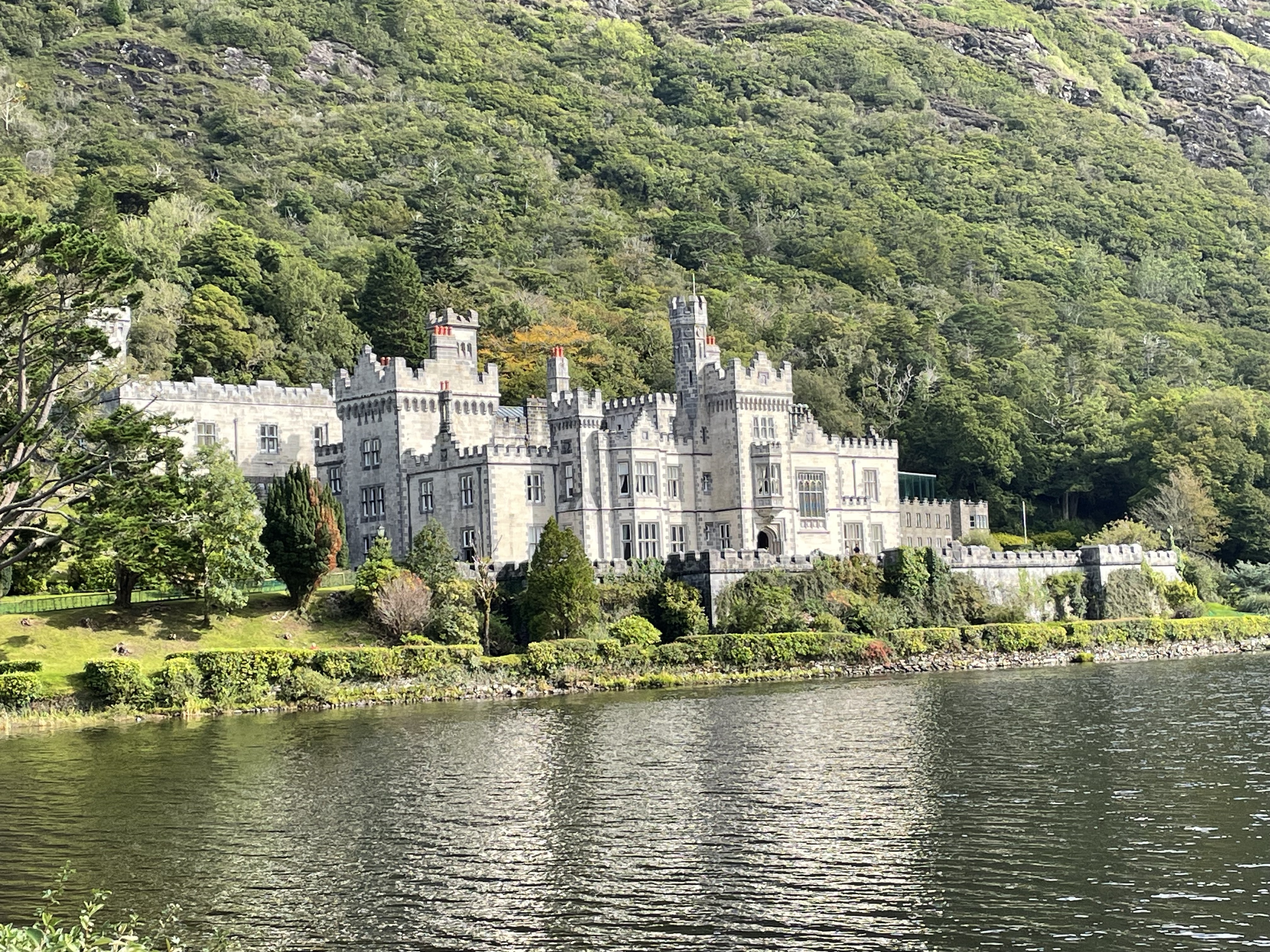
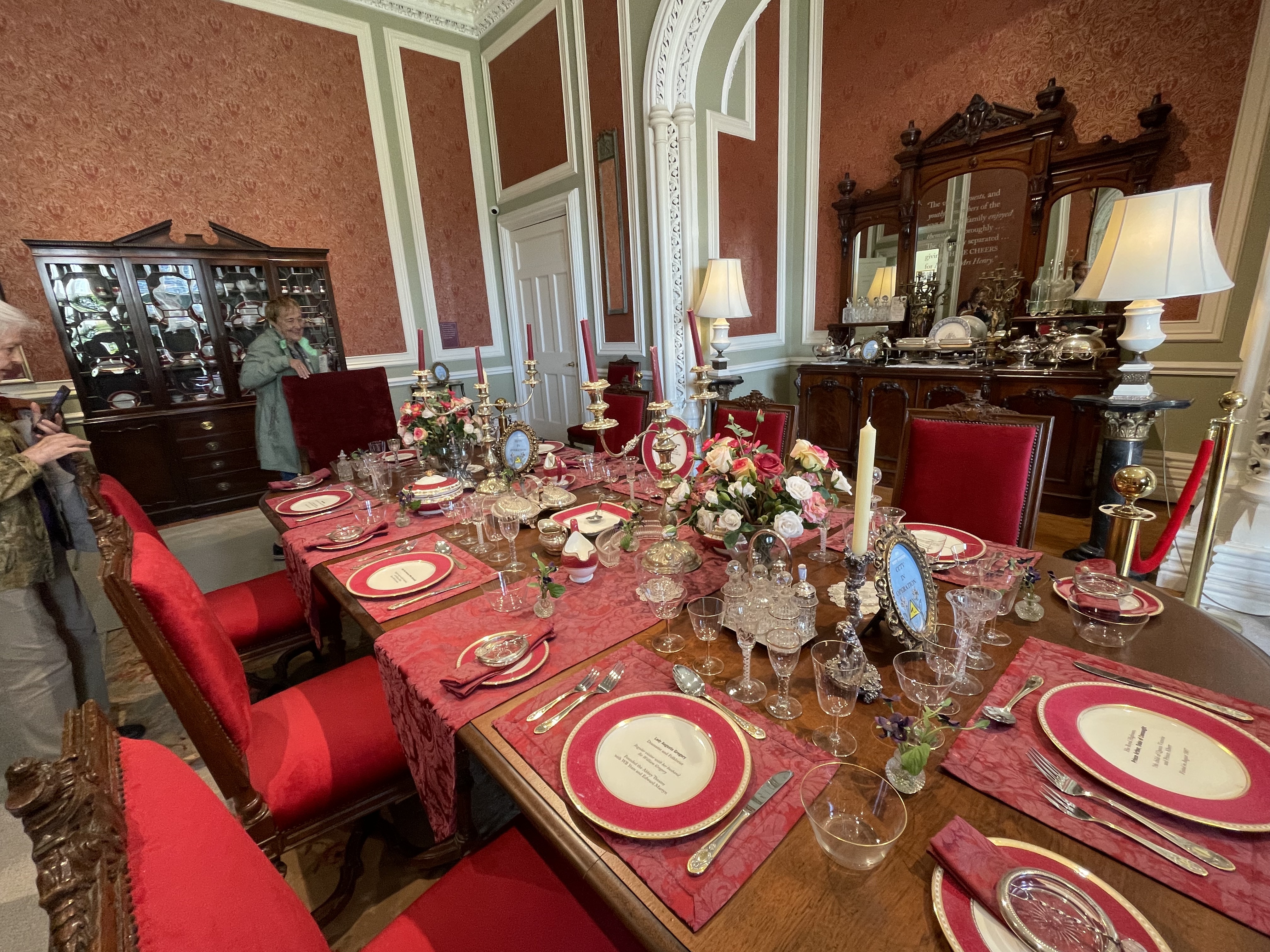
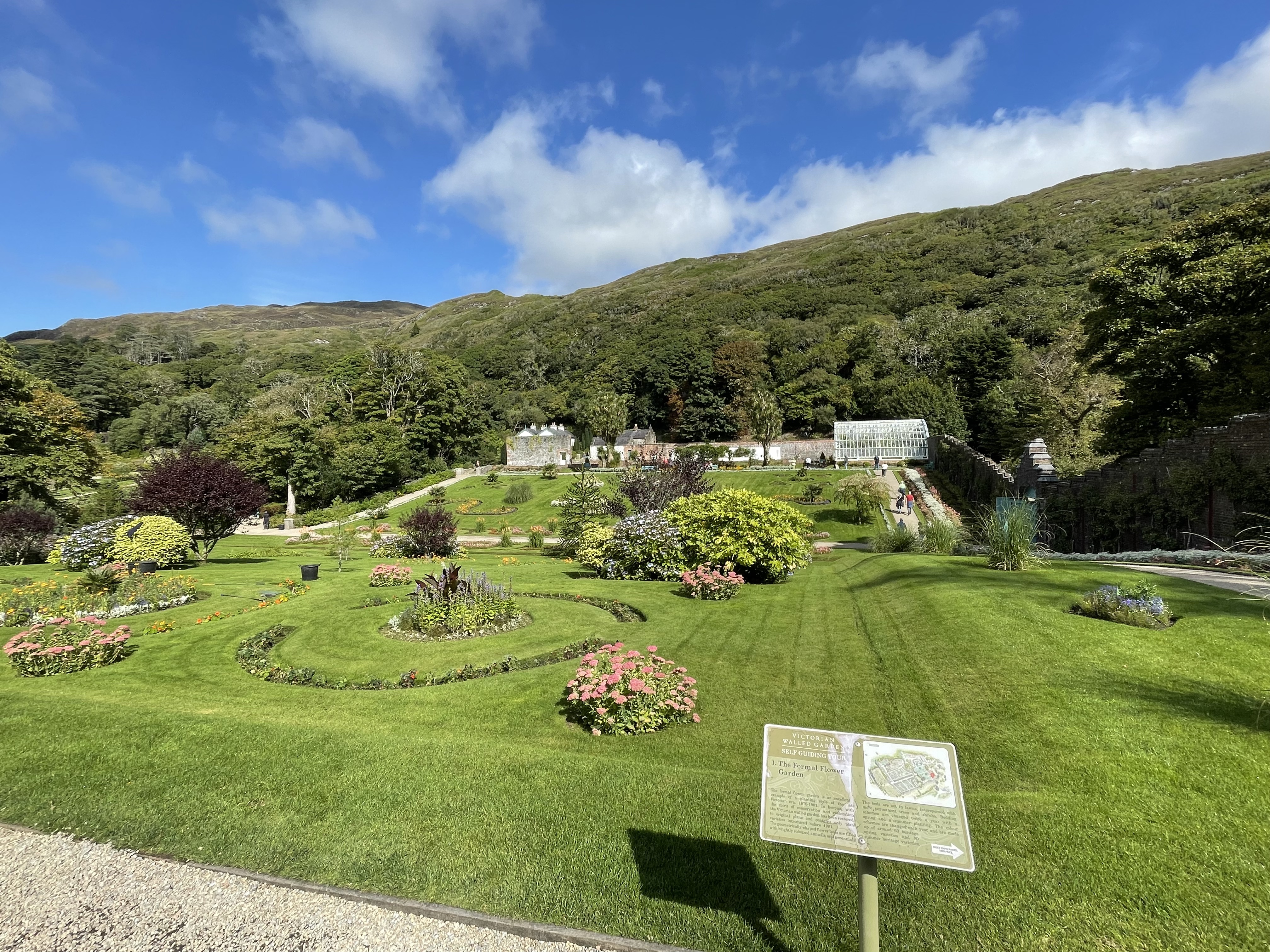
Saturday was a very busy, full day. We left early morning to visit mom’s favourite spot in Ireland – Kylemore Abbey. Kylemore Castle was built in 1868 as a private home for the family of Mitchell Henry, a wealthy doctor from London whose family was involved in textile manufacturing in Manchester, England. He moved to Ireland when he and his wife Margaret purchased the land around the Abbey, after having travelled there on their honeymoon in the mid-1840s. He became a politician, becoming an MP for County Galway from 1871 to 1885. The grounds include a Gothic chapel, family mausoleum, and a Victorian walled garden that is being returned to its original plan. The property was sold to the Duke and Duchess of Manchester in 1903. In 1920, the Castle became a Benedictine Monastery founded by nuns who fled Belgium during WWI. Although there are few nuns left living at the Abbey, the Kylemore Trust continues to operate the property, intentionally restoring portions of it to its original design, and has a unique partnership with Notre Dame University in the United States. Our visit was brief because we had to return to Galway by mid-afternoon, but everyone enjoyed the visit immensely.

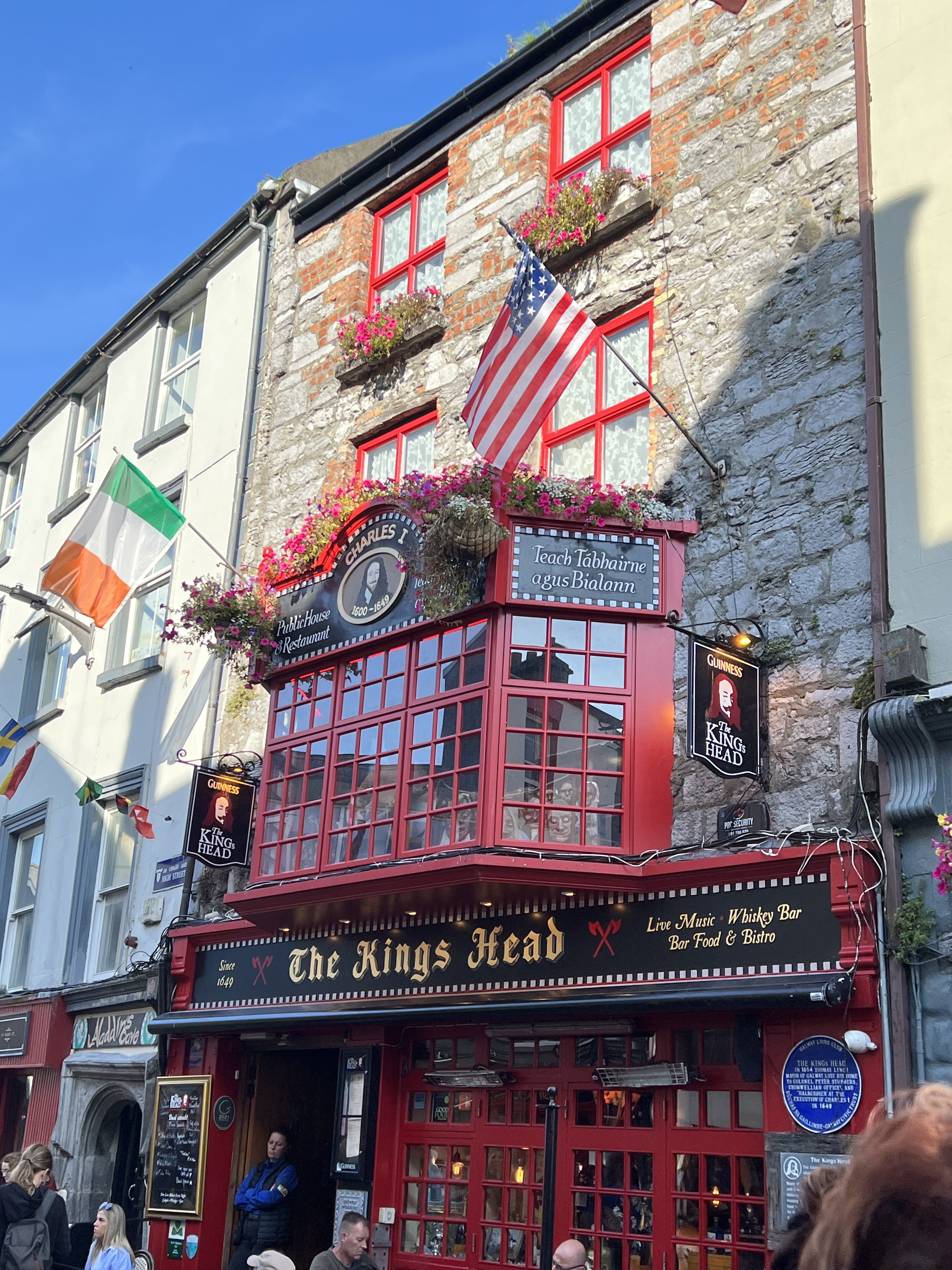
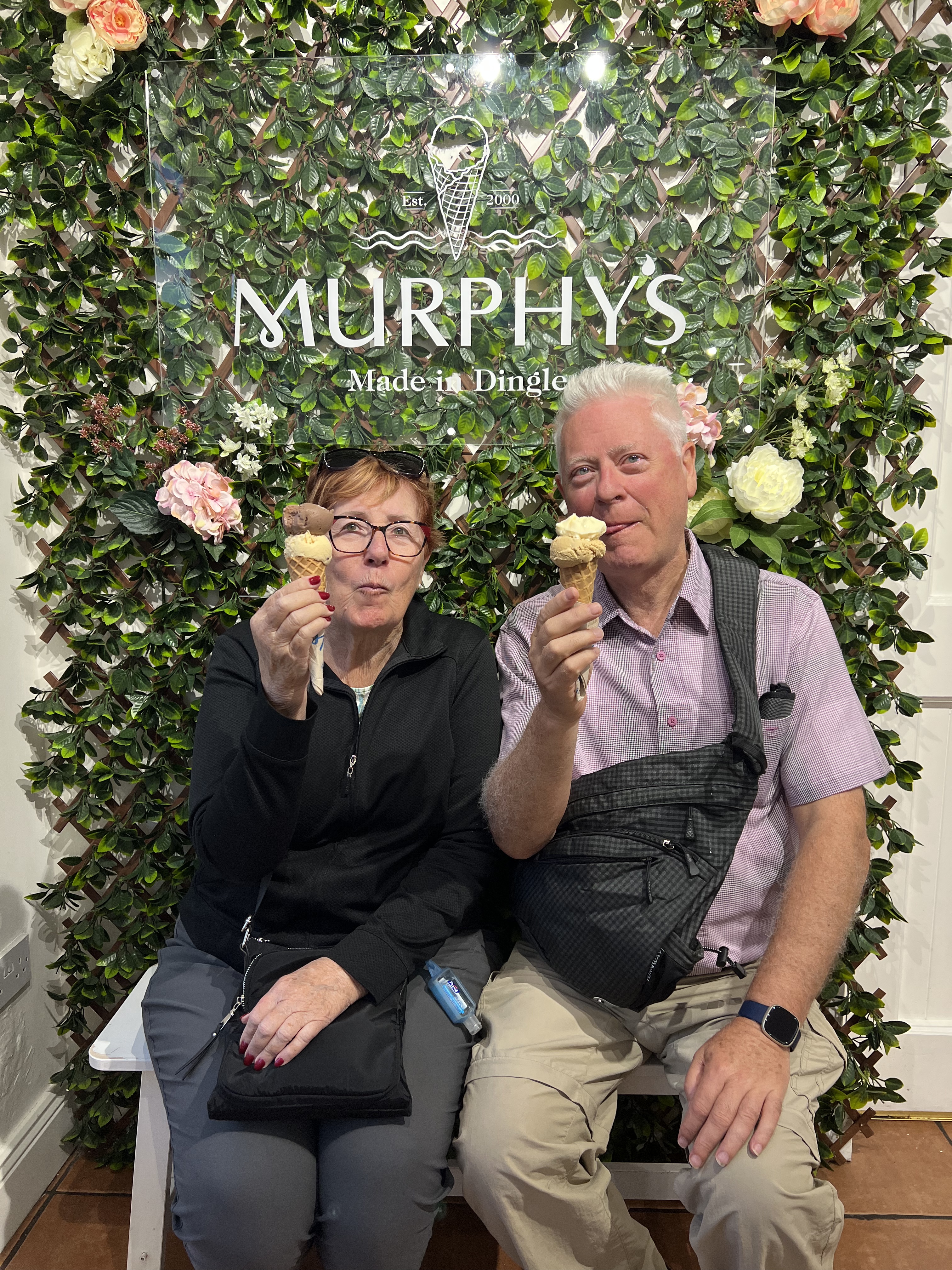
Back in Galway, Jenn and I did the Food Tour which had been recommended by one of her friends. Galway is becoming well known as the food capital of Ireland and our tour included stops with samples at many craft businesses, up-and-coming restaurants and well-known establishments. This tour is highly recommended but book early – it sells out quickly. Dad and George did a walking tour of Galway which covered the history and architectural features of the city. Dinner was at the King’s Head Pub, but Jenn and I could only watch. We were too full from our tour except to enjoy a Murphy’s Ice Cream on our way back to the car.

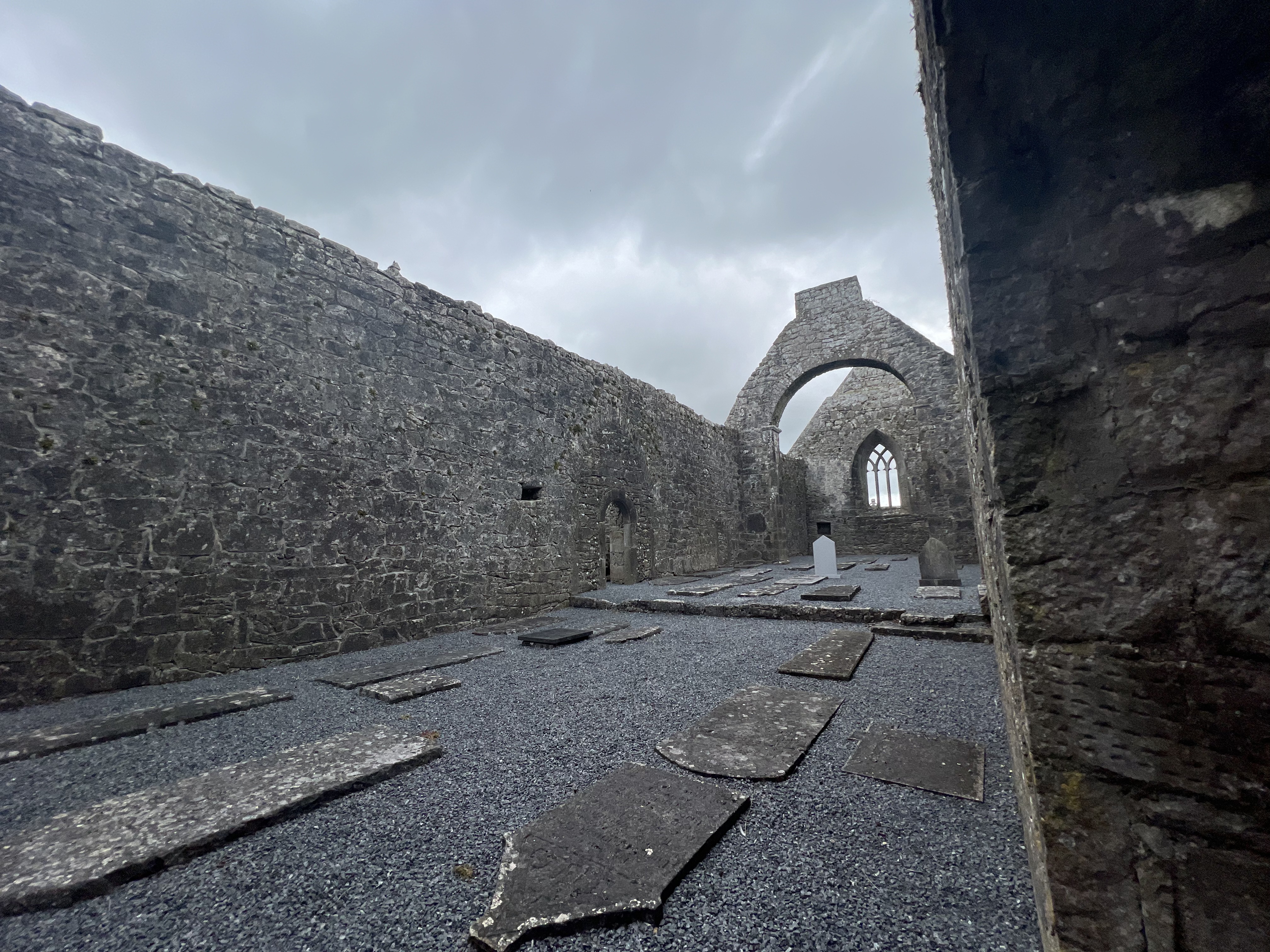
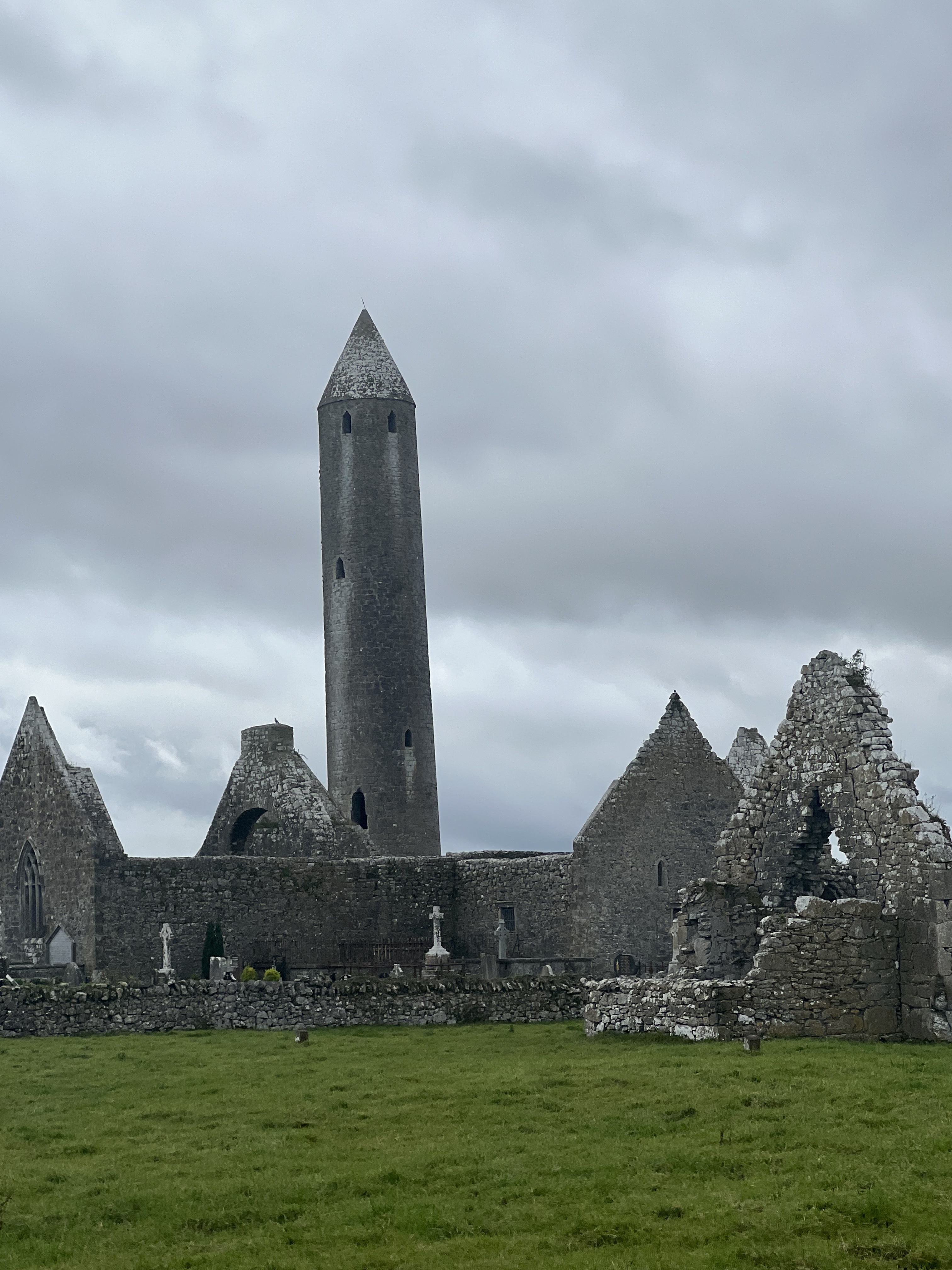
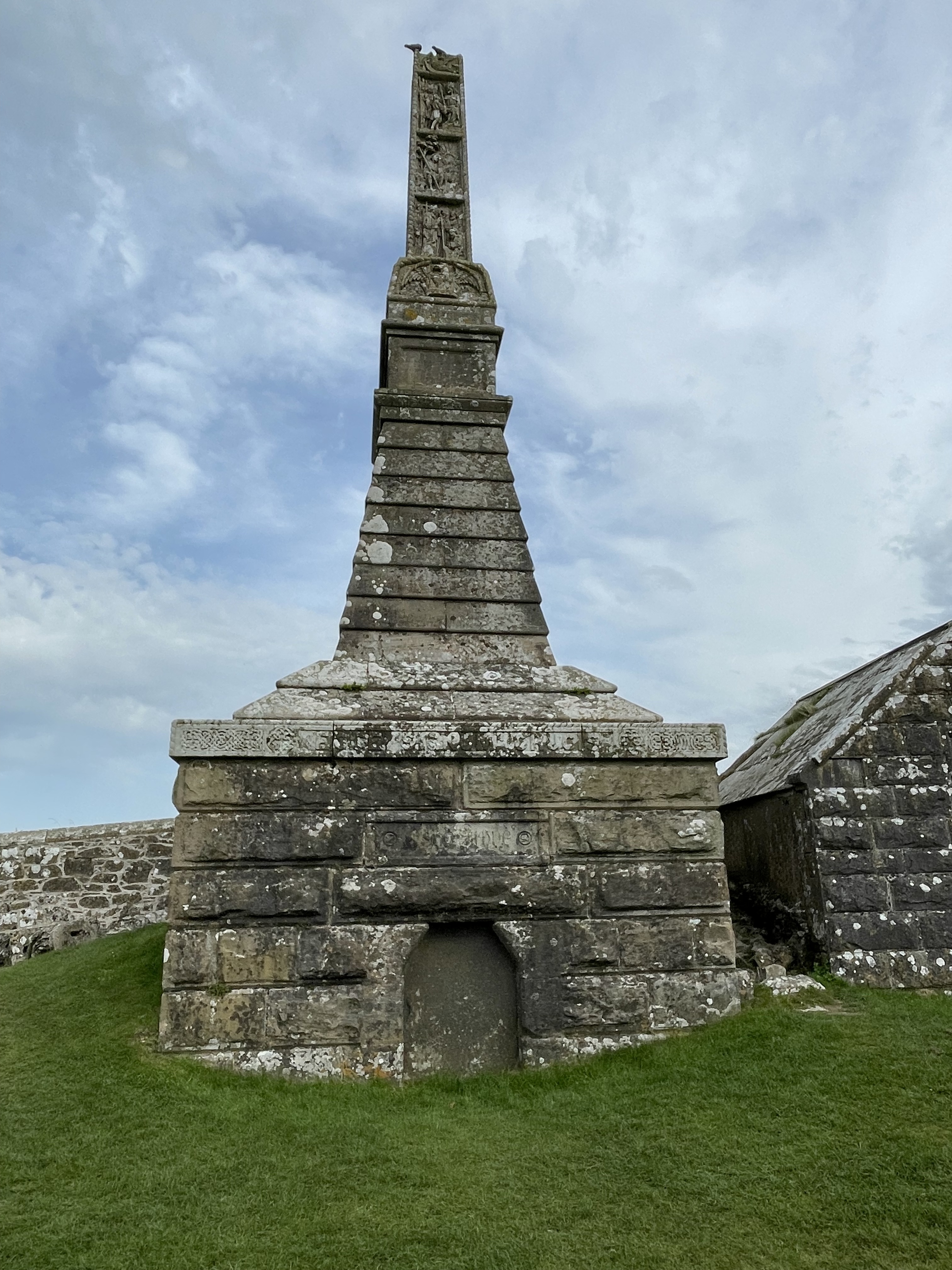
Killarney – Sunday was a long day as we headed for Killarney with a number of planned stops. First up was a trip out to Kilmacdaugh Abbey. The road was quite exciting with some of us wondering if our driver really knew where he was going! The site is thought to date back to the seventh century although the current buildings are not originals. It’s thought that the “leaning” tower dates back to the 10th century.

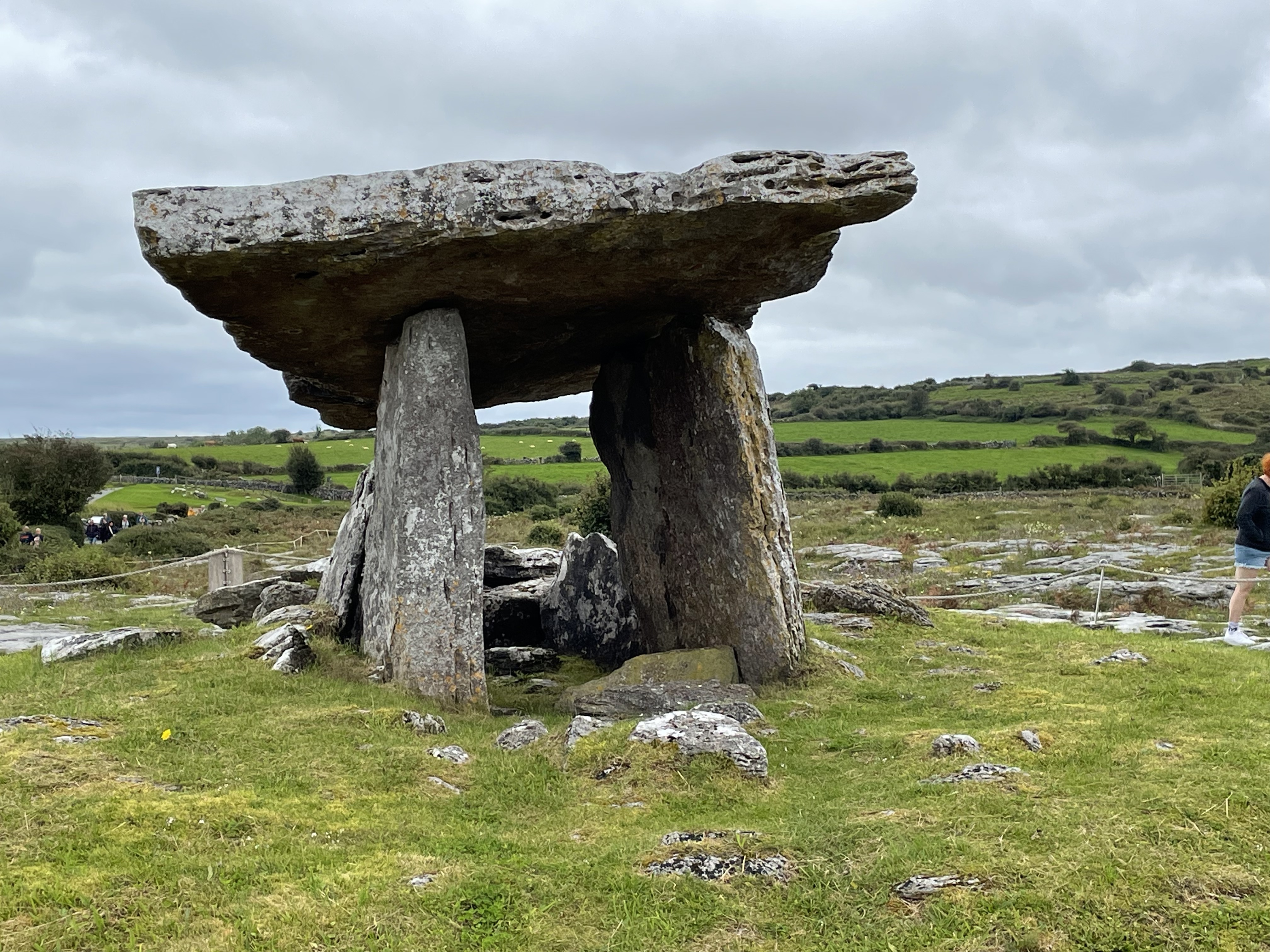
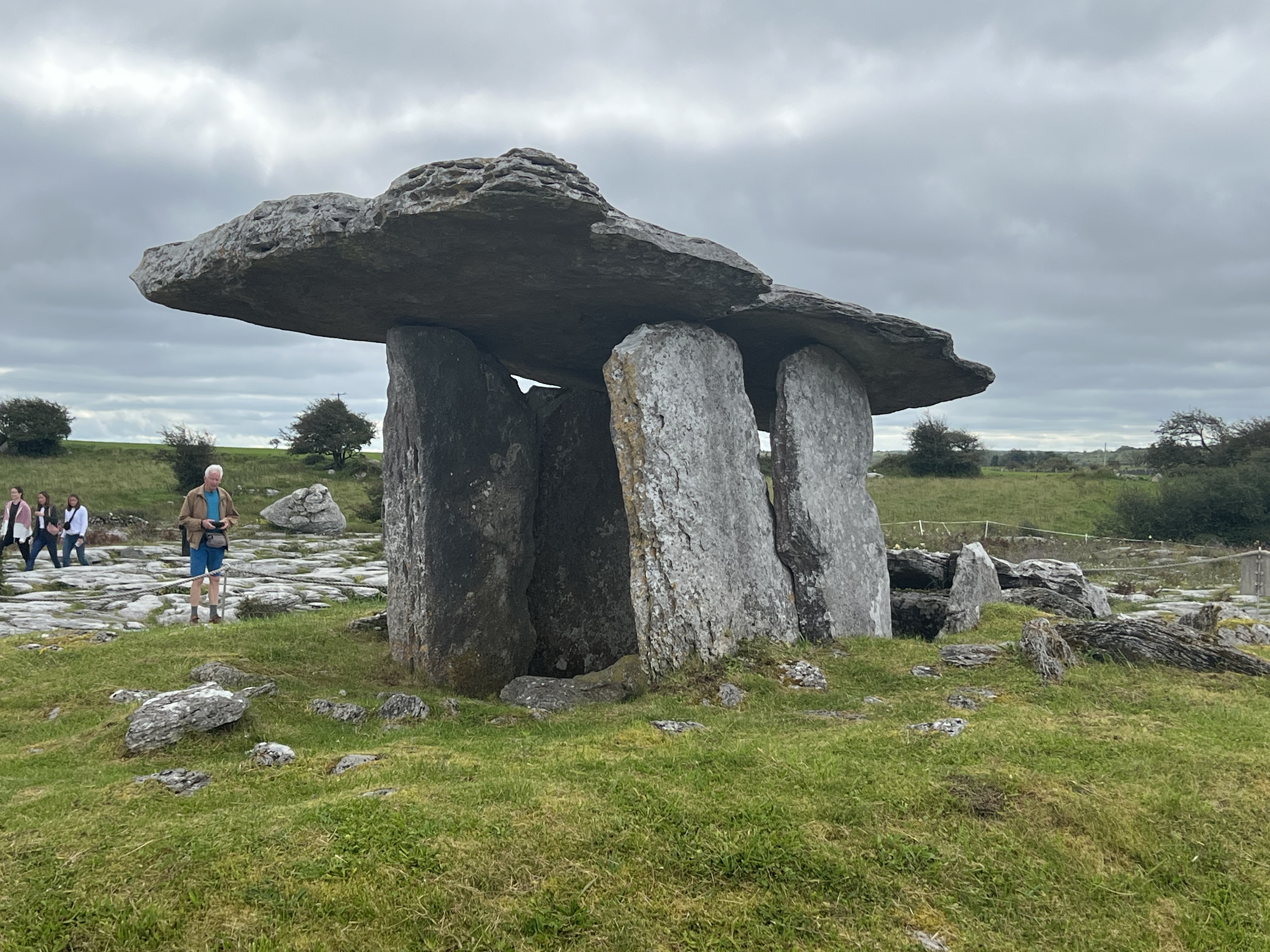
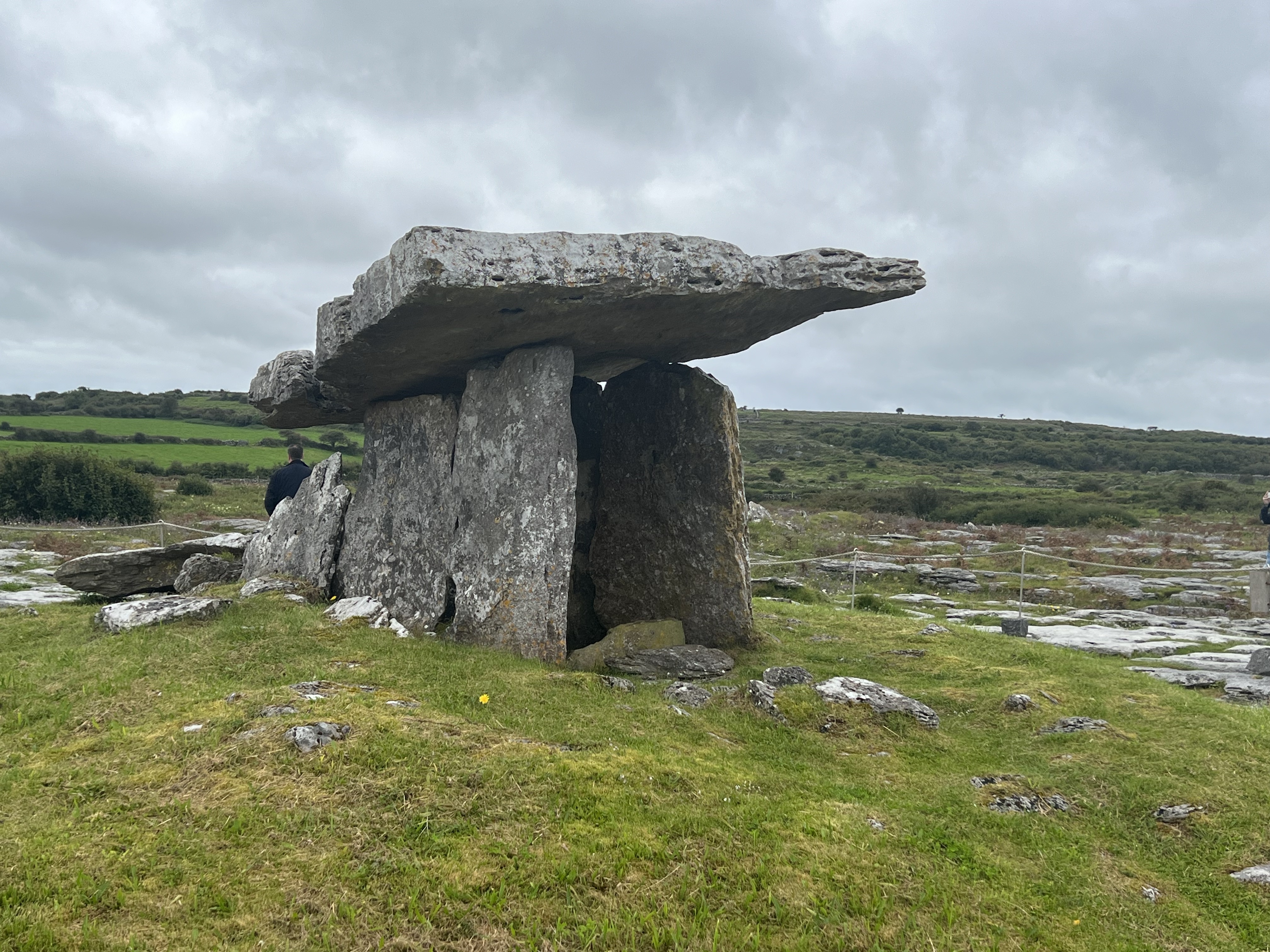
The next stop across the Burren was Poulnabrone Domen, a large single-chamber portal tomb. Situated in one of the most desolate and highest points in the area, it consists of three portal stones and a horizontal capstone. It’s thought to date back to the Neolithic Period, around 3800 and 3200 BC. When the site was excavated in the 1980s, the remains of 33 adults and children were uncovered including stone and bone objects buried with the dead. It was a very interesting stop, one that we might have missed if not for George Jr.

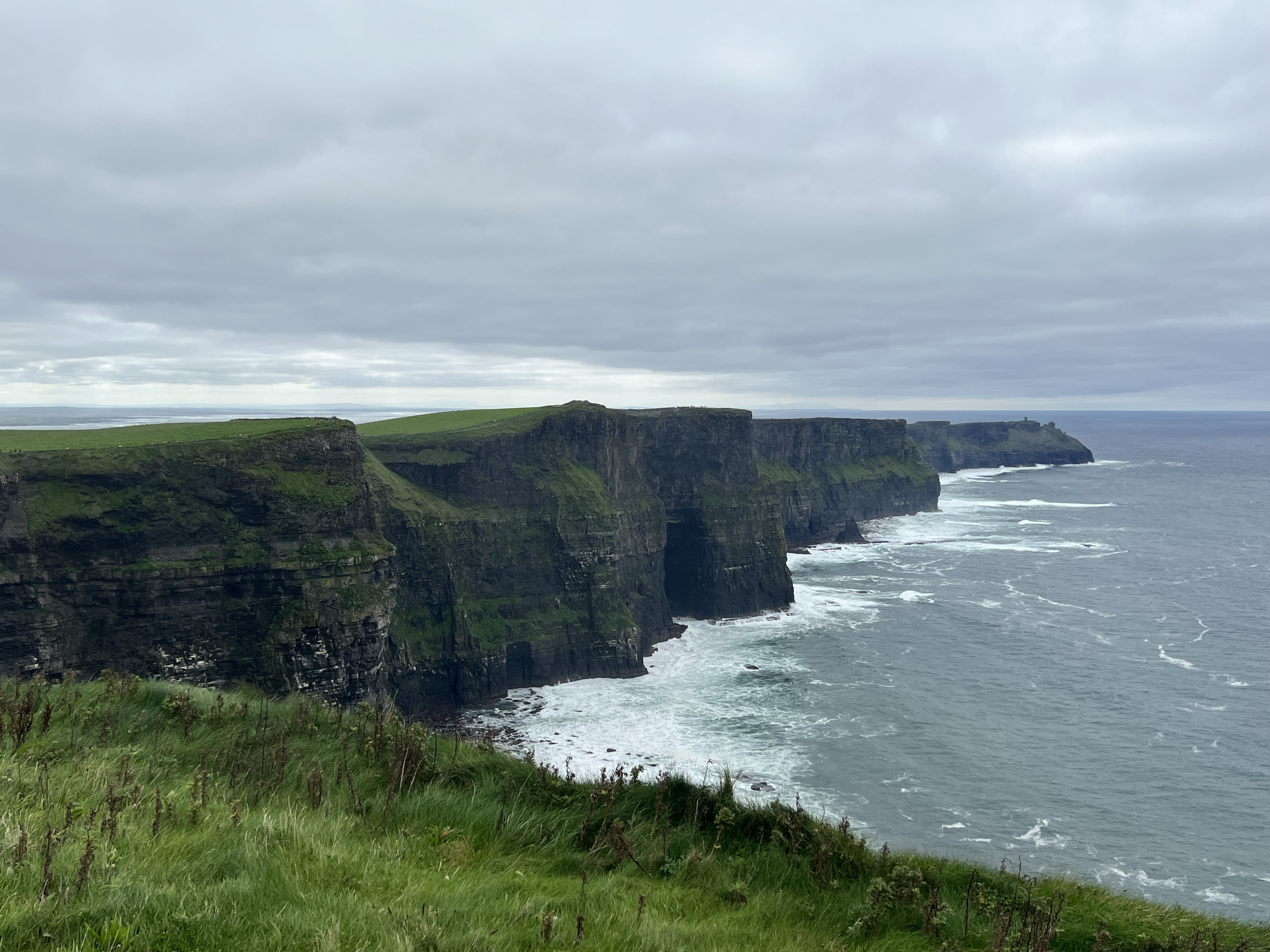
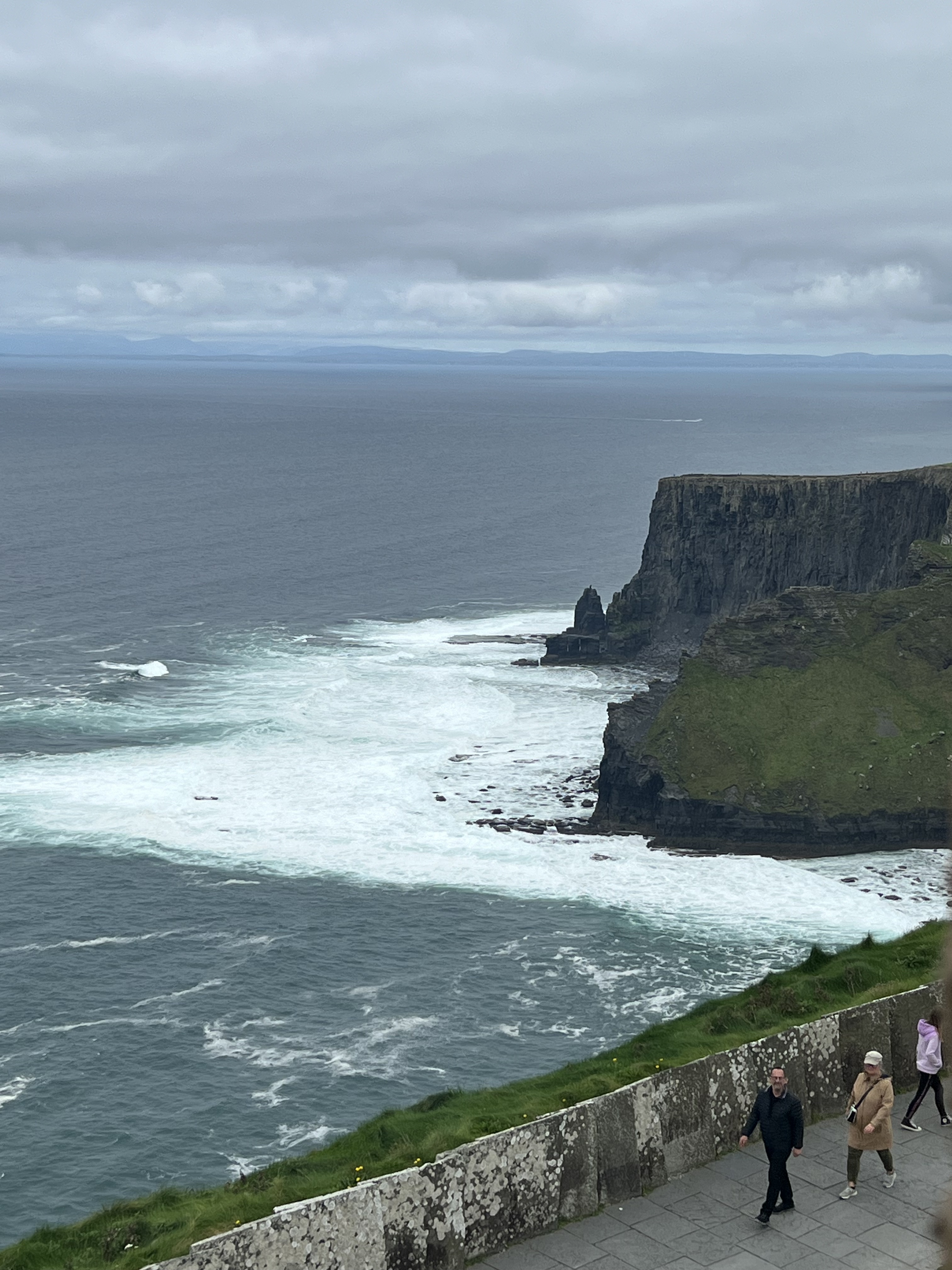
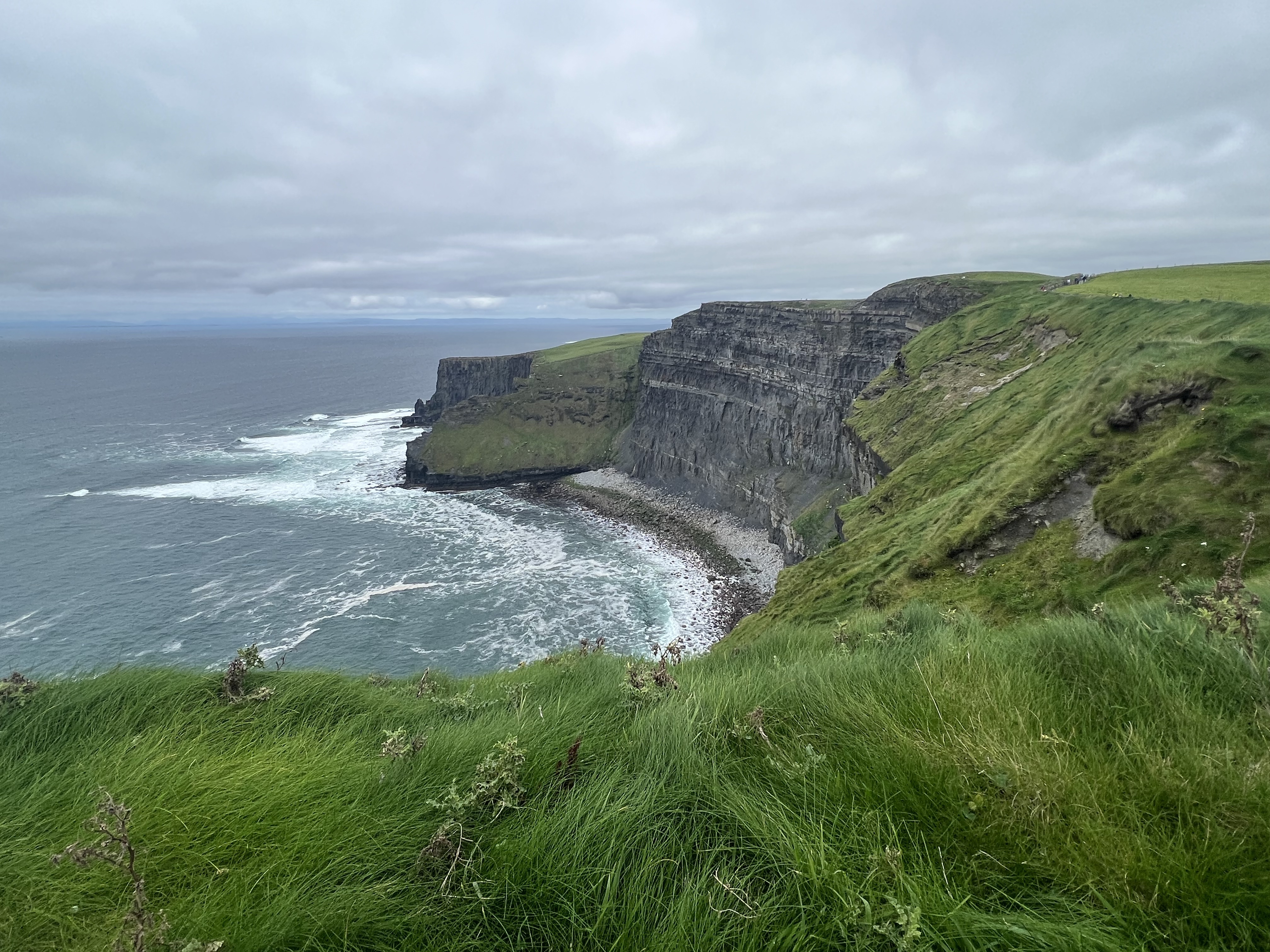
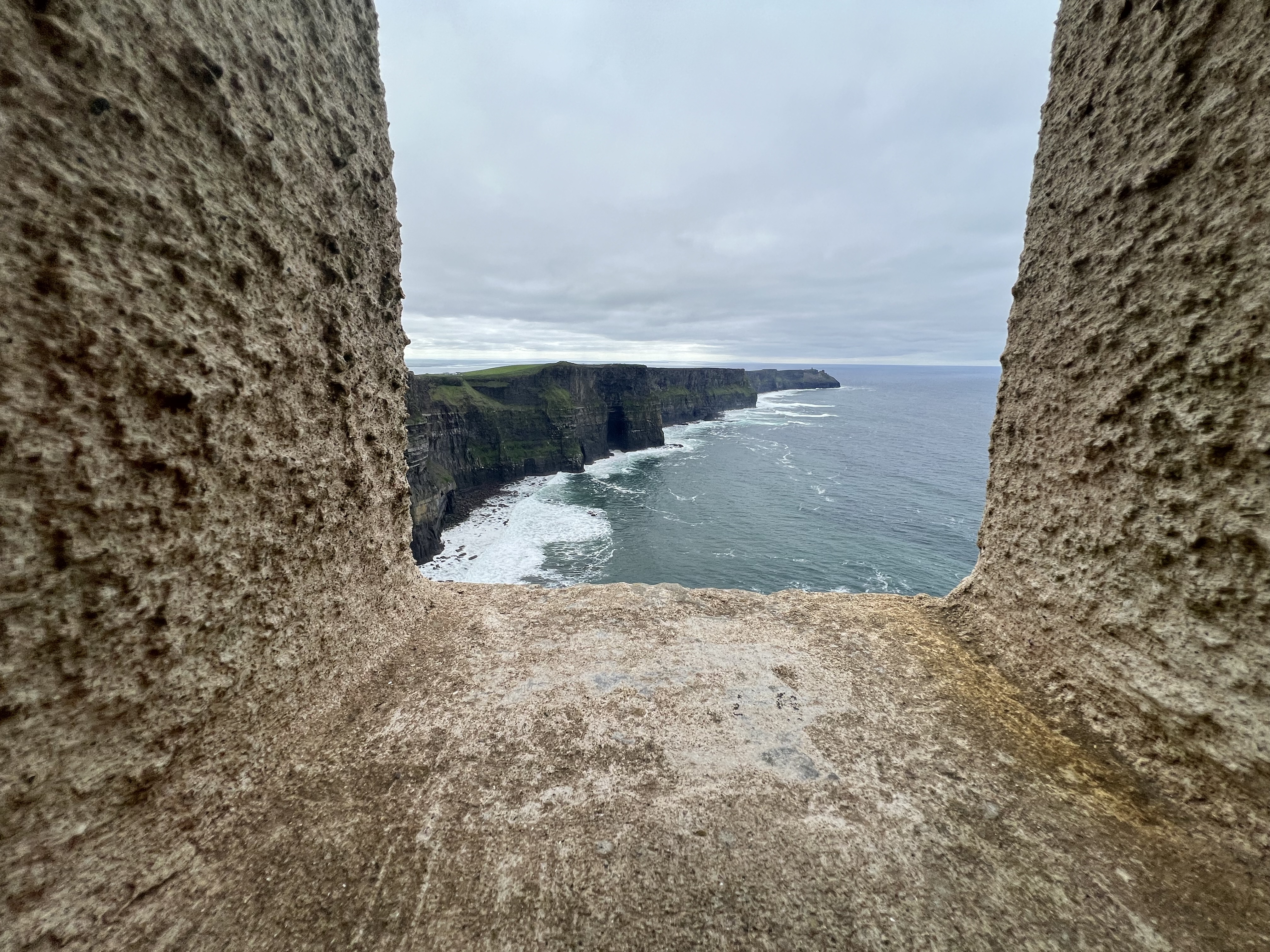
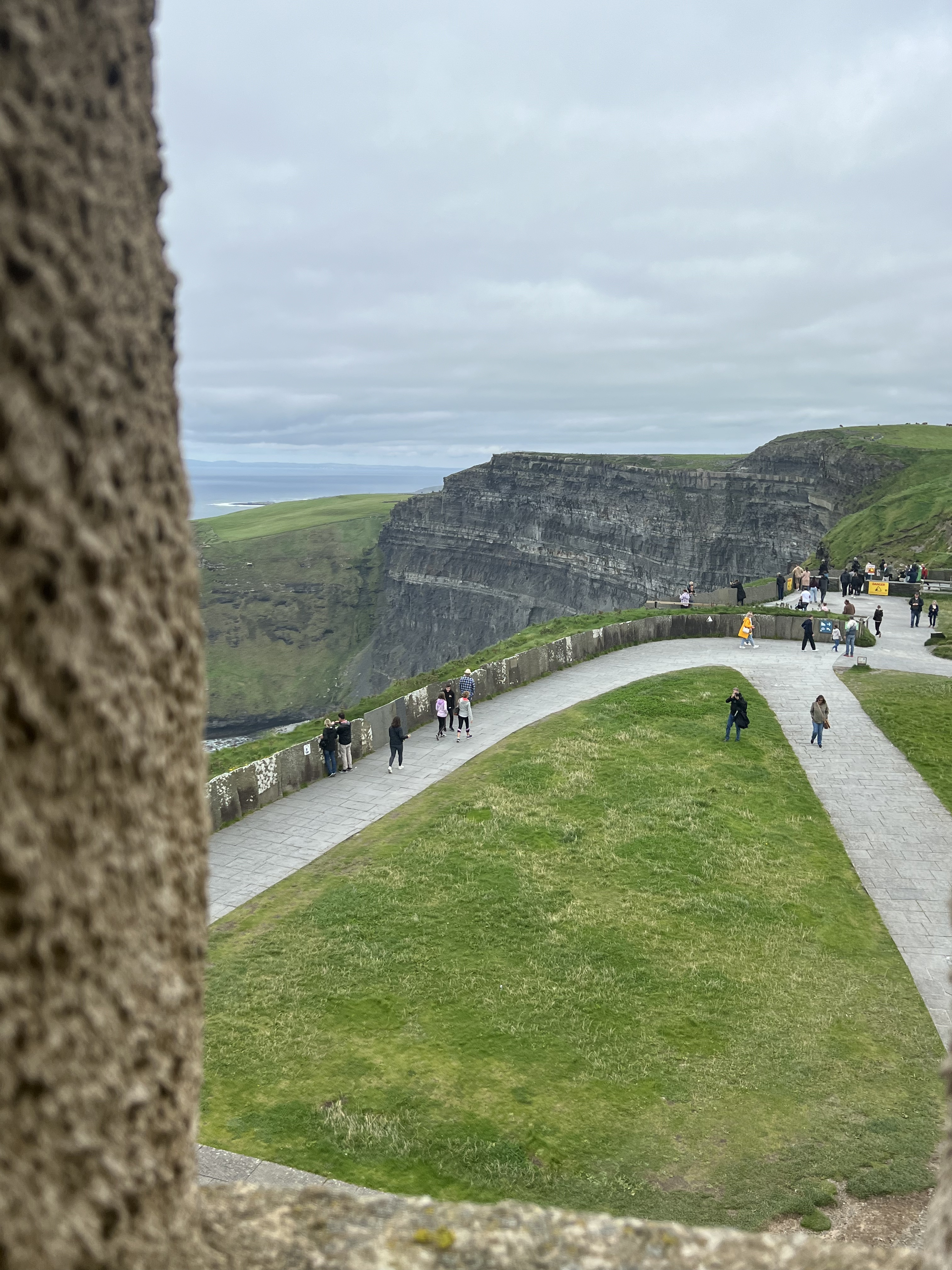
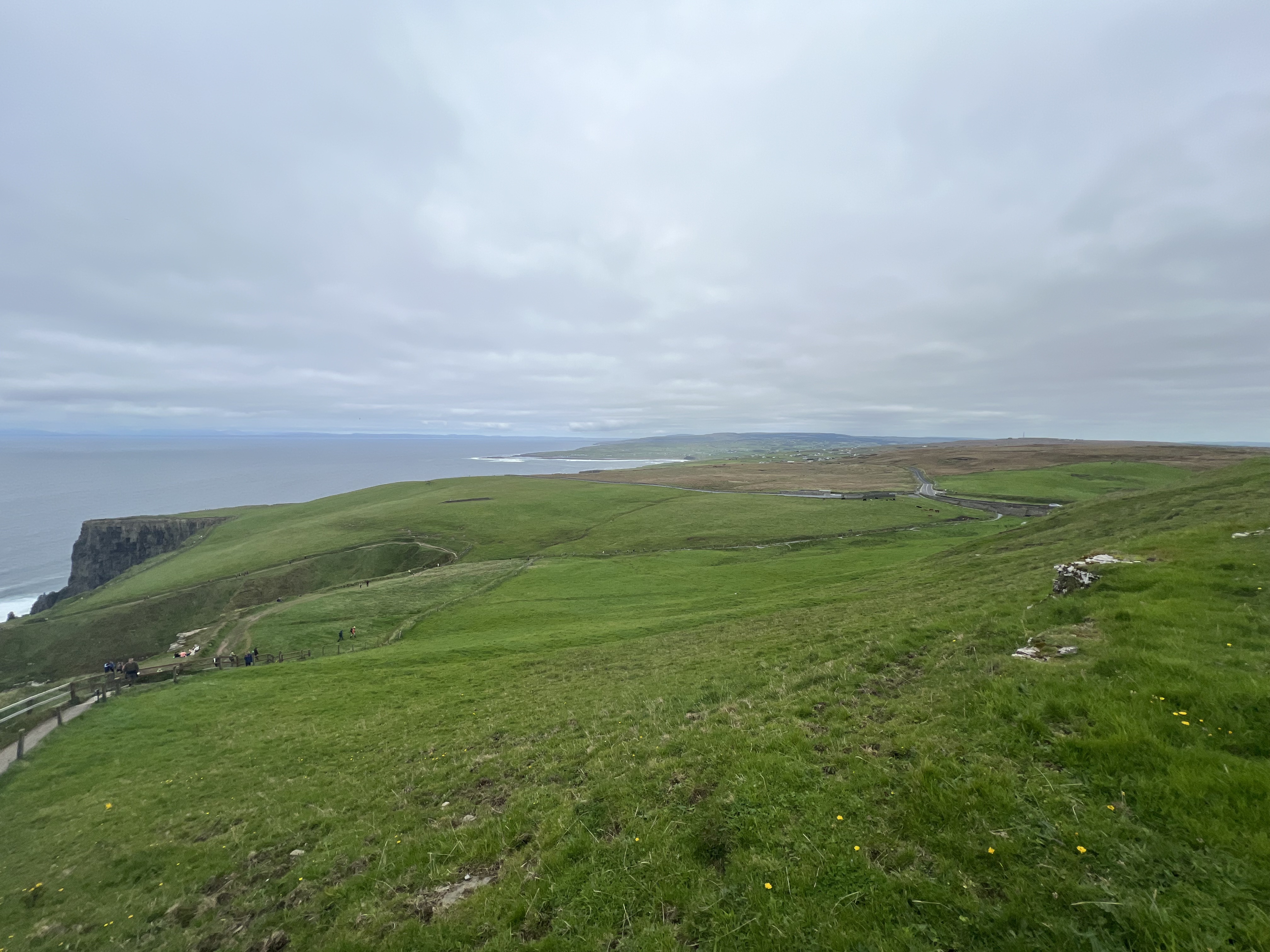
Then it was off across the Burren to The Cliffs of Moher. Probably Ireland’s most visited tourist spot, the cliffs run for about 14 km along the Atlantic Ocean with spectacular views from 120 – 214 meters above the ocean. While Dad and I had visited the site twice before it was interesting to note the changes since our last visit, including a large car park across the road. After a quick lunch in one of the two cafes on the site, we parted company and each did our own thing. Some walked out to the point while others climbed O’Brien’s Tower and visited the interpretive centre (built into the side of the hill). After a quick stop for gas, we chugged on to Killarney and our accommodation at Ashbrook B&B.

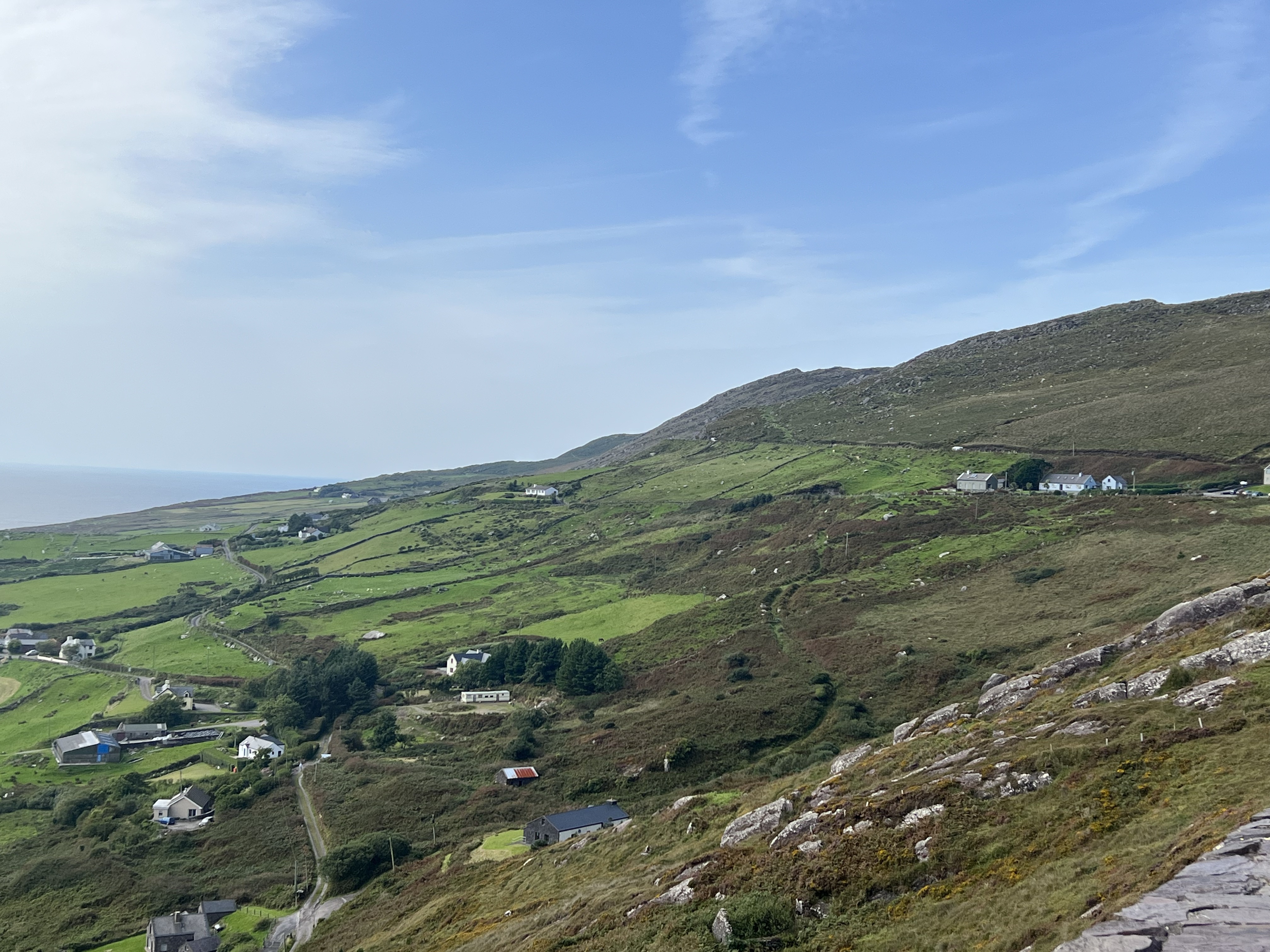
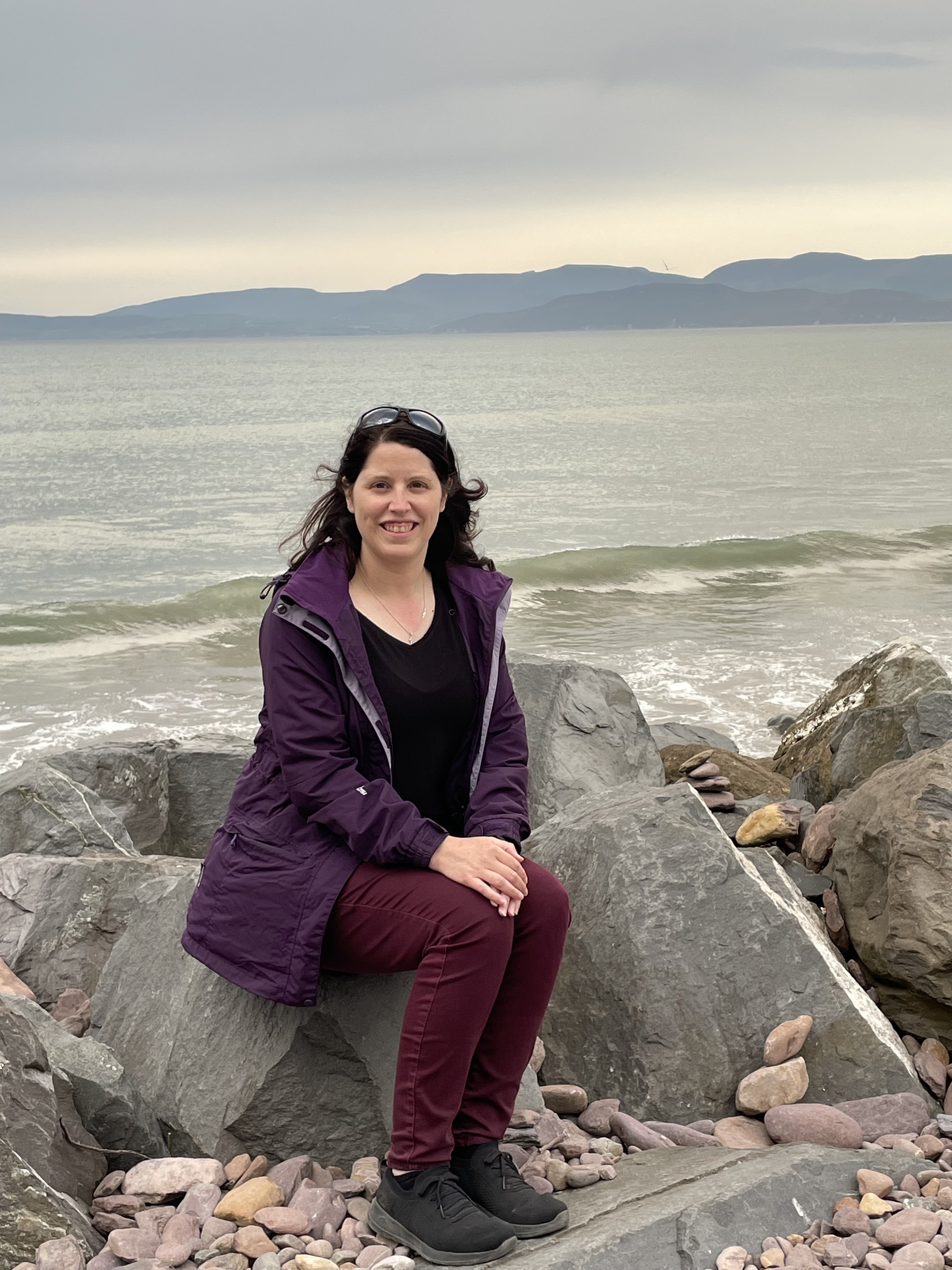
Monday was our day to do the Ring of Kerry. A circular tourist route that covers 179 km, it takes about 10 hours with stops to enjoy the views and experience some of the major attractions. The road has been vastly improved since we first drove it in 2005, and we didn’t experience any problems with buses or lorries on the curves. We followed a guide that I had downloaded from the internet by The Irish Road Trip.

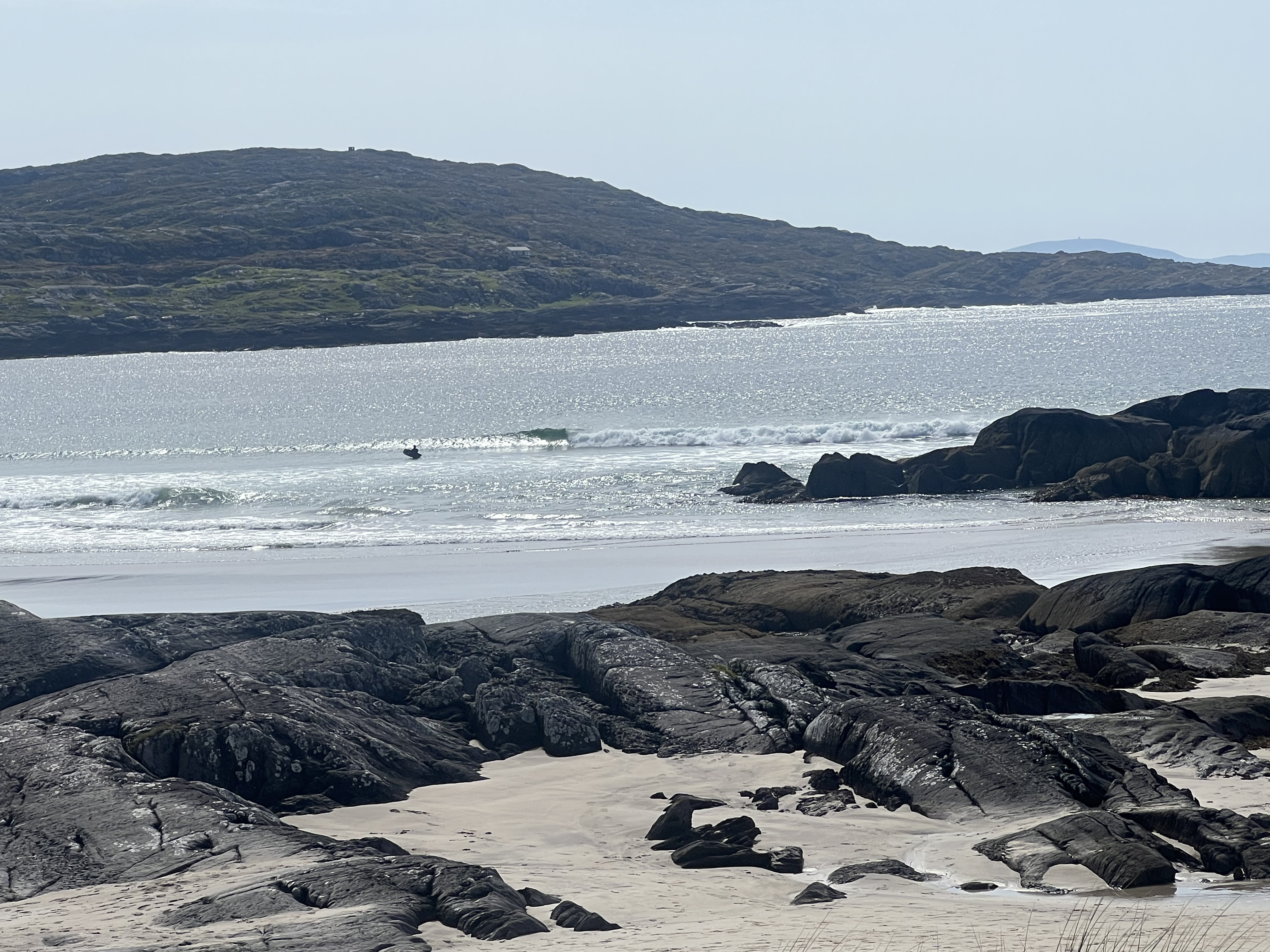
Our first stop was Ladies View and Moll’s Gap – a good spot for a snack but not a particularly super view this particular day. A slow drive (lots of traffic!) through Kenmare gave us a good look at this cute little town with picture-postcard colorful shops and pubs. Then it was on to Derrymane House and Beach. The beautiful white sand and warm sun was an attraction for adventurous bathers. By this time the sun was out and it had begun to warm up. Some of our group made it down to the beach. We decided to stop in Waterville for lunch. Some chose a pizza place while others of us enjoyed sitting in the sun at the little bakery cafe on the main street.

Derrymane House
Derrymane Beach
Strange visitors to Waterville
Skellig Michael
Lighthouse
Kerry Cliffs
Rossbeigh Beach

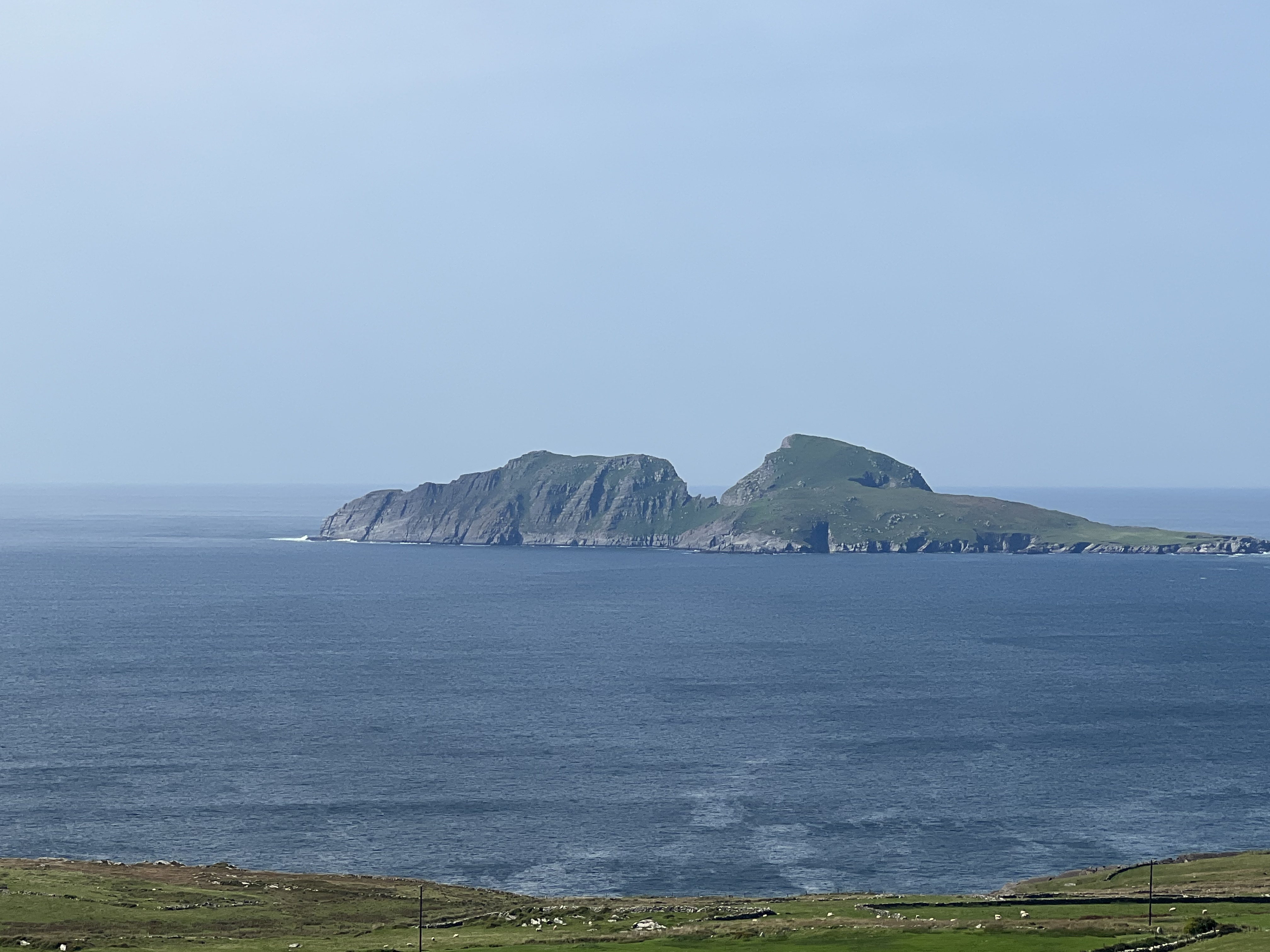
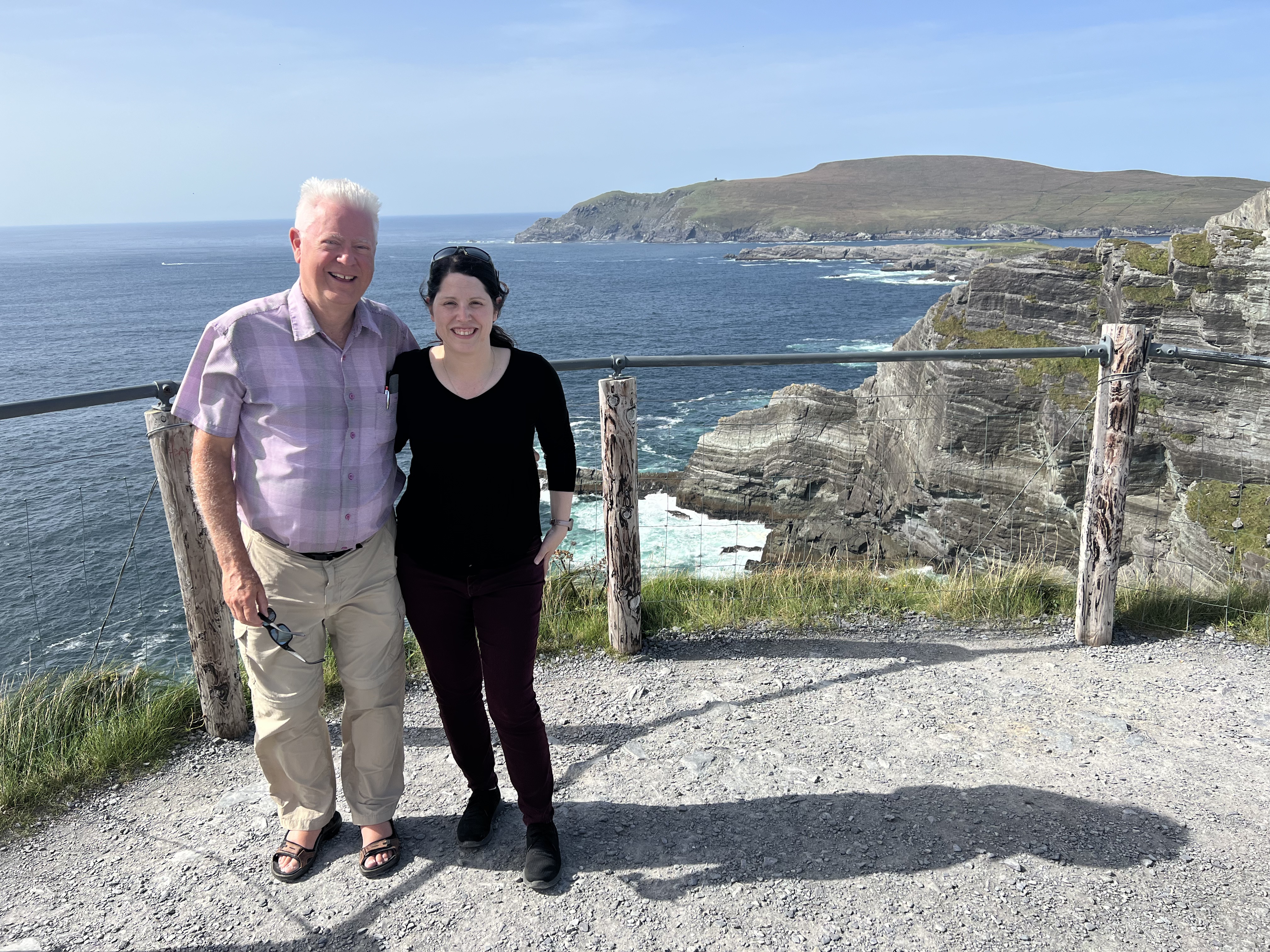
Our driver took us on a diversion from the main route to the Skellig Ring, with its rocky crags, quirkier attractions and UNESCO World Heritage site. Skellig Michael is a rock about 11km from Portmagee and was the site of a Jedi sanctuary in the latest Star Wars movie. Unfortunately, we didn’t arrive early enough or dressed warmly enough to take a boat tour out to the rock, to the disappointment of some in our group. Just across the causeway, at Portmagee, to Valencia Island is The Skellig Experience, a museum which is an excellent interpretive centre for the area. We spent about 30 minutes there. Other places we visited on the island were the lighthouse, the Grotto Slate Quarry (although we weren’t really welcome to be there and quickly turned around), the museum (closed unfortunately) that marked the terminus of the first transatlantic telegraph cable, and a walking path up to Kerry Cliffs at Foilnageragh (llamas included). The roads on the island are quite narrow, with lots of bends and hills. Our driver did an excellent job.

Then it was back to the main road and heading for home. We stopped at Rossbeigh Beach for a pit stop and since it was past dinner time, some of us bought food at the beach cafe to eat in the car. Our driver chose to wait for the Golden Arches back in town.

One day does not do justice to the Ring of Kerry. There is just so much to see and do in this area. I guess that’s why many folk stay for much longer than our itinerary allowed.

Kilkea – We don’t know of anyone who would have Kilkea on their itinerary, but it was on ours because mom had always wanted to stay at a castle and there is a great one in Kilkea. We planned two stops on the way from Killarney to Kilkea. The first at Blarney Castle and the second at Rock of Cashel – both well-known tourist stops.

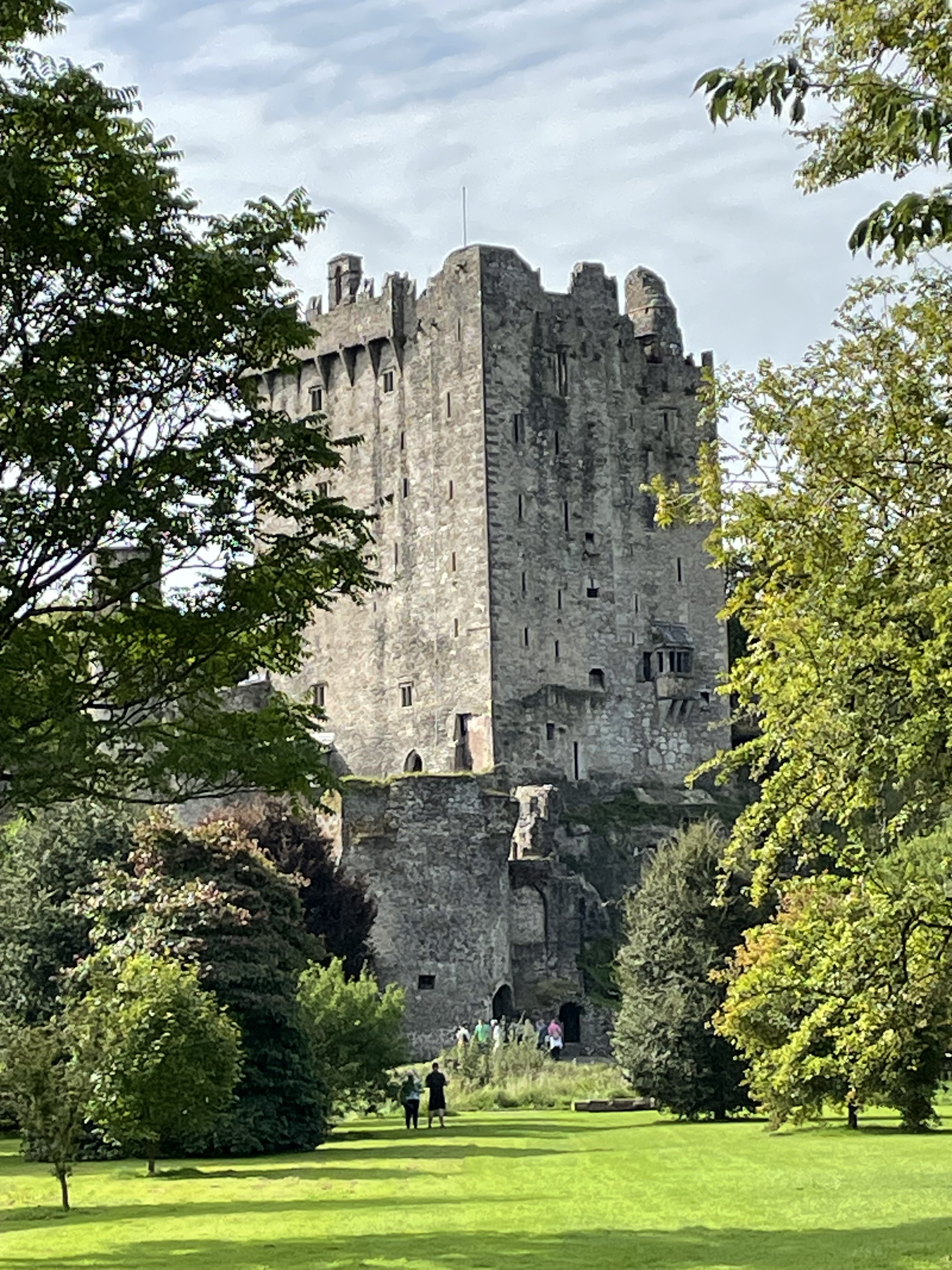
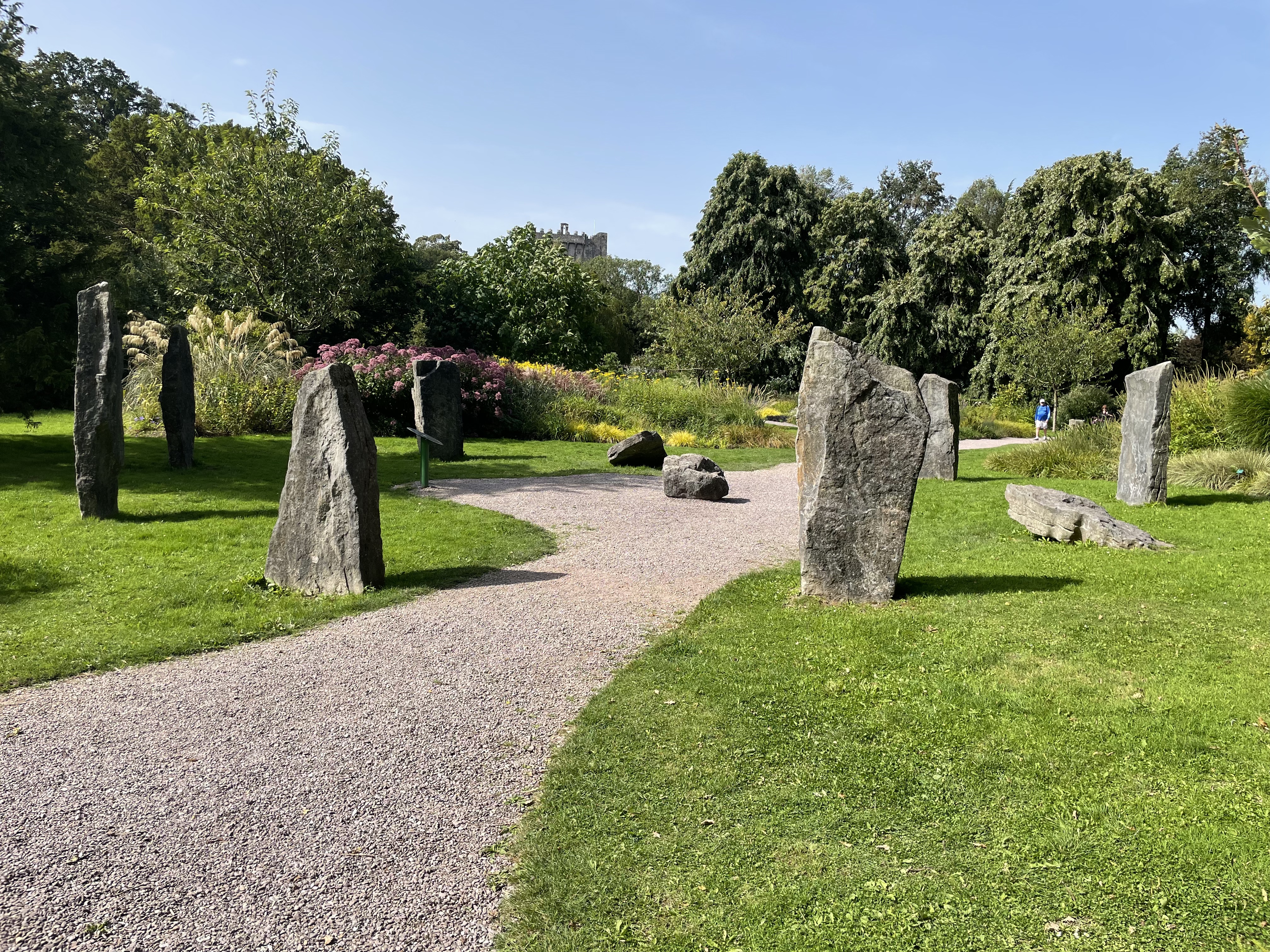
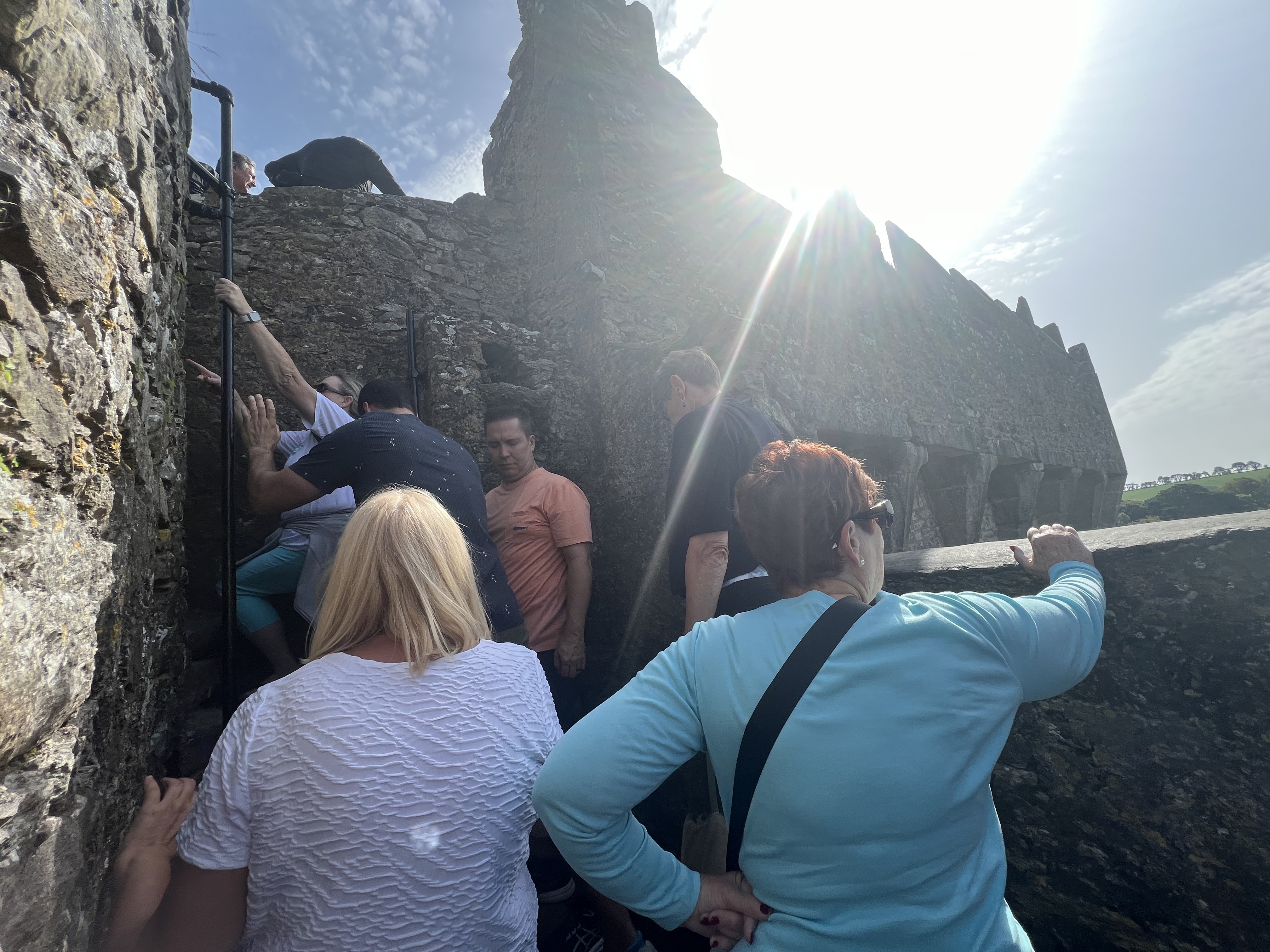
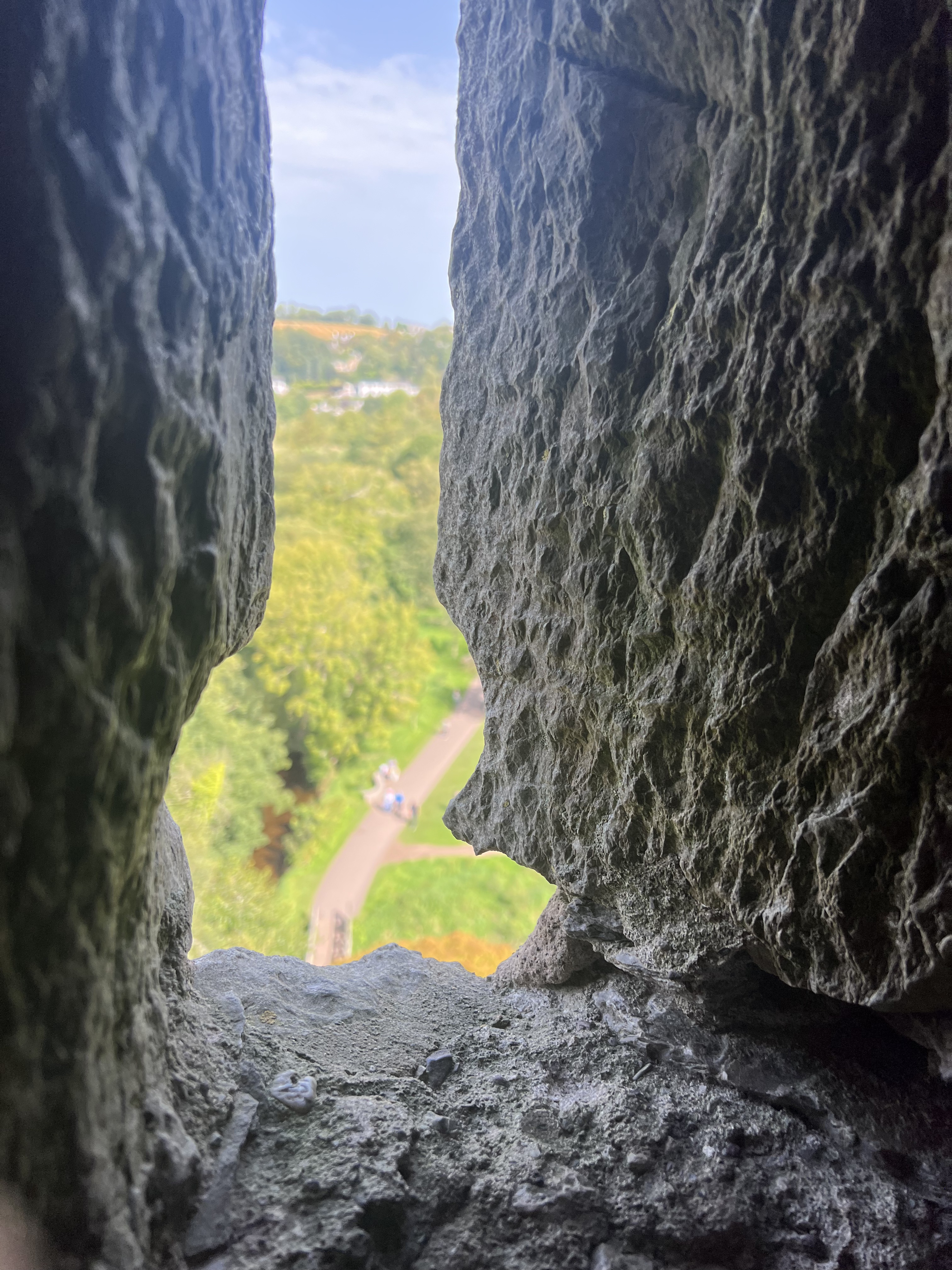
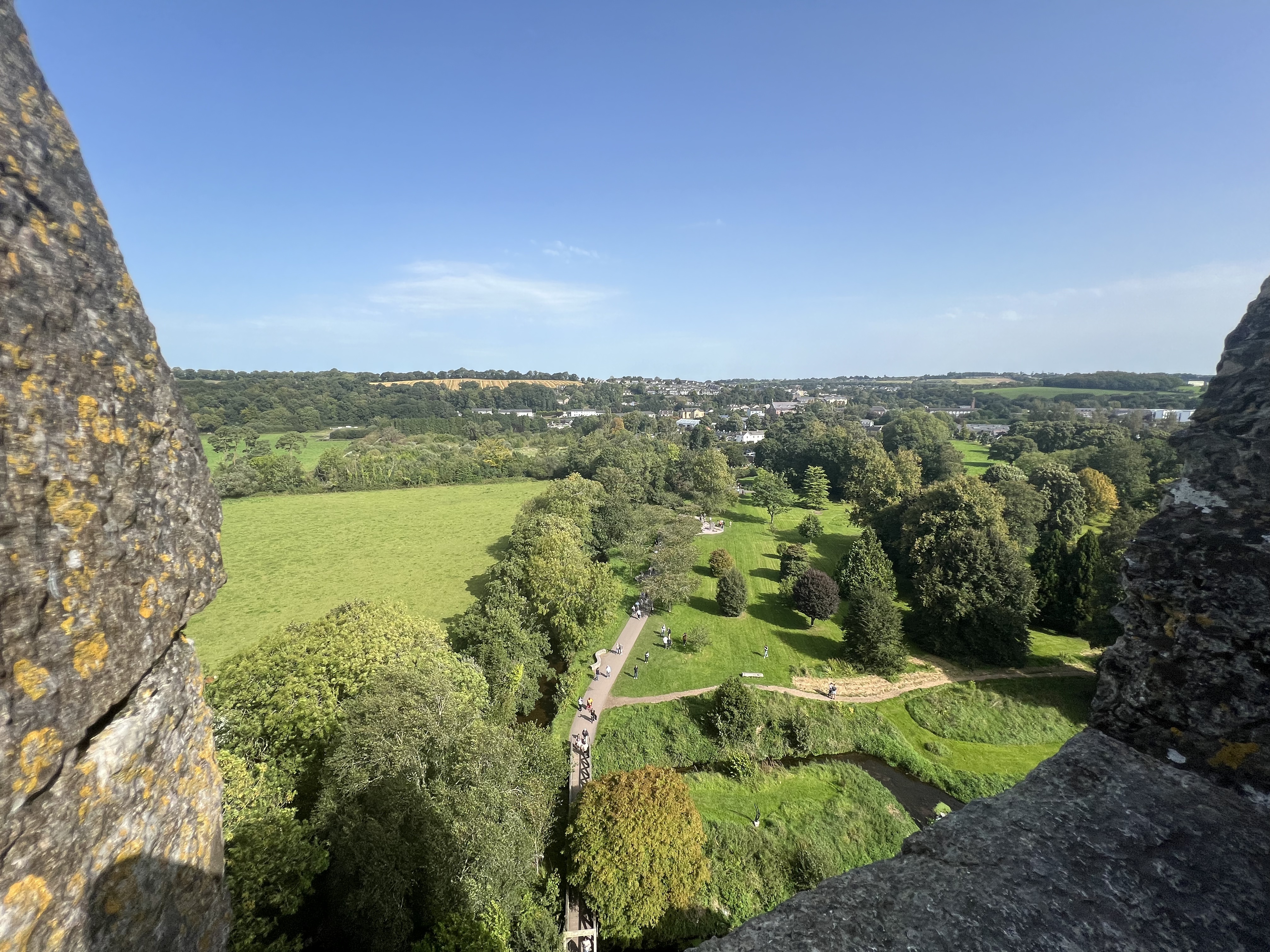
We spent about two hours at Blarney Castle, each doing our own thing. The ground level of the castle has an excellent museum which describes its history and architectural features including a ‘murder hole.’ George Jr and I hiked to the top of the castle so he could kiss the Blarney Stone. Because I’d done it on our first trip, I was just along to capture his moment. I still don’t think it helps with the gift of the gab. Between the entrance and the lake are about 60 acres of gardens to explore. They include themed gardens, three planned walking trails and a range of sculptures throughout. Lots to see!

Blarney Castle
Down the garden path
Climbing to the top
View from the top

The cafe had a limited menu; while three of us were able to find something to satisfy our craving for lunch, Jenn needed a quick stop at a bakery in Cork for a tuna sandwich.

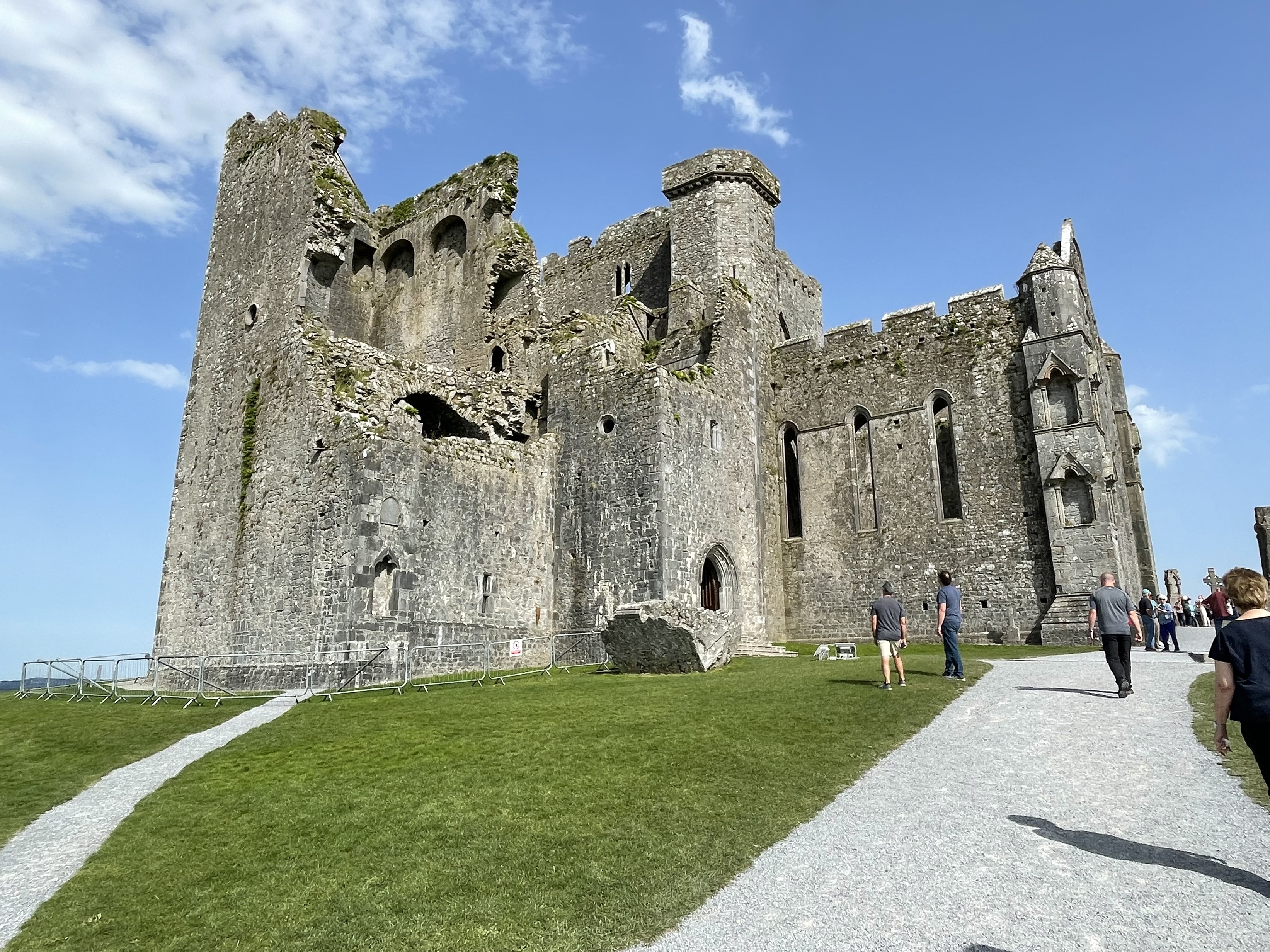
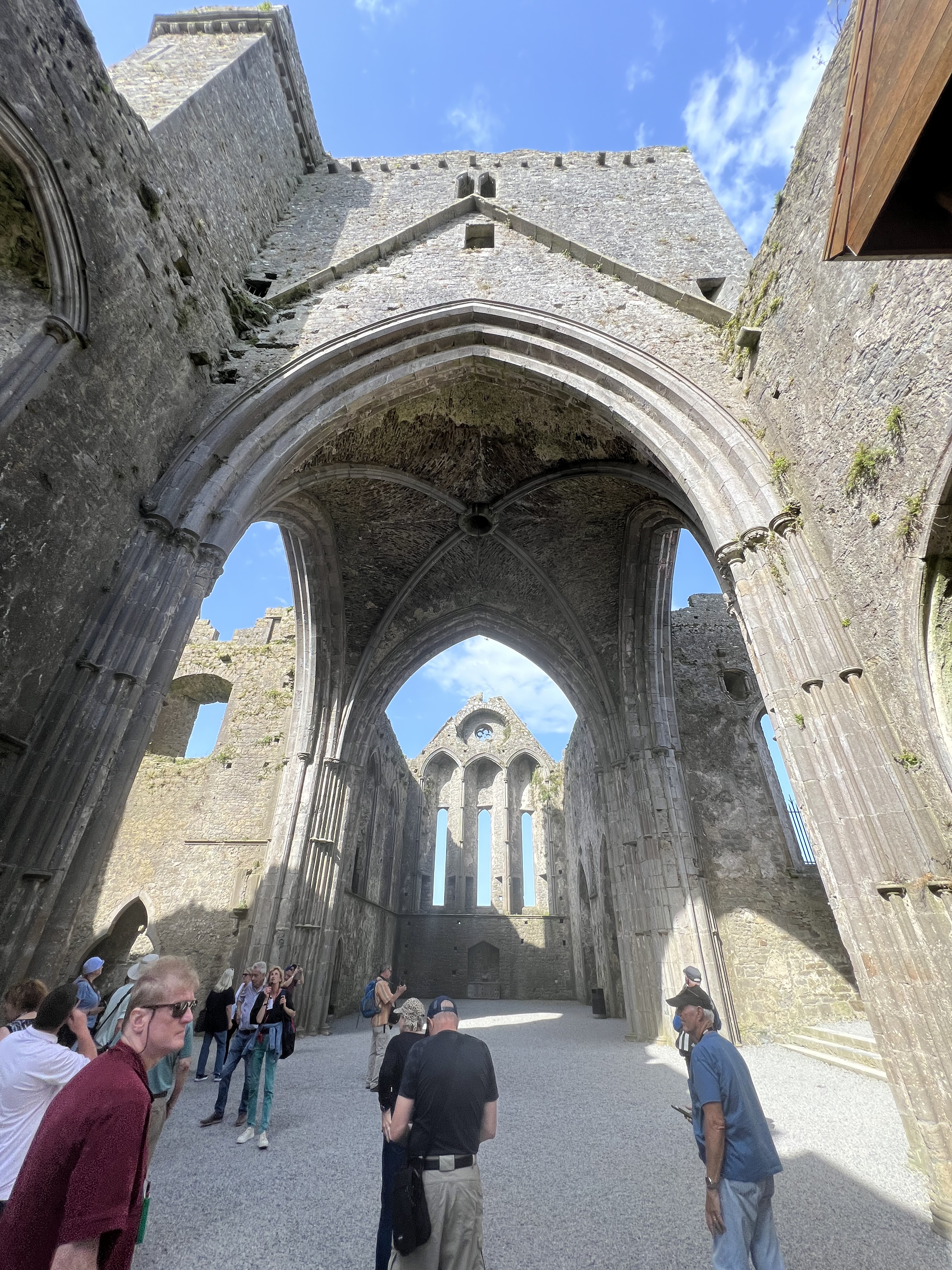
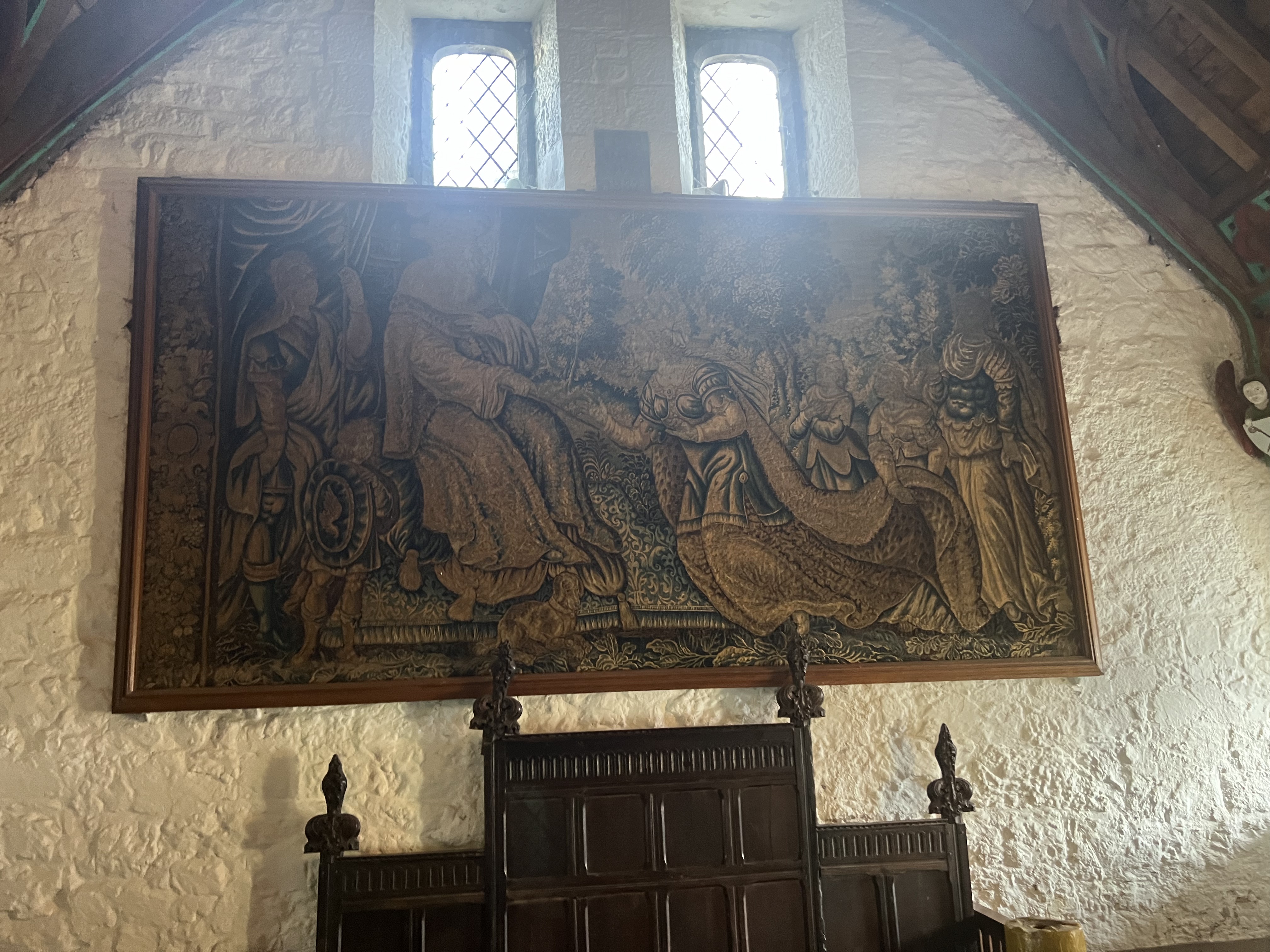
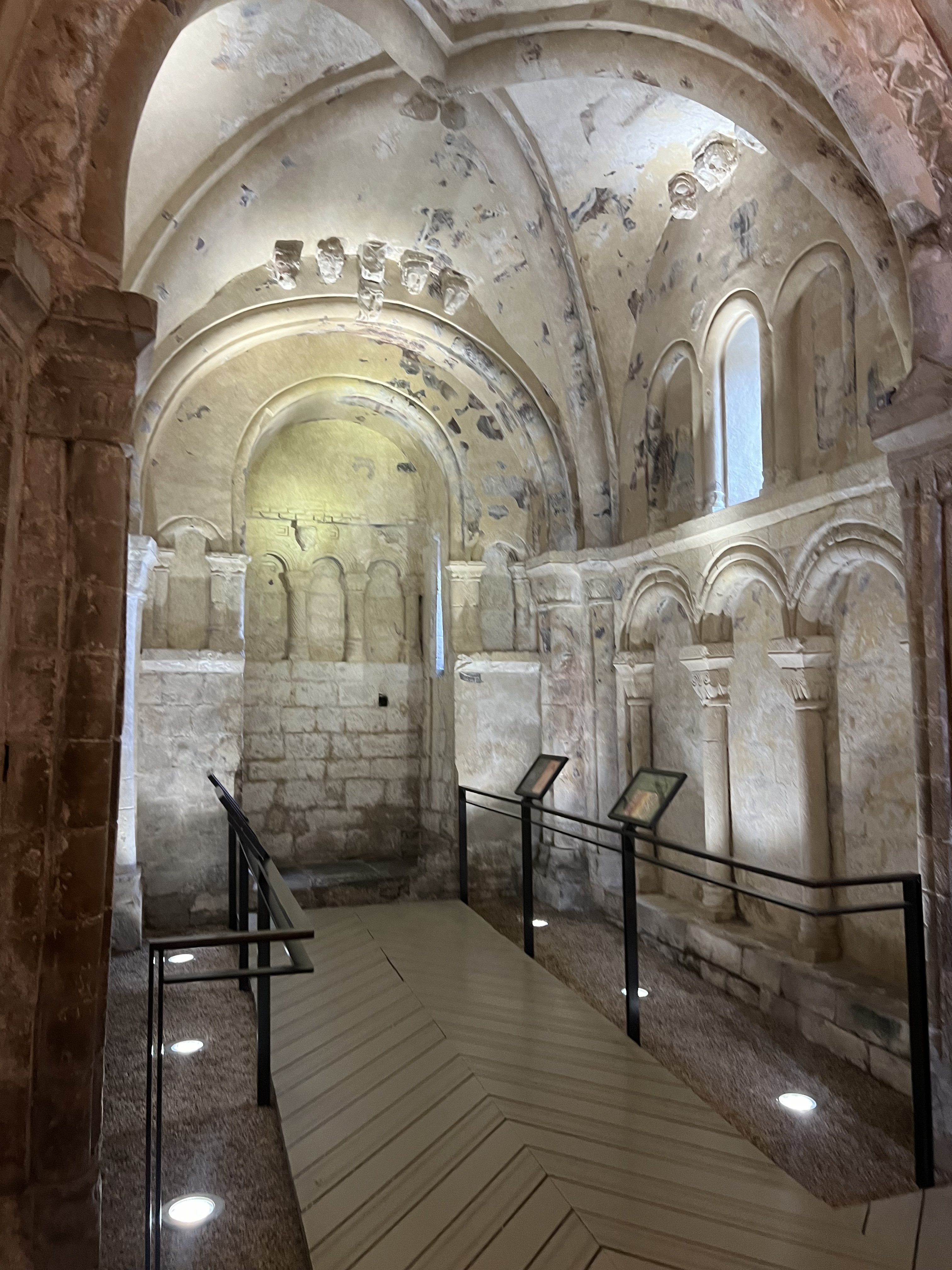
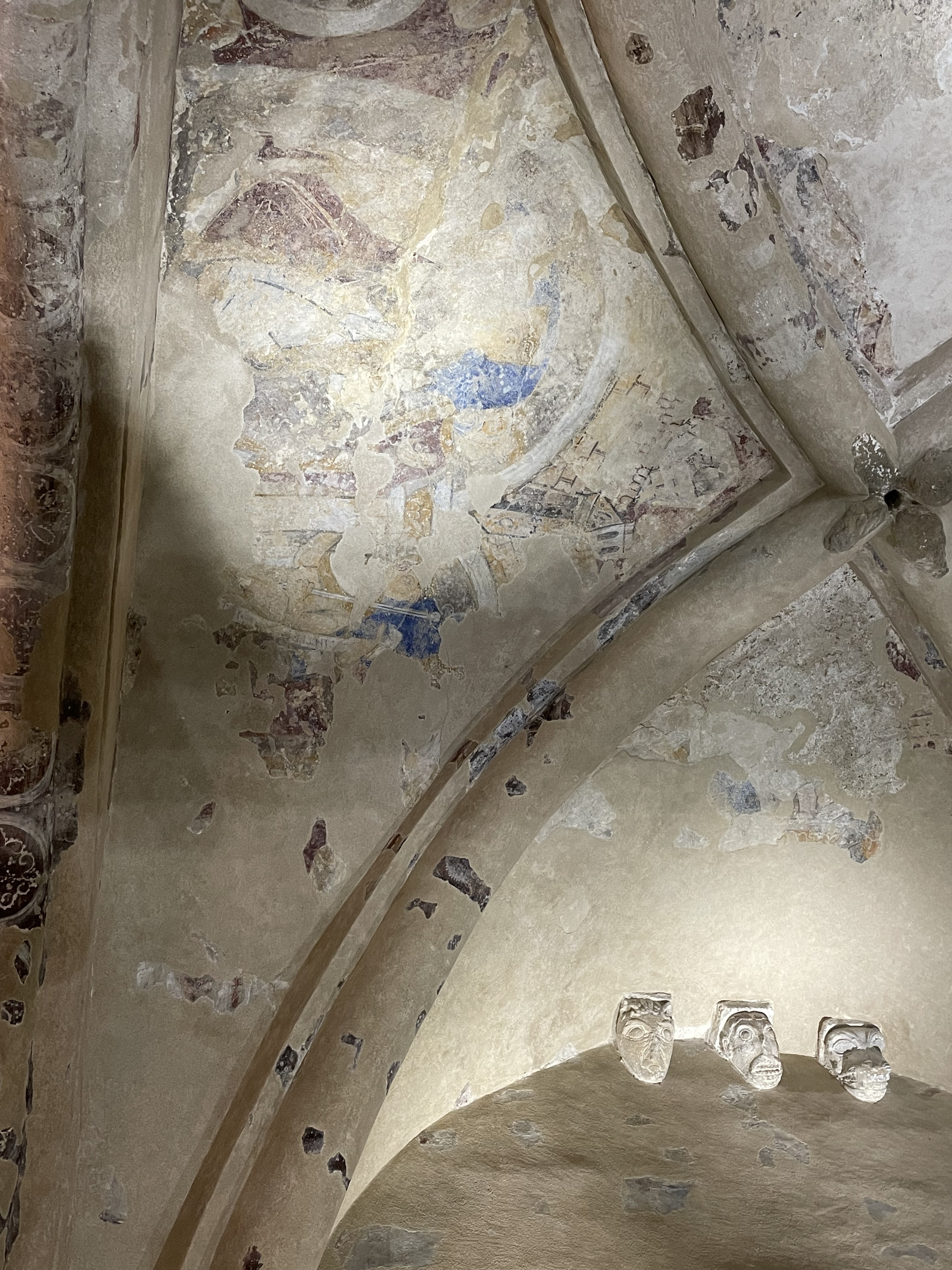
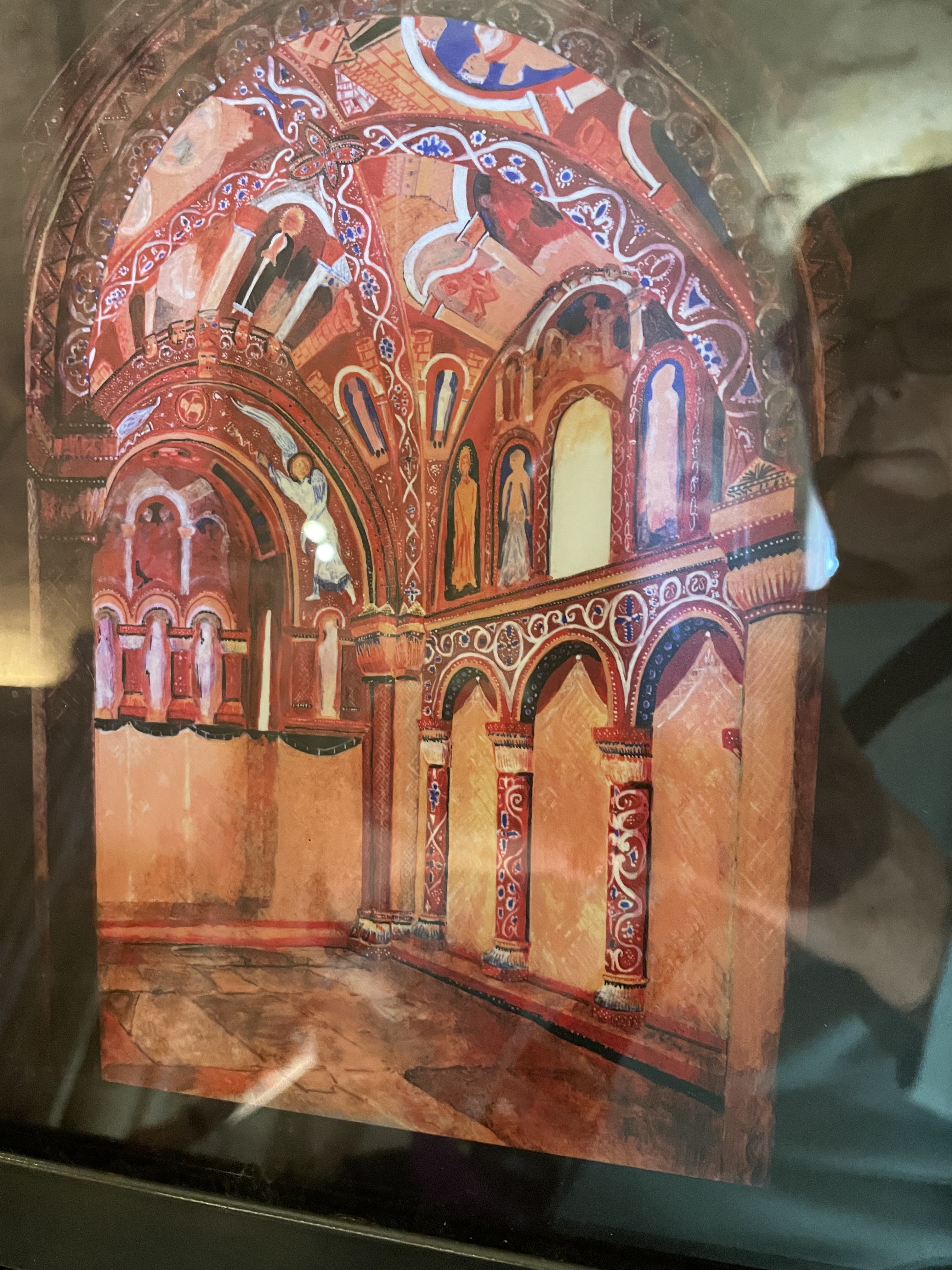
We arrived at the Rock of Cashel around 3 pm just in time to take a guided tour. This iconic site is said to possess the most impressive cluster of medieval buildings in Ireland. Originally the seat of the kings of Munster, legend has it that St. Patrick himself came to convert King Aengus to Christianity. Our tour included a guided tour of Cormac’s Chapel which contains the only surviving Romanesque frescoes in Ireland. Our guide was excellent and even pointed out for us North Americans the grave site of well-known sports broadcaster Vin Scully, who is buried in an ancient family plot.

Rock of Cashel
Frescoes
Scully Grave

Our stop for the next two nights was Kilkea Castle and while we weren’t actually in the castle (our rooms were in the old stable building), we enjoyed visiting the castle for breakfast and afternoon/evening refreshments. After dinner on the first evening, Dad and I sat on the patio outside the bar and met a most interesting local who told us all about the area.

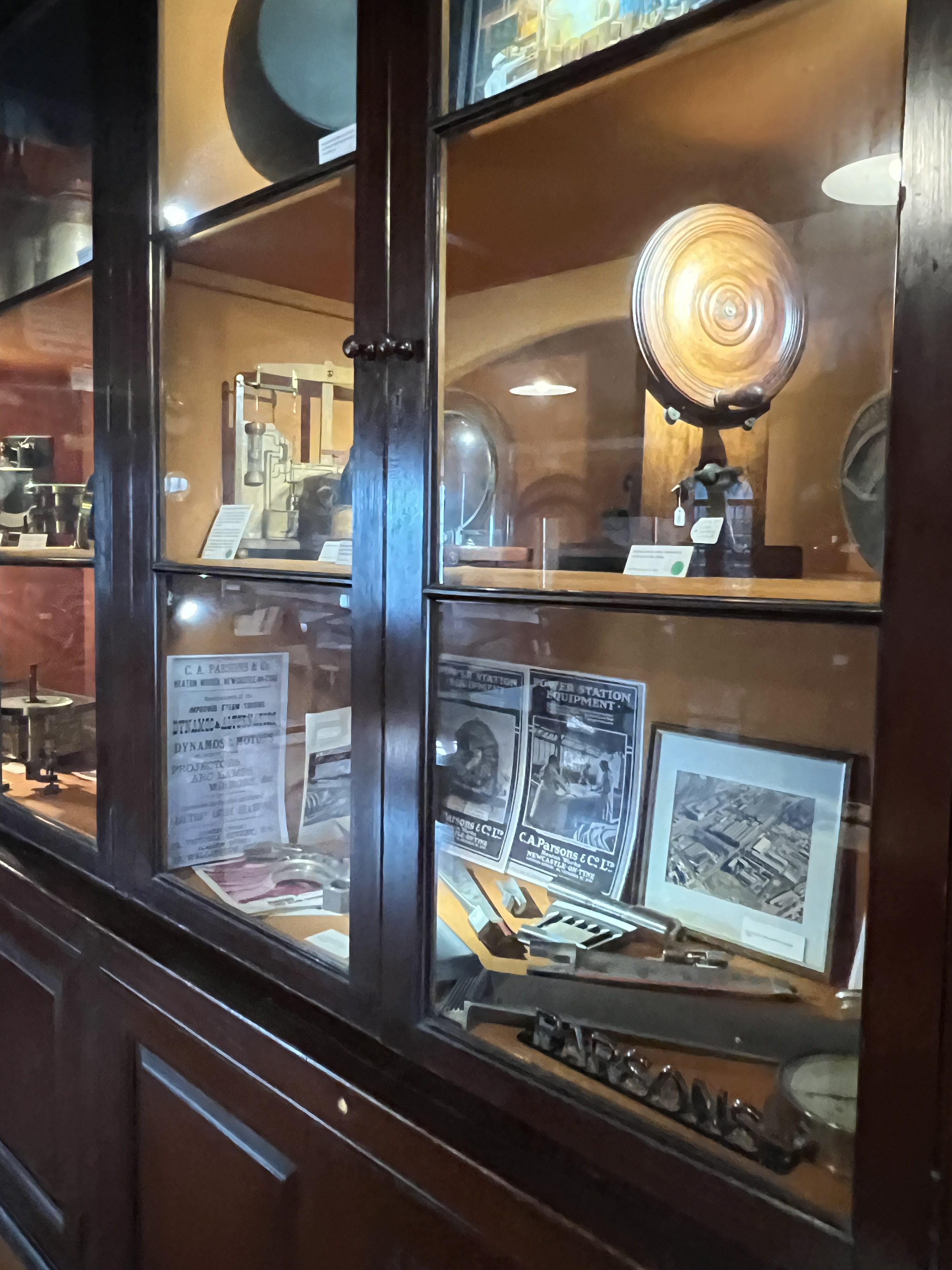
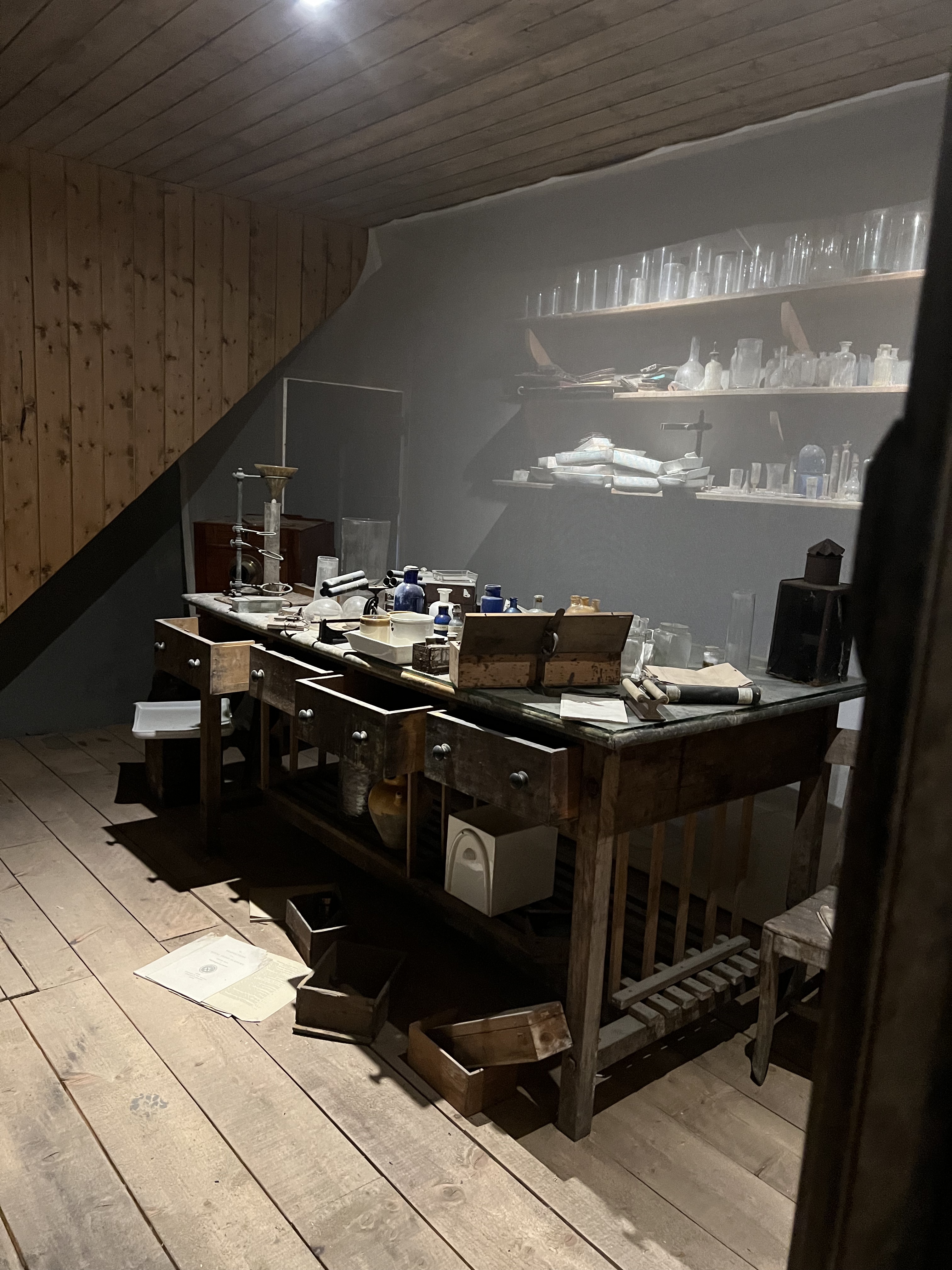
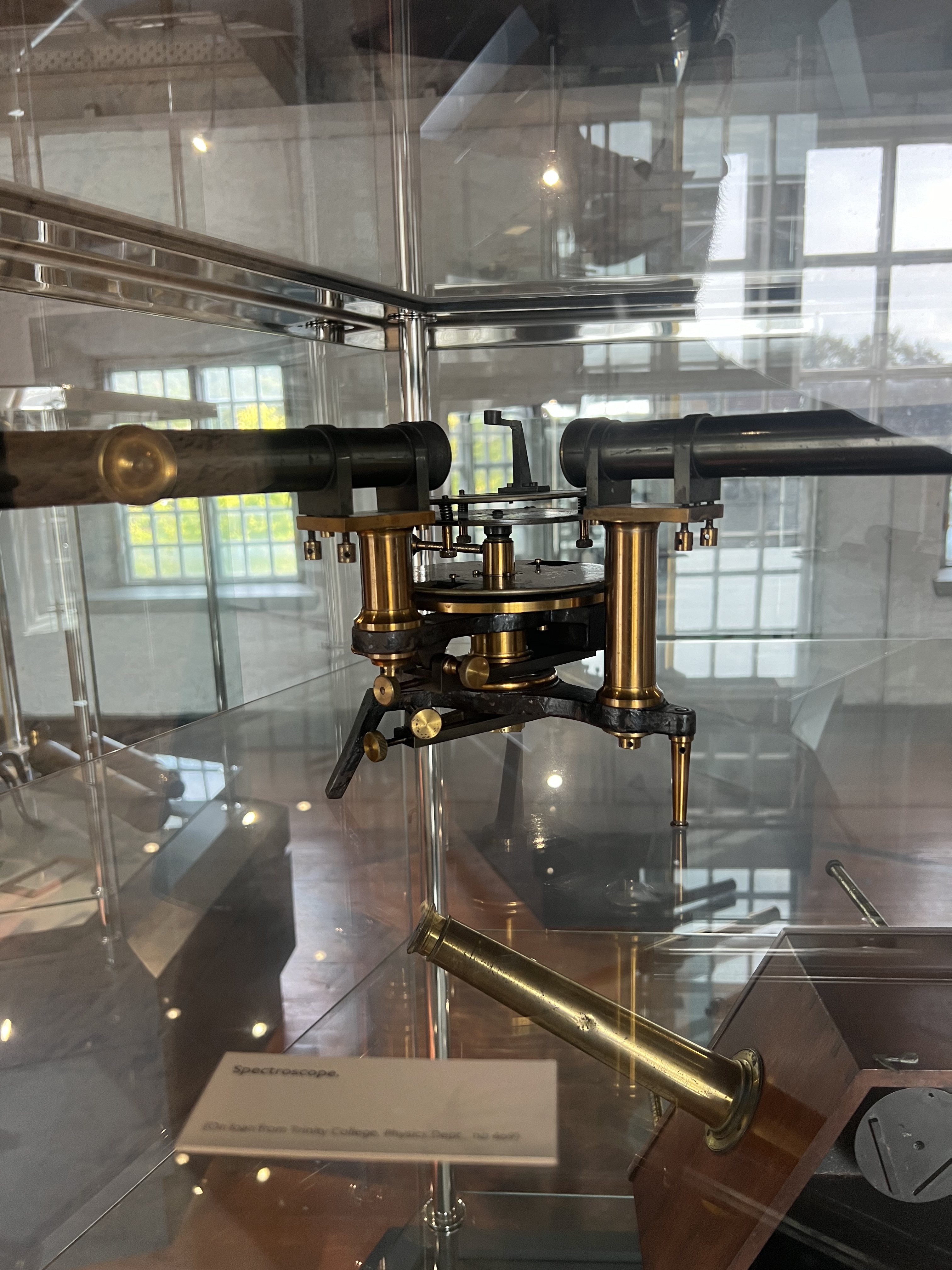
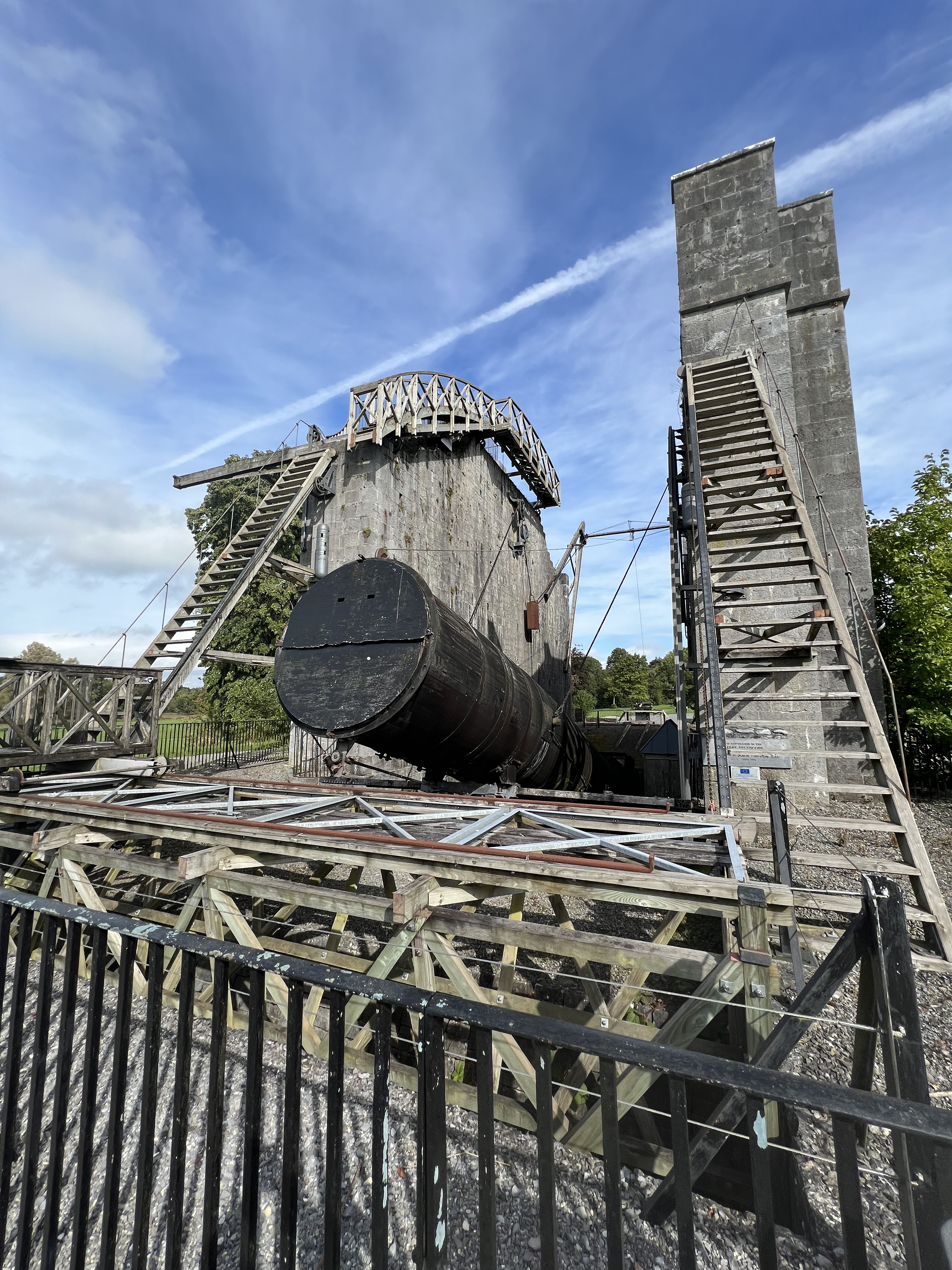
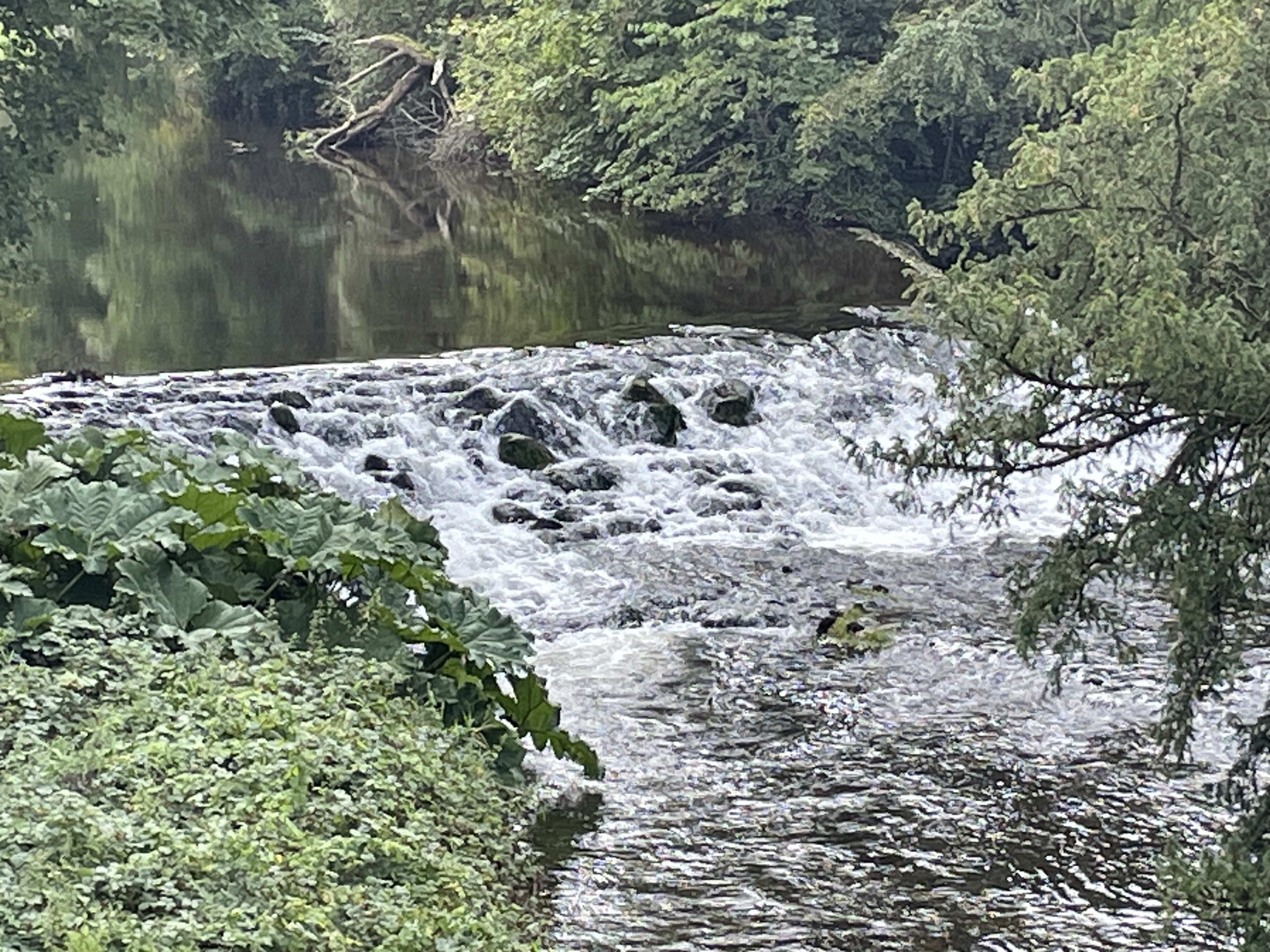
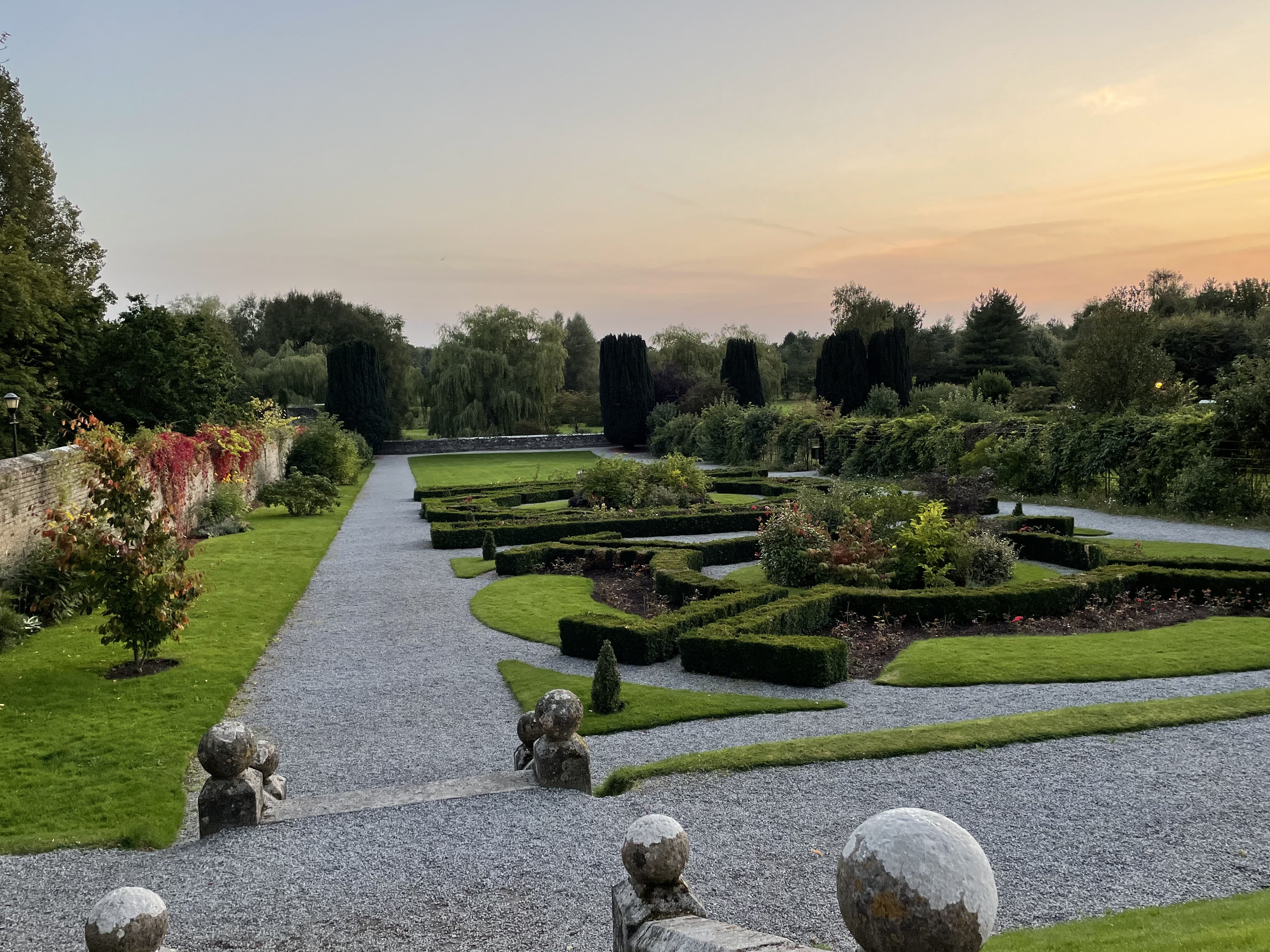
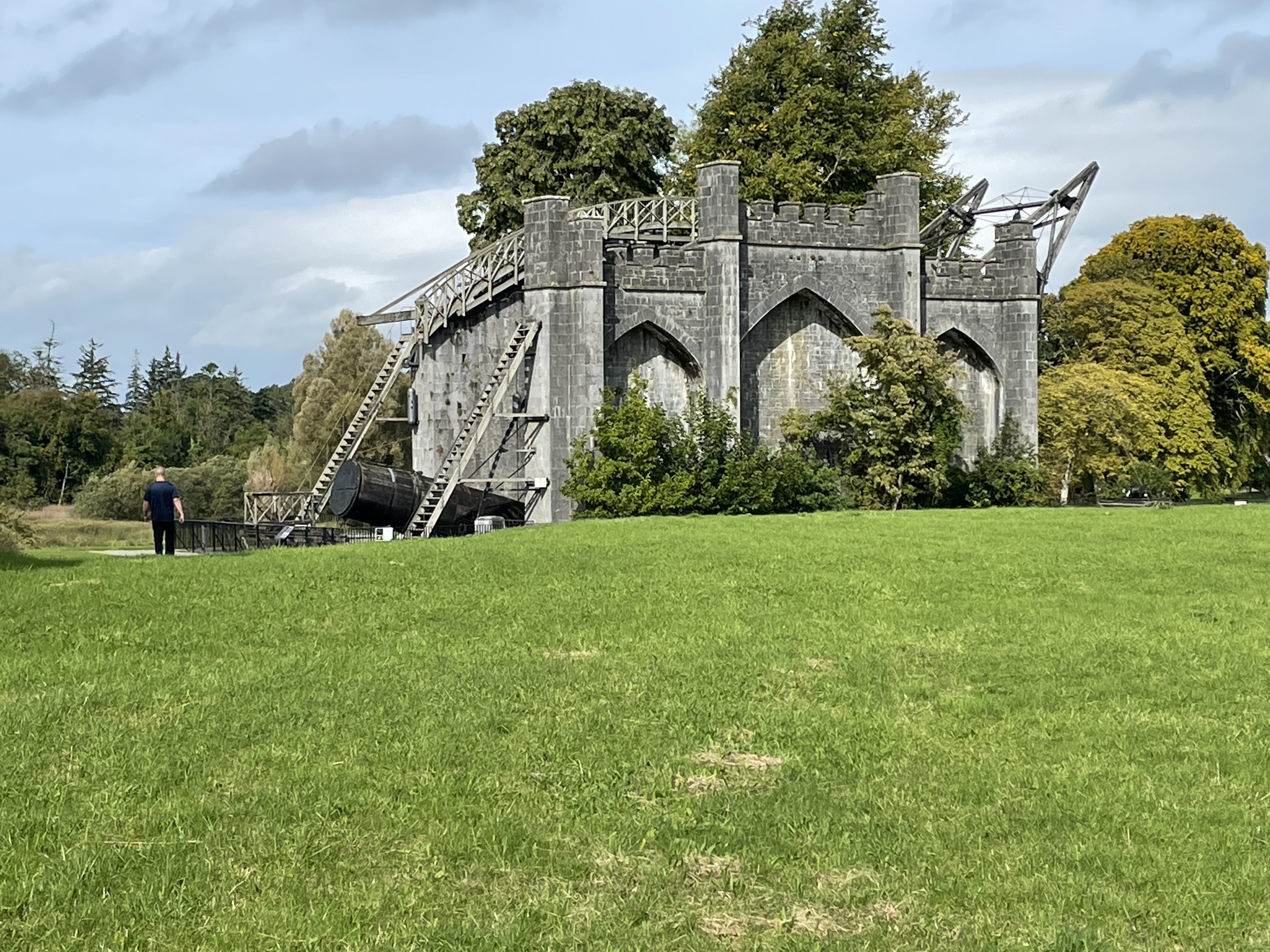
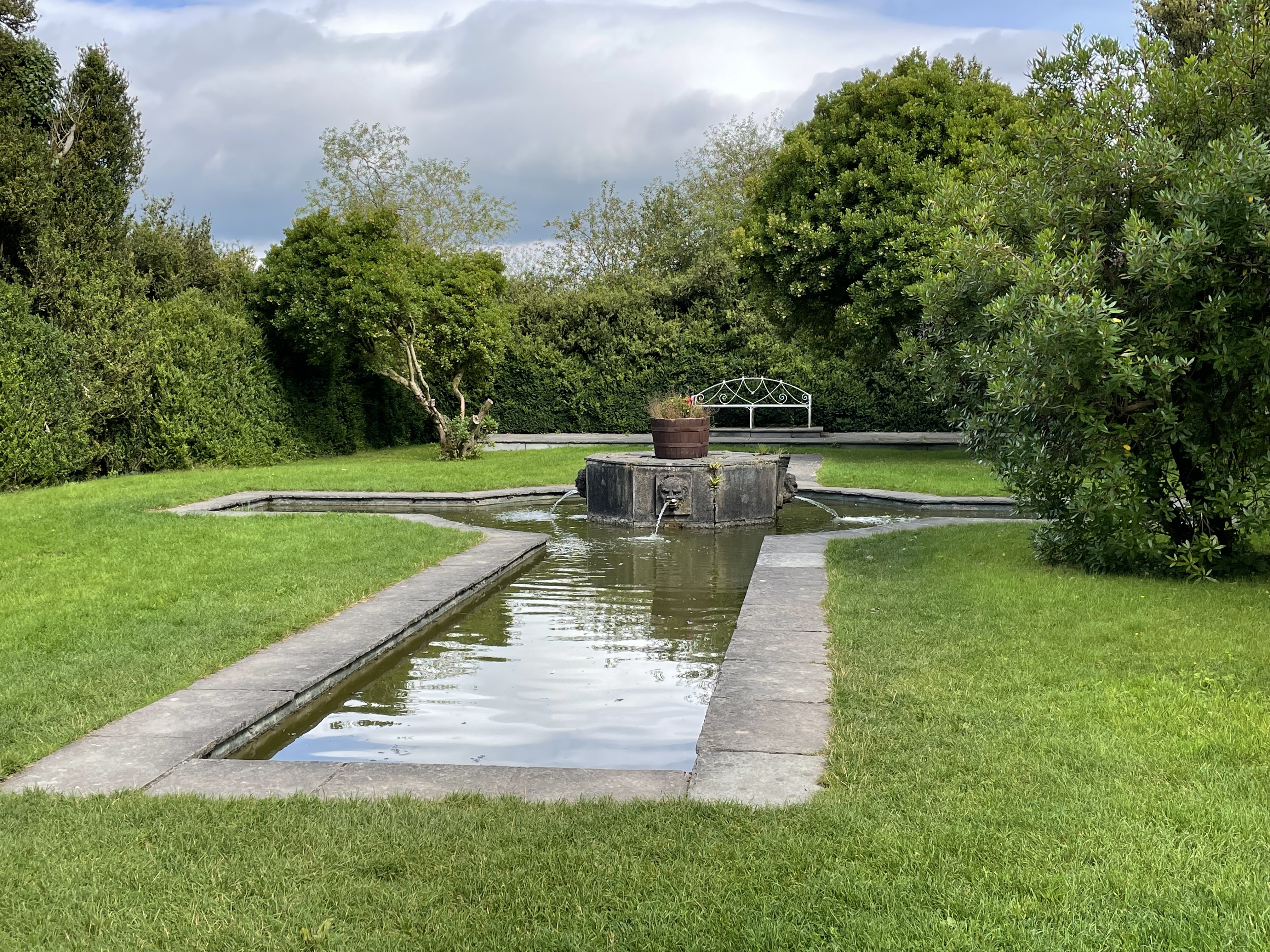
George Jr and I went off the next morning to Birr Castle Demesne. The property has been the home of the Parsons family for over 400 years. Throughout the years, the family has been known worldwide for its interest and inventions in the fields of engineering, astronomy and photography. Part of the castle has been developed into the Ireland Historic Science Centre but the real attraction is The Great Telescope. In the early 1840s, the 3rd Earl of Rosse, designed and built the largest telescope in the world. It attracted star-gazers from all over Europe and beyond and became known as the “Leviathan.” It remained the world’s largest telescope for over 70 years. Dismantled to aid the war effort, the model that exists today is a full-sized replica of the original. In partnership with Trinity College, astronomy continues as one of the main exploits at the castle. The grounds are also well worth the visit, with many walking paths, a delightful garden that features a welcoming waterfall and stream.

Birr Castle
Evidently one of the tallest cedars in Ireland

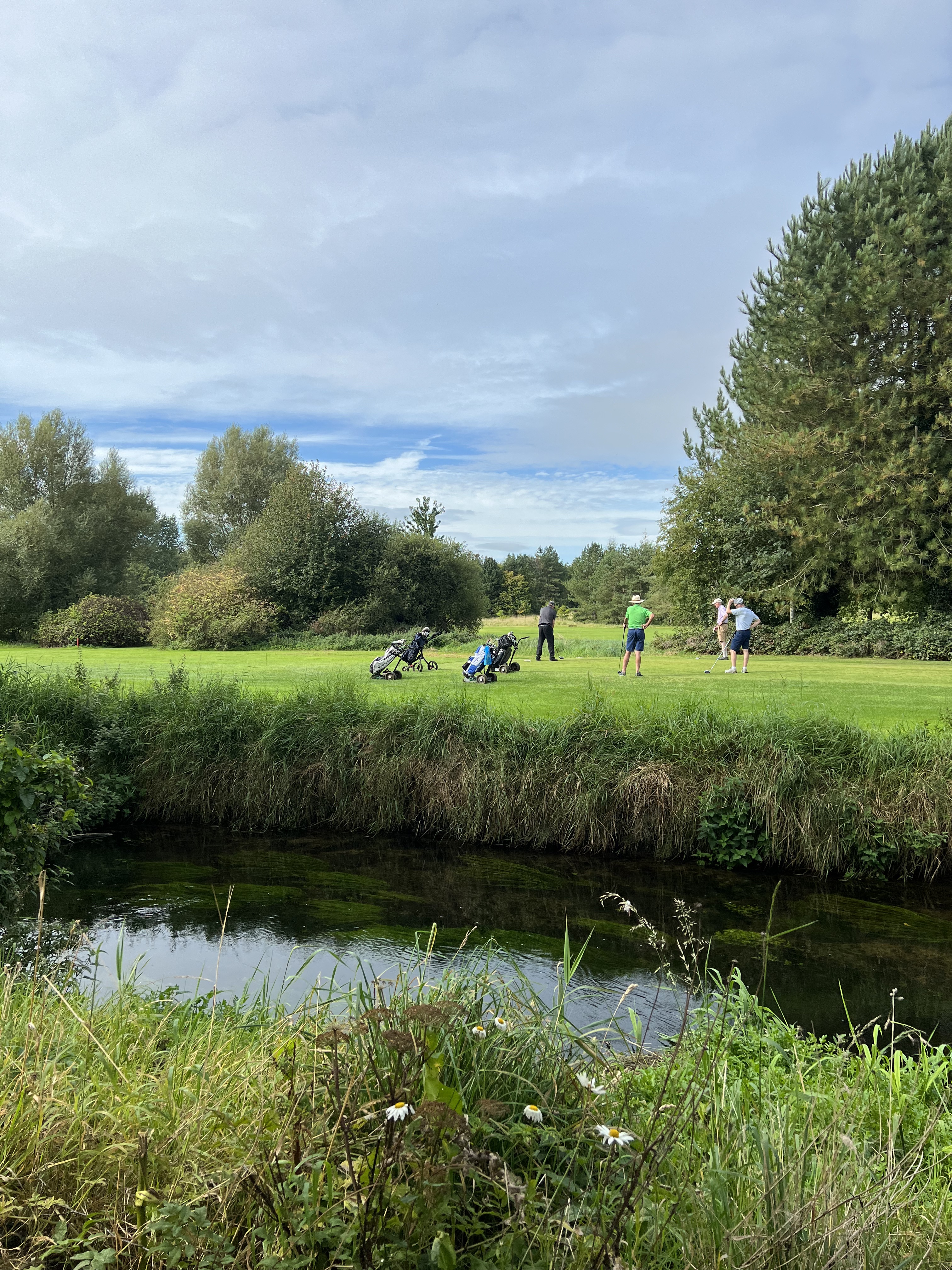
After a soup lunch at the castle, George and I returned to Kilkea to continue on with our afternoon plans. Dad and Jenn reported that they had spent the morning walking around the grounds of Kilkea Castle, exploring the golf course and the gardens.

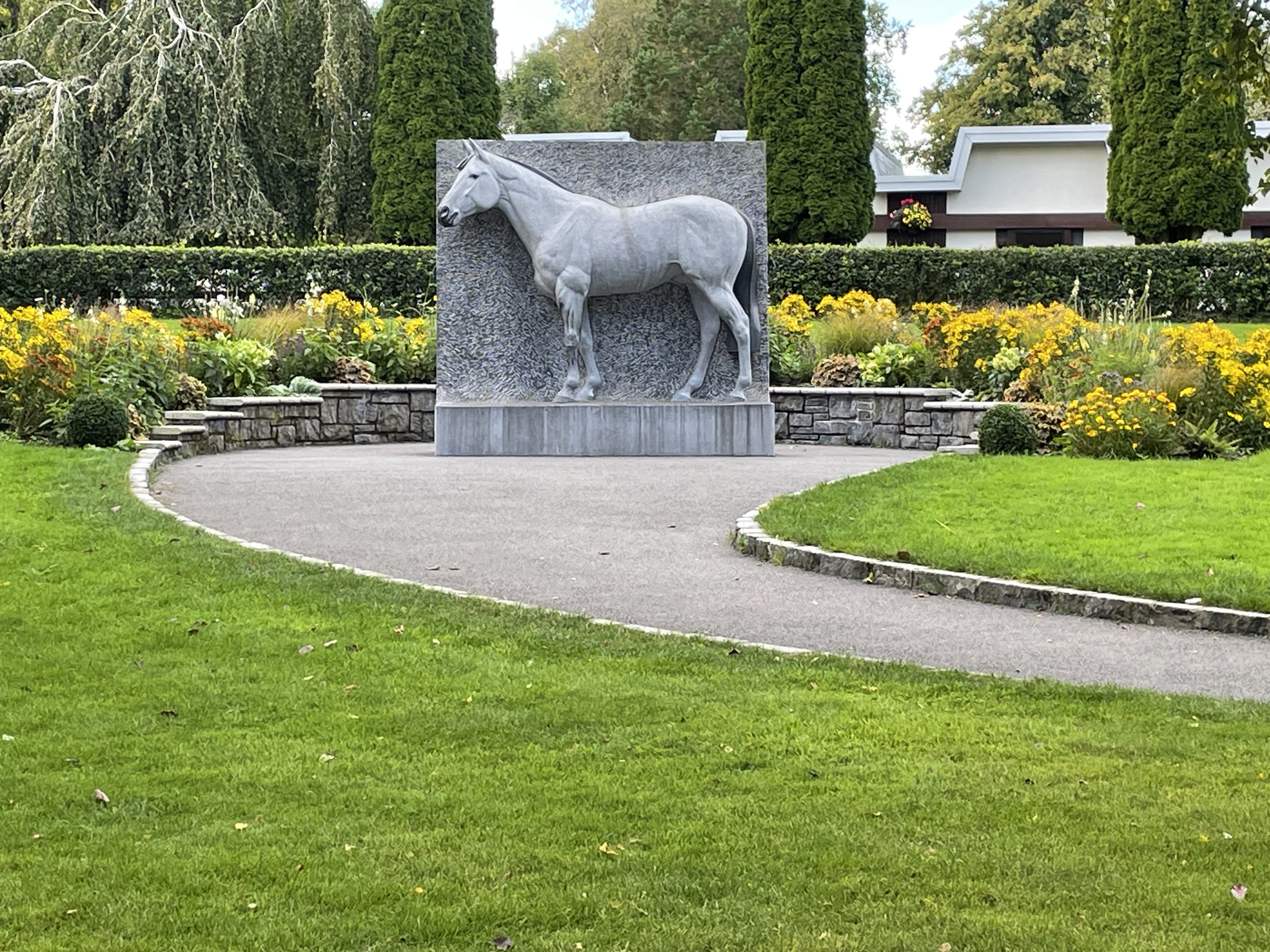
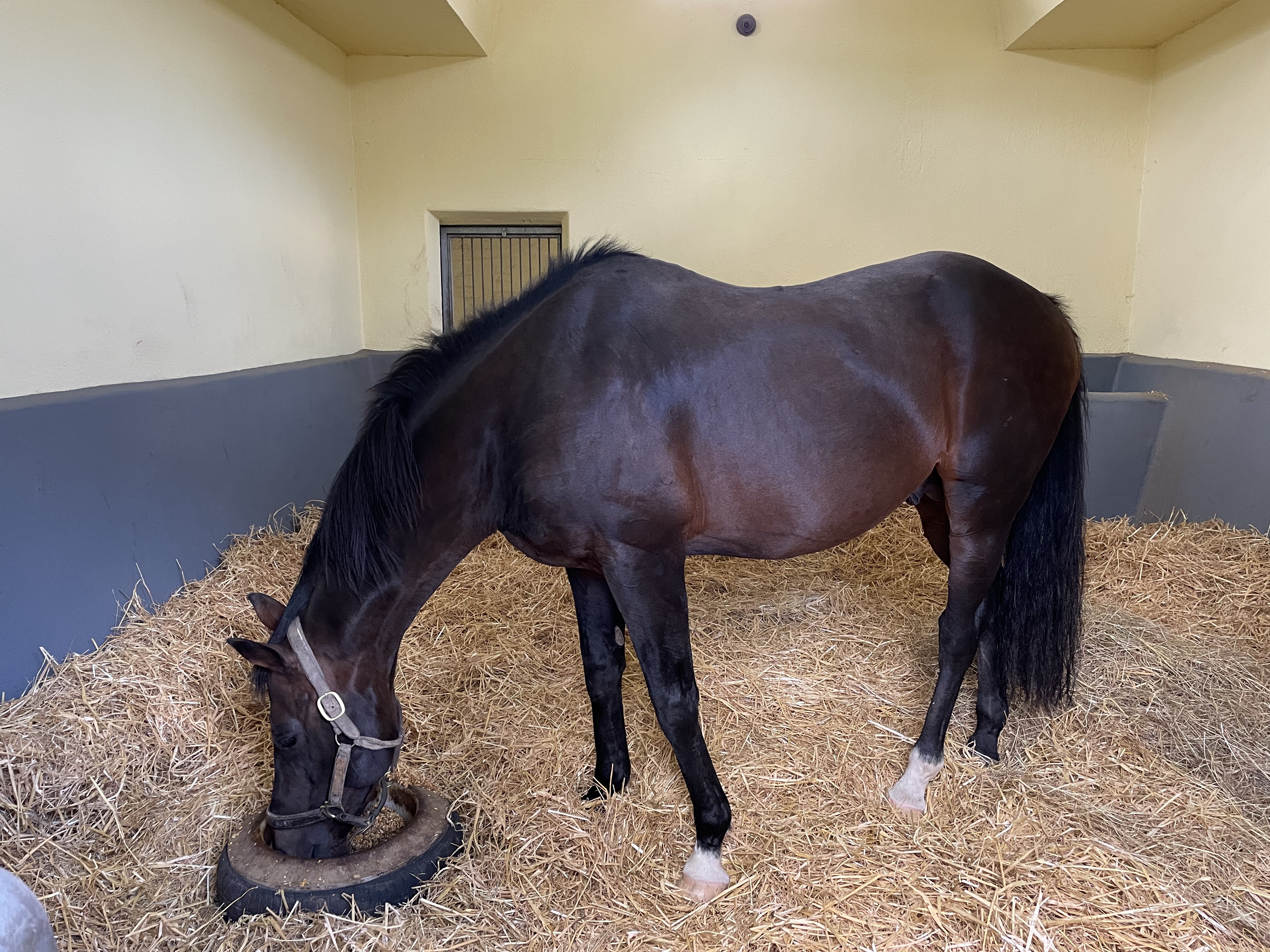
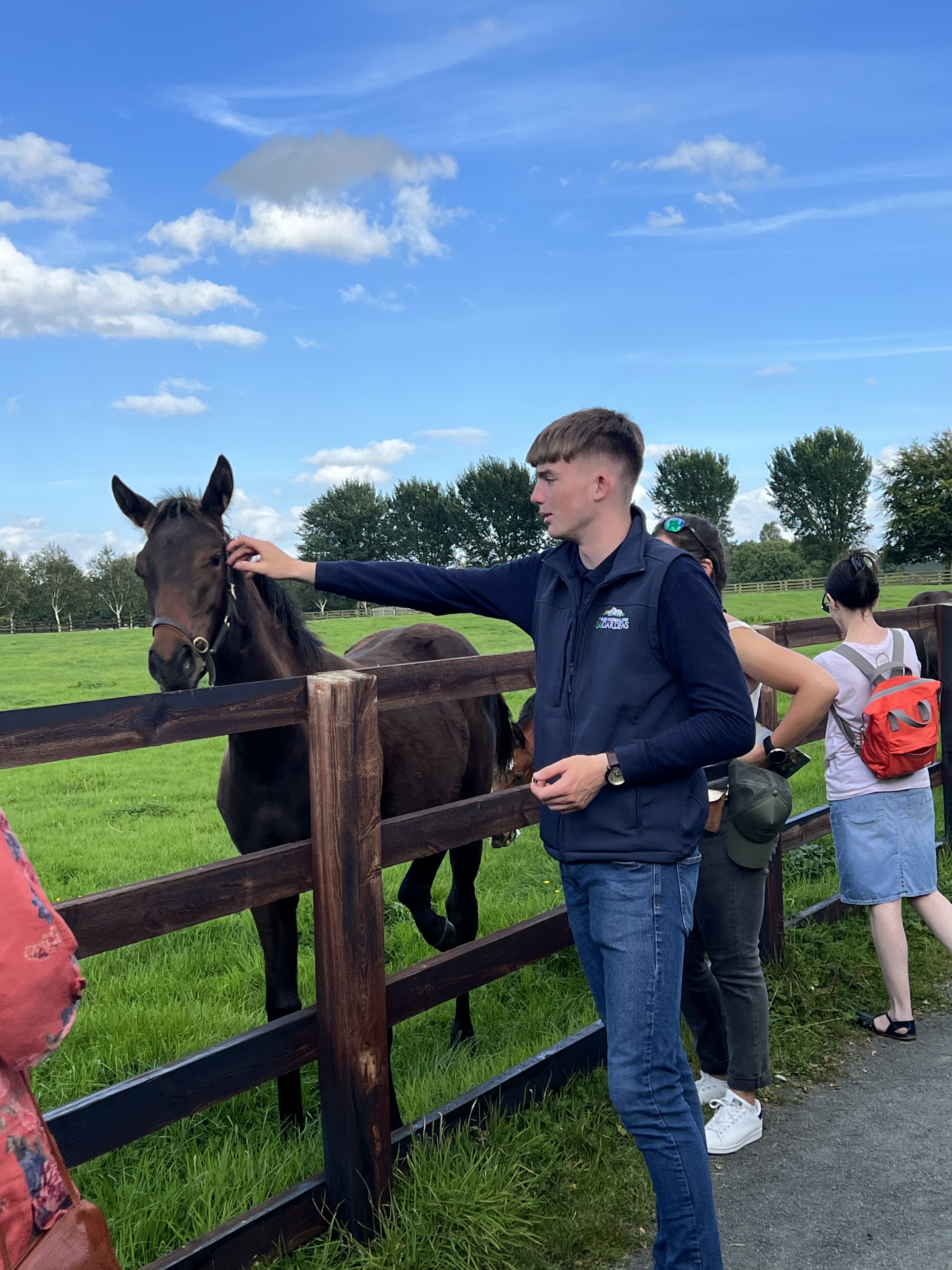
Our afternoon pursuit was to the Irish National Stud Farm, which was probably the most fun day of our trip. We were just three as George Jr decided to stay back at the castle and rest. There were three parts to our visit: a guided tour, a horse-racing experience and the Japanese gardens. Our guide was a passionate college student who told us all the ins-and-outs of breeding race horses. The farm has seven stallions, many of whom generate millions of euros for their owners. Invincible Spirit, great grandson of Northern Dancer, is the star stud!

The racing experience was so much fun! As you go in, you’re provided with an iPad which you use as you explore the exhibit to purchase a horse, engage a trainer, board and train your horse, choose your racing colours and your jockey. Then you go into a video room and race your horse against others. In our case, it was just the three of us. Dad’s horse won, mostly because my arms tired and Jenn couldn’t go fast because she was laughing so hard.

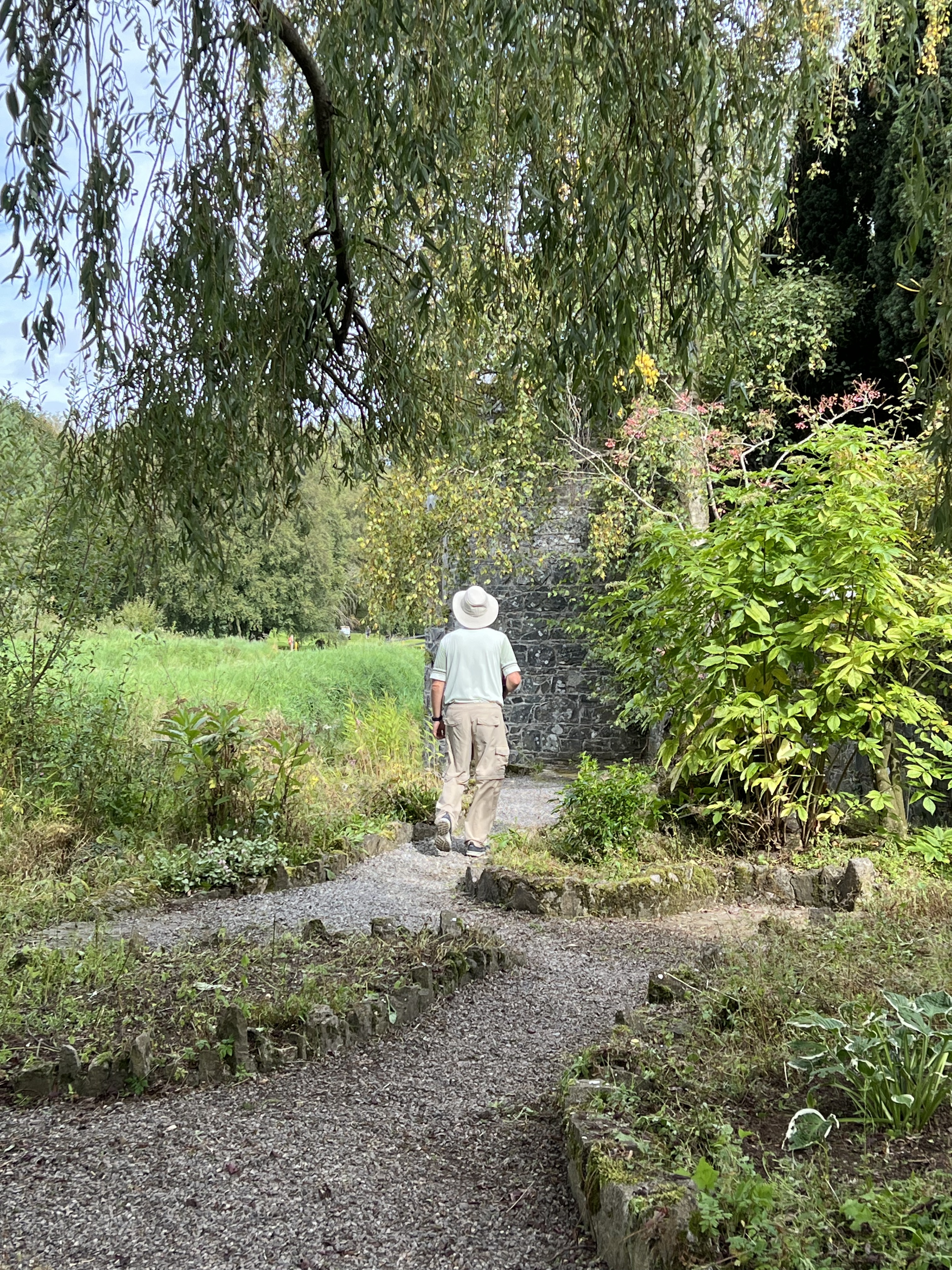
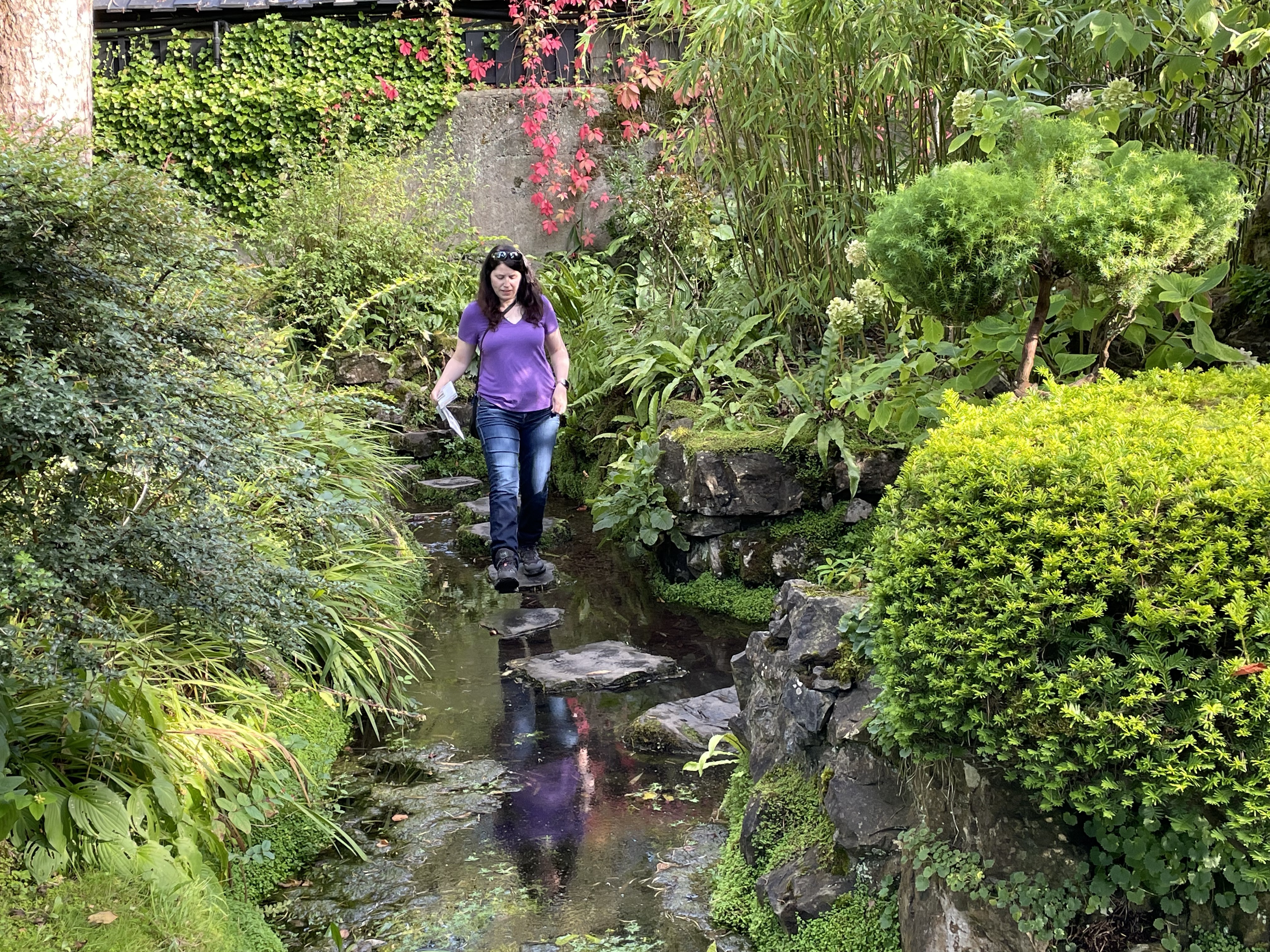
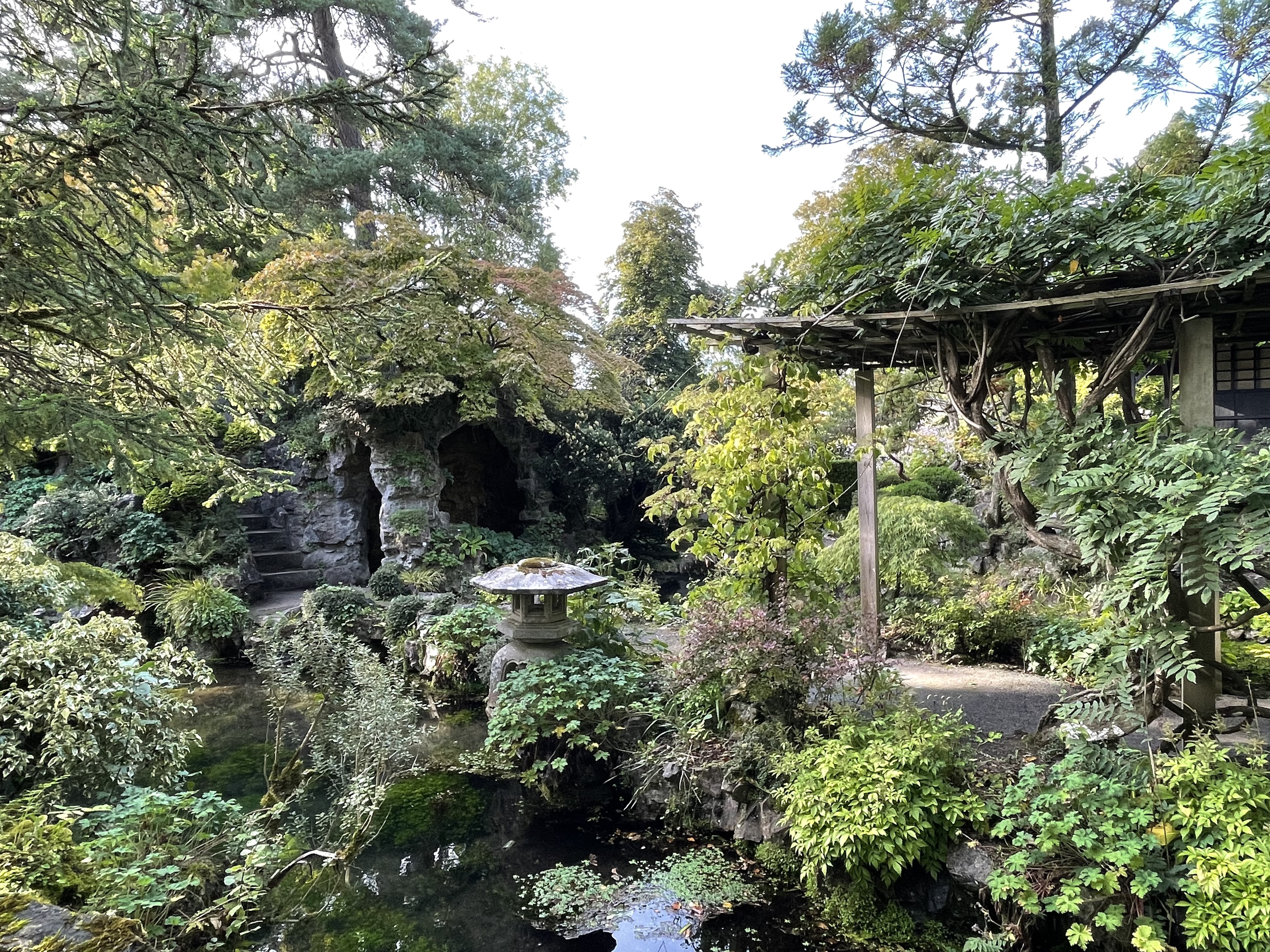
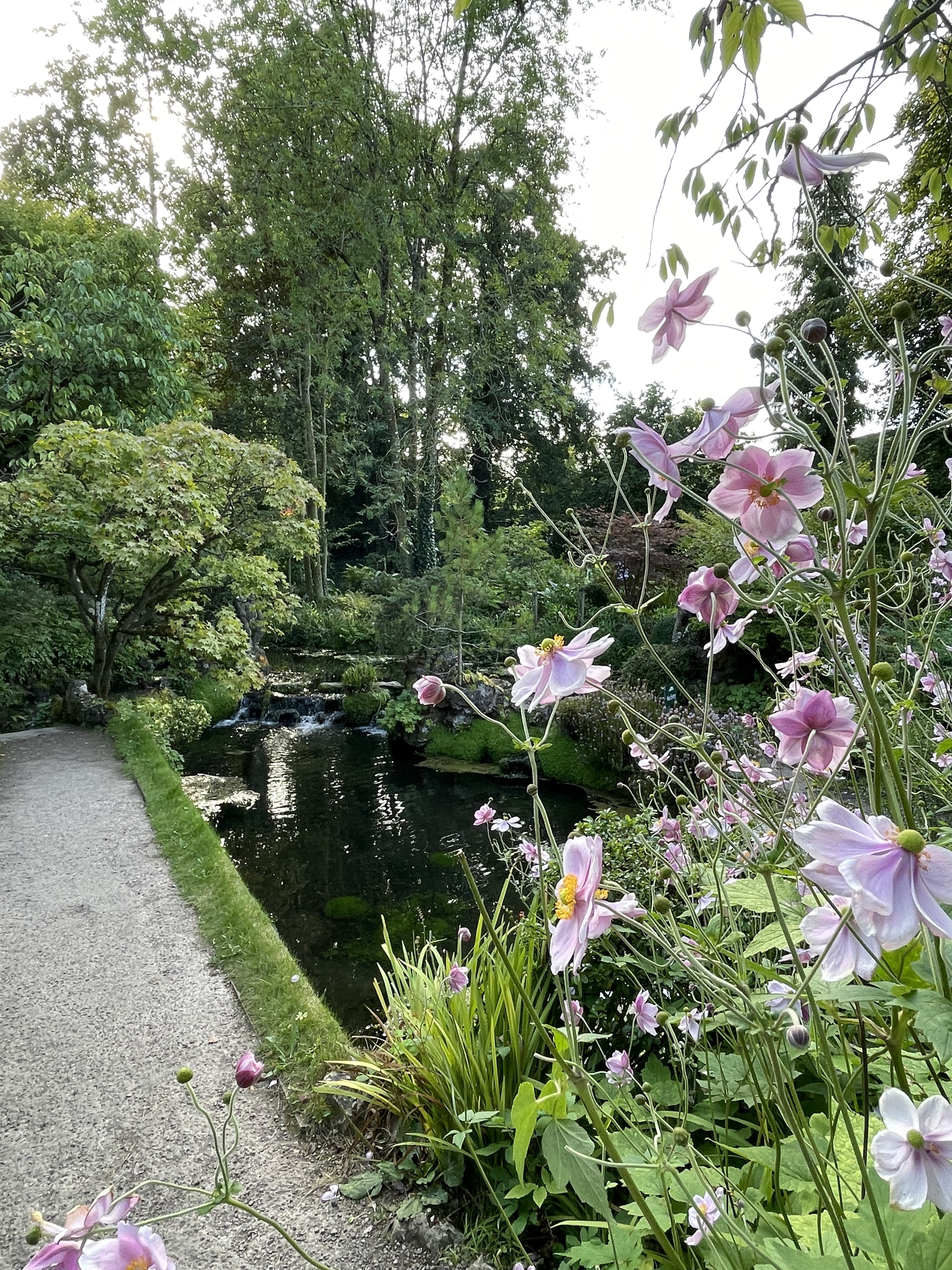
We finished our time at the stud farm, exploring the walking trails through the Japanese garden. Created between 1906 and 1910, the garden was designed to symbolize the Life of Man. Birth, childhood, marriage, parenthood, old age, death and the afterlife are all represented as one chooses easy or difficult paths to follow. The weather contributed to a shady, peaceful walk and time of reflection.

Dinner that night was at Kilkea Castle looking out over the 18th tee. After a long day, we turned in early preparing to leave on the last leg of our trip.

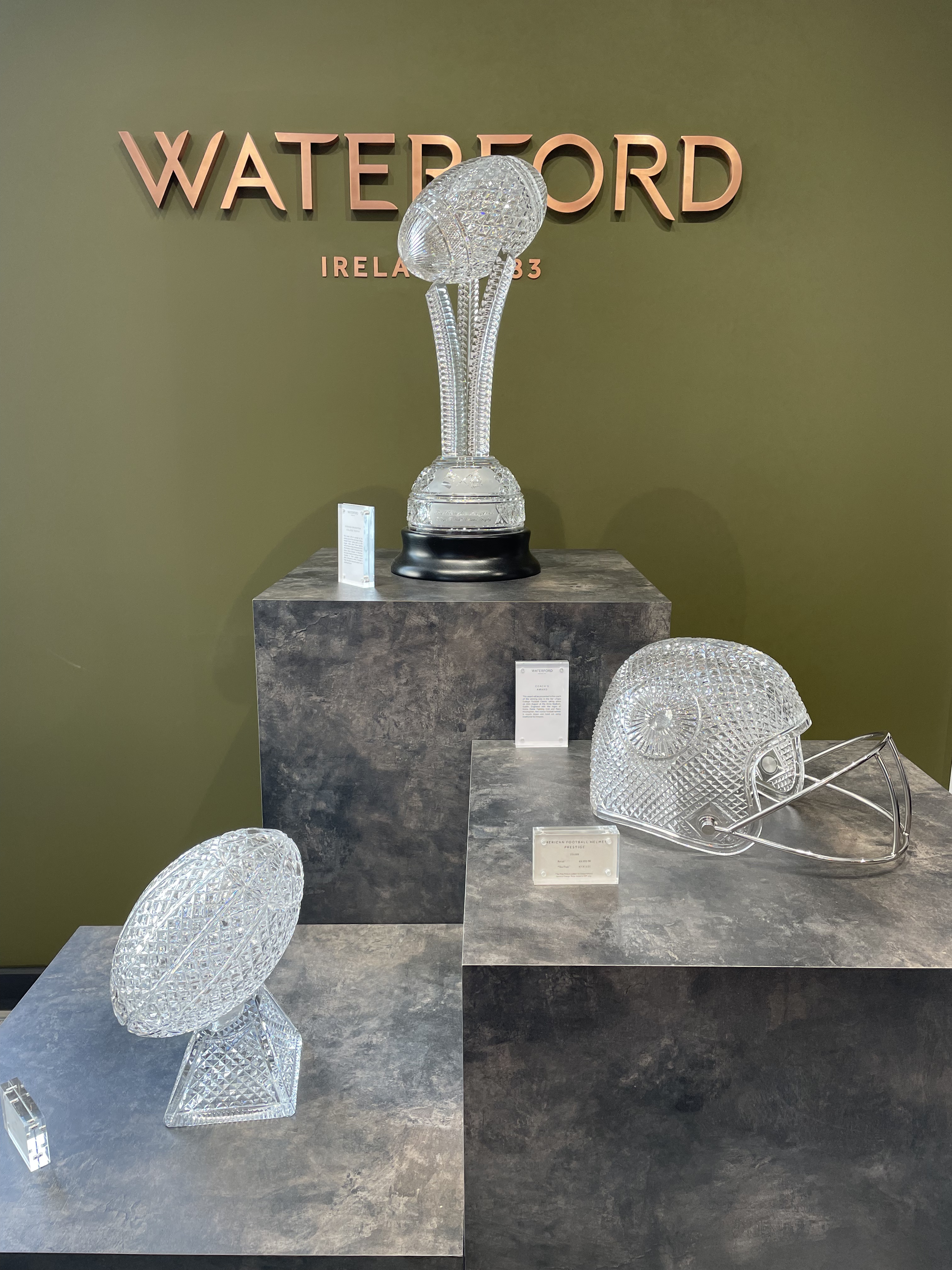
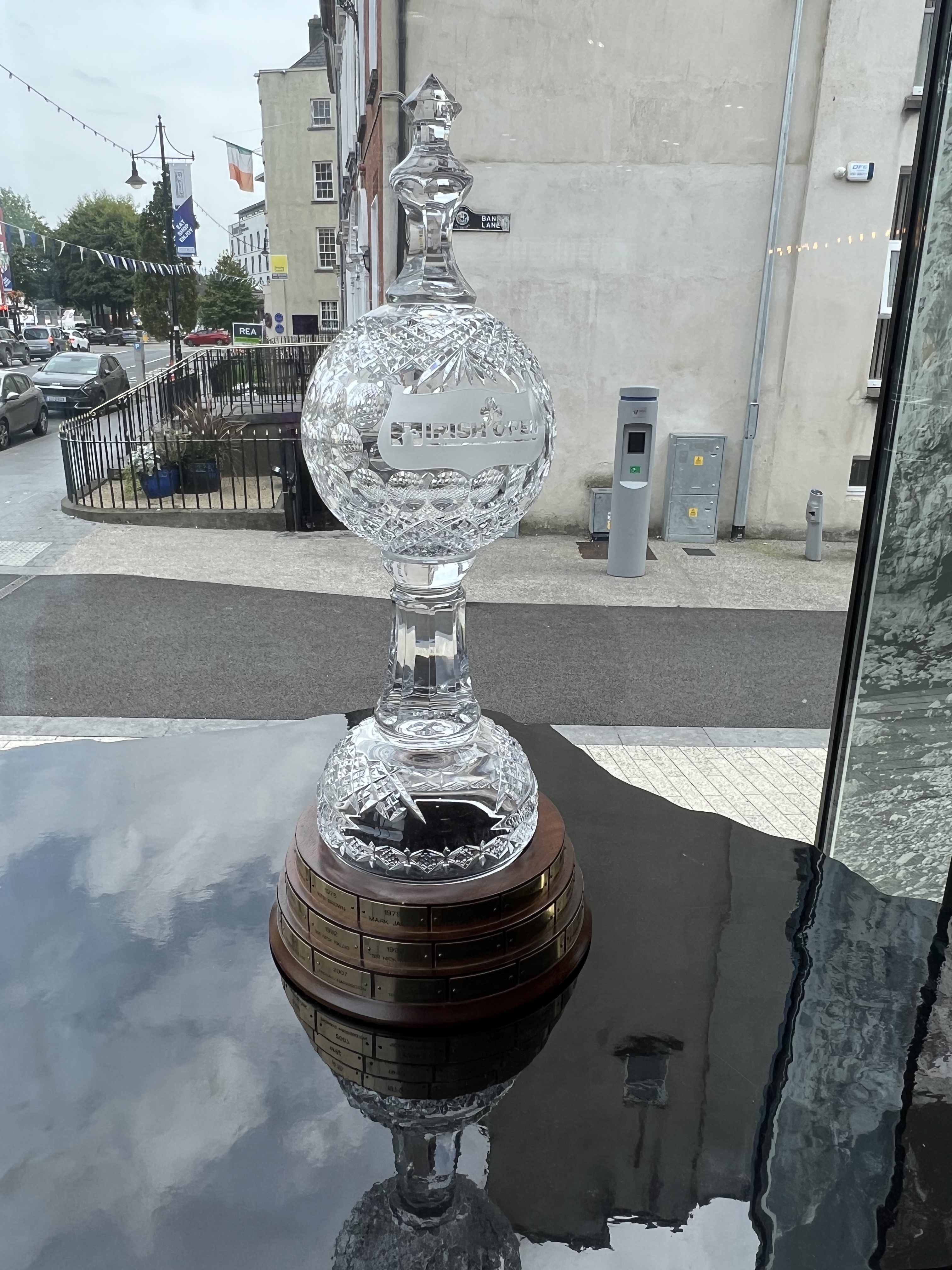
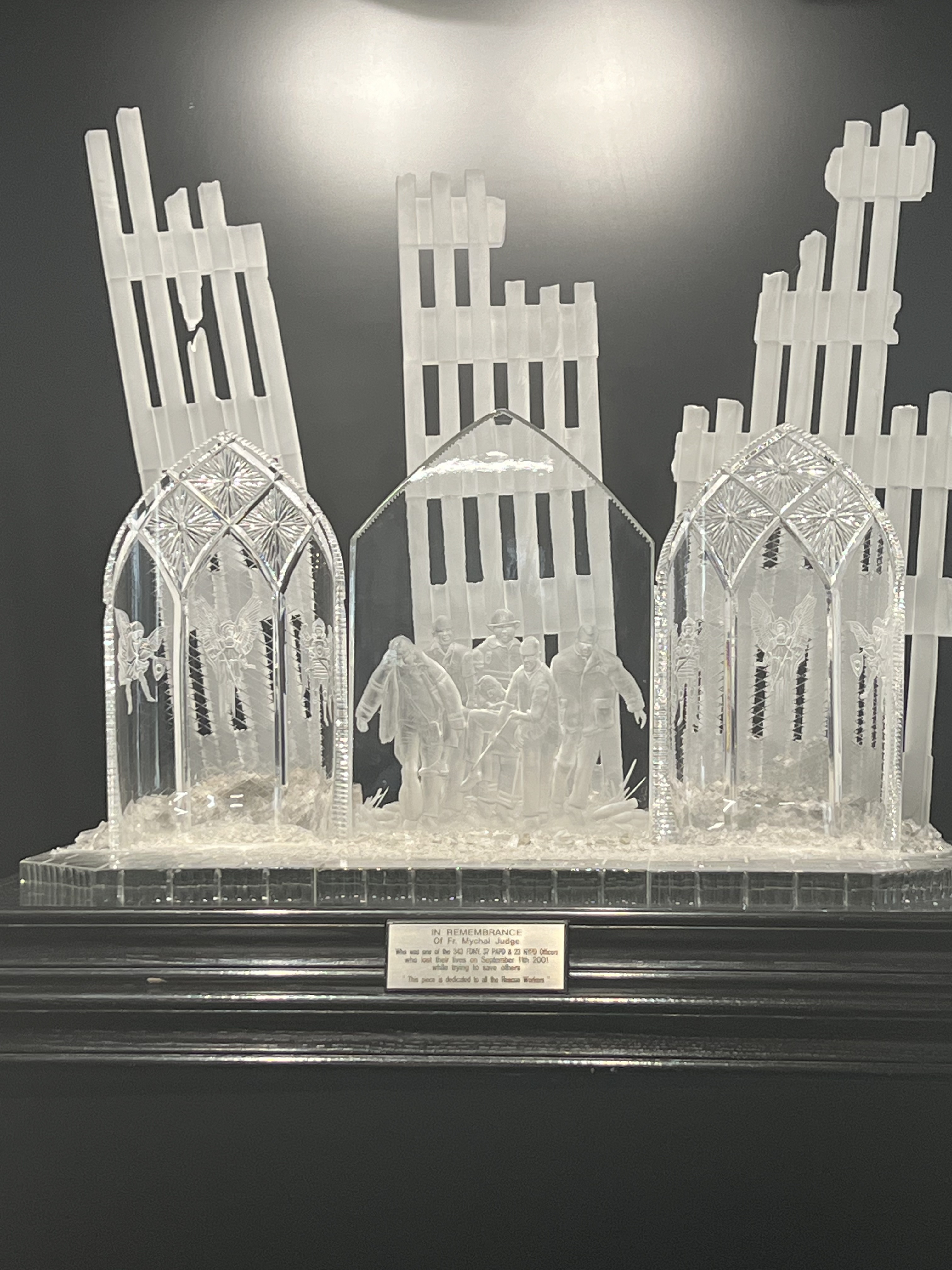
Dublin – Thursday morning, after a full breakfast, we packed the car ready for Dublin via Waterford. Waterford, of course, is the home to Waterford Crystal and since our kids will inherit our crystal, I thought it important that they see how it is made. We arrived a little early for our 11 am tour and spent the time musing through the showroom. In addition to the pieces they have for sale, a corner of the showroom is maintained as a museum of special pieces that have been made for sporting events, awards, etc. It was fun to recognize, for instance, the cups presented to the Solheim Cup and the PGA Honda Classic winners. Some of the decorative pieces are absolutely stunning.

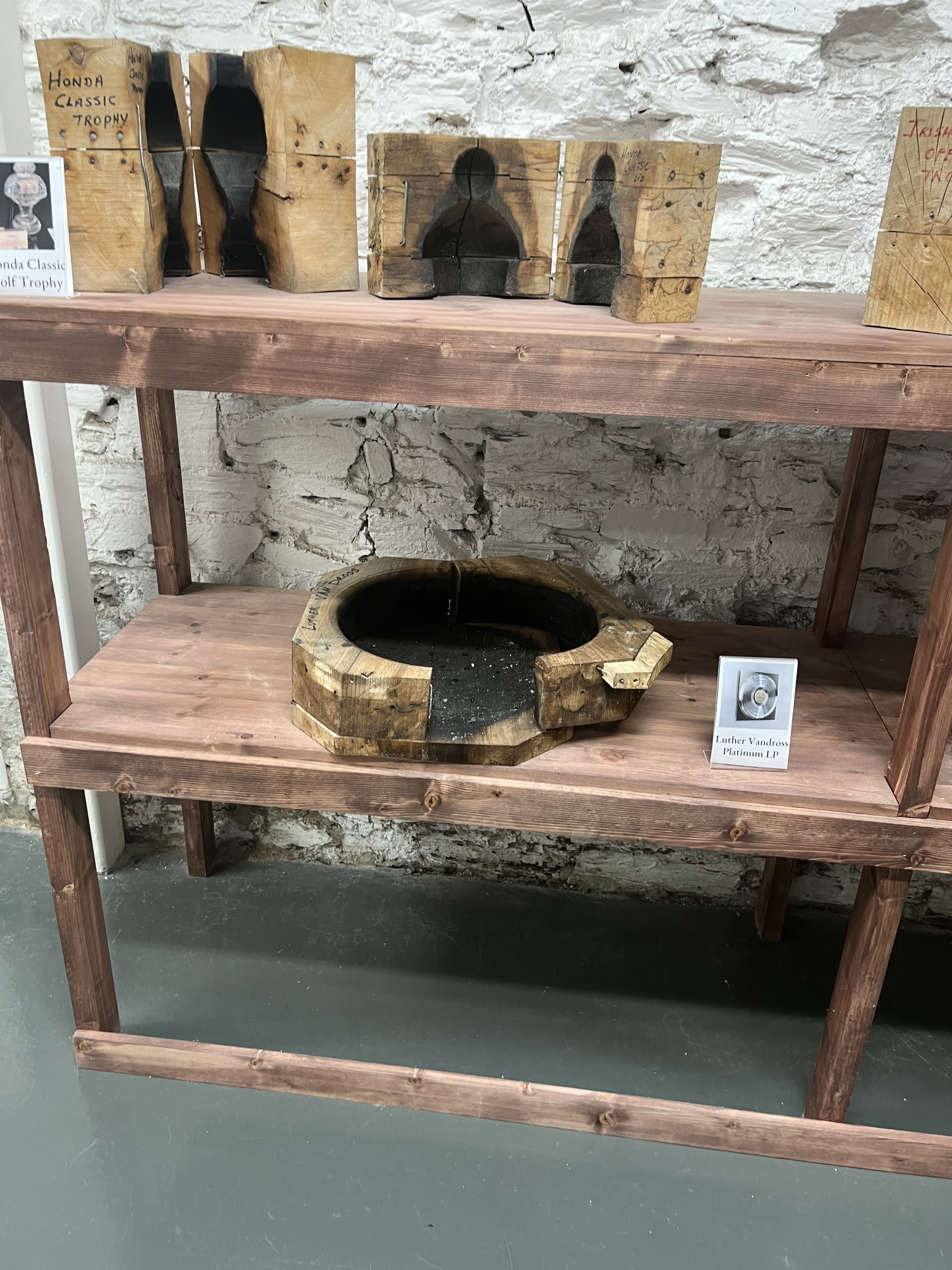
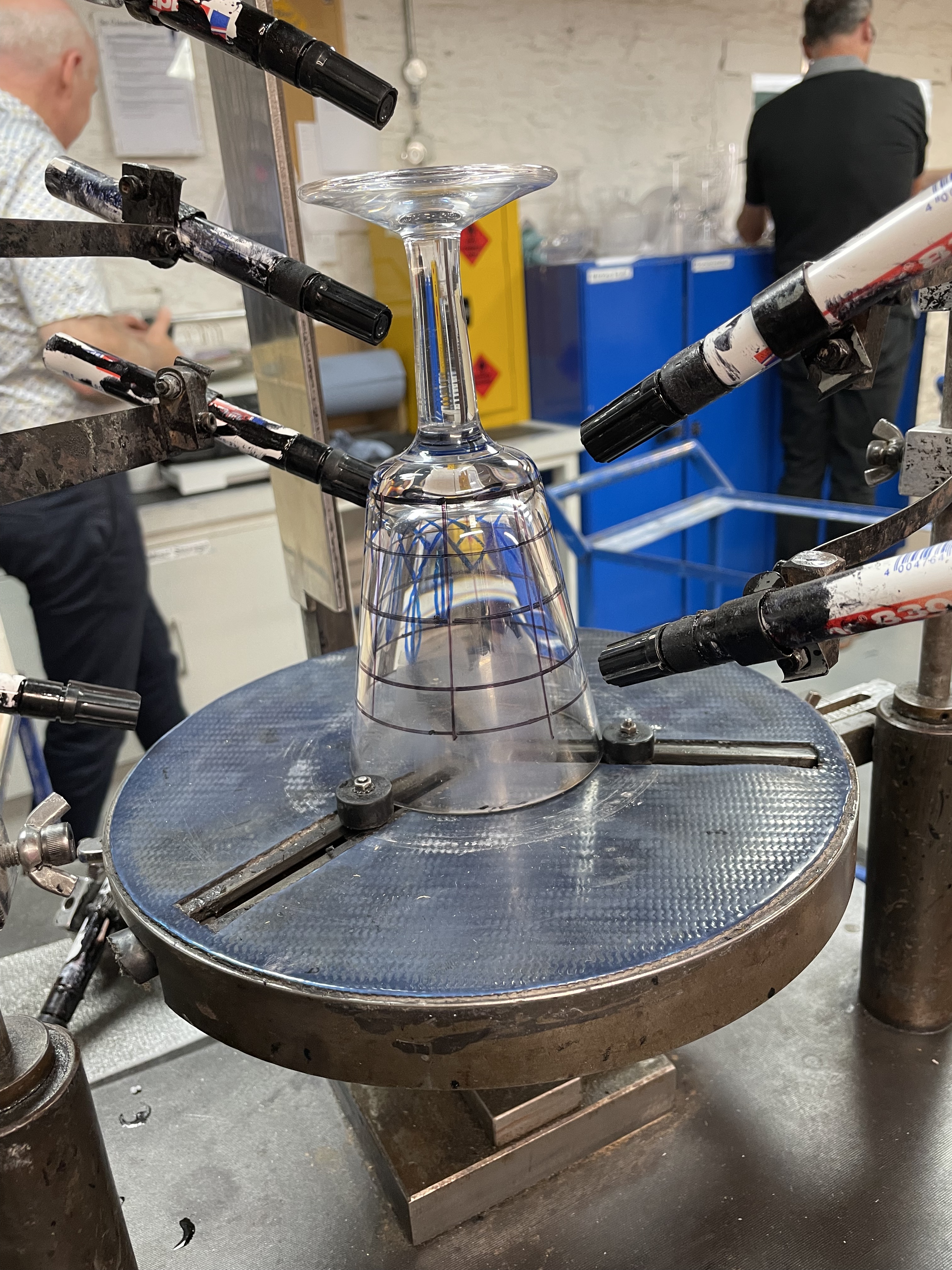
The tour began with a short presentation on the history of Waterford Crystal and its current ownership. Then it moved to the shop floor where we went through each of the steps in making crystal pieces: moulding room, blowing department, quality inspection, hand-marking, cutting department, sculpting and engraving. The process requires skilled craftsmanship and features detailed inspections each step along the way. Pieces that don’t meet their strict standards are melted down and the materials are reused.

Moulds
Firing
Marking
Cutting
Etching
9-11 Remembrance

After the tour, we ate an excellent lunch at the little cafe on site. We purchased a small vase for our neighbour, Jess, who was looking after our house for us.

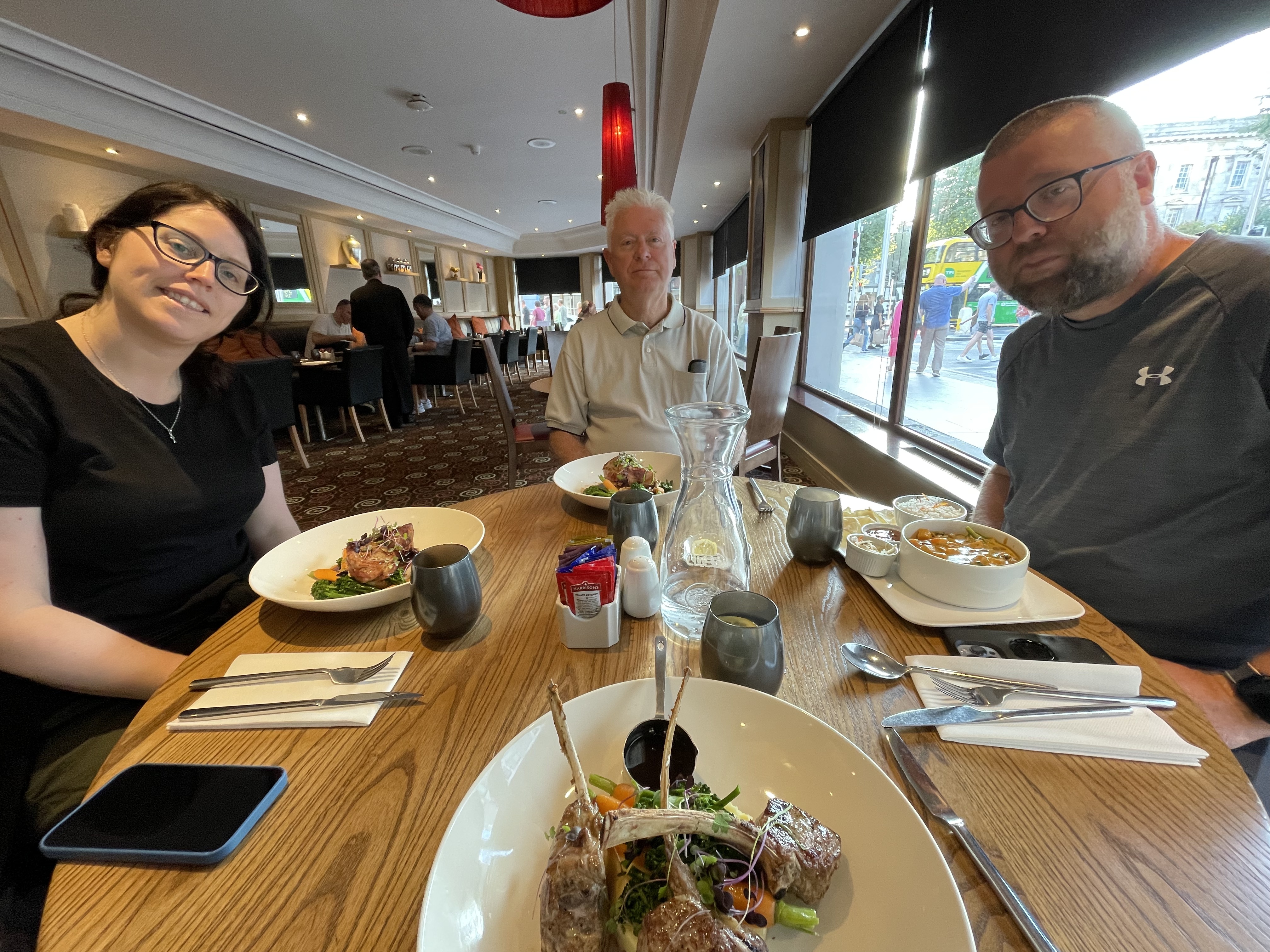
Then it was back to the car one last time and off to Dublin. We decided to drive to our hotel and drop all our bags and then Mom and George Jr took the car back to the airport. We also took a bag of hiking boots, poles, etc. that wouldn’t be needed in Dublin with us and checked them at the airport. The return trip from the airport was quite easy on the Dublin Express. Even though it was rush hour we made the trip in just 45 minutes. While we were away, Jenn and Dad went for an extended walk through the Temple Bar area and had dinner at a restaurant recommended by one of Jenn’s friends. Mom and George had dinner at a cute little Thai restaurant just down the street from the hotel. Our hotel, by the way, was the Holiday Inn on O’Connell Street, which was centrally located and very convenient for tourists. There’s really no need for a car in Dublin.

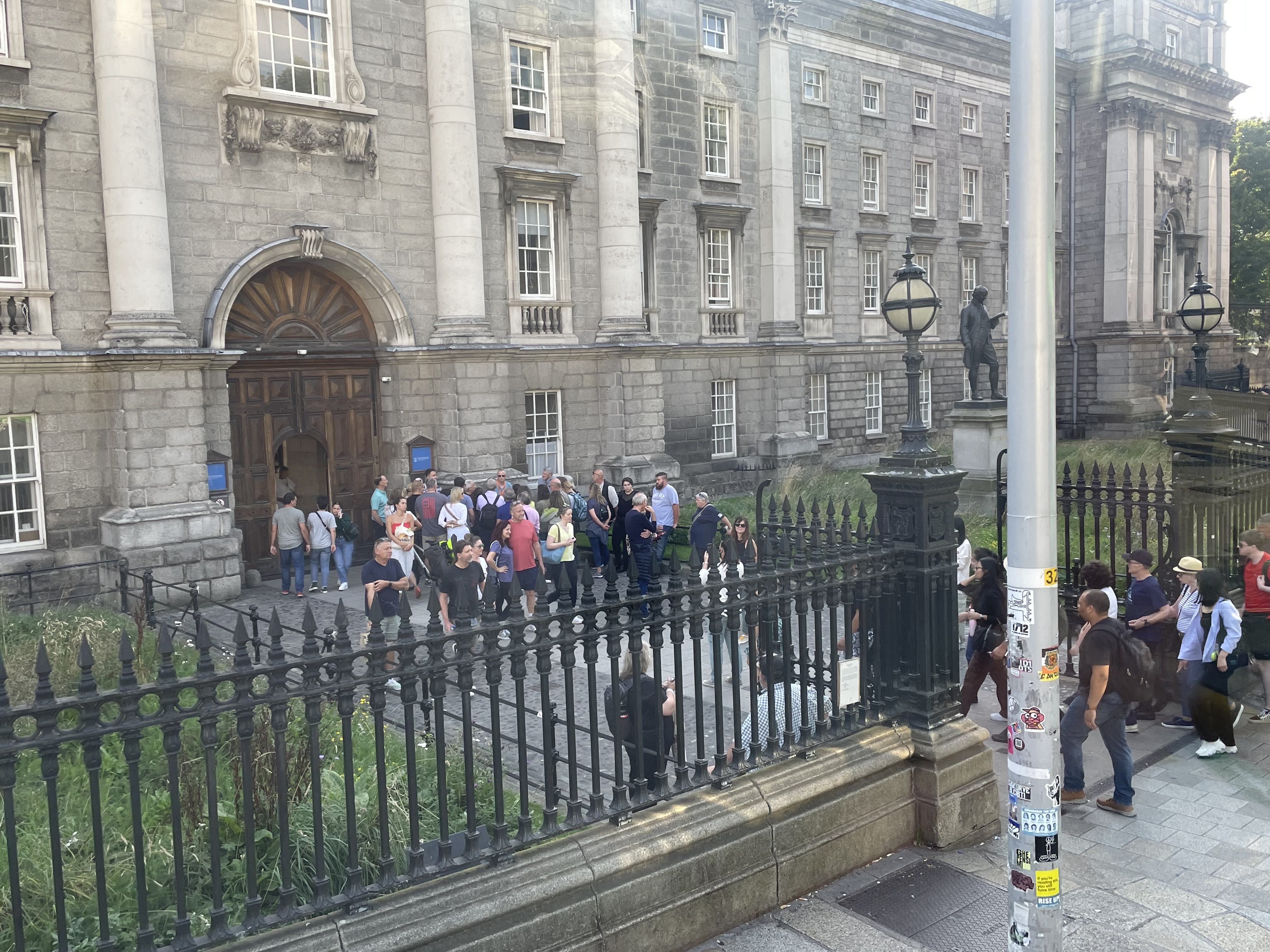
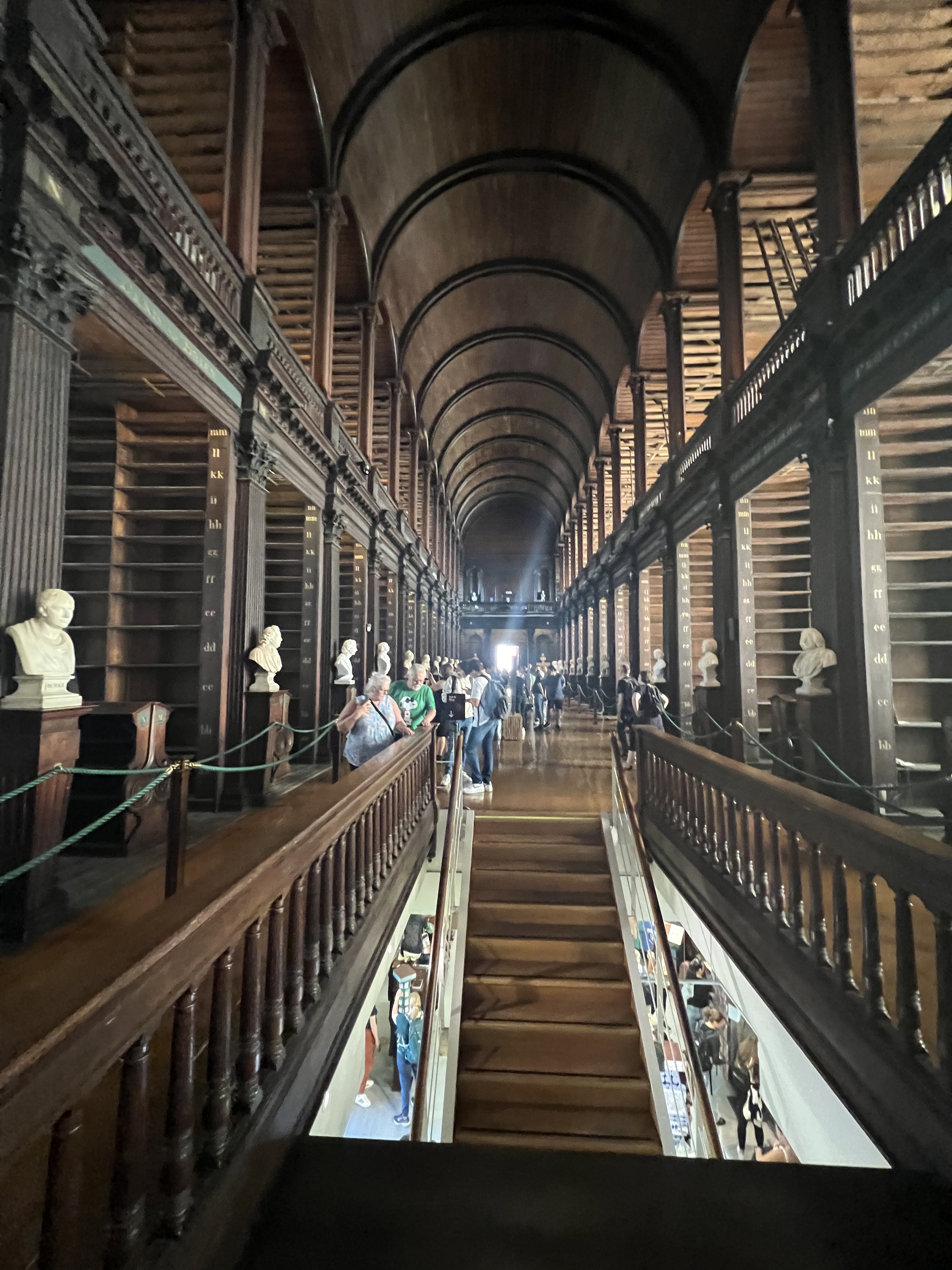
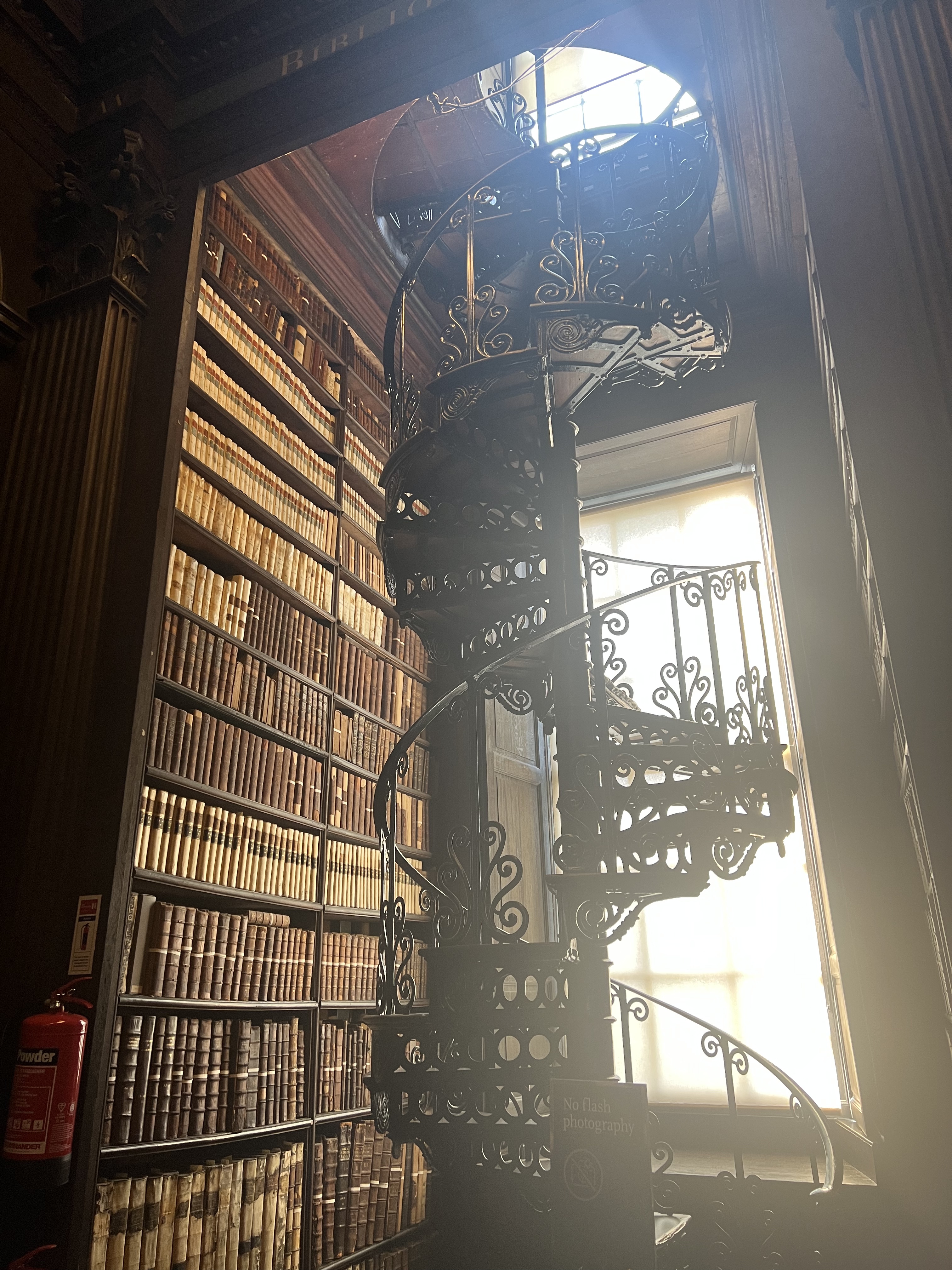
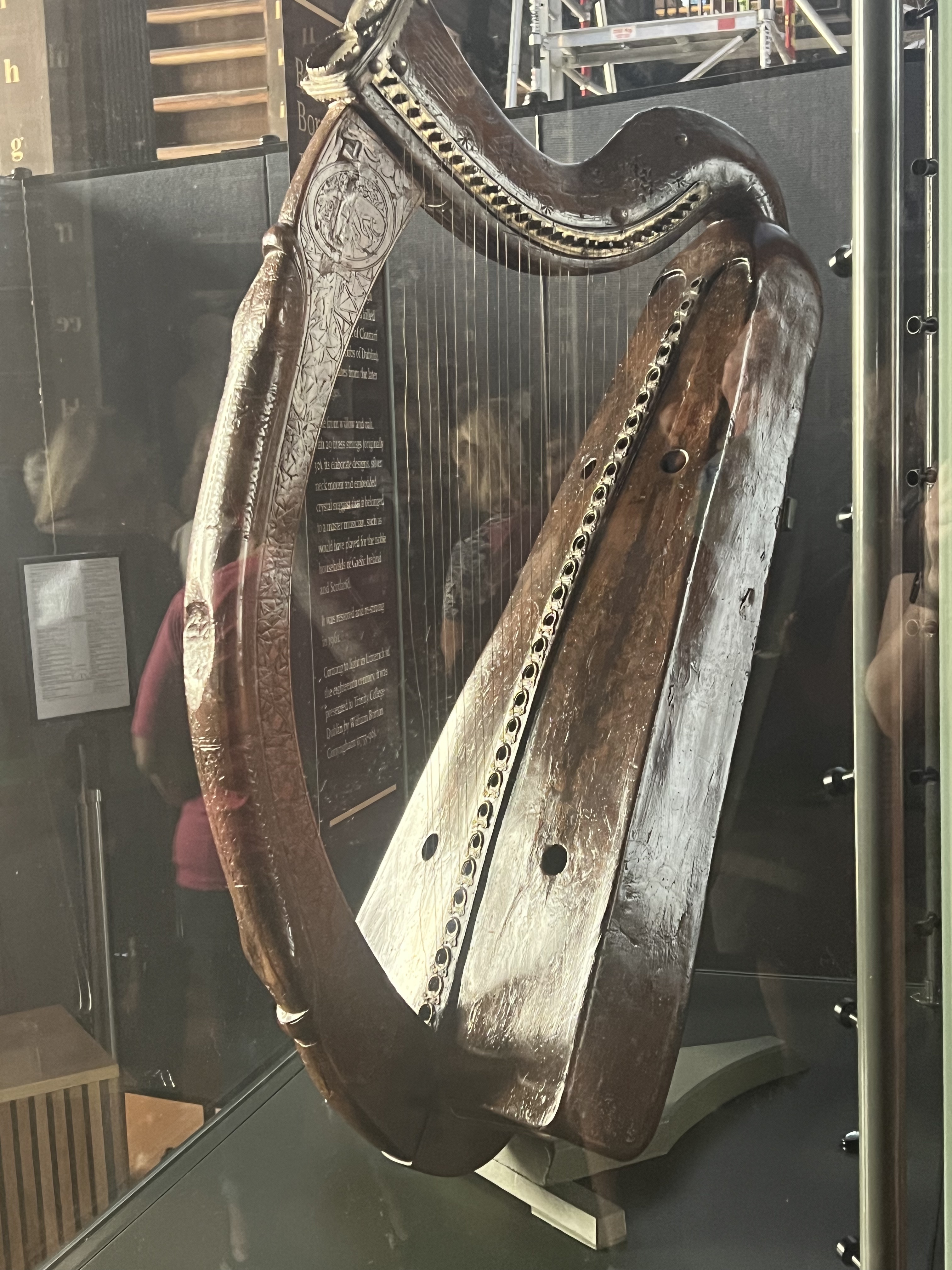
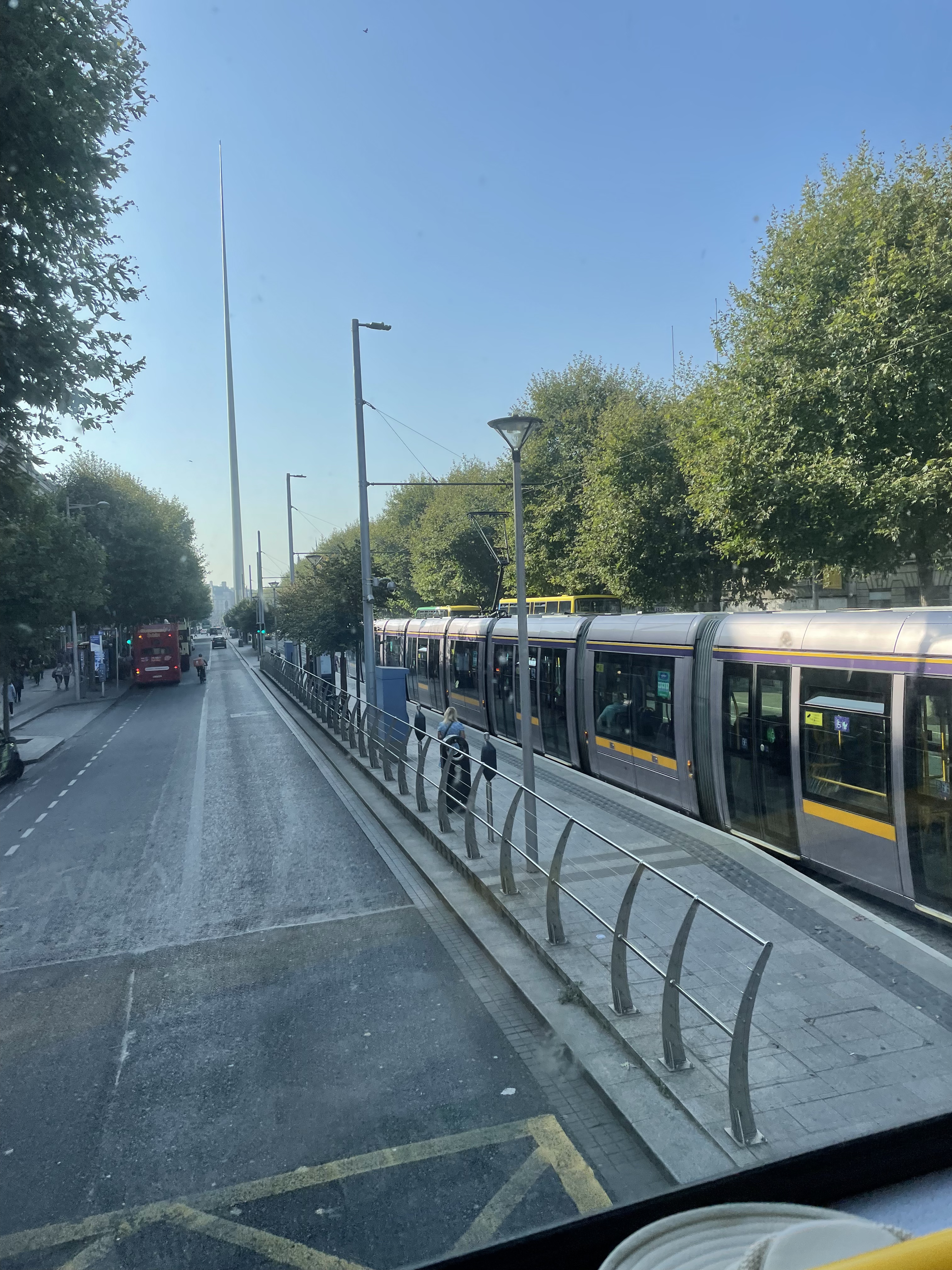
Friday morning, the kids had tickets to the Book of Kells exhibit at Trinity College. Unfortunately for them, the library was under redevelopment and all the books had been removed but their photos still captured the beauty of the old library dating back to 1732. While they were there, Dad and I caught the Hop On, Hop Off and did a round trip to get our bearings. We met the kids at lunch time and the guys went in one direction and the ladies another.

Beautiful spiral staircase
Brian Boru harp – national symbol of Ireland

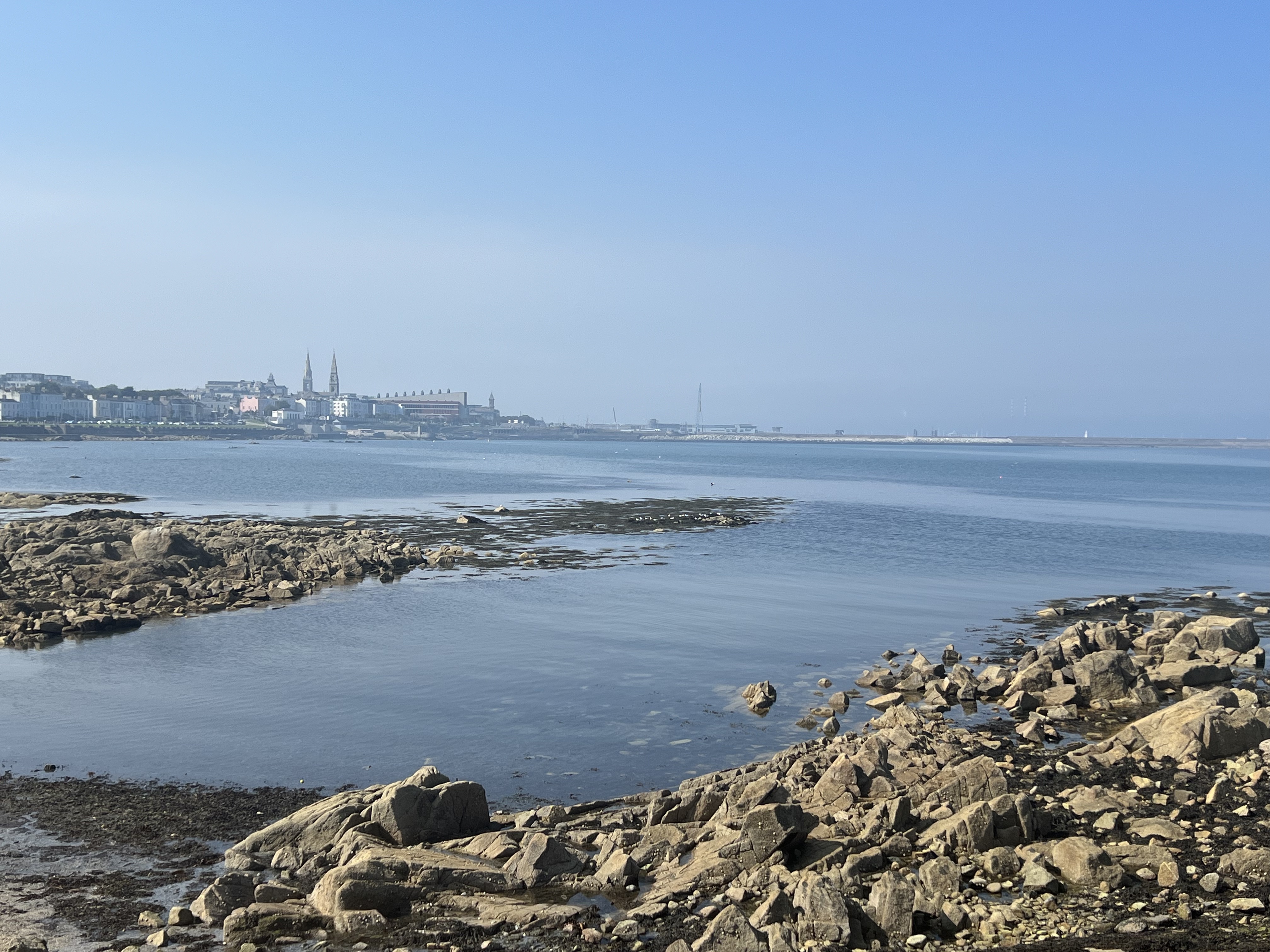
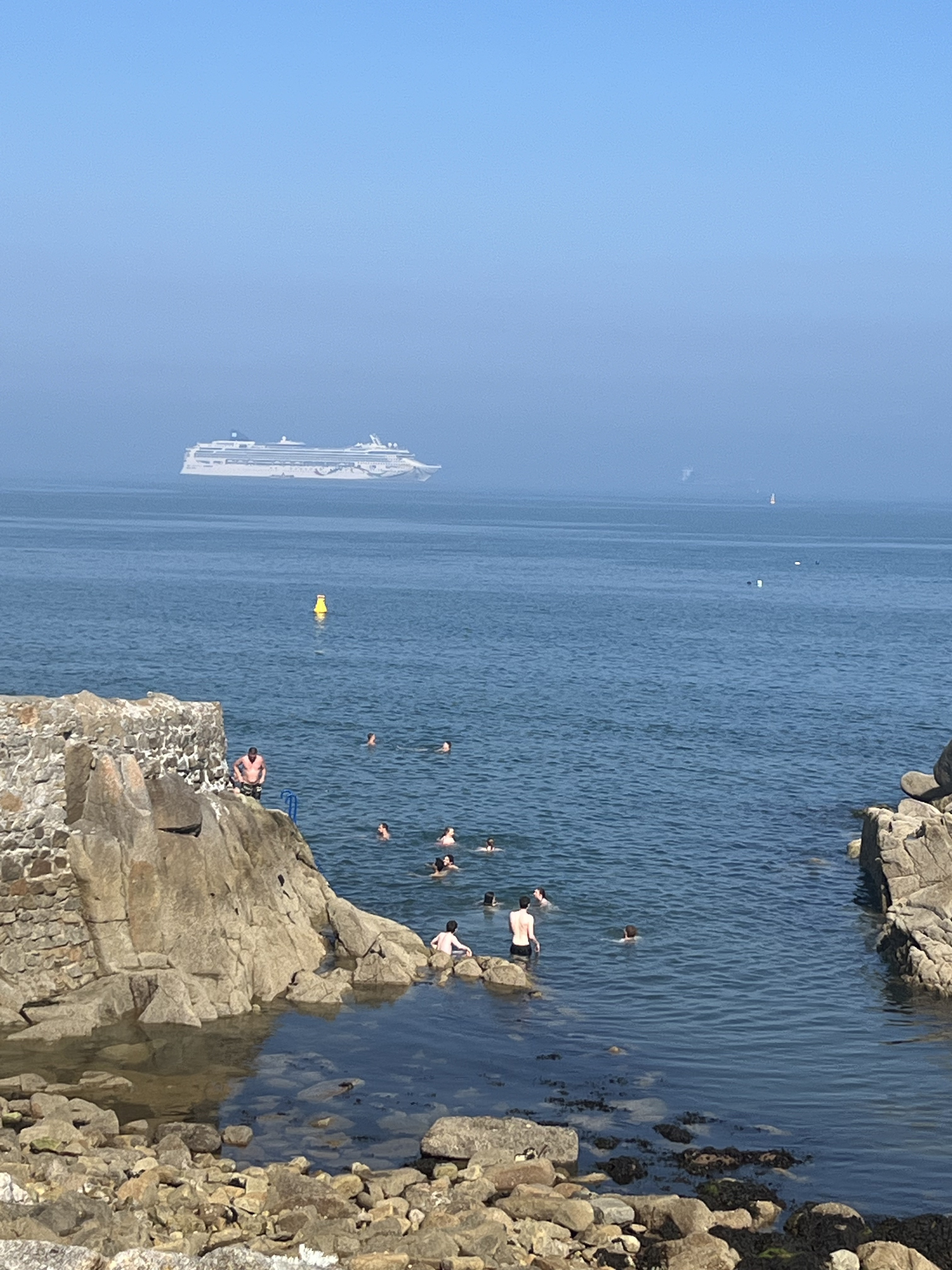
The guys were interested in exploring the transit system in Dublin and thus took the commuter train out to Dun Laoghaire. This is an historic suburban coastal town – home to the first suburban railway, the first purpose-built yacht club, and the world’s largest asylum harbour. Since it was such a lovely day, people were swimming and enjoying the fine summer weather. There are two piers. The East Pier takes you past the historical sundial, the bandstand, the battery and the lighthouse at the end. The walk is about 2.5 km return. The lighthouse features a small museum in honor of James Joyce, who spent some time in the area. The West Pier is unpaved and slightly longer but provides for a better view of the harbour and the boats in the Marina.

The guys love trains
James Joyce museum

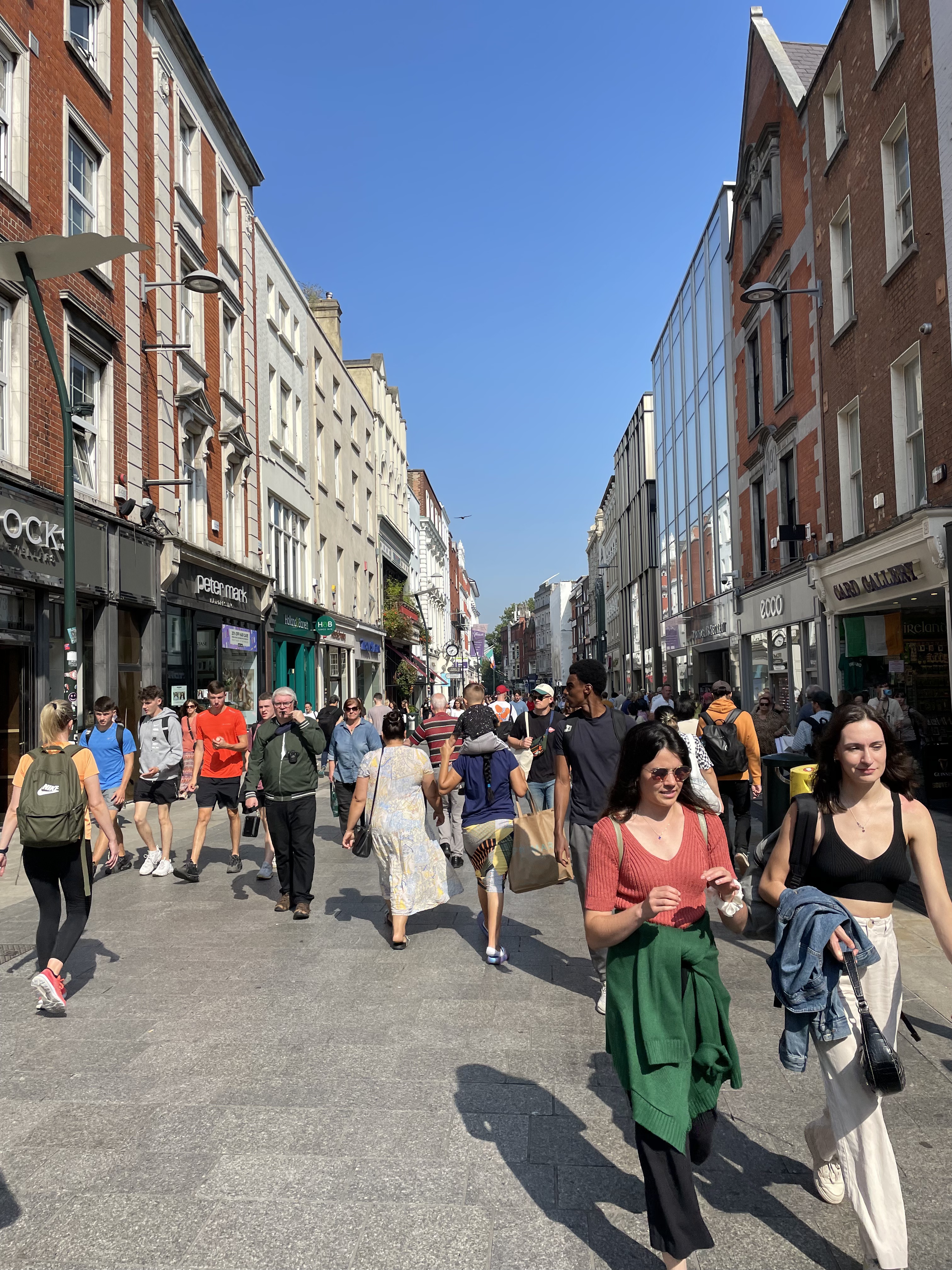
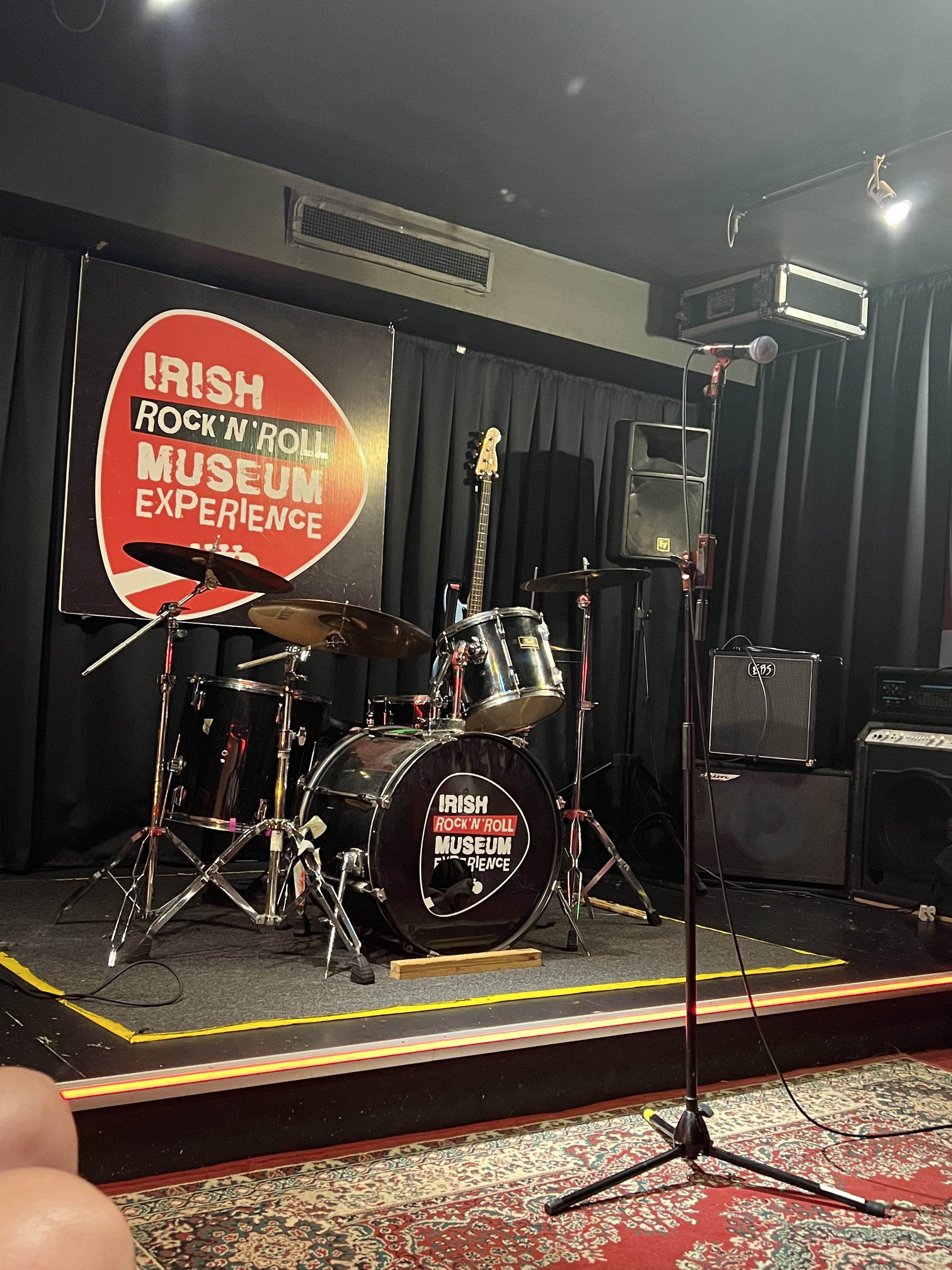
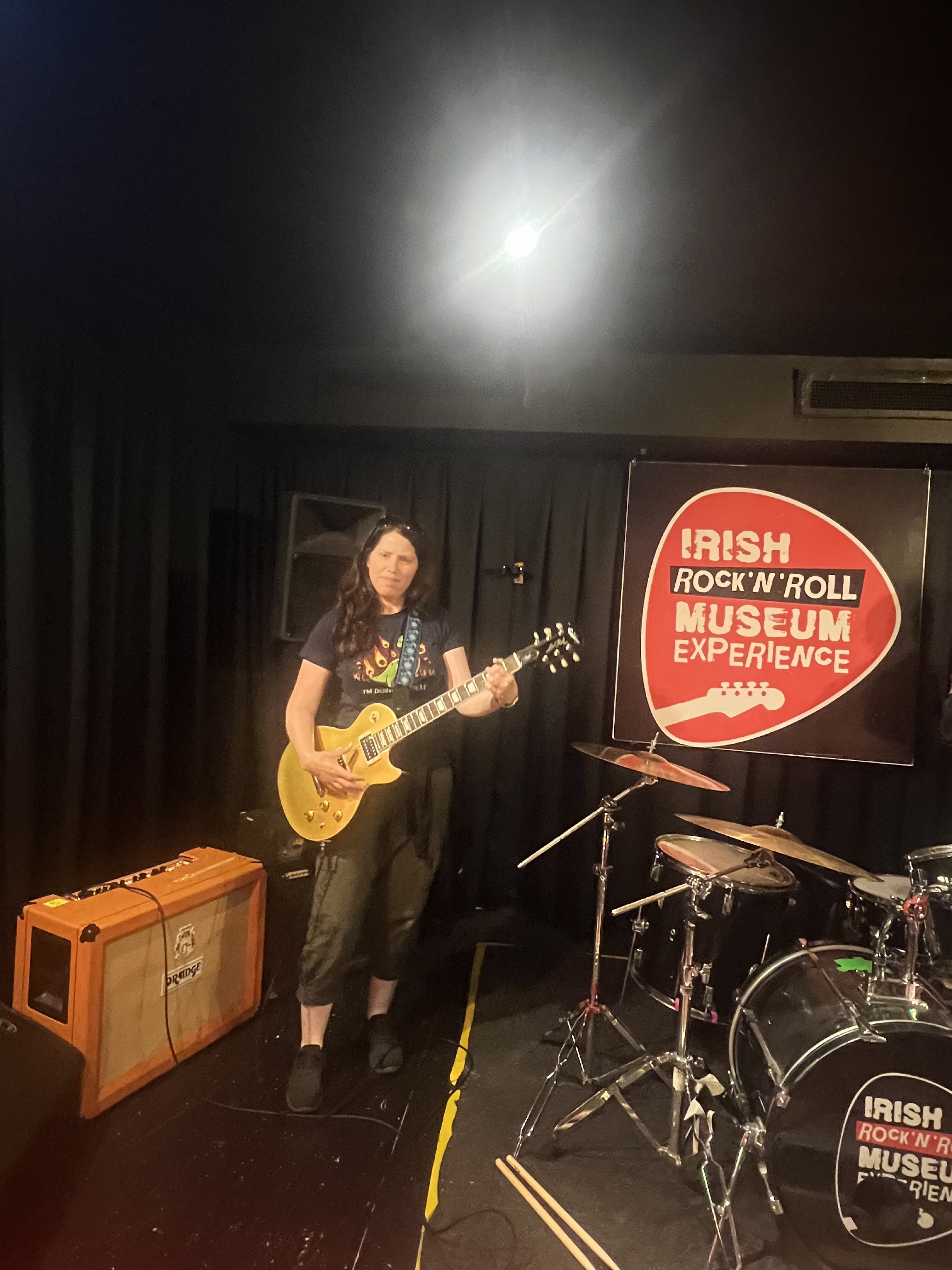
The gals went to Grafton Street to check out the shops and do a little shopping. I returned to the hotel early on the bus while Jenn continued with a music tour of Dublin. She had a great time ending up at a recording studio where she tried out her performance skills.

Dinner that evening was at Flanagans and then we all went to check out the Barbie movie. Both kids had seen it before but were quite keen to see it as a family. What fun!

Our last day in Dublin was “explore your own interests.” Mom and George Jr went to the EPIC museum while Dad and Jenn explored the Archaeology Museum. EPIC is a museum located in an historic building on Custom House Quay where it was used to store tobacco, tea and spirits. It overlooks the River Liffey, which was the departure point for so many people who fled the country during The Famine. It’s a very fitting location for Ireland’s emigration museum. Beautifully designed and entirely interactive, the displays tell the story of over 300 people who became scientists, politicians, poets, artists and even outlaws all over the world. The local joke is that the English discovered the world, while the Irish populated it! It was a fascinating, informative morning.

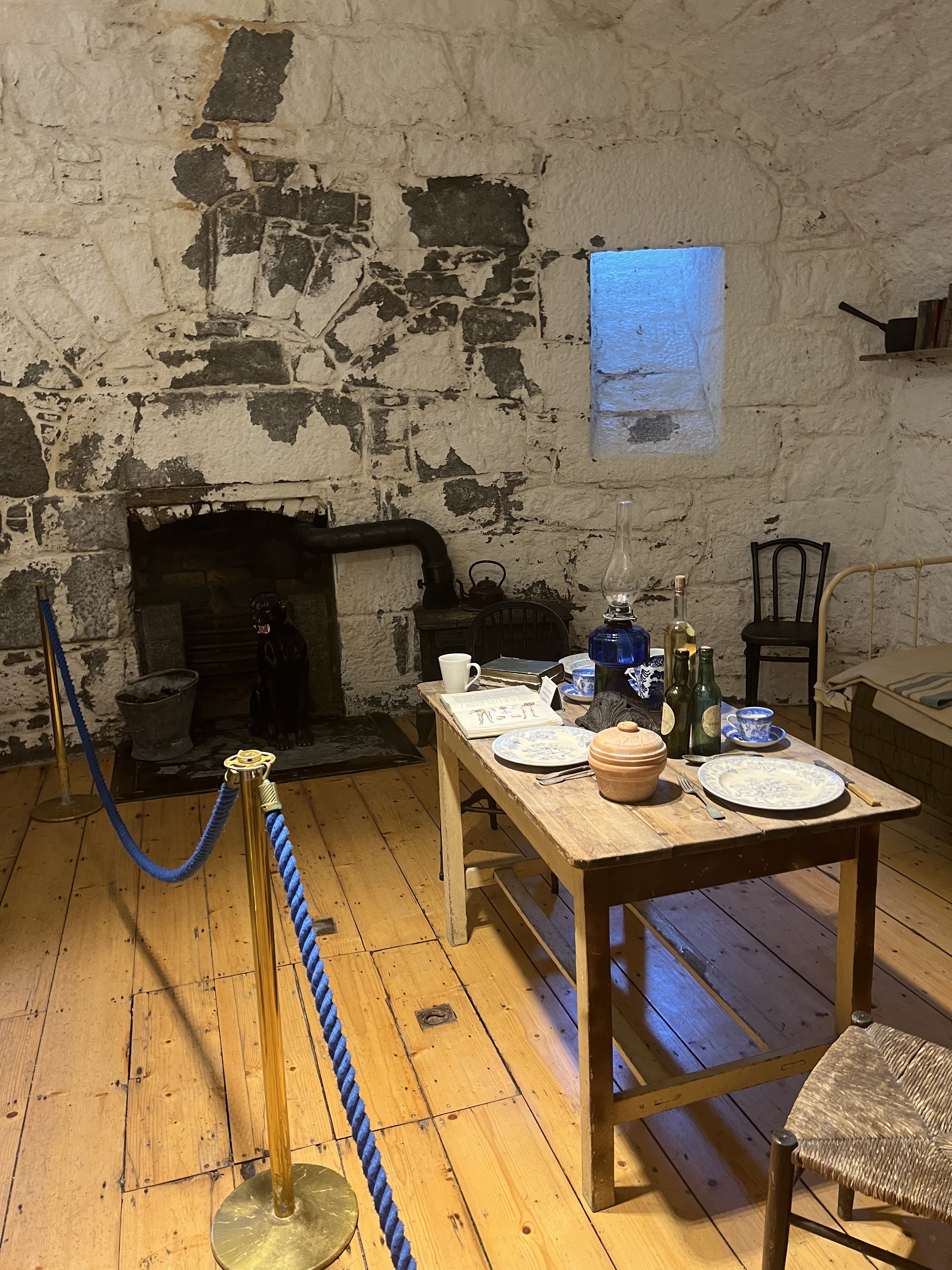
Jenn and Dad lucked in when they arrived at the Archaeology Museum as a tour was to begin shortly. The docent was a young man who was very knowledgeable and provided a very interesting tour. At the end of the tour, they realized that he was going to lead another in about an hour. They separated and explored different parts of the museum and then met again for the second tour. It was fascinating to go to a museum and see some of the artifacts from sites that we had visited. Also of interest was a diorama of a village that explained what life was like in Viking Ireland, a precursor to next year’s trip.

Epic Museum
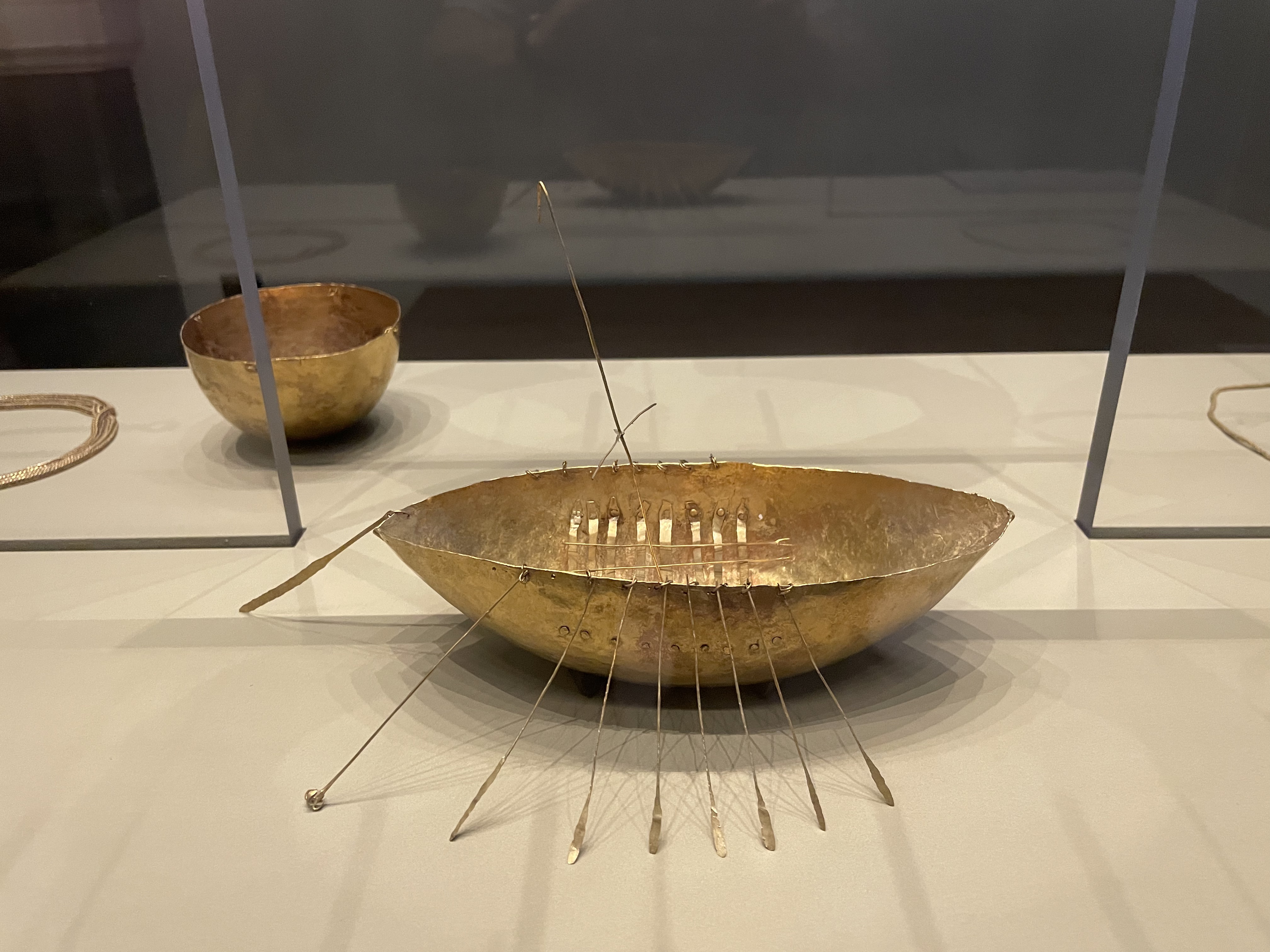
Gold boat from 8th Century BC

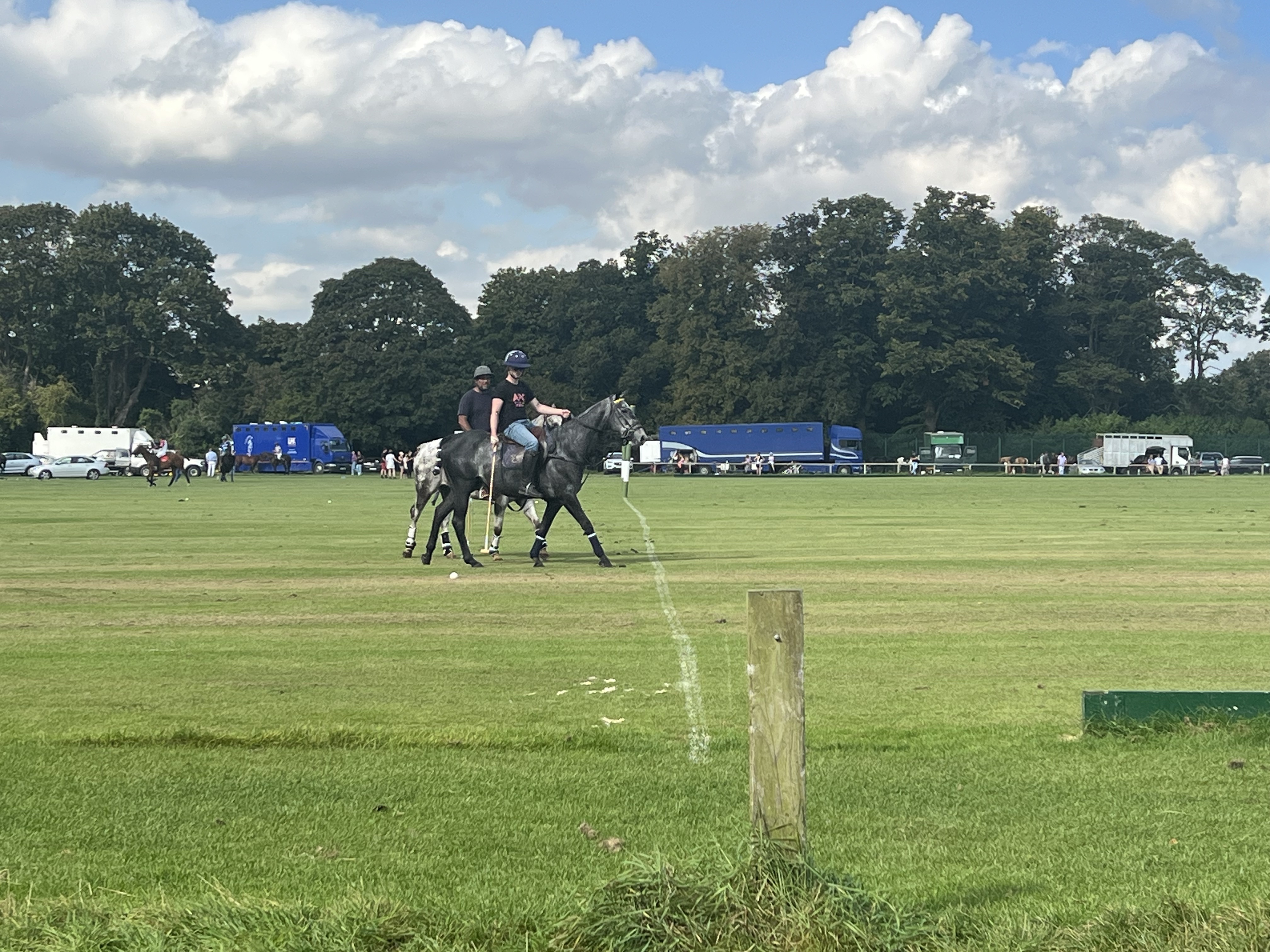
We agreed that we would reconnect at Phoenix Park after lunch. This is one of the largest enclosed public parks in any capital city in Europe and has a long history dating back to the eighteenth century. Included in the park are zoological gardens, flower gardens, a biodiversity information centre, a cafe and tea rooms, walking and cycling trails, as well as many sporting venues. Jenn went off to check out the polo grounds, while George and mom perused the flower gardens and checked out one of the concession stands for a cold drink. Dad sat on a park bench and chatted with other visitors to the park. It was a warm day and we were all beginning to flag towards the end.

Polo Grounds
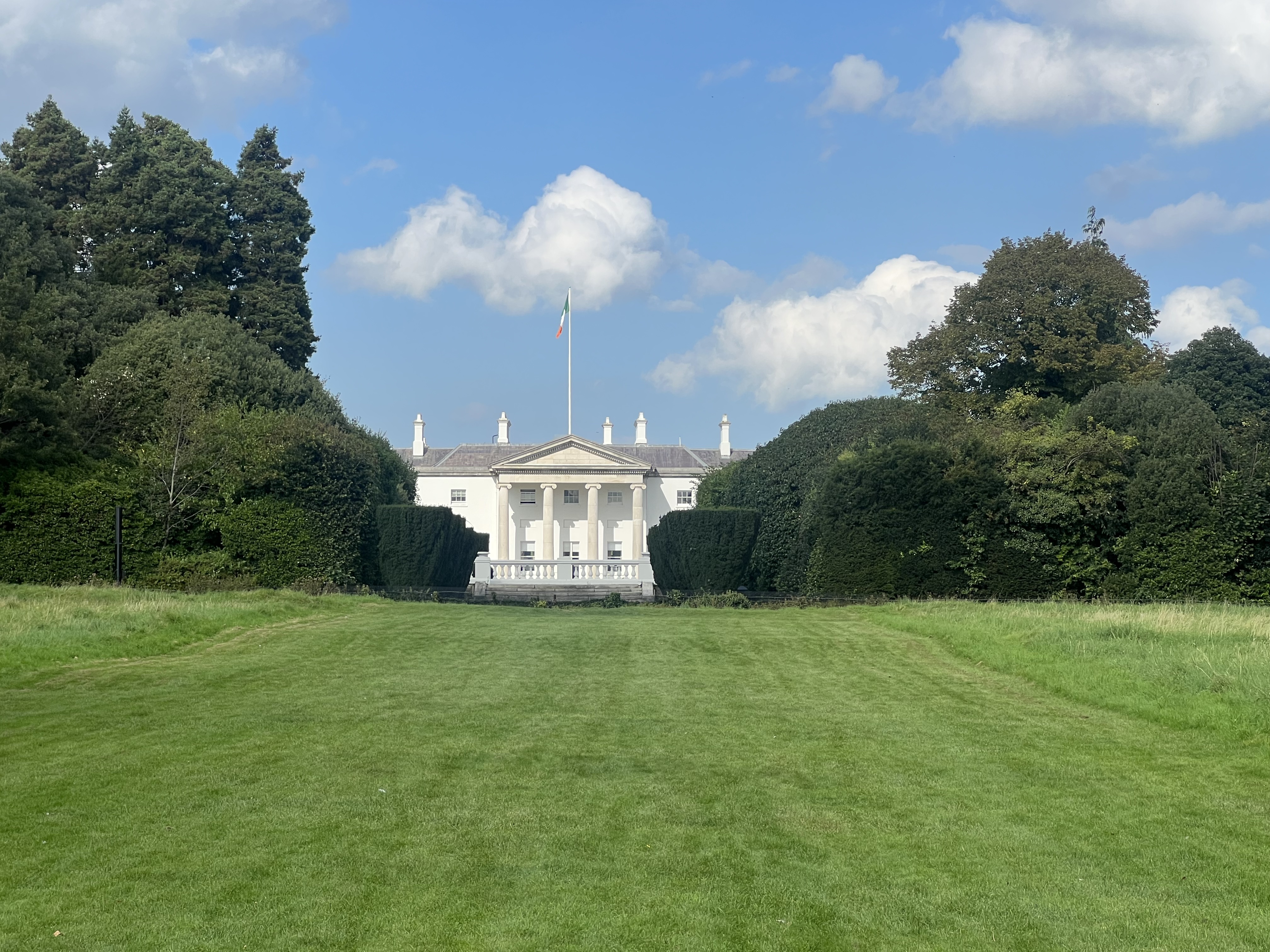
Farmleigh House
The gardens
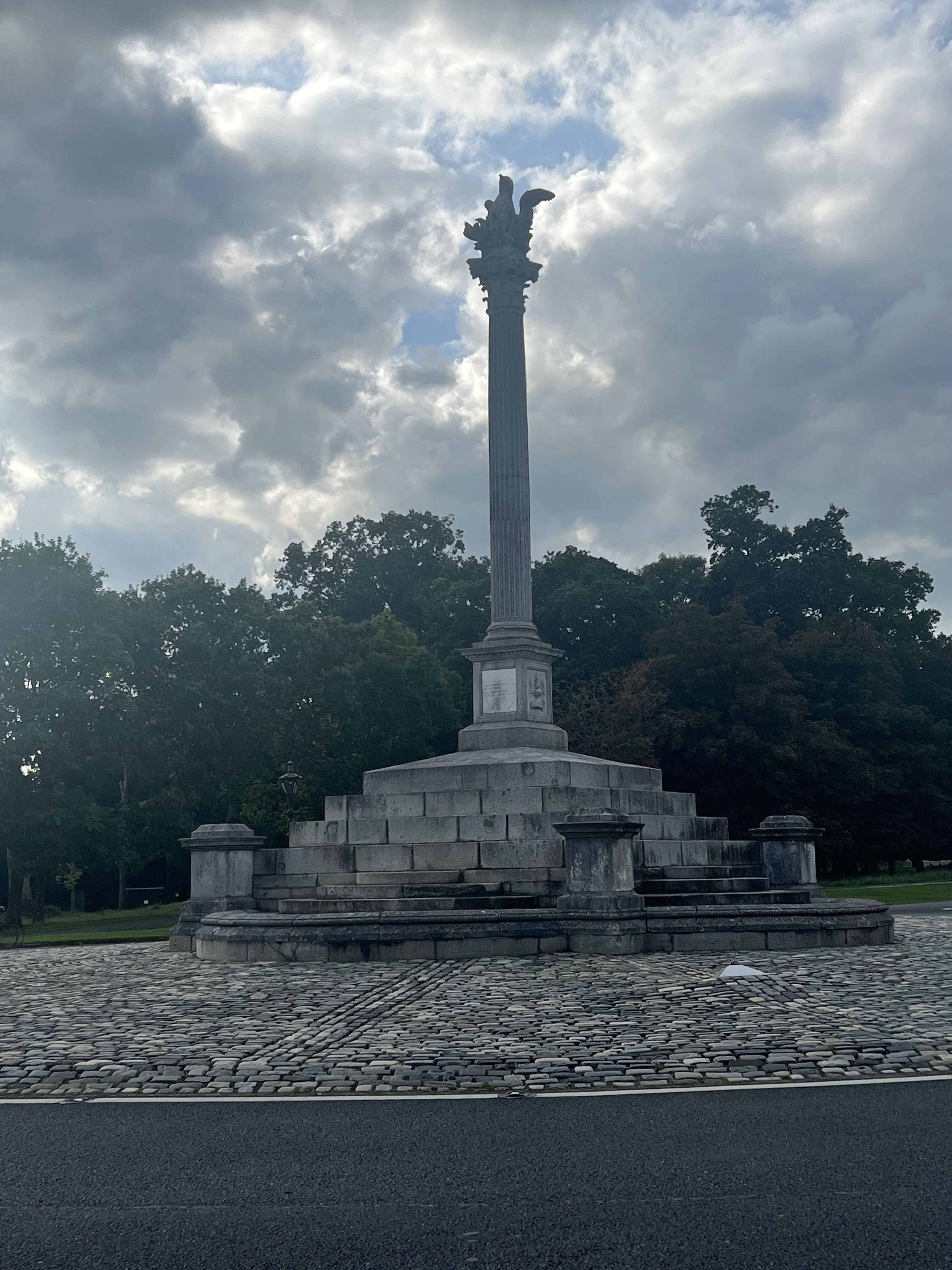
Wellington Monument
Original gas lamps
Dad doing his favourite thing!

Dinner for our last night was at Teddy’s Bar & Brasserie, directly across from the hotel. The food was good and the service was excellent. Then it was back to the hotel for final packing and an early morning bus to the airport. Fortunately, the bus stop was just a short walk from the hotel but 6:20 am was early!

After picking up our stored luggage and checking in, we had a wee breakfast before bidding adieu to George Jr who was catching a later flight to the continent. Dad, Jenn and I flew home without incident until it came time to meet our chauffeur, my sister Barbara, at the airport. Because we had forgotten to take our golf clubs out of the trunk of our car, there was no way we could get all our luggage and George’s bike in the car. Dad ended up taking a separate cab with the bike.

We also brought a little something extra home with us! Jenn and I both came down with COVID the next day. Despite having sat between us on the plane, Dad did not seem to get it … but then maybe he and George had a mild case of it in Ireland? We will never know.

Subscribe

  • Entries (RSS)
  • Comments (RSS)

Archives

  • November 2024
  • October 2022
  • July 2022
  • January 2022
  • February 2019
  • July 2018
  • June 2018
  • February 2018
  • November 2017
  • February 2017
  • January 2017
  • June 2016
  • March 2016
  • February 2016
  • January 2016
  • August 2015
  • July 2015
  • April 2015
  • March 2015
  • February 2015
  • July 2014
  • June 2014
  • November 2013

Categories

  • Uncategorized

Meta

  • Create account
  • Log in

Blog at WordPress.com.

  • Subscribe Subscribed
    • nancybellblog
    • Already have a WordPress.com account? Log in now.
    • nancybellblog
    • Subscribe Subscribed
    • Sign up
    • Log in
    • Report this content
    • View site in Reader
    • Manage subscriptions
    • Collapse this bar
 

Loading Comments...