This trip was many years in the making. In 1990, Nancy’s parents travelled to Oberammergau with friends from their church in Florida. It was such a highlight for them that we added it to our travel bucket list. In 2010, we were three weeks away from leaving when George had a major heart attack. We had rationalized that we should go when we were in our 60s, not knowing what our health might be like in our 70s. Well, that didn’t happen! Our second attempt was in 2020, but obviously COVID intervened. We were very happy for Craig Travel to hold our deposit in the hopes that things would go forward in 2022 … and they did.
The tour included a seven-day Rhine River cruise on AMAWaterways followed by a four-day bus tour through the Bavarian Alps. Our tour group consisted of 28 people mostly from the GTA. The tour leaders were Joan and Roger Rix from Innisfil.
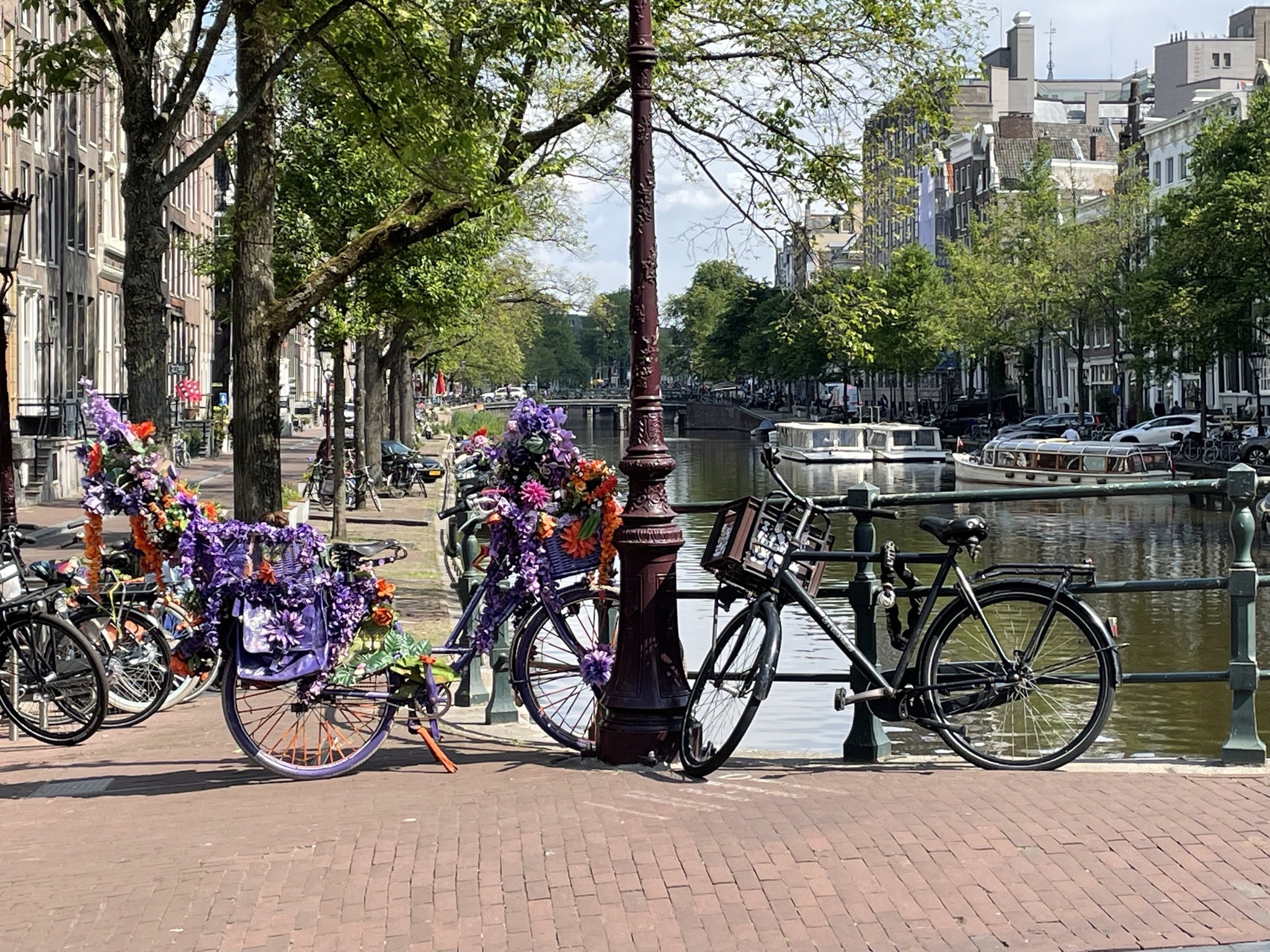
We left three days early (May 29th) so as to get acclimatized before the tour started. Returning to Amsterdam gave us an opportunity to stay at our favourite B&B and visit with the owner, Corina Koon. We also arranged to have lunch with Anne Catrien, whom we had met on a Norwegian cruise in 2010, and her new “significant other.” On two previous trips to Amsterdam, we had not been able to visit the world-renowned Rijksmuseum due to it being closed for renovations. We were very happy to spend most of one of our full days there.
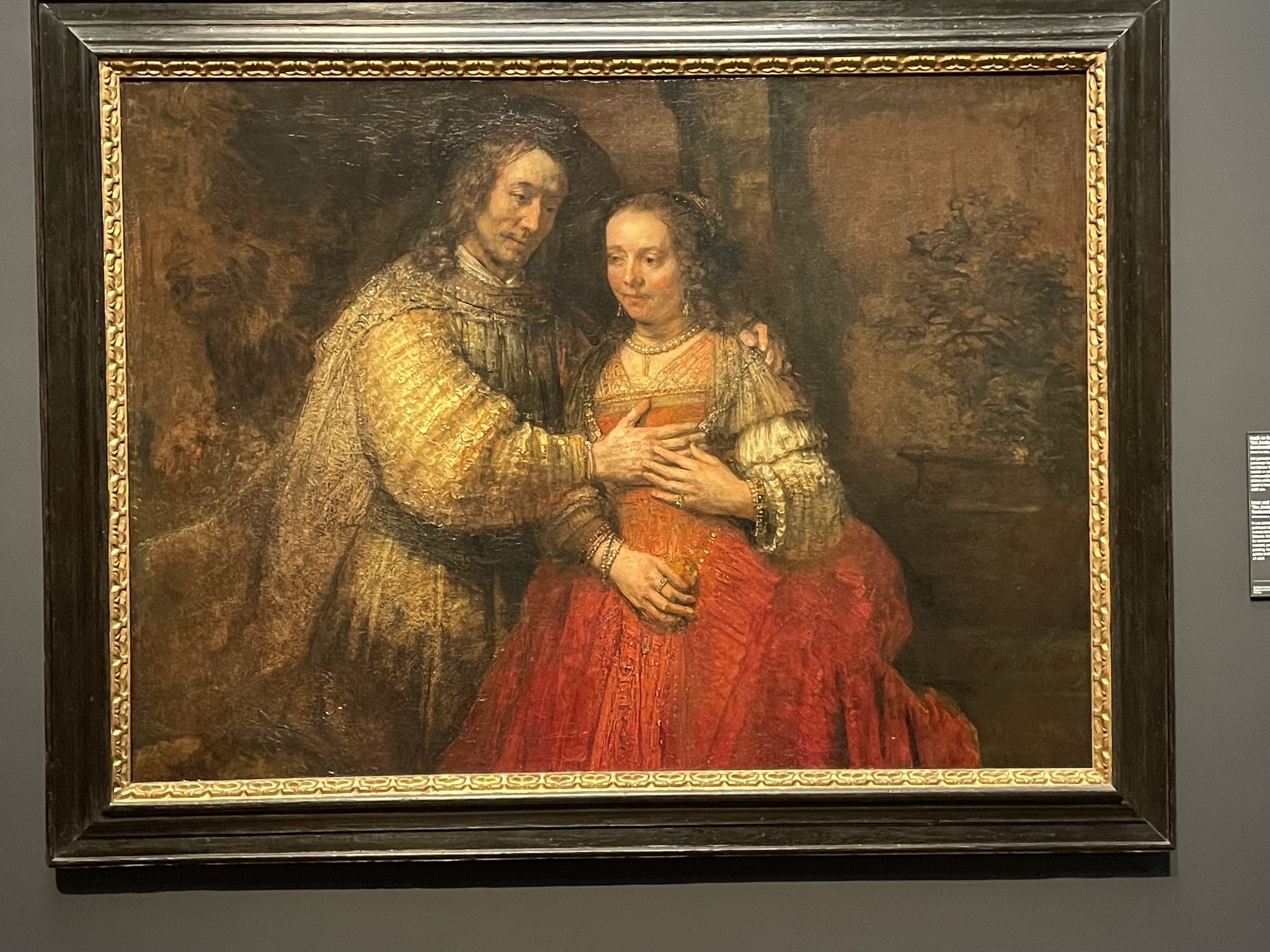

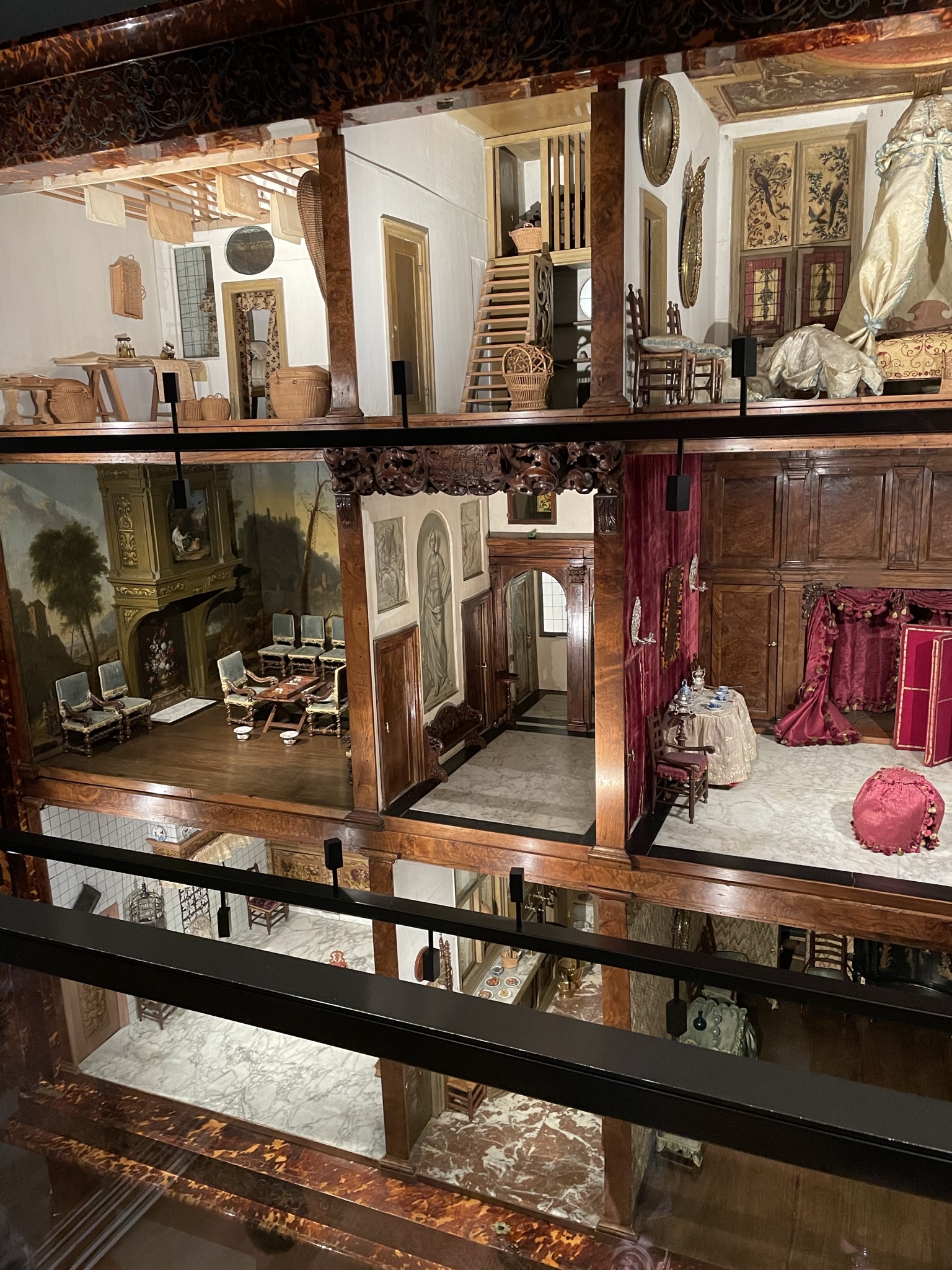
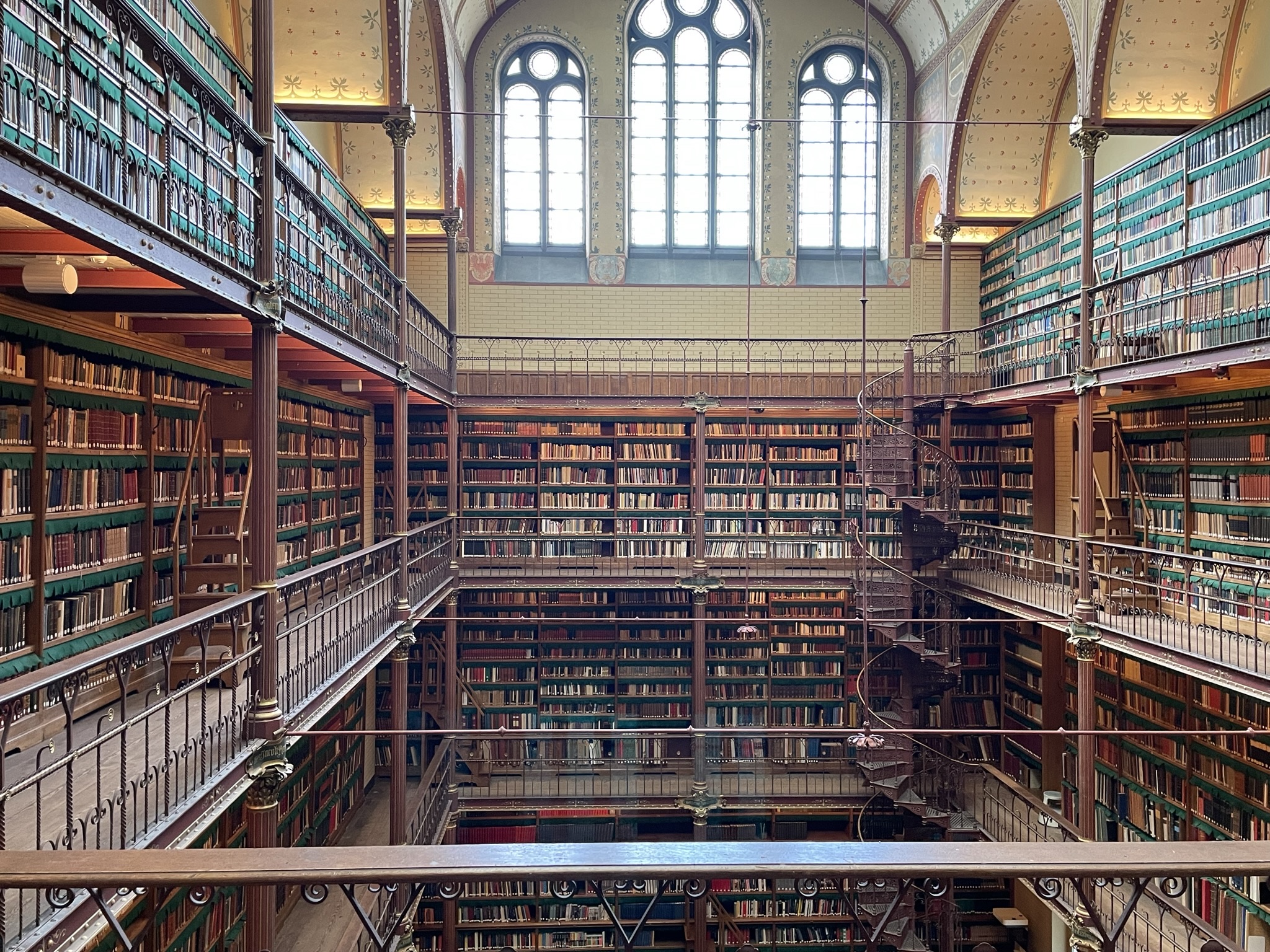
Aside from all the famous Rembrandt paintings, we were taken by the three Doll’s Houses on display. The most famous one once belonged to Petronella Oortman. It provides a detailed view of how affluent houses in Amsterdam were built and furnished. All the pieces are made to scale and replicate their real counterparts. She custom-ordered china, cabinets, fabrics, etc. An extremely expensive hobby, her doll’s house cost as much as a house on the canal!
The museum’s current building was designed by Philip Cuypers and first opened in 1885. It houses a beautiful library which serves as the largest and oldest art historical library in the Netherlands. Researchers were very busy the morning we visited.
There are so many wonderful restaurants in Amsterdam that it is always difficult to choose. This time we opted for Nine Spices (an Indian restaurant close to the B&B), Balthazar’s Kitchen (which features a very limited menu and an intimate setting with an open kitchen) and Sama Sebo (a well-known Indonesian restaurant).
Day 1 – Amsterdam
Our ship the AmaLucia was waiting for us on Thursday morning when we arrived at the port. Since we were early, we just sat and read, went out for lunch and came back in time to find our cabin and unpack before dinner. The cabin we were assigned was not what we had expected (our fault) and so after arranging an upgrade we made a quick move to provide a bit more room and some in-cabin seating. At dinner that evening we caught up with the remainder of our tour group. COVID policy required that our group of 28 sit at four tables of six and one foursome. It meant that we could circulate amongst the tables but for COVID-purposes we were one bubble. Imagine our surprise when our dinner companions the first night turned out to be cousins of a lady at our church and best friends with one of our friends! Ross and Betty Verner are members at Edmison Heights Baptist Church and we found we had many connection points aside from the two mentioned above. If dinner the first night was any indication, we will be well fed on this trip!
Day 2 – Amsterdam
There were a number of choices for tours this morning including the usual canal tour, a self-guided walking tour and a bus trip out to Floriade. We opted for the latter. Floriade is a once-every-ten-year International Horticultural Expo held at different sites throughout the Netherlands. We spent a day at Floriade in 2012 and enjoyed it so much that we were pleased it was on again and close-by this visit. This year’s theme focused on making our cities more fun, more beautiful and more sustainable. Because we only had about four hours before the bus returned to the port, we just got an overview of the expo and sampled some really excellent tomatoes.
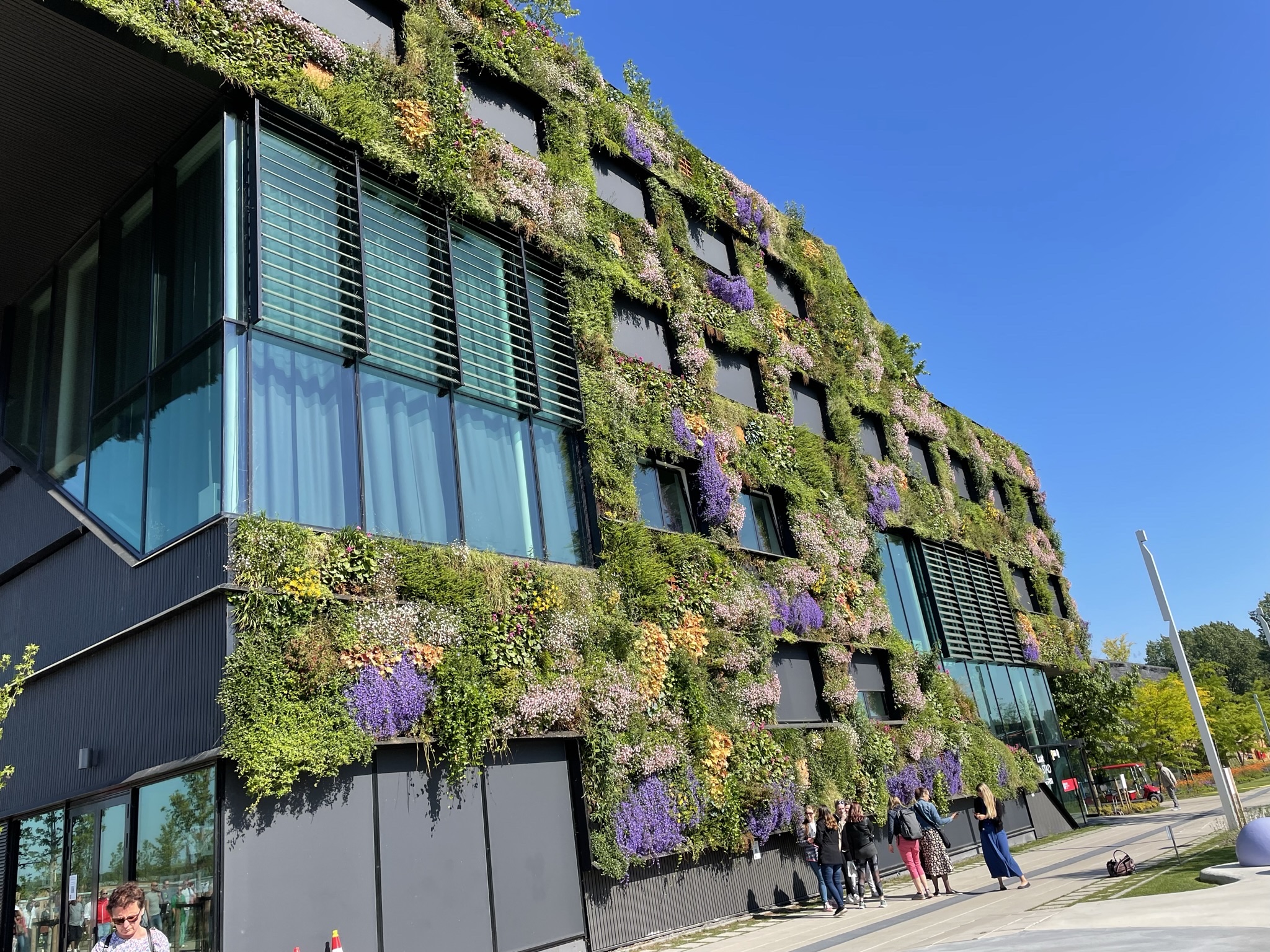

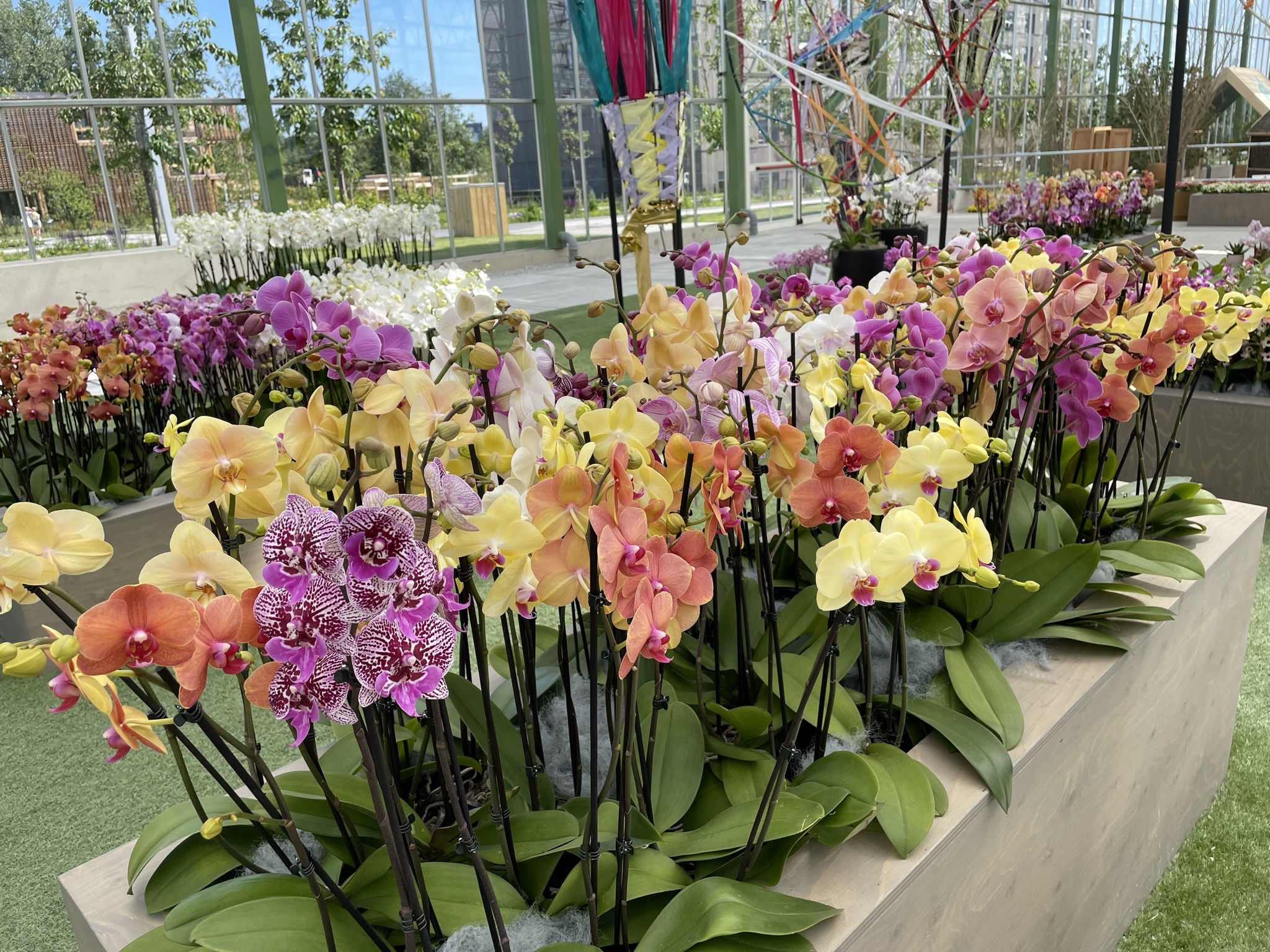
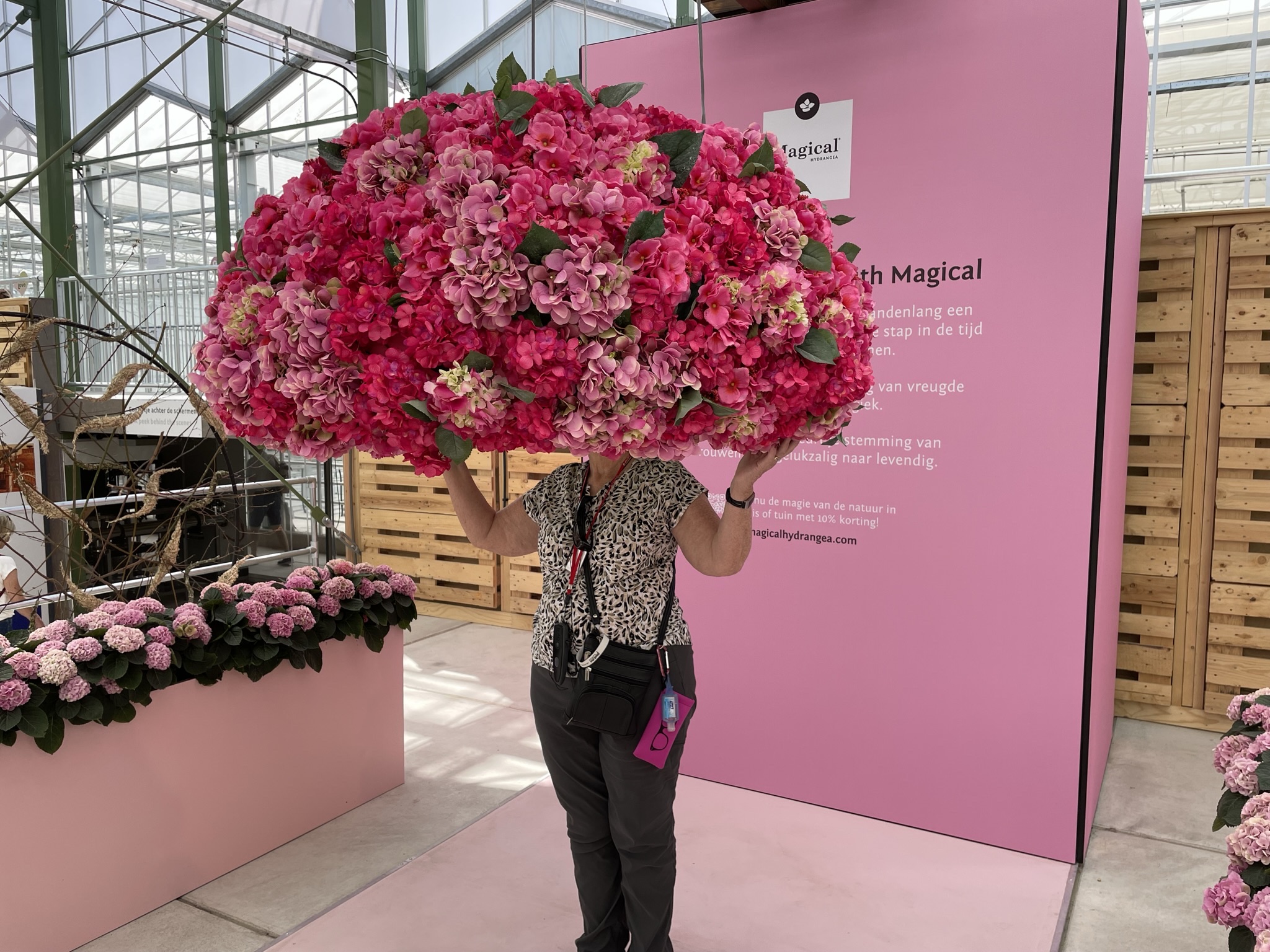
We returned to the ship in time to sail away mid-afternoon. Shortly thereafter we passed through our first of many locks on this voyage. We had been warned that there is not much room in the locks and to keep our hands and heads in the boat. For sure, there was only about 6-8″ between our French balcony and the wall of the lock!
Dinner tonight was in the Chef’s Table, a specialty restaurant. It was a seven-course tasting menu and included appetizers, soup, fish, a sorbet to cleanse the palate, Irish Short Ribs and a caramel chocolate tart. Since it was just the Craig Travel group we had the fun of celebrating the Verners’ 66th Wedding Anniversary with a cake and card. After dinner we each took the opportunity to briefly introduce ourselves to the rest of the group. This precipitated more “do you know someone I know” kinds of conversations in the days to come.
Other people we met amongst our group with connections were Carol and Sandra from the Uxbridge area. Carol was a teacher and is a friend of Ron and Heather, George’s cousins, and Sandra knows one of their sons at her church in Leaskdale. Annie and Greg from Alberta are members at Trinity Baptist and know someone with whom Nancy worked at CBOQ. Ted lives here in Lorne Park and knows many of our acquaintances at Christ First Church. It really is a small world!
Day 3 – Cologne, Germany
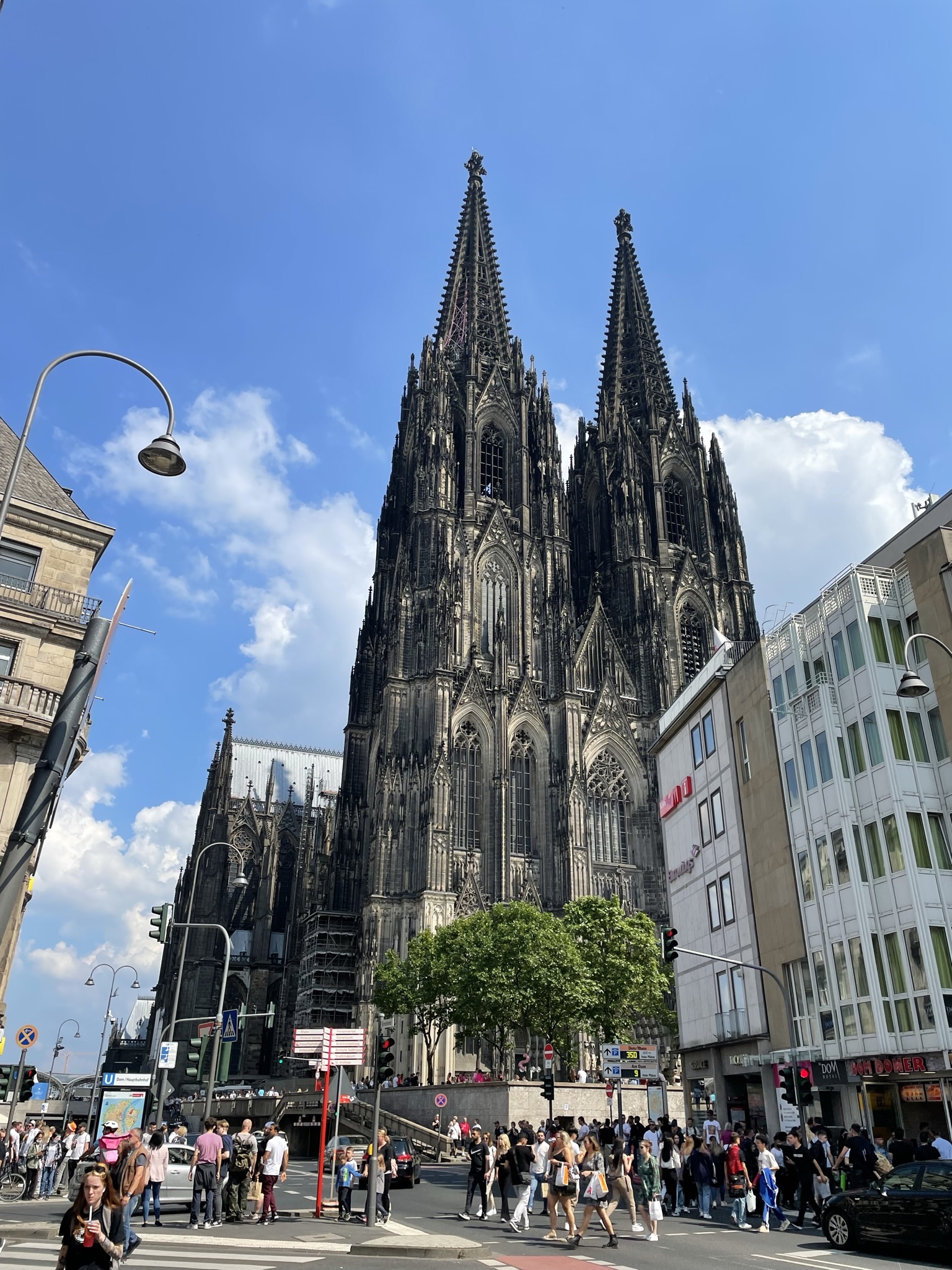
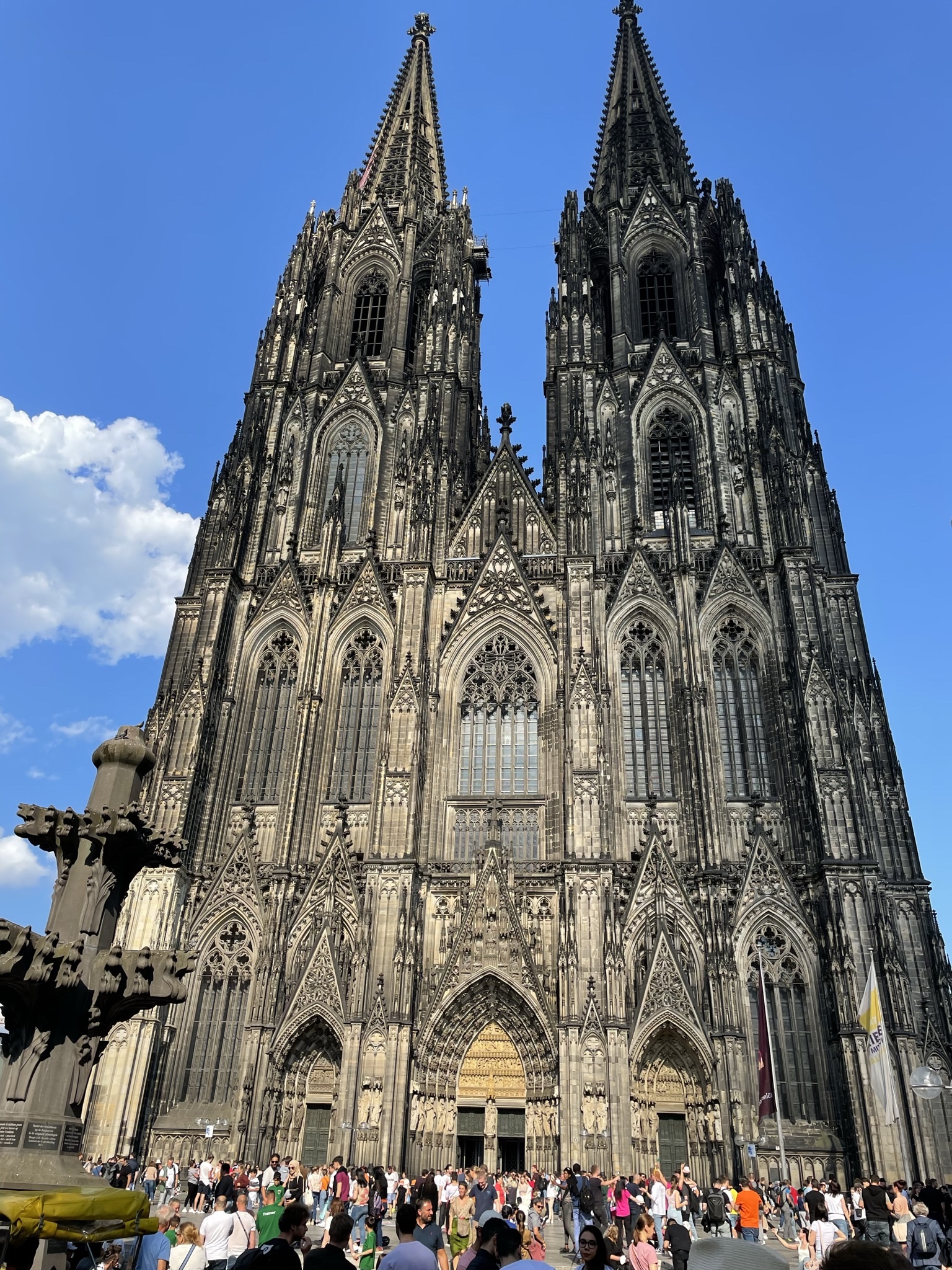
We arrived in Cologne mid-morning and after lunch dispersed to our various tours. Choices were a walking tour of the old town, Kolsch Beer tasting, or a bike tour. We opted for the walking tour. Cologne is the fourth most populous city in Germany and the largest city on the Rhine River. The medieval Cologne Catholic Cathedral is, of course, its focal point. It ranks as the tallest cathedral in the world and was built to house the Shrine of the Three Kings. The city was one of the largest European cities in medieval and renaissance times. Cologne was one of the most heavily bombed cities in Germany during World War II resulting in 95% of the millennia-old city centre being completely destroyed. The post-war rebuilding effort has provided for a mixed cityscape with modern buildings interspersed with a few restored major historic landmarks such as city gates and churches, including about 31 in the Romanesque style. Unfortunately, because the Mass was being held, we were unable to view it from the inside.
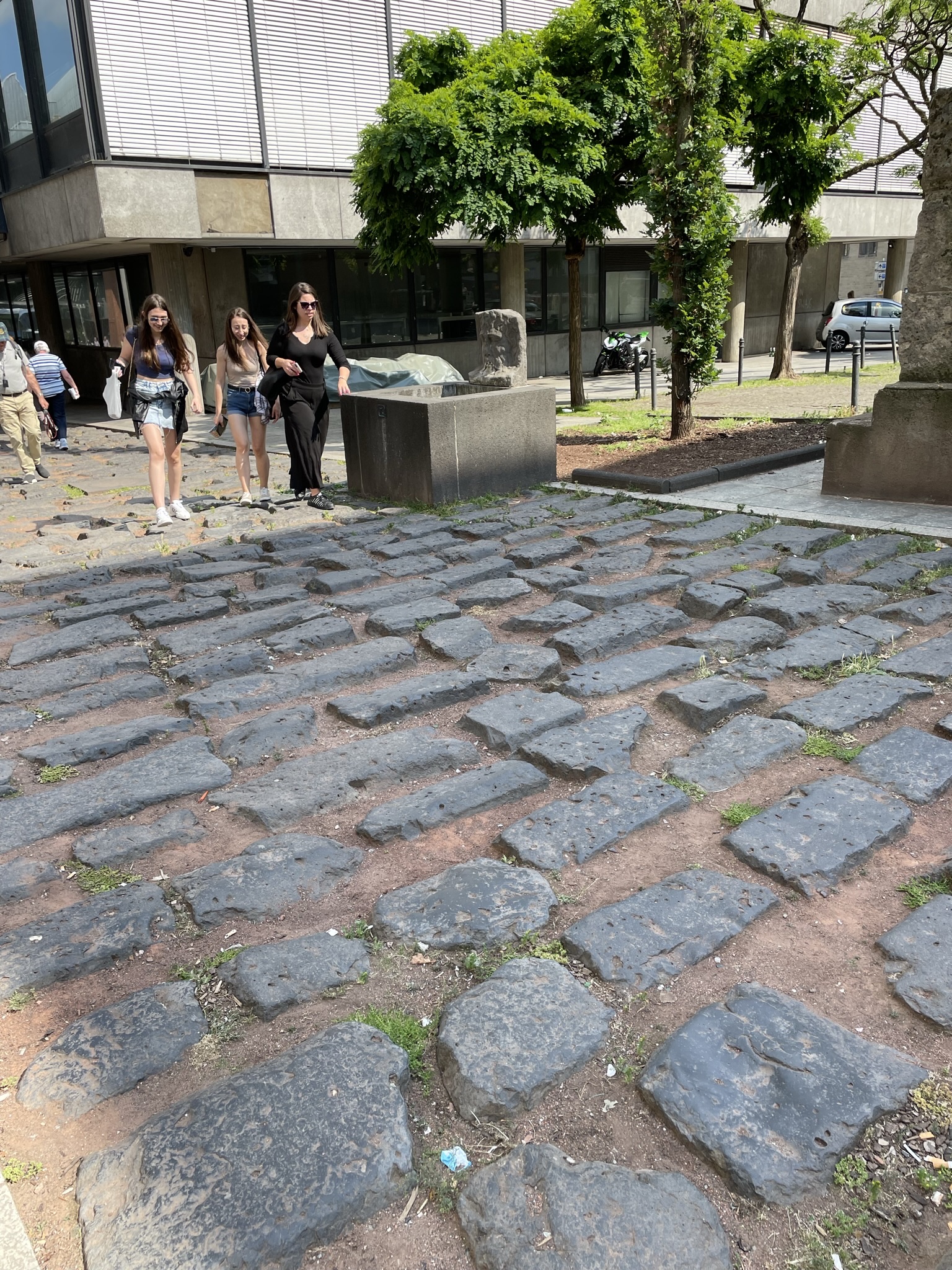
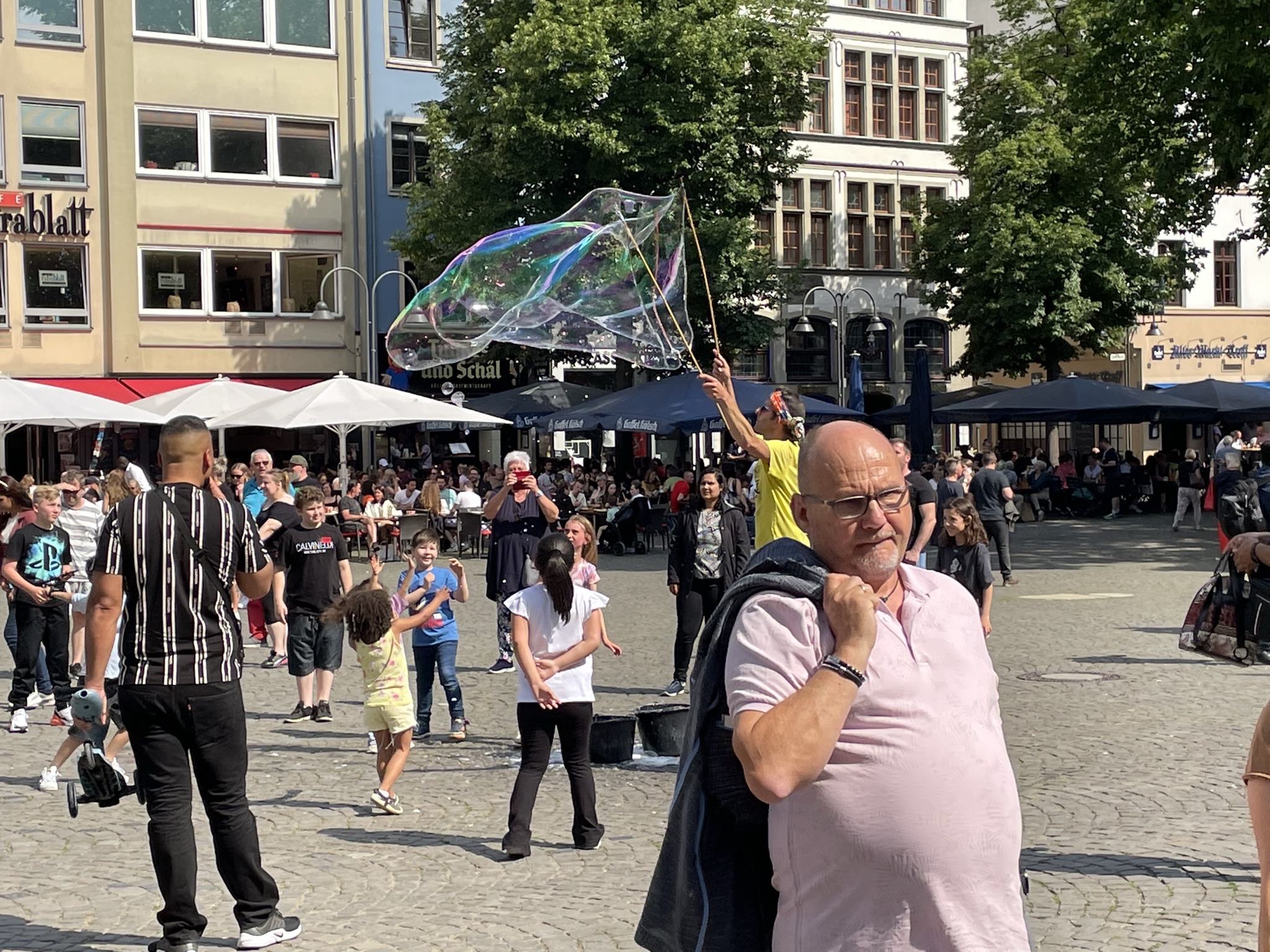


One of the large annual celebrations in Cologne is Carnival, celebrated in its current form for over 190 years. It’s now known as Germany’s craziest party, extending from the kick-off on November 11th and culminating in five days of craziness ending on Ash Wednesday. Carnival Clubs put on special events throughout the city and parades and costume balls abound. Millions of people pour into the city at the end. The Ostermann Fountain sits in the centre of Ostermannplatz Square in old town. The figures depicted on the fountain are references to the songs of Willi Ostermann, a musician and lyricist whose music is still popular during Carnival.
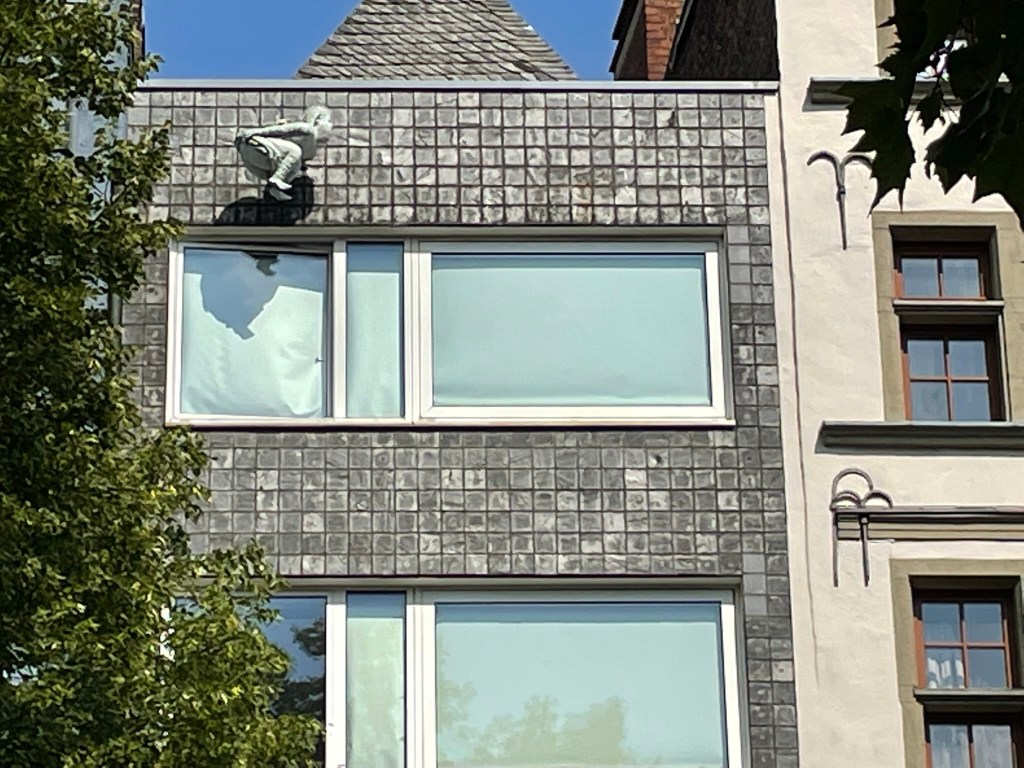
It’s common throughout Europe to find figures on building facades that have a special meaning. This builder/resident was giving a subtle message to the government.
Day 4 – Rhine Gorge to Rὒdesheim, Germany
This morning’s cruise took us through the Rhine River Gorge – the popular name for the Upper Middle Rhine Valley, a 65 km section of the river between Bingen and Koblenz in Germany. In 2002, it was added to the UNESCO World Heritage Sites list for the unique combination of historical, cultural, industrial and geographical reasons. Unfortunately, it was a rainy, overcast day which meant it did not appear at its best. It was still a beautiful trip. The river has been an important trade route in Europe since prehistoric times and continues to be busy with both commercial and tourist traffic. Small settlements have grown up along the shoreline but are constrained in size, thus retaining their historic feel. With wealth came many castles and the valley became the core region of the Holy Roman Empire. Many were left in ruins after the Thirty Years War and have become the attraction for the cruising industry. The commentary on the boat was difficult to hear but we had taken Rick Steves’ guide book with us and were able to follow along with that.
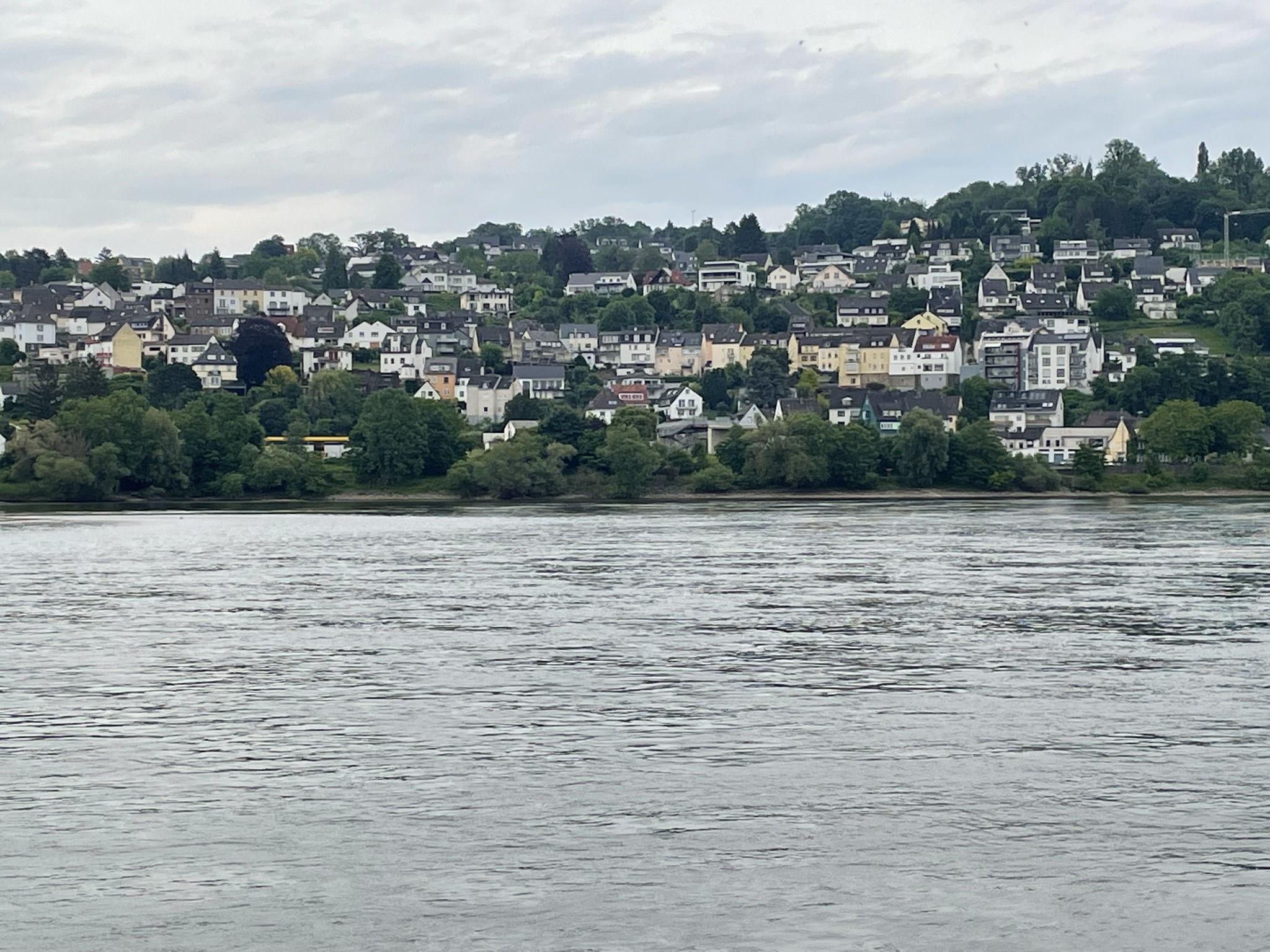

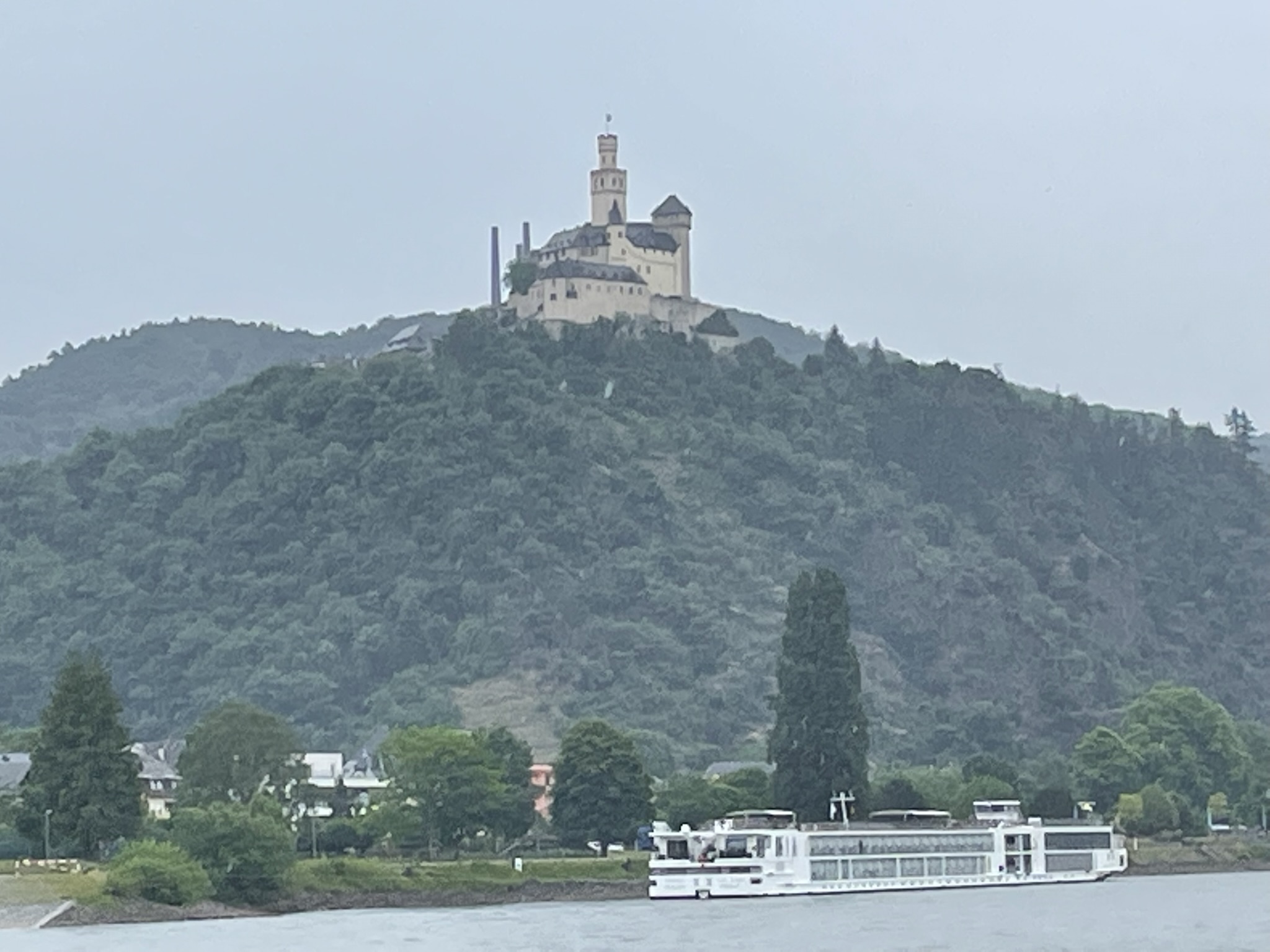
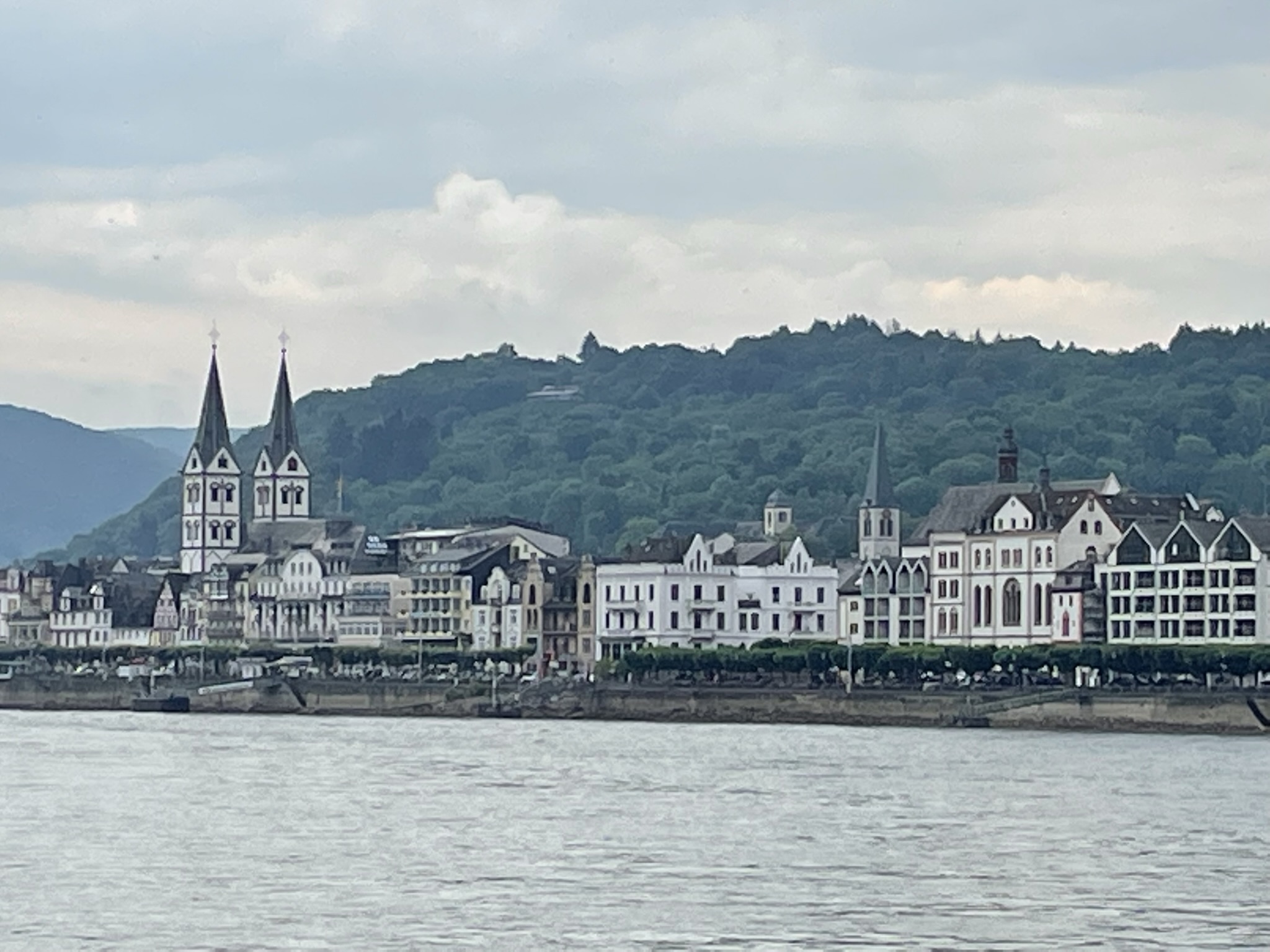
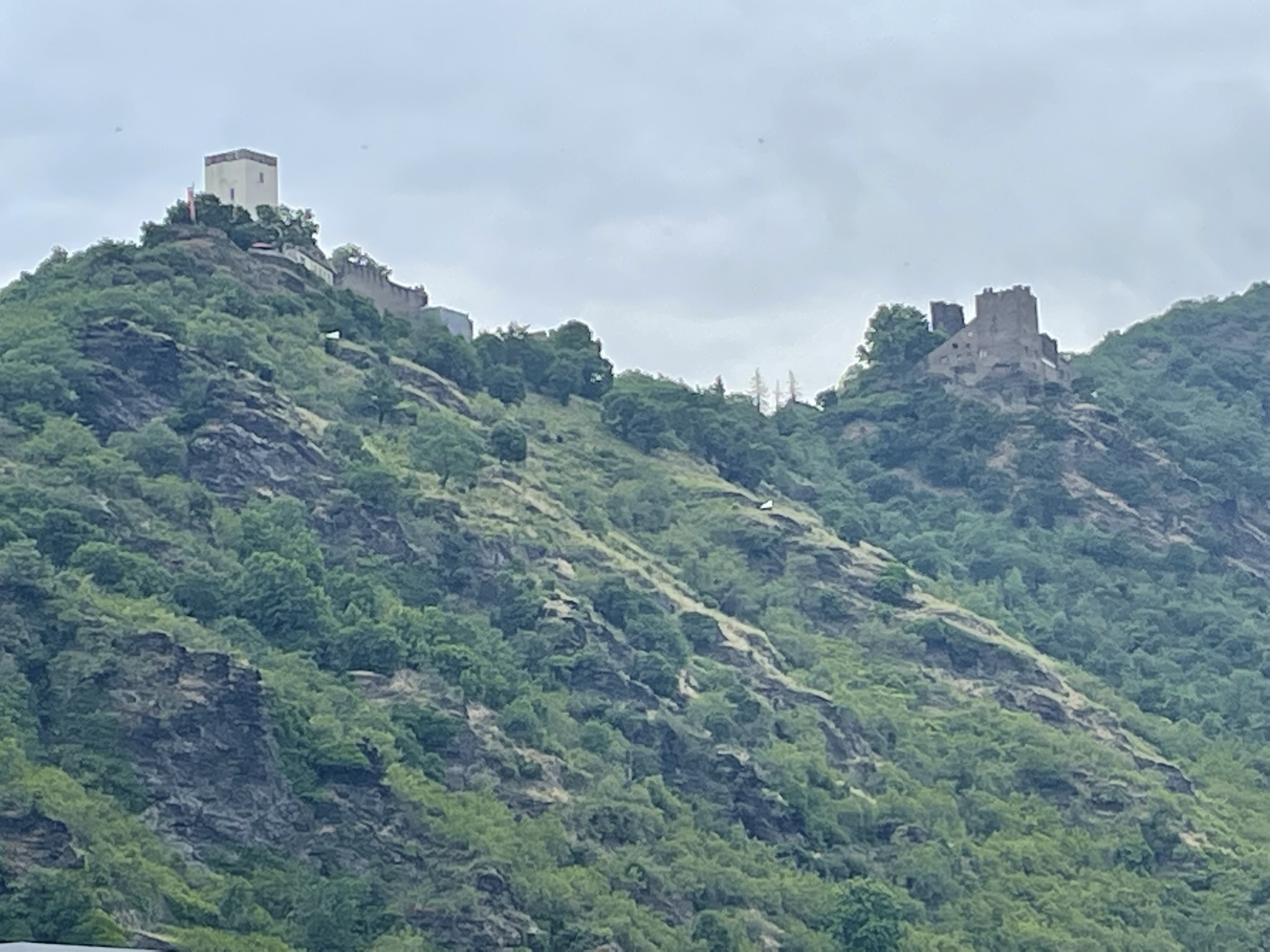
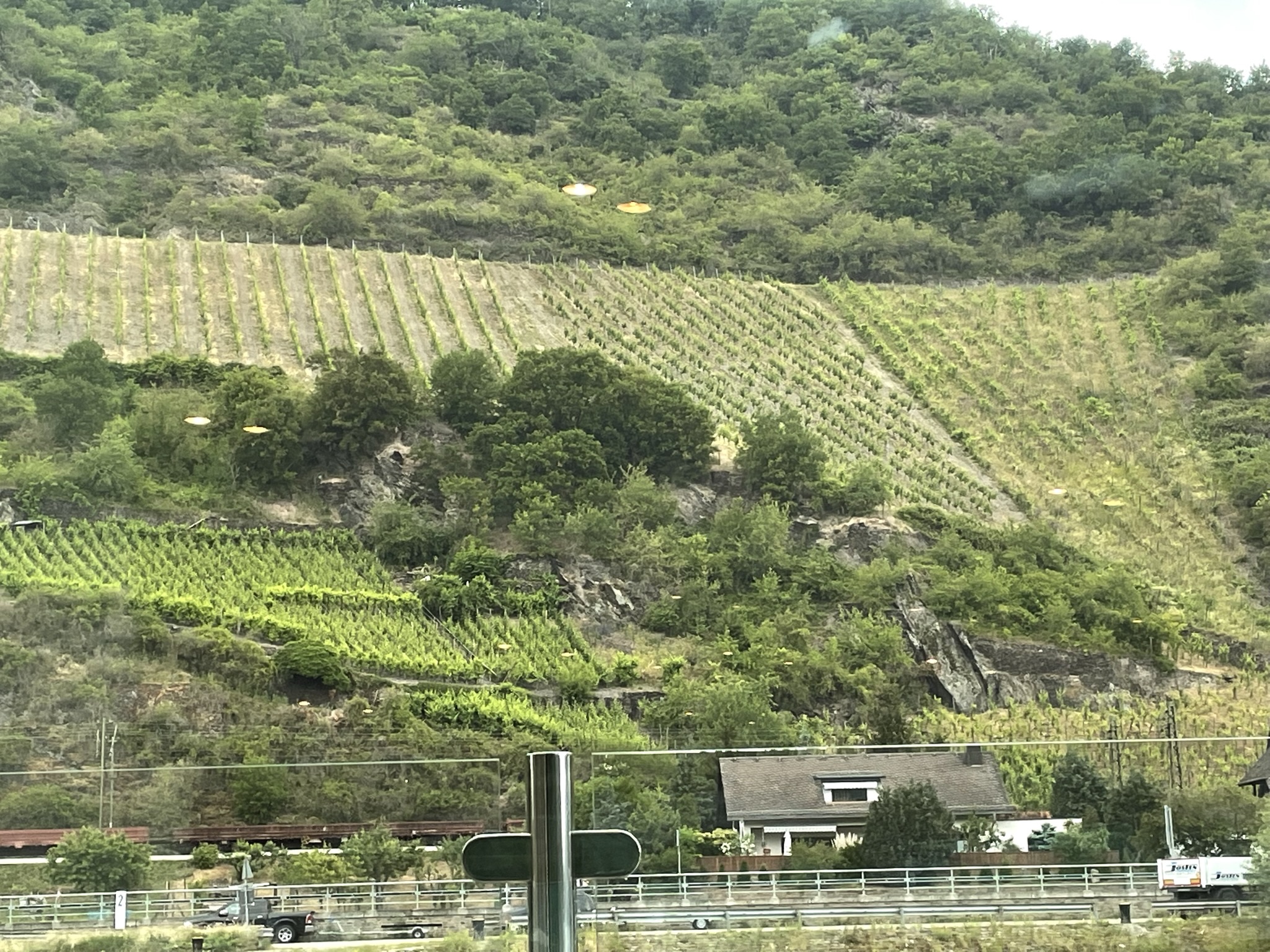
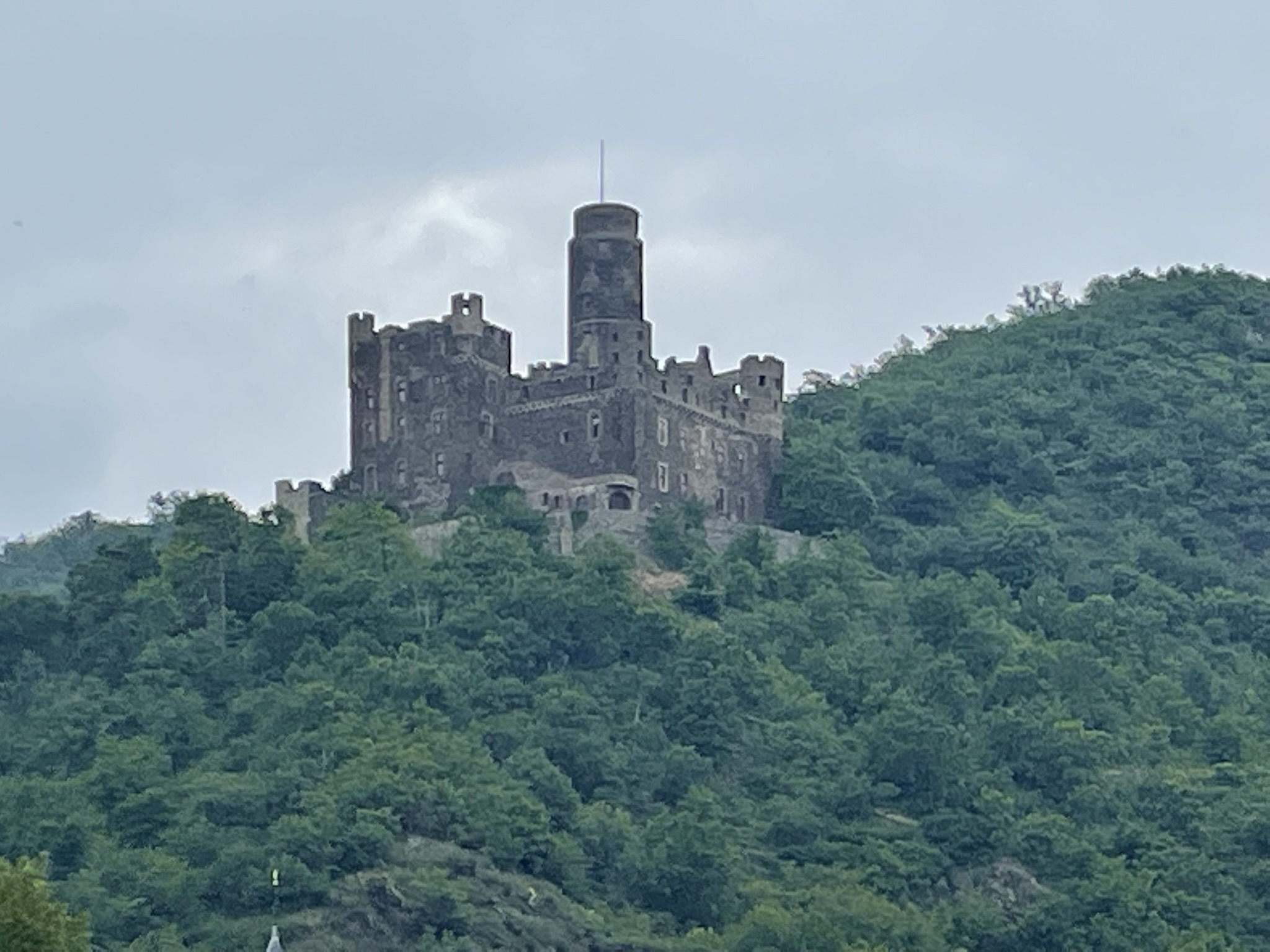
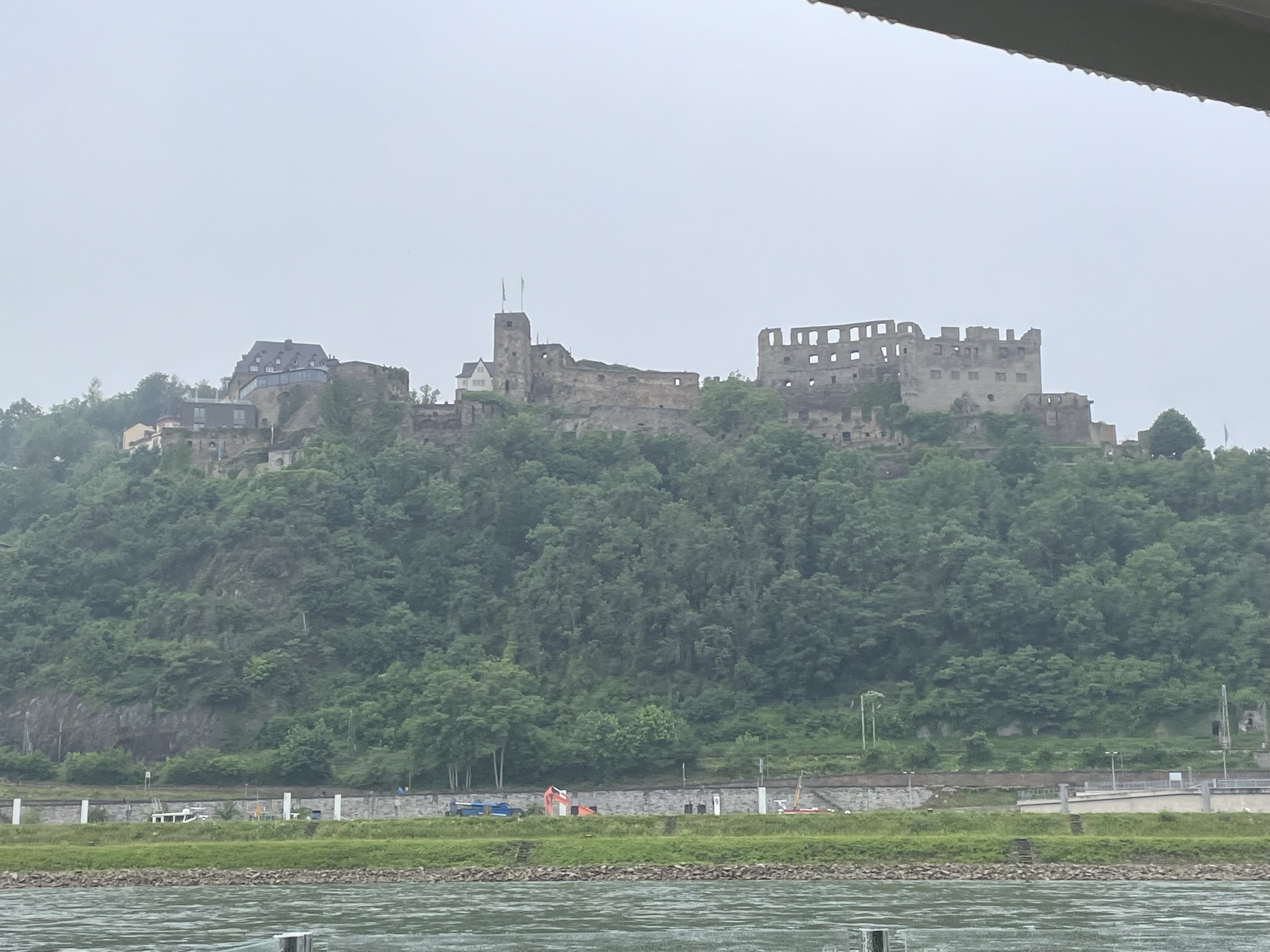
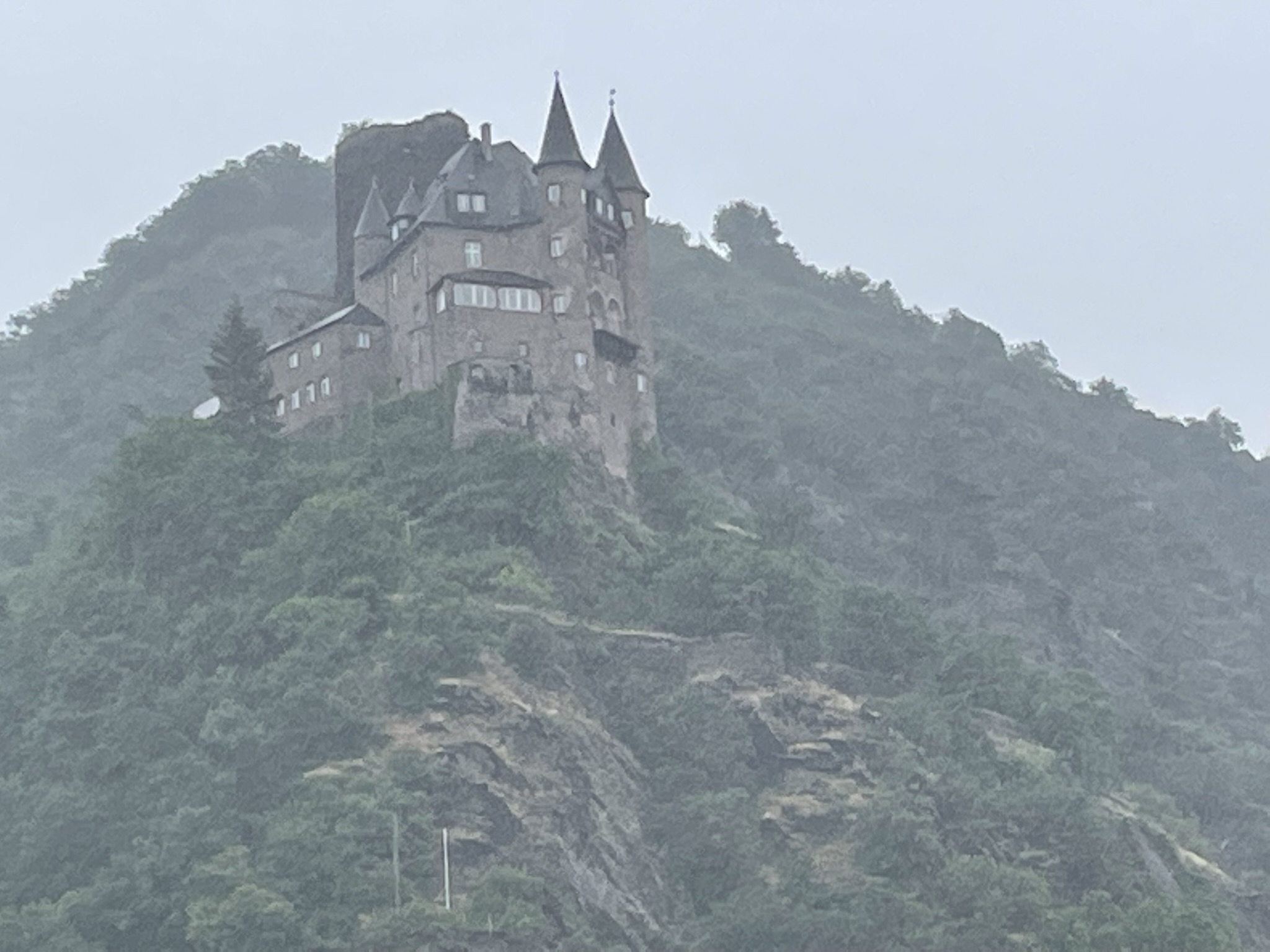
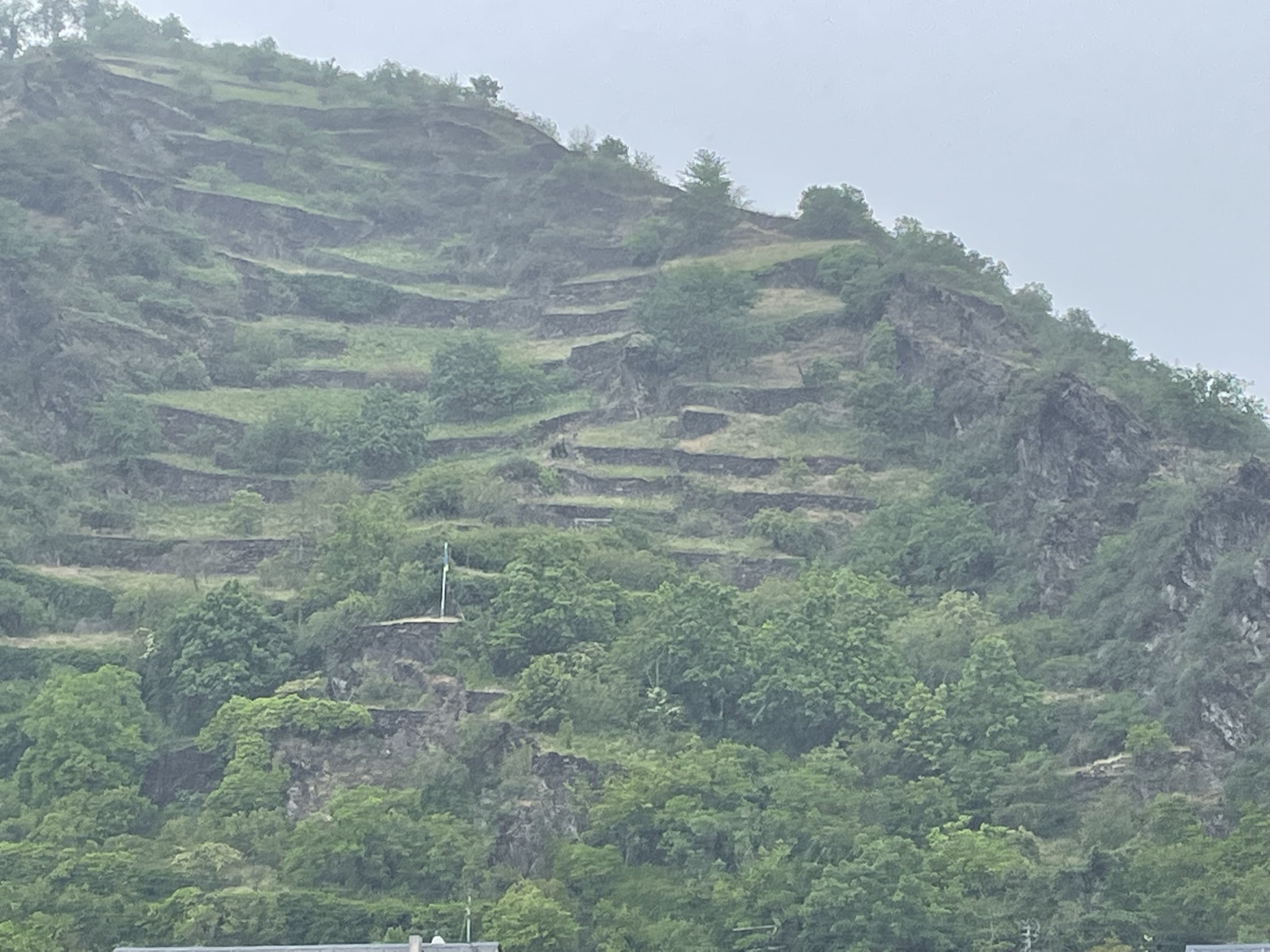

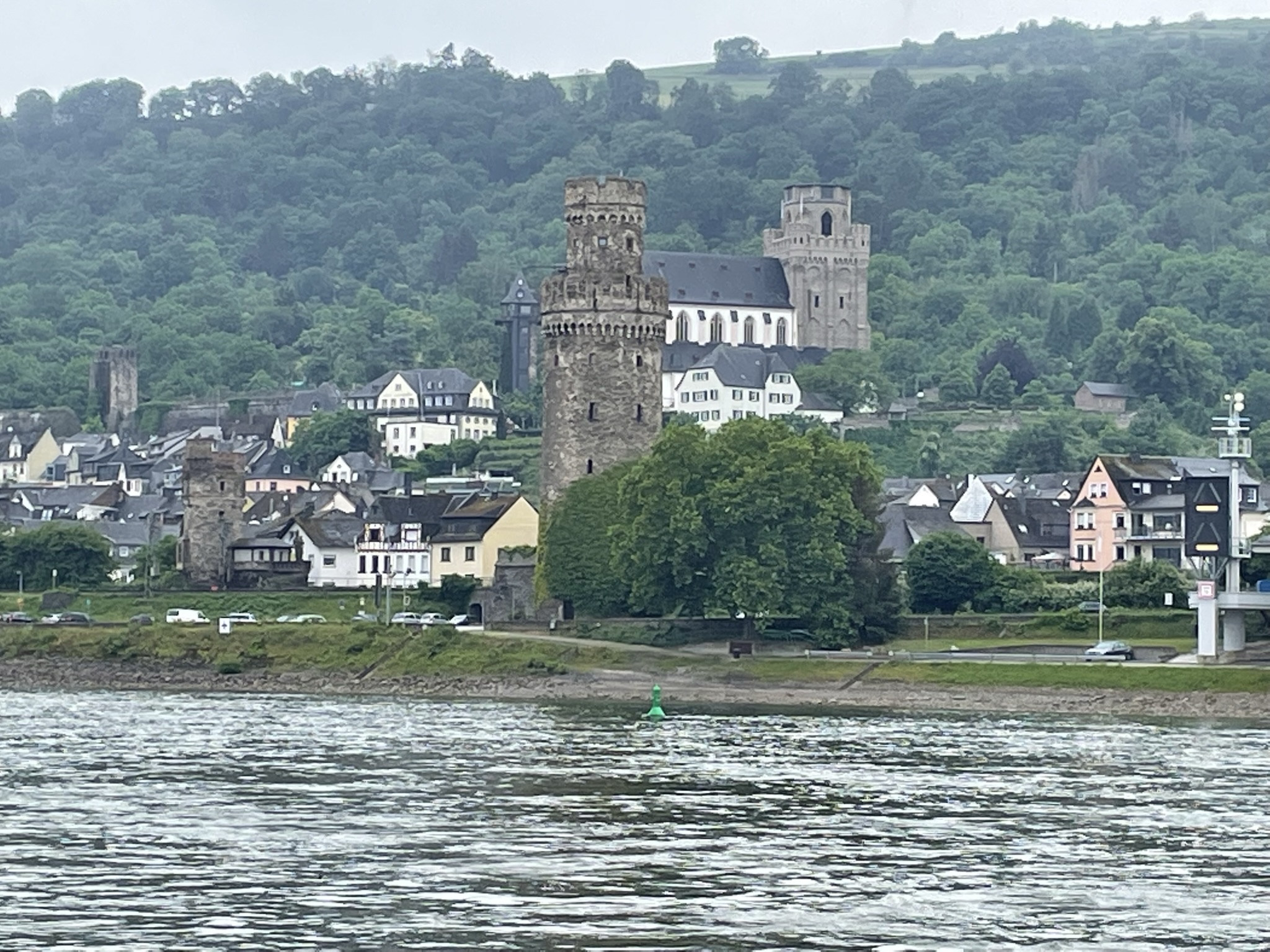
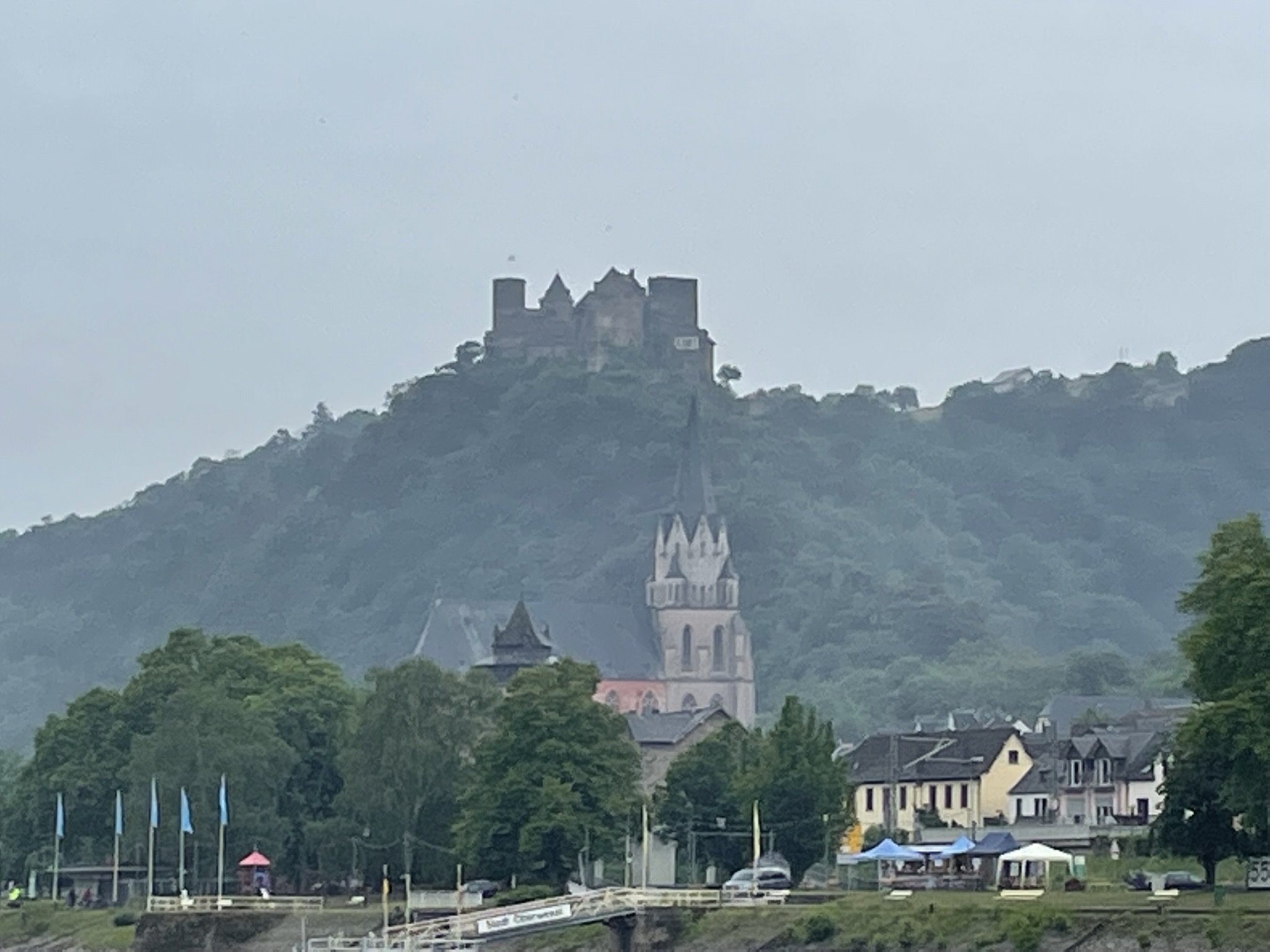

Many of the castles still lie in ruins but some have been salvaged and serve as popular B&Bs, restaurants and museums. At some point we’d love to go back and explore this stretch of the river by auto.
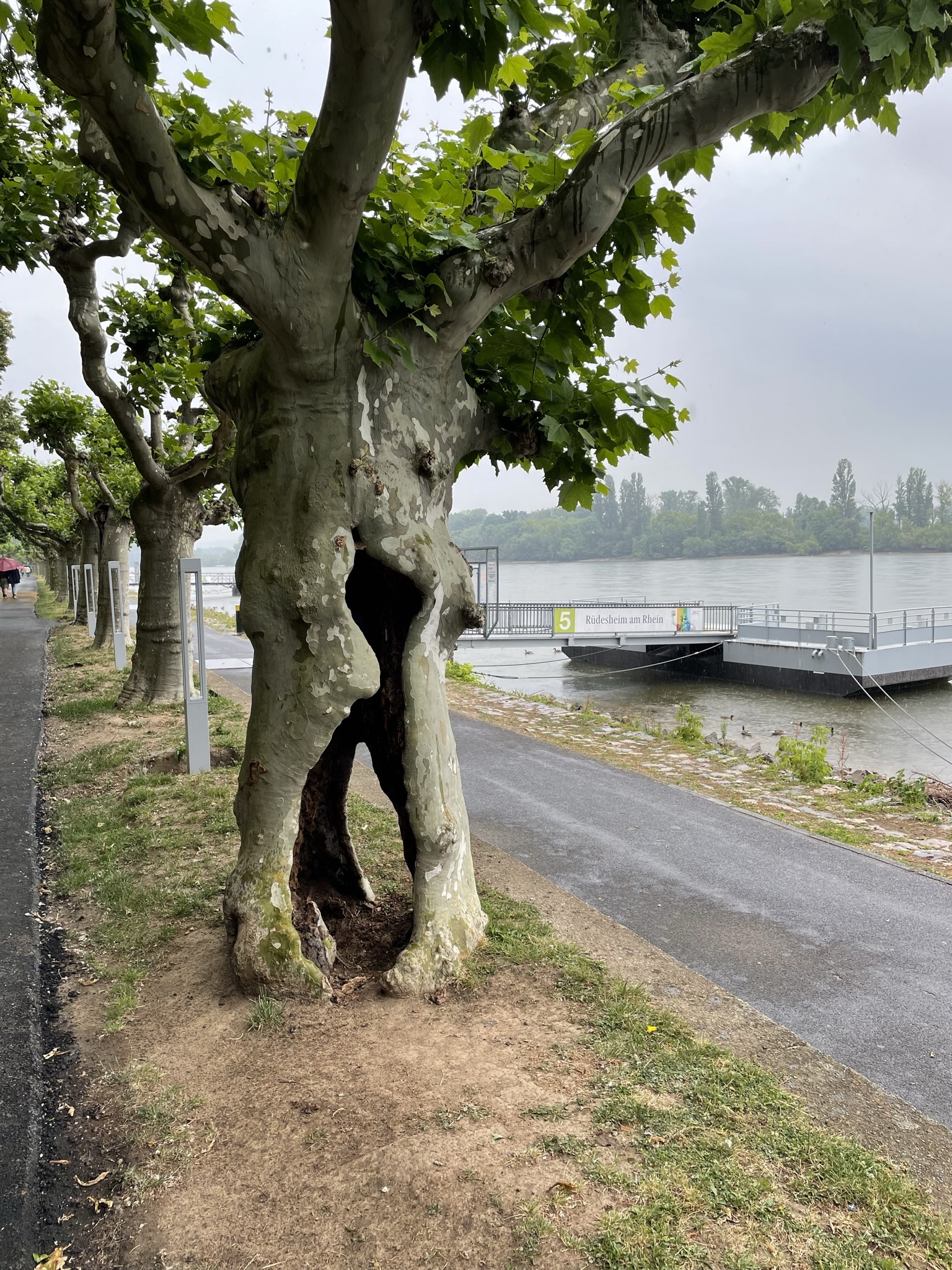
After lunch we arrived in Rὒdesheim am Rhein and had a choice of three different tours – a wine tasting, a vineyard hike, and a guided bike tour. We opted for the wine tasting. Rὒdesheim is another ancient city known best for its winemaking. Our visit was to the Adolf Storzel winery, in business since as early as 1647. It’s a family-owned and operated business and produces mostly Riesling and Pinot Noir wines. While the wine tastings take place in town, the winery is located on the outskirts of town and includes a new building with a restaurant overlooking the vineyards.
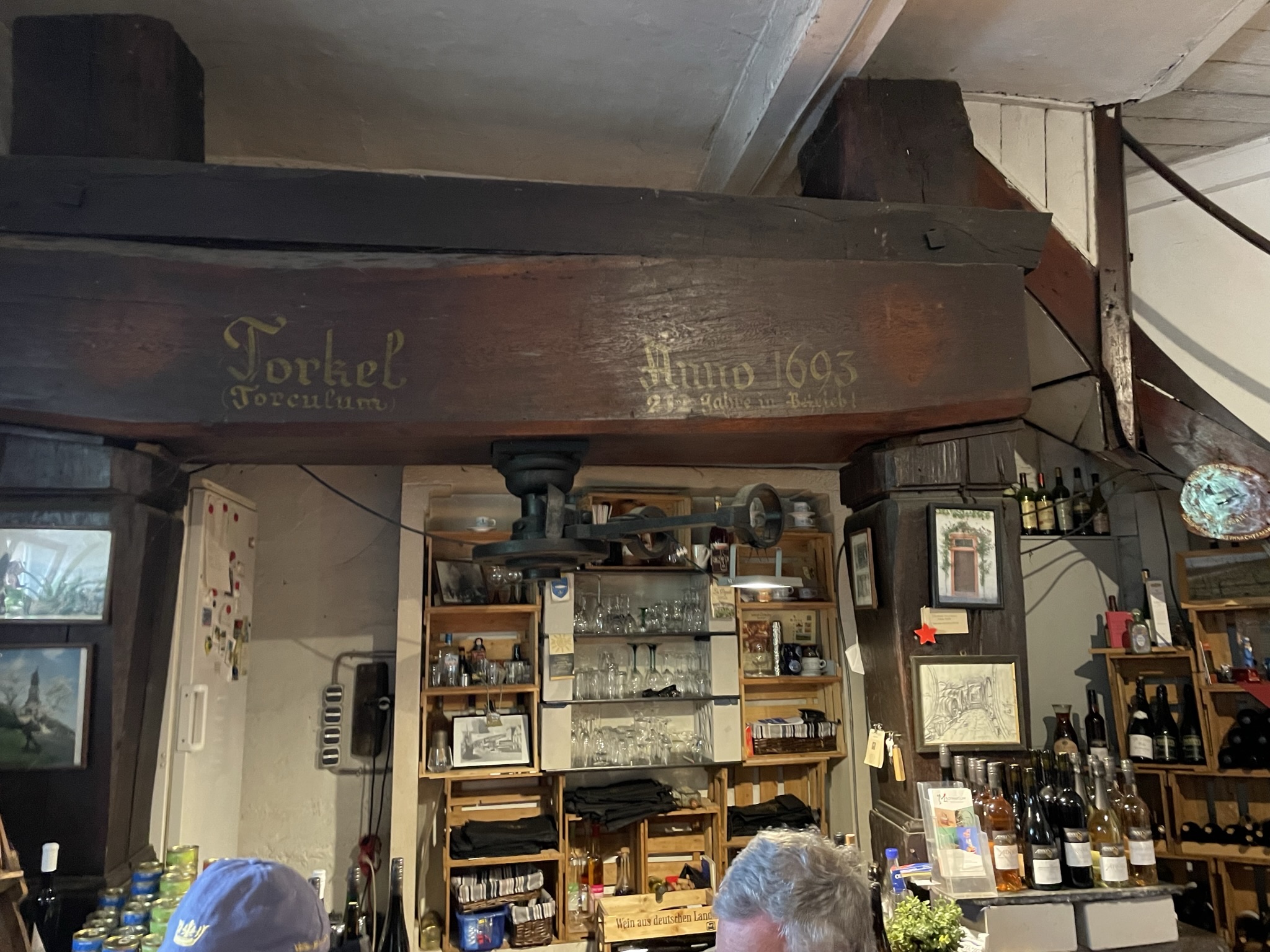
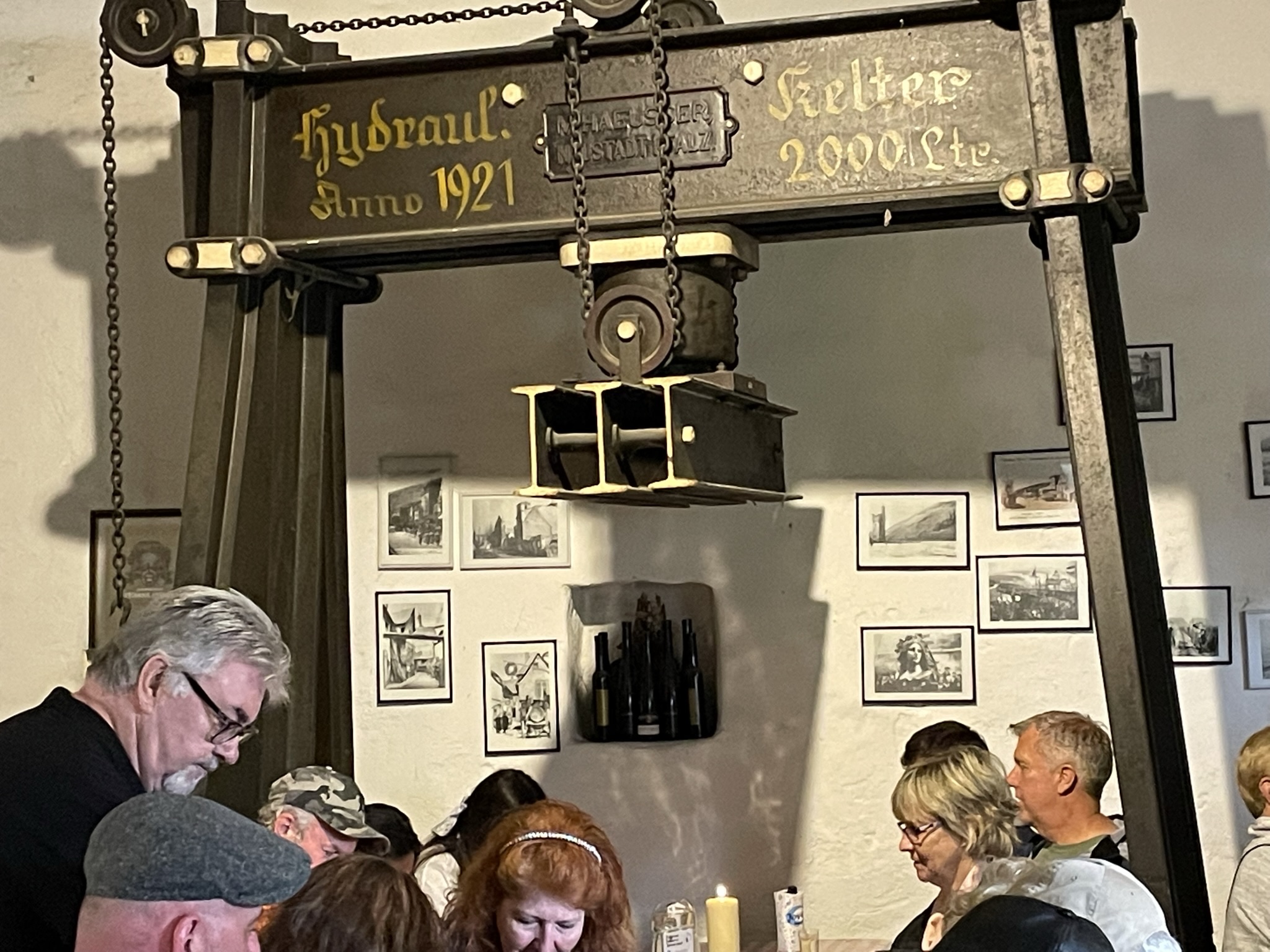
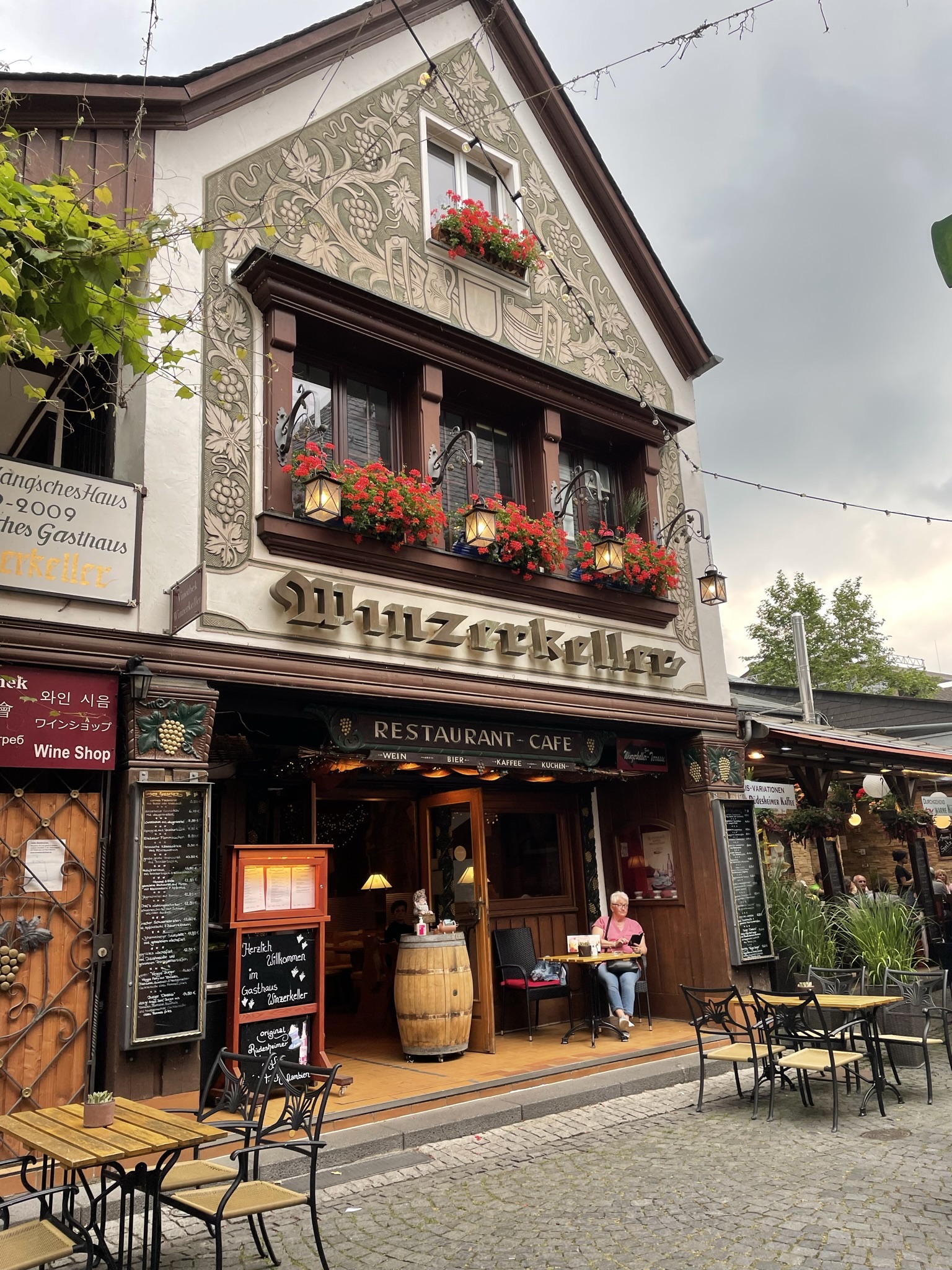
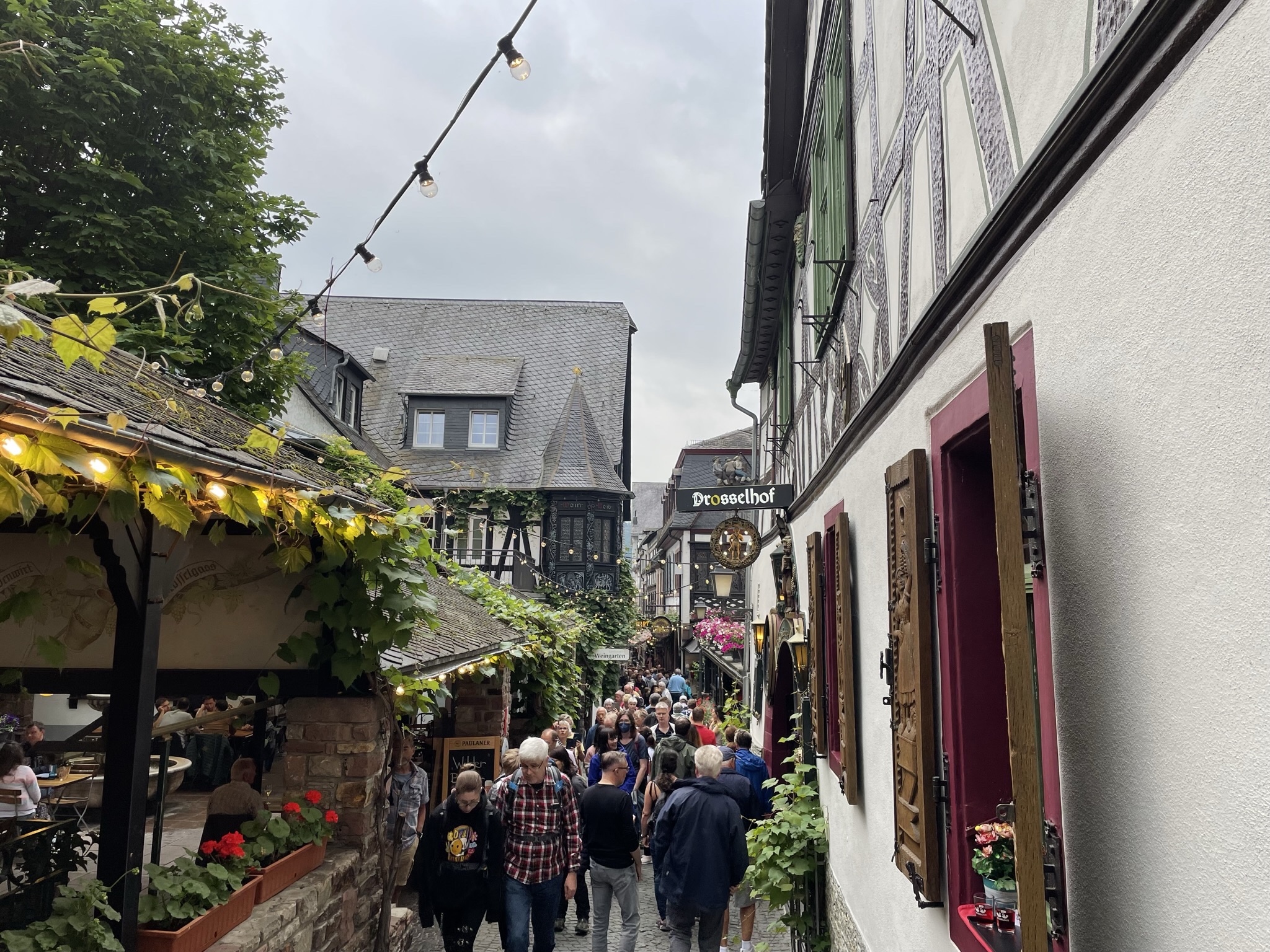
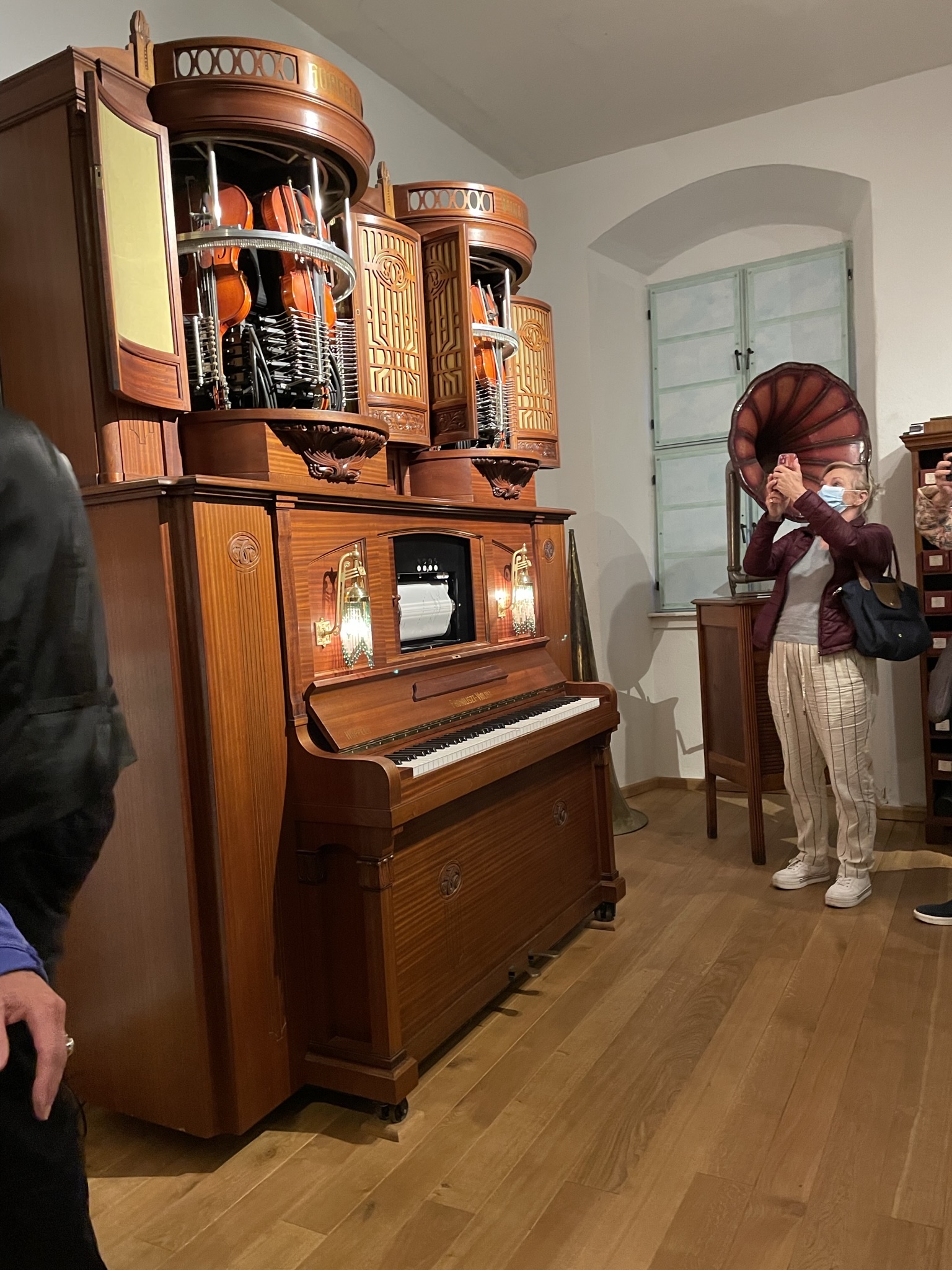
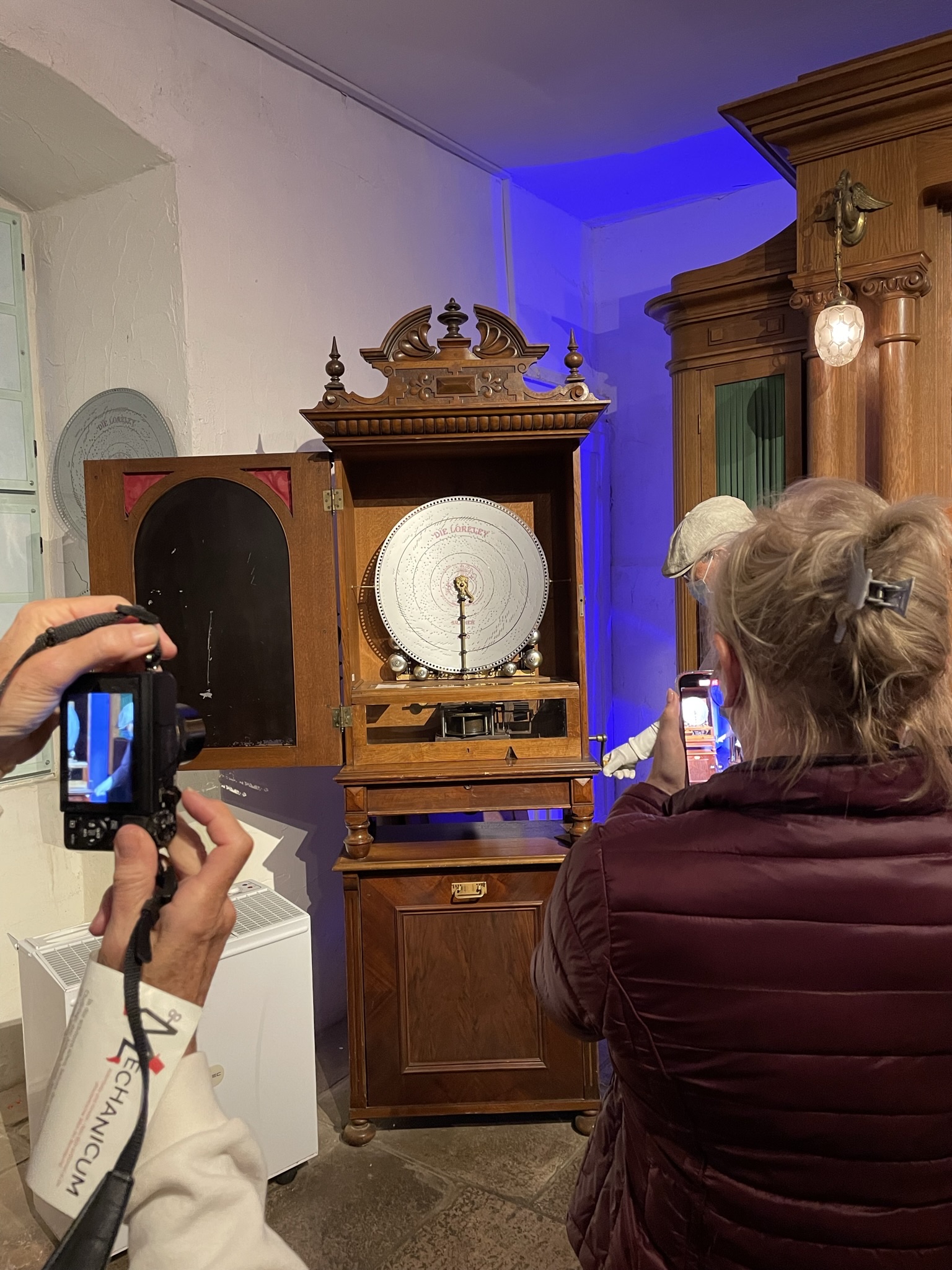
After dinner we had an opportunity to go back into town to visit the Siegfried’s Mechanical Musical Instrument Museum. What a unique place! There is a museum like this in Utrecht, which we had visited in 2012, but the difference is that most of the mechanical instruments here are all still in working order. And the tour guide (owner) was a delight!

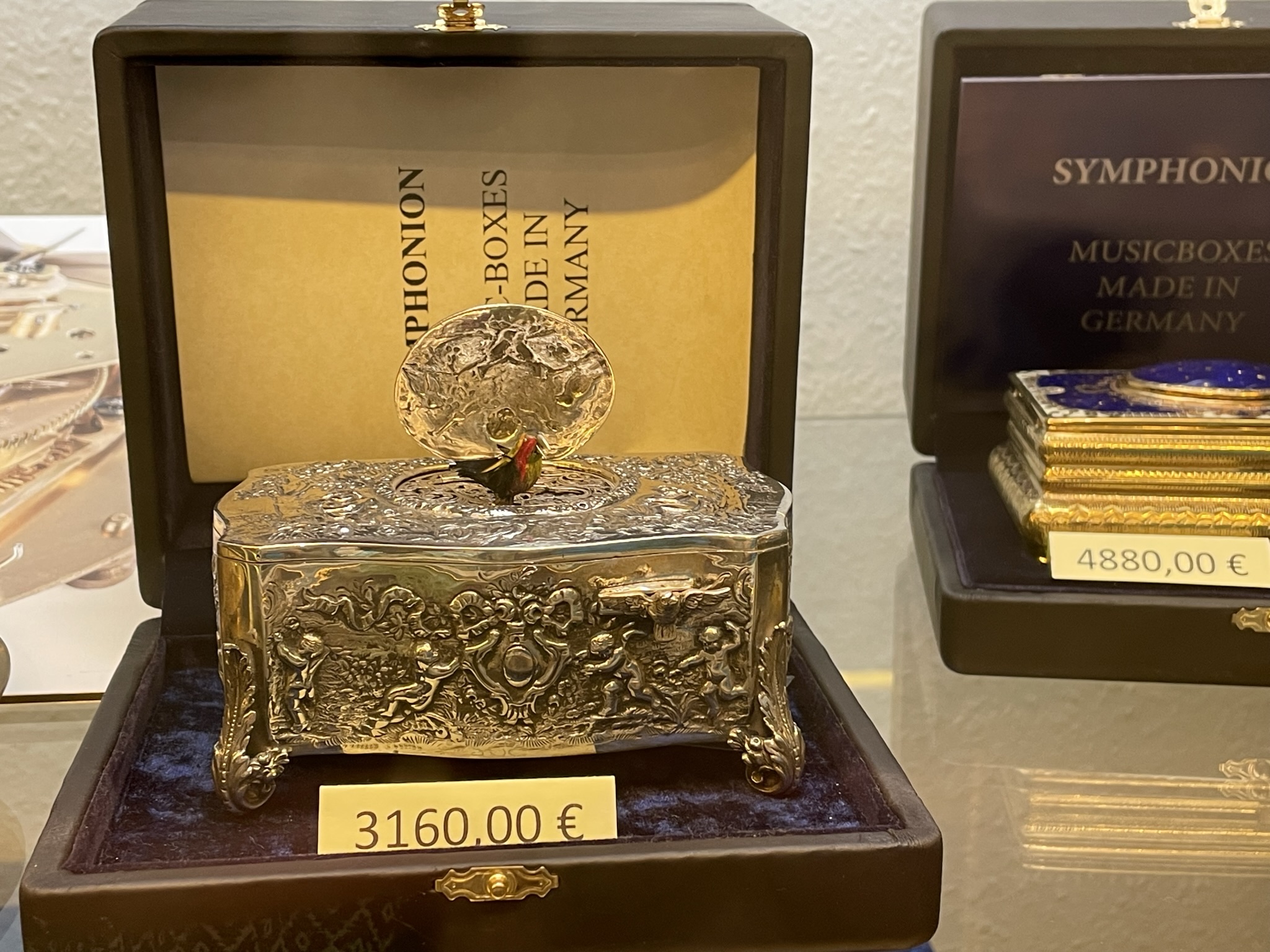
For someone who collects music boxes, this one was a bit out of our price range.
Day 5 – Ludwigshafen, Germany
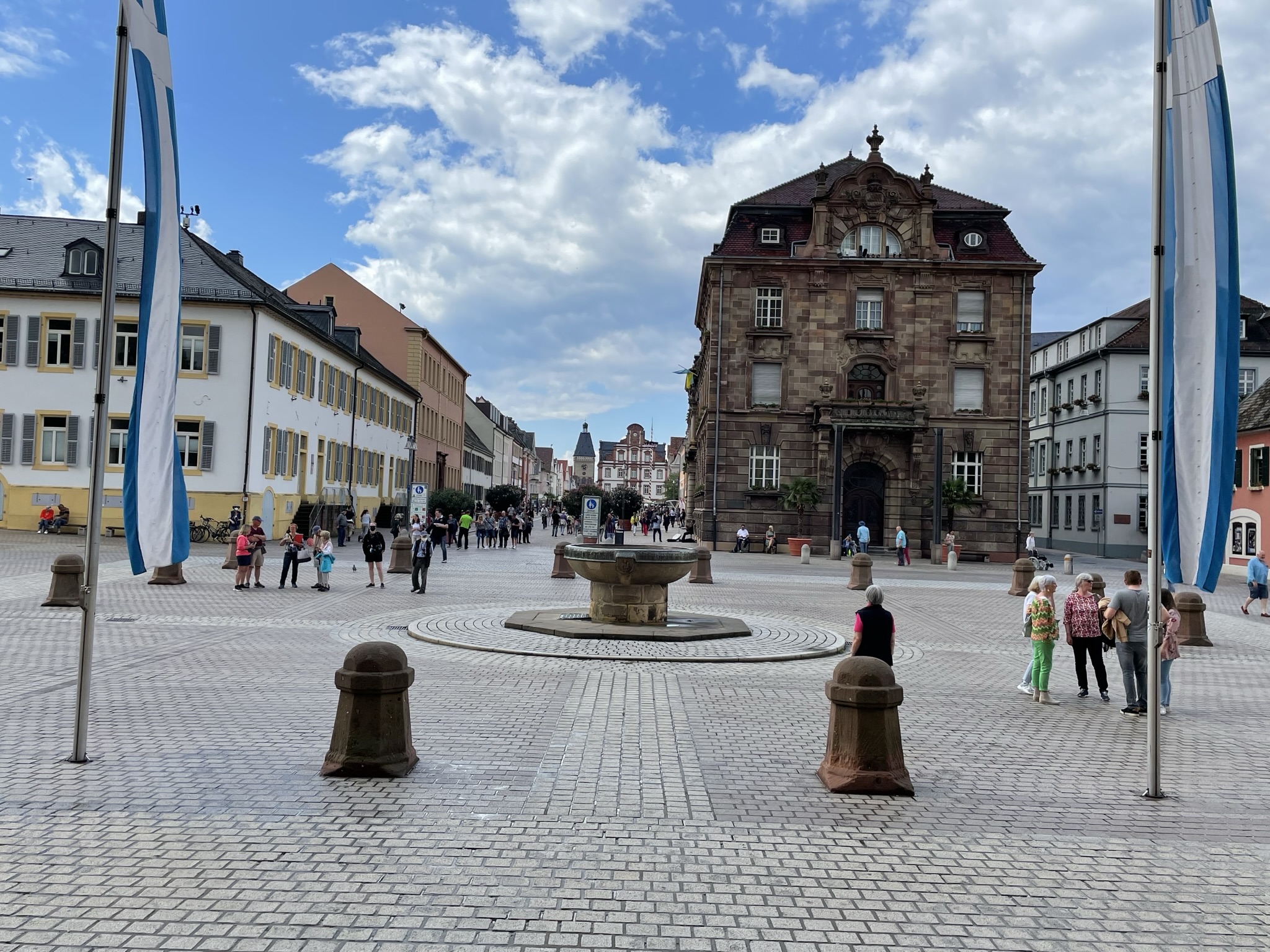
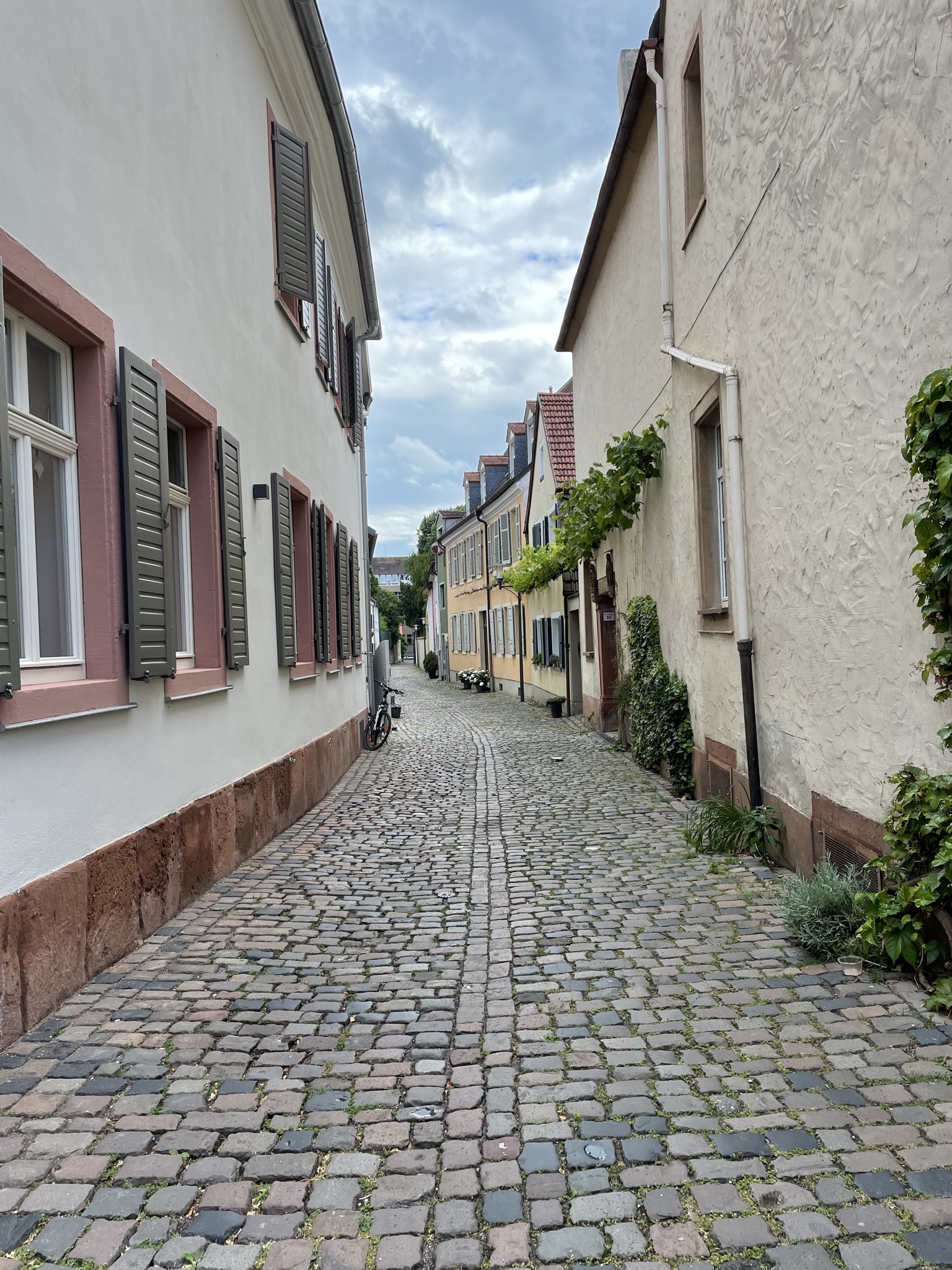
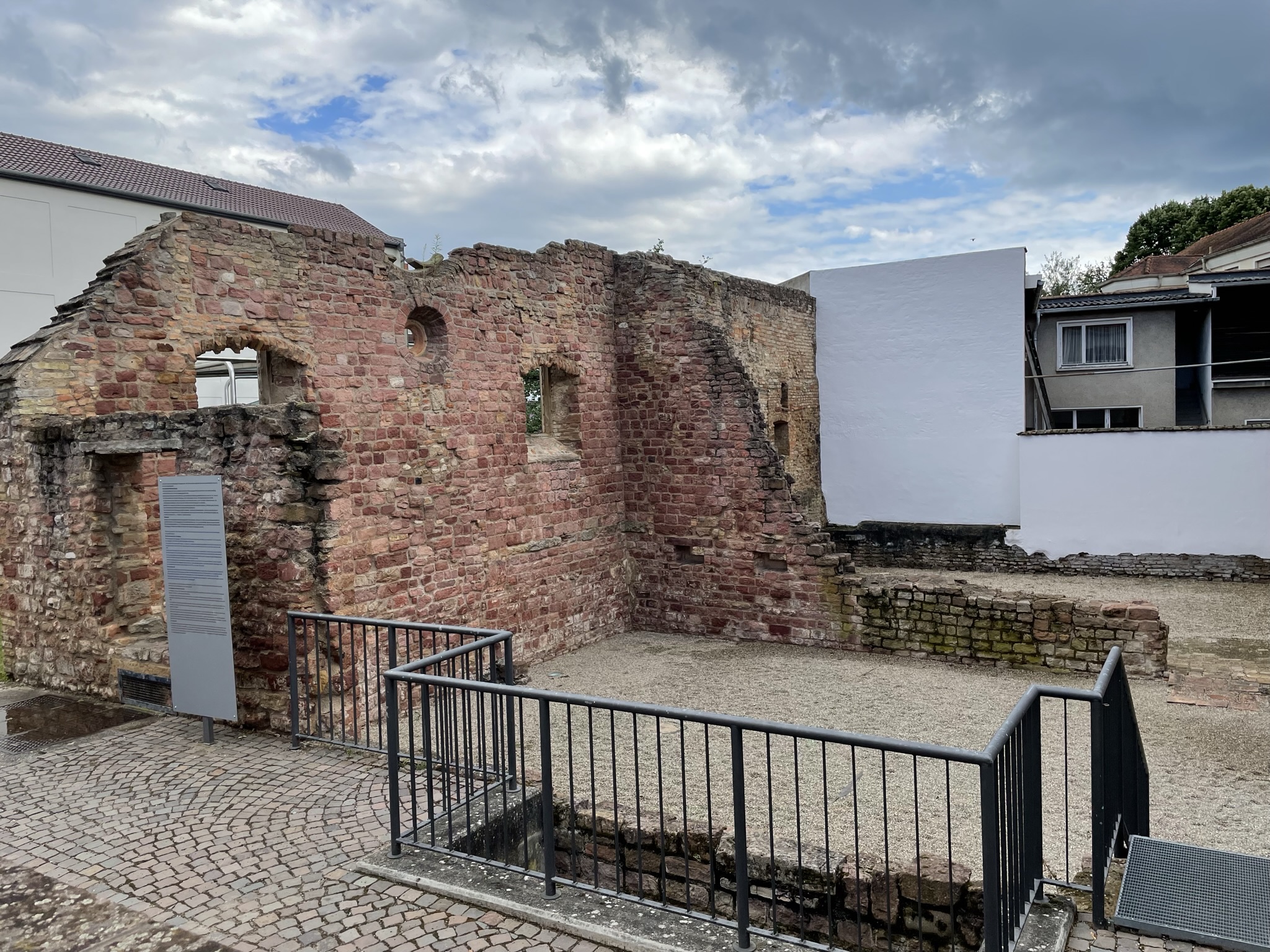
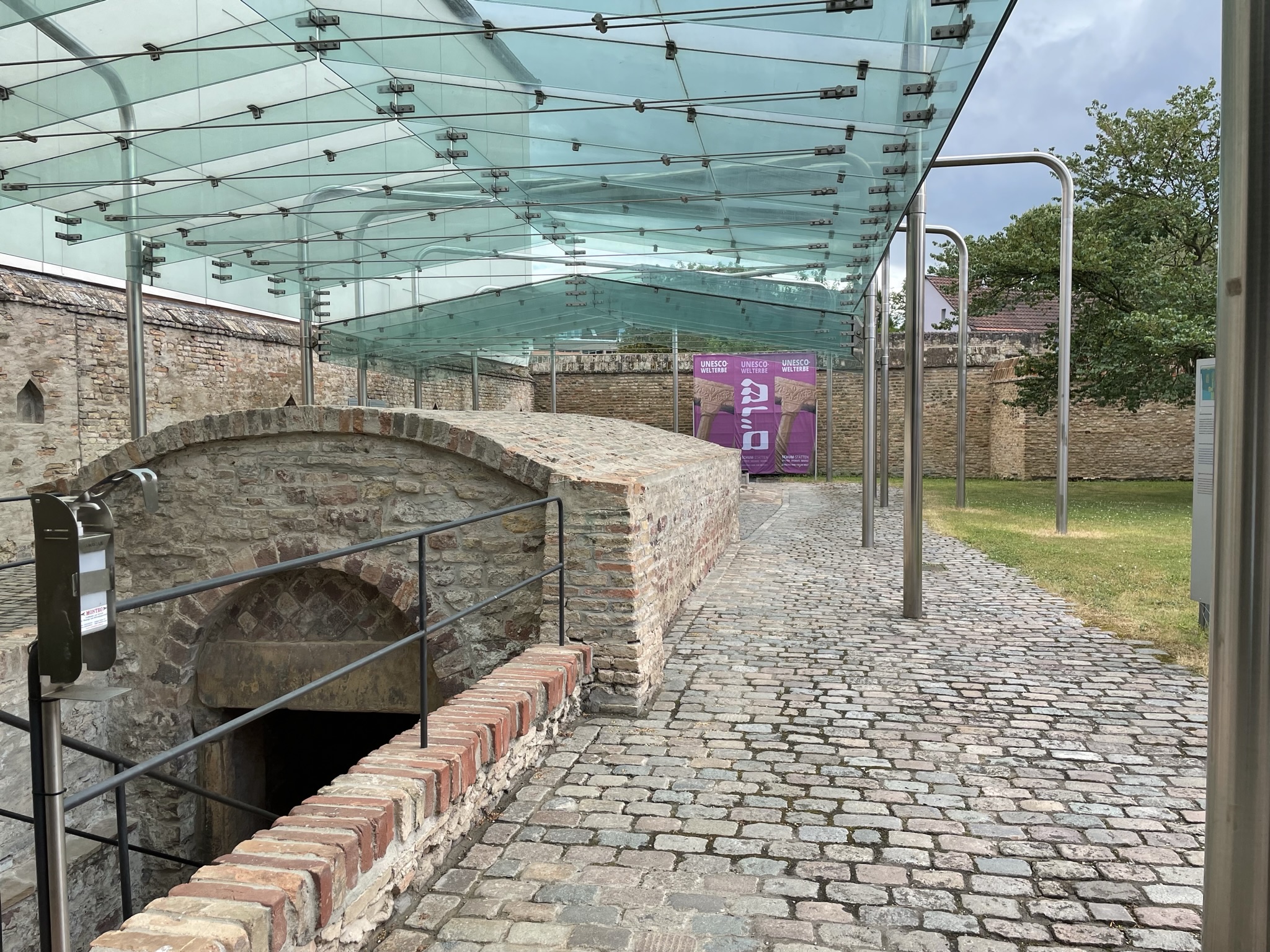
While our boat docked here, we didn’t really see the town as the port is in an industrial area. It is home to BASF, the world’s largest chemical producer and was the birth/death place of Chancellor Helmut Kohl. Directly across the river is the town of Mannheim.. Our choice of excursions today was a trip to Romantic Heidelberg, a walking tour of Speyer, a hike or a bike tour. We opted for the trip to Speyer, one of Germany’s oldest cities. Speyer Cathedral dominates the landscape and beneath the high altar are the tombs of eight Holy Roman Emperors and German Kings. The city is famous for the 1529 Protestation at Speyer which played a part in the unhindered spread of the evangelical faith and allowed for the spread of Martin Luther’s works and teachings. During the Middle Ages Speyer was the hometown of one of the most important Jewish communities in Northern Europe. The Jewish Courtyard with remnants of a medieval synagogue and intact mikveh are also a UNESCO World Heritage Site. Our local guide here was excellent.

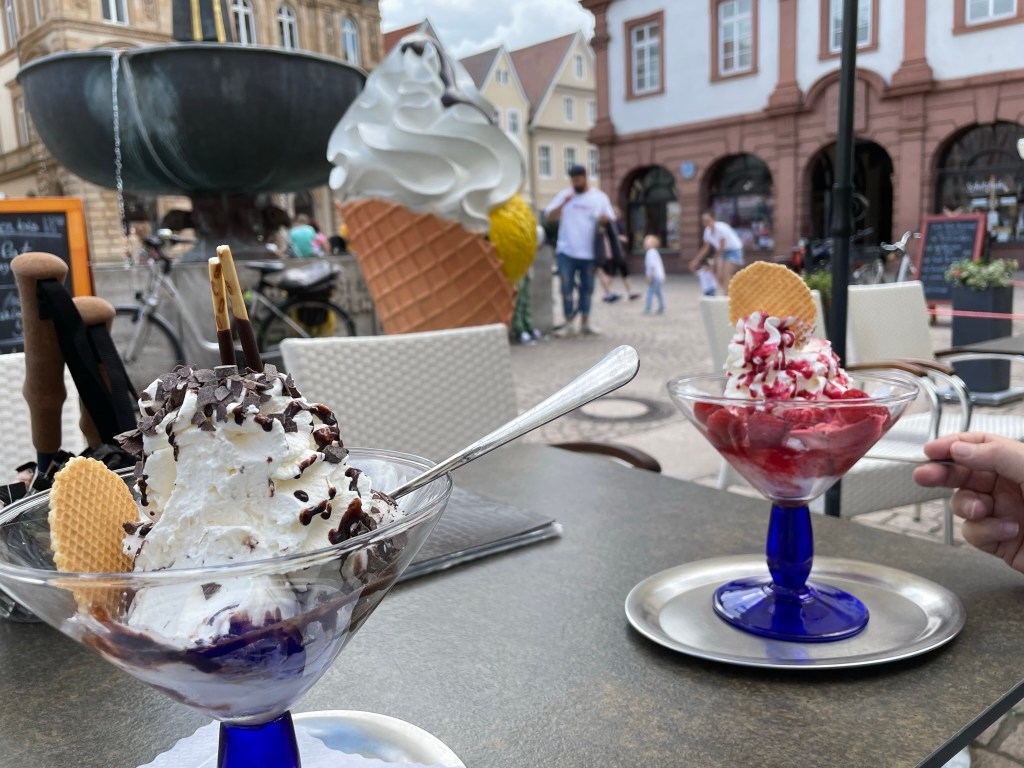
It was a very hot day when we visited Speyer and so we just had to stop for an ice cream treat.
Day 6 – Strasbourg, France
A quaint combination of French and German cultures makes this city a wonderful place to visit. It is the official seat of the European Parliament, and affiliated organizations, as well as many other European organizations separate from the EU.
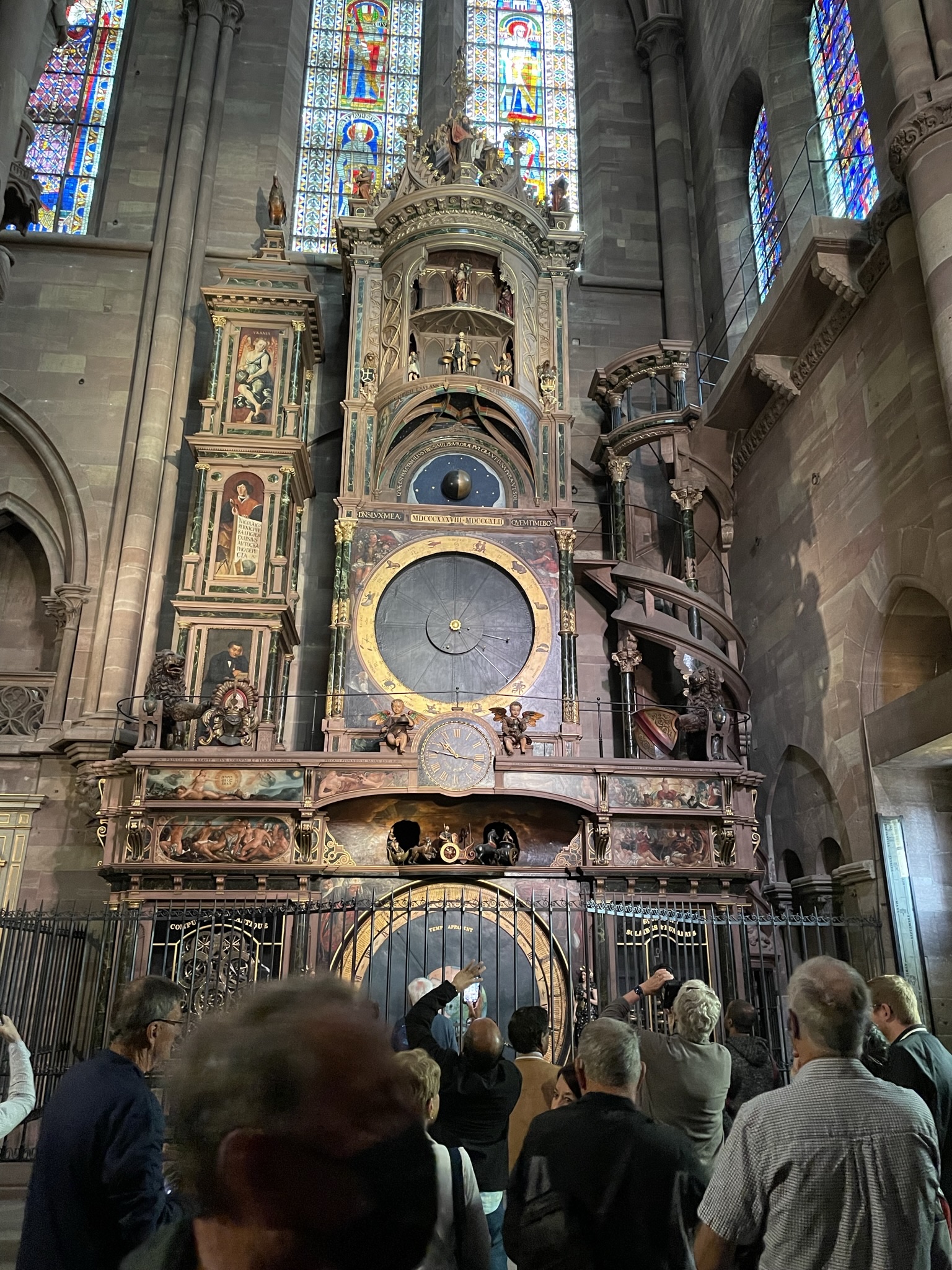
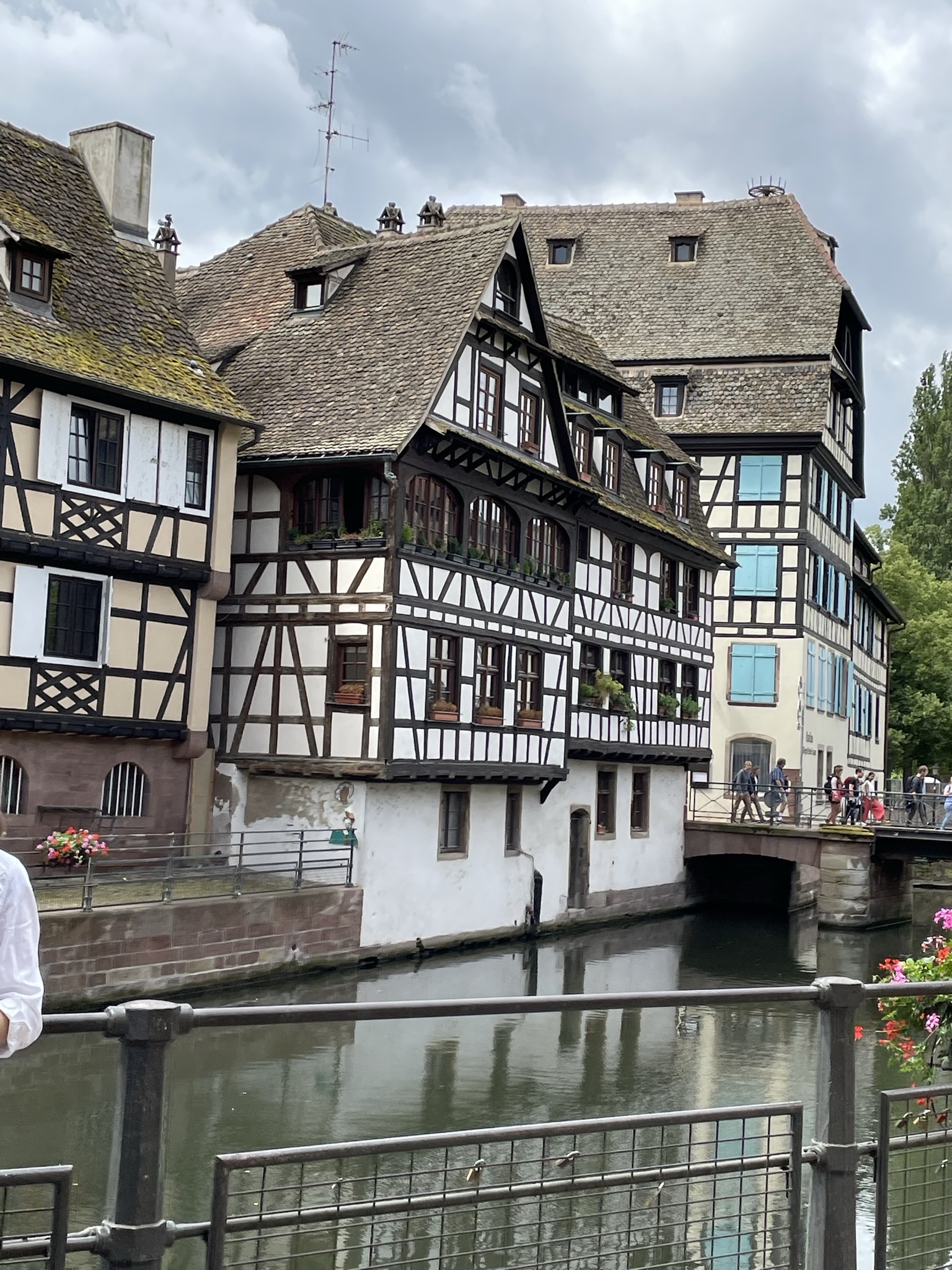
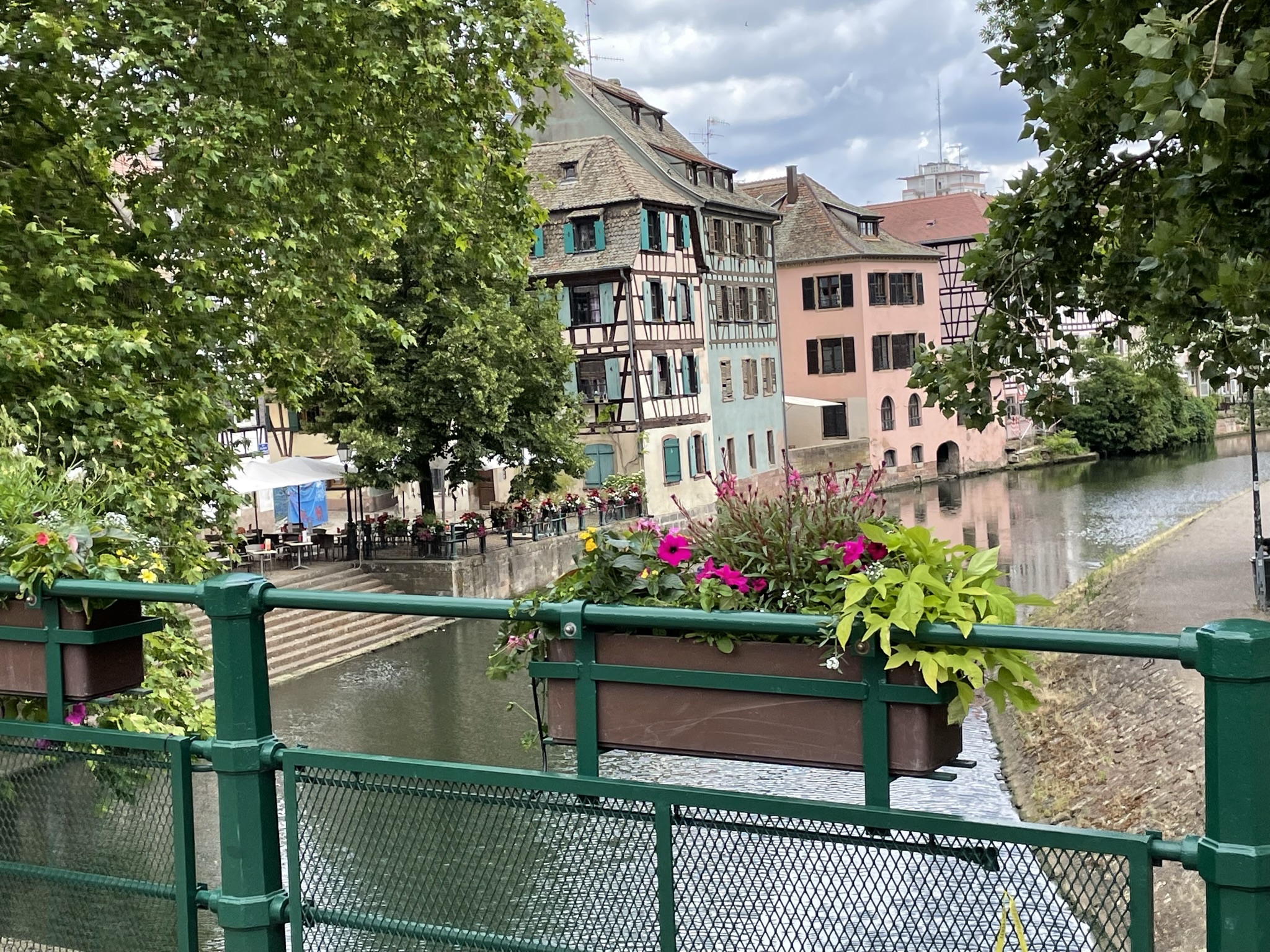
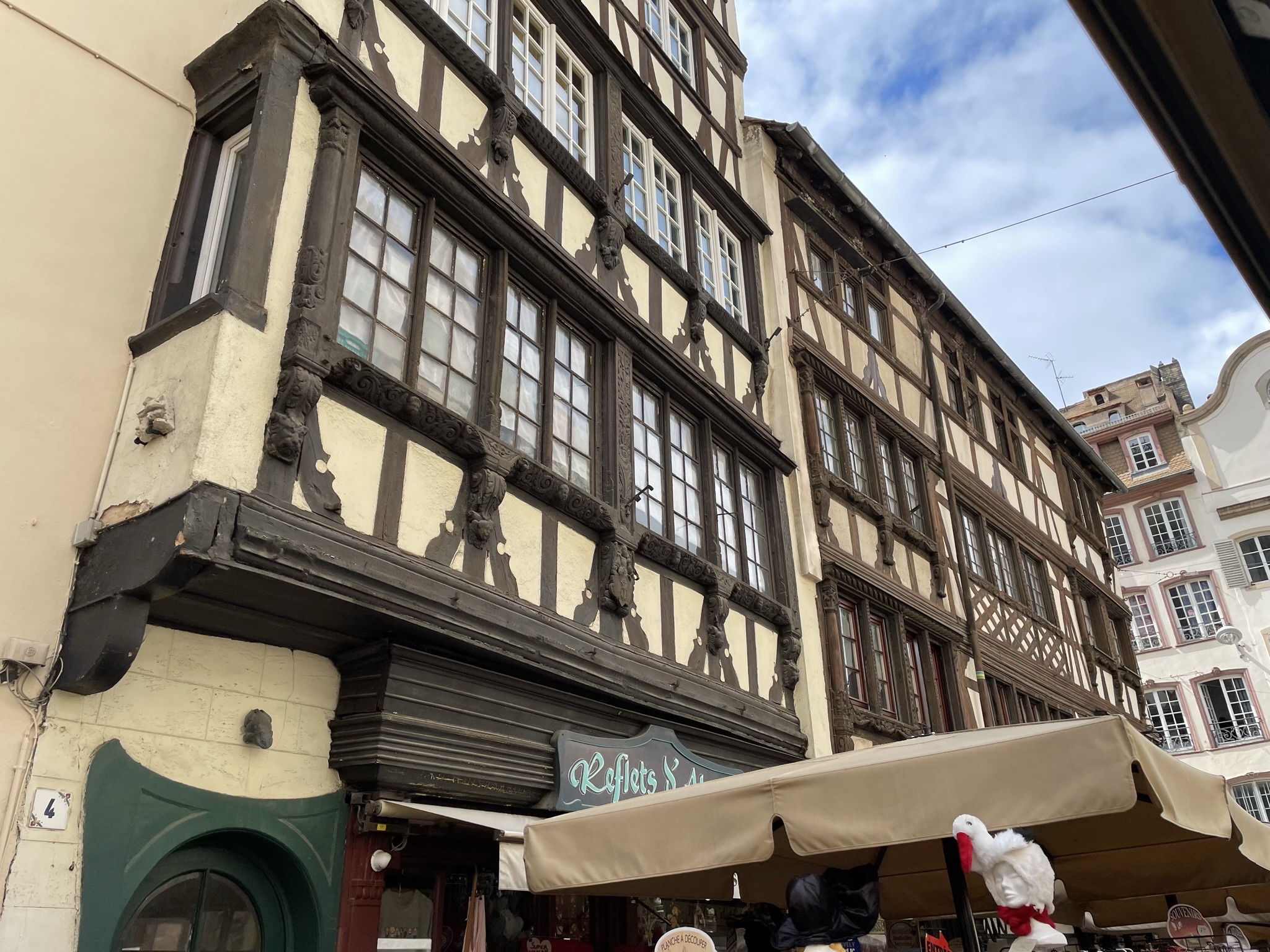
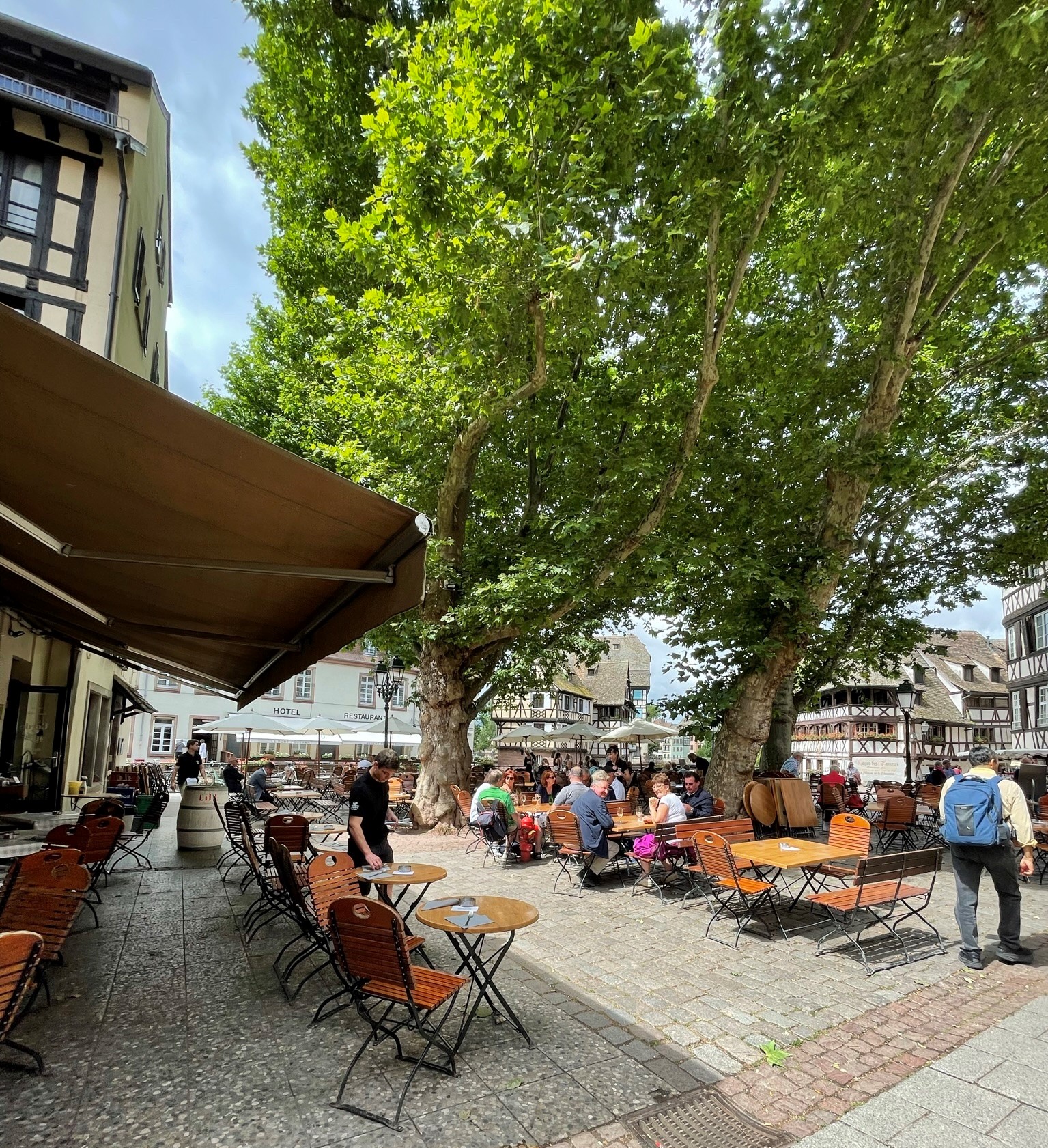
The city is chiefly known for its beautiful sandstone Gothic Cathedral with its famous astronomical clock and for its medieval timber framed buildings especially in an area called Petite France. Our tour included a walking tour of the cathedral district followed by free time to explore on our own. We arrived at the cathedral in time to see the clock.
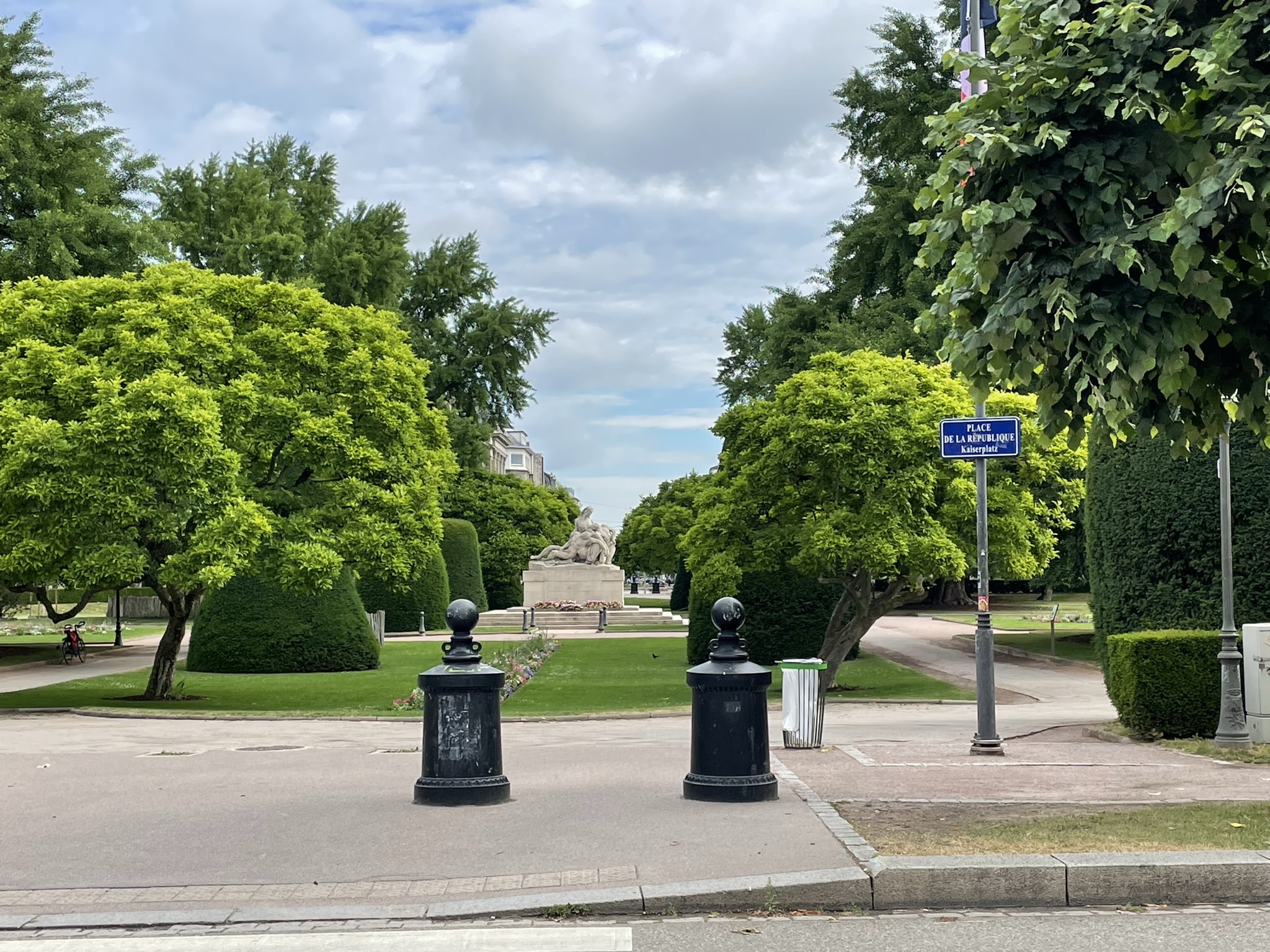
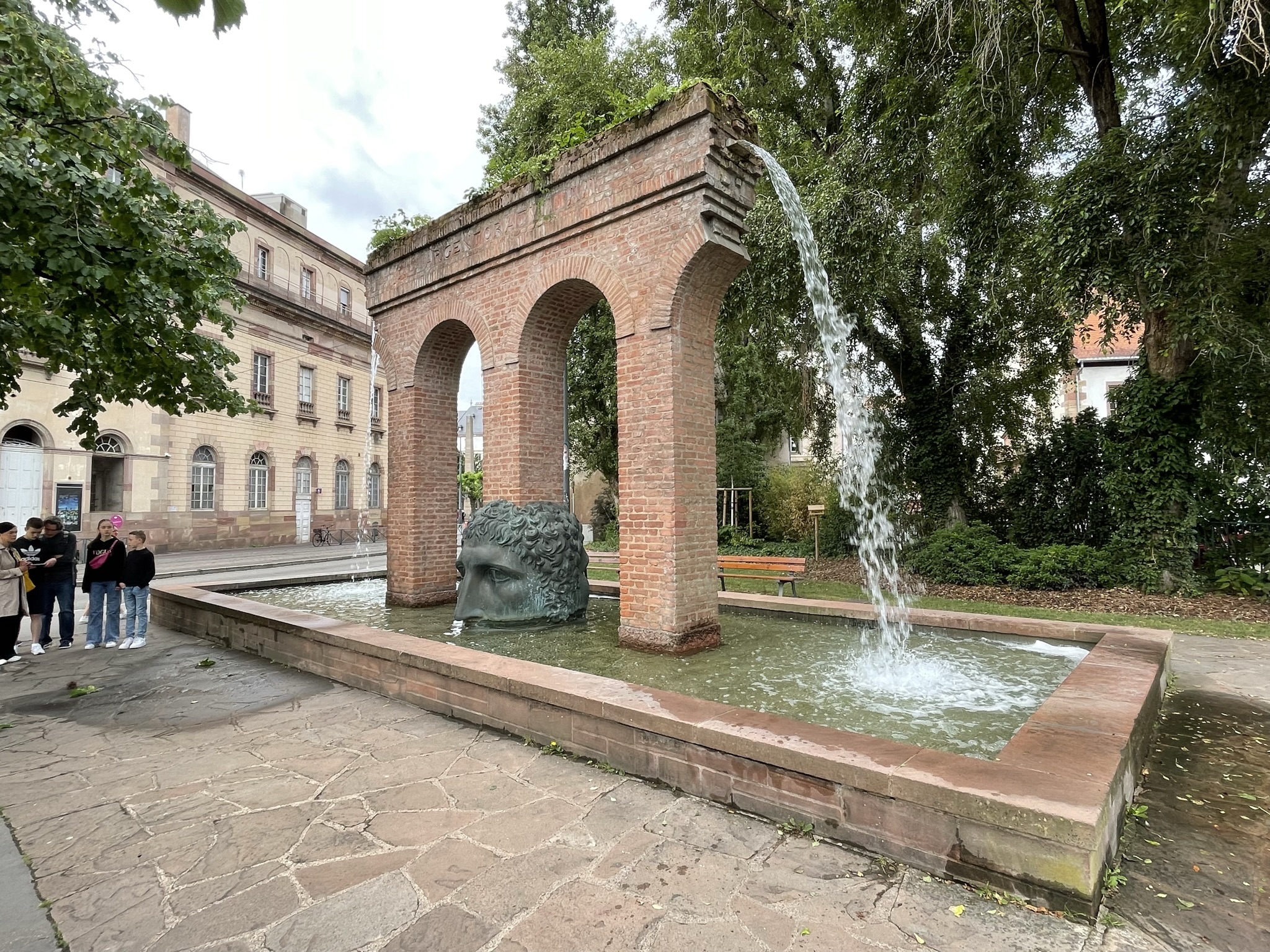
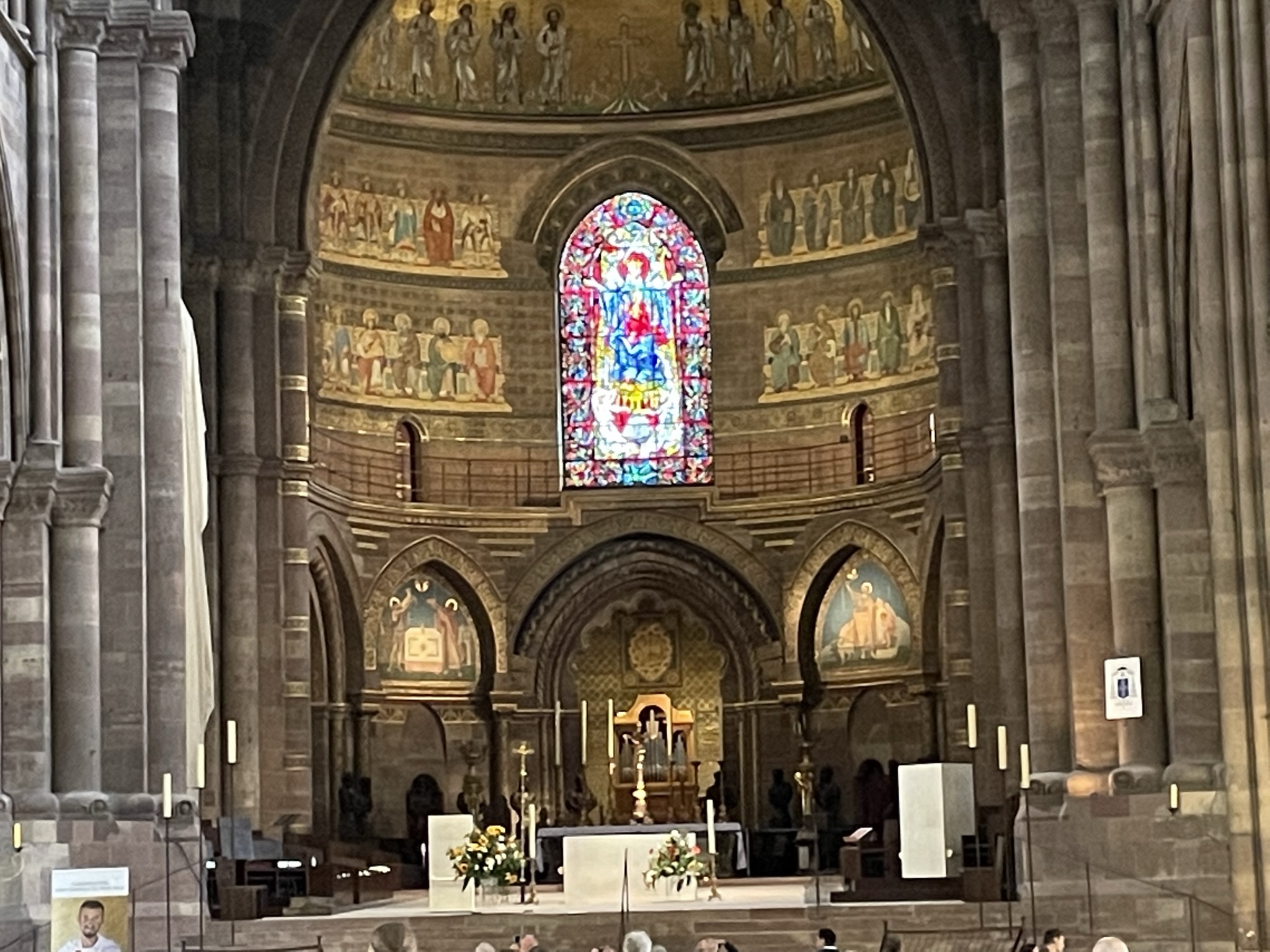
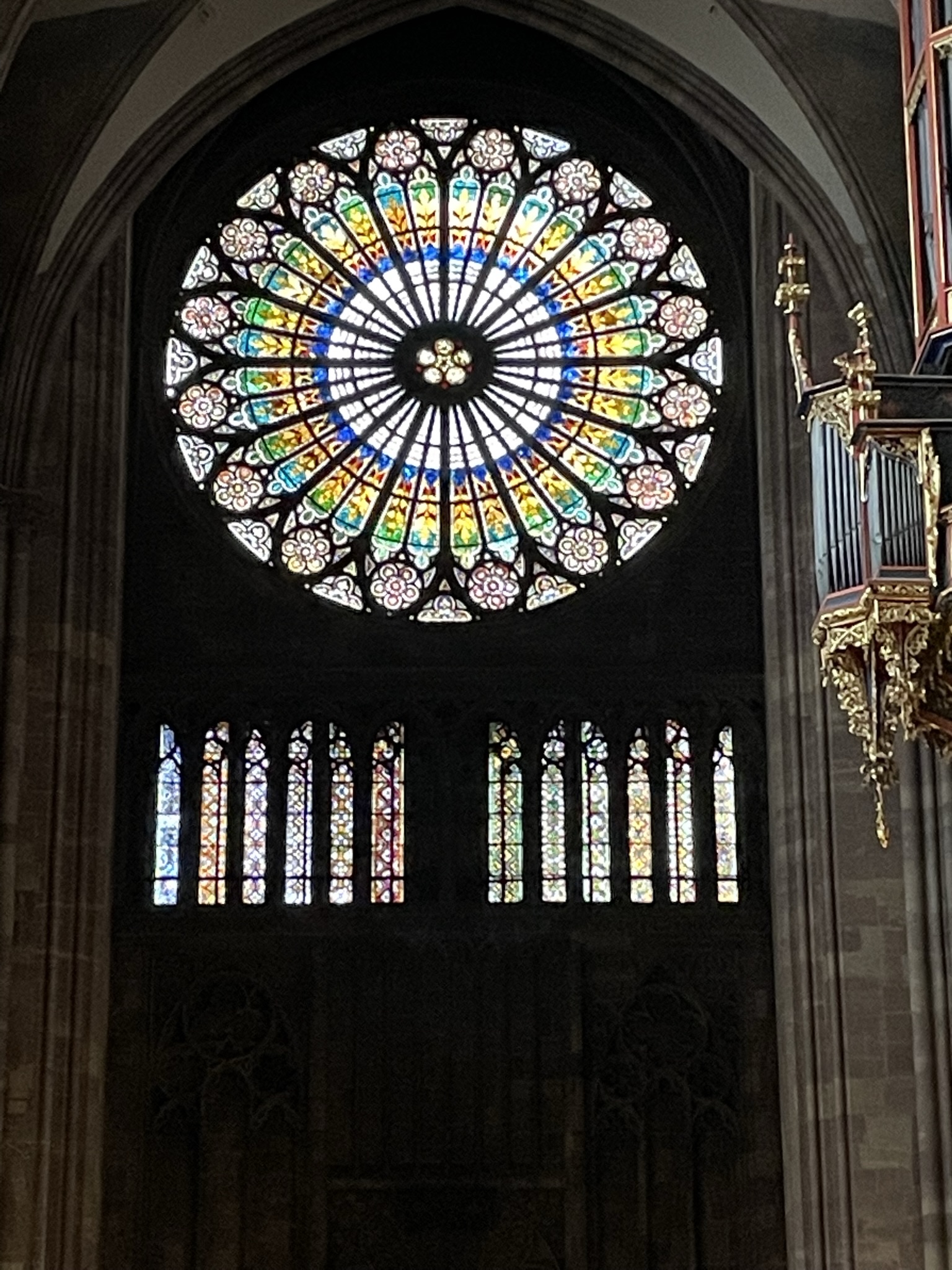
There were a couple of things that struck us about the city. It is very green with lots of big parks and is well treed throughout. Special attention is given to both the French and German cultures and people seem to live compatibly together, despite a long history of discord. Even though the old town suffered significant damage during World War II, most of that has been rebuilt in the original style. Public transit seems to be very well developed especially within the town centre.
Strasbourg played an important part in the Protestant Reformation with personalities such as John Calvin. It was also one of the first centres of the printing industry thanks to pioneers such as Johannes Gutenberg. Representatives from Strasbourg took part in the Protestation at Speyer mentioned earlier.
The cathedral construction began in 1190 and was completed in 1439. It was the world’s tallest building through until 1874 when it was surpassed by a Lutheran church in Hamburg, destroyed during World War II. Today, it remains the highest existing structure built in the Middle Ages. While some of its architecture is Romanesque, it is considered to be one of the finest examples of Rayonnant Gothic architecture. Of particular note were many beautiful stained glass windows, the grand Silbermann organ consisting of 2,242 pipes and 47 different effects, and of course the astronomical clock.
This is the third clock on this spot and dates back to 1843. The main attraction is the progression of 18″- high figures of Christ and the Apostles which occurs every day at solar noon, while the life-size cock crows three times. There is a video on YouTube for those who are interested.
After our walking tour we chose to take a narrated tram tour of La Petite France, an historic quarter in the city. In this area the River Ill splits up into a number of channels that cascade through an area that in the Middle Ages was home to the city’s tanners, millers and fishermen. It is a delightful area with its weirs, lock and half-timbered buildings.
Day 7 – Breisach, Germany
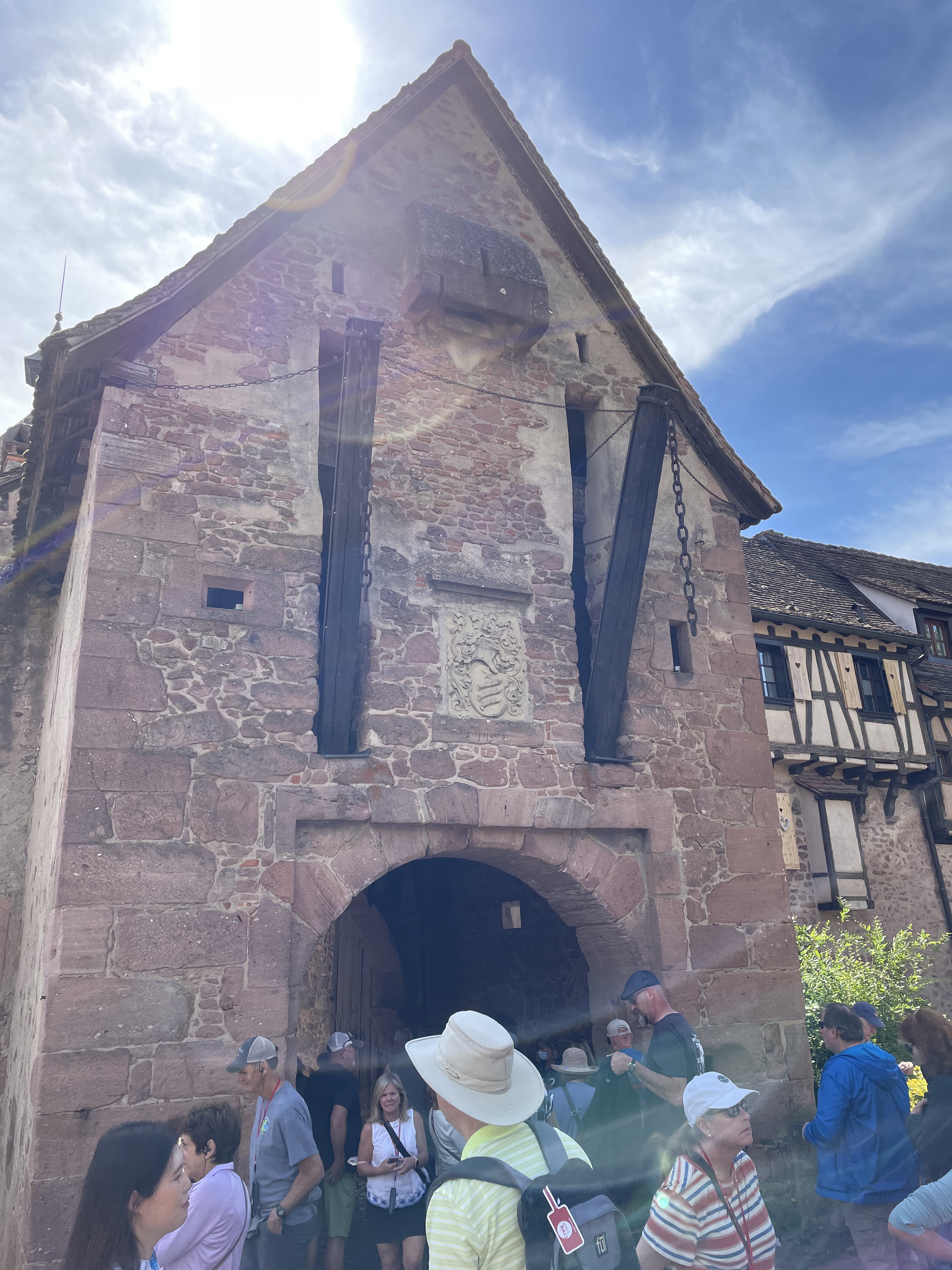
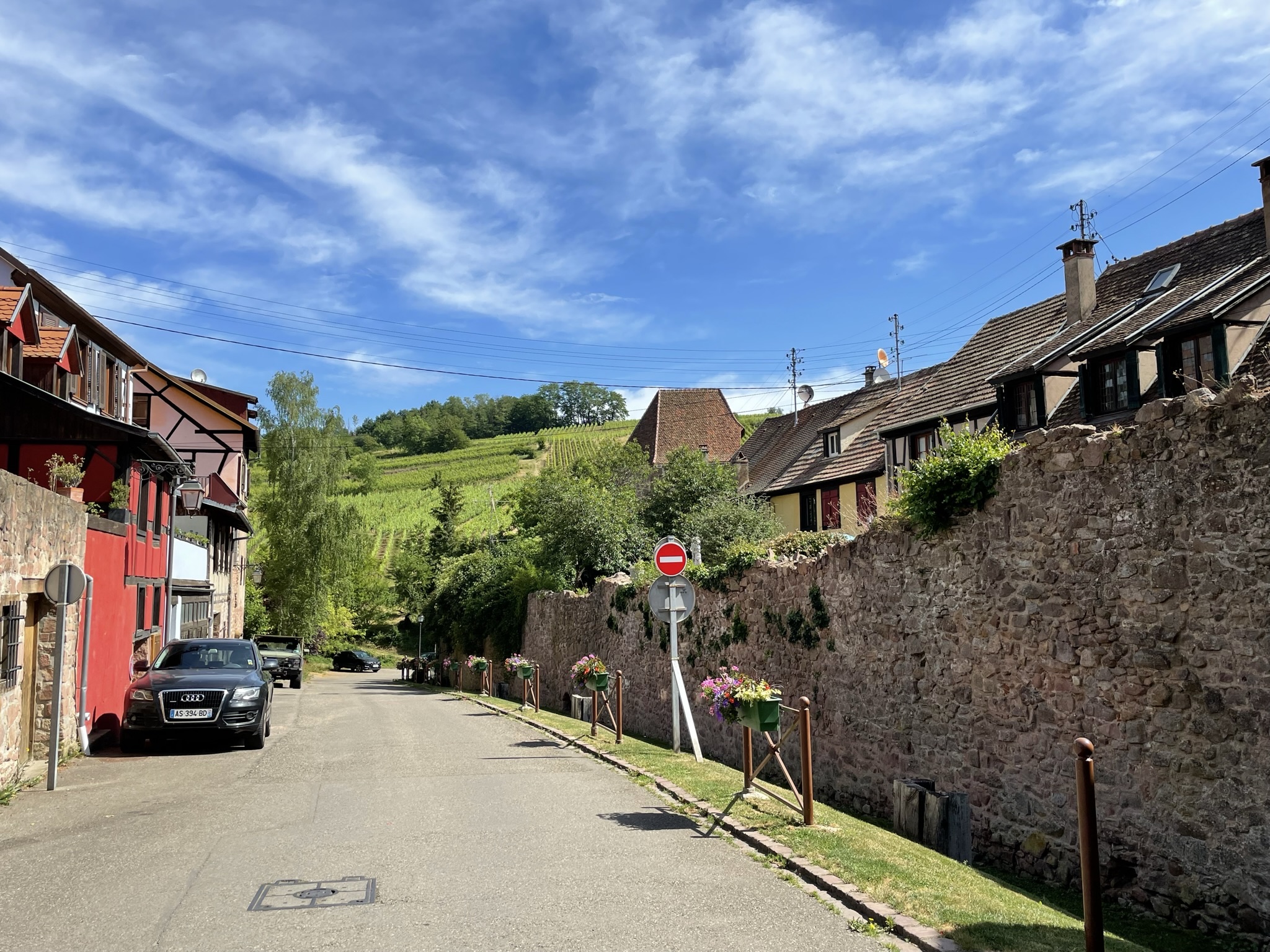
Breisach is a small town on a hill founded by a Celtic prince. Its name is Celtic and means breakwater. The boat dock is in front of a bridge that leads over the Rhine to Neuf-Brisach, Alsace. Our tour choices this morning were a walking tour of the medieval town of Riquewihr, an excursion to Frelburg, a Black Forest hike or a Breisach Wine Country Bike Tour. We chose the tour of Riquewihr.
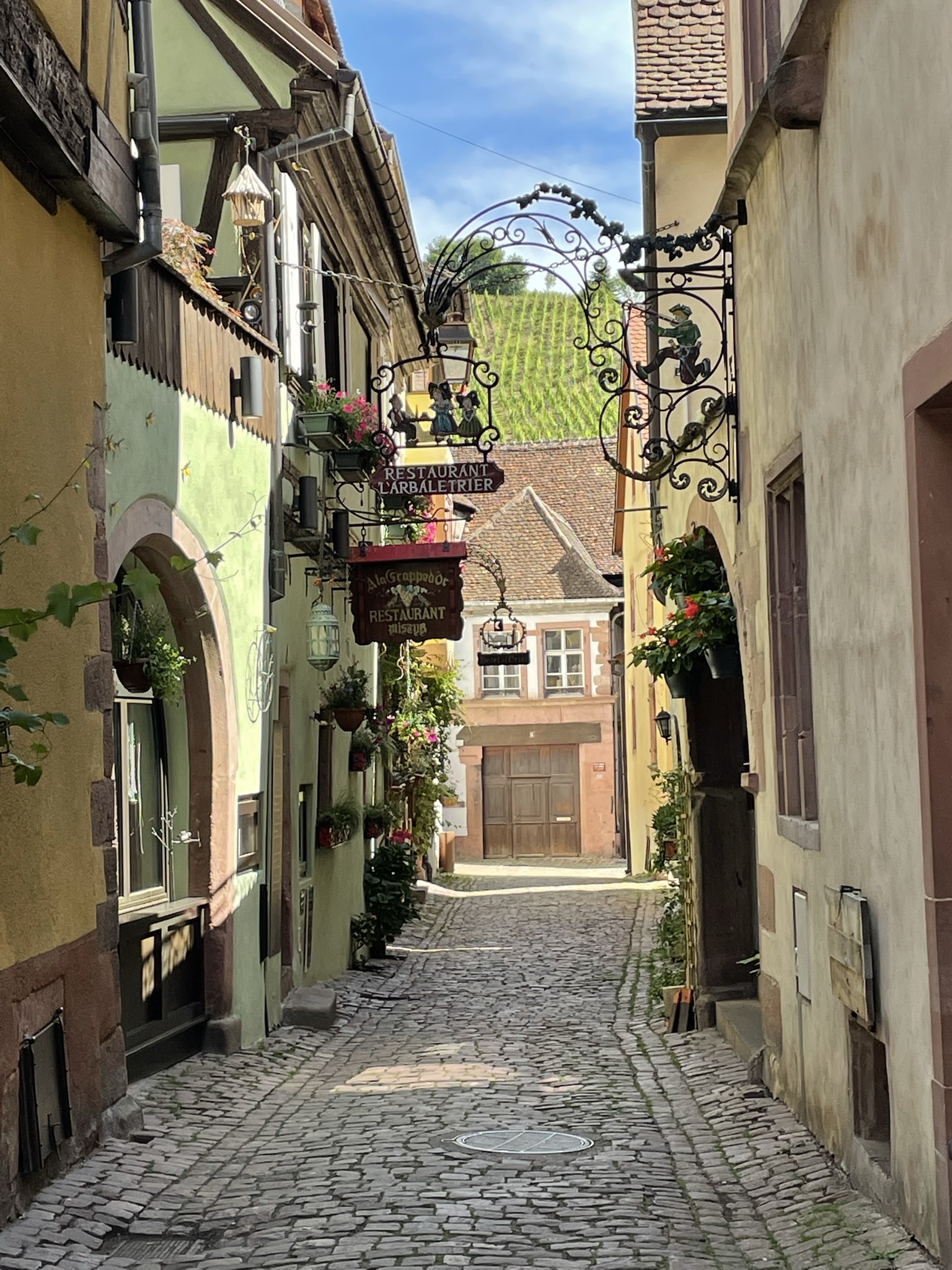
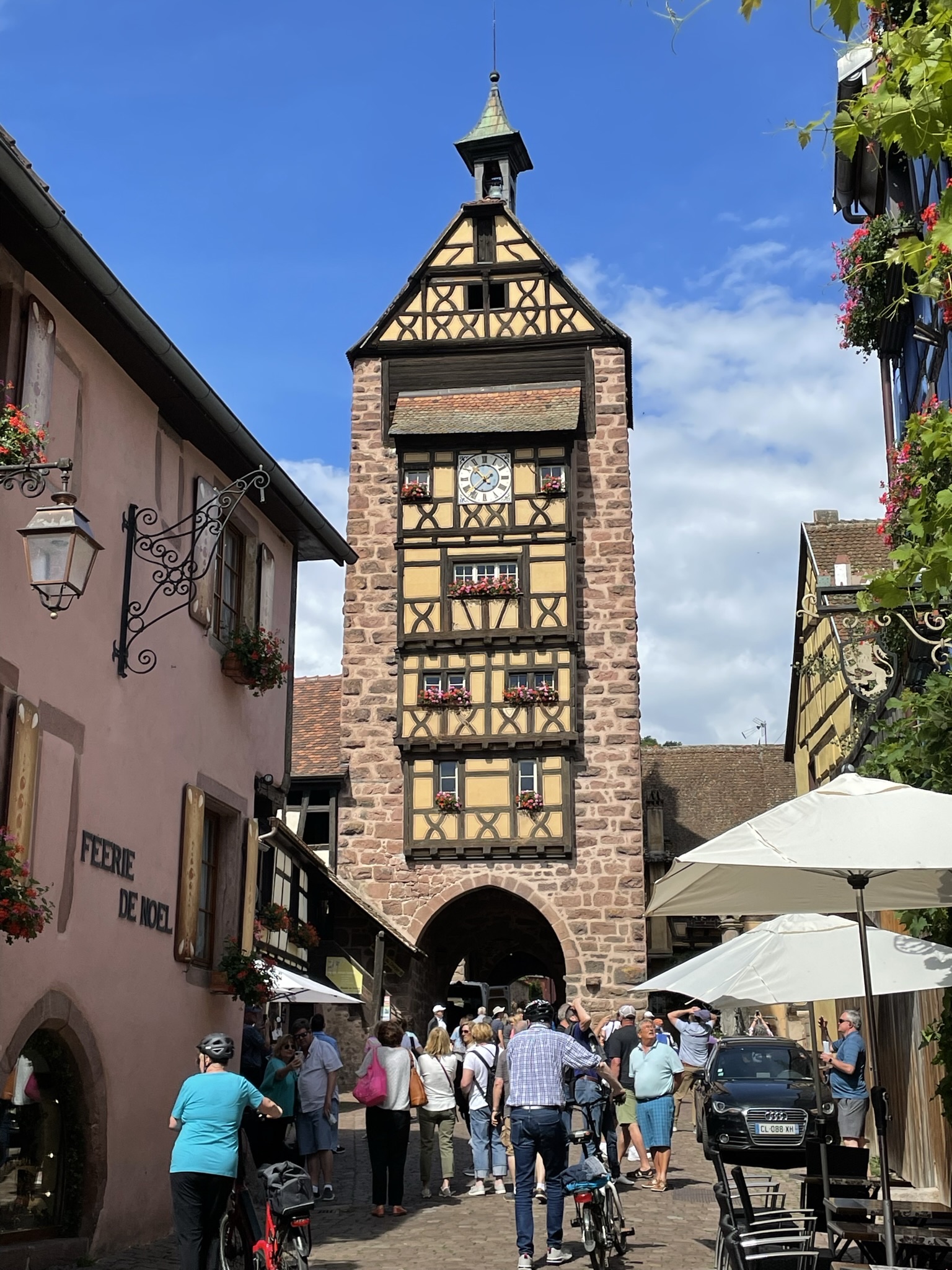
Known for its Riesling and other fine wines produced in the village and its historical architecture, Riquewihr is a popular tourist attraction. There were six tour buses in the small car park. One of the few towns not badly damaged during World War II, the city is still surrounded by its medieval fortifications and is overlooked by a castle from the same period that serves as a museum. The town consists of one main street with a few alleyways. Shops sell products and crafts all made locally and some even hand out samples – macarons, jams and jellies, and hand-rolled pretzels.
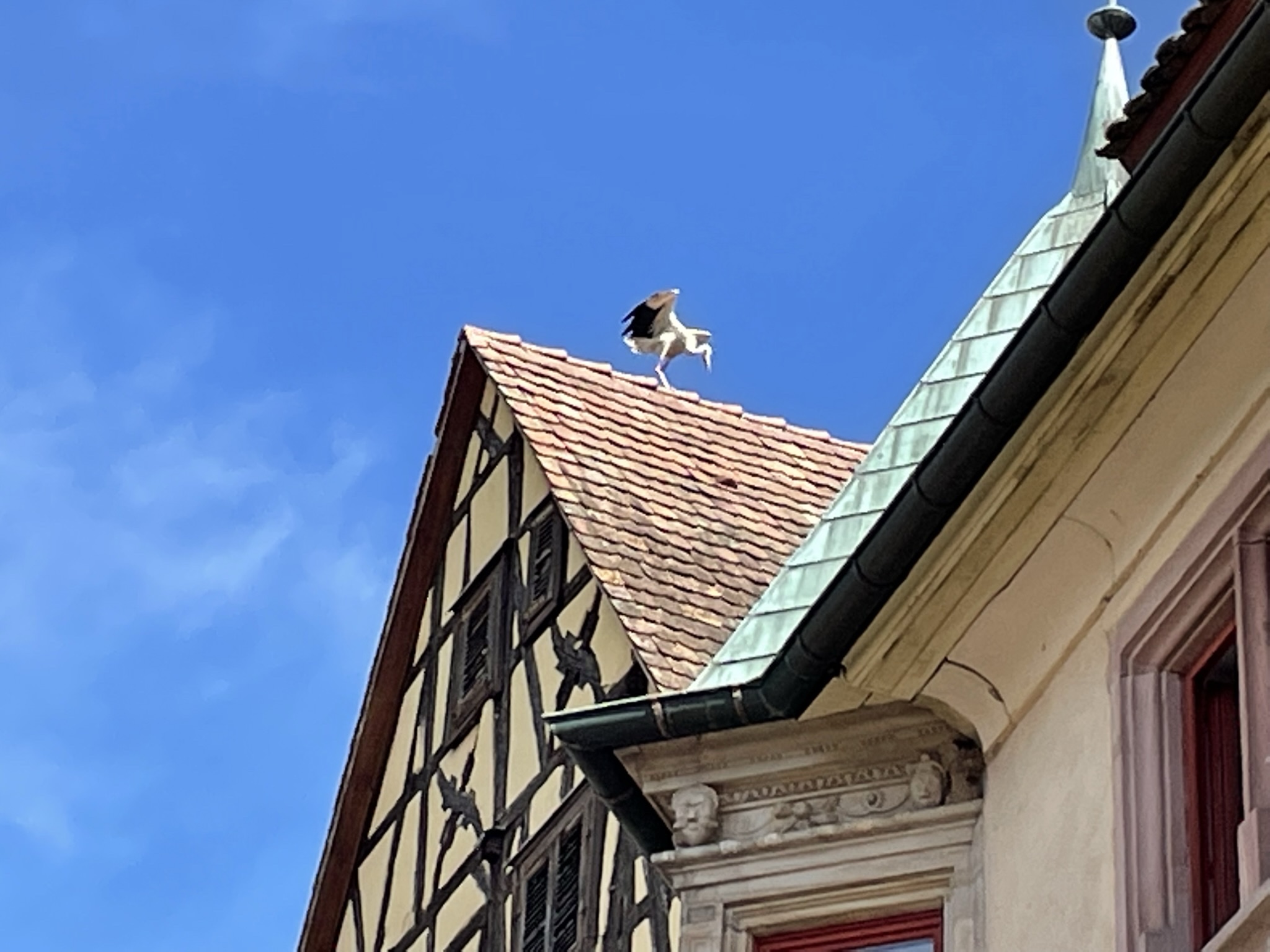
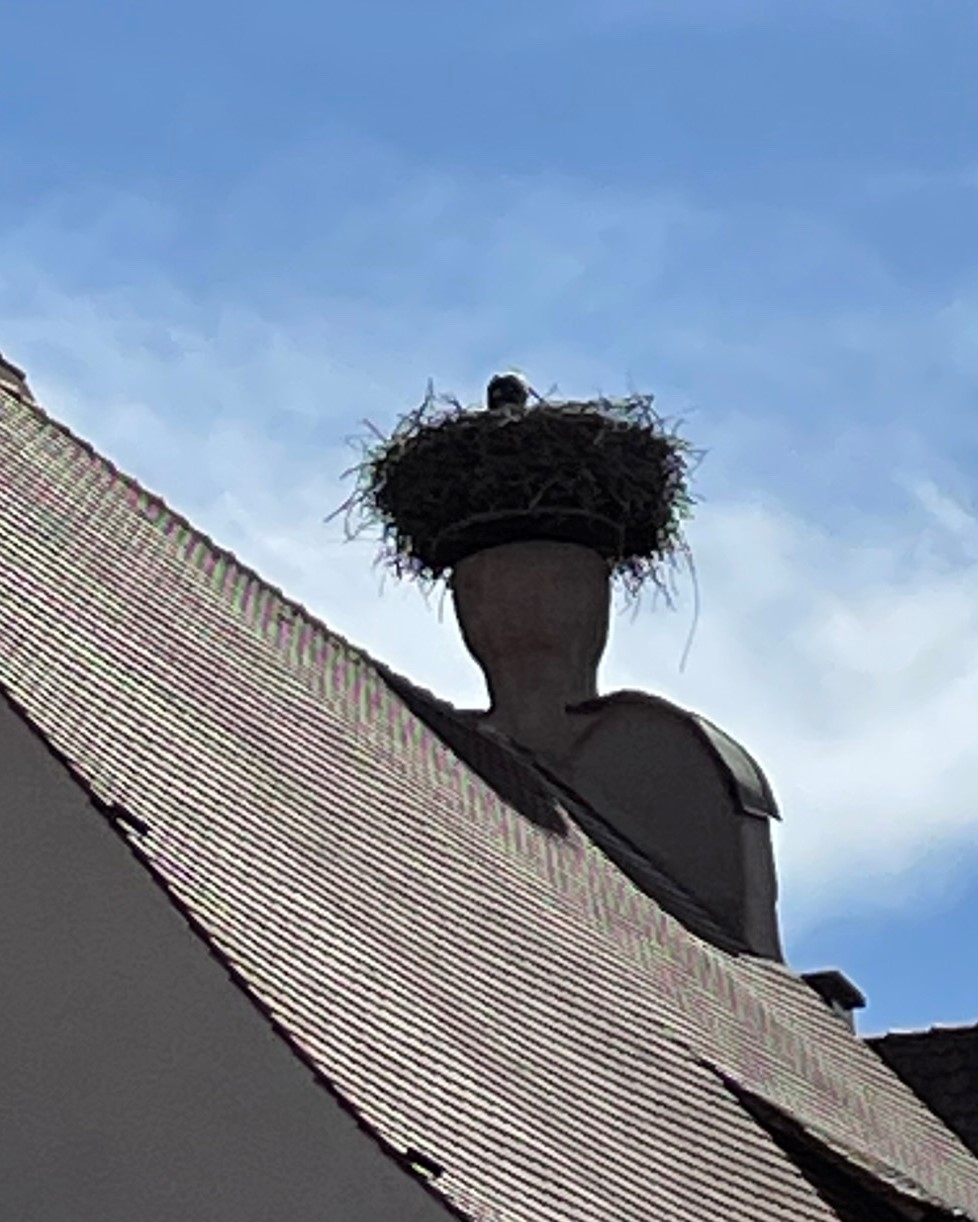
The highlight for many was the up-close sighting of a stork and its nest.
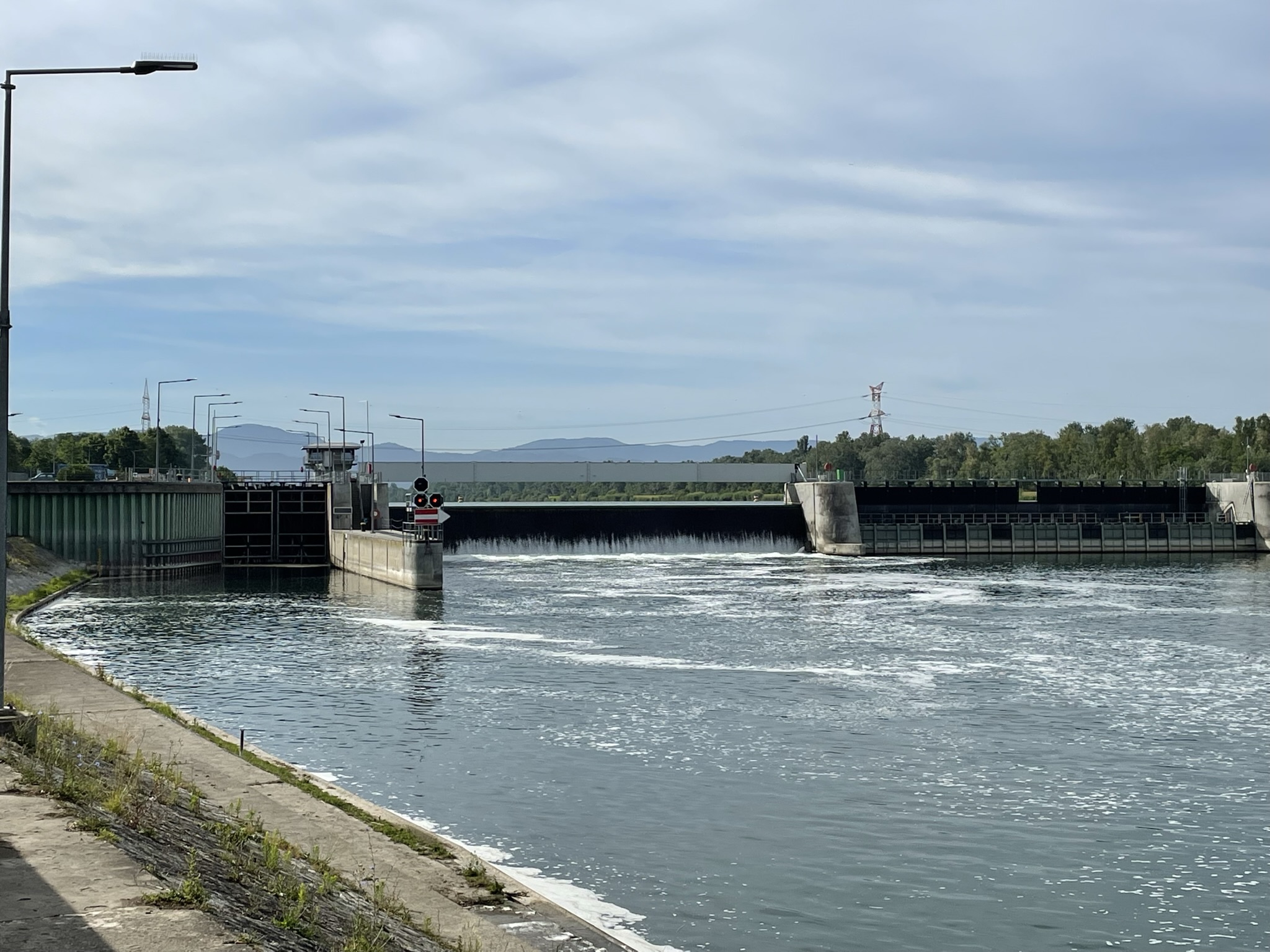

Back on board the boat we celebrated with the Captain’s farewell party. Tonight we travel through a number of locks arriving in Basel by morning.
Day 8 – Basel and on to a bus
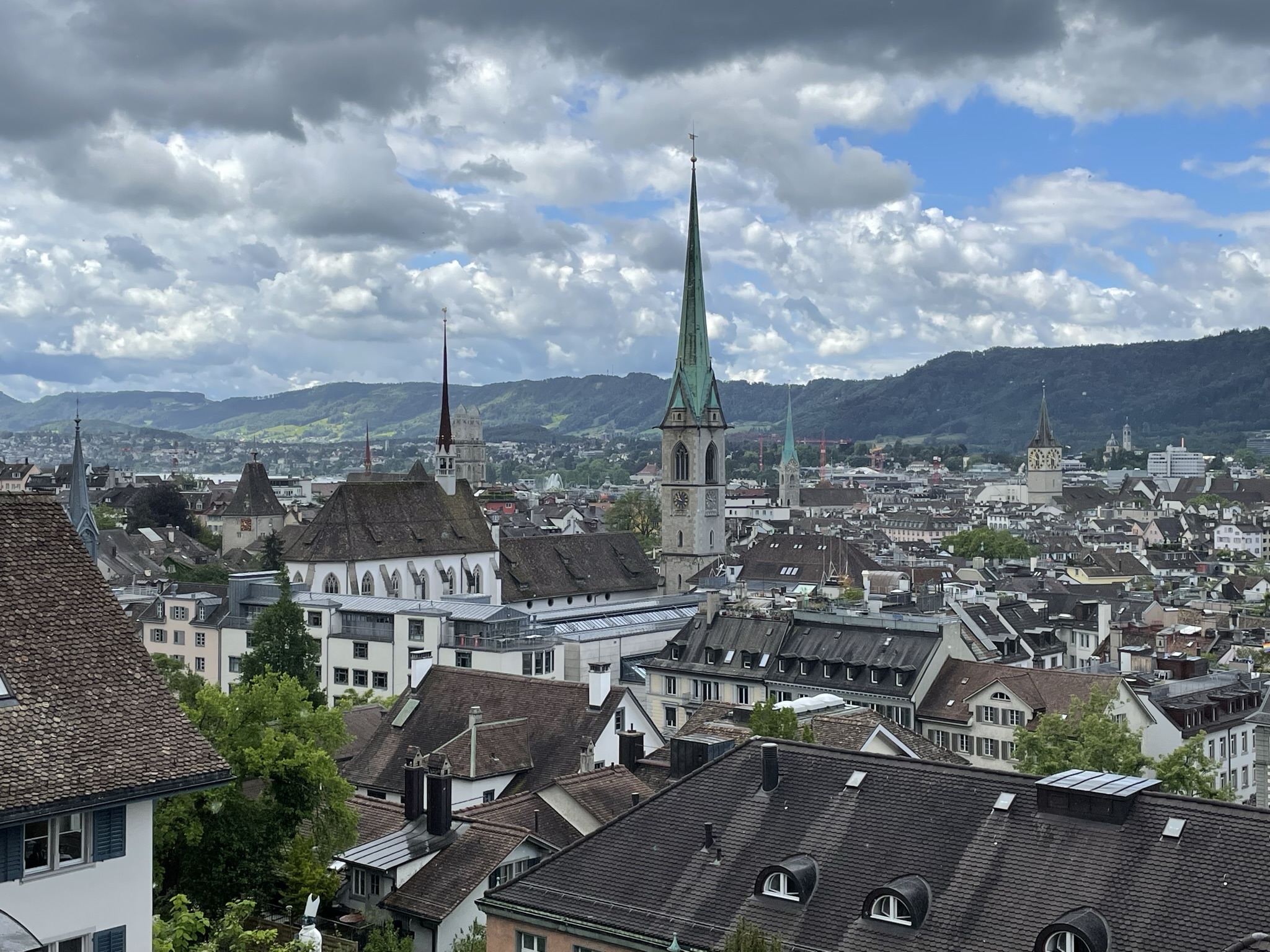
We were up early this morning to finish packing and prepare to disembark. Today we leave the other 104 AMA guests and continue on with just our small Craig Travel group. Our first stop was Zurich for a quick tour, lunch and a view of the city from above.
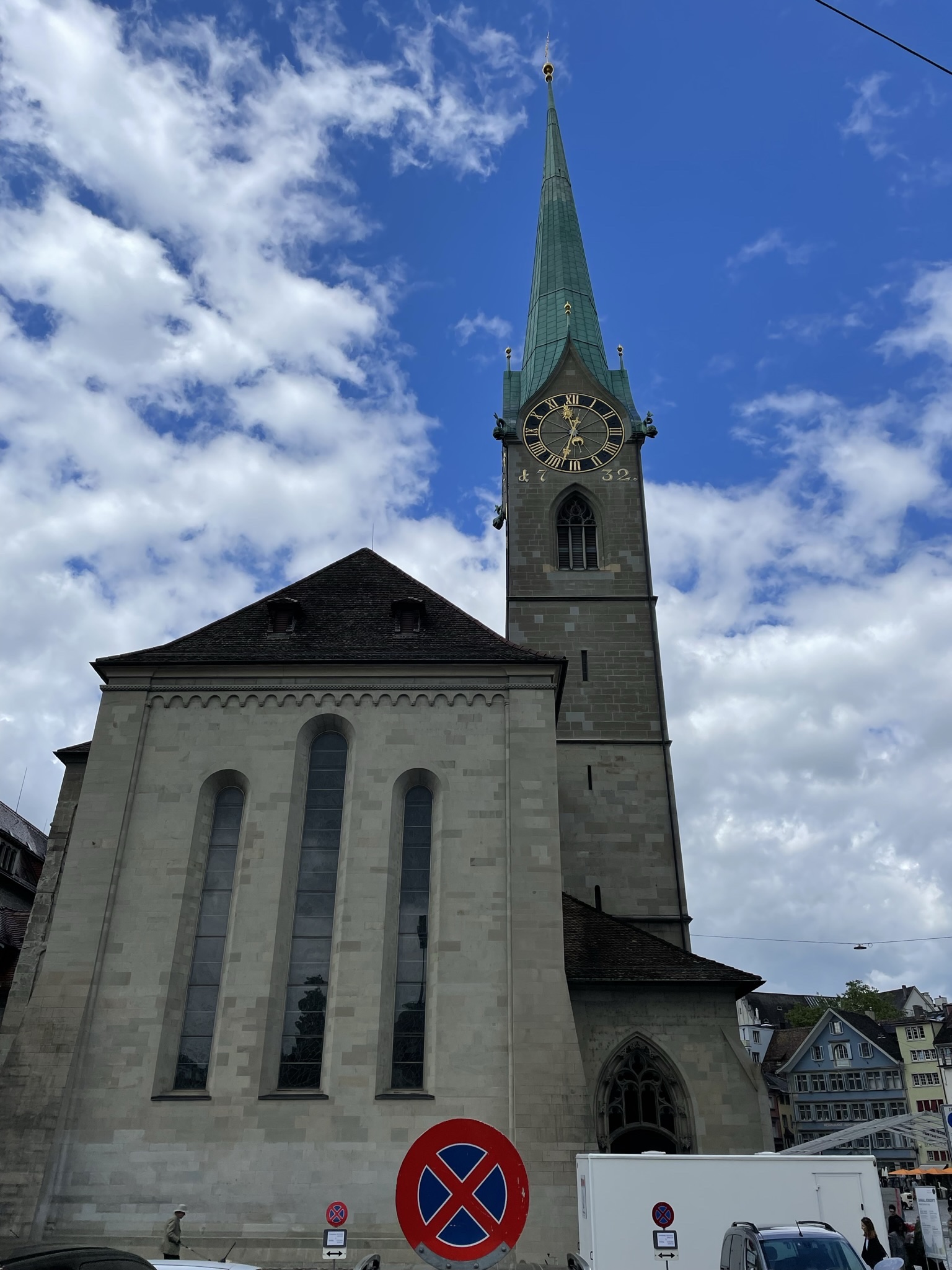
Zurich is the largest city in Switzerland and is among the world’s largest financial centres despite a relatively small population. In 1529 it became the primary centre for the Protestant Reformation. Our tour introduced us to a number of churches, one of which, Fraumuster (translates as Women’s Minister) had a very interesting history. The site was a former abbey for aristocratic women founded in 853. The abbess was very powerful and politically active and was granted the rights of mayor. The church continues today as a part of the Evangelical Reformed church and carries on the traditions of the convent.
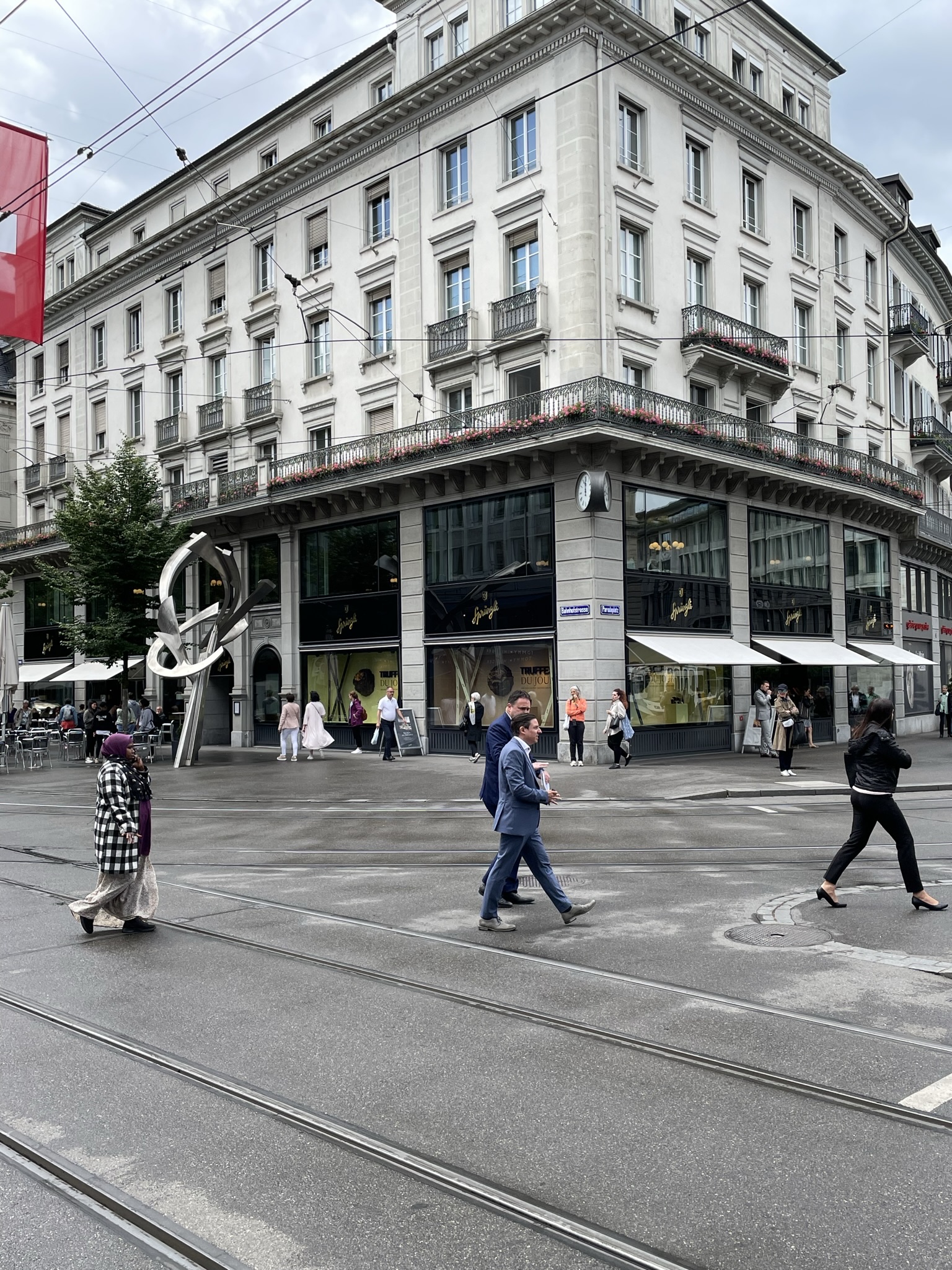
During our walk around town, it was pretty obvious that Zurich is a city of wealth. The main street is full of high-end shops with security guards at the door and people were well dressed in formal business attire. We found a nice outdoor cafe for lunch that served quiche and salad (for two) for just under $70! Of course Switzerland is well known for chocolate, and many shops abound along the main street.
After lunch we re-boarded our bus to continue on to Lake Constance and Hotel Halm. One thing we have had fun with along the way is the European penchant for duvets. On the boat we finally had to ask for a sheet and blanket, finding the duvet just too heavy. At Hotel Halm, we removed the duvet and used the cover as a sheet. The air conditioner worked in the living room but didn’t do much in the bedroom although we were able to open the window to cool the room off at night.
Today was the first day that we recognized that more and more of our group were succumbing to a “summer cold.” We continued to mask on the bus and in the hotel, but it was hard to avoid potential transmission at meal times.
Day 9 – Lake Constance, Germany
The town of Konstanz (or Constance in English) is a holiday town at the west end of Lake Constance. It is also a large university town. Our hotel was conveniently located in the old town very close to the ferry docks. George participated in the walking tour of the port area while Nancy caught up on some much needed rest. The remainder of the morning was free time with lunch on our own.
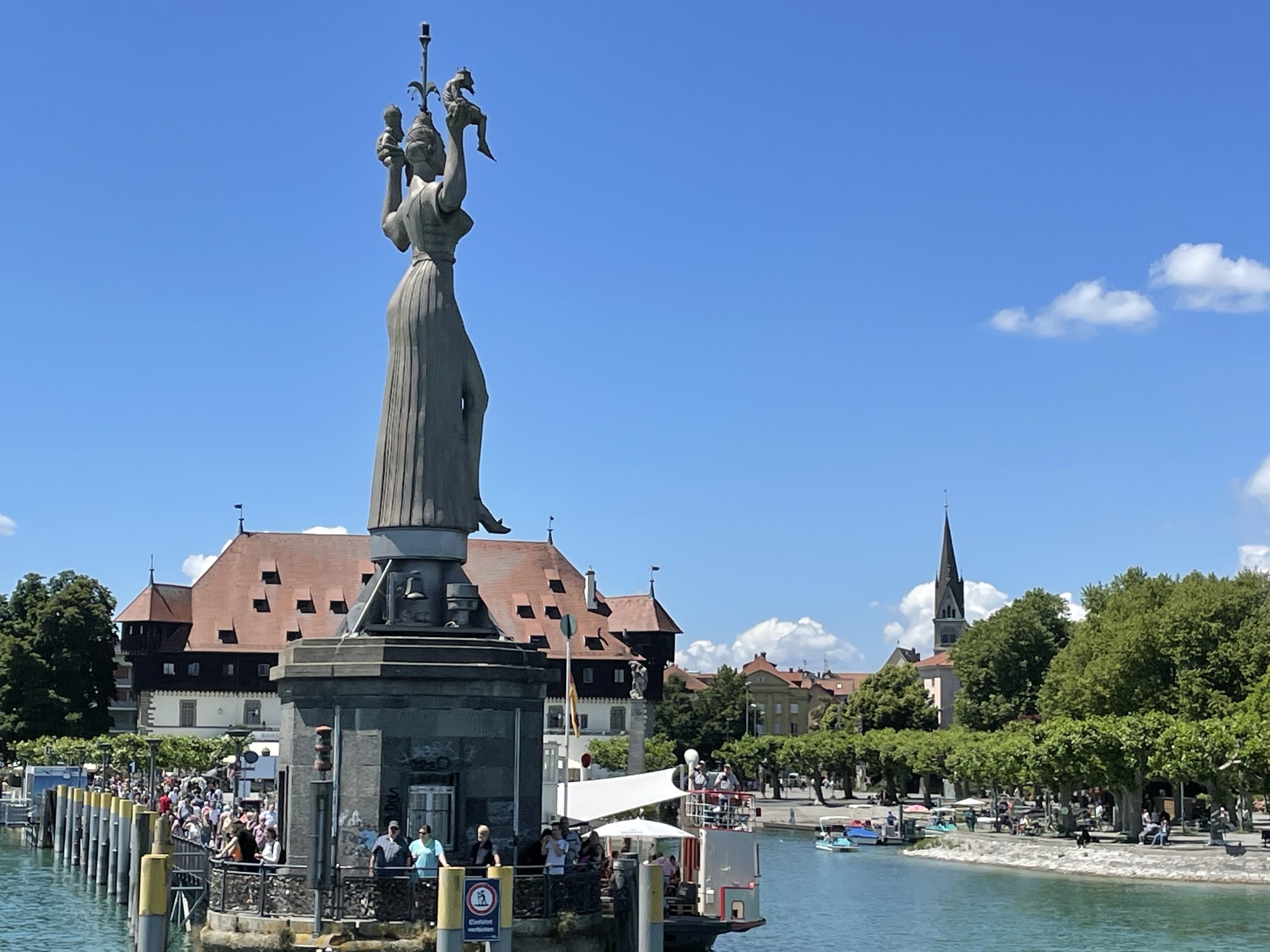
Imperia is a statue at the entrance to the harbour commemorating the Council of Constance that took place between 1414 and 1418. Thirty feet high it stands on a pedestal that rotates around its axis every three minutes. The woman holds two men in her hands – one wearing the papal tiara and one wearing an imperial crown – the artist suggests, rather than the real participants in the Council, they represent fools who have acquired the insignia of secular and spiritual power. The statue refers to a short story by Balzac, La Belle Imperia.
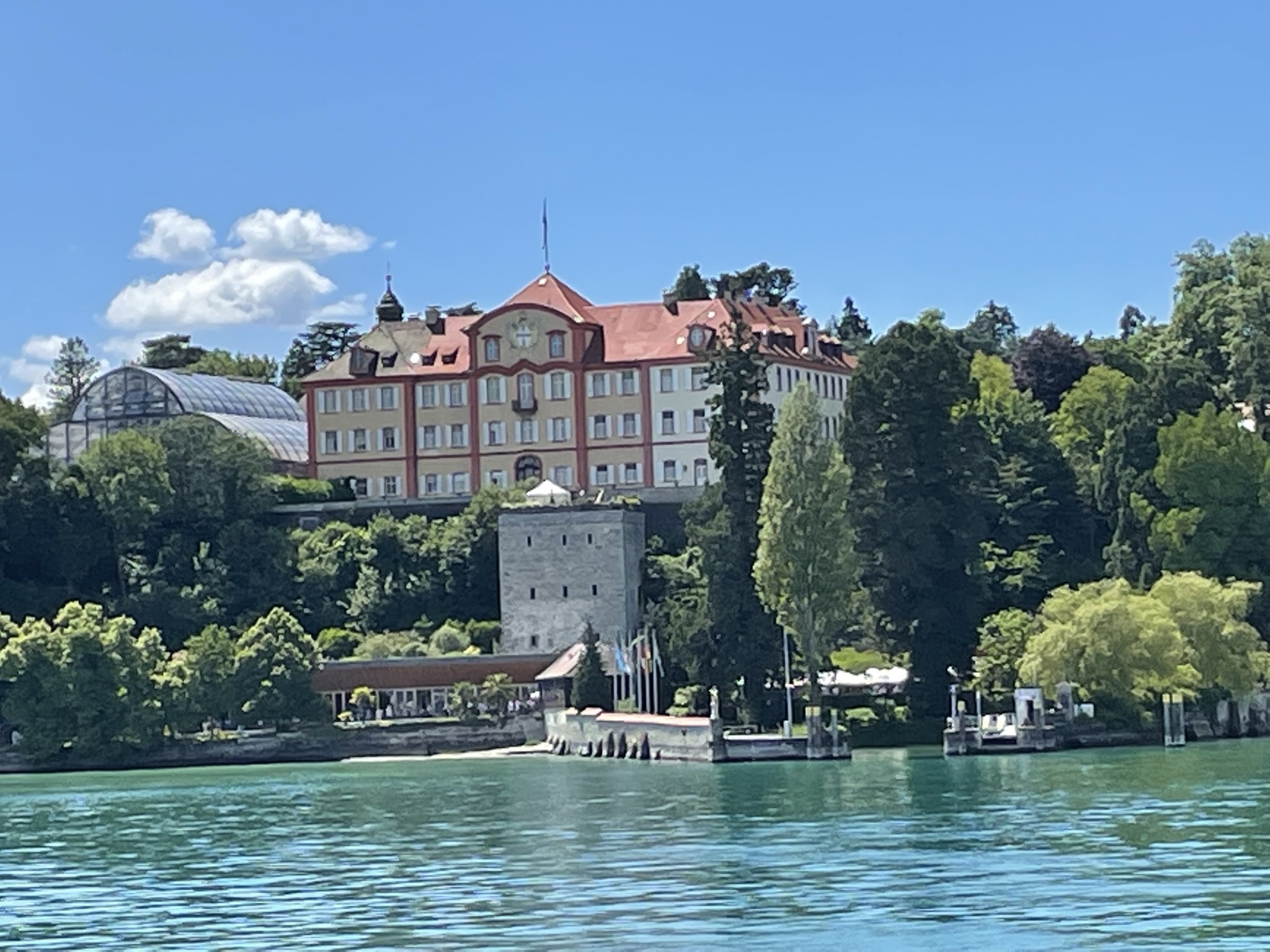
In the afternoon we took a ferry across to Mainau Island, known as the flower island of Lake Constance. Operated since 1853 by a private corporation run by various members of the Bernadotte family, at various times it was a garden and park open to the public, accommodation and recovery for French prisoners liberated from Dachau, a quasi-YMCA operation for war-damaged young people to have opportunity to heal and have international meetings with young people from other countries. In the almost 20 years of that program’s existence, some 20,000 participants from 40 countries participated in events at Mainau Castle. From 1950 on, work began in earnest to develop the gardens and park for the public. Buildings were renovated and new ones built along with much-needed infrastructure. Today some 1.2 million visitors visit the 25-hectare garden annually. Today, Countess Bettina Bernadotte, born in 1974, oversees the corporation as Managing Director. If you’re in the area, you should plan a visit!

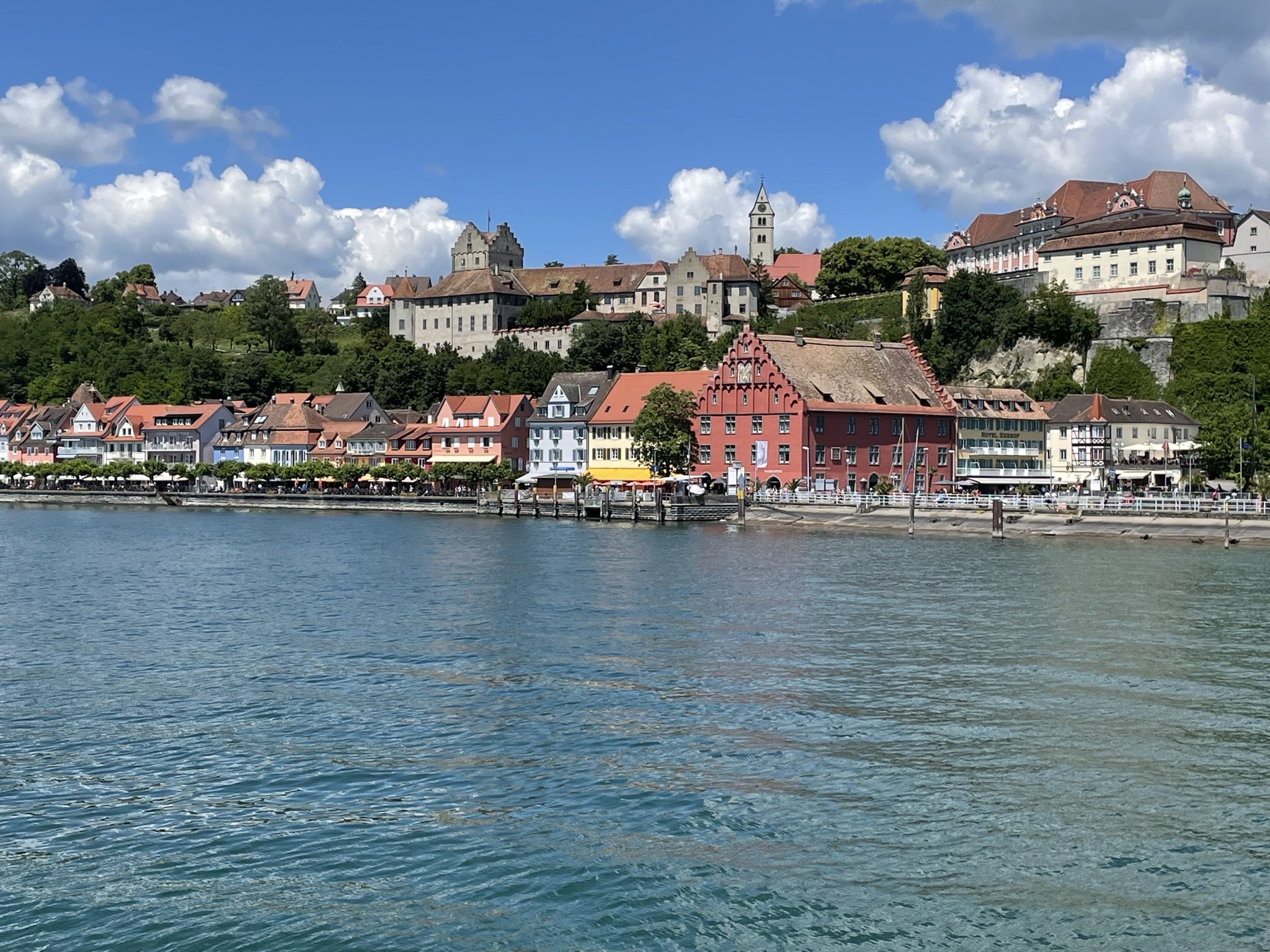
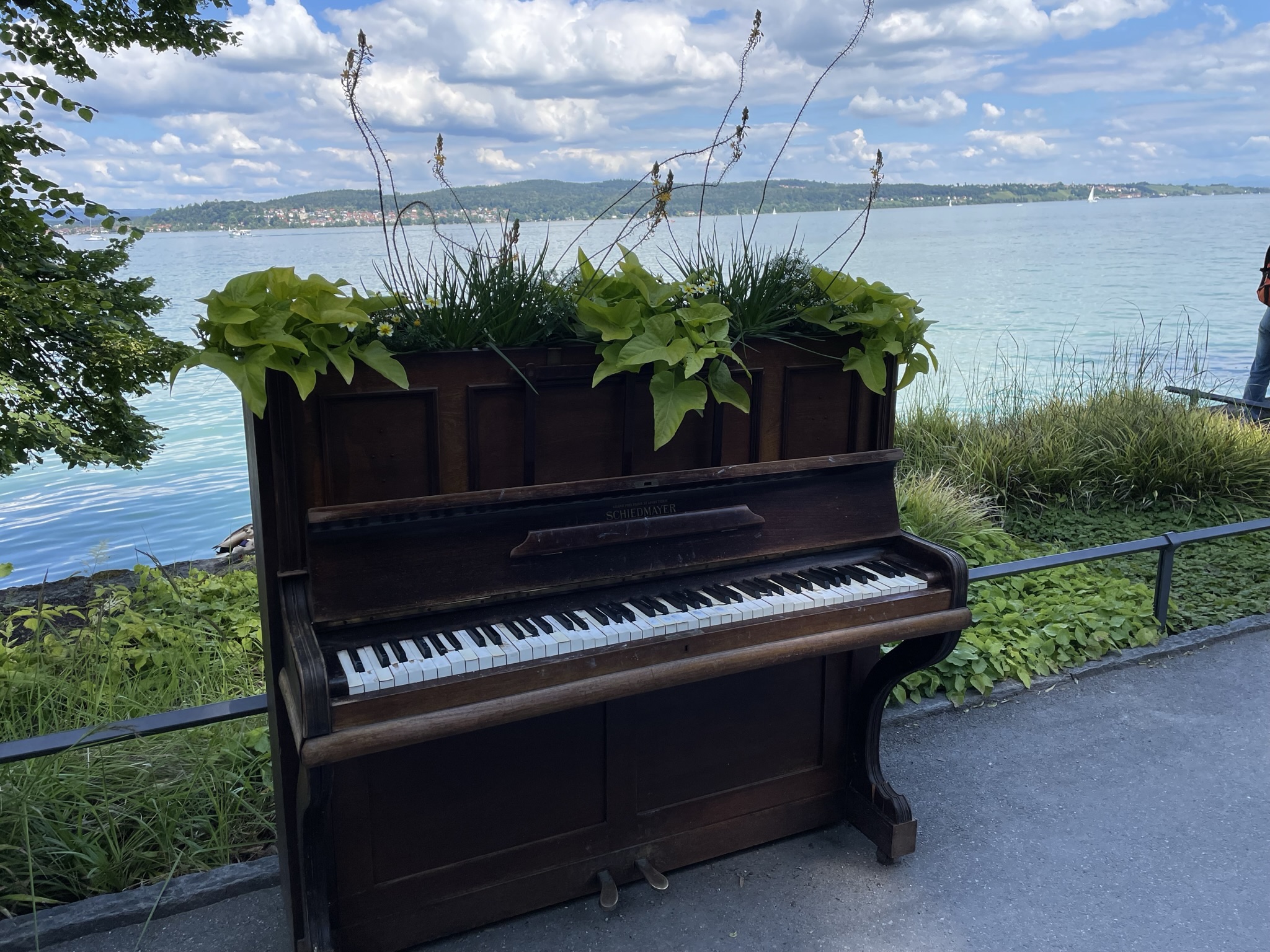


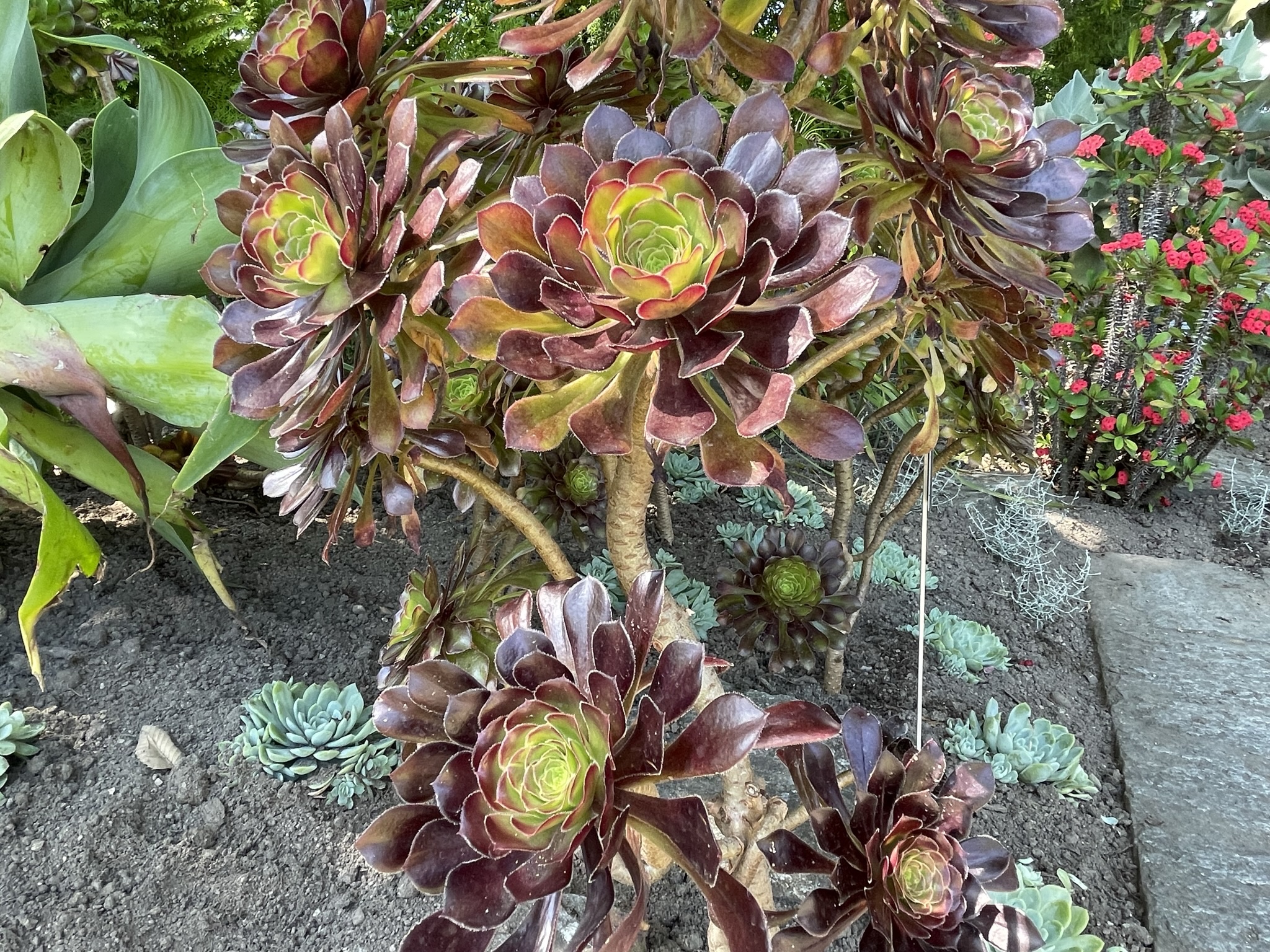

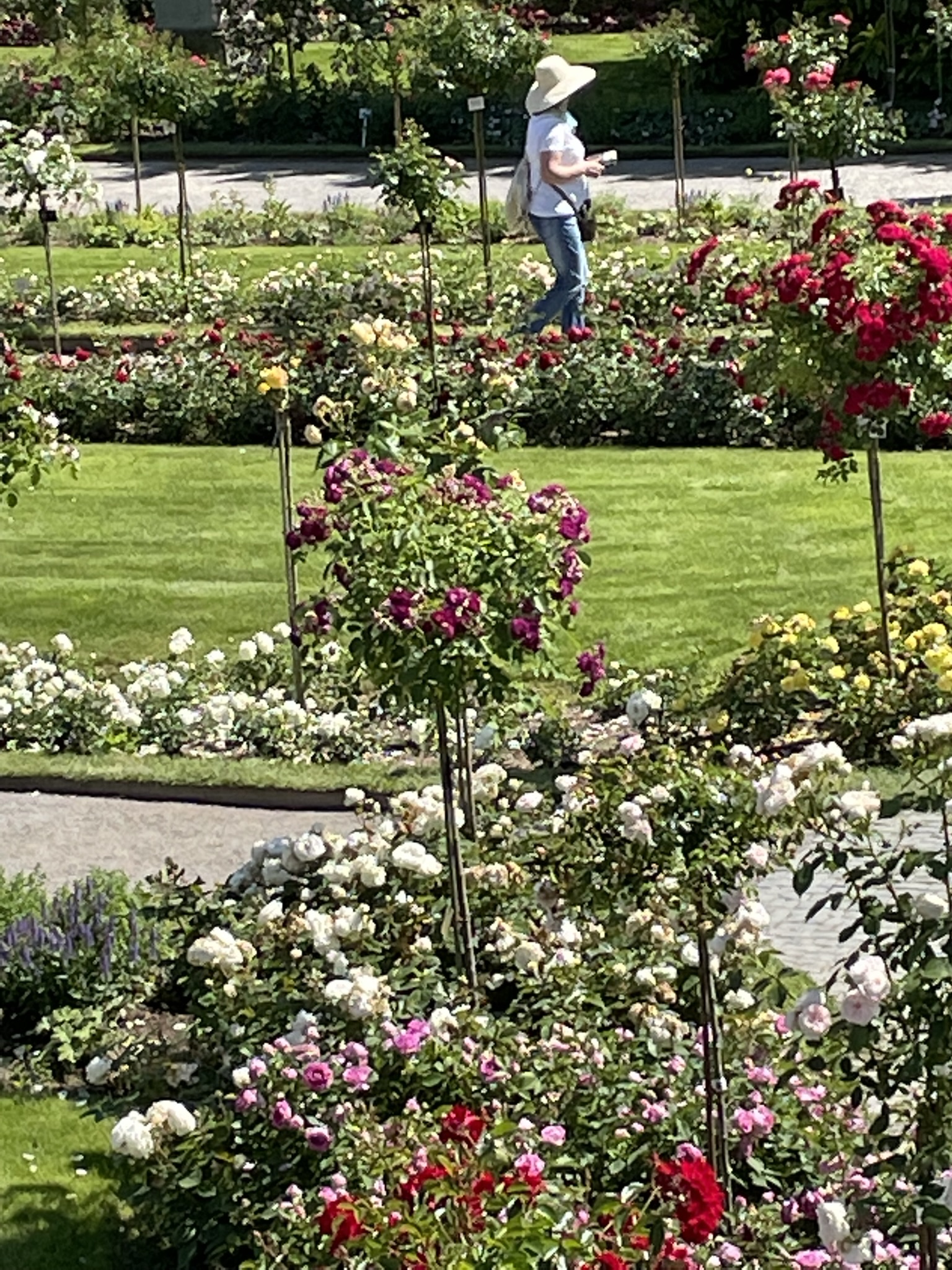

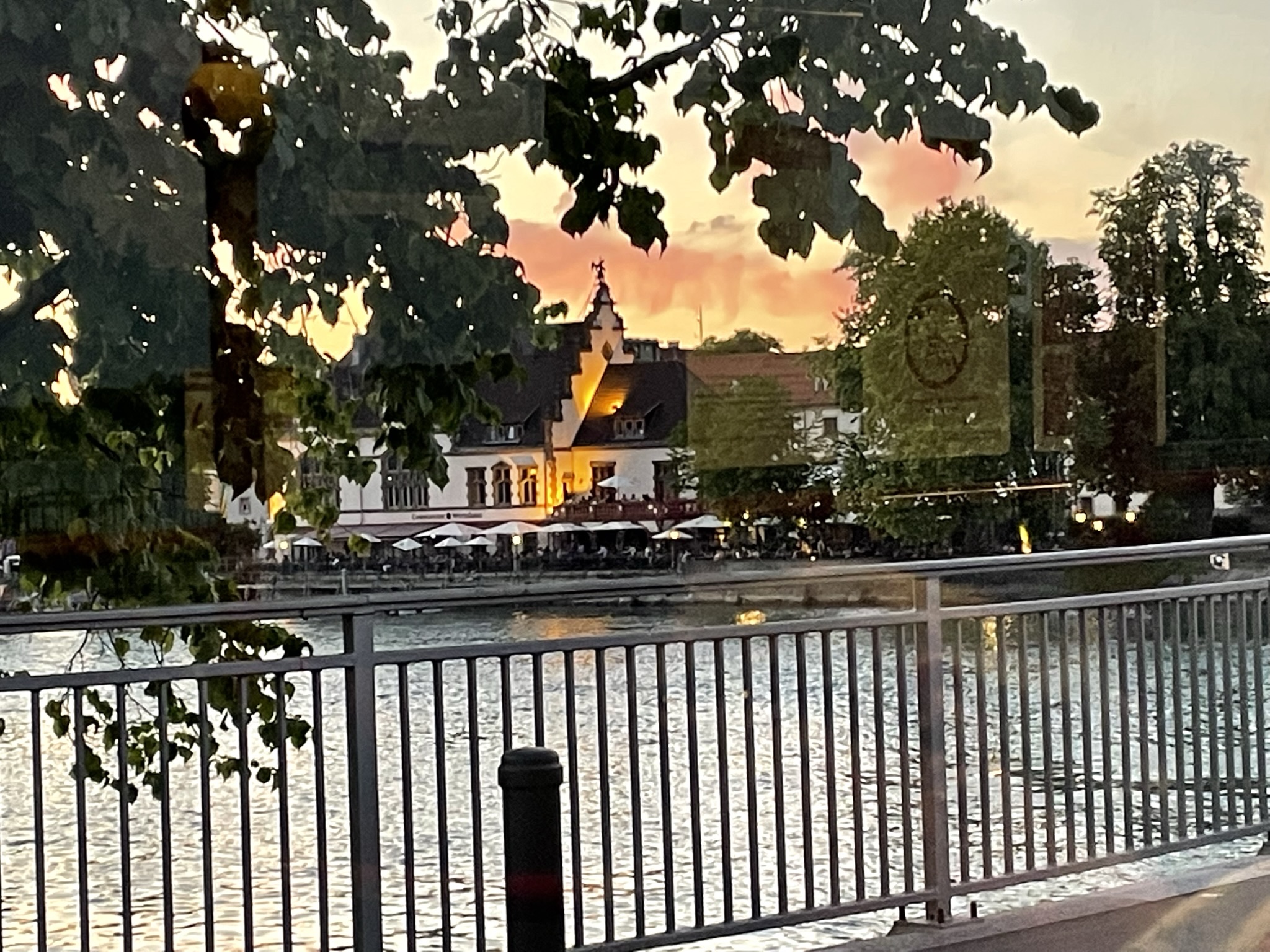
We finished off the day with schnitzel dinner down by the river and a beautiful sunset with our friend Ann.
Day 10 – Liechtenstein and Innsbruck
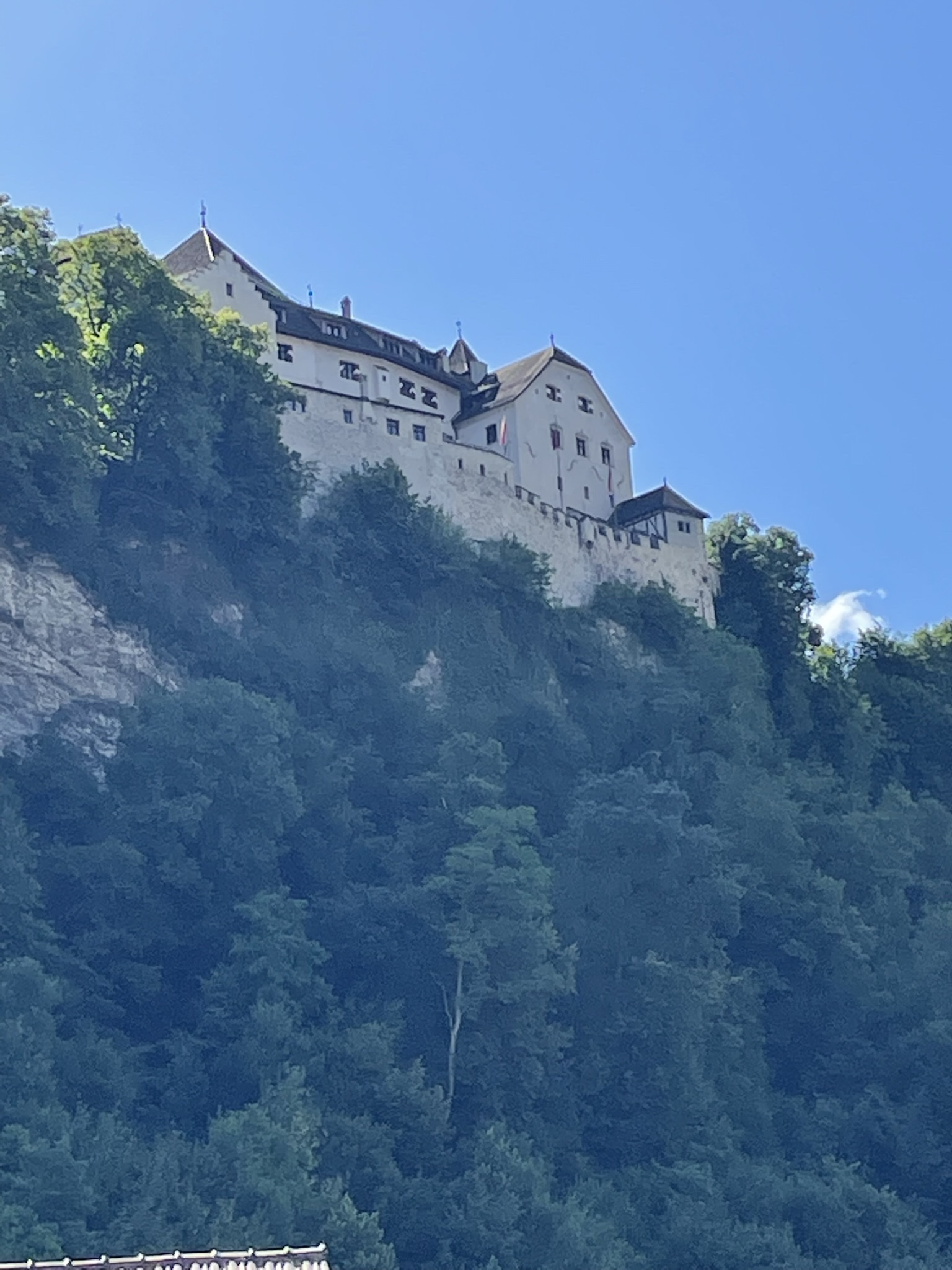
Leaving Lake Constance, we travelled through four different countries on our way to the little town of Oberammergau in the Bavarian Alps. Because Constance is a border town, we travelled through Switzerland and then on to Vaduz, Lichtenstein, a small principality wedged between Switzerland and Austria, where we made a morning stop for coffee. The fourth smallest country in Europe, it is also one of the wealthiest in the world, having attracted many companies because of its low tax rate. Dominating the town is the Vaduz Castle, perched atop a hill overlooking the city. The prince and his family still live in the castle when they are in the area.

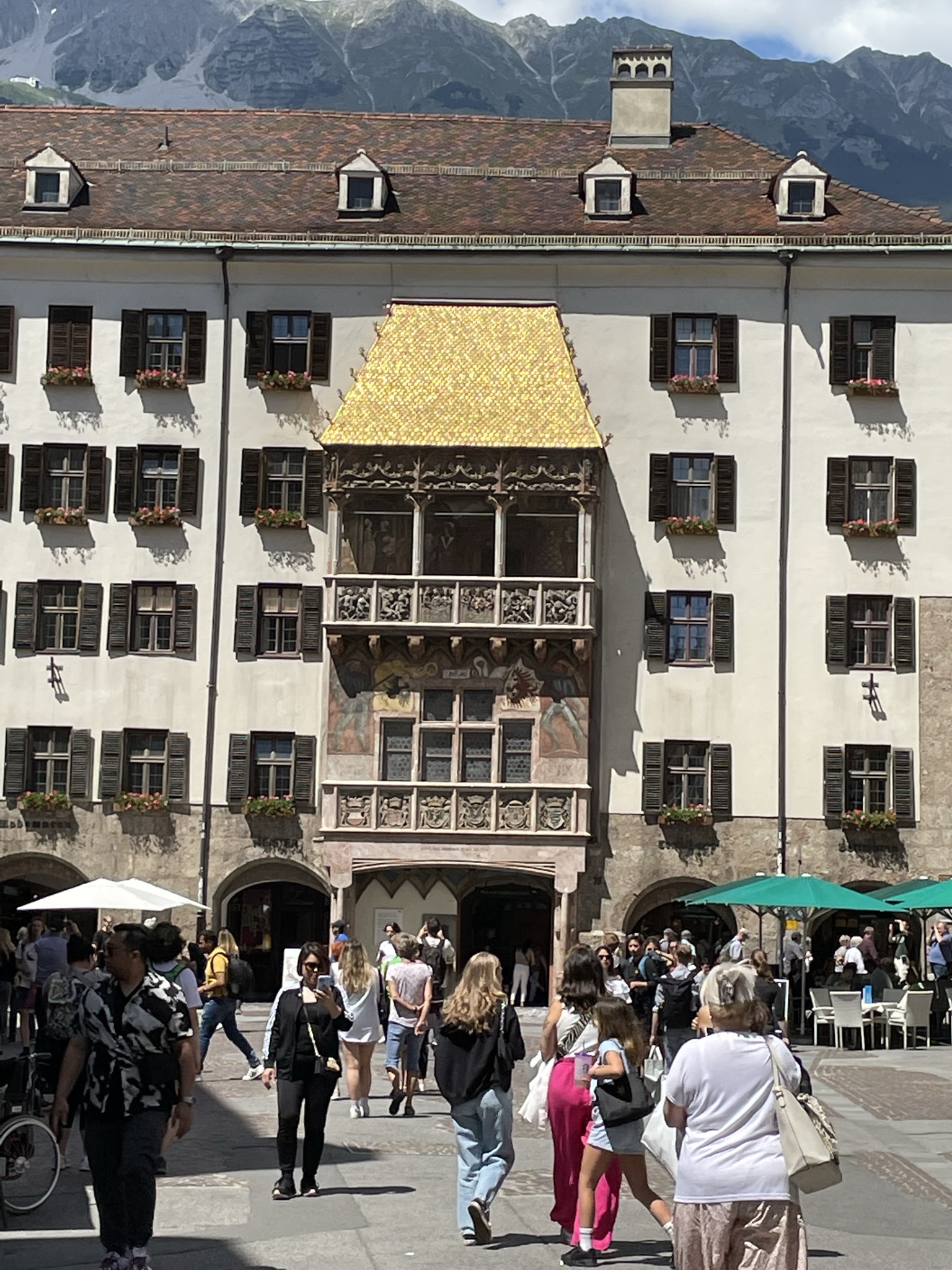
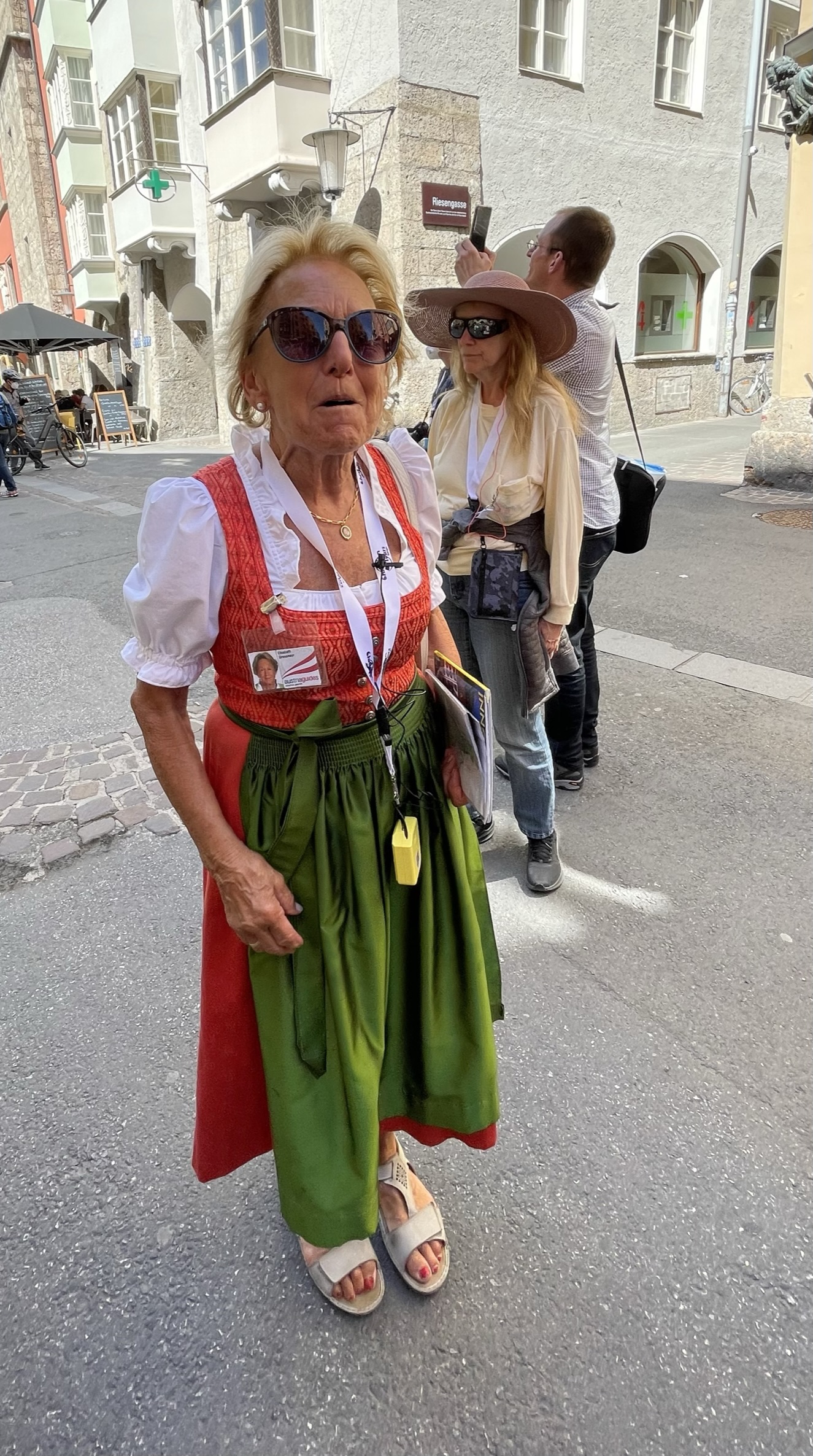
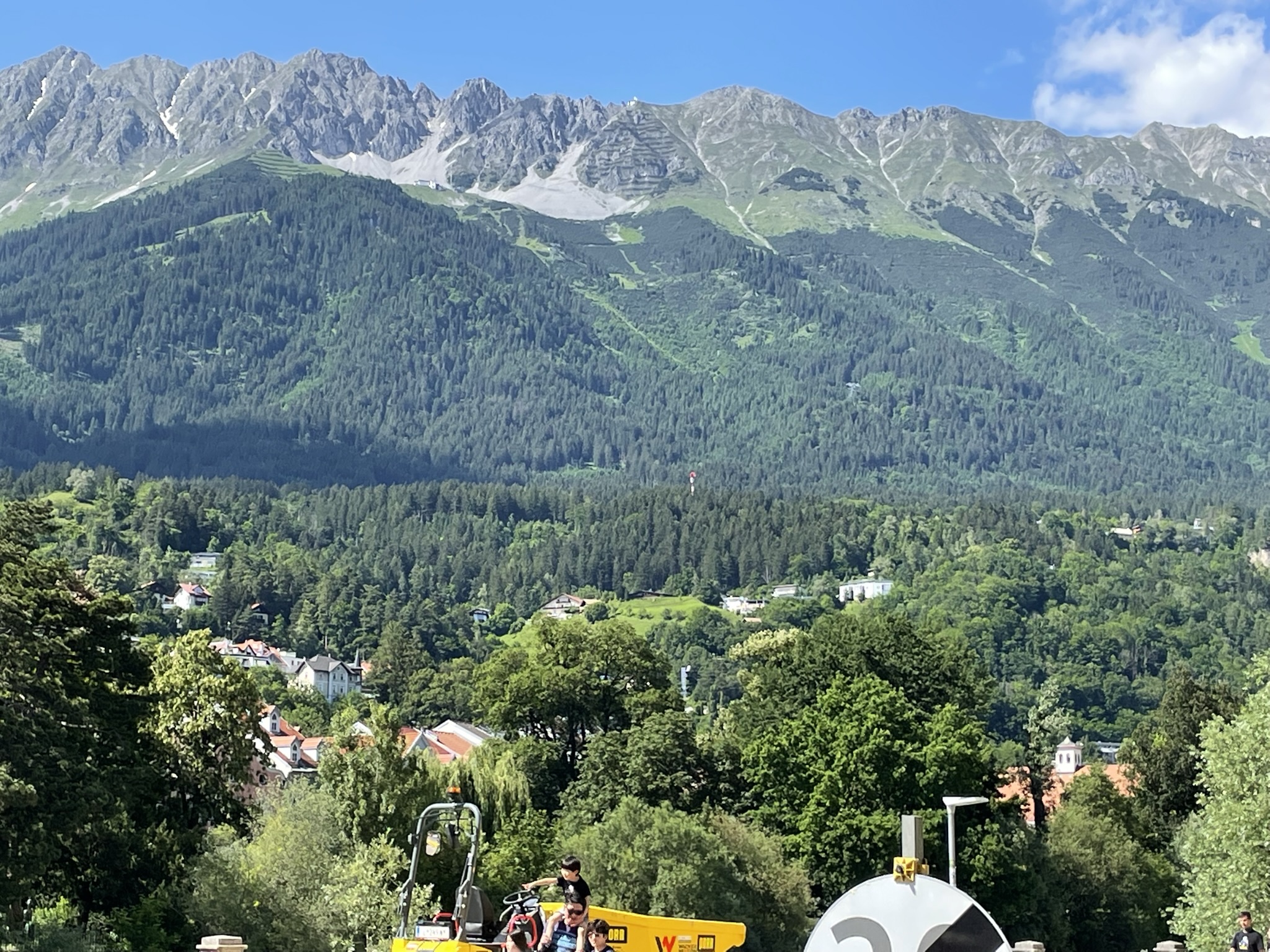
Our next stop was Innsbruck, Austria where we enjoyed lunch on a patio and did a walking tour of parts of the old town. Coming into town we passed the site of the 1964 and 1976 Winter Olympics. Our guide was an 88-year old woman, quite well known for her passion for the city and her unlimited energy. She lives part way up the mountain visible from the town and rides her bicycle to and from work everyday. She still skis five or six times a week in the winter. It seemed like everyone who lived in town knew her.
The meeting place in Innsbruck is the famous building with a golden roof. Completed in 1500, the roof was decorated with 2,657 fire-gilded copper tiles for Emperor Maximilian I to mark his wedding to Bianca Maria Storza. Typical of buildings during that period it is richly decorated with reliefs, frescoes, and coats of arms.
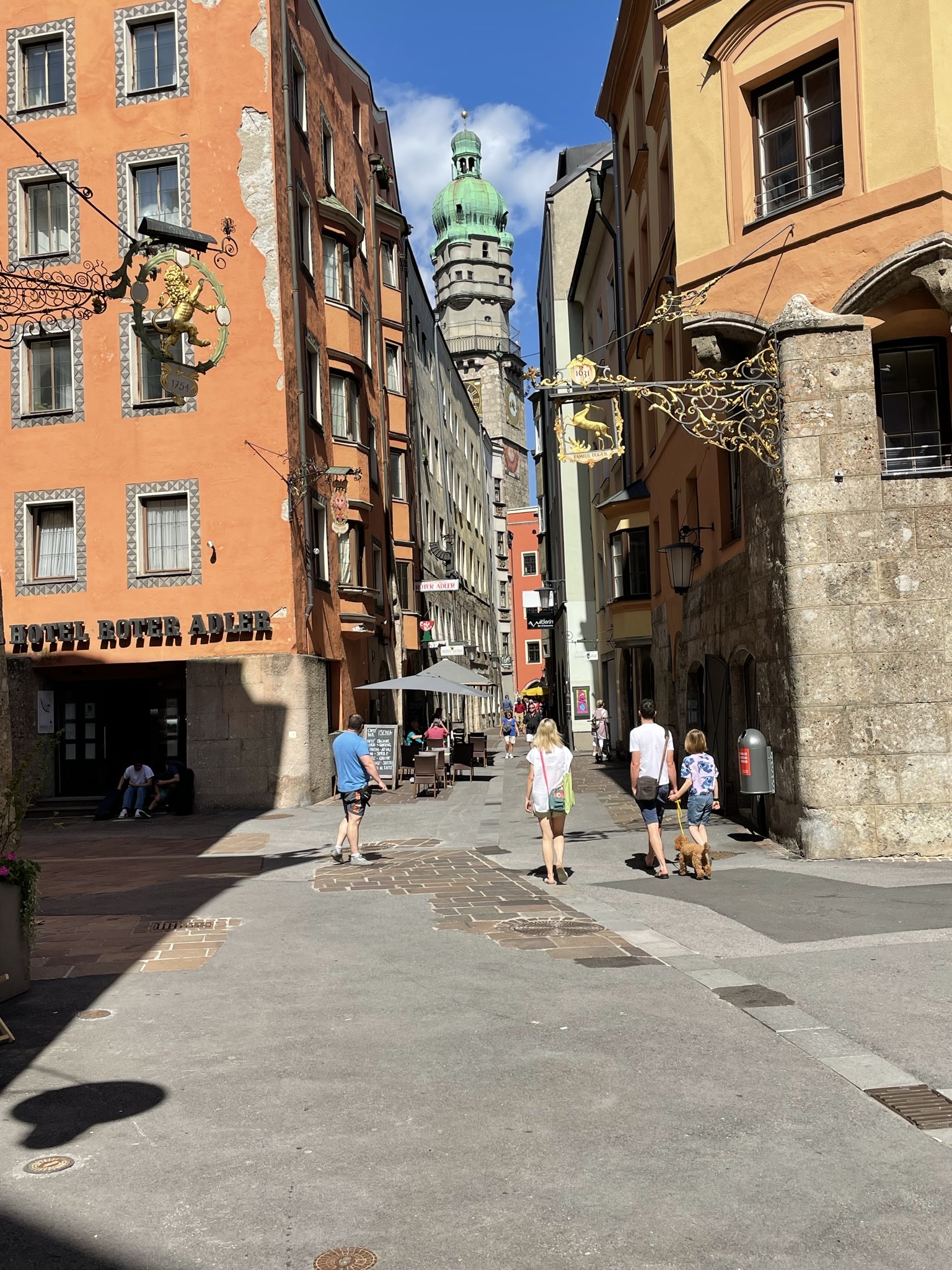

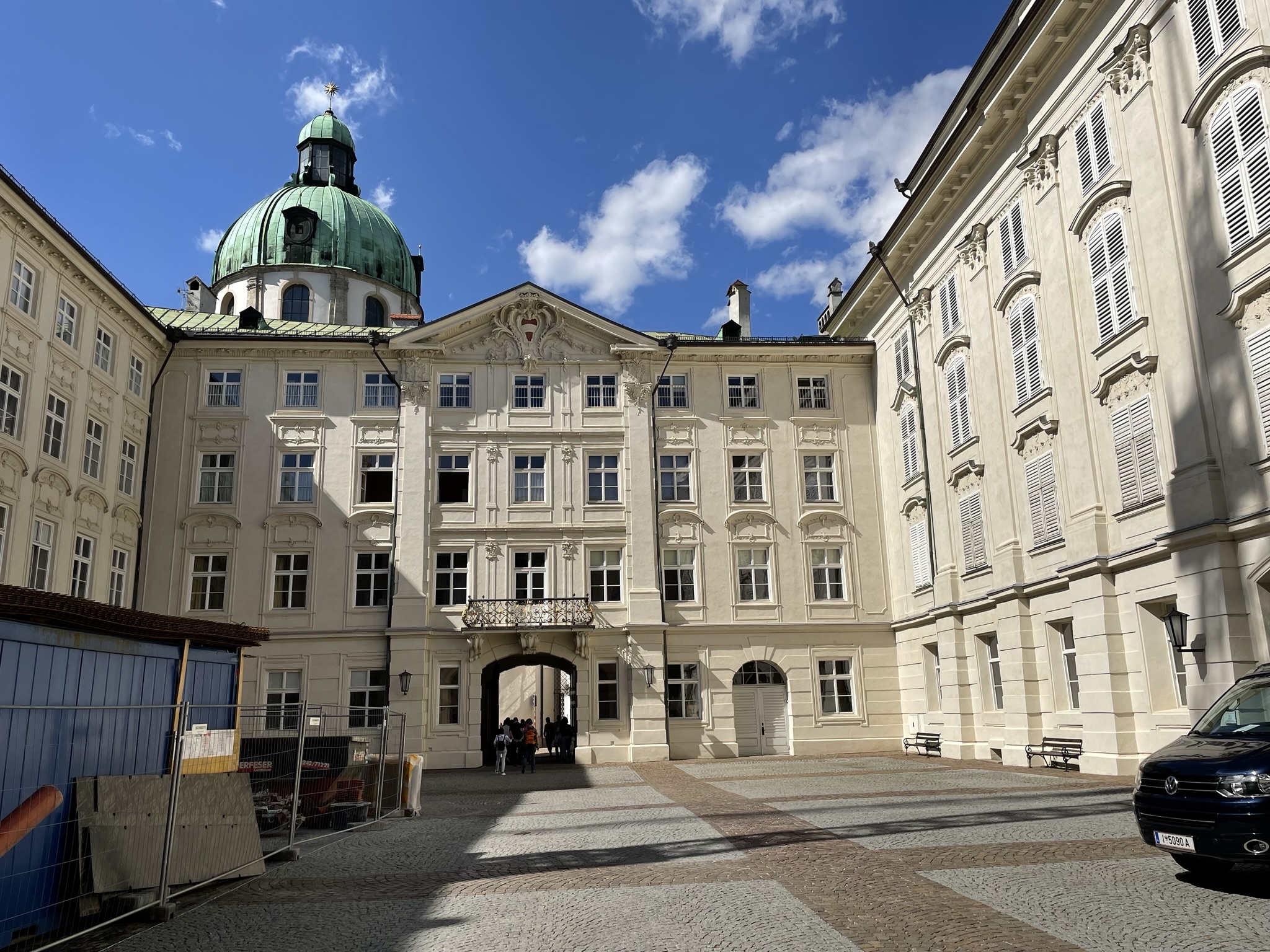
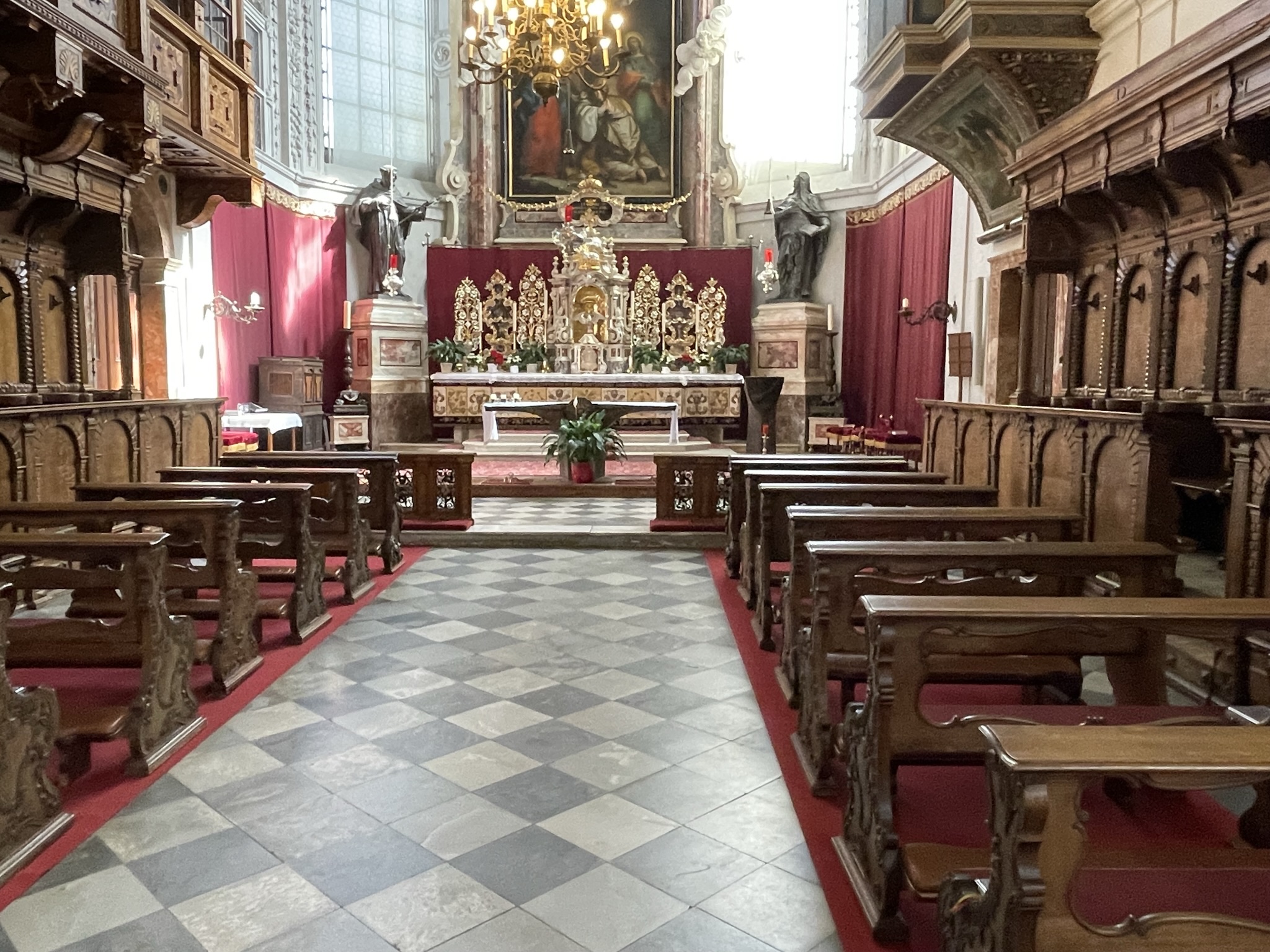
The Imperial Palace is a large residential complex once used by the Habsburgs and is considered one of three significant cultural buildings in the country (along with the Hofburg and Schonbrunn Palaces in Vienna). It currently serves as a museum with five themed areas illustrating various aspects of the political and cultural history of the former imperial palace.
The Court Church was built in 1553 in the Gothic style and is a memorial to the grandfather of Emperor Maximilian 1, whose ornate cenotaph fills the centre nave of the church. The cenotaph is surrounded by 28 large bronze statues of ancestors, relatives and heroes.
Then it was off to Oberammergau and a beautiful afternoon drive through the Bavarian Alps. Our hotel for the next two nights is the Hotel Alte Post. George seems to have caught “the cold” and we retired early, after plying him with Tylenol, hoping that it was nothing more serious.
Day 11 – Oberammergau
After breakfast, it was obvious that George had succumbed to something more serious than a cold and a COVID positive test was not really what we wanted to see. Our doctor had suggested that two positive tests 24 hours apart was more reliable and so we decided not to share this news until another test tomorrow morning. Our ethical dilemma was whether or not he should attend the Passion Play. We rationalized that since we would be sitting in our Craig Travel bubble with others who had “the cold” and since this was our third and final try to see the play, we were going, masked and distanced as much as possible. How ironic that this Passion Play presentation began because of a plague, and here we were experiencing our own version of a plague in 2022.
The small town of Oberammergau is known for its woodcarvers and woodcarvings, its NATO school and around the world for its 380-year tradition of mounting the Passion Play every 10 years. First performed in 1634, the play is performed, according to legend, because of a vow made by the inhabitants of the village that if God spared them from the effects of the bubonic plague then sweeping the region, they would perform a passion play. Originally performed every year between 1634 and 1680, it then moved to every ten years. Normally performed in years ending with zero, the play was also performed in 1934 and 1984 to celebrate the 300th and 350th anniversaries. The 1920 presentation was delayed by two years because of the post-war economic conditions and the 1940 presentation was cancelled due to the onset of World War II. Of course, the 2020 presentation was also postponed to 2022 due to COVID.
The presentation involves over 2,000 actors, singers, instrumentalists and technicians, all of whom are unpaid. Participation is a labour of love! Performances are held five days a week from May to October and the number of visitors range from 420,000 to 530,000. Most tickets are sold as part of a package with one or two nights’ accommodation and meals.
The text of the play is a composite of four distinct manuscripts dating from the 15th and 16th centuries, and covers the short final period of Jesus’ life from his entrance into Jerusalem leading to his crucifixion and resurrection. In German, the play has also frequently been criticized for being antisemitic and a multi-decade effort to reduce such content has led to substantial revisions of the play. Some of these changes involve inclusion of Hebrew phrases and prayers (e.g. – at the Last Supper). The play is divided into 12 Acts, six of which are performed in the afternoon and six in the evening. Total playing time is about five hours.
Each section begins with a tableau from the Old Testament accompanied by spoken word and choral accompaniment. The tableau fades and the New Testament story is told in dramatic, real-life fashion with children, crowds, animals coming and going and much to keep one’s mind and eyes engaged. Each audience member is provided with a book containing the text of the play in their preferred language, which is helpful to keep one on track with the various scenes, but in reality you can’t both watch the play and read the text at the same time.
The current theatre opened in 1900 and was modernized following the 1990 production to include more comfortable seating, heated floors, accessibility seating and modernized stage mechanics. In 2010 a retractable glass roof was installed over the stage, which before had been open to precipitation. Today the theatre can seat 4,700 patrons.
In between the afternoon and evening performances we returned to our hotel for dinner. We were surprised when the young man serving our beverages indicated that he plays the part of the Apostle John. His father, the General Manager at the hotel, plays the part of Pilate but was not scheduled that day. It is common to see people around town looking very much like the characters they play. Only those who were born and raised in Oberammergau or have lived in the village for at least 20 years can become part of the Passion Play. Rehearsals for this year’s play began in January 2022 but a Hair and Beard Decree was in force since February 2021. All performers must allow their hair to grow out, which for men also means growing their beards. Music rehearsals began in November 2021 requiring participants to perform nearly an hour and a half of choral music by heart, and with confidence. Young people are encouraged to participate as choristers. Besides all the sets that are re-used, set changes have to be well-rehearsed because of technical complexities for set-up and dismantling quickly. Some 1,500 costumes were hand-crafted and fitted for each participant.
Unfortunately photography is not allowed in the theatre but there are a number of good pictures on line at http://www.passionsspiele-oberammergau.de
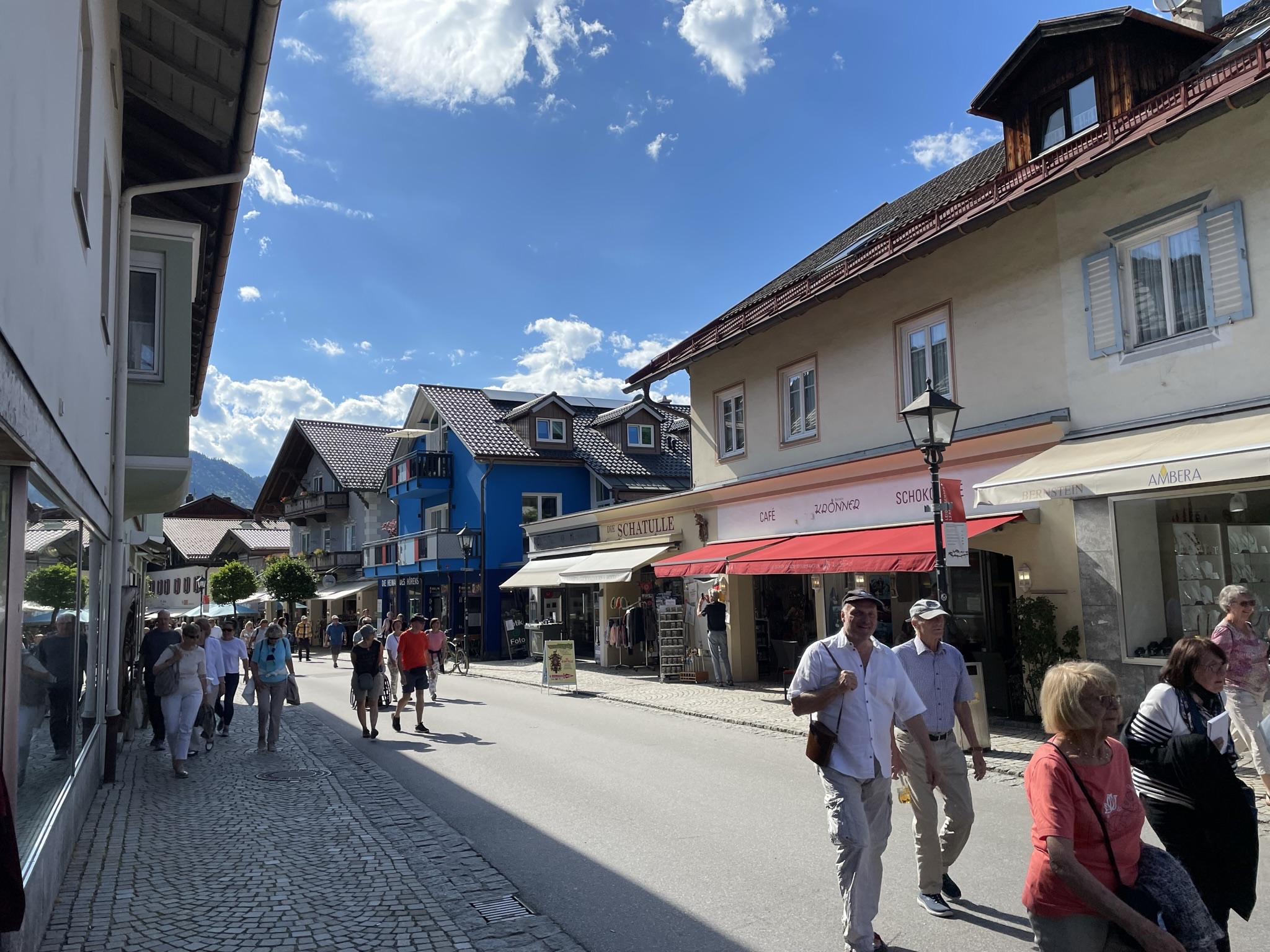
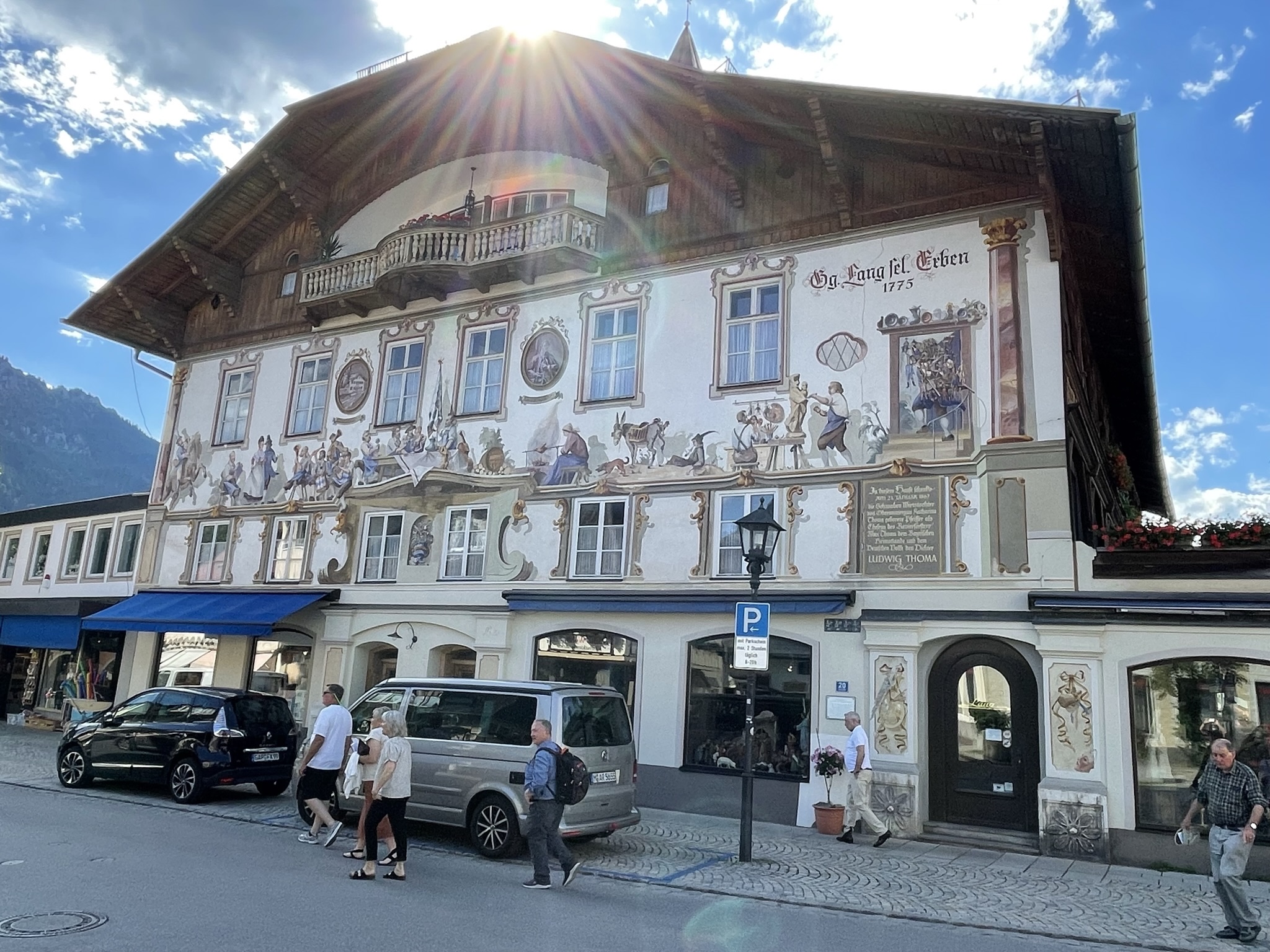
The town of Oberammergau has just over 5,000 inhabitants. We didn’t get an opportunity to explore given our potential COVID status but it seemed to be a well-tended town with lots of community flavour. Obviously the Passion Play injects a lot of money into the town and the local expression “the Passion Play will pay for it” is used to explain improvements such as a new community centre and swimming pool and other civic improvements. Certainly the downtown core is filled with beautifully decorated buildings. Many of the stores have windows full of beautiful woodcarvings.
The NATO school is NATO’s premier facility for training and education at the operational level. It conducts hundreds of multinational programmes annually in direct support of NATO’s operations. Since its founding, it has graduated over 200,000 students and hosts 10,000 students and many conferences annually. The facility is a modern, state-of-the-art training and conference facility set in the Bavarian Alps just outside of town.


Day 12 – Munich
Monday morning arrived, and again the COVID test was positive. We reported this to the tour leader and accepted her recommendation that we continue on with plans for the day so as not to cause a disturbance. We respectfully indicated that once we arrived in Munich, and after the one-hour bus tour, we would find our own way to our hotel and leave the group to isolate in our room.
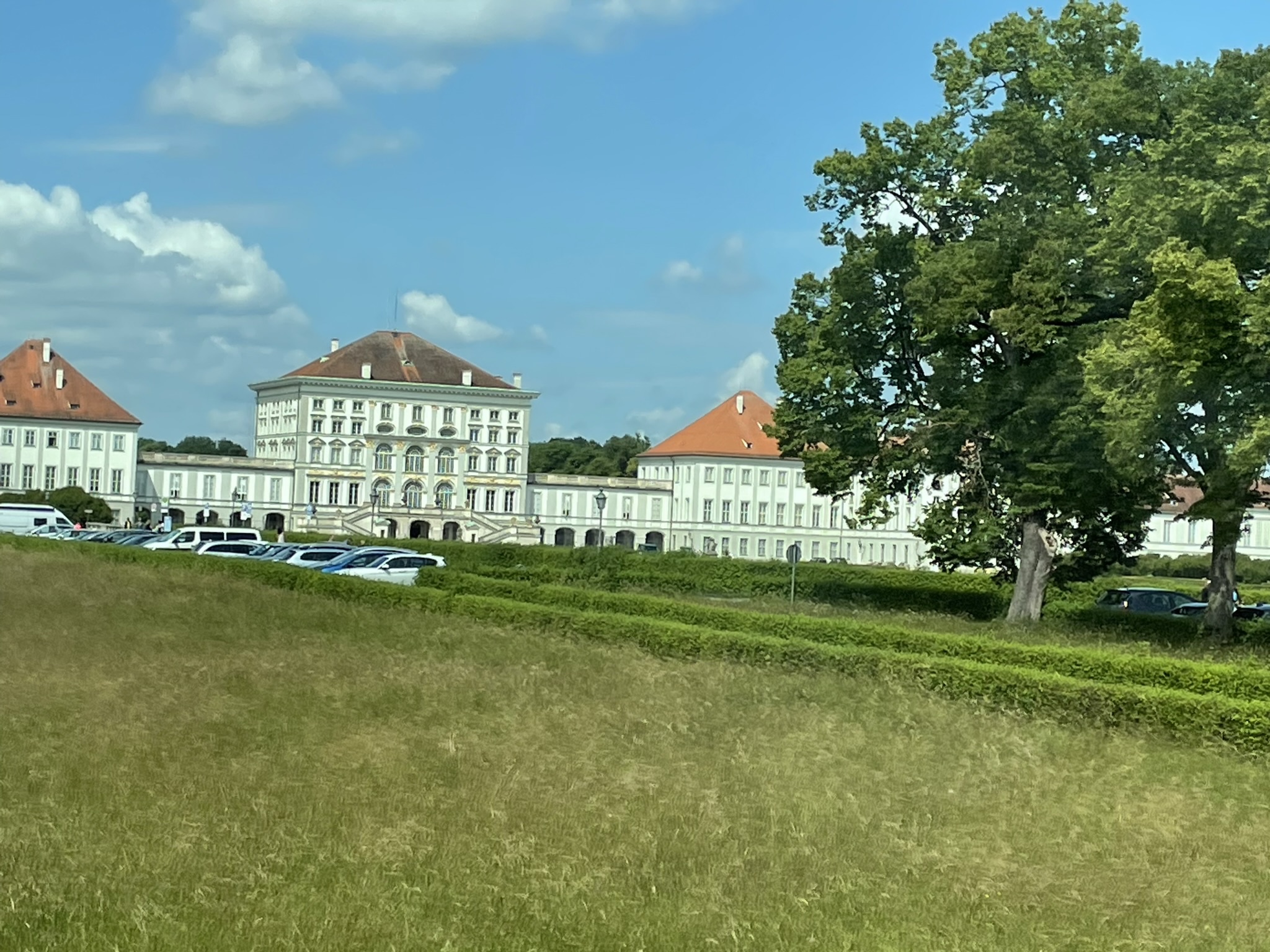
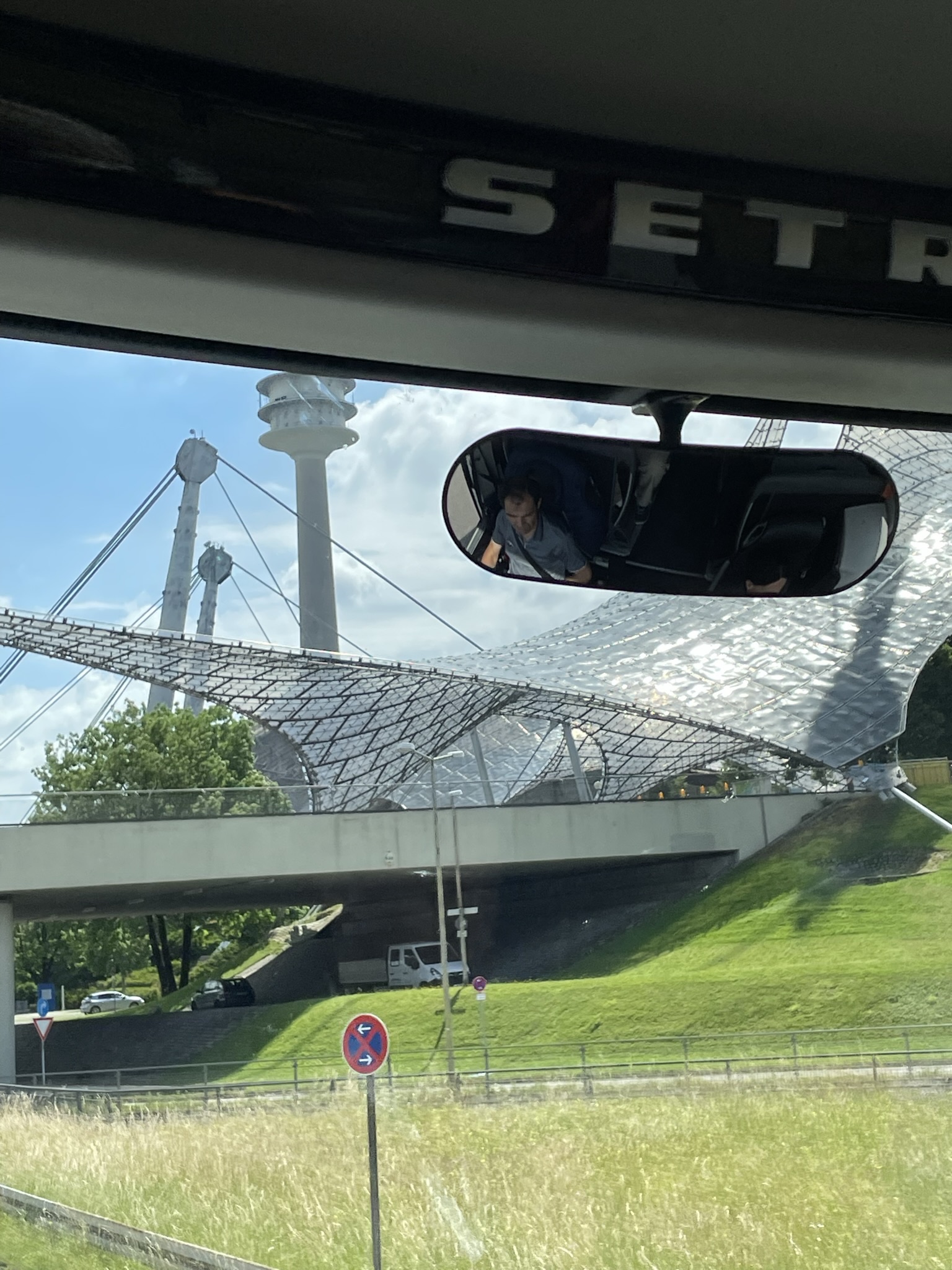
Our bus tour took us by the site of the 1972 Summer Olympics, the BMW Headquarters and many statues in recognition of Munich’s long history. Four grand royal avenues of the 19th century connect Munich’s inner city with its suburbs. With a population of over 1.5M, it is the third largest city in Germany. A global centre of art, science, technology, finance, business and tourism, etc., Munich today enjoys a very high standard of living and is often ranked as one of the world’s most livable cities.
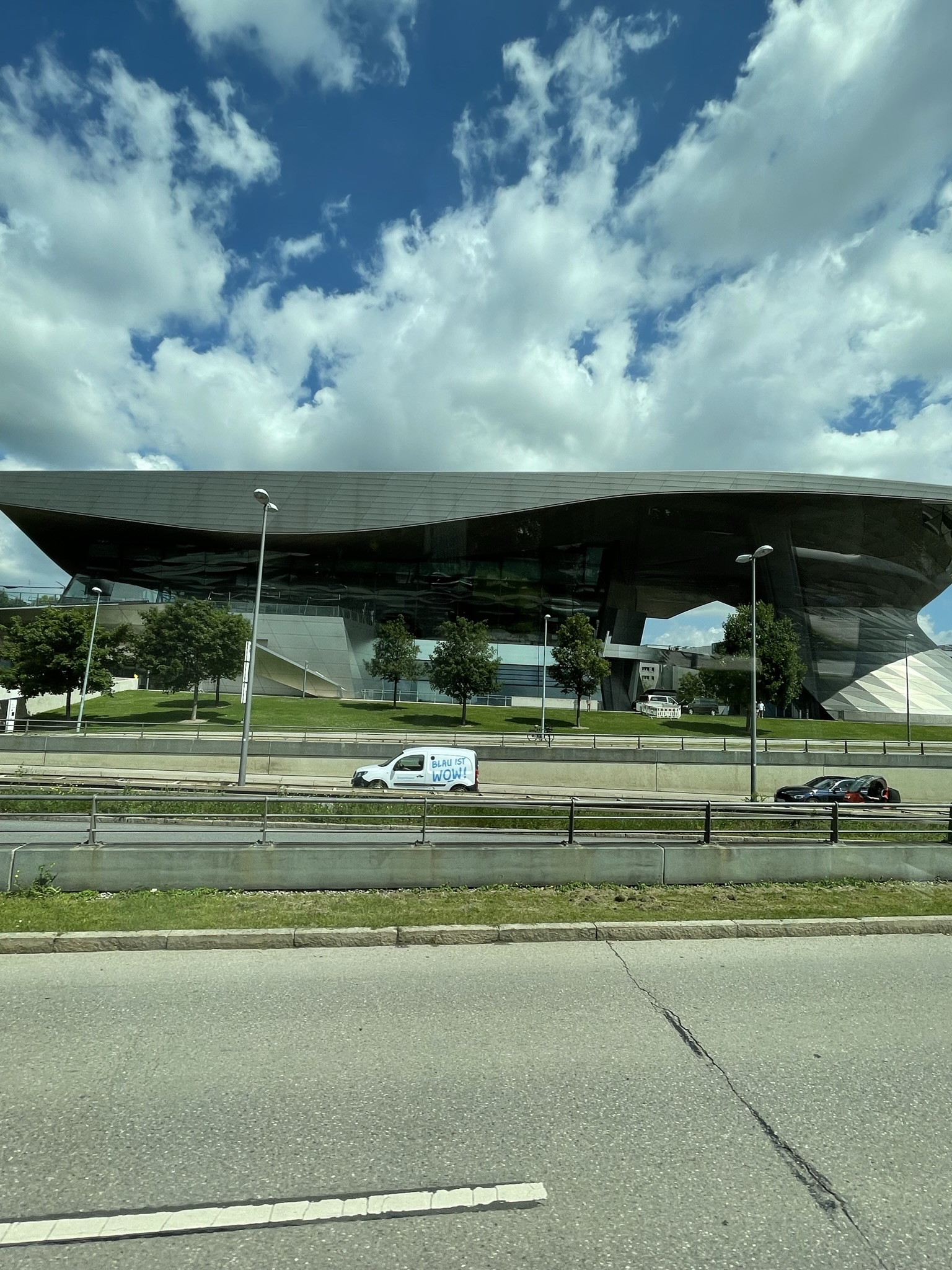
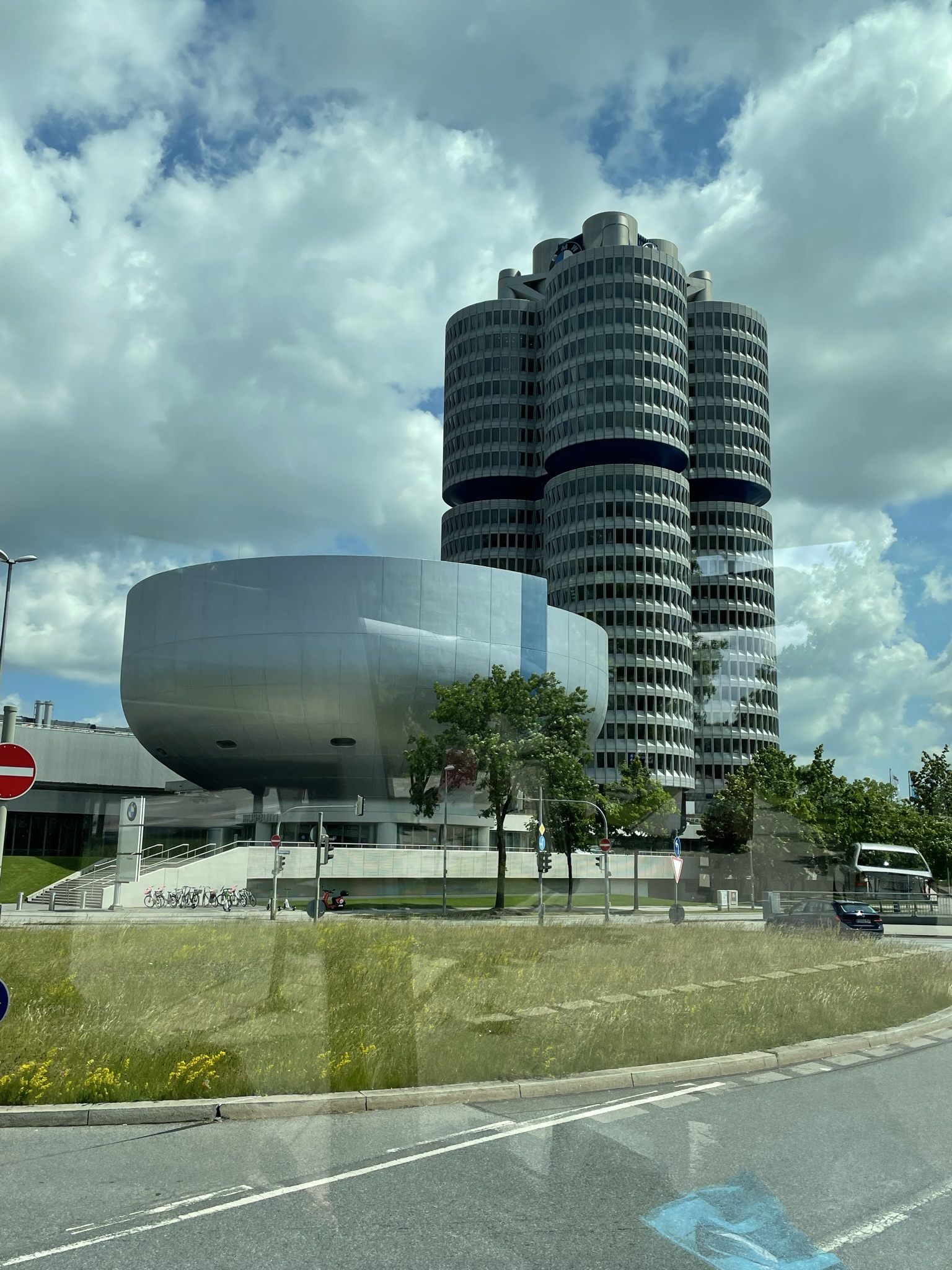
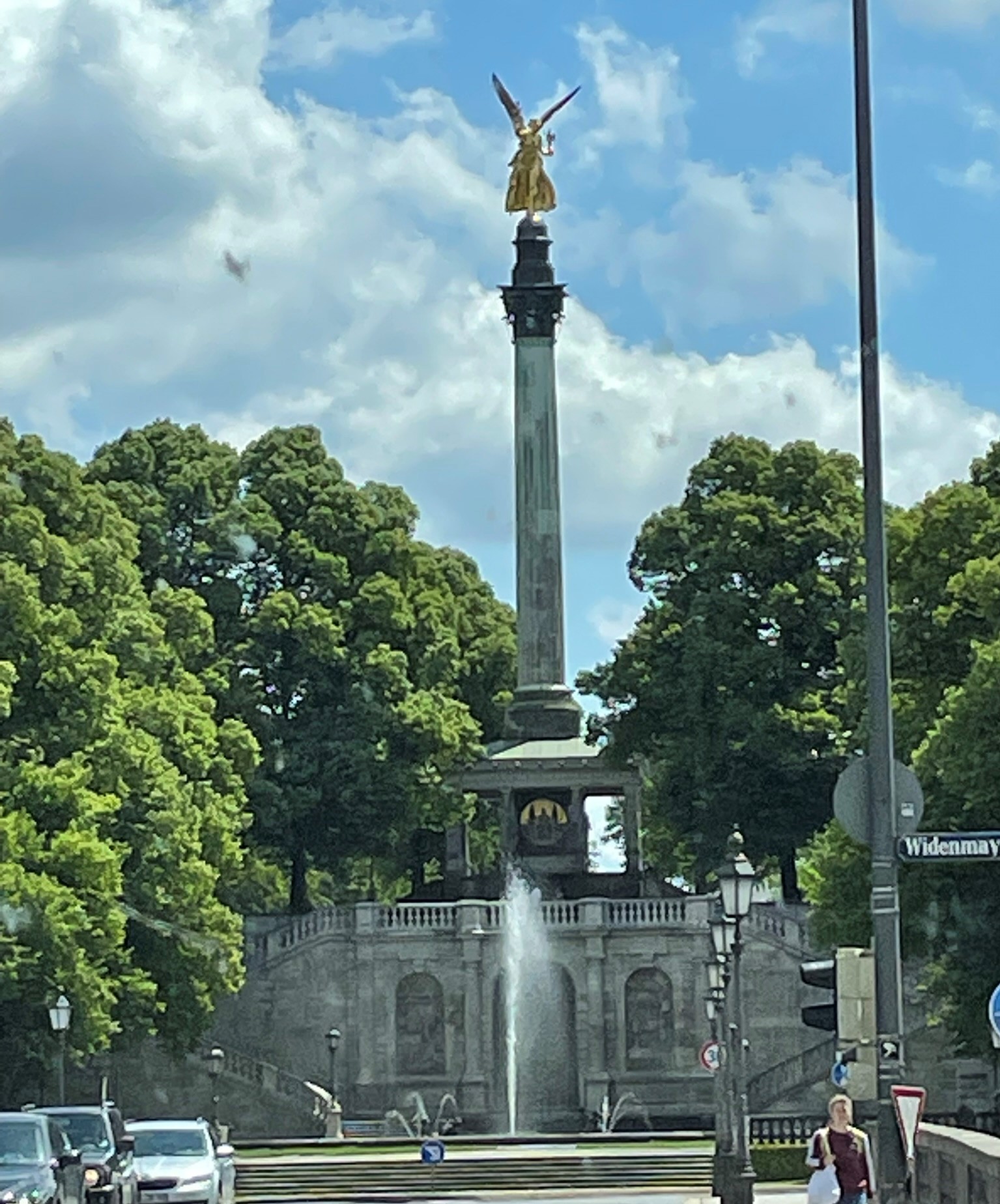

After the bus tour, we shared lunch with Ann on a patio and then hailed a cab to take us to the Holiday Inn Leuchtenbergring. The staff there were most accommodating and helped us settle in to our room and understand the Munich Public Health isolation guidelines. Five days in our room begin today!
Days 13 – 17 – Munich
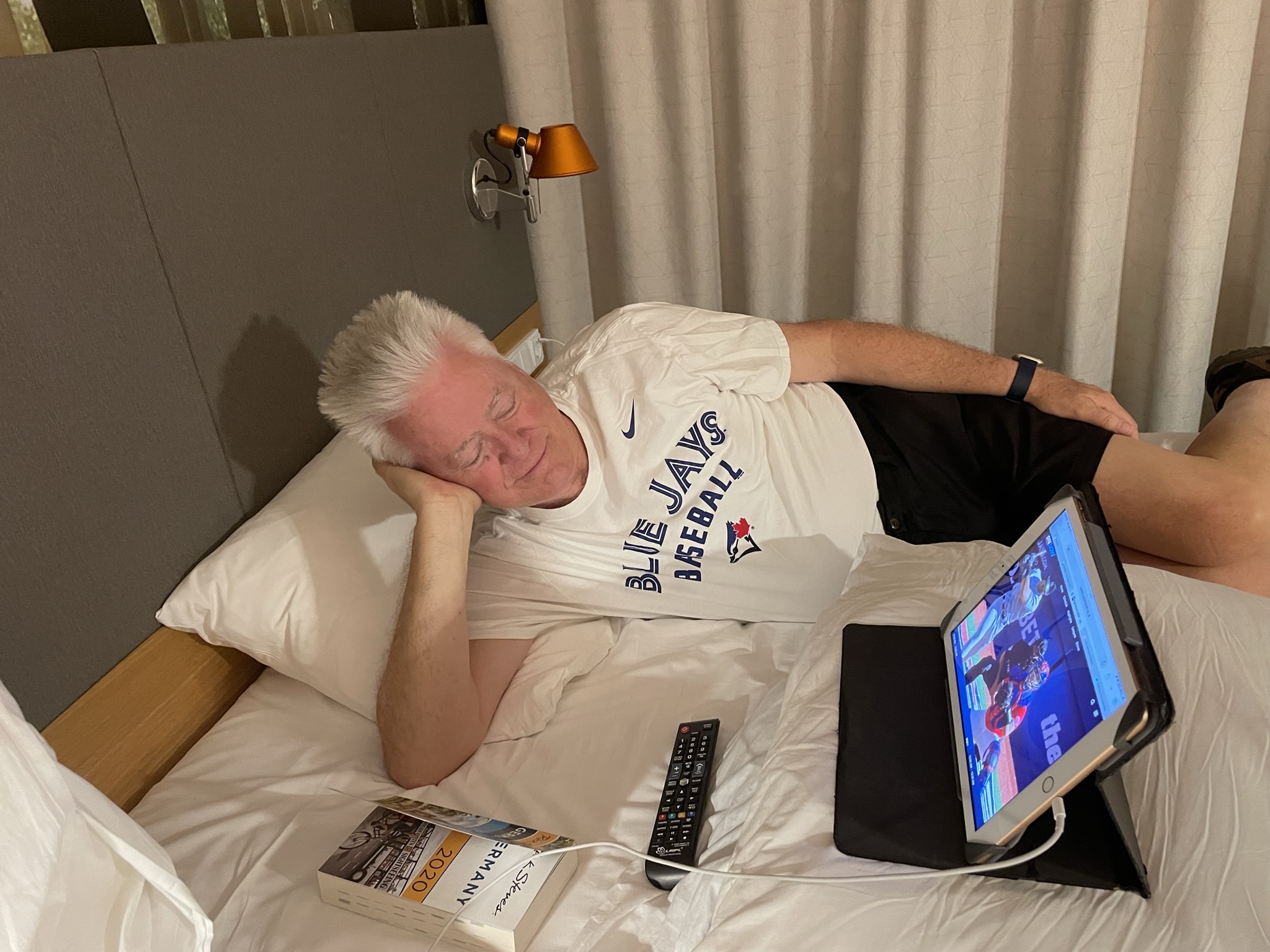
Each day was pretty much the same. Our breakfast arrived between 8:15 and 8:30 and contained enough goodies to provide us with both breakfast and lunch. There was a coffee maker in the room that kept Nancy happy and staff were available to deliver any other supplies we needed during the day. Fortunately, Greg and Annie, two fellow travellers, were staying through until Friday and were more than helpful in making trips to the pharmacy and grocery store as needed. Nancy began showing symptoms on Tuesday morning and went to the local pharmacy to get a medically supervised COVID test, required for insurance purposes. There were phone calls and lots of emails with Craig Travel and our Trip Interruption insurer, re-booking flights, understanding what they would require for reimbursement, and trying to get a grip on Ontario’s requirements for travellers returning having had COVID abroad. Fortunately, with our VPN subscription, we were able to watch the CBC News, baseball games and other TV shows from home. Dinners were chosen and delivered through an app called Lieferando, similar to SkipTheDishes. We actually ate quite well under the circumstances.
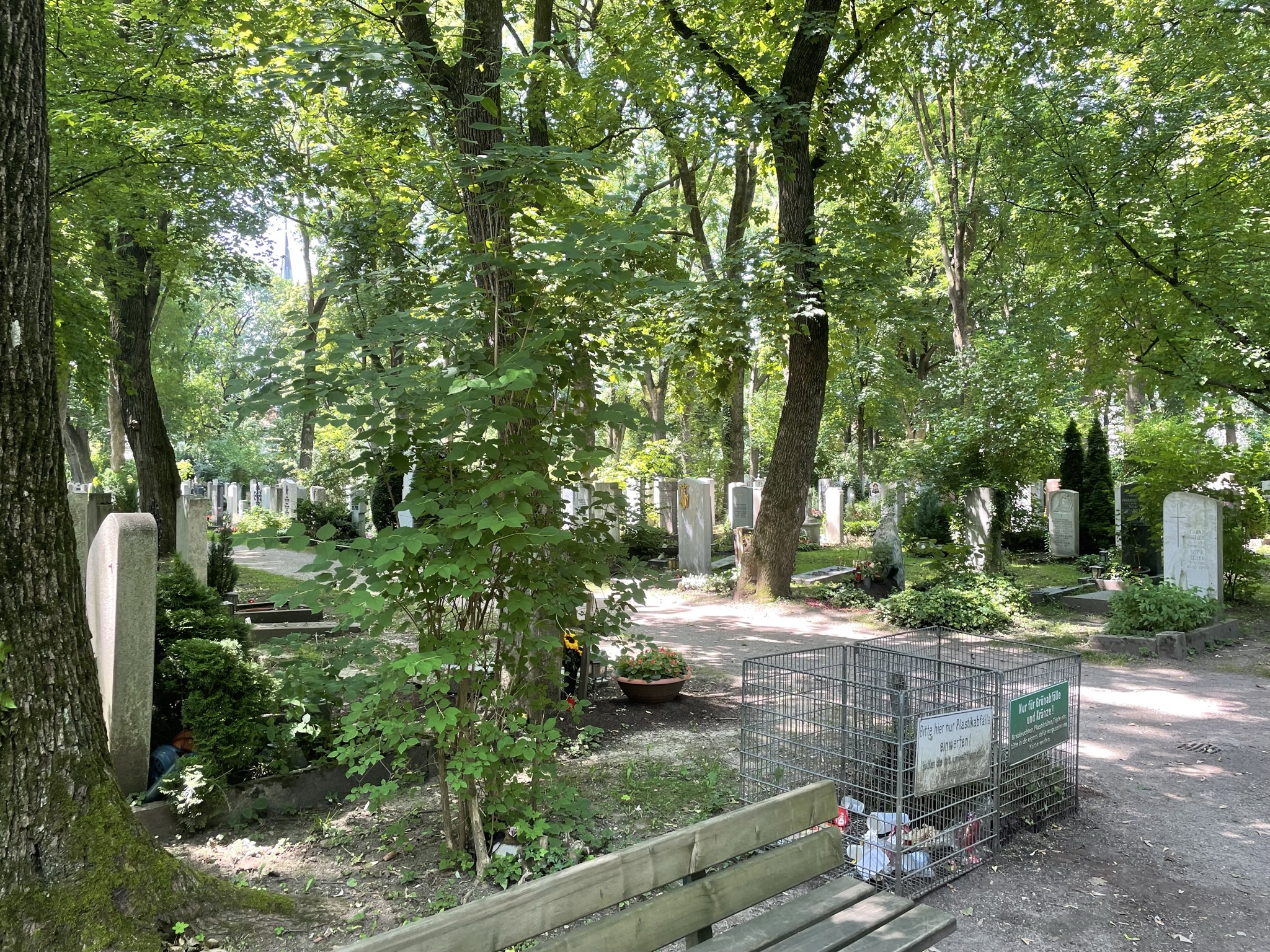
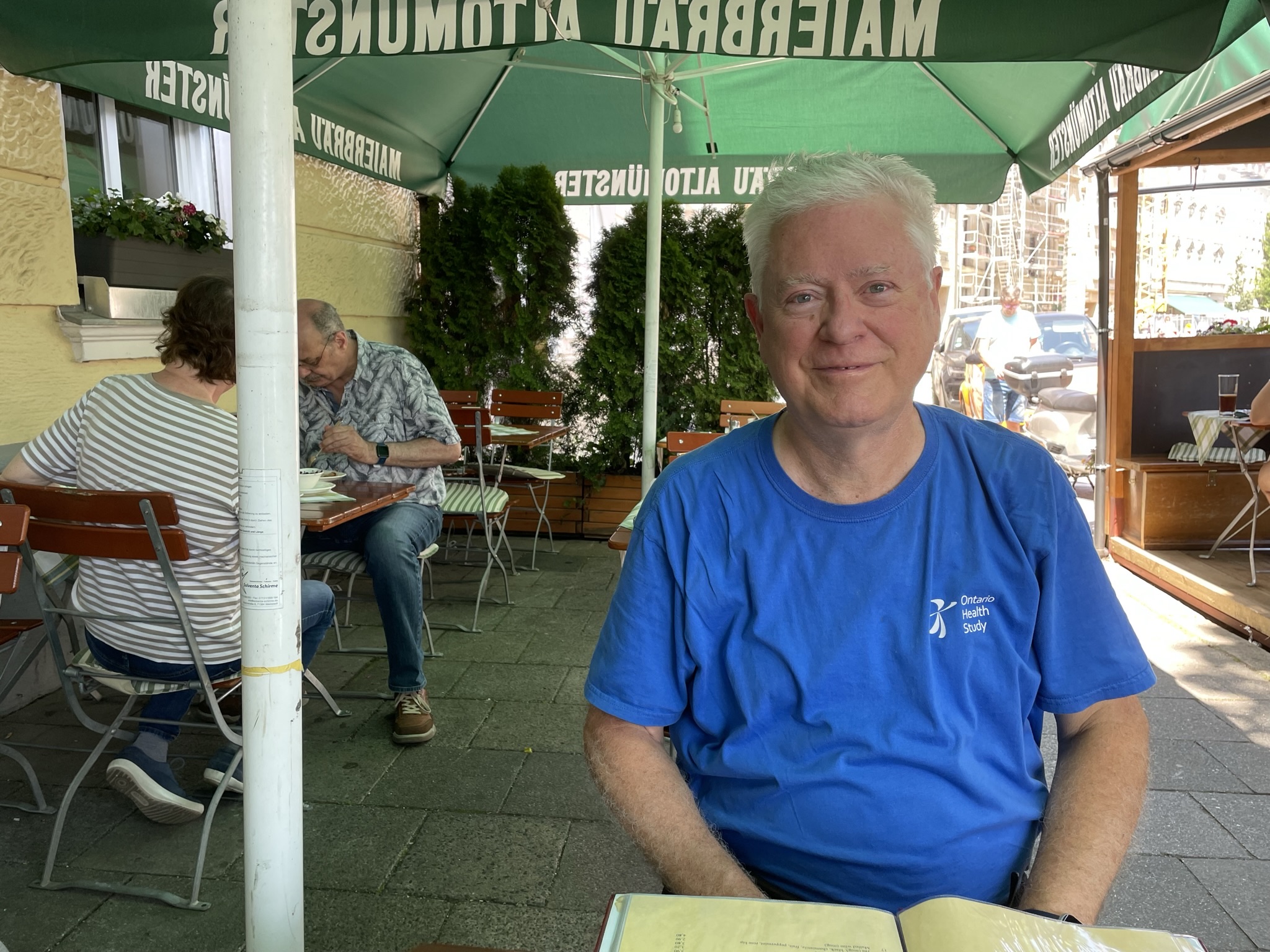
George’s isolation was finished on Saturday and he took a short walk to pick up some cough candies. On Sunday we both went for a walk in the local cemetery, figuring no one there was concerned about our COVID germs if we were still contagious. We stopped at a patio for lunch but wore our masks and kept our distance. It was very warm and humid so we weren’t out for long.
Days 18 & 19 – Munich
We had planned two days in Munich at the end of our trip to see the city but this was shortened to just one full day in the end. We opted to do a portion of Rick Steves’ self-directed walking tour of the Old Town, available through an app. It was excellent but stamina (or lack thereof because of the heat) dictated a shortened route.
The tour began in the Marienplatz where we were on time to see the Rathaus-Glockenspiel, a tourist attraction at the Town Hall. Built in 1908, the clock chimes and enacts two different stories and 11 am at 12 pm, and again at 5 pm in the summer. A video is available on YouTube.
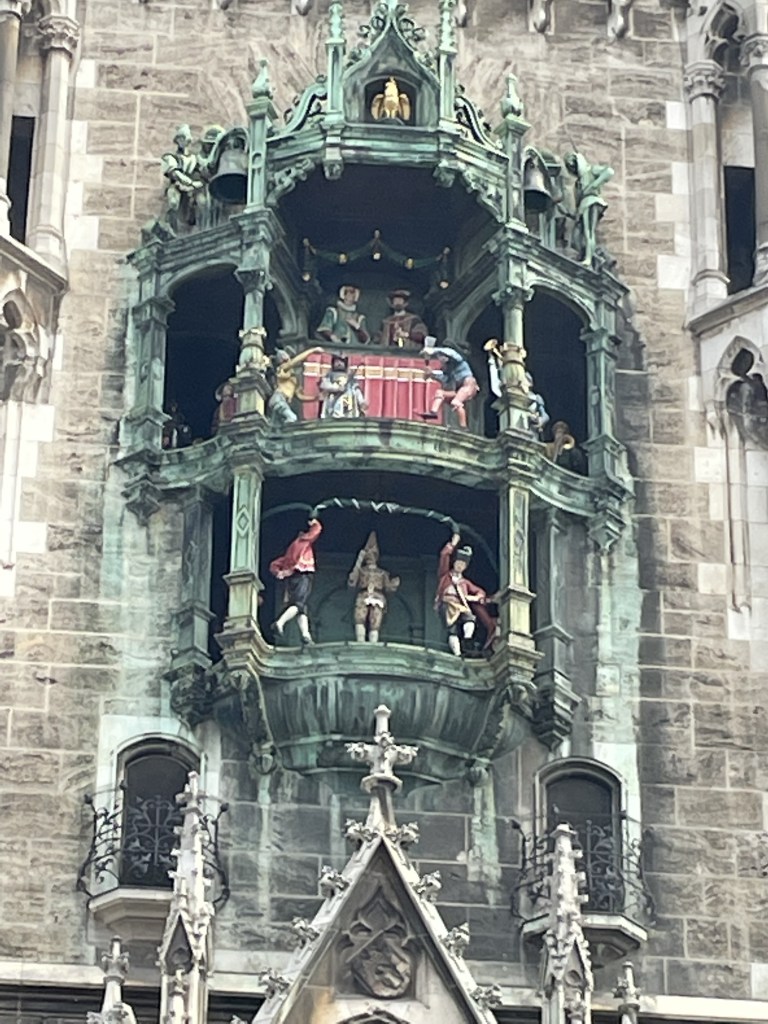
The top half of the Glockenspiel tells the story of the marriage of Duke Wilhelm V to Renata of Lorraine. There is a joust with life-sized knights on horseback representing Bavaria and Lothringen. The Bavarian knight wins every time, of course.
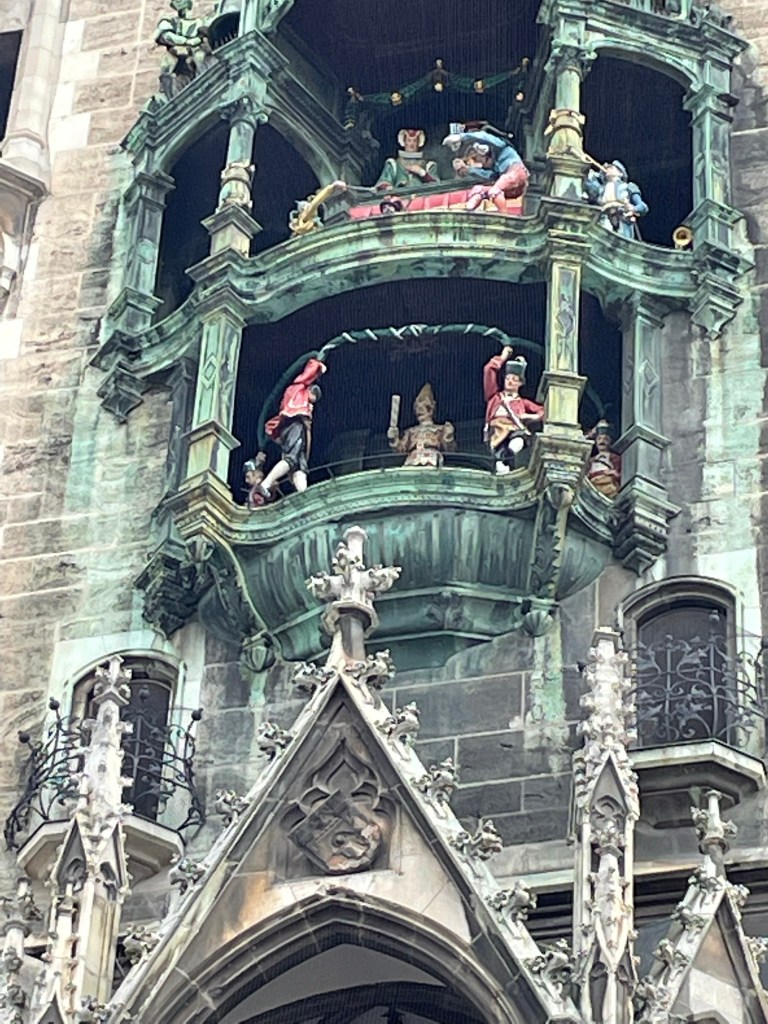
The bottom half then tells the story of the cooper’s dance. According to myth, the coopers danced through the streets of Munich, which was experiencing a plague in 1517, to “bring fresh vitality to fearful dispositions.” By tradition, the dance continues to be performed in Munich every seven years.
At the end of the show, which lasts 12 to 15 minutes depending on which tune it plays, a small golden rooster at the top of the Glockenspiel chirps quietly three times.
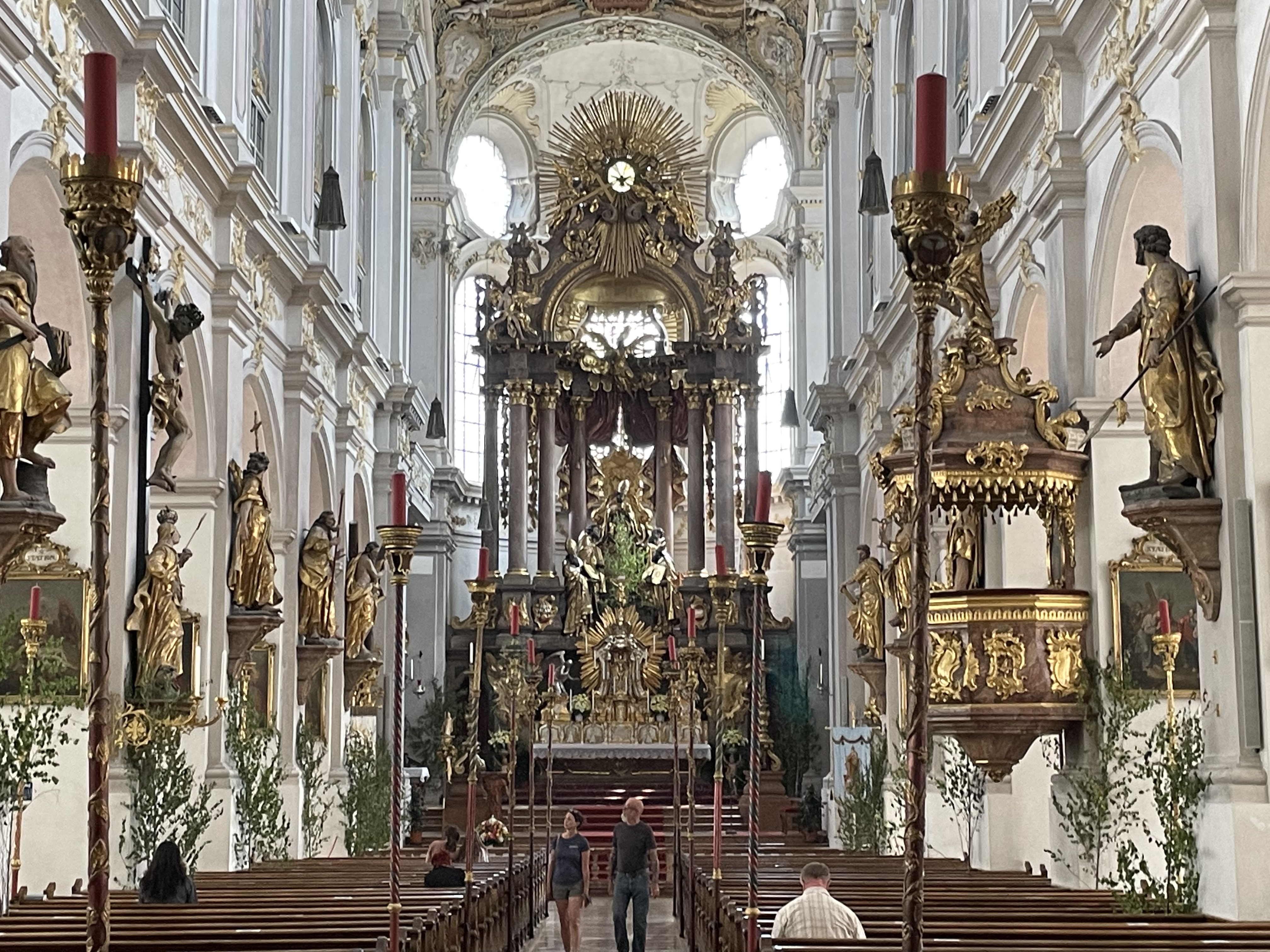
From there we explored St. Peter’s Church, the oldest recorded parish church in Munich. Its tower is visible throughout the old town. Heavily damaged during World War II, the altar is dominated by a statue of Saint Peter. The ceiling fresco, a number of large paintings and several altars all add to the interior beauty of the church.
The Ohel Jakob Synagogue (Jacob’s Tent) was built between 2004 and 2006 as the new main synagogue for the Jewish community in Munich. There is also a museum and community centre included in the compound. In a tunnel between the synagogue and the community centre is a memorial to the more than 4,000 Jews of Munich who were killed during the Holocaust.
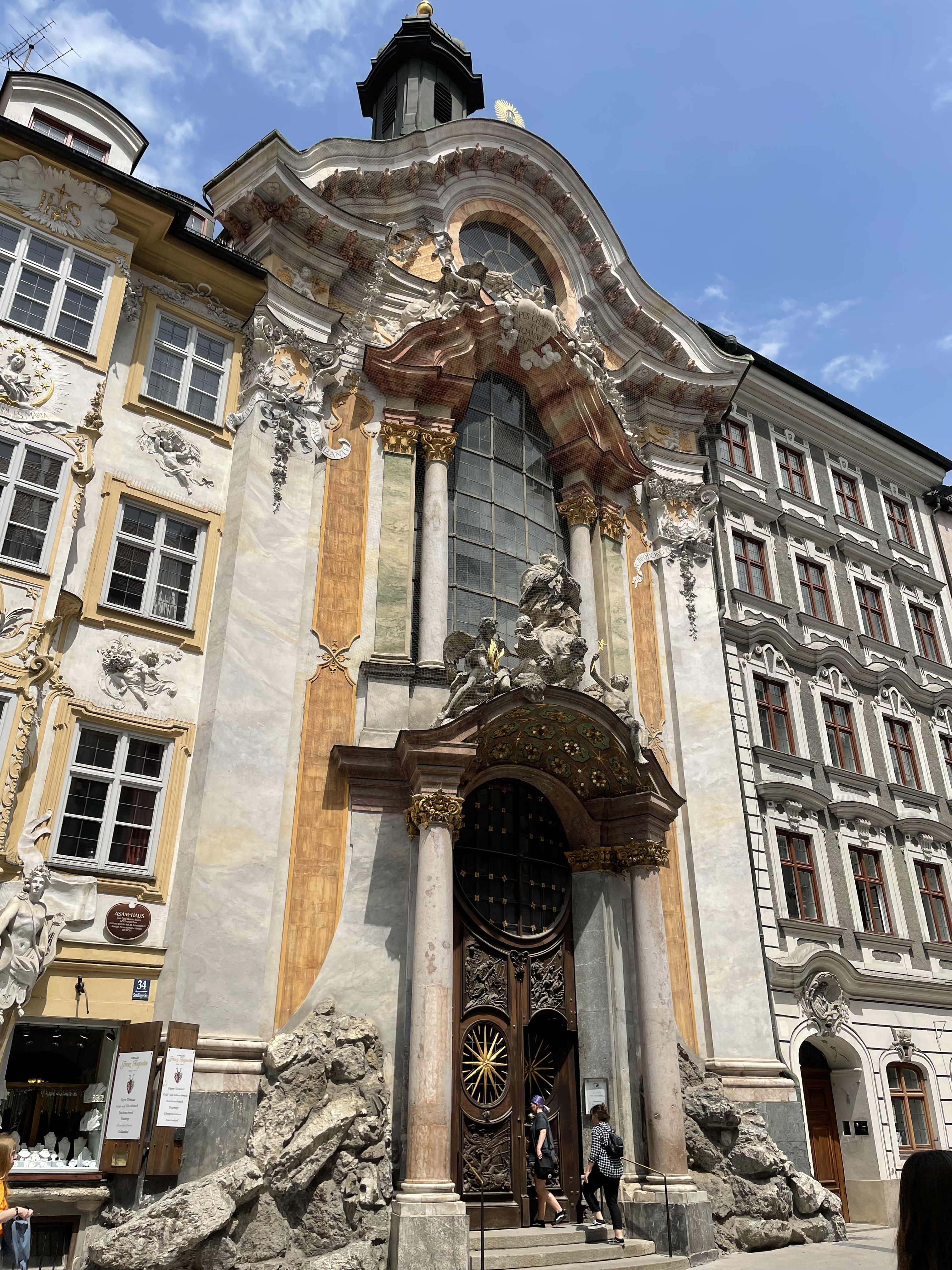
The Asam Church was built from 1733 to 1746 by a pair of brothers as their private church, which allowed them to build in line with their own ideas as independent contractors. It is considered to be one of the most important buildings of the southern German Late Baroque. Evidently, the brothers also used it as a display for their building skills to gain other contracts.

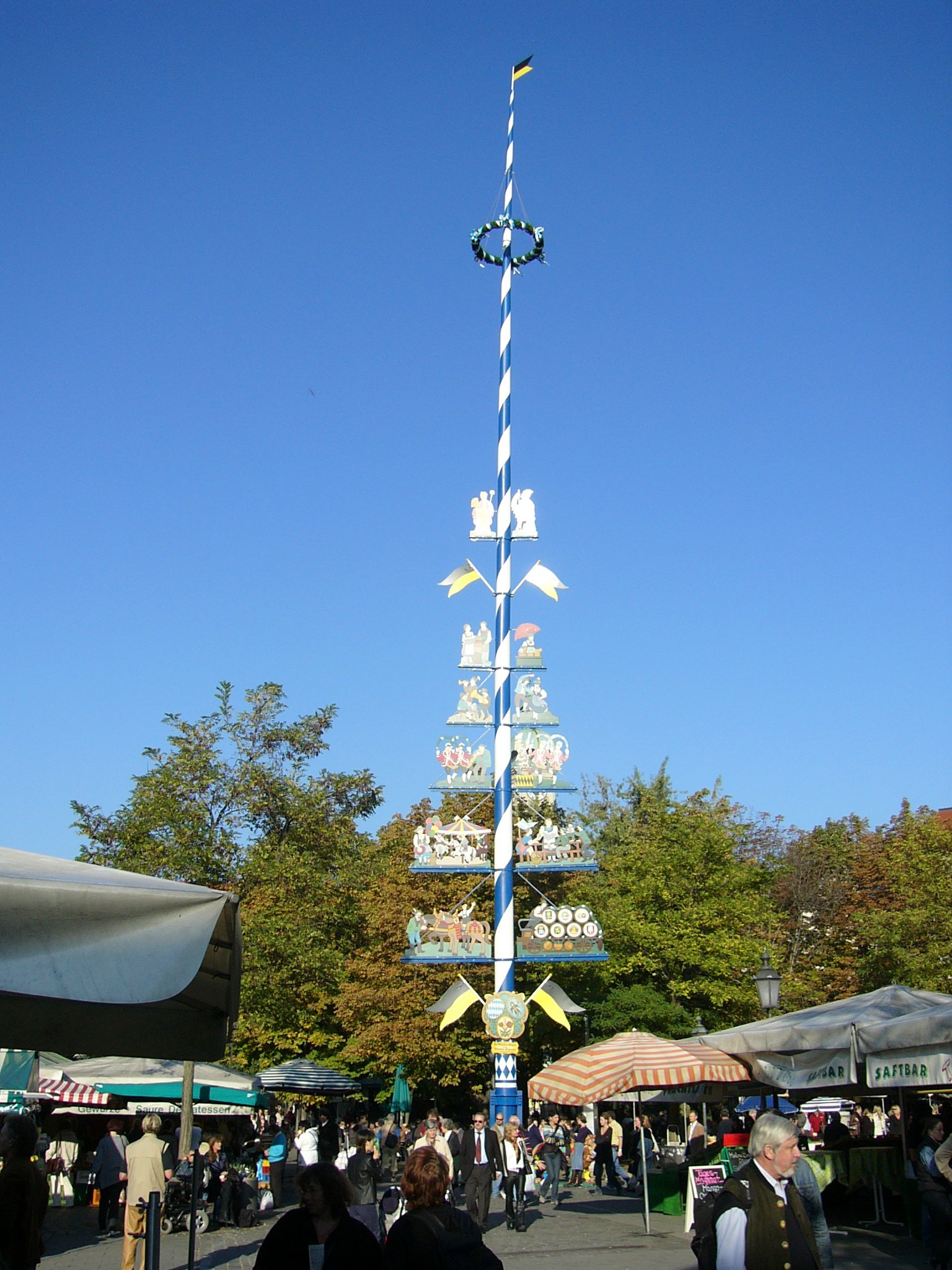
The Viktualienmarkt in the heart of the old town is an outdoor market with over 100 stalls that attracts epicures, foodies and tourists. Everything from Bavarian delicacies to exotic produce is available. Of course, there is also a large beer garden. The market area also includes a series of water fountains featuring statues of folk singers and comedians. A traditional Malbaum (Maypole) takes centre place in the Viktualienmarkt and serves as a great meeting spot for those who might get lost while sampling the wares.
We stopped for lunch at Noah’s patio, a modern Italian cafe not for from the market and then decided to head home. The disappointment of the day was that the ice cream shop mentioned in Rick’s guide had moved and we had to settle for a Starbucks frappe.
We went to bed happy tonight knowing that only one more day of travel would bring us home and we’d be in our own bed tomorrow night.
Day 20 – Travel home
June 16th – There had been a lot of press lately about hours-long waits at airports, lost luggage and frayed tempers. We must have been two of the fortunate few for our lines in Munich airport were nothing more than normal, there was no line through security and we had time for a leisurely lunch before boarding the plane. When we arrived in Toronto, disembarking was done 75 people at a time and the line through Customs moved fairly quickly. Our luggage was waiting (off-loaded from the carousel) when we arrived in the luggage hall. Our car was delivered to the Arrivals pick-up lane by a kind family member. We drove ourselves home and were sitting in the TV room just a little longer than 2 hours after our plane landed. We were glad to be home!
 nancybellblog