Feb 19th – Today we begin our three week adventure travelling from Buenos Aires, Argentina to Santiago, Chile on the Zaandam (Holland America). In order to get acclimatized before boarding the ship, we booked two days in Buenos Aires on our own. The flight from Toronto was uneventful although we did notice the more cramped space on smaller planes that make the long haul flights now. It was difficult to walk the aisle without bumping someone and, while the legroom was fine, the reclining mechanism didn’t move more than three inches. The seats were very uncomfortable for a ten hour overnight flight!
We booked a private transfer from the airport to our hotel which is something we have found to be very helpful…no negotiating a fee…no chance of getting ripped off…and they are always waiting for you as you exit immigration. Our hotel is The Intercontinental downtown on Moreno Street. Since our room wasn’t ready, and we refused to pay for a upgrade that would provide free breakfast and afternoon snacks, we left our luggage with the concierge and went off for a walk and early lunch. With a temperature in the mid-30s and humidity that rivals Toronto in the summer, we weren’t out long before we were both happy to be returning to the air conditioned comfort of our hotel room.
After a nap and a change to summer clothes, we ventured out again for an early dinner. As per the European custom, dinner here is usually about 7 or 8 pm. We knew we wouldn’t last that long but the concierge was helpful in directing us to restaurant El Querandi that was able to serve an early dinner. We had the place to ourselves and enjoyed attentive service, excellent food, and the friendly staff.
Feb 20th – After a continental breakfast in the dining room (much cheaper than the up-selling yesterday) we waited on our tour guide to pick us up for a city tour. Buenos Aires has a population of 3M people with another 1M arriving from the suburbs everyday for work. Driving here requires patience and expandable travel times depending on traffic. Imagine a road through the centre of town that has nine lanes in each direction and four bus lanes in the centre. That’s 9 de Julio…one of the main thoroughfares. They also have an extensive subway with seven different lines…something we might explore if we had more time.
The tour took us past a number of important cultural and government buildings, some lovely parks, and through a number of different neighbourhoods, each with unique architecture and histories. We had personal time at two spots – Plaza de Mayo to see the Cathedral and the Pink House, mansion and office of the President; and Caminito, a vibrant, unique area inhabited by artists and cafes. We ended the tour at the Obelisk built in 1936 to commemorate the quadricentennial of the founding of the city. It serves as a beacon and a favourite meeting spot. After a stop for lunch we returned to the hotel for a rest and preparation for an evening of entertainment Argentinian style.
We were picked up about 8pm and taken to Cafe de Angelita for dinner and a tango show. The dinner was quite nice and included a typical Argentinian appetizer, a choice of four different entrees (we had steak), and a choice of dessert. Wine and unlimited bottles of water were included. The hall is quite beautiful and seats about 150 people. Dinner was served with precision – I think they’ve done this before. The show began about 10:30 and went until midnight. It’s advertised as a show that tells the story of the tango over the past hundred years. Certainly you could tell that from the costumes and the changes in the style of music. I would have liked a bit of commentary in between numbers but perhaps language is a problem. We were quite tired by the time we returned to the hotel and crawled into bed shortly after 1 am. Good job we don’t have to get up tomorrow!
Feb 21st – Today was purposely planned as a quiet day so we could arrive at the pier without having to rush. We had a leisurely breakfast and read until it was time to pack up and meet our taxi. Boarding was quite well organized and we were settled in to our stateroom on the Zaandam by 1:15. We went off and had lunch before returning to unpack and settle in. I have a feeling we’re going to spend a fair bit of time comparing Holland America to Oceania. So far, the storage is better on the Zaandam but the bathroom on the Marina was much nicer. After a rest, we explored the ship, stopped for a drink in the library, attended the draw in the spa (we didn’t win) and then had a light dinner in the Lido Market. During dinner we enjoyed watching the container yards at the pier as truck after truck arrived with more containers to be stacked, awaiting shipment. We decided that it must all be computerized since no one appeared to be controlling the loading arm and the trucks stopped at different points in the rows, presumably depending on their contents and final disposition. Hopefully tomorrow before we leave we’ll get to see some being loaded onto a ship.
We had a problem with our air conditioning unit, but the staff responded quickly and fixed the problem right away. Tomorrow’s another warm day and we’ve scheduled a culinary walking tour…it’s another early night, I think.
Feb 22nd – Our last day in Buenos Aires was a real highlight of our few days here. We signed up to do a culinary walking tour, which actually began with a bus tour through some of the same areas we had travelled on Wednesday. While the sights were the same, the commentary was different and we learned much more about the city and its neighbourhoods. As mentioned previously, the population of the city is 3M but the metropolitan population is close to 13M. Inflation is running at about 48%, making it difficult for everyone to think positively about the future. Our guide told us that mortgages and loans are non existent at reasonable rates so purchases of homes and new cars are not realistic given a good wage is about $1000 US per month.
We began our culinary tour at La Canita for some street food called choripan – basically a chorizo sausage on crusty bread. It is served with two different sauces, one that’s like salsa and the other made with olive oil, vinegar and spices. The building was over 100 years old and used to be a dairy.
Our second stop was at La Guitarrita, a cafe that specializes in food and wines from the Salta region in the northwest of the country. We tried beef empanadas, which are very much like a meat pie. They were quite tasty and this one had a stewed beef filling instead of ground beef like last night. The wine was from the Cafayate winery in an area of the country that is becoming very well known.
Our third stop was at Las Cholas, a traditional Argentinian steakhouse. Here we dined on flank steak, sirloin steak, rice, fries, and grilled vegetables. They also served grilled provolone cheese on crusty bread, paying homage to the Italian influence felt in Buenos Aires. In other parts of the country one would experience French and German influences. The wine served was a Malbec for which Argentina is one of the biggest producers.
Our last stop was for ice cream, which is really gelato only a bit creamier. Our guide told us that’s because the cows here eat more grass than in Italy!
On the way back our guide entertained us by talking about some of the idioms specific to Argentina. The first was “rich enough to have a cow tied up”. This dates back to the 19th century when wealthy people moved their families back to France for the winter season. On the boat, they took all their household staff, food for the journey including chickens in cages, for eggs, and a cow tied up so there would be fresh milk. The second idiom was “throw butter to the ceiling” which relates to wasting money. It was a custom to celebrate a child’s first birthday by hosting a gala event during which people would throw butter to the ceiling…even though the child was too young to understand.
The entertainment tonight was presented by Pampas Devils Gauchos, a group of three dancers/drummers who were quite amazing. They began with the usual tango dances and a short video about the history of the tango and then moved into a rhythmic presentation of drumming skills and then a combination of drums and boleadoras (acrylic balls on the ends of ropes that hit the floor to make rhythmic sounds). It was quite mesmerizing. Google them to see some video of their presentation.
Feb 23rd – Our first stop en route to Cape Horn was Montevideo, Uruguay. It is at the mouth of the estuary, across from Buenos Aires, but closer to the ocean. The capital of Uruguay, it is a mixture of old and new…old colonial style buildings and modern skyscrapers. Uruguay has a population of only 3.5M people but is only 1/10 the land size of Argentina. It is listed as the richest country in South America, most likely because there are no really wealthy people as in Brazil and Argentina. Everyone would be considered “working class.” Agriculture is the main industry, especially potatoes and beef. Despite growing ten times the amount of food required by its population, food costs remain high and are a major source of complaint.
Our excursion for the day was a bus trip to Colonia del Sacramento, a UNESCO Heritage Site. Founded in 1680 by Portuguese Captain Manuel Lobo, governor of Rio de Janiero, it sits on a peninsula surrounded on three sides by water. A wall across the fourth side ensured it was protected from invasion. In 1777, the city was successfully captured by the Spanish hence leaving behind a delightful mix of both Portuguese and Spanish architecture. Uruguay achieved independence in 1858(?). Many buildings have been rebuilt or refurbished as museums that explain the original plan of the city and its changes over time. People continue to live within the city walls although accommodation is quite expensive. Our guide, Betty, did an excellent walking tour providing us with the history and unique features of many buildings. The Basilica of the Holy Sacrament has been rebuilt many times during its life…noticeably once during Spanish rule. They thought it wise to keep their ammunition in the sacristy, in case of invasion. It worked well until the church was hit by lightning!
After the walking tour we enjoyed lunch at a restaurant, close to the church, complete with a singer for our dining pleasure. Lunch was a choice of beef or fish.
On the outskirts of Colonia was an old hotel and casino, now converted to a school, and an old bull ring, slated for refurbishment. I’ll add more about this when I have access to the internet.
There is a unique feature about the Uruguayan people that we saw at play during out tour of Colonia. They like tea…and so you will see many of them cradling a thermos of hot water and a gourde-like bowl with a metal straw. The tea leaves float on top and the straw provides a way to sip the tea as you walk. It’s called a ???.
We ate in the dining room tonight where service is four-star. What fun watching people new to cruising react to delivery of their twice-baked potato soup – delivered as a empty bowl with a few pieces of cheese, potato and bacon in the bottom. We noticed that if you don’t react, the soup is brought in a jug relatively quickly and poured into the bowl. If you do react, you may have to wait for the rest of the table to be served their appetizers before your soup arrives, or the waiter may try to convince you that what you see is the soup. Lots of laughs!
Feb 24th – Feb 28th – As can happen in this area of the world, things have not gone as planned. There was an ominous sign as we left Montevideo watching a thunder storm form over the city. Later in the night the rolling of the ship began as we hit winds of 15 to 25 knots. The captain explained, in the morning, that their only option was to slow our speed to reduce the roll and potential damage to the ship. The slower speed meant that we arrived in Port Madryn one day later than planned.
Port Madryn was settled by a group of 150,000 Welsh folk and is a very small town. Although there is a town further inland that has retained its Welsh heritage, there was little evidence in town other than a monument. We hadn’t planned any tours, so we joined forces with a Hymn Society friend, Nancy Hardy, and explored the town on our own.
We’ve enjoyed the Trivia Team challenges each evening and have joined forces with Nancy Hardy, Malcolm and Elspeth Sinclair and another couple to form Team Mensa.
The entertainment has been somewhat sporadic so far, given the bad weather. We’ve enjoyed two shows – one by the entertainment team and one by Shirley Dominguez, who plays an electric harp with a Latin beat.
Since we’ve had three full sea days, there has been lots of opportunities for port, history, scientific and cultural lectures. We’ve particularly enjoyed Tommie Sue Montgomery, a history professor who lives in Oshawa. Her lectures are both informative and interesting.
Unfortunately, the delays and bad weather have meant that we will not be stopping at Port Stanley in the Falkland Islands. Evidently only about 1/3 of the ships who travel this route make it there. Disembarkation is by tender and any bad weather involving high winds makes it very dangerous to use the tenders. So, on we go to Puntas Arenas!
Mar 1st – We woke up this morning in Puntas Arenas, Chile, a small city of 160,000 people famous for being one of the windiest places on earth. It is said that at some times of the year the wind is so strong they put ropes across the road for people to hang on to while crossing. When you look at the trees, the direction of the prevailing wind is obvious – they all lean in the same direction.
The region of Patagonia in the south, where Puntas Arenas is located, makes up about 10% of Chile and its inhabitants are fiercely independent. Mountains cover about 89% of Chile. The population is about 2M people and 7.5M sheep.
Our tour today was called the Tycoons of Patagonia and featured some of the original families to the area. The first stop was the Cemetery where Sara Braun is buried. She was one of the wealthiest women in PA and contributed significantly to the building of the city at the turn of the century. The Cemetery is ranked sixth most beautiful in the world. Who knew there was a ranking system for cemeteries!
The second stop was the Braun Menendez Museum, her brother’s house that has been left with its original period furniture. There was also a small museum of artifacts from the founding of the city and other interesting items.
We then had an opportunity to wander through the central square and visit some of the artisan’s stalls along the way. The statue in the centre of the square reminded us of the statue of Timothy Eaton, at home – one foot was well polished as people rubbed the toes to ensure a return visit to PA.
The final stop was probably the most interesting. The Dick family came to PA from Scotland over 100 years ago to farm the land. They specialized in beef and sheep. Their great grandchildren carry on the family farm, which has been moved further out of town due to expansion of housing within the city. The old homestead, however, has been turned into a tourist attraction to show people the history of the area and farming techniques at the turn of the century. They were most welcoming and served a snack prior to a visit to the sheep and llama pens and a demonstration of sheep shearing. We quite enjoyed this stop.
After returning to the ship we hopped on the shuttle bus and went back into town for lunch at a cafe that had free wifi. Downloading 275 messages took a bit of time and most of them were quickly dispatched to the trash folder. George got two days of the Globe and Mail, which will keep him happy reading about the Canadian political crisis.
The entertainment tonight was called Frozen Planet in Concert: A Visual & Musical Journey. It was an amazing film made by the BBC and shown in partnership with Holland America, accompanied by the musicians on the ship. There were about ten different stories with film footage from the Arctic and Antarctic regions. Very enjoyable!
Tomorrow we cruise the Beagle Channel early morning with narration.
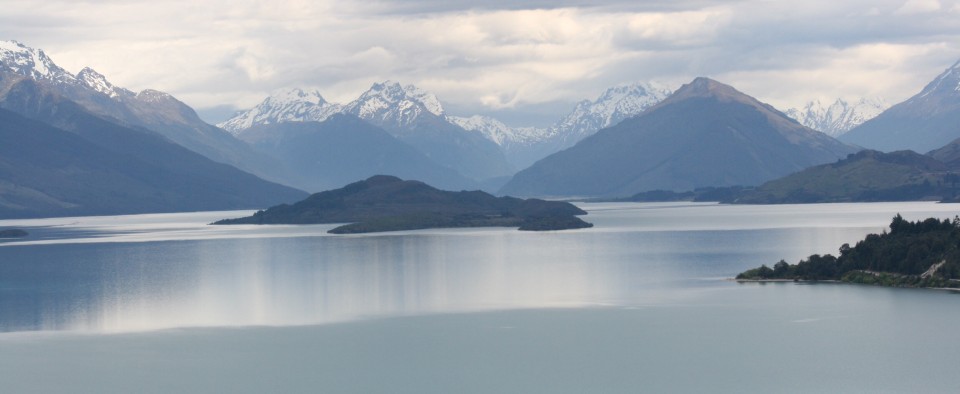
Mar 2nd – The Beagle Channel is a channel shared between Argentina and Chile, discovered by Fitzroy in 1830. He made another voyage in the area in 1833 accompanied by Charles Darwin. The channel was named after Fitzroy’s ship HMS Beagle. Our cruise through the channel included narration describing the history of the area and the six glaciers that one passes on the way down to Ushuaia, the southernmost city in South America. We were reminded yesterday in Chile that in fact Port William is further south, although it is only classed as a town – a bit of good-natured rivalry.
We docked in Ushuaia shortly after noon and embarked on a 4.5 hour nature tour. Our first stop was Tierra del Fuego National Park which covers 68.9 hectares of the southern tip of the Andes. Most of the Park is naturalized but does provide for some camping and hiking in restricted areas. The vegetation is mostly Southern Beech and Guindo, a type of evergreen. The Fuegan Red Fox is abundant in the lower regions while the Guanaco is more abundant in the upper regions. New species introduced for economic reasons such as the beaver, rabbits, and muskrats have not fared well and are causing problems to the ecosystem. After a brief stop at the most southern post office in Argentina, the bus took us along highway 3 to the terminus of the Pan-American highway – the most southerly point that one can drive.
The next part of the tour was by catamaran along the Beagle Channel. There we were able to see some of the wildlife including imperial cormorants, rock cormorants, skua and sea lions. Unfortunately, the weather closed in and we experienced rainy conditions until close to the end of the trip when the sun finally arrived.
We only had about 30 minutes left when we arrived back to our ship. Sine this was our last stop in Argentina and we still had 900 Pesos left, we walked to the end of the pier where we found a wine shop and were able to purchase two bottles of wine similar to the ones we had tried earlier in Buenos Aires. We had just enough to leave a little tip for the clerk.
While we didn’t get to see much of town, Ushuaia means “bay to the west.” It’s a city of about 80,000 and continues to grow. It was originally established as a penal colony, but the government in the 70s and 80s began to give tax-free status to encourage people to move there. As the population has grown, new professionals such as doctors, lawyers, and teachers have moved in as well creating a good community base. One would think this far south, the winters would be quite extreme but in fact the temperatures don’t change that much: 0* to 10* year round. The most depressing part would be the 200 days of rain…but our guide said you get used to it, especially if you like hiking and the outdoor life. Tourism accounts for 20% of their economy.
Mar 3rd – We were up early again this morning as we rounded Cape Horn just after 7 am. Cape Horn is where the Atlantic and Pacific oceans meet and is the most deadly passage in the world. Waves have been known to be over 30m or 100′. More than 1000 ships and 15,000 lives have been lost traversing this route. We were fortunate as the seas were very calm.
There are only three structures on the Cape – a lighthouse, a home for the keeper, and a memorial built to those who have lost their lives rounding the Cape. The property is maintained by Chile and the current keeper lives there with his wife and three children. They are resupplied once a month and otherwise live a very secluded life.
The memorial is in the shape of an Albatross and Sara Viel, a Chilean poet, wrote this poem to accompany the sculpture. [to be Added later].
Today was a full day at sea and was quite restful. The weather is very changeable with periods of sun followed by abrupt closing-in with heavy clouds and rain showers. We attended two lectures and Ask the Captain Anything. The latter was very well done as he, Chris Norman, explained the inner workings of the ship, how staffing works, a bit about how he came to his position as captain, and some of the finer points of cruising the Southern Hemisphere. In particular, we thought he did an excellent job of explaining the process of decision-making that went into the change of itinerary regarding the Falklands.
Dinner tonight was in the dining room and we were assigned a seat by the window at the back of the ship. The changeable weather rewarded us with a double rainbow just as we were finishing dessert.
Mar 4th – The windy, rainy weather system continues to haunt us providing for lots of rocking and rolling. Fortunately, neither of us suffer from seasickness. Around 1pm, we were finally able to enter the Nelson Passage which provided some protection from the wind and a lot less motion.
There were two more lectures this morning on Chile and our two remaining ports. This was followed by a lunch for Members of the Mariners Club, which we attended with Nancy Hardy. We certainly have enjoyed a number of relaxed meals chatting with people from around the world. The majority are from the US, Canada, and the UK but there are a good number from France, which allows us to practice our conversational French.
Just before dinner tonight, we entered one of the fjords to view Brujo Glacier. It’s one of 118 glaciers in the area and is a tidewater glacier, meaning that the ice comes right down to the water line. We don’t remember any of the glaciers in Norway being this large…but we’ll check that out when we return.
We had a lovely dinner in the Pinnacle Grill complements of our travel agent, Rozik, at CAA.
Mar 5th – Not too much to write about today as it was yet another day at sea. We attended two lectures – one by Tommie Sue on the history of Chile and the other on the habits and culture of whales by George. Tonight’s entertainment was an excellent presentation by Andrea Amat, a flutist from Spain.
The weather has been less than stellar. Today we had winds gusting up to 50 mph with heavy rain. We are passing the fjords but there’s not much to see. Fortunately even though the seas are rough, the Zaandam is doing a pretty good job of handling them. It was a bit rough over night but the rest of the day has been tolerable. At bedtime, we still don’t know if we’ll be able to get into Puerto Montt tomorrow. The forecast is for strong winds and rain, and it’s a tender-port. We’ll see!
Mar 6 & 7th – We were up early and ready to disembark by 9 am for a trip to Petrohue Falls and the Orsono Volcano. There we all sat in the theatre trying to be positive given the circumstances. It was obviously windy with heavy rain, and some of us truly hoped they would cancel, but they stretched out the decision to cancel the port call just about as long as they could. I suspect there was a fair bit of diplomacy going on in the background as the decision was taken out of the captain’s hands. The portmaster imposed a ban on small vessels which meant that the ship’s tenders couldn’t be used. After about an hour they finally cancelled the port. I doubt we would have seen much and a walk in the forest would have been somewhat miserable given the weather.
Over these two days, there were more lectures – this time on Football and why it is so popular in South America – a five-kilometre walk around the deck to raise funds for cancer, a lovely afternoon concert by Adagio, another presentation by the entertainment team, more games of trivia…and it’s time to pack.
Mar 8th – Our departure time this morning was quite civilized given that we made our own arrangements to travel from the port in San Antonio to our hotel in Santiago. Our driver was waiting for us just outside the terminal building. The trip takes about 90 minutes, most of it on tollways. At one point he stopped as we passed through the toll gate and waved a lady over to the car. He bought two packages of pastries and gave us one. I don’t know what they’re called, but they were small cakes filled with creme de leche and covered with icing sugar- messy but good.
Santiago has four tollways covering over 250 km. The speed limit is 120kph but we suspect we were travelling faster than that at times. The line ups to pays tolls at various entrances was unbelievable but we assume there’s a faster way for vehicles who travel them frequently.
Our hotel, Courtyard in Las Condes, is fairly new and quite modern. It’s located between the Andes mountain range and downtown Santiago and has its own selfie spot on the 18th floor. It’s also conveniently located to Mall Parque Arauco, the most popular in Santiago. Located around a central outdoor courtyard, the mall has most of the usual American stores and restaurants.
After getting settled and having a quick lunch, we headed off on the Hop On Hop Off bus tour. The route takes about two hours and winds its way through residential areas and the commercial district. We were particularly struck by the varying architecture throughout the city. From traditional Spanish areas, to the occasional English Tudor style, to large neo-classical structures such as the palace and the buildings around the Plaza des Armas, to the modern skyscrapers, there is eye candy everywhere you look.
Traffic is horrendous, as expected, and we were surprised by the number of people in the downtown area. Some streets have been converted to pedestrian only and most major streets have express bus lanes to improve commuter travel.
Santiago is a city of neighbourhoods and one that caught our fancy was Providencia because of its Canadian connection to the Sister of Divine Providence who arrived in Chile from Canada in 1853. The amusing part of the story is that their landing here was due to the fact that their original destination in Oregon was flooded. Not knowing how to make the return journey to Canada, they met a Chilean sea captain who brought them to this remote corner of the world. Their ministry flourished and the area eventually became known as Providencia. Today it is an upscale area well suited to the many hotels, restaurants and embassies located there.
The tour guide made a point of telling us that Santiago is a relatively safe city and many of the neighbourhoods have a very vibrant nightlife. The presence of many police stationed on street corners throughout busiest areas of the city was also reassuring.
After a little rest, we ventured out to the Mall for pizza dinner and a treat at the bakery restaurant. A swim in the hotel pool finished off a lovely day.
 nancybellblog