June 23rd – We awoke this morning in the seaside town of Warnemunde, Germany. The construction of a new terminal in 2005, has made it the most important harbour for cruise line ships in Germany. Since our tour didn’t leave until after lunch, we took the opportunity to have a quiet morning and then walk into town. It was quite busy in town, with lots of families and tourists. It looks like a place that many locals would visit for the day. It’s also the hub for ferries traveling to and from other towns/cities along the coast and to Sweden.
Our afternoon tour took us on a countryside bus tour out to see the Minster (Church) at Bad Doberan. It is culturally significant for many reasons. The first abbey was founded by the Cistercian monks in 1171 and the current abbey dates back to 1368 – having mostly escaped the ravages of war. Through the activities of its inhabitants, the abbey greatly contributed to the cultural and economic development of Mecklenburg and became the centre of Christianity in the region. The altar is the oldest wing altar in art history and some of the tombs are considered to be treasures.
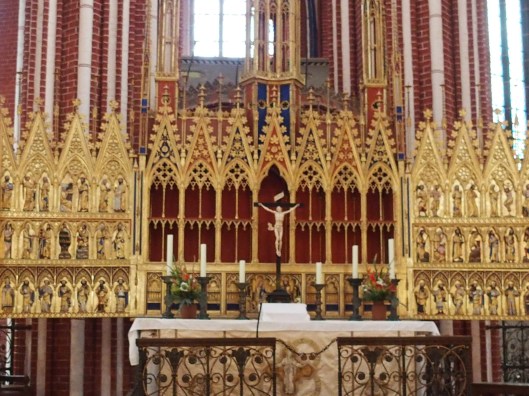
Minster at Bad Doberan
After another brief drive we boarded a narrow gauge steam train that took us to Kuhlungsborn, another seaside town, where we enjoyed afternoon tea and a brief walkabout. Had the weather been better, a walk along the beach may have been nice. The train tracks were built during Franz Frederick II’s time (1880s) as a “keeping up with the Jones” thing. Because of cost he conceded to the narrow gauge. The rail line has run continuously for over one hundred years – the last 20+ as a private system.
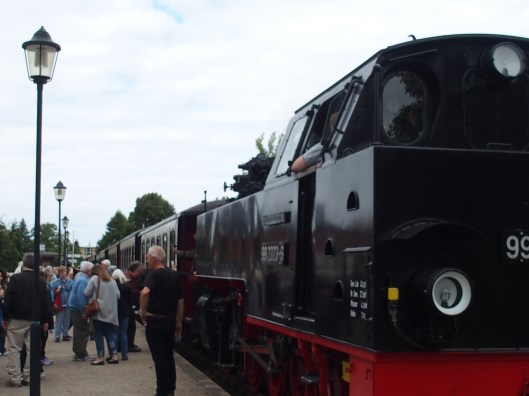
Steam Train
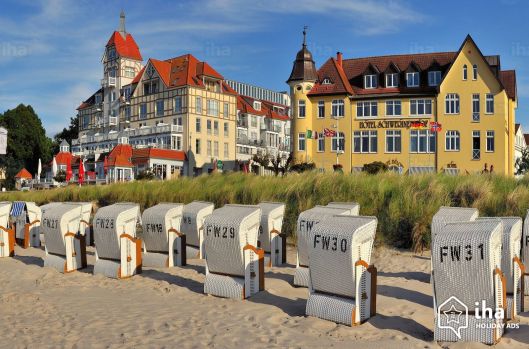
Kuhlungsborn has an interesting story attached to it. As an East German town, it wasn’t allowed to be used as a vacation spot because the Communist government feared people would escape into international waters, and in fact many tried. Since reunification it has become a very active seaside resort with old homes being refurbished and new homes being built. On our way in the bus, we passed the first golf course to be built after reunification, since they were not allowed under the Communists.
It was a very interesting afternoon with an excellent guide, Ulf, who resides in the area and was passionate about the history and folklore of this place.
We arrived back at the ship just in time for a quick change and then to dinner at Jacques. This is one of the specialty restaurants onboard and is French cuisine. George had scallops and I had lamb. The pea vichyssoise was particularly memorable.
 nancybellblog