
Monday July 27th – Today was the beginning of George’s International Hymn Society meetings so we were up early to have breakfast and get him over to Robinson College. It’s about a 10 minute drive from where we’re staying and about a 35 minute walk through to the other side of town. Since it was damp and cool, we opted for the drive.
This left me with the rest of the day to myself so I took it easy this morning and then headed downtown to do the self-guided walking tour. There are some gorgeous old buildings in Cambridge with lots of history and stories attached. I think I said before that most of the buildings are attached in some way to the University. There are more than 20 colleges scattered throughout the downtown core affiliated with the university. King’s College is the largest and owns most of the central core. Every student must belong to a college (similar to U of T) although most of their course work would be done through the university with a mixture of students from all the colleges. The colleges really provide accommodation and social life.
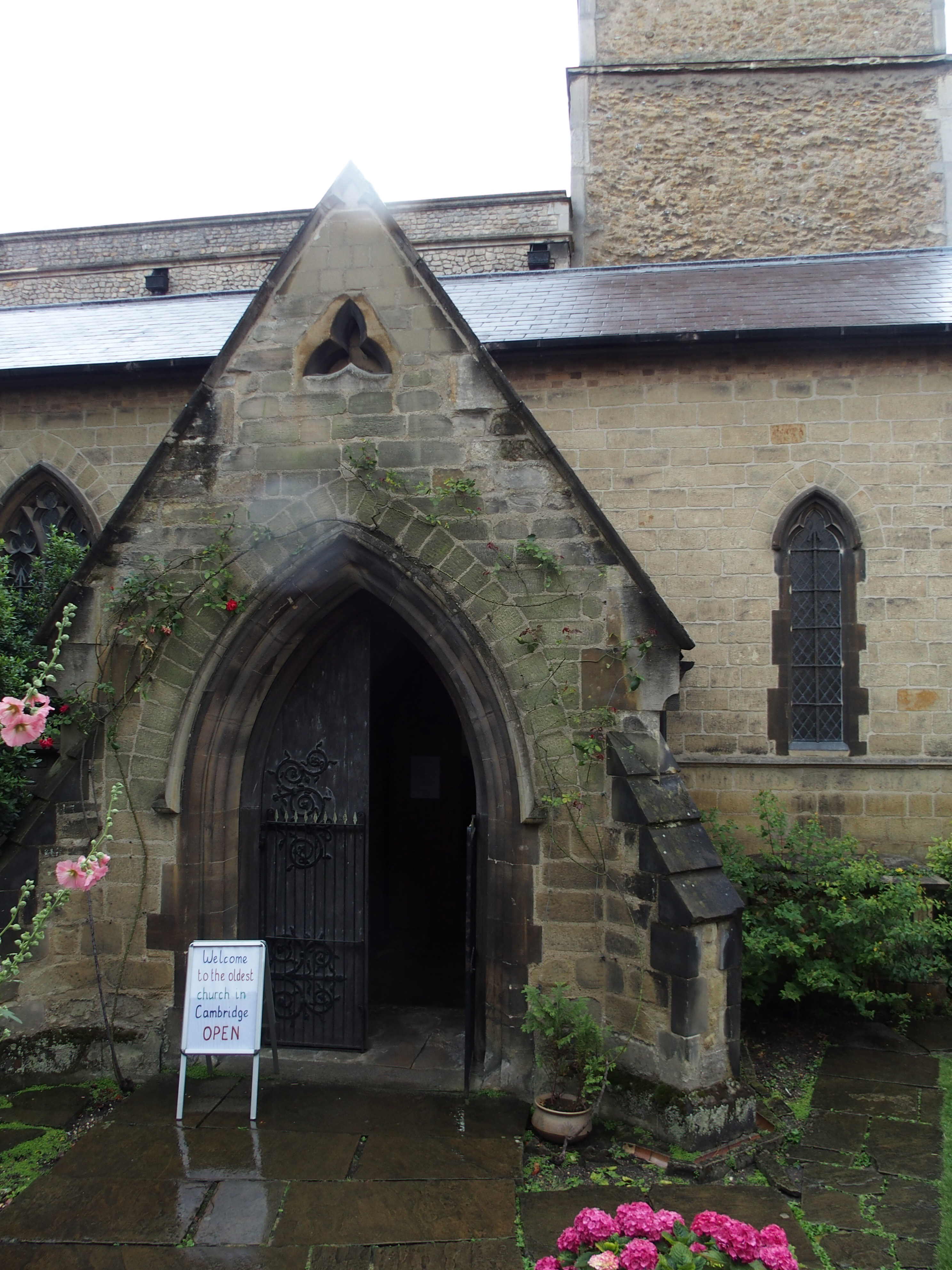
St. Bene’t’s Church
My first stop was at the ancient church of St. Bene’t’s, the county’s oldest building. The history of prayer and worship in the building goes back a millennium! It was quite small and quaint inside but must provide for a very intimate worship space within the city.
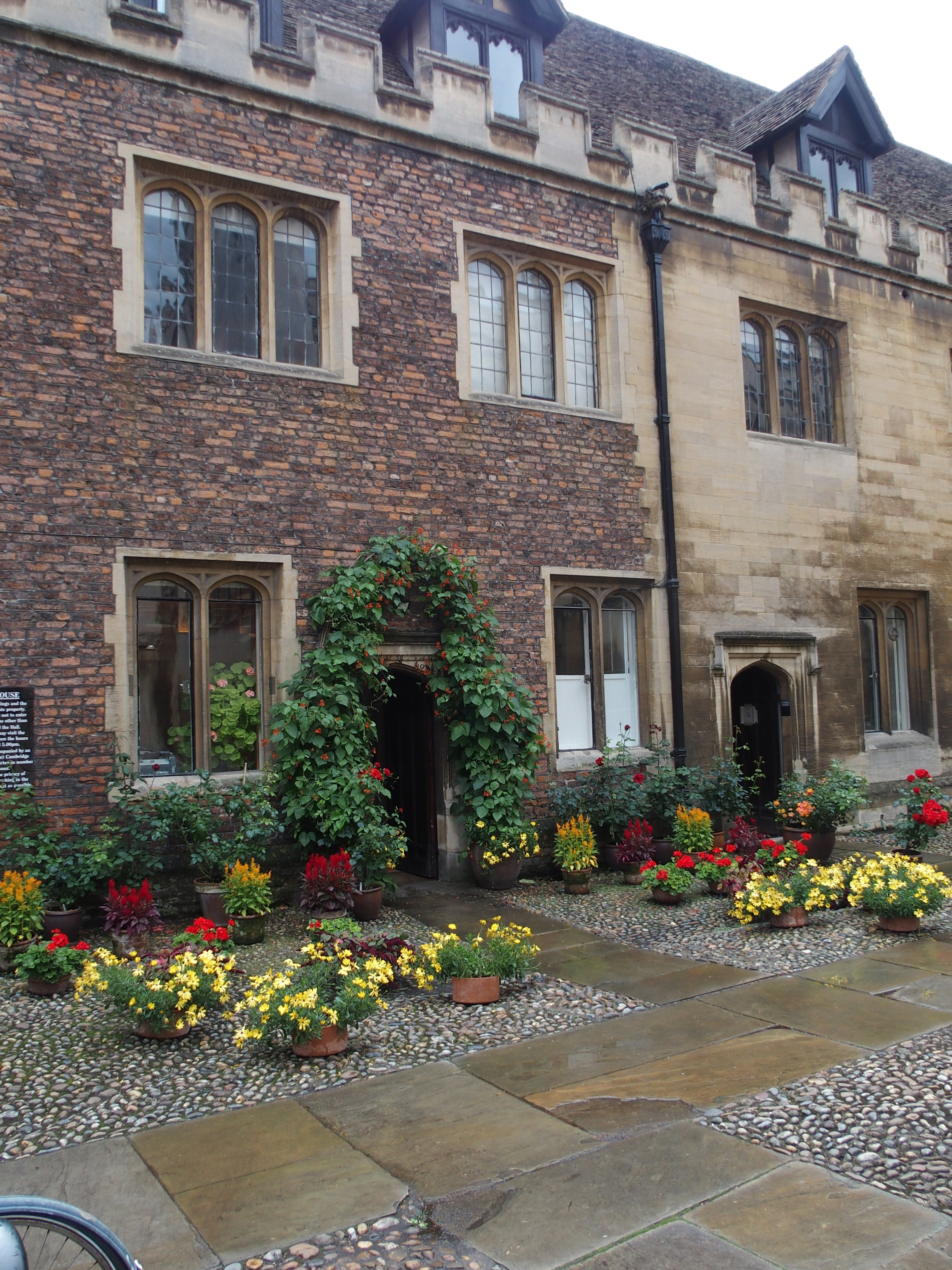
Peterhouse College
Peterhouse is the oldest college founded in 1284, although I don’t think this building dates back that far. I was taken by the ivy covered doorway, the lovely pots of flowers about and the balcony pots on each window. Fellows are graduates of the college, who are still involved in teaching or research or in some way, and obviously deserve a special parking spot – for their bicycle! Undergraduate students at Cambridge are forbidden to have a car within 10 miles of the university so bicycles are everywhere.

Peterhouse Common
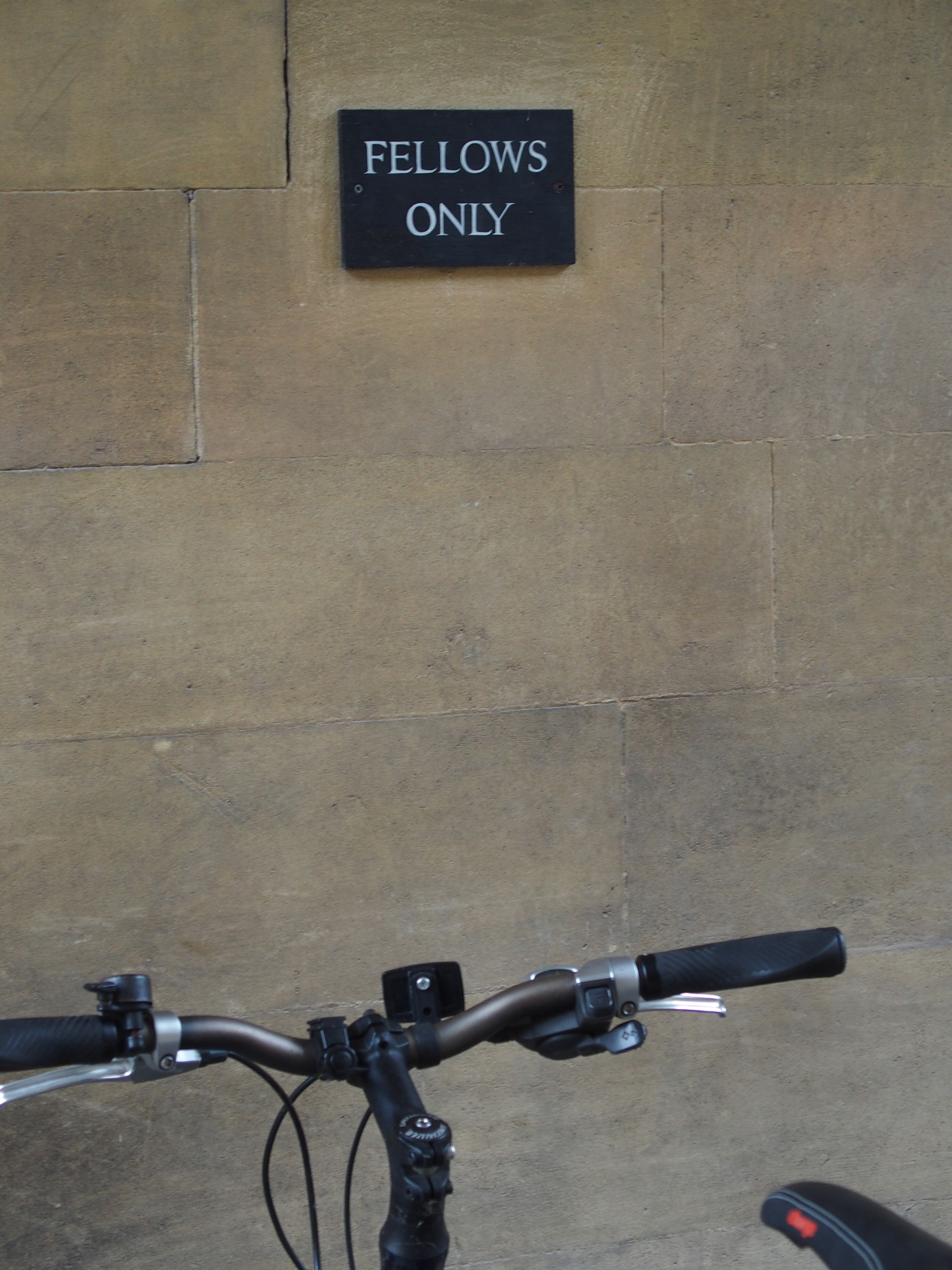
Special bicycle parking
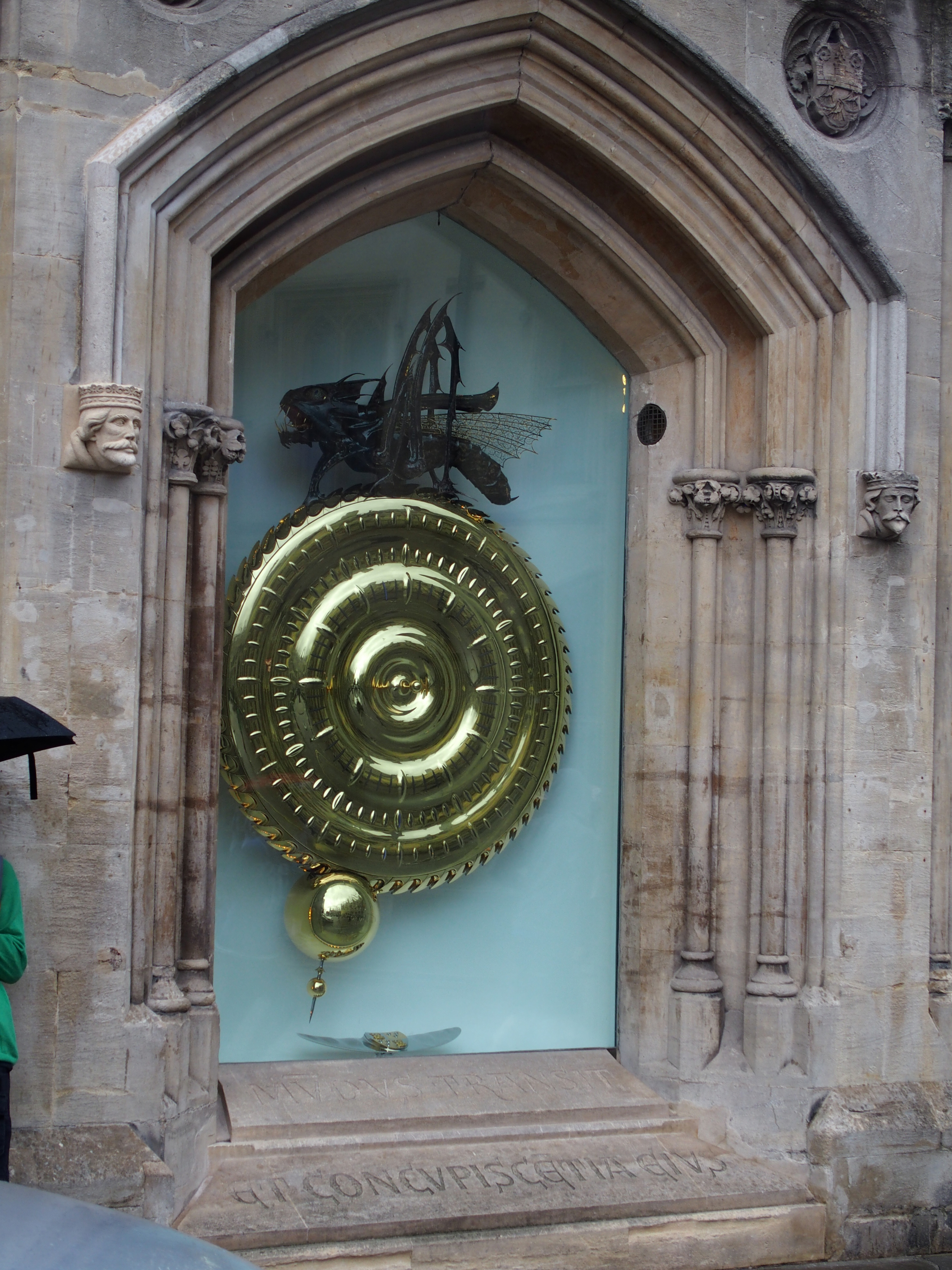
The Corpus Clock
The next stop on the tour was to see The Corpus Clock. The fabulously terrifying “Grasshopper Clock” on the corner of Corpus’ Taylor Library is a must-see for any Cambridge visitor. Unveiled to the public in September 2008, this extraordinary feat of new technology now stands proudly facing onto King’s Parade; its shining, 24-carat gold dial and gruesome time-keeper, a dazzling addition to the historic city centre. For more information about how the clock works I encourage you to follow this link: The Corpus Clock.
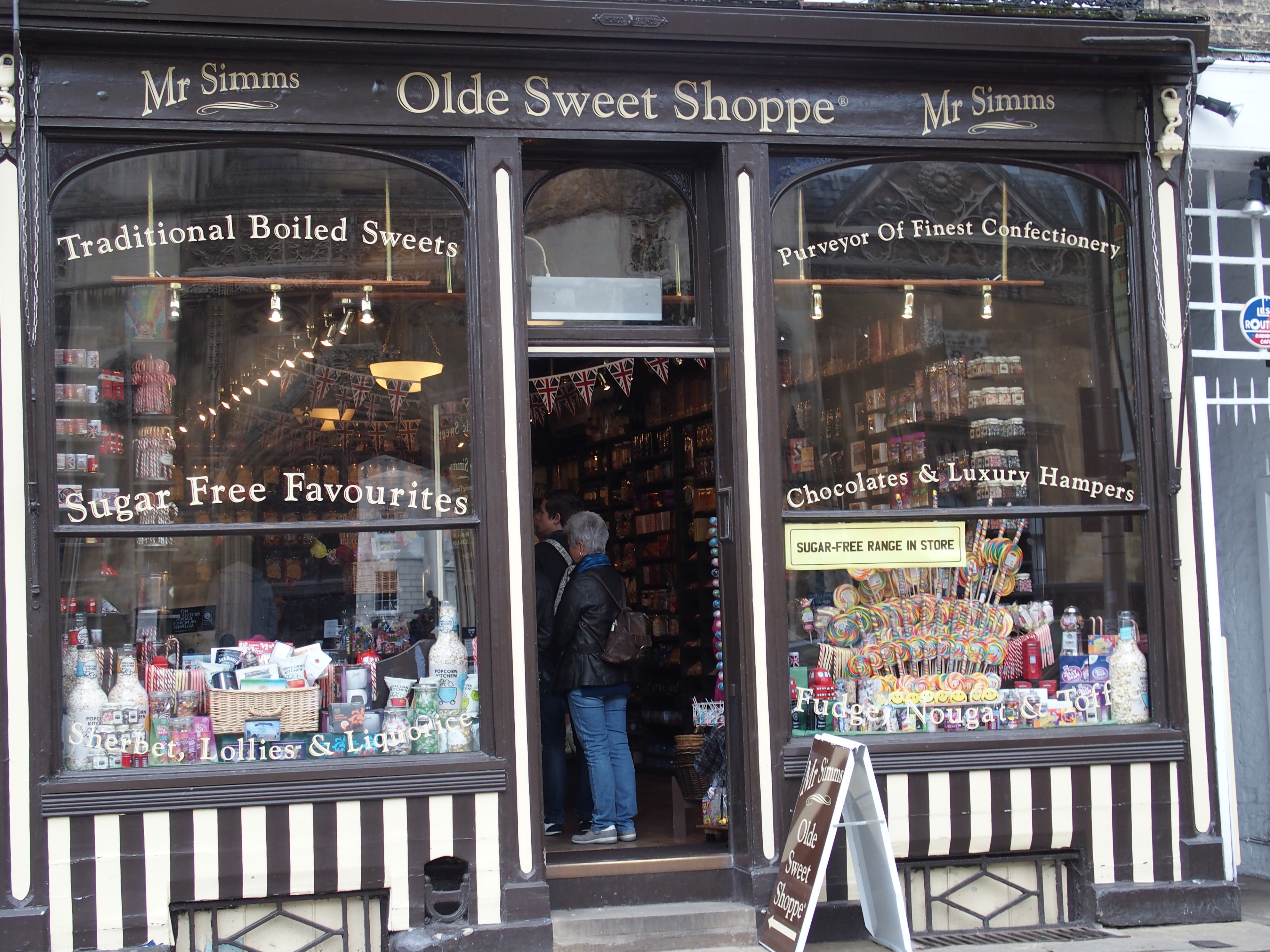
The Olde Sweet Shoppe
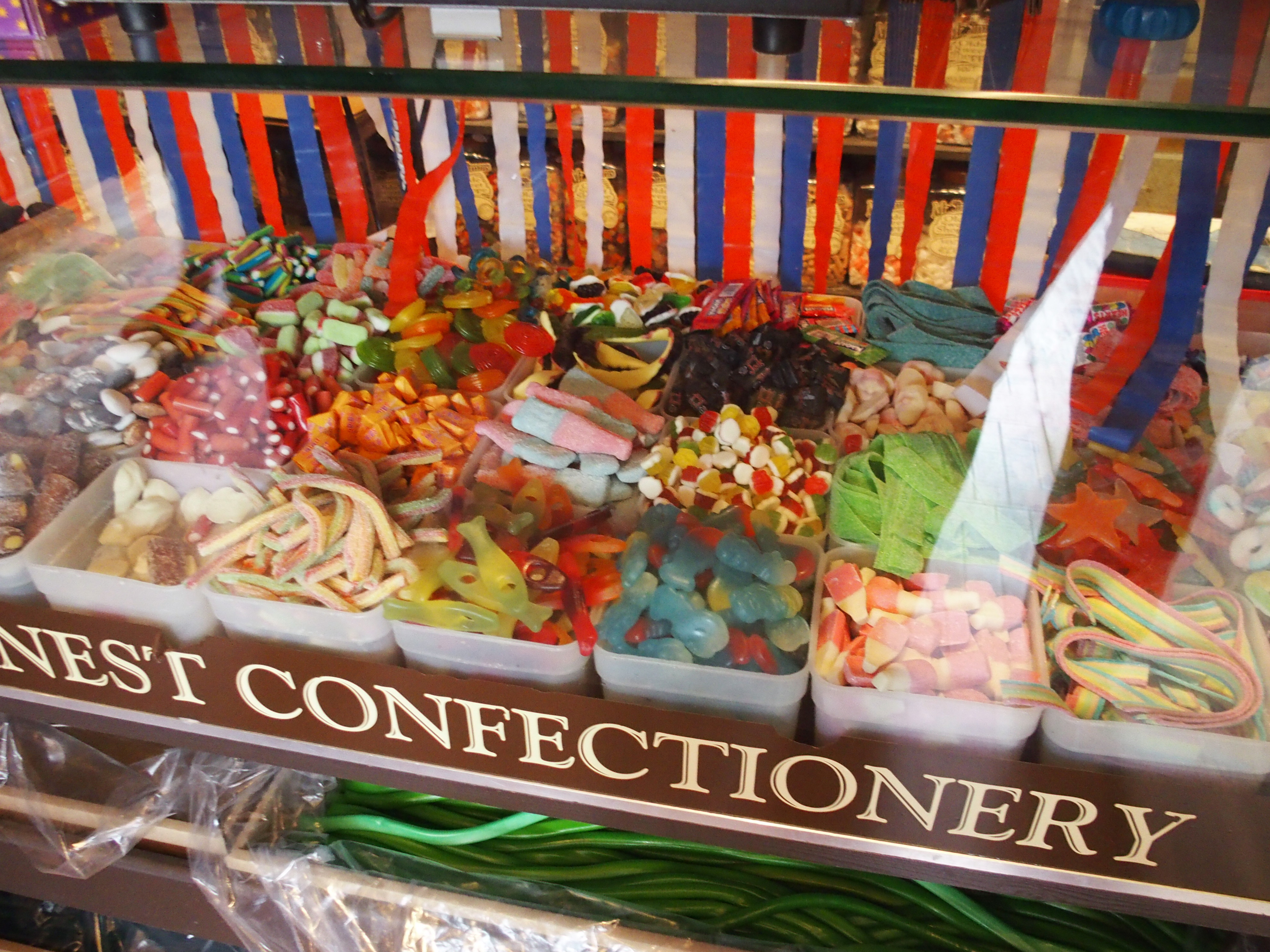
Penny Candy
No walking tour in the UK would be complete without a visit to the candy shop. A few licorice allsorts and some butterscotch candies in a bag and we were good to go. They even still have a selection of penny candy for the kids.
The next stop was the beautiful Queen’s College site of the hymn festival for Tuesday evening. The college is well known for its mathematical bridge which crosses the river Cam between their new building and the old buildings (affectionately called the light side and the dark side). The college was founded in 1448 by Margaret of Anjou (Queen of Henry VI) and is now one of the largest. Probably its most famous graduate is Desiderius Erasmus who studied there in the early 1500s.

Mathematical Bridge
A popular fable is that the bridge was designed and built by Sir Isaac Newton without the use of nuts or bolts. Various stories relate how at some point in the past either students or fellows of the University attempted to take the bridge apart and put it back together, but were unable to work out how to hold the structure together, and were obliged to resort to adding nuts and bolts. In reality, bolts or the equivalent are an inherent part of the design. When it was first built, iron spikes were driven into the joints from the outer side, where they could not be seen from the inside of the parapets, explaining why bolts were thought to be an addition to the original. Newton cannot have been directly involved since he died in 1727, twenty-two years before the bridge was constructed.
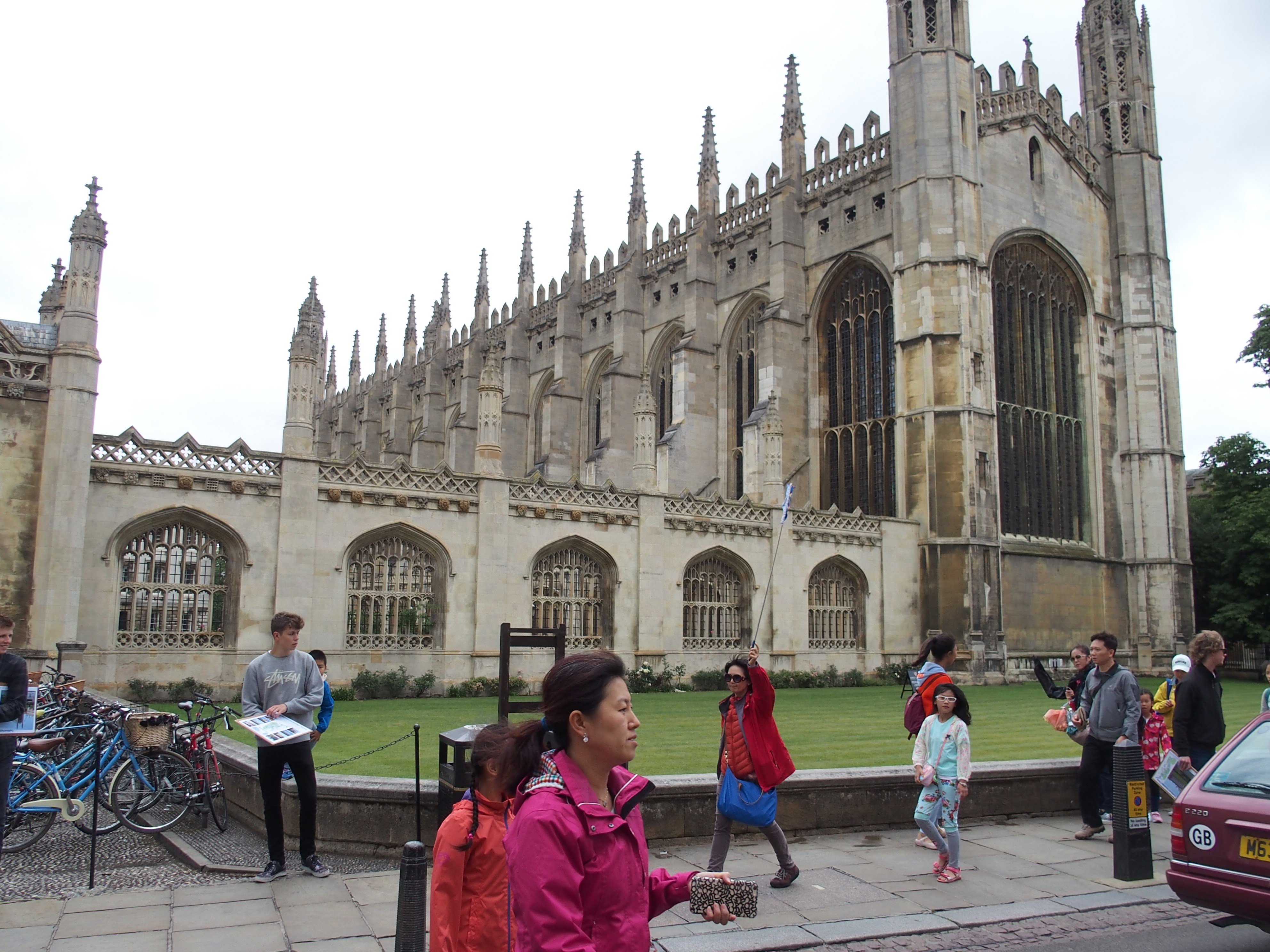
King’s College
Walking along King’s Parade you pass King’s College which is the most imposing structure in the area, Trinity College and then St. John’s College.
It’s time to stop for lunch at the Michaelhouse Cafe in St. Michael’s Church. The church uses their narthex as a restaurant and has downsized their sanctuary but still have regular services/prayers daily and weekly concerts. You’re welcomed to join in after lunch!
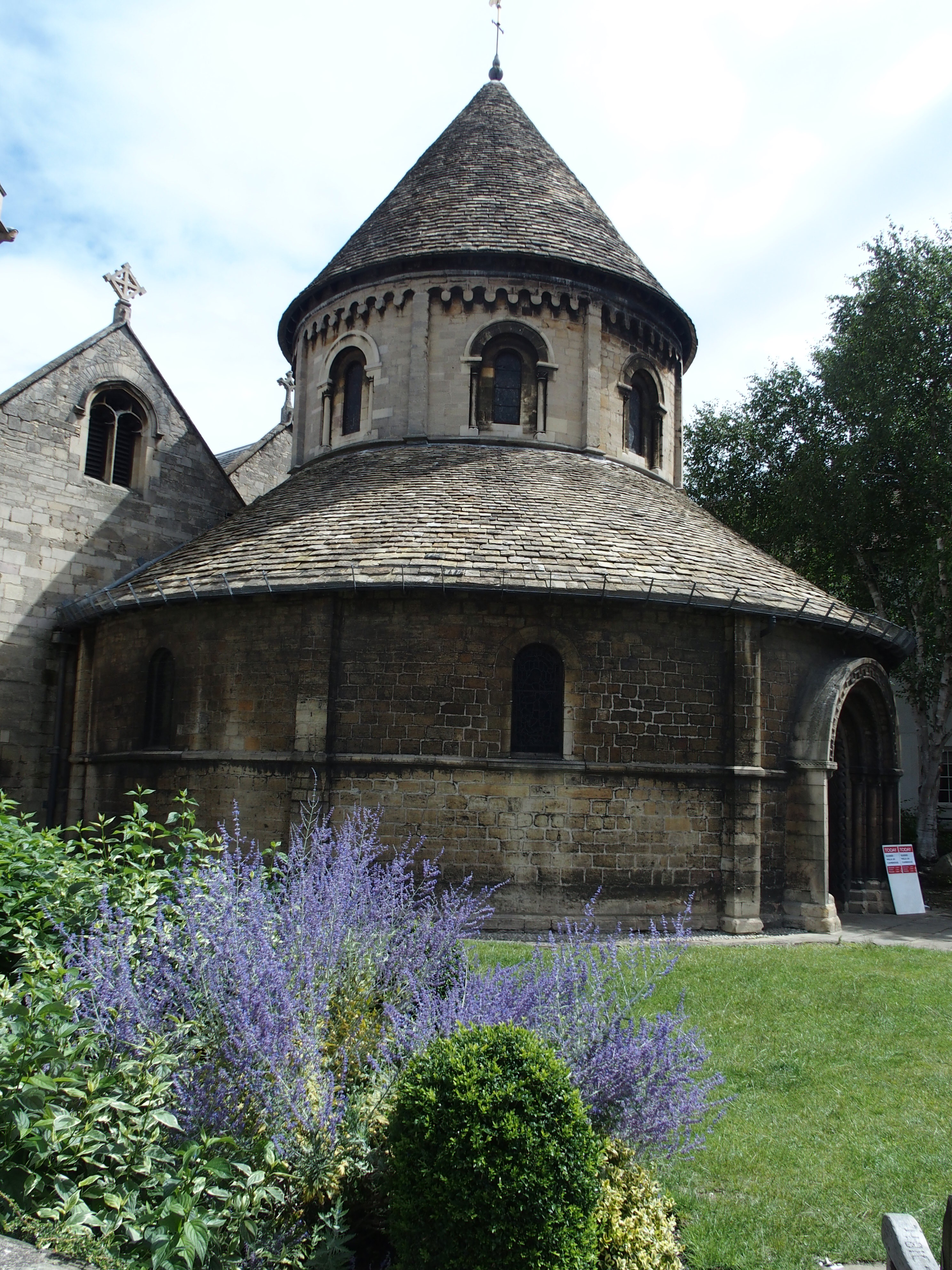
Church of the Holy Sepulchre (The Round Church)
After wandering through the shopping district, you come to the Round Church. Its real name is the Church of the Holy Sepulchre. Built in 1130, it was fashioned after its name sake in Jerusalem and is one of only four medieval round churches still in use in England. Also down this way is the oldest section of town with its quaint stores and very old buildings.
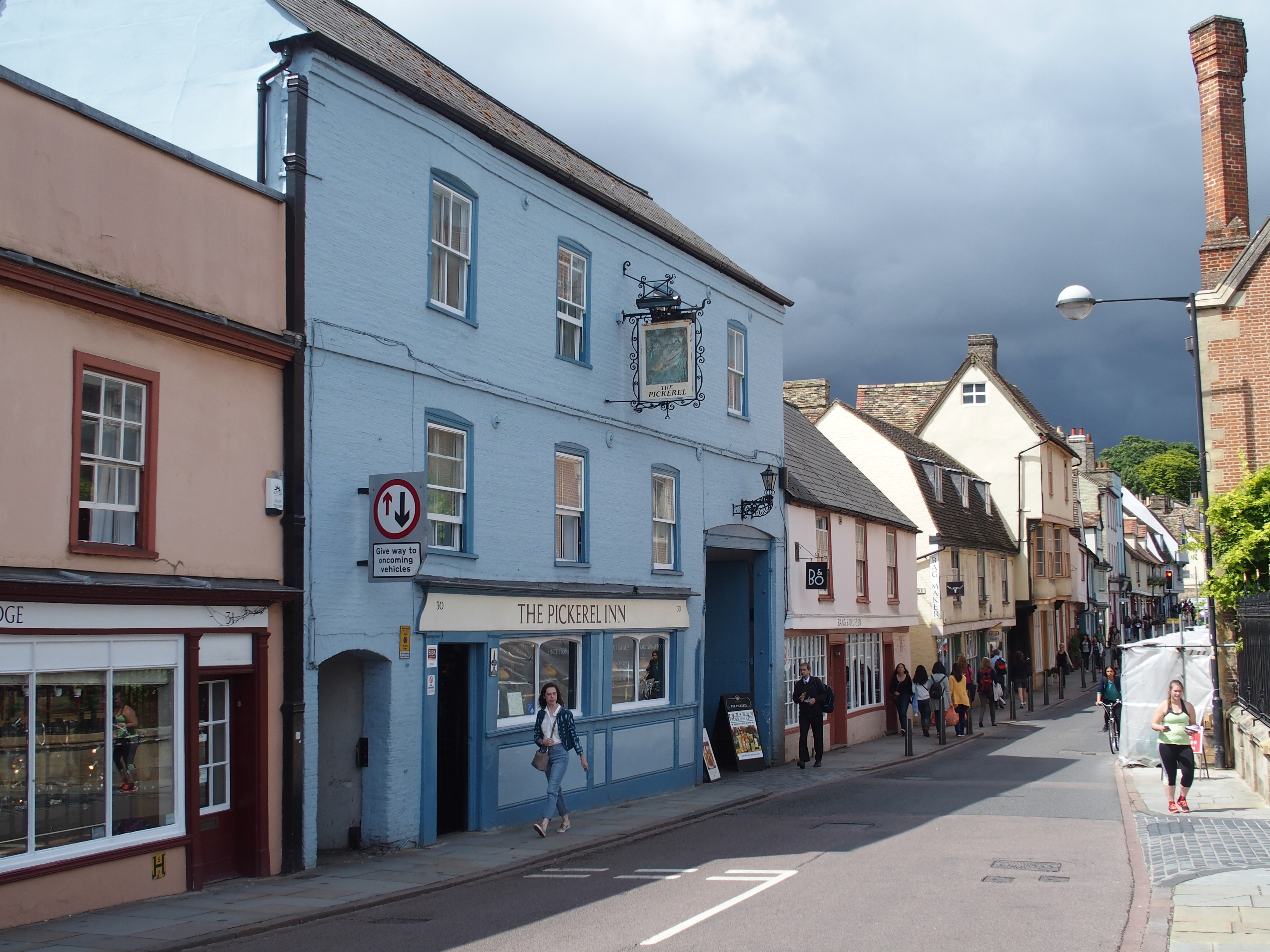
Oldest section of town
 nancybellblog